Kal Bhairav Temple Ujjain: History, Liquor Offering, Timings, and Visitor Guide
Kal Bhairav Temple is an ancient Hindu shrine located in Bhairavgarh along the banks of the Shipra River in Ujjain, Madhya Pradesh. Dedicated to Kal Bhairav, the fierce guardian manifestation of Lord Shiva, the temple is famous across India for its centuries-old Tantric ritual in which devotees offer liquor (madira) as prasad to the deity.
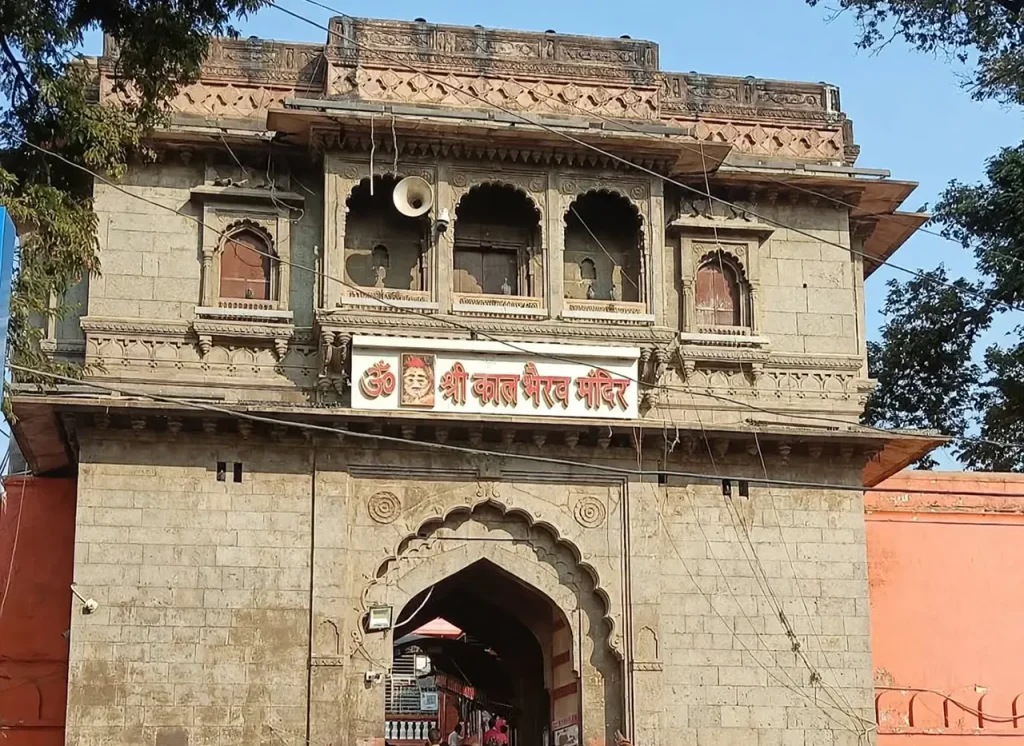
For pilgrims visiting Ujjain, a trip to this temple holds deep spiritual value. Local tradition teaches that a pilgrimage to the sacred city and its famous Mahakaleshwar Jyotirlinga feels complete only after seeking blessings from Kal Bhairav, the guardian deity who protects Ujjain from all directions.
Quick Information About Kal Bhairav Temple Ujjain
| Feature | Details |
| Temple Name | Kal Bhairav Temple (Kaal Bhairav Mandir) |
| Presiding Deity | Kal Bhairav (Guardian manifestation of Lord Shiva) |
| Location | Bhairavgarh, near Shipra River bank, Ujjain |
| District & State | Ujjain District, Madhya Pradesh, India |
| Religious Tradition | Shaivism and Tantric (Panchamakara) worship |
| Famous Ritual | Offering of liquor (madira) poured into the idol’s mouth |
| Daily Darshan Timings | Generally 5:00 AM – 10:00 PM (confirm locally during festivals) |
| Entry Fee | Free general darshan (special pooja tickets vary locally) |
| Distance from Ujjain Junction | Approximately 5 to 6 km |
| Distance from Mahakaleshwar Temple | Approximately 5 to 6 km |
| Nearest Airport | Devi Ahilyabai Holkar Airport, Indore (~55 to 60 km) |
| Best Time to Visit | October to March, Sundays, and Kal Bhairav Ashtami |
| Official District Portal | Ujjain District Administration |
Why Kal Bhairav Temple Ujjain Is So Important
In Hindu tradition, every sacred city has a Kshetrapala, which means a divine guardian who watches over the town and protects its people. For the ancient city of Ujjain—known in scriptures as Avantika—Kal Bhairav serves as that chief protector.
Hindu texts describe eight primary forms of Bhairava, known together as the Ashta Bhairavas. Kal Bhairav is considered the leader among them. While Lord Mahakaleshwar represents Shiva as the supreme ruler of time and eternity, Kal Bhairav represents Shiva’s fierce, active power that removes fear, clears obstacles, and guards devotees against negative forces.
Because of this sacred bond, pilgrims follow a long-standing custom in Ujjain. After praying at Mahakaleshwar Temple, devotees travel to Bhairavgarh to pay their respects to Kal Bhairav. Many believers consider him the Kotwal (chief sentinel) of Ujjain, much like Kaal Bhairav is revered in Varanasi and at shrines such as Shri Kalabhairaveshwara Temple in Bengaluru.
Understanding the Famous Liquor Offering Tradition
The most widely discussed feature of Kal Bhairav Temple in Ujjain is the offering of alcohol to the deity. While visitors from outside Madhya Pradesh often find this surprising, the practice follows an established religious tradition rather than modern entertainment.
The Tantric Background Behind the Ritual
Ujjain has been a major center for Shaiva and Shakta spiritual practices for many centuries. In classical Tantric worship, rituals sometimes involve five symbolic elements known as the Panchamakara:
- Madya (wine or liquor)
- Mamsa (meat)
- Matsya (fish)
- Mudra (parched grain)
- Maithuna (spiritual union)
In ancient times, all five elements were part of specialized Tantric rites performed by initiated practitioners. Over the centuries, temple traditions evolved to make worship accessible to everyday families and pilgrims. Today, only the symbolic offering of madya (liquor) remains a visible part of public temple worship at Kal Bhairav Temple.
How the Offering Ritual Works
If you wish to offer madira during your visit, the process follows a clear, orderly routine:
- Buying the Offering: Just outside the temple entrance, licensed vendors sell small bottles of liquor alongside traditional worship baskets containing flowers, coconuts, incense, and sindoor.
- Presenting the Basket: You carry the sealed bottle inside the temple queue and hand it to the priest inside the sanctum.
- The Pouring Ritual: The priest opens the bottle, pours a portion of the liquor into a shallow metal plate, and holds the plate near the open mouth of the stone idol.
- Receiving Prasad: As the priest recites prayers, the liquid in the plate disappears into the idol’s mouth. The priest then returns the remaining liquor in the bottle to you as prasad.
The Unexplained Phenomenon of the Idol’s Mouth
What draws immense curiosity from visitors is that the idol of Kal Bhairav is carved from solid stone. There is no visible pipe, drain, or hollow chamber beneath the face. Over the years, various curious observers and local officials have examined the shrine out of intrigue, yet no hidden outlet has ever been identified. For devotees, this remains a sacred mystery tied to faith and divine grace.
Are Non-Alcoholic Offerings Accepted?
Yes. Offering liquor is completely optional, never mandatory. Many families, elderly pilgrims, and visitors who prefer not to handle alcohol offer standard Hindu worship items instead. You can freely offer:
- Fresh marigold flowers and garlands
- Coconuts and sweets (peda or ladoo)
- Mustard oil and sindoor (vermilion)
- Black sesame seeds (til) and incense sticks
The priests accept both traditional vegetarian baskets and liquor offerings with equal respect.
History and Origins of Kal Bhairav Temple
Understanding the history of Kal Bhairav Temple requires separating ancient local traditions from documented architectural records.
According to regional historical accounts in Malwa, the original shrine at this site is attributed to an ancient ruler named King Bhadrasen. While inscriptions confirming the exact century of the earliest foundation have not survived, Ujjain itself has flourished as a major cultural and religious capital for more than two millennia.
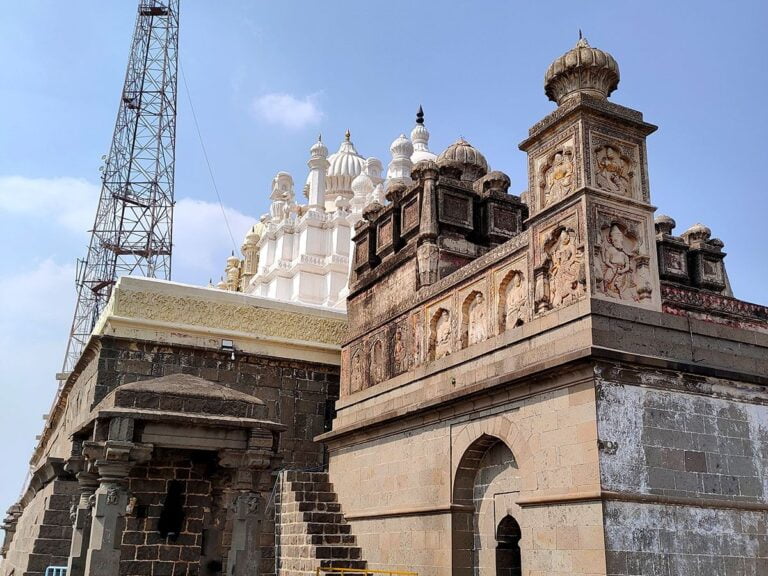
The temple structure visible today reflects strong Maratha-era restoration from the 18th century. When the Maratha general Mahadji Scindia and his successors governed Ujjain, they rebuilt and repaired several historic shrines across the city that had suffered damage during earlier conflicts.
Inside the temple halls, traces of traditional Malwa-style wall paintings were once visible on the plastered walls. Although weather and age have faded much of this artwork, the stonework, pillars, and courtyard layout clearly display the craftsmanship of 18th-century central Indian temple architecture.
Sacred Legends and Sthala Purana
In Hindu puranic literature, such as the Shiva Purana and Skanda Purana, the origin of Kal Bhairav is tied to a well-known lesson on humility.
The Story of Brahma’s Fifth Head
According to traditional accounts, Lord Brahma once became overly proud of his role as creator of the universe. At that time, Brahma possessed five heads. During a cosmic debate between Brahma and Lord Vishnu over supremacy, Brahma spoke disrespectfully toward Lord Shiva.
To humble Brahma’s pride, Shiva manifested a fierce, radiant form from his brow—Kal Bhairav, the Lord of Time and Dissolution. Using the nail of his left thumb, Kal Bhairav severed Brahma’s fifth head.
Seeking Liberation and Guarding Sacred Cities
Because Brahma was a creator deity, severing his head brought the spiritual burden of Brahmahatya upon Kal Bhairav. To cleanse this burden, Shiva instructed Bhairava to wander as a wandering ascetic carrying Brahma’s skull (kapala) as a begging bowl until the skull finally fell from his hand near Kashi Vishwanath Temple in Varanasi.
Alongside Varanasi, Lord Shiva appointed Kal Bhairav to guard key Shaiva centers, with Ujjain standing among the foremost. Thus, Kal Bhairav took his permanent seat on the banks of the Shipra River to watch over Avantika.
Temple Architecture and Sacred Surroundings
Kal Bhairav Temple is not a sprawling modern mega-complex; instead, it retains the intimate, historic feel of an old riverside shrine.
The Sanctum Sanctorum (Garbhagriha)
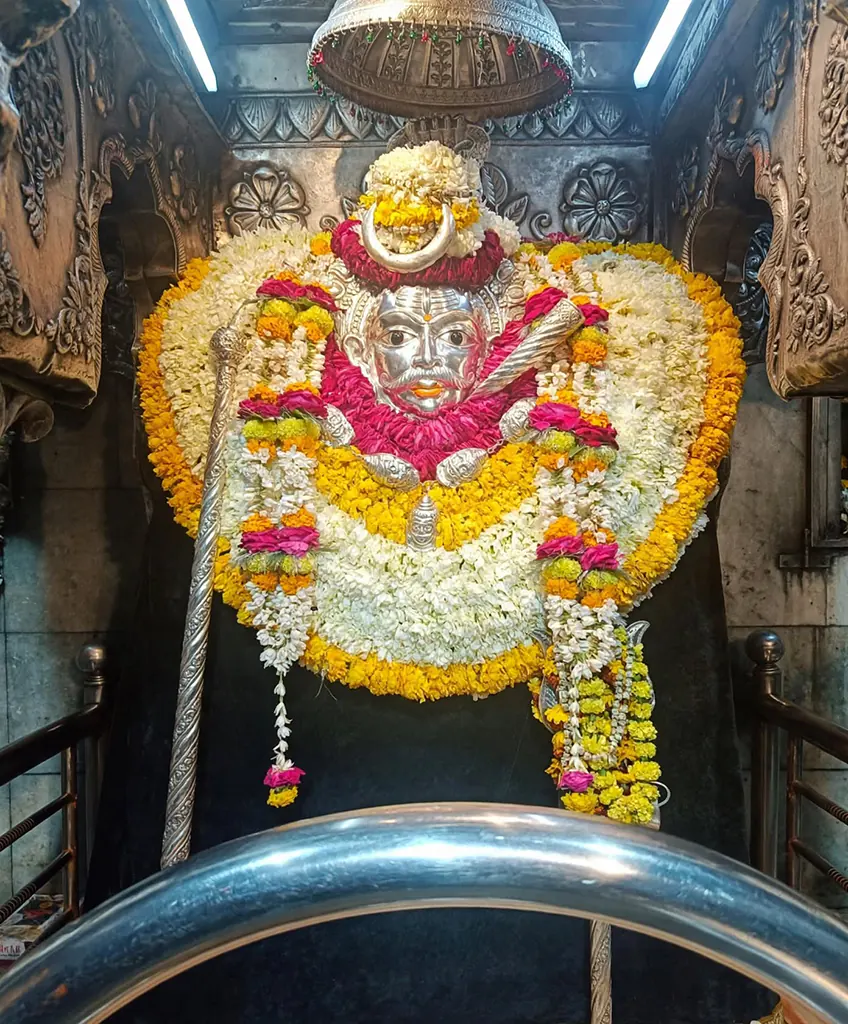
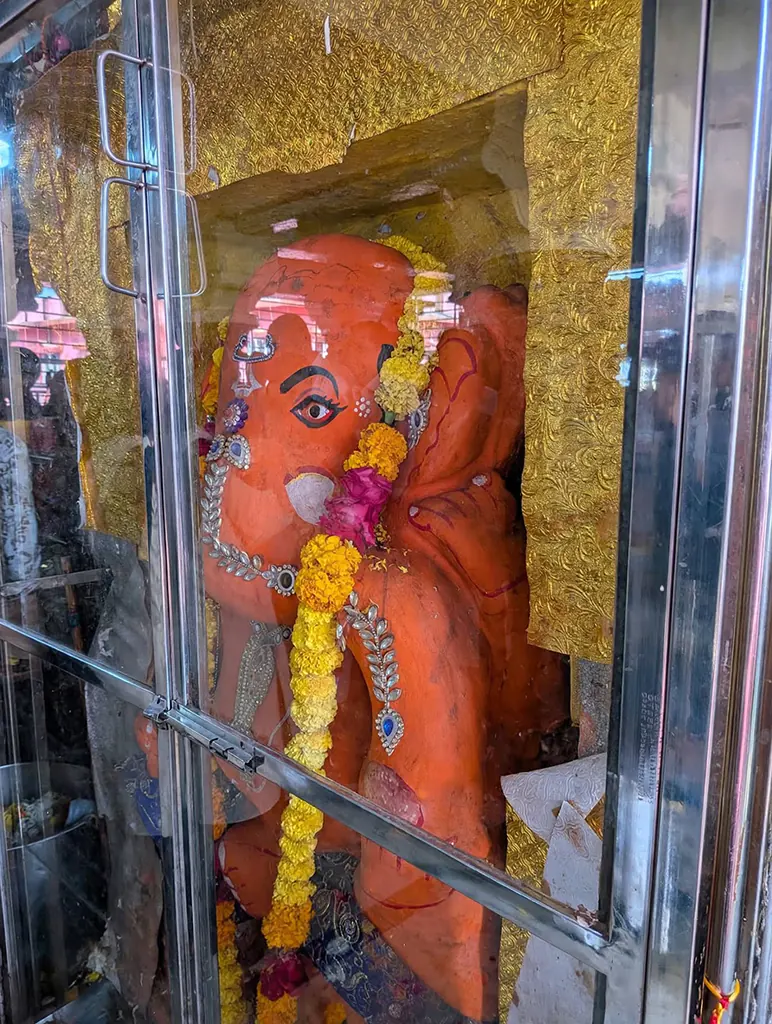
The inner sanctum houses the striking stone image of Kal Bhairav. The idol is heavily coated with bright orange-red sindoor and dressed in vibrant ceremonial garments, with a silver or metallic crown and large expressive eyes. Because the sanctum is compact, darshan moves in a steady single-file line.
The Courtyard and Deepastambha
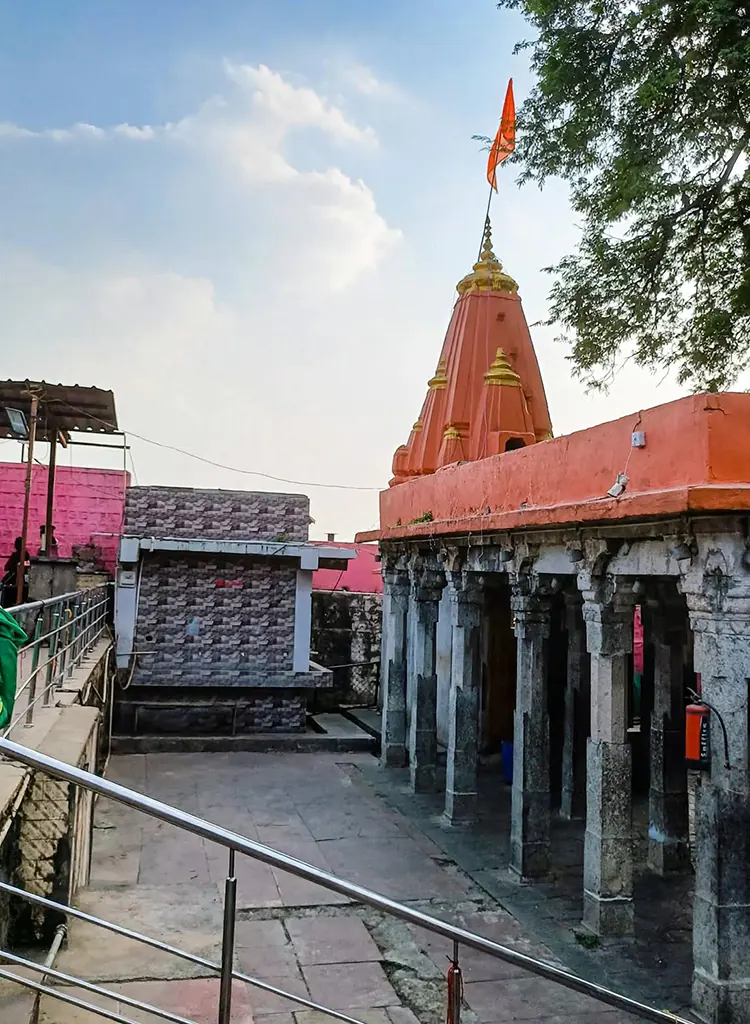
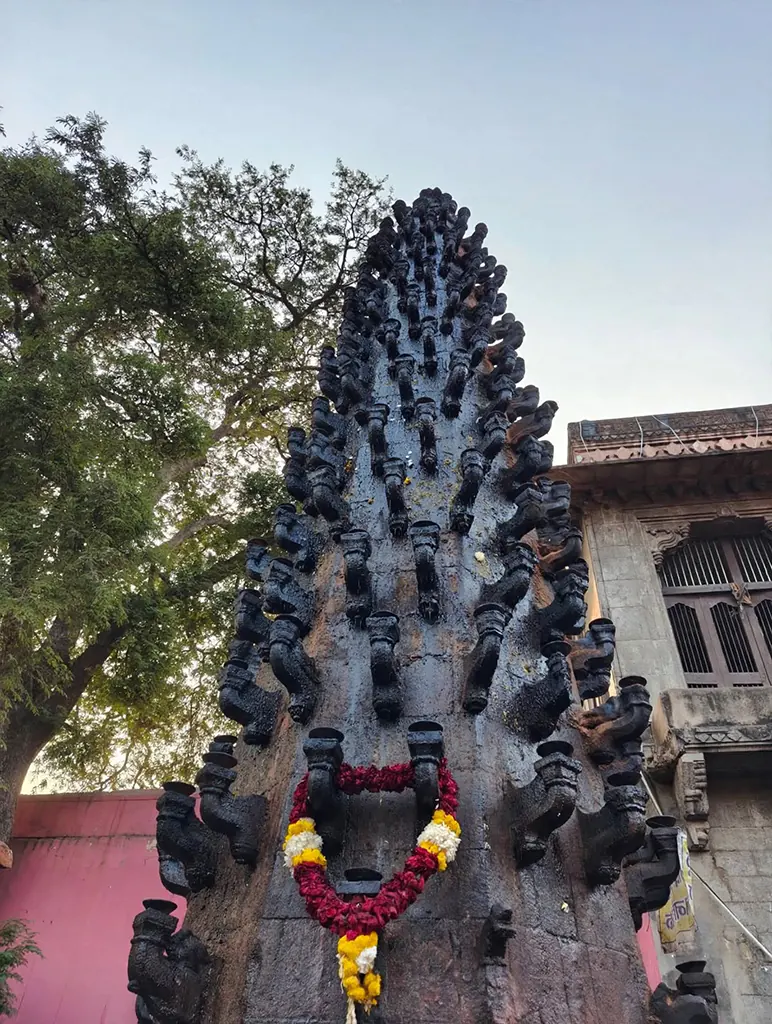
Outside the main hall stands a tall stone Deepastambha (lamp tower) typical of Maratha-influenced temples in central India. During festivals and special evenings, dozens of oil lamps are lit along the brackets of this tower, illuminating the entire courtyard.
Proximity to the Shipra River
The temple sits right beside the Shipra River in the Bhairavgarh area. Steps lead down toward the riverbank, where the calm water provides a peaceful contrast to the bustling temple queue. Many visitors spend a quiet moment near the river after completing their darshan.
Darshan Timings, Aarti Schedule, and Best Time to Visit
Because Ujjain attracts millions of pilgrims throughout the year, knowing when to visit helps you enjoy a smoother darshan.
Daily Darshan and Aarti Windows
- Morning Opening: The temple doors generally open around 5:00 AM to 6:00 AM, followed by the morning Mangala Aarti and abhishekam.
- Daytime Darshan: Continuous darshan runs through the morning and afternoon, with a brief midday ritual break for Bhog Aarti (usually around noon).
- Evening Aarti & Closing: Evening Sandhya Aarti takes place around sunset, and the temple typically remains open until 9:00 PM or 10:00 PM.
Note: Exact aarti timings can change during the holy month of Shravan, eclipses, and major festivals. You can check local updates via the Ujjain District Administration portal before traveling.
Best Months and Days to Visit
- Best Weather (October to March): Winter and post-monsoon months offer pleasant daytime temperatures (15°C to 28°C), making it comfortable to walk around Ujjain’s temple circuit.
- Auspicious Days: Sundays and Ashtami (the eighth lunar day of every fortnight) are considered especially sacred to Kal Bhairav. Expect larger crowds and longer queues on these days.
- Major Festivals: Kal Bhairav Ashtami (usually in November or December) and observances celebrating the significance of Mahashivratri draw massive gatherings, special decorations, and grand night-long aartis.
How to Reach Kal Bhairav Temple Ujjain
Ujjain is well connected by rail and road to major Indian cities, and reaching Bhairavgarh from the center of town is straightforward. You can also explore regional circuit maps on the Madhya Pradesh Tourism official guide.
By Train
Ujjain Junction (UJN) is the nearest major railway station, located about 5 to 6 km from Kal Bhairav Temple. Trains connect Ujjain directly with Indore, Bhopal, Delhi, Mumbai, Ahmedabad, and Varanasi. Outside the station, auto-rickshaws, e-rickshaws, and app-based cabs take around 15 to 20 minutes to reach the temple.
By Air
The nearest airport is Devi Ahilyabai Holkar Airport in Indore (IDR), situated roughly 55 to 60 km away. From Indore airport, you can hire a prepaid taxi or take a bus to Ujjain via the Indore–Ujjain highway, which takes about 1.5 hours depending on traffic.
By Local Transport in Ujjain
If you are already staying near Mahakaleshwar Temple or Ram Ghat, shared auto-rickshaws and private e-rickshaws frequently run toward Bhairavgarh. Many visitors hire an auto-rickshaw for a half-day Ujjain temple tour that covers Kal Bhairav, Mangalnath, Gadkalika, and Harsiddhi Mata together.



Visitor Rules, Dress Code, and Practical Tips
Following local temple customs ensures a respectful and hassle-free visit:
- Dress Code: There is no strict written uniform for general darshan, but modest traditional attire is expected. Men usually wear trousers, kurtas, or dhotis, while women wear sarees, salwar suits, or long skirts. Avoid shorts or sleeveless tops.
- Photography Restrictions: Taking photos or recording videos inside the inner sanctum is prohibited. Keep your phone inside your pocket or bag once you enter the main darshan hall.
- Footwear and Belongings: Remove your shoes at the designated footwear stalls outside the main gate before entering the courtyard.
- Offering Safety: Only purchase offerings from licensed stalls right outside the temple gate. Do not bring unsealed bottles from outside, as temple security may not allow them inside.
- Accessibility for Seniors: The temple sits on relatively flat ground compared to hill shrines, with only a few steps at the entrance. However, narrow queue lanes can become crowded on Sundays, so elderly visitors should visit on weekday mornings between 7:00 AM and 10:00 AM.
Nearby Temples to Visit in Ujjain
Ujjain is compact enough that you can easily combine Kal Bhairav Temple with several other historic shrines on the same day:
- Mahakaleshwar Jyotirlinga Temple (~5.5 km): One of the 12 sacred Jyotirlingas in India and the spiritual heart of Ujjain, famous for its early morning Bhasma Aarti.
- Avanti Maa Gadkalika Temple in Ujjain (~1.5 km): An ancient shrine dedicated to Goddess Kalika, closely associated in local tradition with the classical Sanskrit poet Kalidasa.
- Mangalnath Temple (~3 km): Situated on a scenic bend of the Shipra River, regarded in Hindu astrology as the birthplace of Mars (Mangala).
- Bada Ganesh Ka Mandir in Ujjain (~5.5 km): Located right beside Mahakaleshwar Temple, renowned for its massive artistic idol of Lord Ganesha.
- Ram Ghat (~5.5 km): The oldest bathing ghat on the Shipra River, where pilgrims gather every evening for the river aarti.
If you have an extra day in Madhya Pradesh, many devotees also continue south from Ujjain to visit Omkareshwar Jyotirlinga Temple on the Narmada River to complete the twin-Jyotirlinga circuit of Malwa.
Frequently Asked Questions About Kal Bhairav Temple
Why is liquor offered to Kal Bhairav in Ujjain?
Liquor (madira) is offered as part of an ancient Tantric worship tradition called Panchamakara, where wine symbolizes spiritual surrender and detachment from worldly ego. Today, it remains a customary devotional offering at this specific shrine.
Where does the alcohol go when poured into the idol’s mouth?
When the priest holds a shallow plate of liquor to the stone idol’s mouth, the liquid disappears into the slit without any visible pipe or drainage system underneath. Devotees revere this as a sacred miracle, while visitors respect it as an enduring mystery of the temple.
Is it compulsory to offer alcohol at Kal Bhairav Temple?
No, it is completely optional. Many devotees offer coconuts, marigold flowers, sweets, mustard oil, and sindoor instead, and the priests welcome all respectful offerings.
What are the timings of Kal Bhairav Temple Ujjain?
The temple generally opens around 5:00 AM or 6:00 AM and stays open until 9:00 PM or 10:00 PM, with a short midday break for Bhog Aarti. Timings may shift on major festival days.
How far is Kal Bhairav Temple from Mahakaleshwar Temple?
Kal Bhairav Temple is located approximately 5 to 6 kilometers north of Mahakaleshwar Temple in the Bhairavgarh area, taking about 15 to 20 minutes by auto-rickshaw or taxi.
Can women and children visit Kal Bhairav Temple?
Yes, women, children, and families visit the temple daily in large numbers. The atmosphere is devotional and well-managed by local temple staff and police.
Which day is best to visit Kal Bhairav Temple?
Weekday mornings (Monday to Friday) are best for a peaceful, quick darshan with minimal waiting time. If you want to experience vibrant festival energy, visit on a Sunday or on Kal Bhairav Ashtami.
Conclusion
Kal Bhairav Temple in Ujjain offers a rare glimpse into living Tantric-Shaiva heritage that has endured for centuries on the banks of the Shipra River. Whether you visit to understand the deeper spiritual meaning behind its famous liquor offering, admire its Maratha-era architecture, or fulfill the traditional pilgrimage sequence after praying at Mahakaleshwar, a visit here leaves a lasting impression. Plan an early morning trip, keep your offerings simple and respectful, and take time to enjoy the peaceful riverside atmosphere of historic Bhairavgarh.