Kalluthipara Temple: Lord Krishna Divine Footprint in Stone!
Kalluthipara Temple in Kandanassery, a beautiful town in Thrissur district. Imagine a temple that’s not only a building, but a place that’s steeped in history, tales, and a deep connection of faith. That’s precisely what Kalluthipara Temple is! It’s a place where even a little boy like you can sense the magic and grasp why it’s so significant to so many people.
Contents
- 1 Kalluthipara Temple History: A Peek into the Past
- 2 Legend of the Temple: Lord Krishna’s Footprint!
- 3 Cultural, Spiritual, and Mythological Significance of the Temple
- 4 Festivals and Special Days
- 5 Distinct Architectural Designs and Carvings
- 6 Myths and Beliefs: Stories That Touch Hearts
- 7 Kalluthipara Temple Timings: When to Visit
- 8 Sites to See Around Kalluthipara Temple
- 9 Accommodation Options: Where to Stay
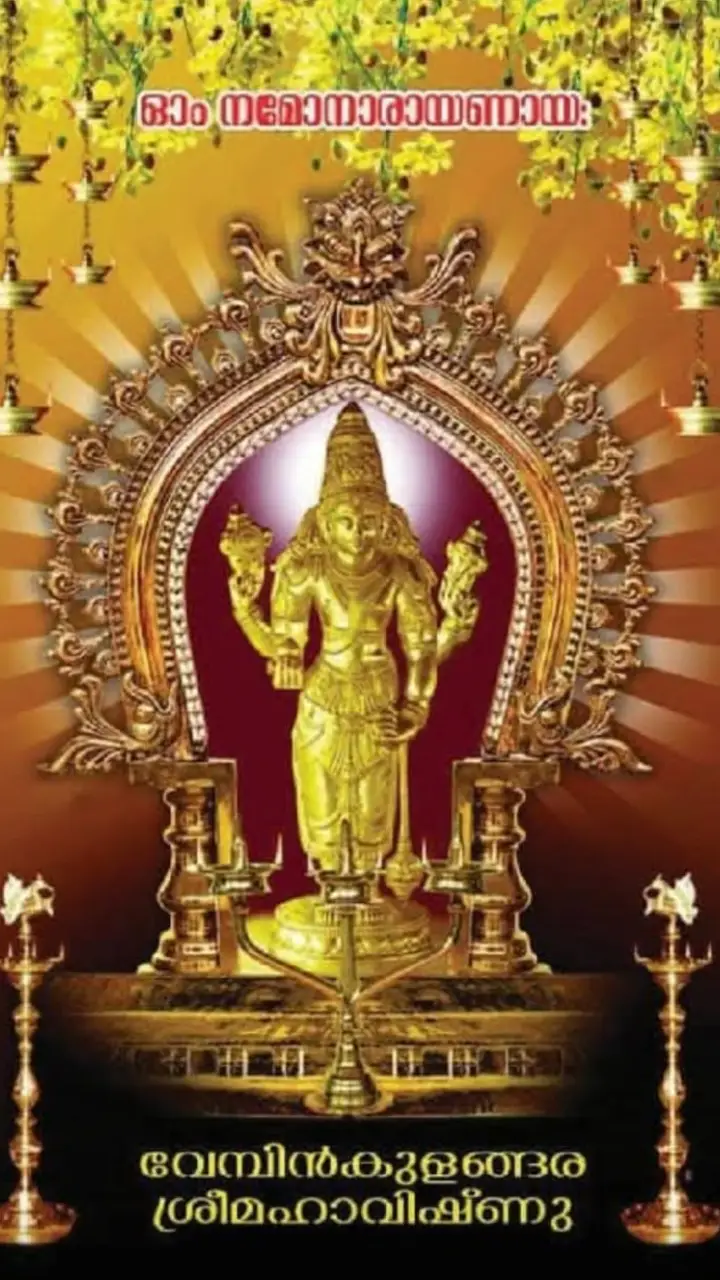
- 9.0.1 Vembinkulangara Sri Mahavishnu Temple
- 9.0.2 Chelamattom Sreekrishna Swami Temple: Powerful Temple for Ancestors
- 9.0.3 Kalluthipara Temple: Lord Krishna Divine Footprint in Stone!
- 9.0.4 Thuravoor Temple of 2 Powerful Deities Narasimha & Sudarsana
- 9.0.5 Nelluvaya Sree Dhanwanthari Temple
- 9.0.6 3000 yr Old Sacred Neerputhoor Shiva Temple Water Encircled
- 10 How to Reach Kalluthipara Temple
Kalluthipara Temple History: A Peek into the Past
All old buildings have a history, and Kalluthipara Temple does too! We don’t have really, really old books that say when this temple was constructed exactly, but we know it’s really old. Picture your great-grandparents, and their great-grandparents – this temple was likely around before them! It’s stood firm for hundreds and hundreds of years, guarding generations of people.
Temples such as Kalluthipara were usually constructed by kings or wise men who wished to build a sanctuary for all people to visit and pray. They felt that in constructing these temples, they were doing not only a home for God, but also a site in which people could be at peace and joyful. So, for centuries now, Kalluthipara Temple has been a source of solace to people, where they visit to offer their prayers and get closer to the almighty. It is a living piece of history, always willing to embrace new visitors.
Read More>> Thuravoor Temple of 2 Powerful Deities Narasimha & Sudarsana
Legend of the Temple: Lord Krishna’s Footprint!
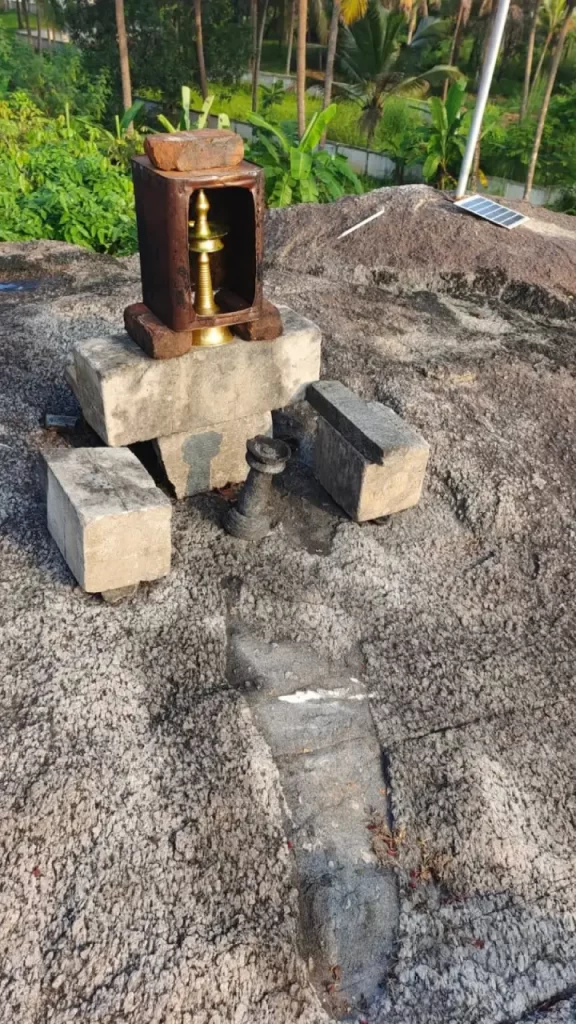
Now, prepare yourself for a really thrilling tale! The most incredible thing about Kalluthipara Temple is a really special faith: there’s a very special belief that Lord Krishna’s very own footprint is engraved on a rock close to the temple! Can you believe it? Lord Krishna, the mischievous and wise god, is thought to have stepped here itself!
The term “Kalluthipara” literally translates to “footprint rock.” The people think that when Lord Krishna came to this site, he stepped on a rock and left his divine imprint. That makes the temple all the more special since it’s a direct link to the Lord himself. If you go there, you’ll get to see this sanctified rock, and you can visualize little Krishna’s mischievous footsteps right there. It is a tale that inspires everyone with awe and reverence, and it’s the reason why so many individuals visit this Kalluthipara Temple.
Although we don’t come across particular verses regarding Kalluthipara Temple in popular Hindu scriptures or Puranas, Hindu mythology has strong belief in divine footprints. For instance, the Srimad Bhagavatam talks about Lord Krishna’s different lilas (divine play) and his appearances at many locations. While not specifically referencing this individual location, the theme of a god leaving their mark is a prevalent one within devotional literature, representing a divine presence. It’s a local myth, handed down through generations, so it’s a highly personalized and endearing tale to the inhabitants of this area.
Cultural, Spiritual, and Mythological Significance of the Temple
Kalluthipara Temple is not merely a temple; it’s a kaleidoscopic center of culture, religiosity, and age-old lore.
Cultural Significance: This temple is a large, opened book of the culture of Kerala. From the dress code that people adopt while they go there, to the music they sing, to the offering they offer, everything here is a representation of the rich culture of the state. It’s a place where families unite, children learn about their traditions, and the community celebrates life. The festivals celebrated here are an explosion of colors, sounds, and happy energy, a display of traditional art forms and rituals.
Spiritual Significance: For numerous people, Kalluthipara Temple is a source that brings them near to God. It’s the place they visit to seek peace, say prayers for their loved ones, and seek blessings. The fact that Lord Krishna’s supposed footprint exists here makes the spiritual link even more potent. Individuals visit here for solace, wisdom, and a sense of community. It is a location where your cares appear to disappear, and a soothing sense of peace washes over you. Many are convinced that coming to this Kalluthipara Temple and praying will bring good luck and grant wishes.
Mythological Significance: The myth of Lord Krishna’s footprint lends the temple a profound mythological significance. It bridges the world of the physical to the spiritual world, reminding us of the characters and tales of our ancient Hindu scriptures. Although the particular mention may be absent in the Puranas, the tale of Lord Krishna’s divine and playful presence is the linchpin of Hindu mythology. This temple makes one feel a physical connection with these favorite stories, and the mythology thus comes alive and feels real.
Festivals and Special Days
Temples are even more vibrant during the festival season, and Kalluthipara Temple is no different! Although certain grand yearly festivals specific to this temple may not be well advertised, as with many Kerala temples, it celebrates major Hindu festivals with considerable fervor.
Vishnu (Krishna) Festivals: As the chief deity is associated with Lord Krishna, Ashtami Rohini (Krishna Janmashtami, birthday of Lord Krishna) would be observed with special worship, decorations, and possibly even cultural events like Krishnattam (a traditional dance-drama representing Krishna’s life).
Other Auspicious Days: Such days as Vishu (Malayalam New Year), Onam (Harvest festival of Kerala), and Thrikarthika (celebration of Goddess Bhagavathi) would have special offerings and more devotees.
Busy Days: As with all busy temples, Thursdays and Sundays tend to be more people-packed since these are typically held as auspicious days for offering prayers. While in the peak festivals, the temple will be packed with worshippers from morning until night. It’s an excellent time to visit if you wish to feel the temple during its most energetic, with the sounds of chants filling the air and the scent of incense.
Read More>> Airavatesvara Temple Darasuram
Distinct Architectural Designs and Carvings
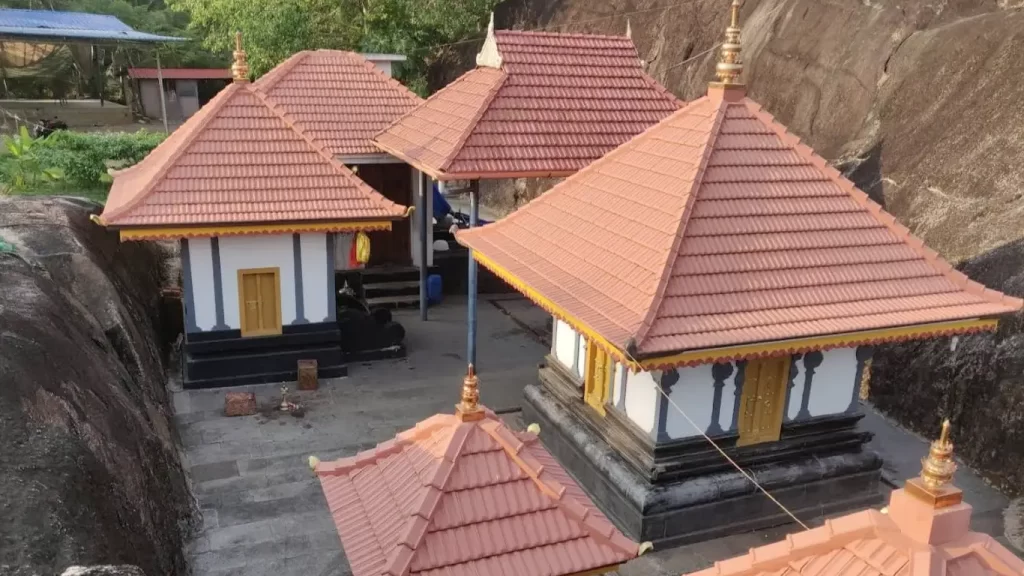
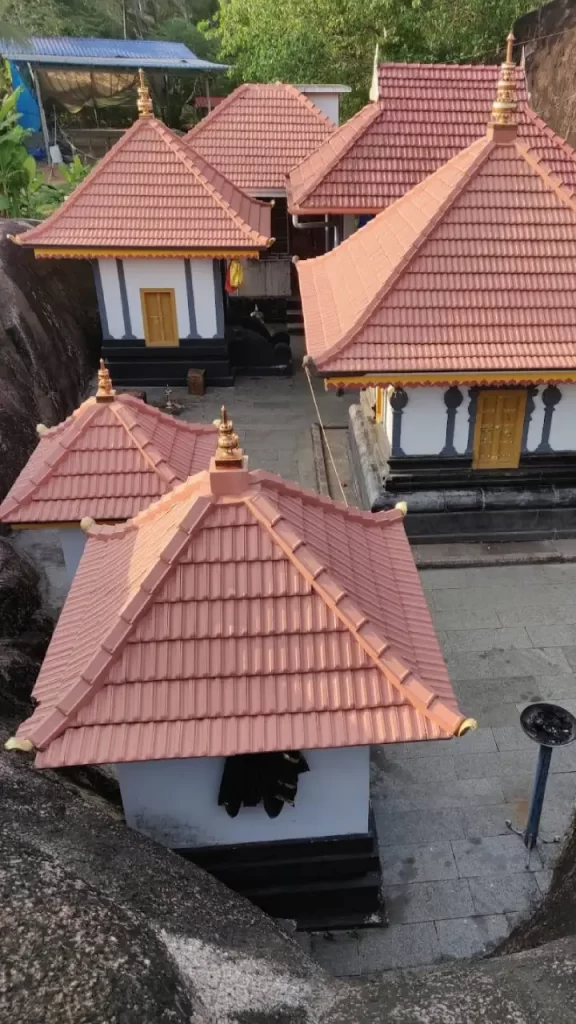
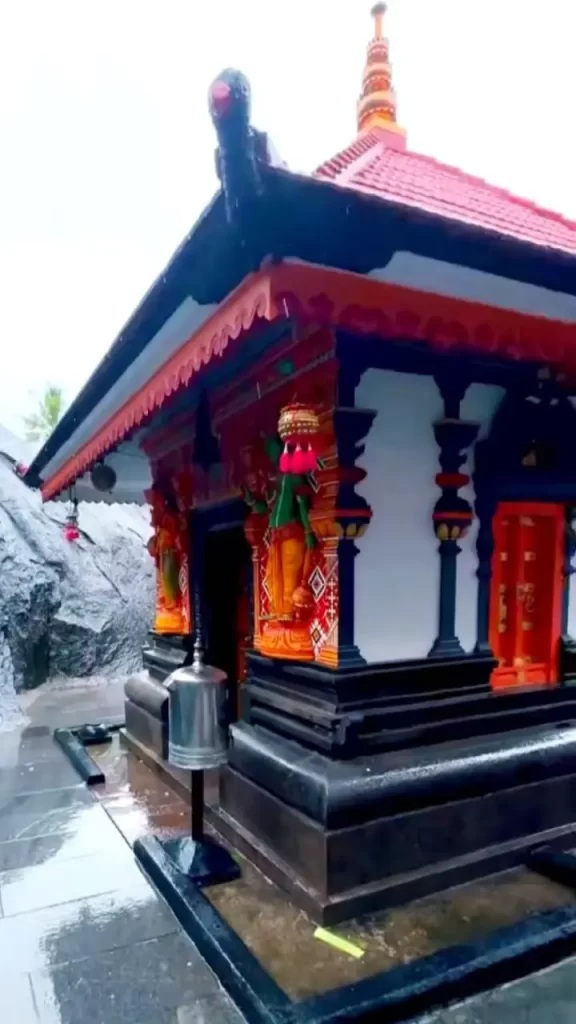
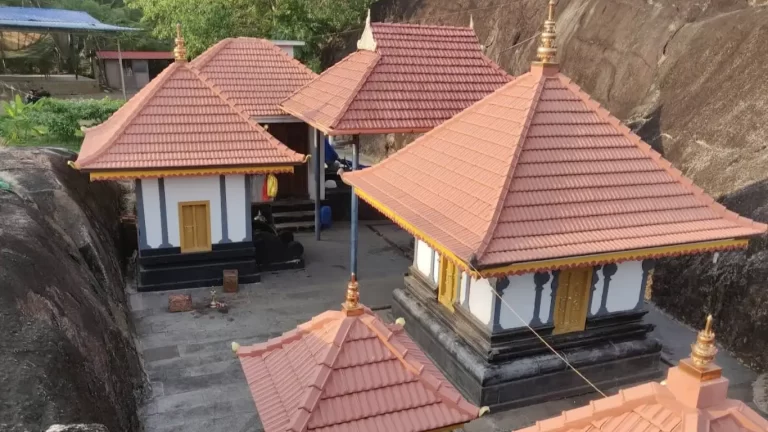
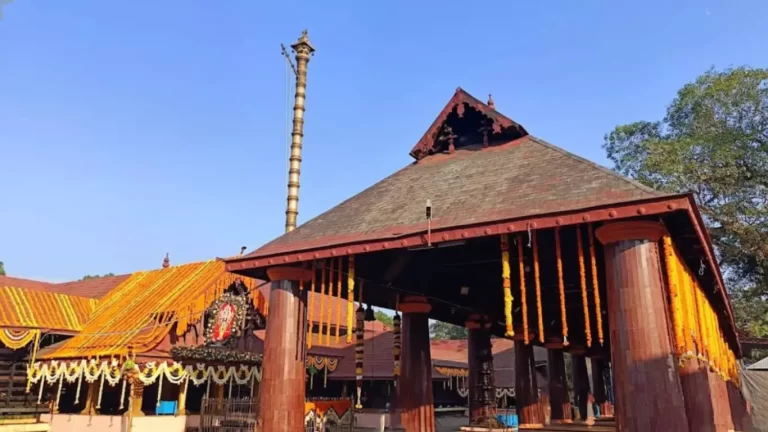
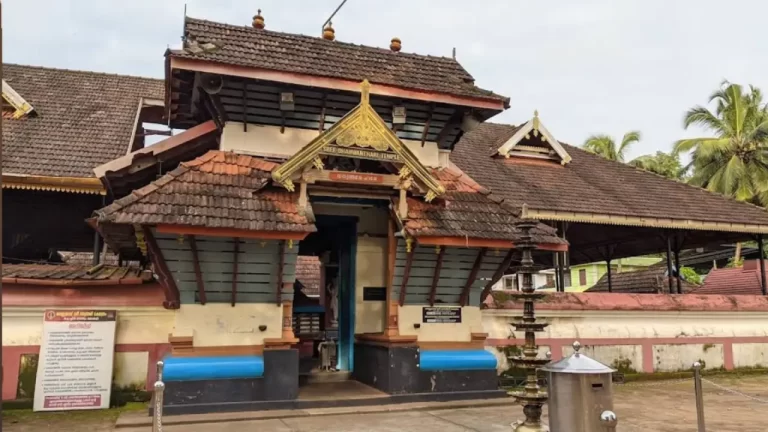
When you’re at Kalluthipara Temple, take a moment to appreciate its architecture. A lot of temples in Kerala have a signature look, and they often have gabled roofs (sloping roofs) and lovely wood carvings. Though it may not be as impressive as some of the huge temples, its simplicity and traditional appearance are very endearing.
You can see that the temple is encompassed by rocks, and it’s constructed at a little lower level, which is very distinctive. Having the holy rock with the footprint itself as a natural “carving” is something that makes this site remarkable. Kerala temples tend to incorporate natural features into their architecture, merging with the environment. You could find carvings of gods, mythical beings, or Hindu myths on the wooden columns or walls, presenting wordless stories of piety and craftsmanship. The stone upon which Lord Krishna’s footprint is said to be indented is the most significant “carving” of all in this Kalluthipara Temple.
Myths and Beliefs: Stories That Touch Hearts
Aside from the main legend of Lord Krishna’s footprint, local communities also have numerous tiny myths and beliefs surrounding the temple. These are typically grandparent-to-grandchild lore, making the temple even more intimate and close to the people.
Granting of Wishes: One general belief of many temples, including Kalluthipara, is that prayers made genuinely here can assist in granting wishes. Individuals visit with different hopes and aspirations ranging from good health to their family to passing exams, anticipating the divine presence to bless them.
Healing Powers: Occasionally, individuals are convinced that a visit to a particular temple can heal a disease or provide comfort from distress. Though not a medical assertion, this is based on the serenity and good energy individuals find in such holy places.
Defending the Land: Some of the myths may speak of the god protecting the surrounding land and its inhabitants from evil, such as floods or diseases. These myths bring out the guardian function that the temple is seen to perform in society.
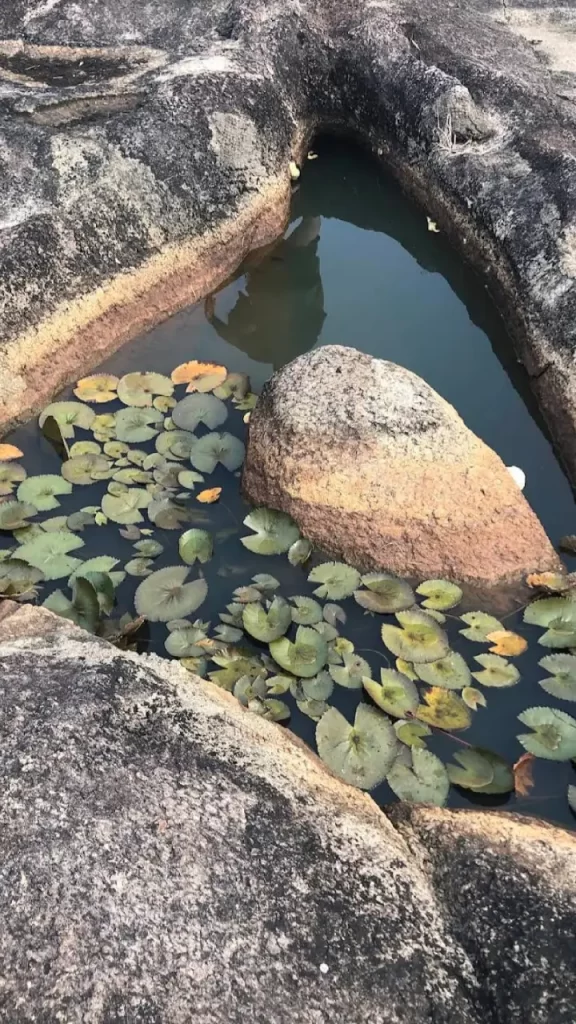
The Sacred Pond: It is stated that there is a tiny pond on a rock over the temple. This introduces another touch of mysticism to the temple, as water bodies surrounding temples are considered sacred and have special powers.
These myths and legends are not mere ancient tales; they form part of the living faith of the people who hold dear to their hearts Kalluthipara Temple.
Read More>> Bhakta Kannappa Temple Srikalahasti
Kalluthipara Temple Timings: When to Visit
All temples in Kerala, including the Kalluthipara Temple, have a fixed routine for poojas (rituals of worship) and darshan (viewing the deity).
Although specific daily hours may differ slightly, generally temples tend to open early morning for the initial prayers, often between 5:00 AM or 5:30 AM. They may close for a few hours during the afternoon and then open again for additional prayers later in the evening before closing for the evening, often between 8:00 PM or 9:00 PM.
It’s always safe to verify the precise timings with the temple management or the local people if you book your visit for a particular ritual. Still, mostly, if you go early morning from 6:00 AM to 10:00 AM, or in the late evening from 5:00 PM to 7:30 PM, you will be able to have a quiet darshan.
Special Poojas Performed
Temples have a number of poojas that can be done by devotees to attain blessings. Although the list provided for Kalluthipara Temple may not be widely documented on the internet, common poojas in honor of Lord Krishna or Bhagavathi (which the idol is also known as “Krishna Bhagavathi”) are:
Archana: This is a simple offering where the priest recites your family name and wishes along with presenting flowers and prayer to the god.
Pushpanjali: Presenting flowers to the deity, usually with certain mantras.
Palpayasam/Nivedyam: Offering rice pudding (or other food items) sweetened with jaggery, which is then distributed as prasadam (blessed food) to the devotees.
Gopuja: Performing prayers to cows within the temple grounds because cows are sacred in Hinduism.
Swayamvara Archana: For a good life partner.
Sahasranama Archana: Reciting the thousand names of the deity.
These poojas are means for devotees to show their devotion and get blessings. Each pooja has some special significance and is done with utmost devotion at Kalluthipara Temple.
Read More>> Nitya Kalyana Perumal Temple: Unlock Your Marriage Destiny!
Sites to See Around Kalluthipara Temple
Thrissur district, where Kalluthipara Temple is situated, is also referred to as the “Cultural Capital of Kerala” and has numerous significant temples. So, while you’re visiting Kalluthipara, you can also visit some other great sites:
Guruvayoor Sree Krishna Temple: One of India’s most renowned Krishna temples and also referred to as the “Dwarka of the South.” You must visit it, and you will witness a great scale of devotion there. It is not very far from Kalluthipara, so it’s a convenient visit.
Vadakkumnathan Temple: In the heart of Thrissur city is this ancient Shiva temple, an epitome of Kerala architecture and a UNESCO World Heritage Site.
Kodungallur Bhagavathy Temple: A highly potent and historic temple for Goddess Bhadrakali.
Thriprayar Sree Rama Temple: This temple dedicated to Lord Rama is famous for its exquisite murals and unusual rituals.
Puzhakkal Kavu Temple: Yet another important Bhagavathi temple in the Thrissur area.
Visiting these temples will help you learn more about Kerala’s rich spiritual heritage and provide you with even more reasons to value your visit to Kalluthipara Temple and the areas surrounding it.
Read More>> Garbarakshambigai Temple: Secret of Fertility & Safe Birth
Accommodation Options: Where to Stay
Because Kalluthipara Temple is close to Guruvayoor, it will be pretty easy to find a place to stay! Guruvayoor provides plenty of accommodation options for different budgets and tastes.
Budget Hotels and Lodges: There are plenty of simple and hygienic lodges and hotels available, ideal for families and pilgrims, which provide basic facilities.
Mid-Range Hotels: There are some decent hotels with nice amenities such as air-conditioned rooms, restaurants, and room service. You can opt for hotels such as Hotel Bhasuri Inn, Hotel Sopanam Heritage, or Sreepathi Indraprastha Hotel in Guruvayoor.
Homestays: For a more intimate feel, you may be able to find homestays around Kandanassery or Guruvayoor, where you will get a taste of local hospitality.
Luxury Options: If you want more comfort, there are some higher-class hotels such as Sterling Guruvayur with a bit more facility.
It’s always best to reserve your lodging in advance, particularly if you’re traveling during peak festival time. To be able to visit Kalluthipara and other attractions is convenient when staying close to Guruvayoor.

How to Reach Kalluthipara Temple
Accessing Kalluthipara Temple is fairly easy, particularly since it’s situated near a major town like Guruvayoor.
By Air: The closest airport is Cochin International Airport (COK), which is around 75-80 kilometers. From the airport, you may take a taxi or bus to Guruvayoor, and then an auto-rickshaw or taxi to the temple.
By Train: The closest major station is Guruvayoor Railway Station, which has excellent connectivity to major Kerala city stations. From Guruvayoor, Kalluthipara Temple is very nearby (a few kilometers), accessible via auto-rickshaw or public bus. Thrissur Railway Station can also be an option, which is a larger junction, but more distant.
By Road: Kalluthipara Temple is easily accessible by road.
From Guruvayoor: It’s very close by by drive or auto-rickshaw.
From Thrissur: You can go by bus to Guruvayoor or Kunnamkulam and alight at Kandanassery, which is from where the temple can easily be accessed.
Self-Drive/Taxi: If you’re traveling from Kerala’s other regions, it’s quite simple to use GPS and reach Kandanassery, Thrissur, and then find the Kalluthipara Temple.
Be sure to dress casually and be respectful of the temple traditions, such as removing your shoes when approaching the temple grounds.
4 Comments