Masroor Rock Cut Temple, Kangra: History, Architecture, Timings & Travel Guide
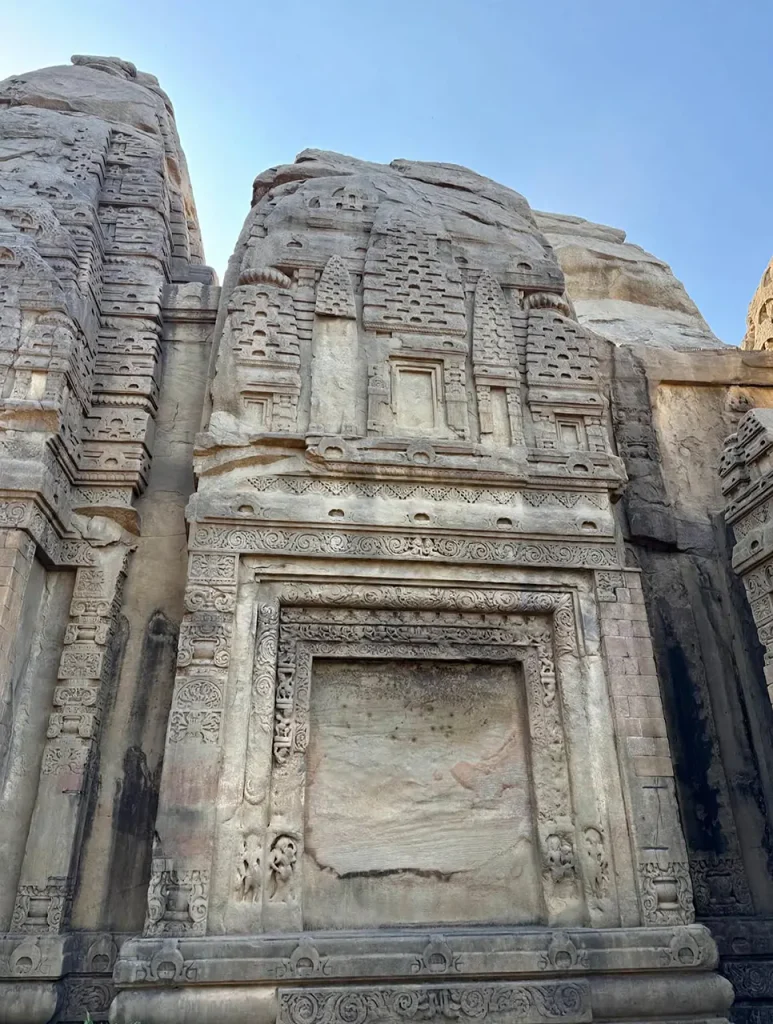
Masroor Rock Cut Temple is an 8th-century monolithic Hindu temple complex in Kangra district, Himachal Pradesh. Carved out of a single sandstone ridge, it is the only known monolithic Nagara-style rock-cut shrine in North India. Locally called Thakurdwara, the complex faces the snow-capped Dhauladhar mountains and blends ancient Shaiva art with later Rama worship.
Quick Information: Masroor Rock Cut Temple
| Feature | Verified Details |
| Temple Name | Masroor Rock Cut Temple (Masrur Temples) |
| Local Name | Thakurdwara |
| Location | Masroor Village, Dehra Gopipur Tehsil, Kangra District, Himachal Pradesh |
| Original Deity | Lord Shiva (confirmed by main sanctum lintel carvings) |
| Current Presiding Deities | Lord Rama, Lakshmana, and Goddess Sita |
| Built Period | 8th Century CE (Early Medieval Period) |
| Architectural Style | Monolithic Rock-Cut North Indian Nagara Style |
| Number of Shrines | 15 shrines carved from a single sandstone hillock |
| Heritage Status | ASI Monument of National Importance; UNESCO World Heritage Tentative List |
| General Visiting Hours | Sunrise to Sunset (typically 6:00 AM to 6:00 PM; confirm locally) |
| Entry Fee | Nominal ASI entry ticket applies (verify current rate on official ASI portal) |
| Best Time to Visit | October to March (clear mountain views and pleasant weather) |
| Nearest Airport | Kangra Airport at Gaggal (approx. 40–45 km away) |
| Nearest Railway Stations | Nagrota Surian / Kangra Mandir (narrow gauge); Pathankot Junction (broad gauge, ~95–105 km) |
Why Masroor Rock Cut Temple Is So Special
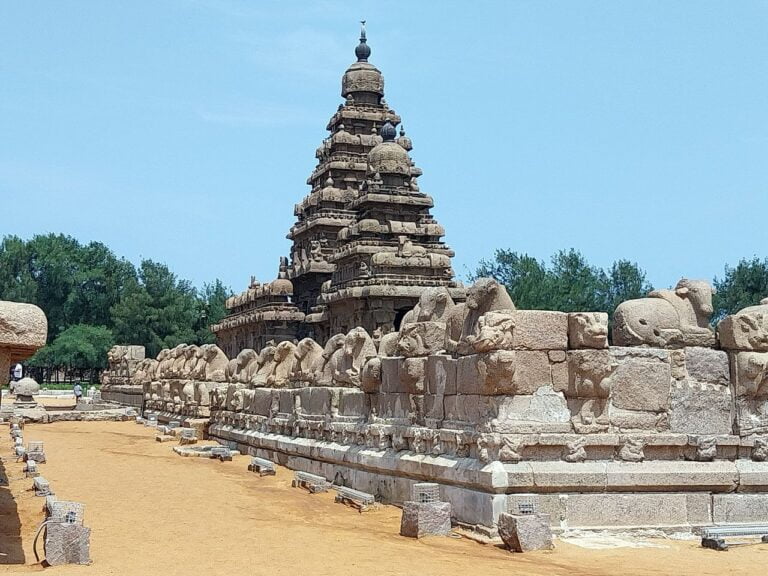
Most famous rock-cut temples in India sit in the western and southern parts of the country. Travelers immediately think of the Kailasa Temple at Ellora Caves in Maharashtra or the 8th-century rock-cut monuments of Mahabalipuram in Tamil Nadu. Very few people realize that the Himalayan foothills of Himachal Pradesh hold an equally remarkable stone marvel.
Masroor Rock Cut Temple stands at an elevation of roughly 2,500 feet above sea level. Instead of stacking cut blocks of stone on top of one another, ancient artisans carved this entire temple complex directly out of one massive, naturally occurring sandstone rock ridge.
What makes Masroor unique among Indian monuments is its architectural school. While Ellora and southern rock-cut temples largely follow Dravidian or Vesara designs, Masroor is the only surviving monolithic Nagara temple complex in North India.
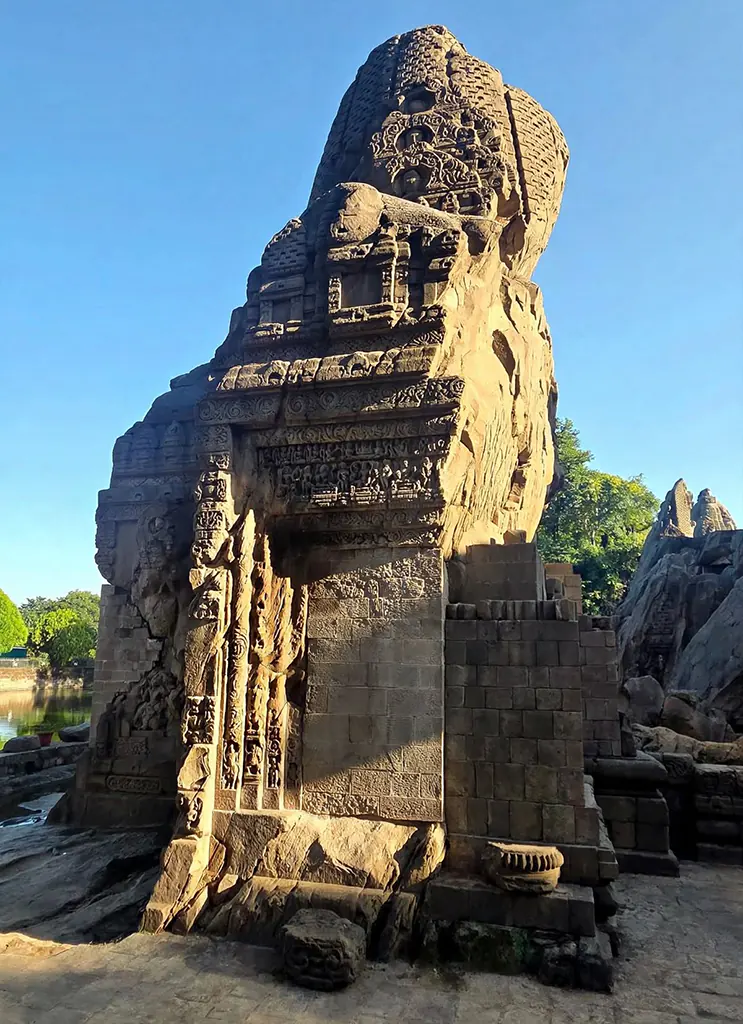
Adding to its quiet beauty is the setting. On clear mornings, the carved sandstone towers stand against the dramatic backdrop of the snow-covered Dhauladhar mountain range. In front of the eastern entrance, a large rectangular water tank cut into the solid rock mirrors the temple spires on calm days.
History and Origins of the Masroor Temples
Archaeologists and art historians date the Masroor Rock Cut Temple to the 8th century CE, during the early medieval period in North India. The temple belongs to the mature phase of the Pratihara-era architectural tradition that flourished across northern and central India.
Who Built Masroor Rock Cut Temple?
No foundation inscription has ever been found at the site. Because of this, historians do not know the exact name of the king or dynasty that commissioned the project. Some scholars suggest it may have been patronized by rulers of the Jalandhara or Trigarta (ancient Kangra) region, or by a powerful local sovereign who wanted a grand monument along the Beas valley.
Why Parts of the Temple Remain Unfinished
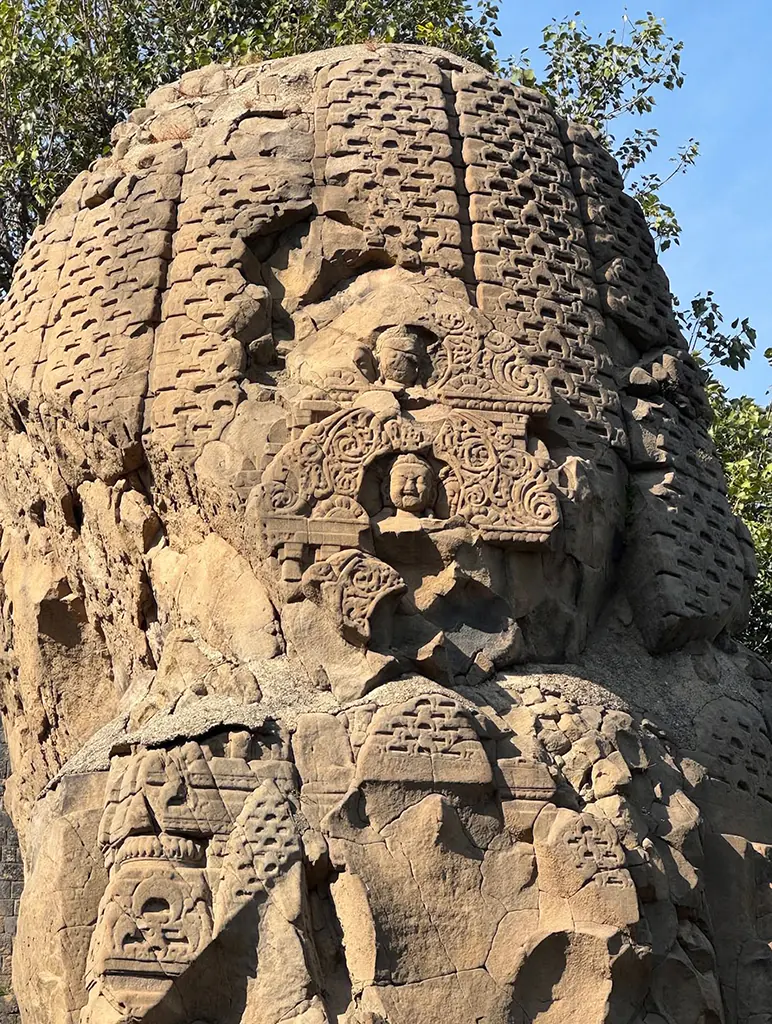
When you walk closely around the sandstone shrines, you can see that several sections were left incomplete. Chisel marks, half-carved walls, and rough rock faces appear next to finely detailed sculptures.
Historians point to two likely reasons for this:
- Natural rock flaws: Sandstone contains hidden cracks and weak veins. As stonecutters carved deeper into the ridge, they hit natural fissures that forced them to stop working on certain portions.
- Loss of royal funding: Carving an entire mountain ridge by hand took decades of skilled labor. A change in ruler, war, or declining funds may have halted the project before every surface was polished.
Damage in the 1905 Kangra Earthquake
For more than a thousand years, the monolithic shrines withstood Himalayan weather. However, on April 4, 1905, a devastating earthquake struck the Kangra Valley.
The tremor severely shook the sandstone ridge. Several upper spires (shikharas) cracked, tilted, or collapsed into the courtyard below. Some of the fallen stone fragments were later studied and preserved by the Archaeological Survey of India (ASI). Today, the ASI Shimla Circle maintains and protects the monument, and the site is included on the UNESCO World Heritage Tentative List.
The Pandava Legend Behind Masroor
Alongside documented history, local villagers share a beloved traditional account connected to the Mahabharata.
According to regional folklore, the five Pandava brothers stayed in the Kangra hills during their period of exile (Agyatavasa). Local tradition says they began carving this entire temple complex out of the rocky hill in a single night. Before they could finish the final details, morning broke and a rooster crowed, forcing them to leave the work incomplete and move on.
While archaeologists treat the 8th-century sandstone carvings as historical evidence, the Pandava story remains an important part of local cultural memory and devotional pride.
Presiding Deity: From Lord Shiva to Thakurdwara
One of the most fascinating puzzles at Masroor is understanding which deity the temple belongs to. If you ask local residents for directions, they will almost always point you toward Thakurdwara, a Hindi term commonly used for a temple dedicated to Lord Vishnu or Lord Rama.
The Original Shaiva Design
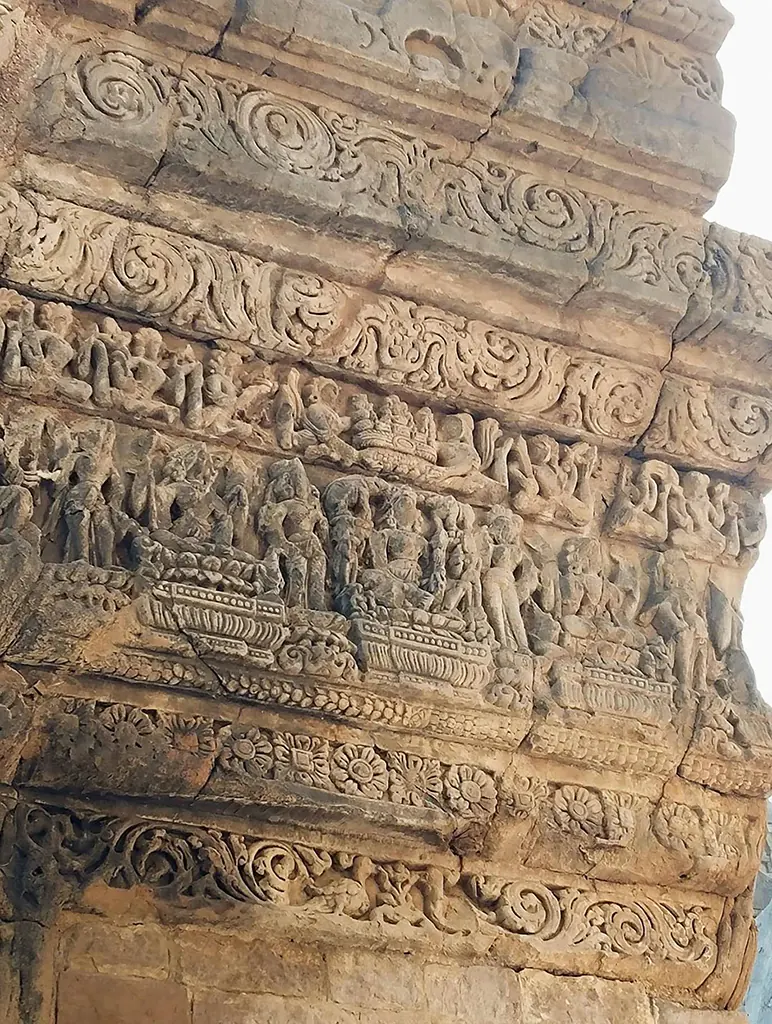
Archaeological evidence inside the carvings tells a clear story. Look closely at the carved stone lintel directly above the doorway of the main sanctum (garbhagriha). Right in the center of the lintel sits Lord Shiva, accompanied by other major Hindu deities including Vishnu, Brahma, Indra, and Kartikeya.
In traditional Indian temple architecture, the deity placed at the center of the sanctum lintel identifies the primary god to whom the temple was originally dedicated. Additional carvings of Shiva in various forms and river goddesses Ganga and Yamuna on the doorframe confirm that Masroor was conceived as a Shaiva temple in the 8th century.
Later Worship of Lord Rama
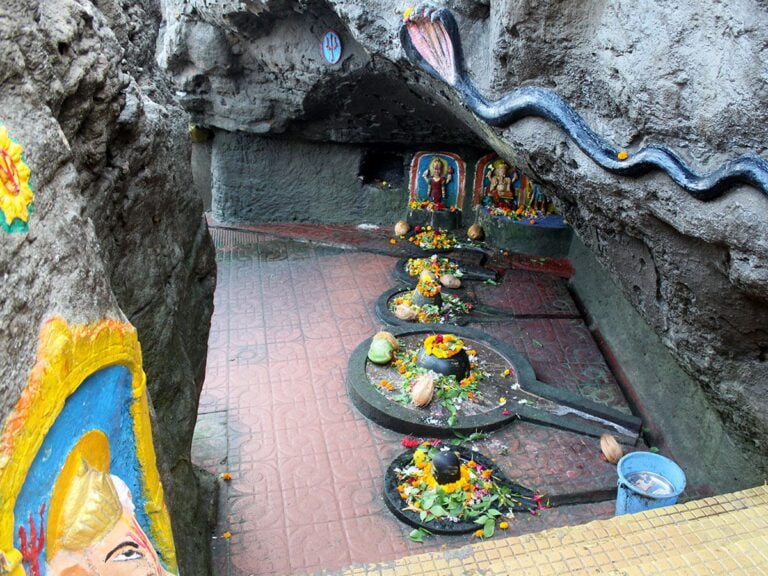
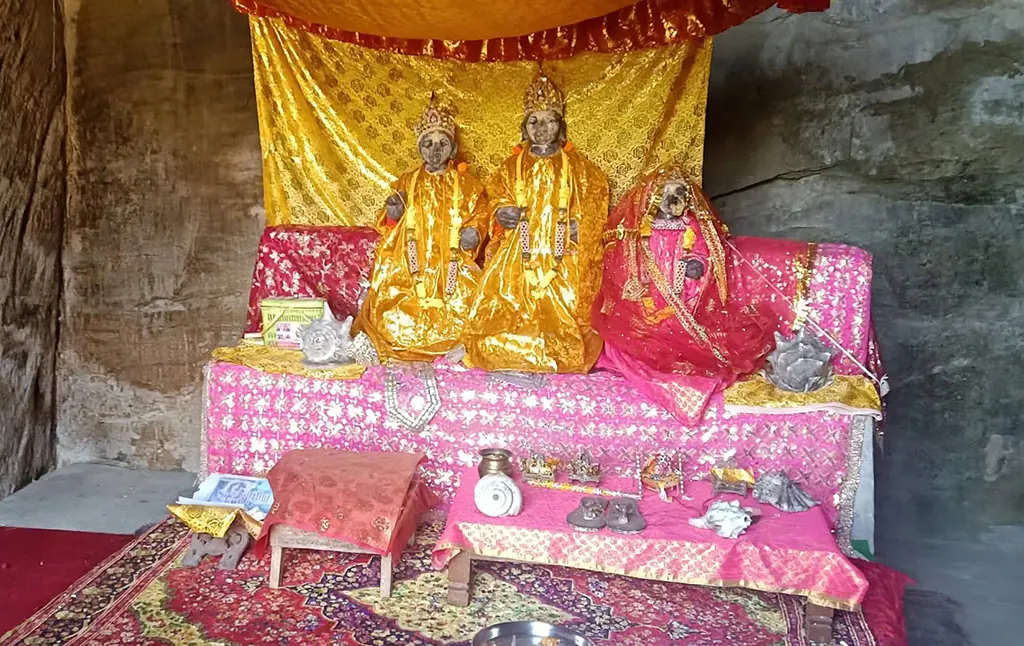
Centuries later, after parts of the complex suffered damage or fell out of regular Shaiva worship, black stone idols of Lord Rama, Lakshmana, and Goddess Sita were installed inside the main sanctum.
Because of these consecrated idols, the site became active again as a Vaishnava shrine known as Thakurdwara. Today, just as pilgrims visit major sacred temples dedicated to Lord Rama across India, devotees at Masroor respect both layers of its spiritual heritage—admiring its ancient Shaiva stonework while offering prayers to Lord Rama inside the main shrine.
Monolithic Nagara Architecture and Key Features
Understanding how Masroor was built makes walking through the courtyard far more rewarding. Rather than assembling stones from a quarry or hollowing out a cliffside like the Badami Cave Temples in Karnataka, sculptors here started at the top of a natural sandstone outcrop and carved downward and inward.
This top-down technique is known as monolithic rock-cut architecture. Every wall, doorway, pillar, and tower was freed from the living rock in place. Once a chisel removed a piece of sandstone, it could never be glued back—requiring extraordinary planning from the master architects.
Key Architectural Parts of the Complex
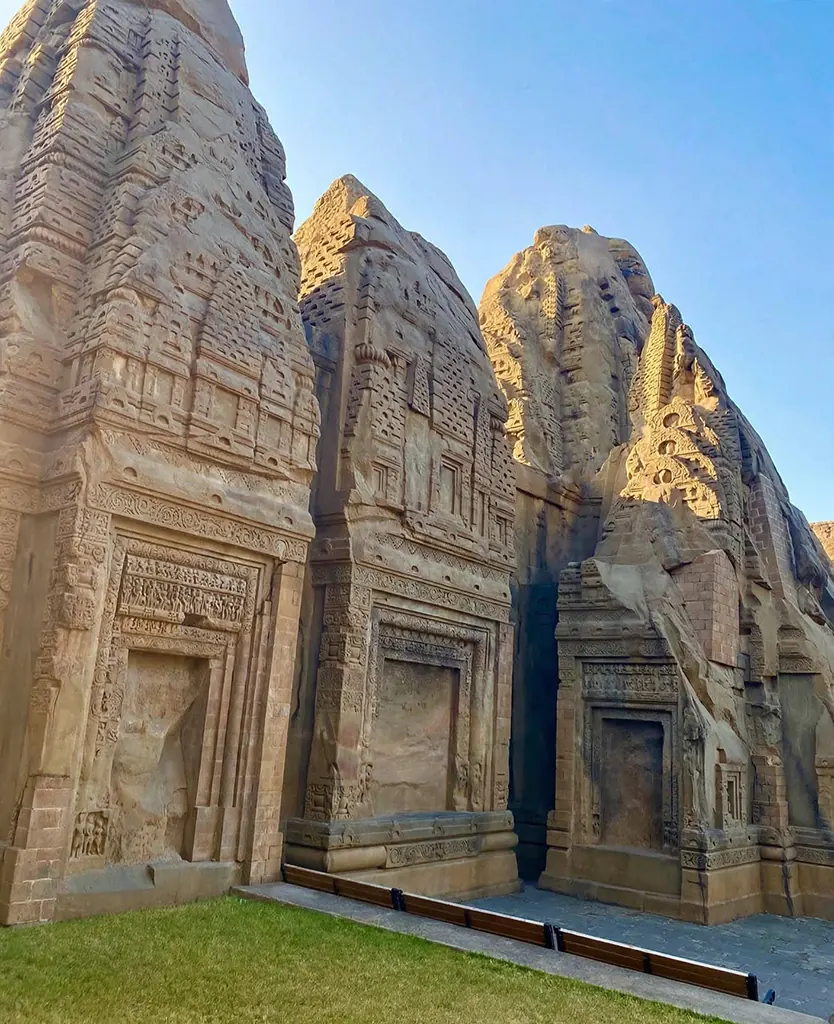
- The 15-Shrine Layout: The complex originally consisted of 15 shrines arranged symmetrically around a large central temple. Flanking shrines stand on either side of the main sanctum, creating a balanced cluster of towers rising from the rock platform.
- The Main Sanctum (Garbhagriha): At the heart of the complex lies the primary shrine, entered through a richly sculpted doorway. Inside rest the stone images of Rama, Lakshmana, and Sita.
- The Pillared Hall (Mandapa): In front of the sanctum stood a covered pillared assembly hall (mandapa), much of which was damaged in the 1905 earthquake. You can still see the massive stone pillars and carved ceiling remains.
- Nagara Shikharas: The towers above the shrines follow the classic North Indian Nagara style of temple architecture. They feature curving vertical spires decorated with intricate horseshoe-arch motifs (gavaksas) and crowned with ribbed stone disks (amalakas).
- Staircases to the Roof: Two flanking rock-cut staircases lead visitors up to the upper terrace level of the monument. From the upper level, you can inspect the carved spires up close and take in panoramic views of the Kangra Valley.
- The Sacred Rock-Cut Tank (Kund): Directly east of the main entrance lies a rectangular water tank measuring roughly 150 feet by 80 feet, carved straight into the solid stone floor. Even during dry months, it usually holds water and creates a mirror reflection of the temple towers.
Darshan Timings, Entry Fee, and Visitor Rules
Because Masroor Rock Cut Temple is an active place of worship located inside a centrally protected archaeological monument, it follows Archaeological Survey of India visiting guidelines.
Daily Opening Hours
- General Timings: Sunrise to Sunset (generally 6:00 AM to 6:00 PM daily).
- Morning Light: Arriving between 7:00 AM and 9:30 AM gives you soft sunlight on the east-facing carvings, peaceful surroundings, and crisp views of the Dhauladhar peaks before afternoon haze builds up.
Entry Tickets
- The ASI charges a nominal entry fee at the gate for maintaining the monument grounds.
- Rates differ for Indian citizens (including SAARC and BIMSTEC visitors) and foreign tourists. Children below 15 years generally enter free at ASI monuments.
- Because ASI periodically updates ticket prices and digital payment rules, check the official ASI e-ticketing portal or confirm at the ticket counter on arrival.
Visitor Rules and Etiquette
- Footwear: Remove your shoes at the designated area before stepping onto the main temple platform or entering the sanctum (garbhagriha).
- Dress Code: There is no strict written uniform, but modest clothing covering shoulders and knees is respectful inside an active Hindu shrine.
- Monument Protection: Do not climb onto fragile carved ledges, touch delicate sandstone reliefs, or carve markings onto the rock walls.
- Photography: Handheld still photography of the exterior architecture is generally allowed for personal use. Tripods, drones, and commercial filming require prior written permission from the ASI. Avoid flash photography inside the inner sanctum.
Best Time to Visit Masroor Rock Cut Temple
Kangra Valley experiences distinct seasons, and choosing the right month shapes your experience at Masroor.
October to March (Best Overall Season)
- Weather: Cool, crisp mornings and pleasant daytime temperatures between 12°C and 24°C.
- Views: Post-monsoon and winter skies offer the clearest views of the snow-clad Dhauladhar range behind the temple spires.
- Festivals: Navratri (October/November and March/April) and Ram Navami bring extra devotional energy across Kangra Valley temples.
April to June (Warm Days, Clear Mornings)
- Weather: Daytime temperatures in lower Kangra can climb to 30°C–35°C, making midday walks across exposed sandstone warm.
- Tip: Visit early in the morning or after 4:00 PM when the stone cools down.
July to September (Monsoon Season)
- Weather: Kangra receives heavy monsoon rainfall. While the surrounding hills turn lush green and the rock-cut tank fills completely, heavy rain can make stone steps slippery and cause occasional landslides on mountain approach roads.
How to Reach Masroor Rock Cut Temple
Masroor sits in a quiet rural pocket of Kangra district, slightly off the main highway. Having your own car or hiring a local taxi from Kangra or Dharamshala is the easiest way to reach the gate.
By Air
- Nearest Airport: Kangra Airport (Gaggal Airport) is approximately 40 to 45 km away (around 1.5 hours by road depending on the route).
- From Gaggal, prepaid and local taxis are readily available for a half-day or full-day round trip to Masroor.
By Train
- Broad Gauge: Pathankot Junction (in Punjab) is the nearest major broad-gauge railway hub, located about 95 to 105 km away (roughly 3 hours by road).
- Narrow Gauge (Kangra Valley Railway): Small stations such as Nagrota Surian and Kangra Mandir lie closer to the temple on the scenic narrow-gauge line, though train frequency is limited. Always verify schedules before relying on narrow-gauge connections.
By Road
- From Kangra Town: Approximately 32 to 40 km (about 1 to 1.5 hours). You can drive via the Lunj road or via Ranital and Haripur. The roads are paved two-lane hill roads that wind through villages and pine forests.
- From Dharamshala / McLeod Ganj: Approximately 45 to 55 km (around 1.5 to 2 hours via Gaggal and Kangra).
- Public Buses: Limited Himachal Road Transport Corporation (HRTC) local buses connect Kangra and Nagrota Surian toward Masroor, though timings are infrequent. If traveling by bus, confirm the return bus schedule with the conductor before getting off.
Nearby Temples and Attractions in Kangra Valley
Because a visit to Masroor takes about 1 to 2 hours, most travelers combine it with nearby Shakti Peethas and heritage landmarks across Kangra district:
- Bajreshwari Devi Temple in Kangra: Located about 35 km away in Kangra town, this revered Shakti Peetha is one of the most important Devi shrines in North India.
- Bathu Ki Ladi Temple in Kangra: Located in the Pong Dam wetland area near Jawali, this historic cluster of submerged temples becomes accessible when reservoir water levels drop in summer.
- Jwala Ji Temple at Jawalamukhi: Situated roughly 45 to 55 km southeast of Masroor, this famous Shakti Peetha is known for its eternal natural flames emerging from rock fissures without fuel.
- Mata Baglamukhi Temple at Bankhandi: Located along the Kangra–Hoshiarpur route near Bankhandi, this prominent Siddha Peetha attracts devotees from across North India.
- Chintpurni Shakti Peeth in Himachal Pradesh: Located around 65 to 75 km away near the Una-Kangra border, it is another major pilgrimage stop on the Himachal Devi circuit.
- Kangra Fort & Pong Dam Lake: Perched near Kangra town, Kangra Fort offers deep royal history, while Maharana Pratap Sagar (Pong Dam) near Nagrota Surian attracts thousands of migratory birds between November and March.
Practical Tips and Facilities for Visitors
Masroor remains peaceful largely because it has not been surrounded by heavy commercial markets. Keep these practical points in mind before you drive out:
- Carry Drinking Water and Light Snacks: Small tea stalls or basic shops may operate near the village road, but dining options right outside the ASI gate are limited. Eat a proper meal in Kangra, Nagrota Surian, or Dharamshala.
- Wear Easy-to-Remove Footwear: Since you must remove shoes near the shrine and walk across stone courtyards, slip-on sandals or comfortable walking shoes work best. Carry socks if visiting during hot summer afternoons or chilly winter mornings, as bare sandstone gets very hot or icy cold.
- Accessibility Note: The approach path from the parking area to the main courtyard involves paved walkways and several stone steps. Visitors with knee pain or limited mobility can view the main complex and reflection tank from the lower courtyard, while the upper terrace requires climbing narrow rock-cut stairs.
- Restrooms and Parking: Basic ASI visitor facilities and roadside parking space are available near the monument entrance.
- Allow Enough Time: Plan to spend 60 to 90 minutes exploring the main sanctum, walking around all 15 shrine towers, climbing to the upper terrace, and photographing the reflection tank.
Frequently Asked Questions About Masroor Rock Cut Temple
1. Why is Masroor Rock Cut Temple called the Ellora of Himachal Pradesh?
Like the famous Kailasa Temple at Ellora Caves in Maharashtra, Masroor was carved downward out of a single massive rock formation rather than built with separate stone blocks. Because it is the only monolithic rock-cut temple complex in North India, travelers and historians often call it the “Ellora of Himachal Pradesh.”
2. Which god is worshipped inside Masroor Rock Cut Temple?
Today, black stone idols of Lord Rama, Lakshmana, and Goddess Sita are worshipped inside the main sanctum, which is why locals call the temple Thakurdwara. However, the 8th-century stone lintel above the doorway features Lord Shiva in the center, showing that it was originally built as a Shiva temple.
3. Who built the Masroor Rock Cut Temple and when?
Art historians date the complex to the 8th century CE based on its Nagara architectural style and sculpture patterns. Because no foundation inscription survives, the exact ruler who commissioned it is unknown. Local tradition credits the Pandava brothers with carving it during their exile.
4. Why are some towers of Masroor Temple broken or incomplete?
Two things shaped the monument’s current appearance. First, ancient stonecutters left parts unfinished after hitting natural cracks in the sandstone ridge. Second, the massive Kangra earthquake of April 4, 1905 damaged and collapsed several upper temple spires.
5. How much time is needed to visit Masroor Rock Cut Temple?
Most visitors spend 1 to 1.5 hours at the temple. This gives you plenty of time to offer prayers in the main sanctum, study the detailed wall carvings, climb the stone stairs to the upper terrace, and walk around the sacred water tank.
6. Can I visit Masroor Temple and Kangra temples in one day?
Yes. Starting early from Dharamshala or Kangra town, you can comfortably visit Masroor Rock Cut Temple in the morning, explore Kangra Fort and Bajreshwari Mata Temple around midday, and continue to Jawalamukhi Temple by late afternoon.
Conclusion
Masroor Rock Cut Temple offers a rare window into India’s ancient stone-carving mastery set against the quiet beauty of the Kangra hills. Whether you come as a pilgrim offering prayers at Thakurdwara or a heritage traveler admiring 8th-century monolithic Nagara architecture, arriving early in the morning rewards you with peaceful surroundings, clear mountain views, and timeless craftsmanship carved straight from living rock.