
Venugopala Swamy Temple Kannambadi: Lost for Decades Under Water
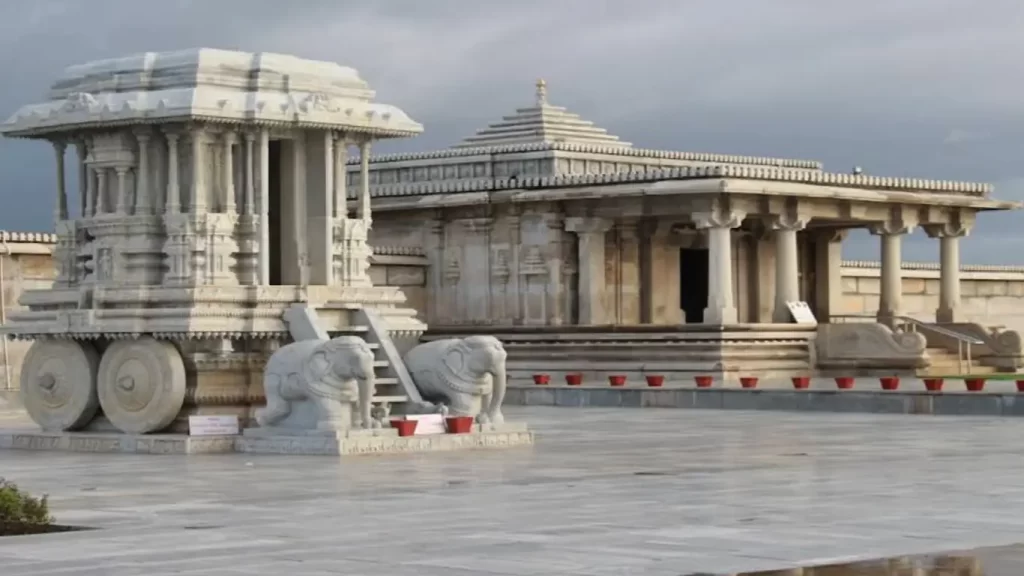
Venugopala Swamy Temple Kannambadi, which lies close to the picturesque Krishna Raja Sagara (KRS) Dam in the Mandya district of Karnataka, India. Imagine a temple submerged in water, like a hidden treasure, and then resurrected, stone by stone! Isn’t that just amazing? Let’s plunge into its marvelous tale.
Contents
- 1 A Little Glimpse into the Past: History of Venugopala Swamy Temple Kannambadi
- 2 The Amazing Story: Legend of the Temple
- 3 More Than Just Bricks and Stones: Cultural, Spiritual, and Mythological Importance
- 4 Festivals and Special Days: Rituals and Festivals
- 5 A Glimpse into the Art: Special Architectural Designs and Sculptures
- 6 Whispers of the Past: Myths and Beliefs
- 7 When to Go: Venugopala swamy temple timings mysore
- 7.0.1 Mahaganapathi Temple Malleswaram
- 7.0.2 Gangapur Dattatreya Temple
- 7.0.3 Sri Kshetra Dharmasthala Temple: Miracles of Lord Manjunatha
- 7.0.4 Shri Bettada Byraveshwara Temple
- 7.0.5 Vidyashankara Temple Sringeri 12 Pillars Reveal Your Destiny
- 7.0.6 Venugopala Swamy Temple Kannambadi: Lost for Decades Under Water
- 8 More Adventures Nearby: Places to Visit Near the Temple
- 9 Sweet Dreams and Good Food: Staying Options
- 10 Your Way to the Temple: How to Reach
A Little Glimpse into the Past: History of Venugopala Swamy Temple Kannambadi
We are starting from ancient times, ages and ages ago, in the 12th century. That was an extremely, extremely long time ago, even before your grandparents’ grandparents were born! The Venugopala Swamy Temple Kannambadi was constructed by clever and artistically talented folks named the Hoysalas. They were the kings and queens who enjoyed constructing gorgeous temples, and this one was a masterpiece just like some other very well-known temples such as the Chennakesava Temple of Somanathapura.
Now, picture a quiet village named Kannambadi. Our temple was there, large and magnificent, as cheerful villagers visited each day to pray. But then, something wonderful happened! In the beginning of the 1900s, clever minds thought about creating a large dam, the Krishna Raja Sagara Dam, to irrigate many fields and houses. It was an excellent plan, but it would mean that the village of Kannambadi, our beautiful temple included, would be submerged by water.
So, what happened? The clever people moved the villagers to a new place, which they called Hosa Kannambadi, meaning “New Kannambadi.” And guess what? For many, many years, the Venugopala Swamy Temple Kannambadi was hidden under the water! It was like a sleeping giant, waiting to be woken up. Sometimes, when it didn’t rain much and the level of water in the dam decreased, you could actually catch glimpses of the temple peeking through. Everybody would exclaim, “See, the temple is revealing itself!” But it also meant that the farms had less water, and everybody felt a little sad.
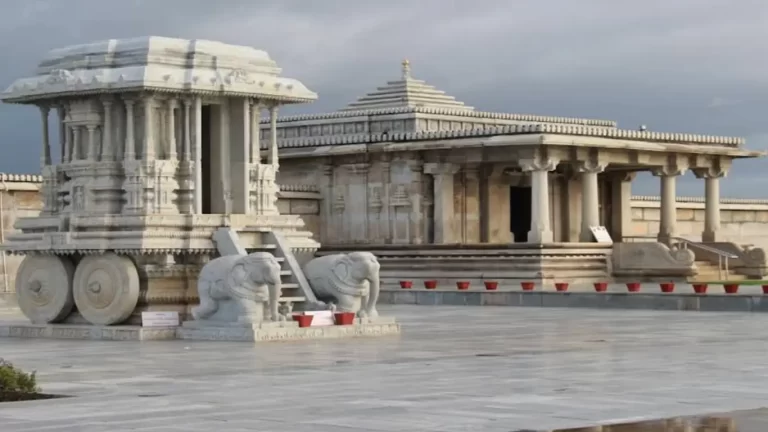
Then, something beautiful occurred around 2004! A very generous man and his organization, the Khoday Foundation, chose to restore the temple! They didn’t simply pull it from the water. No way, that would be too much work! They disassembled each and every one of the venugopala swamy temple stones, labeled them, photographed them thousands of times, and then, piece by piece, relocated them to a new, secure location, just near the KRS Dam backwaters.
It was a long process that required many years and a lot of effort from special builders and artisans from distant lands such as Tamil Nadu. And thus, the Venugopala Swamy Temple Kannambadi you know now was formed, just as lovely as it appeared 800 years ago! Isn’t that like a fairy tale come true?
Read More>> Kalluthipara Temple: Lord Krishna Divine Footprint in Stone!
The Amazing Story: Legend of the Temple
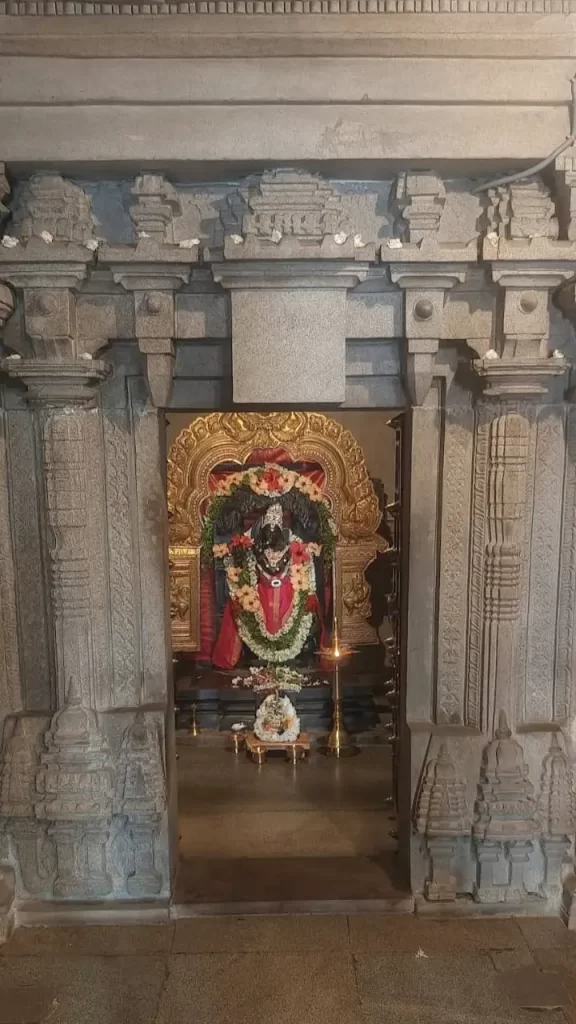
The history of the Venugopala Swamy Temple Kannambadi is strongly related to its submersion and revival. Picture this: the ancient temple was a lively hub of devotion in the old village of Kannambadi. When the dam was constructed and the villagers were relocated, they were much saddened by the prospect of abandoning their dear temple.”. While the principal idol of Lord Venugopala Swamy was transferred with utmost care to a new, smaller temple in Hosa Kannambadi, the great old edifice was left to be inundated.
Silent for decades, the temple remained submerged in the waters of the Krishna Raja Sagara. It was believed that when the water receded and exposed the temple, it was a sign, not necessarily bad luck as some of the locals thought because of the drought, but possibly an indication of its strength and the continuing power of religion.
It was almost as if the Venugopala swamy temple itself was waiting for the day when it would be seen once more. The tale of its re-apparition, stone by stone, is a legend of the times, demonstrating how human beings can come together to conserve something valuable from the past. It’s an account of tenacity and passion for heritage, and it demonstrates that even what has been lost can be rediscovered and re-commemorated once again.
Read More>> Airavatesvara Temple Darasuram
More Than Just Bricks and Stones: Cultural, Spiritual, and Mythological Importance
The Venugopala Swamy Temple Kannambadi isn’t a set of mere ancient stones; it’s a living, breathing component of our faith and our way of life.
Cultural Significance: This temple is a great reflection of Hoysala art and architecture, which we will learn more about later. It teaches us how skilled the people of Karnataka were ages ago. It’s a site where we can learn about our history, our art, and the life and worship of people centuries ago. The fact that it was moved and rebuilt is a cultural achievement, reflecting how much we care about our past.
Spiritual Significance: The Venugopala Swamy Temple Kannambadi centers around Lord Venugopala Swamy. Who, you wonder? He is a very special incarnation of Lord Krishna, our sweetheart cowherd boy who plays the most magical flute! “Venu” is flute and “Gopala” means cow protector. So, Venugopala Swamy is Lord Krishna playing his flute and entrancing everyone with his music. As soon as you enter, you experience a sense of calm and peace.
It’s a destination where you can sense being near God, where you can pray to Him and be content. Individuals visit here in order to seek blessings, happiness, and just connect with the divine. The whispering of the wind, the gentle lapping of the backwaters, and the calm surrounding make it a spiritual haven. You will not see many salesmen or obtrusive individuals here; it is a temple where faith really comes first.
Mythological Significance: Although there is no widespread documentation about the mention of this particular Venugopala Swamy Temple Kannambadi in ancient Hindu texts or Puranas, the god Lord Venugopala Swamy, who is Lord Krishna, is a significant character in Hindu mythology. Lord Krishna’s tales are plentiful in books such as the Bhagavata Purana and the Mahabharata.
The Bhagavata Purana, for example, is replete with stories of Krishna’s youth as a mischievous yet divine cowherd boy in Vrindavan, captivating all with his flute. That Lord Venugopala is here links the temple unambiguously to these ancient stories of worship, love, and playfulness of the divine. The temple’s very nature commemorates Krishna’s function as the divine musician and protector, a theme at the core of Hindu mythological tradition.
Read More>> Talakaveri Temple: Divine Origin of the Sacred Kaveri River
Festivals and Special Days: Rituals and Festivals
Temple life is always lively during festivals, and the Venugopala Swamy Temple Kannambadi is no exception!
Festivals: The biggest festivals here are ones celebrated for Lord Krishna. Krishna Janmashtami, which marks the birth of Lord Krishna, is a huge celebration. Picture special decorations, pretty songs, and everyone rejoicing with gladness! Another significant festival described is Pavithrotsavalu. This is a cleansing festival, with rituals being carried out to maintain the sanctity and purity of the temple and gods. Holi, the festival of colors, is also observed here, infusing vitality and joy.
Special Days and Rituals: Venugopala swamy temple priests conduct Maha Pooja (a grand prayer) twice daily in each day, typically at 11 AM and 6 PM. These are great times to go if you would like to see the religious rituals and sense the piety in the atmosphere. It is generally a serene spot, but look for a slightly more populous crowd at these Pooja periods and, naturally, during popular events like Krishna Janmashtami.
Weekends are also more crowded than weekdays. The temple has a special practice of not encouraging voluntary donations such as money or pooja material actively, stressing that heartfelt devotion comes from within and not from possessions. This contributes to the peaceful and uncommercialized environment of the Venugopala Swamy Temple Kannambadi.
Read More>> Ajgaibinath Temple Bhagalpur
A Glimpse into the Art: Special Architectural Designs and Sculptures
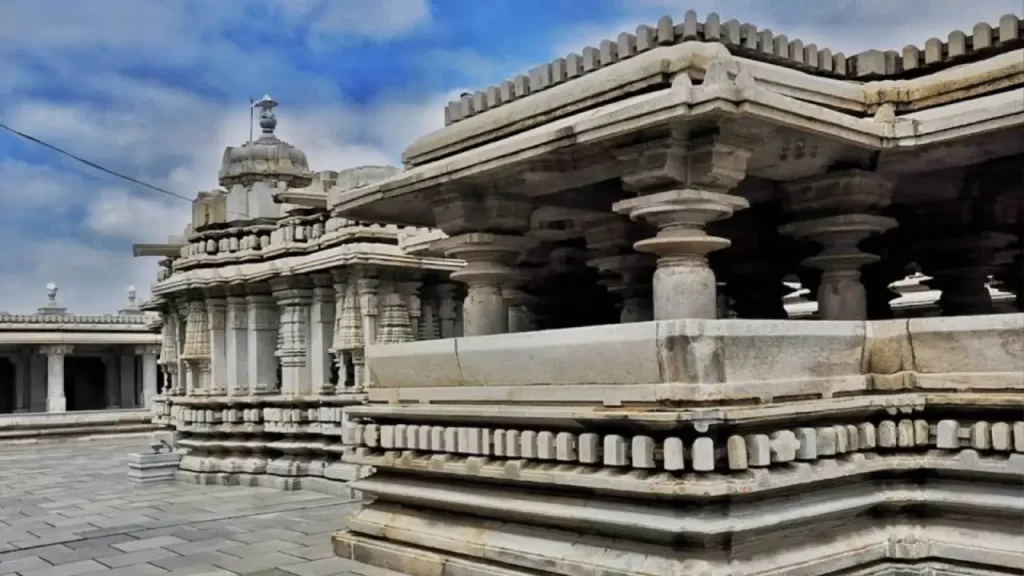
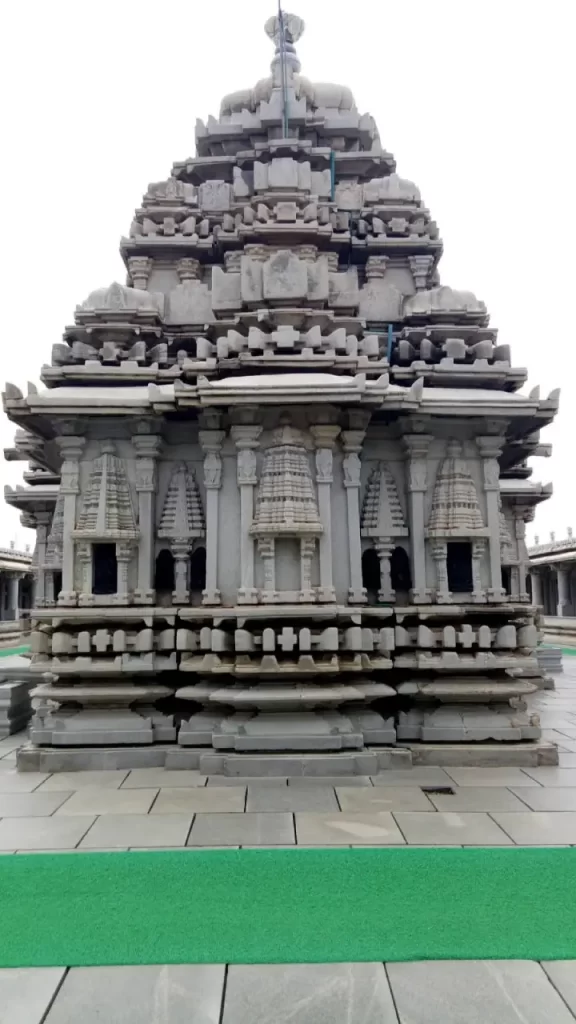
Oh, this is where the Venugopala Swamy Temple Kannambadi stands out! It is constructed in the Hoysala school of architecture, which is really popular for its intricate carvings and stunning designs.
As you walk through, you will notice:
Delicate Carvings: Observe the pillars and walls closely. You’ll notice minute, beautiful carvings of gods and goddesses, animals, and Hindu mythological stories. It’s as if a stone storybook! The workmanship is so intricate, you can’t believe how they managed to do it all those years without the machines we use today.
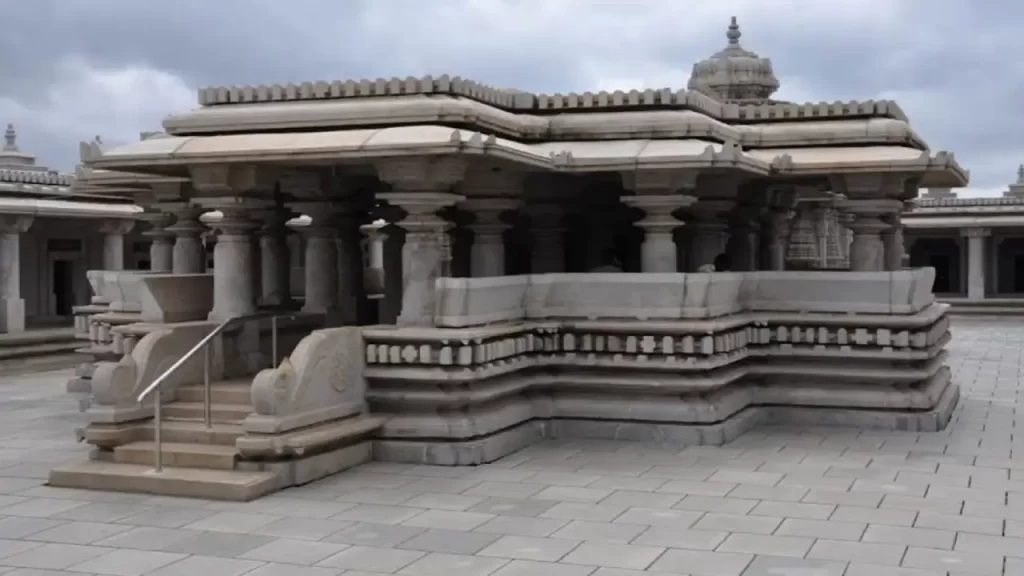
Star-shaped Platform: Hoysala temples tend to be constructed atop a star-shaped platform known as a jagati. Although the present venugopala swamy temple has been shifted and rebuilt, aspects of the typical Hoysala design remain present, although perhaps not as strong as in certain other Hoysala temples.
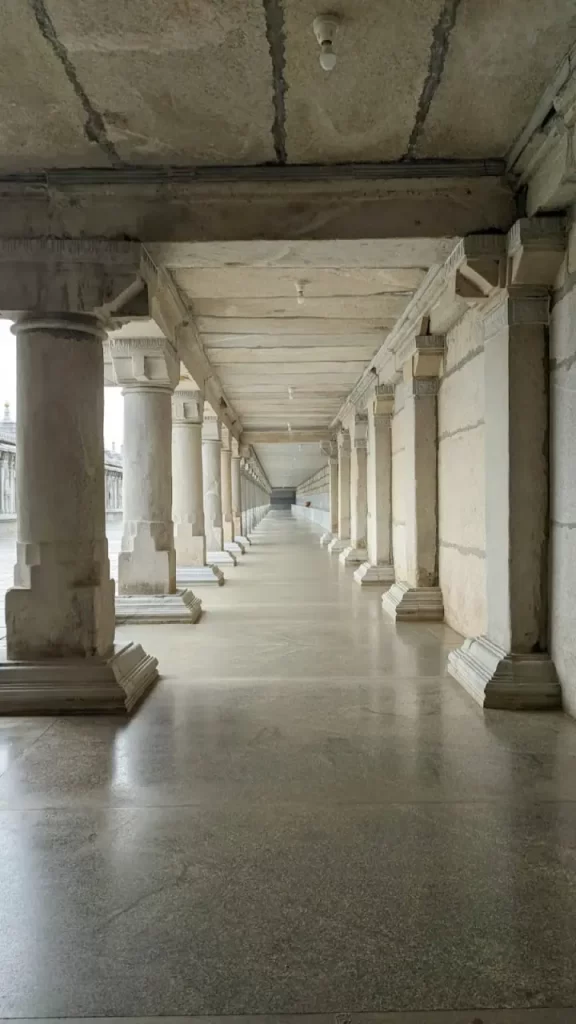
Pillared Corridors: The temple also features beautiful pillared corridors encircling the main shrine. The pillars are usually “lathe-turned,” i.e., they resemble those shaped on a massive spinning machine, so they are precisely round and smooth, occasionally with inlaid designs.
Gopuram and Prakara: There is a grand entrance gopuram (tower) and robust prakara (compound wall) constructed of enormous granite blocks, all held together without using any cement, but fitting snugly together like a colossal puzzle!
Smaller Shrines: Within venugopala swamy temple complex, surrounding the central deity, there are smaller shrines for other gods and goddesses such as Lord Ganesha, Goddess Andal, Rukmini, and Satyabhama (wives of Lord Krishna). There are even shrines for the Dasavatharam (the ten avatars of Lord Vishnu) and the Navagrahas (nine planets). It’s a whole universe of deities all collected!
It’s really incredible to consider that these rocks used to be underwater for thousands of years, and now look at how proudly they sit, flaunting their ancient beauty.
Read More>> Peringottukara Vishnumaya Temple Thrissur
Whispers of the Past: Myths and Beliefs
Other than the myth of its sinking and resurrection, the Venugopala Swamy Temple Kannambadi has some beliefs which contribute to its mysticism. One of the local beliefs was that the emergence of the temple during times of drought was a sign of impending doom for the agrarian society as it would be in the midst of water shortages. This is actually a reflection of the villager’s problem rather than a myth surrounding the god himself.
The central belief about Lord Venugopala is his ability to create harmony, happiness, and prosperity. The belief of devotees is that by worshiping Venugopala Swamy, the divine flutist, they can find peace in life, end disputes, and fill their hearts with love and joy, just like Krishna’s flute had enchanted all living creatures. The serene environment of the temple, with soothing sounds of the backwaters, adds to this feeling of peace and religious link.
Read More>> Famous Kollur Mookambika Temple: Discover the Unseen Powers
When to Go: Venugopala swamy temple timings mysore
The Venugopala Swamy Temple Kannambadi is typically open from 9 AM to 6 PM daily.
My special tip for you: The evening is a spellbinding time to visit! The sun starts setting, making the sky look beautiful with lovely hues, and the soft breeze from the backwaters makes it feel extremely peaceful and invigorating. It’s the best time for a quiet visit and to imbibe the calm ambiance. Don’t forget the daily Maha Pooja takes place at 11 AM and 6 PM, so if you wish to witness the rituals, schedule your visit accordingly.


More Adventures Nearby: Places to Visit Near the Temple
Your visit to the Venugopala Swamy Temple Kannambadi can be part of a larger odyssey! There are tons of other great places to visit close by:
Krishna Raja Sagara (KRS) Dam and Brindavan Gardens: This is likely the most popular place around, and you can actually view the KRS backwaters from the temple! The Brindavan Gardens are lovely terraced gardens with musical fountains that glow at night. It’s a great place to spend some time, particularly with family.
Mysore Palace: About 30 km from here in Mysore city, it’s a palace fit for kings and queens! One of India’s most popular palaces, it has incredible architecture and so much history. You’ll be treated like royalty strolling through its corridors!
Ranganathittu Bird Sanctuary: A must-see for any bird lover! It’s a series of small islands in the Cauvery River that have various types of birds with brilliant plumage. You can even go boating there and spot them close up.
Tipu Sultan’s Fort and Site of Death (Srirangapatna): Discover the courageous warrior Tipu Sultan at his fort and site of his final battle. It is a historical site with tales of bravery.
Kunti Betta: For the older children and adventurous adults, these are two rocky hills ideal for a quick trek. Legend has it that the Pandavas of the Mahabharata resided here for a while!
Balmuri Falls: An intimate, stunning cascade over the Cauvery River, ideal for a cool break and some nice photo opportunities.
Read More>> Kabbalamma Temple Kanakapura
Sweet Dreams and Good Food: Staying Options
Because Venugopala Swamy Temple Kannambadi is near Mysore, you have plenty of great options for somewhere to stay. Mysore has all types of hotels, ranging from luxury to cozy guesthouses.
Hotels near Brindavan Gardens/KRS Dam: If you prefer to stay close to the gardens and temple, you may consider hotels such as Royal Orchid Brindavan Gardens.
Mysore City Hotels: Mysore has numerous choices, ranging from famous brands such as Radisson Blu Plaza Hotel Mysore, Grand Mercure Mysore, Silent Shores Resort & Spa, and Fortune JP Palace. These provide comfortable accommodations and are generally well-connected to all the major tourist attractions, including the temple.
Do remember to book your stay in advance, particularly if you’re going during peak season or festival time!
Read More>> Is Eating Non-Veg a sin in Hinduism?
Your Way to the Temple: How to Reach
It is very easy to reach the Venugopala Swamy Temple Kannambadi!
By Air: Mysore Airport (MYQ) is the nearest airport. There, you can take a taxi. The Kempegowda International Airport (BLR) in Bengaluru is a larger airport, and from Bengaluru, either get a train, bus, or take a taxi to Mysore.
By Train: The closest major railway station is Mysore Junction (MYS). Mysore city is well connected by train to most major cities in India. After you arrive at Mysore, it is a simple matter to book a taxi or an auto-rickshaw to the temple.
By Road: The temple is located around 25-30 kilometers away from Mysore city and is conveniently very near to the popular KRS Dam.
From Mysore: The most convenient method is to take a taxi or a private car. It is a pleasant drive, and you can enjoy the scenery. Several local tour operators also have guided tours that cover the temple.
From Bengaluru: It takes around 3 to 4 hours of driving. You can go by bus to Mysore and then by local taxi, or rent a private car directly from Bengaluru.
The roads are decent by and large, so the drive is pleasant. Follow the signs towards KRS Dam, and you’ll come across the venugopala swamy temple mysore next to it.
3 Comments