Bhojpur Shiva Temple (Bhojeshwar Temple): Complete History, Architecture, and Pilgrimage Guide
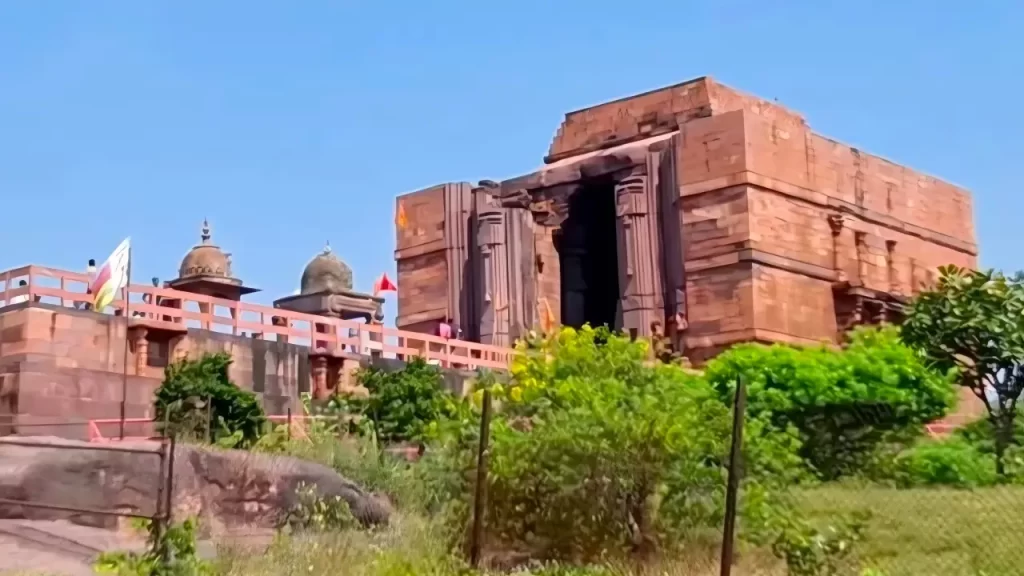
The Bhojpur Shiva Temple, also known as the Bhojeshwar Temple, is an 11th-century Hindu temple dedicated to Lord Shiva, located in Bhojpur village along the Betwa River, roughly 28 kilometers southeast of Bhopal in Madhya Pradesh, India. Founded by the celebrated Paramara scholar-king Raja Bhoja, the temple houses one of the largest monolithic stone Shiva Lingams in the world, carved from single sandstone and set upon a massive limestone pedestal.
Celebrated as the “Somnath of the East,” this grand temple is famous for two reasons: its monumental scale and the fact that its construction was never finished. Today, protected by the Archaeological Survey of India (ASI), Bhojpur remains both a living place of worship for thousands of devotees—especially during Maha Shivratri—and a fascinating archaeological site showcasing medieval Indian stone engineering.
Quick Information: Bhojpur Shiva Temple
| Feature | Verified Visitor Detail |
| Temple Name | Bhojpur Shiva Temple (Bhojeshwar Temple / Bhojpur Mandir) |
| Main Deity | Lord Shiva (worshiped as Bhojeshwar Mahadev) |
| Location | Bhojpur Village, Raisen District, Madhya Pradesh, India |
| Supervising Authority | Archaeological Survey of India (ASI), Bhopal Circle |
| Daily Temple Timings | 6:00 AM to 6:30 PM (Open daily, sunrise to sunset) |
| Aarti / Pooja Timing | Morning Aarti at sunrise (~6:30 AM); Evening Aarti at sunset (~6:00 PM) |
| Entry Fee | Free entry / Nominal ticket depending on ASI site category changes (carry digital payment/UPI) |
| Best Time to Visit | October to March (pleasant central Indian weather); Maha Shivratri (February/March) |
| Major Festival | Maha Shivratri (marked by an annual fair and special night darshan) |
| Distance from Bhopal | Approximately 28 to 32 km southeast of Bhopal city center |
| Nearest Railway Station | Rani Kamlapati Station (RKMP) (~24 km) and Bhopal Junction (BPL) (~30 km) |
| Nearest Airport | Raja Bhoj Airport, Bhopal (BHO) (~38 km) |
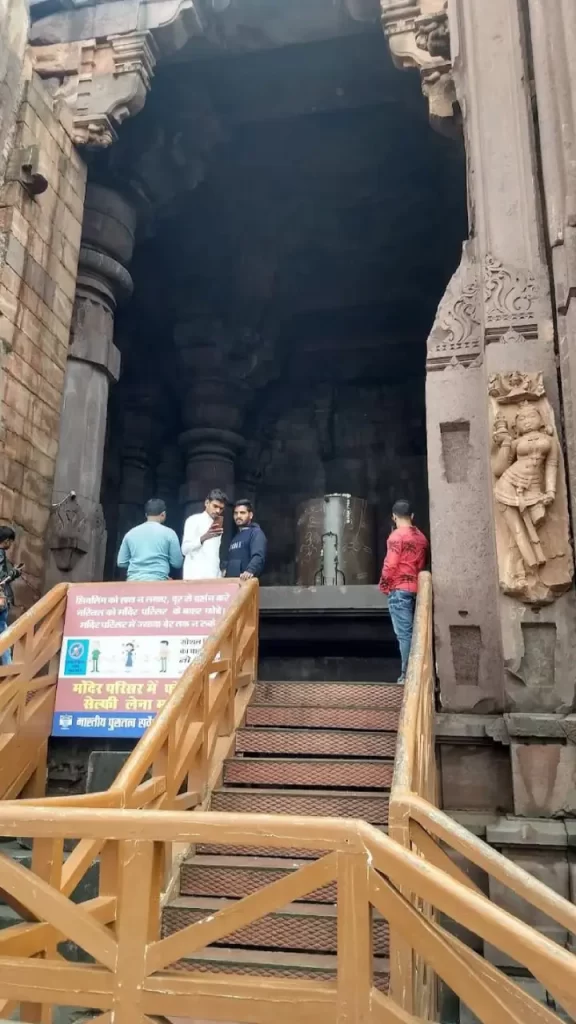
| Steps / Accessibility | Elevated flight of stone stairs leading to the plinth; ramp access is limited |
| Footwear / Photography | Footwear must be removed at the plinth entrance; photography allowed outside and inside sanctum |
Read More>> 4 Century Gokarna Mahabaleshwar Temple
Historical Origins: The Vision of King Bhoja
The history of the Bhojeshwar Temple is tied directly to the golden age of the Paramara dynasty. The temple was commissioned by Raja Bhoja (reigned c. 1010–1055 CE), one of medieval India’s most celebrated rulers. Bhoja was not only a conqueror who ruled Malwa from his capital at Dhar, but also a polymath credited with authoring classical Sanskrit treatises on civil engineering, architecture (Samarangana Sutradhara), poetry, and philosophy.
King Bhoja chose a high sandstone ridge overlooking the Betwa River (known historically as the Vetravati) to build an immense temple city. His ambitious civil project included constructing huge earthen and stone dams across nearby hills, creating a massive artificial lake covering over 400 square kilometers. This reservoir supplied water to the settlement, moderated the local climate, and reflected the soaring towers of the temple above it. While the lake was later breached in the 15th century, the dry bed and the temple remain.
History vs. Local Devotional Legends
While epigraphic evidence firmly dates the temple’s construction to the Paramara era under Raja Bhoja, local devotional folklore (sthala purana) offers a mythological origin. Local tradition tells that during their exile, the Pandavas of the Mahabharata were instructed by their mother Kunti to build a Shiva shrine in a single night. According to this story, dawn arrived before the roof could be completed, causing the Pandavas to leave the temple unfinished.
Devotees respect this devotional narrative, while historians and visitors alike appreciate how it sits alongside the site’s documented 11th-century archaeological history.
The Mystery: Why Was the Bhojpur Temple Left Unfinished?
Visitors often ask why a king as wealthy and powerful as Raja Bhoja left this magnificent temple without its completed roof and tower (sikhara).
Architects and historians have put forward several evidence-based theories:
- Sudden Structural Failure of the Roof: The temple’s sanctum covers an enormous open expanse without interior load-bearing pillars. The stone roof slabs were engineered using corbelled vaulting. Scholars suggest that as workers hoisted massive stone blocks weighing dozens of tons overhead, a catastrophic crack or partial collapse occurred in the temporary framework, causing work to stop immediately.
- Warfare and the Fall of the Capital: Toward the end of King Bhoja’s reign, the Paramara kingdom faced simultaneous invasions from the Western Chalukya king Someshvara I and the Kalachuri ruler Lakshmi-Karna. Bhoja passed away around 1055 CE during these military campaigns, and his successors lacked the resources and architectural drive to finish the monument.
- Breach of the Engineering Ramp: Unlike most ancient Indian monuments where temporary earthen ramps were removed after construction, Bhojpur still has its original stone-and-earth construction ramp on the north-eastern side of the building. This intact ramp proves that work stopped suddenly, rather than winding down through deliberate planning.
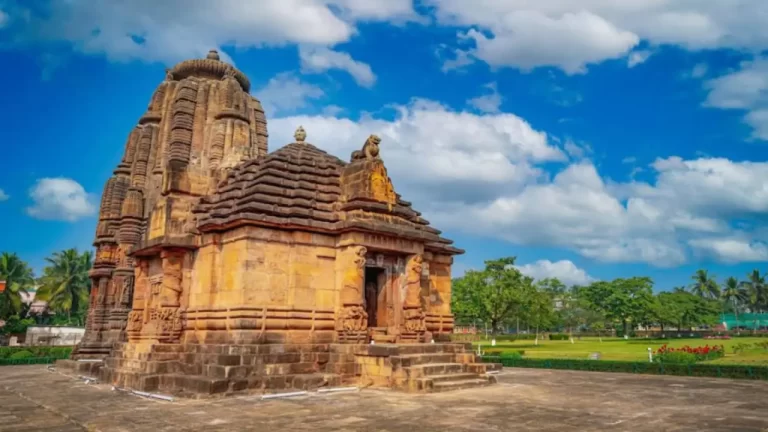
Read More>> 15 Best Places to Visit in Odisha
Architecture of Bhojeshwar Temple: Engineering on a Colossal Scale
The Bhojpur Temple is one of the most important surviving examples of northern Indian temple architecture (the Nagara style), offering a rare look at medieval construction techniques.
The Sanctum (Garbhagriha)
The temple sits on an elevated sandstone platform (jagati) measuring roughly 115 feet long and 82 feet wide. The sanctum forms a clean square hall with an exterior measuring approximately 66 feet on each side. The interior walls rise smoothly without windows, leading the eye upward to the monumental lintels overhead.
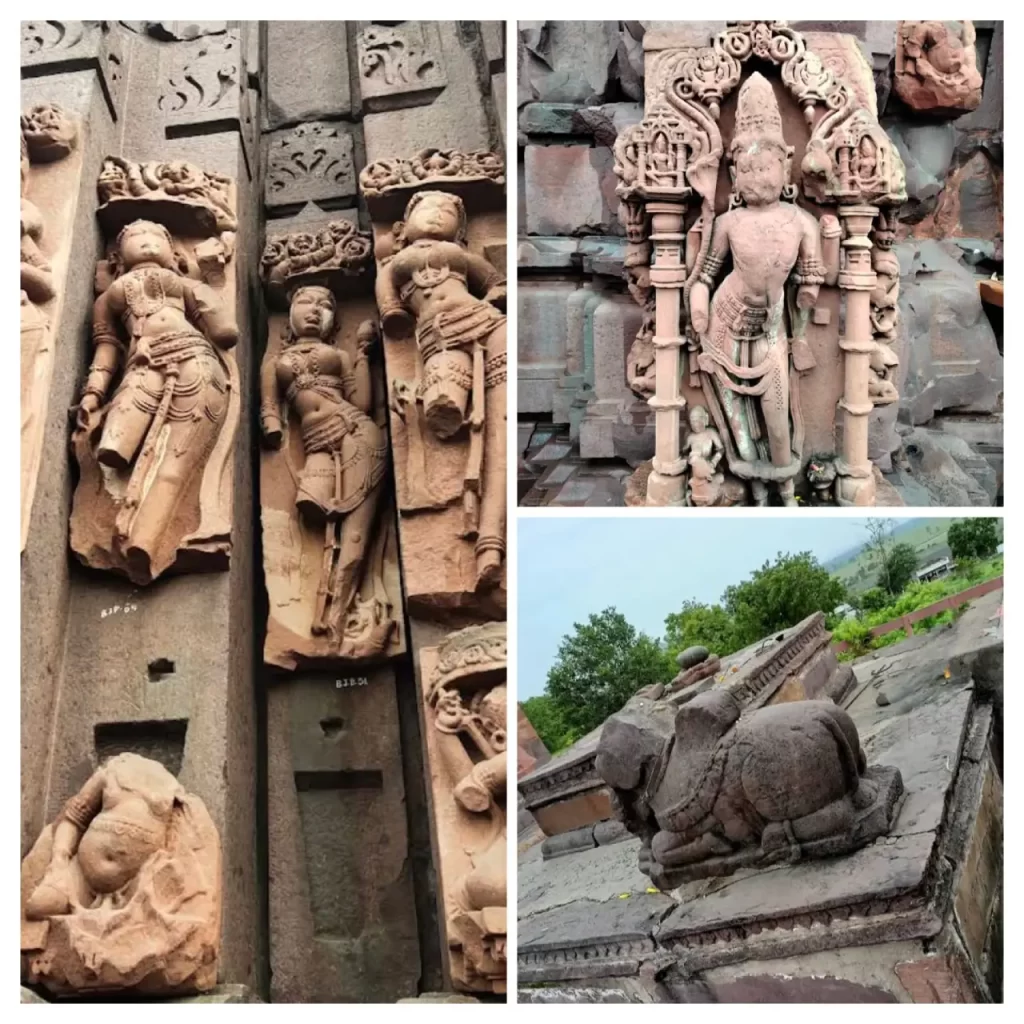
Four towering stone pillars—each over 39 feet tall—support the interior ceiling beams. These tapered pillars are masterworks of Nagara carving: square at the bottom, octagonal in the middle, and circular toward the capital, topped with intricately carved bracket figures.
The Monolithic Shiva Lingam and Yonipitha
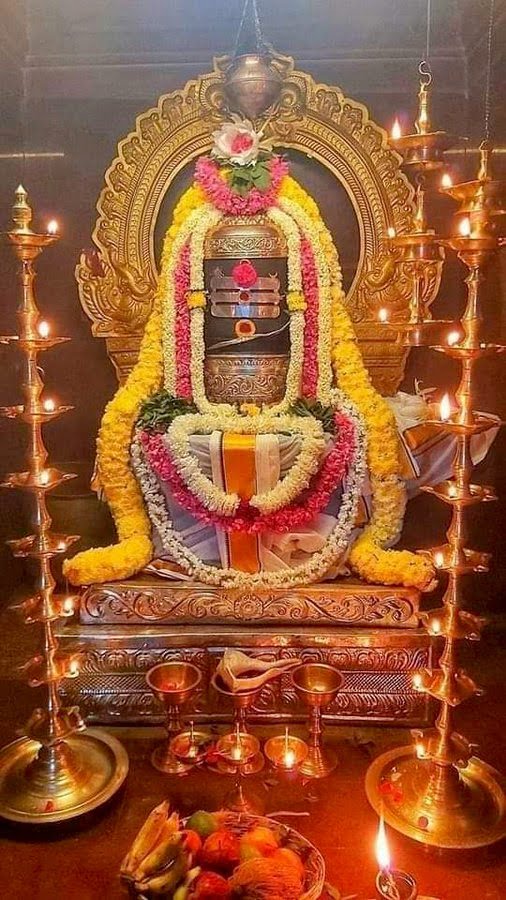
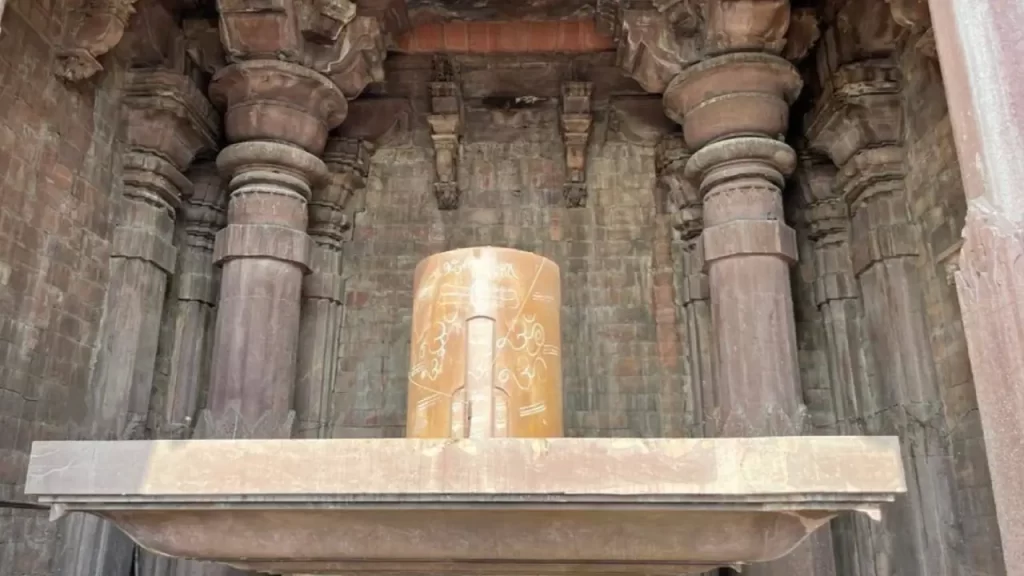
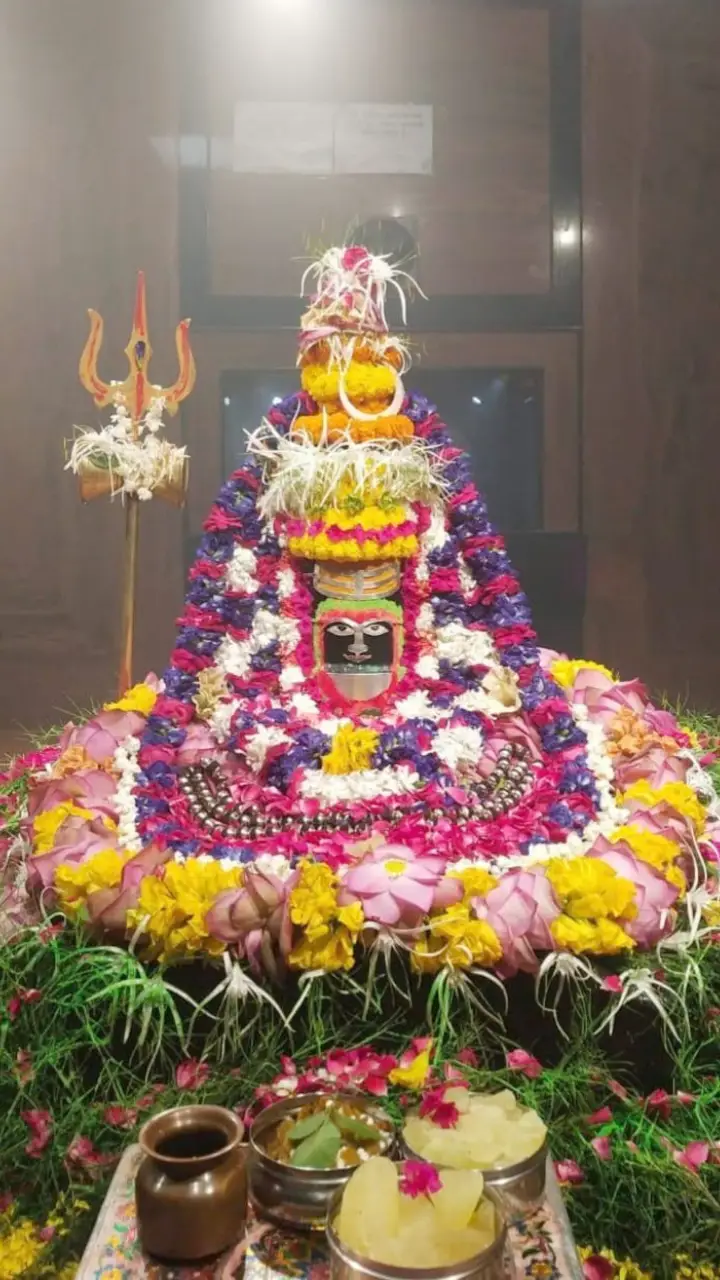
The centerpiece of the entire temple is its towering Shiva Lingam, carved from a single block of fine-grained, smooth sandstone:
- Lingam Height: Stands roughly 7.5 feet (2.3 meters) tall above the base, with a circumference of nearly 17.8 feet.
- Yonipitha (Base): The Lingam is set into a massive square pedestal (yonipitha or peetham) measuring over 20 feet (6 meters) across and roughly 19 to 20 feet high, built from large limestone tiers.
- Total Combined Height: Rising nearly 40 feet from the sanctum floor to the crown of the lingam, it is one of the tallest monolithic Lingams in existence.
Because of this immense height, temple priests use an elevated metal staircase and walkway constructed around the yonipitha to perform daily rituals, abhishekams, and offer bilva leaves.
If you are traveling through Madhya Pradesh’s Shaivite circuits, combine your visit to Bhojpur with our detailed pilgrimage guides to the Mahakaleshwar Jyotirlinga in Ujjain and the river-island shrine of Omkareshwar Temple along the Narmada.
Architectural Blueprints Engraved on Surrounding Rocks
Bhojpur holds a unique place in Indian archaeology: the surrounding quarry surfaces serve as an open-air drafting room.
On the flat sandstone rocks around the temple, you can still see detailed architectural plans, elevation drawings, pillar sections, moldings, and sikhara profiles carved into the rock. These incised blueprints match the proportions described in King Bhoja’s architectural text, the Samarangana Sutradhara. They show how 11th-century master builders (sthapathis) calculated scale, stone joints, and structural loads before moving dressed blocks to the plinth.
The Earthen Construction Ramp
Behind the temple sits an enormous ramp made of packed earth and stone masonry, sloping gently from the quarry floor to the top of the sanctum walls. This rare survival shows how medieval engineers transported massive lintels and stones weighing up to 70 tonnes using wooden rollers, ropes, and elephant teams.

Religious Significance and Daily Worship
Despite being technically unfinished and lacking a sealed shikhara roof, the Bhojpur Temple has been an active center of worship for centuries. Under Hindu ritual guidelines, damaged or incomplete idols are generally not consecrated for regular worship. However, the Shiva Lingam at Bhojpur remains fully intact, smooth, and spiritually vibrant.
Devotees come from all over India to offer milk, honey, flowers, and holy water from the Betwa River. Praying before Bhojeshwar Mahadev is believed to grant peace of mind, physical strength, and liberation from karmic burdens.
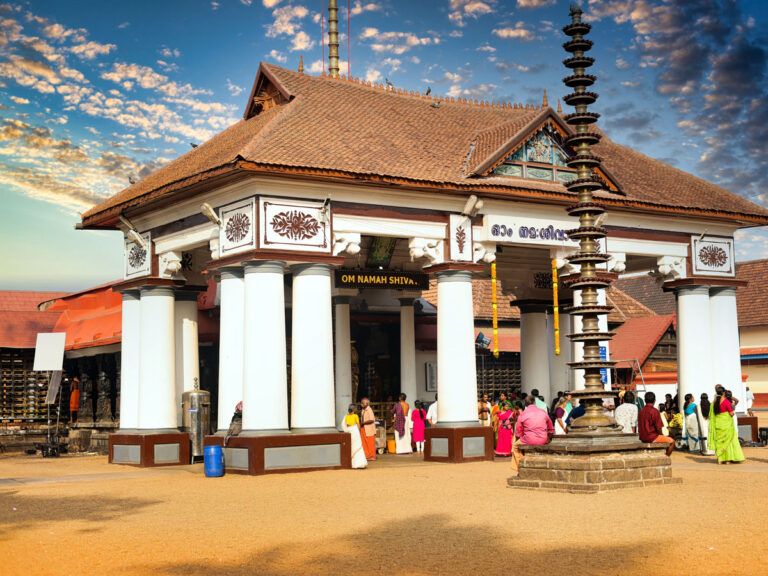
Read More>> Famous Vadakkumnathan Temple: Experience Instant Inner Peace
Maha Shivratri Celebrations
The temple comes alive during the annual festival of Maha Shivratri (celebrated in Phalguna, usually February or March). During this time:
- The temple stays open for continuous day-and-night darshan.
- Over 100,000 pilgrims visit the monument to offer prayers, chant the Shiva Sahasranama, and perform night vigils (jagaran).
- An annual cultural and spiritual fair (Maha Shivratri Mela) is held at the base of the hill, featuring local artisans, devotional music performances, and traditional food stalls.
Editorial Note on Internal Linking: For guidance on performing festival rituals at home or during pilgrimage, read our complete guide to Maha Shivratri fasting and puja rituals.
Best Time to Visit Bhojpur
Central Madhya Pradesh experiences clear seasonal extremes. Planning your trip around the weather makes a big difference to your experience:
- Winter (October to March) — Best Season: Daytime temperatures stay between 15°C and 28°C. The cool, clear air is ideal for exploring the open-air stone platform, climbing the steps, and inspecting the quarry rock carvings without midday heat.
- Monsoon (July to September) — Scenic & Lush: The surrounding Betwa River valley turns vibrant green, and cloudy skies make outdoor sightseeing pleasant. Take care on the stone steps and walkways, which can become slippery after rain.
- Summer (April to June) — Challenging: Summers are hot and dry, with afternoon temperatures frequently passing 42°C. The bare sandstone courtyards heat up quickly. If visiting in summer, plan your darshan for early morning (between 6:00 AM and 8:30 AM).
Read More>> Vedadri Narasimha Swamy Temple
How to Reach Bhojpur Temple from Bhopal
Bhojpur is one of the easiest heritage day trips to make from Bhopal, with good road connections to the state capital.
1. By Air
The nearest airport is Raja Bhoj Airport (BHO) in Bhopal, roughly 38 kilometers away. The airport offers direct flights to major Indian hubs including Delhi, Mumbai, Bengaluru, and Hyderabad. You can hire a prepaid airport taxi directly to Bhojpur, or take a cab into Bhopal city first.
2. By Train
Bhopal is one of central India’s main railway junctions:
- Rani Kamlapati Station (RKMP): Located on the south-eastern side of Bhopal, roughly 24 km from Bhojpur. This modern station is the most convenient railhead for arriving travelers.
- Bhopal Junction (BPL): Located in the central city, approximately 30 km away. Both stations have taxi stands, auto-rickshaws, and app-based ride services (Uber and Ola) for day excursions.
3. By Road and Local Transport
- Private Taxi / Self-Drive: The drive takes 45 to 60 minutes from central Bhopal via Hoshangabad Road (NH 46) and the Bhojpur link road. Roads are paved, two-lane rural highways passing through quiet agricultural land.
- Public Buses: State transport buses and local shared minibuses run from Bhopal’s Kushabhau Thakre Inter State Bus Terminal (ISBT) toward Mandideep and Obaidullaganj. From the Bhojpur junction on the main highway, you can hire local shared autos for the remaining 6 km to the temple gates.
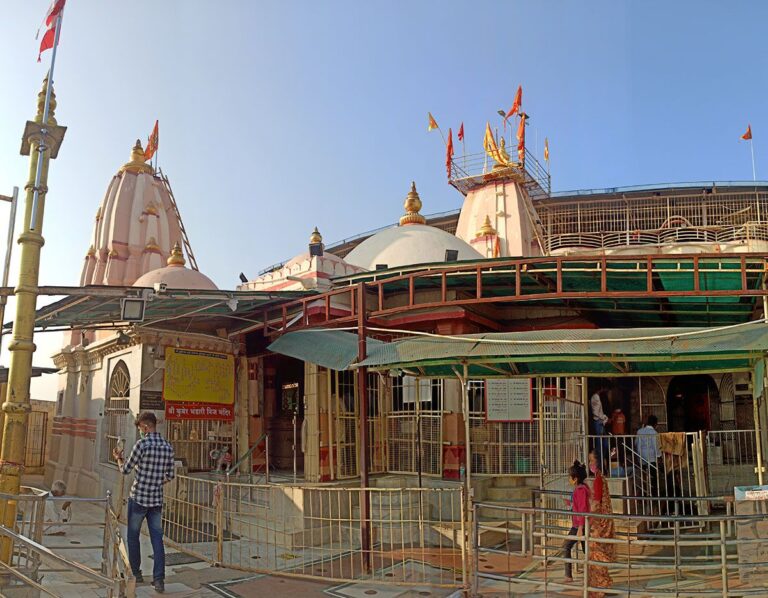
Read More>> Kondagattu Anjaneya Swamy Temple
Recommended One-Day Itinerary: The Bhopal Heritage Circuit
Because Bhojpur can be thoroughly explored in 1.5 to 2 hours, visitors often combine it with nearby UNESCO World Heritage sites to make a rewarding full-day heritage circuit:
- Morning (8:30 AM – 11:30 AM): Bhimbetka Rock SheltersDrive south from Bhopal to Bhimbetka (approx. 45 km), a UNESCO World Heritage site featuring prehistoric rock paintings dating back over 10,000 years.
- Midday (12:30 PM – 2:30 PM): Bhojpur Shiva TempleDrive 25 km back toward Bhojpur. Spend time in quiet contemplation in the sanctum, take darshan of the monolithic Lingam, and explore the quarry plans and construction ramp behind the temple.
- Late Afternoon (3:30 PM onwards): The Parvati Cave & Betwa GhatsVisit the small rock-cut sanctum across the river, walk down to the Betwa River ghats, and return to Bhopal by sunset.
If you enjoy historical architecture, you will also appreciate our comprehensive architectural guide to the sculptural marvels and Nagara mandapas at the temples of Khajuraho.
Read More>> Hadshi Temple Adventure Park Pune
Practical Tips for Pilgrims and Heritage Visitors
- Dress Code: There is no strict traditional dress code enforced by the ASI, but modest attire covering shoulders and knees is expected out of respect for an active place of worship.
- Footwear Handling: Shoes and leather items must be removed before climbing the final stone stairs to the sanctum plinth. Footwear stands are available near the entrance for a nominal donation.
- Temple Guides: Authorized ASI-licensed local guides are available near the entrance. Hiring a guide for 30–45 minutes is worthwhile to help you locate the faint rock blueprints engraved on the surrounding quarries.
- Drinking Water and Restrooms: Basic tourist amenities, packaged drinking water, and clean restrooms managed by MP Tourism are available near the vehicle parking lot.
- Monkeys: Rhesus macaques are common around the temple courtyard. Keep prasad, coconuts, flowers, and food items securely stored inside bags.
Read More>> 900 Yrs Old Brahmeswara Temple: Amazing Temple Built by Gods

Frequently Asked Questions about Bhojpur Shiva Temple
What are the daily darshan timings at Bhojpur Temple?
The Bhojpur Shiva Temple is open daily from sunrise to sunset, generally between 6:00 AM and 6:30 PM. During the annual Maha Shivratri festival, the temple remains open through the night to welcome visiting pilgrims.
How old is the Bhojpur Shiva Temple?
The temple dates back to the mid-11th century (between 1010 and 1055 CE), making it approximately 1,000 years old. It was built during the reign of Paramara King Bhoja of Malwa.
Is the Shiva Lingam at Bhojpur really one of the largest in India?
Yes. The polished sandstone Shiva Lingam rises roughly 7.5 feet tall with a circumference of nearly 17.8 feet. Set atop its tiered limestone yonipitha base (which measures over 20 feet wide), the entire structure rises almost 40 feet high, making it one of the largest monolithic lingams in the world.
Why is the roof of Bhojpur Temple not finished?
The temple was left uncompleted likely due to a combination of architectural challenges—such as the collapse of the corbelled ceiling during construction—and the death of King Bhoja around 1055 CE during military conflicts, which left the kingdom without the resources to finish such an ambitious project.
Is photography allowed inside Bhojpur Temple?
Yes. Still photography and personal mobile videography are permitted inside the temple sanctum and around the monument grounds. Commercial photography, drone filming, and tripods require advance written permission from the Archaeological Survey of India monument register.
How much time is needed to visit Bhojpur Temple?
Most visitors spend between 1 and 2 hours at the site. This leaves plenty of time for darshan inside the sanctum, exploring the exterior carvings, seeing the architectural blueprints on the quarry floors, and walking down to the banks of the Betwa River.
Are there good places to eat near Bhojpur Temple?
There are basic tea stalls, fresh coconut vendors, and modest vegetarian eateries near the parking area. For full meals, visitors usually stop at MP Tourism-approved restaurants along the Bhopal–Hoshangabad highway or dine upon returning to Bhopal city center. For up-to-date travel circuits and state-run accommodations, consult the official Madhya Pradesh State Tourism Portal.