Kartik Swami Temple, Uttarakhand: Complete Trek, Timings & Pilgrimage Guide
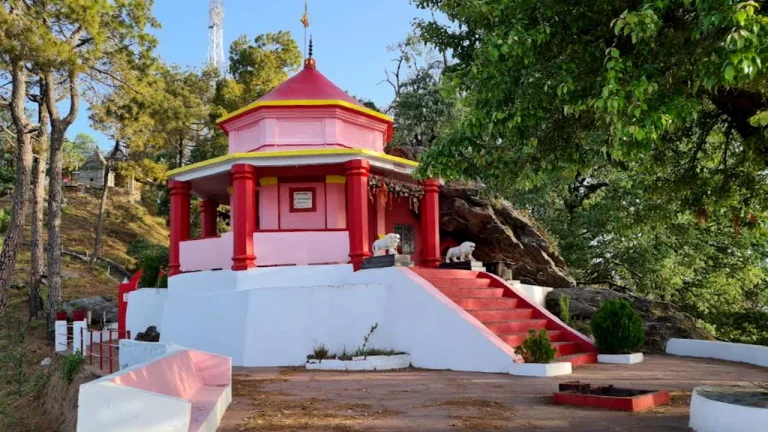
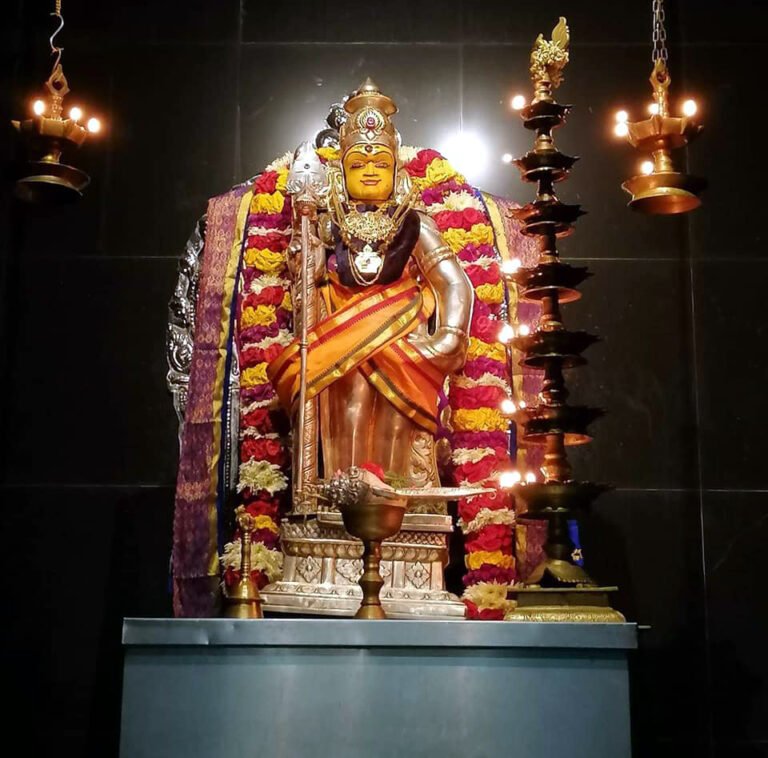
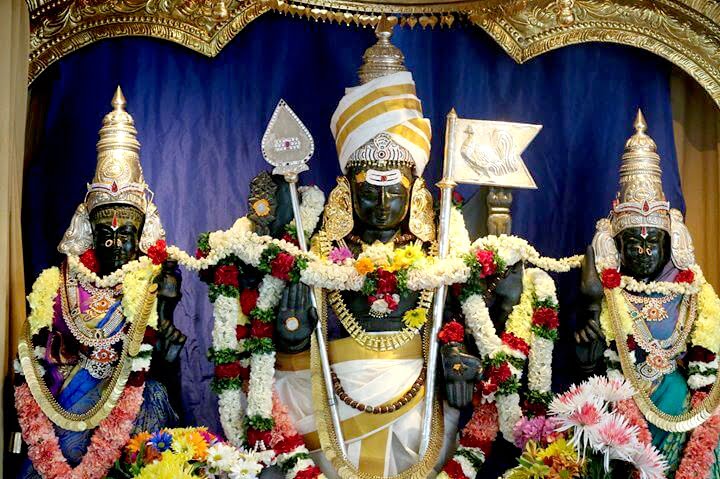
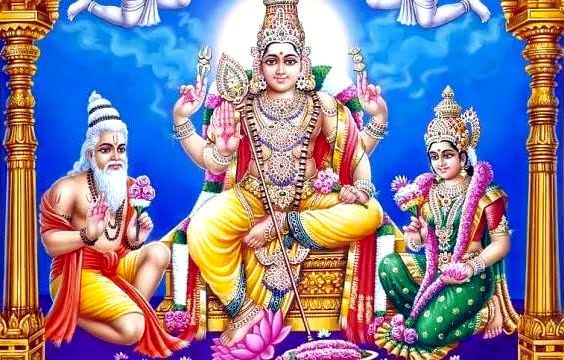
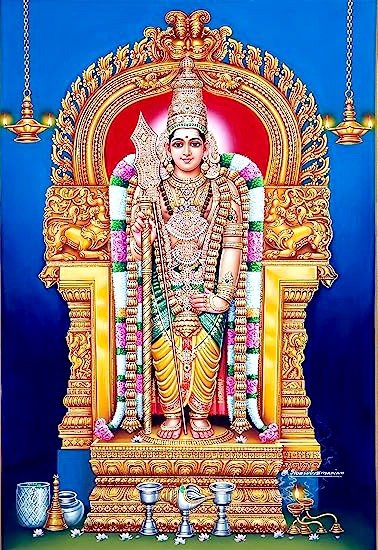
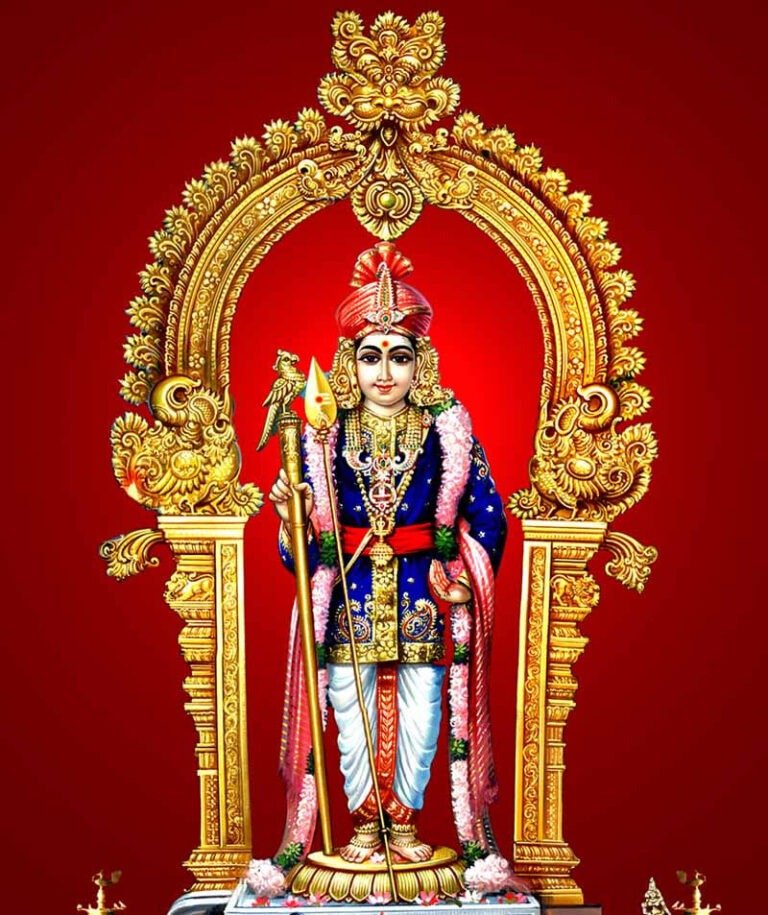
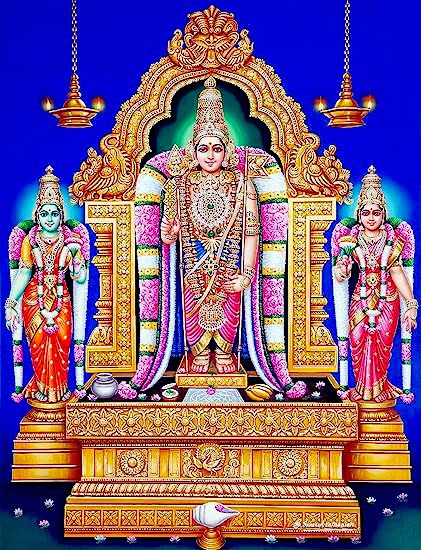
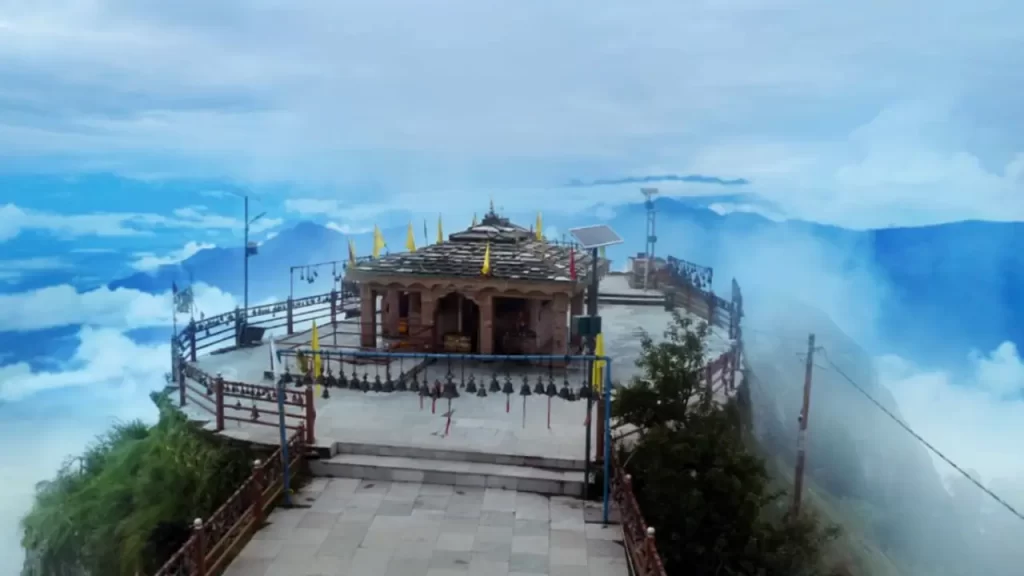
Perched dramatically on the narrow, rocky ridge of Kroncha Parvat at an altitude of 3,048 meters (10,000 feet) above sea level, the Kartik Swami Temple is one of the most revered and visually stunning shrines in the Garhwal Himalayas of Uttarakhand. Located in the Rudraprayag district, this sacred sanctuary is dedicated to Lord Kartikeya (the elder son of Lord Shiva and Goddess Parvati), known across South India as Murugan, Skanda, or Subramanya.
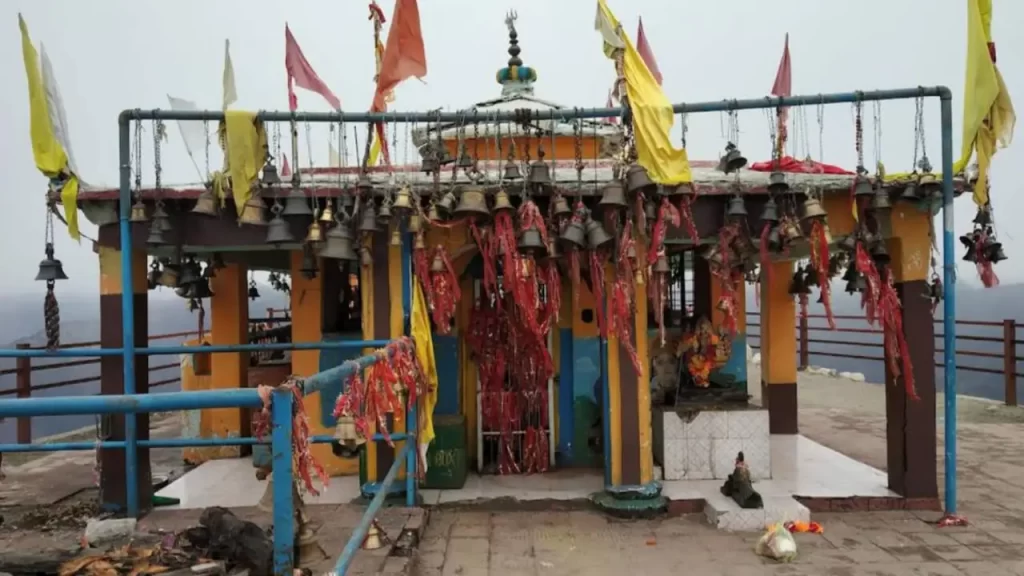
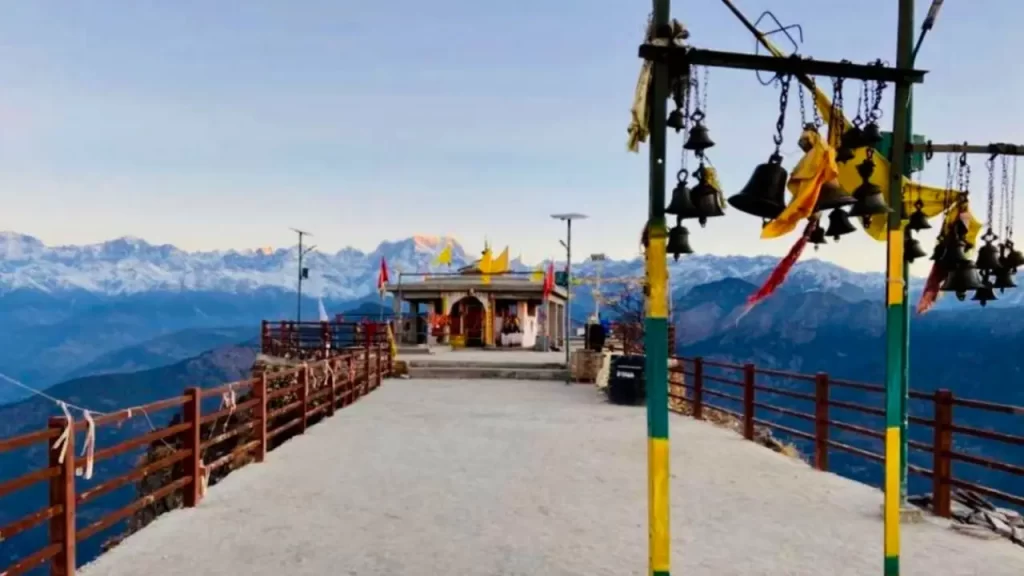
Unlike southern India, where shrines dedicated to Lord Murugan are widespread, temples dedicated to Kartikeya are rare in the northern Himalayan belt. What makes Kartik Swami truly extraordinary is not just its sacred isolation, but its profound mythological legacy and a breathtaking 360-degree panorama of over 300 Himalayan peaks—including the majestic Chaukhamba, Trishul, and Nanda Devi massifs. Reached via an invigorating 3-kilometer trek starting from the quiet village of Kanakchauri, this shrine offers pilgrims and travelers a rare union of deep spiritual devotion and alpine beauty.
Quick Information: Kartik Swami Temple at a Glance
| Feature | Verified Details |
| Temple Name | Kartik Swami Temple (कार्तिक स्वामी मंदिर) |
| Principal Deity | Lord Kartikeya (worshipped in his Asthi / Bone manifestation) |
| Mountain / Ridge | Kroncha Parvat (Krauncha Shail) |
| Location | Near Kanakchauri Village, Rudraprayag District, Uttarakhand, India |
| Elevation | ~3,048 meters (10,000 feet) above sea level |
| Trek Distance | 3 kilometers (one way) from the base camp at Kanakchauri |
| Trek Difficulty | Easy to Moderate (Well-paved forest track followed by ~450–500 stone steps) |
| Temple Timings | 06:00 AM – 07:00 PM daily (Adjusted according to sunset and winter daylight) |
| Aarti Timings | Morning Aarti: Around sunrise (~06:30 AM); Evening Sandhya Aarti: Around sunset (~06:00 PM) |
| Best Time to Visit | October to December (Clearest Himalayan views) & March to June (Pleasant weather, rhododendrons) |
| Major Festivals | Kartik Purnima (November) and the 11-day Kalash Yatra (June) |
| Nearest Base Camp | Kanakchauri Village (38 km from Rudraprayag on the Pokhari road) |
| Nearest Railhead | Rishikesh / Yog Nagari Rishikesh (~185 km) |
| Nearest Airport | Jolly Grant Airport, Dehradun (~210 km) |
| Entry Fee | Free entry; no advance online permit required for general darshan |
The Sacred Legend: Why Lord Kartikeya Resides on Kroncha Parvat
To understand the profound spiritual energy of Kartik Swami Temple, one must step back into the ancient lore preserved in the Shiva Purana and regional Garhwali oral traditions.
The legend begins with a divine contest between the two sons of Lord Shiva and Goddess Parvati: Lord Kartikeya and his younger brother, Lord Ganesha. The divine parents presented a challenge: whoever was first to circumambulate the entire universe would be granted supreme honors and the fruit of wisdom.
Lord Kartikeya, the commander-in-chief of the divine army (Devasenapati), immediately mounted his celestial peacock, Mayura, and set off on a swift journey across the cosmos. Lord Ganesha, wise and discerning, realized that the entire cosmos resided within his divine parents. He reverently walked around Lord Shiva and Mother Parvati seven times, demonstrating that filial devotion and wisdom encompass all existence.
Pleased by his supreme devotion and wisdom, Shiva and Parvati declared Ganesha the winner. When Kartikeya returned from his arduous cosmic flight and saw that Ganesha had already received the divine honors, he was deeply hurt and disillusioned by worldly attachments.
In an act of supreme detachment and ascetic penance, Kartikeya renounced his royal stature. According to local Himalayan faith, he sacrificed his physical worldly self—surrendering his flesh (Mansa) to his mother Parvati and his bones (Asthi) to his father Shiva—to abide in pure spiritual consciousness. He withdrew to the solitary heights of Kroncha Parvat. It is believed that the sanctum sanctorum of the Kartik Swami Temple houses this exact sacred stone form where his holy bones are venerated. Devotees revere this spot as a place of supreme penance, emotional healing, and liberation from vanity and ego.
Continue Reading >> Gudimallam Parashurameshwara Swamy Temple: History, Oldest Shiva Lingam, Timings & How to Reach
Spiritual Significance: The Tradition of Offering Brass Bells
One of the most striking visual and acoustic experiences at Kartik Swami Temple is the presence of thousands of brass bells of every size, tied to railings, stone pillars, and temple lintels along the final staircase.
In Himalayan tradition, offering a bell (Ghanti Arpan) to Lord Kartikeya is an ancient practice linked to the granting of wishes (Manokamna). Devotees make a solemn vow before the deity—praying for family prosperity, the birth of a child, victory over adversity, or liberation from persistent obstacles. When their prayers are answered, pilgrims return to climb the 500 stone stairs and tie a brass bell inscribed with their family names or prayer intentions.
As mountain winds blow across the knife-edge ridge, the collective resonance of thousands of consecrated bells creates an uplifting and meditative soundscape that echoes across the valleys of Rudraprayag.
Detailed Trek Guide: From Kanakchauri Village to the Summit
The journey to Kartik Swami Temple is a classic day-trek that requires no technical mountaineering skills, making it suitable for families, senior pilgrims with moderate fitness, and experienced mountain travelers alike.
1. Base Camp: Kanakchauri (0 km)
The trek commences at the small Himalayan settlement of Kanakchauri, situated on the Rudraprayag–Pokhari road. Kanakchauri sits at an elevation of approximately 2,200 meters. The trailhead is marked by a prominent archway dedicated to Lord Kartik Swami. Here, you will find small local tea stalls where you can purchase walking sticks, bottled water, and light refreshments before heading up.
2. The Forest Section (First 1.5 km)
The first half of the trail winds through an enchanting canopy of high-altitude flora.
- In spring (March to late April), this entire forest bursts into brilliant crimson and pink hues as the rhododendrons (Buransh) blossom in full glory.
- The trail here consists of a well-defined, stone-paved path that climbs at a gentle, steady gradient.
- Along the way, birdwatchers can spot vibrant Himalayan species, including the Himalayan Monal (the state bird of Uttarakhand), verditer flycatchers, and laughingthrushes.
3. The Midpoint Ridge & Bhairav Temple (1.5 km to 2.3 km)
As you pass a Forest Department rest shelter, the forest begins to thin, giving way to rocky terrain and dwarf alpine scrub. Soon, you reach a small shrine dedicated to Bhairav Nath, who serves as the guardian deity of the sacred mountain. Traditional etiquette encourages pilgrims to stop here, pay their respects, and seek permission before proceeding to the sanctum of Lord Kartikeya.
4. The Final Staircase Climb (Last 700 Meters)
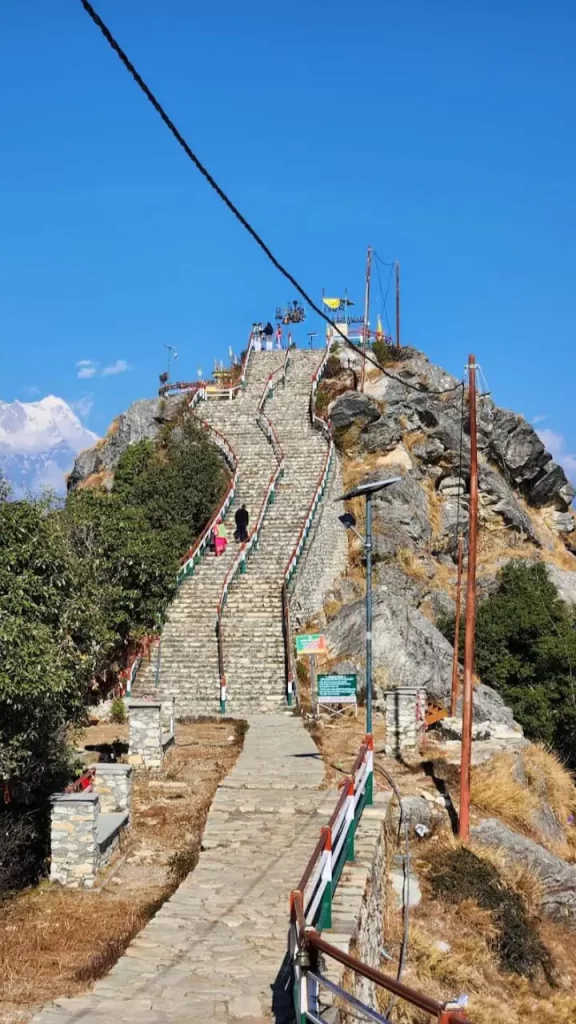
The final stretch of the trek is the most dramatic. You emerge onto a razor-sharp, narrow mountain ridge with drop-offs into deep river valleys on both sides.
- The trail transforms into a climb of approximately 450 to 500 stone steps.
- Sturdy iron railings have been installed along this section by the state authorities to ensure safety.
- Thousands of brass bells line both sides of the stairway, their chime rising above the mountain breeze as you make the final ascent to the temple platform perched at the edge of the sky.
The complete ascent typically takes 1.5 to 2 hours, while the descent back to Kanakchauri can be completed comfortably in about 45 minutes to 1 hour.
Continue Reading >> Golu Devta Temple: Pilgrimage Guide, Temple Differences, and Petition Rituals
The Himalayan Panorama: What Peaks Can You See?
Reaching the summit of Kartik Swami rewards you with an uninterrupted 360-degree vista of the Greater Himalayan range. On crisp, clear mornings, especially between October and January, the mountain views are magnificent:
- Chaukhamba (I, II, III, IV): The colossal four-pillared massif dominates the northern horizon, appearing close enough to touch.
- Kedarnath Peak & Kedar Dome: The sacred peaks guarding the Kedarnath valley stand clearly visible to the northwest.
- Bandarpoonch & Swargarohini: Visible towards the far western horizon on ultra-clear mornings.
- Trishul & Nanda Ghunti: The iconic trident-shaped peaks of Chamoli district rise dramatically to the east.
- Nanda Devi: India’s highest peak located entirely within the country can frequently be spotted glistening in the morning light.
- Dronagiri & Hathi-Ghodi Parvat: Prominent peaks marking the Joshimath and Biti regions.
Photographer’s Tip: To witness the Himalayan peaks turn from pale lavender to burnished gold, start your trek from Kanakchauri by 04:30 AM with a headlamp to reach the summit platform before sunrise. Alternatively, the sunset paints the Chaukhamba massif in fiery crimson shades. If visiting for sunset, ensure you carry a flashlight for the descent through the forest.
Temple Rituals, Daily Schedule & Festivals
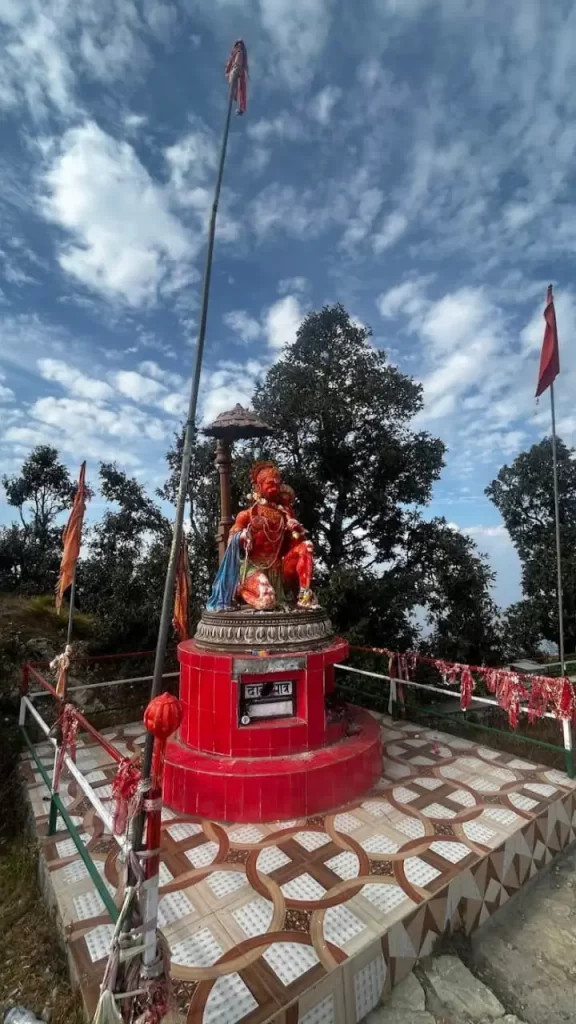
Kartik Swami operates as a living, vibrant center of Himalayan worship maintained by local priests from the surrounding villages.
Festivals of Significance
- Kartik Purnima (October / November): The most sacred time of the year at the shrine. Falling on the full-moon day of the Hindu month of Kartik, this festival draws thousands of devotees from across Uttarakhand and South India. Special Havans, continuous bell offerings, and round-the-clock Vedic chanting take place.
- Kalash Yatra (June): A grand 11-day spiritual gathering held in early summer, where village women carry sacred water vessels (Kalash) up the mountain from local river confluences to bathe the deity in a communal prayer for rain, agricultural abundance, and regional well-being.
Continue Reading >> Kasar Devi Temple, Almora: History, Timings, Significance & Visitor Guide
Best Time to Visit Kartik Swami: Season-by-Season Guide
Because the temple stands at an elevation of over 10,000 feet, weather conditions can alter the experience significantly:
October to December (The Clear View Season): This is universally considered the best window for photography and clear Himalayan sightlines. The post-monsoon atmosphere is scrubbed clean of haze, offering crystal-sharp visibility of the snow-covered massifs.
March to May (The Flower Season): Ideal for general travelers and families. The climate is mild, and the entire forest trail from Kanakchauri is adorned with blooming red and pink Buransh flowers.
January to February (The Winter Snow Experience): The upper ridge and stairs often receive light to moderate snowfall. While the temple remains accessible during periods of mild snow, the final stairs can become slippery with black ice. Proper winter boots and trekking poles are essential.
July to August (The Monsoon Season): Travel during mid-monsoon requires caution due to frequent cloudbursts and road blockages along the sensitive highway stretches between Rishikesh and Rudraprayag.

How to Reach Kartik Swami Temple
Reaching Kartik Swami requires traveling through the holy confluences of Garhwal before ascending the mountain road to Kanakchauri.
Route by Road
- From Rishikesh / Haridwar to Rudraprayag (140–165 km): Follow National Highway 7 (NH 7, the all-weather Char Dham Highway) through Devprayag and Srinagar to Rudraprayag town. State transport buses, private coaches, and shared taxis run constantly along this corridor.
- From Rudraprayag to Kanakchauri (38 km): At Rudraprayag, leave the Badrinath/Kedarnath national highway and cross the bridge towards the Pokhari road. Kanakchauri is located roughly 38 km from Rudraprayag town.
- Shared Maxis / Jeeps: Regular shared jeeps run from Rudraprayag’s main market taxi stand towards Pokhari via Kanakchauri from 07:00 AM to 02:00 PM.
- Private Taxi / Self-Drive: A private cab from Rudraprayag to Kanakchauri takes roughly 1.5 hours along a scenic, winding mountain road.
Nearest Railhead and Airport
- Nearest Airport: Jolly Grant Airport in Dehradun (~210 km from Kanakchauri). Taxis can be hired directly from the airport to Rudraprayag or Kanakchauri.
- Nearest Railway Station: Yog Nagari Rishikesh Railway Station or Haridwar Junction (~185 km and ~210 km respectively).
Continue Reading >> Navagraha Circuit Kumbakonam: 9 Temples Map, Timings, Route & Guide
Where to Stay: Accommodation in Kanakchauri & Around
Staying overnight near the base of the mountain is strongly recommended if you wish to catch the morning sunrise at the summit.
- Village Homestays in Kanakchauri: Kanakchauri is a modest rural settlement. A few clean, family-run guesthouses and local homestays provide basic rooms, warm Himalayan blankets, clean washrooms, and freshly prepared vegetarian Garhwali meals (such as Mandua roti, Bhatt ki Churkani, and local dal).
- GMVN Tourist Bungalow / Eco-Camps: Garhwal Mandal Vikas Nigam (GMVN) operates a guest facility and eco-cottages near Kanakchauri. Advance bookings can be checked through the official GMVN booking portal.
- Staying at Rudraprayag (38 km away): If you prefer three-star hotels, luxury riverside resorts, or broader amenities, base yourself in Rudraprayag town. You can take a morning day-trip to Kanakchauri, complete the trek, and return to Rudraprayag by late afternoon.
Essential Travel Tips, Packing List & Safety Rules
- Carry Cash: Mobile network signals (Jio, Airtel, BSNL) are available on parts of the ridge, but digital payment terminals (UPI) can fail due to power cuts or intermittent connectivity in Kanakchauri. Carry adequate cash for food, transport, and homestays.
- Layered Clothing: Even during summer afternoons, wind speeds on the exposed 10,000-foot ridge can be intense. Always carry a windproof jacket, a light fleece, and a woolen cap. In winter, thermal inners, a heavy down jacket, and insulated gloves are required.
- Footwear: Do not attempt the trek in smooth-soled casual shoes. Wear sturdy trekking shoes with good rubber traction to prevent slipping on gravel or damp stone steps.
- Hydration & Snacks: There are no food stalls once you cross the first kilometer of the trail. Carry at least 1.5 liters of drinking water per person and light energy snacks (nuts, dates, energy bars). Bring your own reusable water bottle to prevent plastic waste on the sacred mountain.
- Senior Citizen Considerations: While the distance is only 3 km, the final 500 stairs are steep. Seniors with knee issues should carry dual trekking poles and take frequent rests at the provided stone platforms along the trail.
- Ridge Safety: The final ridge has safety railings, but pilgrims must remain on the designated stone path. Avoid climbing onto loose outer boulders or leaning dangerously over the cliffs for selfies.
Contextual Spiritual Connections on Your Pilgrimage
If you are planning an extended pilgrimage through the Garhwal Himalayas, Kartik Swami can be combined with other sacred shrines in the region:
- Rudraprayag Sangam: Visit the holy confluence of the emerald Alaknanda and turquoise Mandakini rivers, where the sage Narada is believed to have worshipped Lord Shiva.
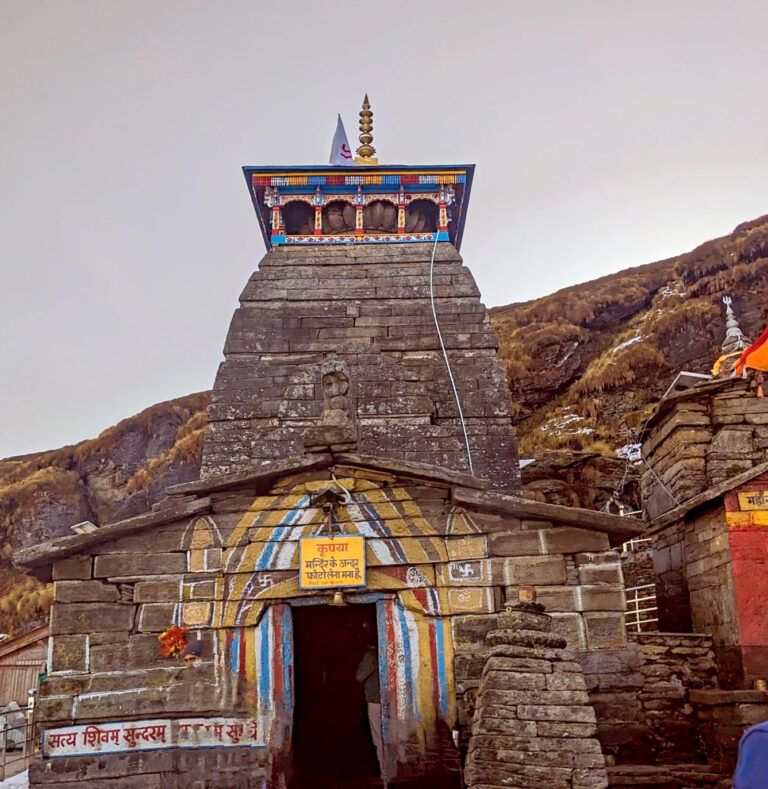
- The Panch Kedar Circuit: Kartik Swami sits conveniently between the Kedarnath valley and the high-altitude temple of Tungnath (the highest Shiva shrine in the world, located in nearby Chopta) and Madhyamaheshwar.
- Ukhimath (Omkareshwar Temple): The winter seat of Lord Kedarnath, located just an hour’s drive from the Chopta-Pokhari belt.
- Triyuginarayan Temple: The celestial wedding site of Lord Shiva and Goddess Parvati, easily accessible when connecting back towards Sonprayag.
Frequently Asked Questions (FAQs)
1. Is the trek to Kartik Swami difficult for beginners?
No, the trek is classified as easy to moderate. The distance is 3 kilometers one way. The initial two kilometers follow a gentle forest gradient. Only the final 700 meters involve a steep climb up roughly 450 to 500 stone stairs along the ridge. Anyone with average physical fitness can finish it comfortably in under two hours.
2. Can we visit Kartik Swami Temple during the winter months?
Yes, the temple remains accessible for most of the winter. During heavy snowfall (typically late December to early February), the final staircase may accumulate snow and frost, requiring trekking poles and shoes with deep treads. The winter views of snow-draped Himalayan peaks are spectacular during this period.
3. Are there dining and food facilities at the summit?
No. There are no tea stalls, water stations, or restaurants at the summit or along the upper stairs. The last stalls for tea and basic snacks are located in Kanakchauri village and near the trail entrance. Always carry your own drinking water and snacks, and bring all plastic waste back down with you.
4. Are there any dress codes or photography restrictions?
Modest attire suitable for a sacred Hindu shrine is expected. Avoid sleeveless tops and shorts. Leather goods (belts, wallets) should be removed before entering the inner sanctum. While photography along the ridge and of the Himalayan peaks is permitted, photography inside the inner sanctum sanctorum of Lord Kartikeya is strictly prohibited out of reverence.
5. How much time is needed for the complete Kartik Swami excursion?
If you are starting from Kanakchauri, plan for 4 to 5 hours in total. This includes 1.5 to 2 hours for the ascent, 1 hour for peaceful darshan and photography at the summit, and 1 hour for the descent. If traveling from Rudraprayag as a day trip, account for an additional 3 hours of two-way driving time.