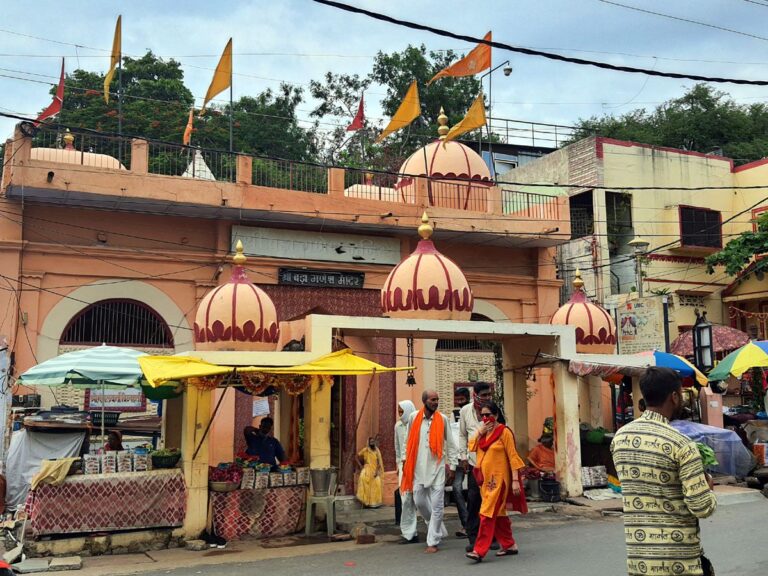
Chintamani Temple Theur
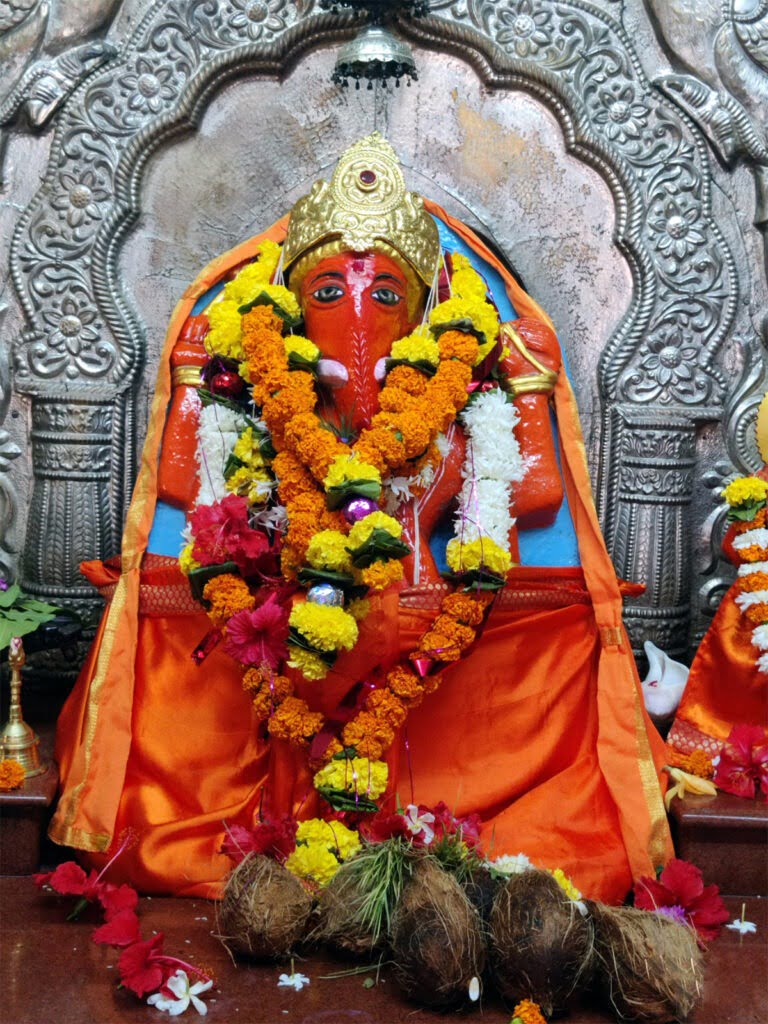
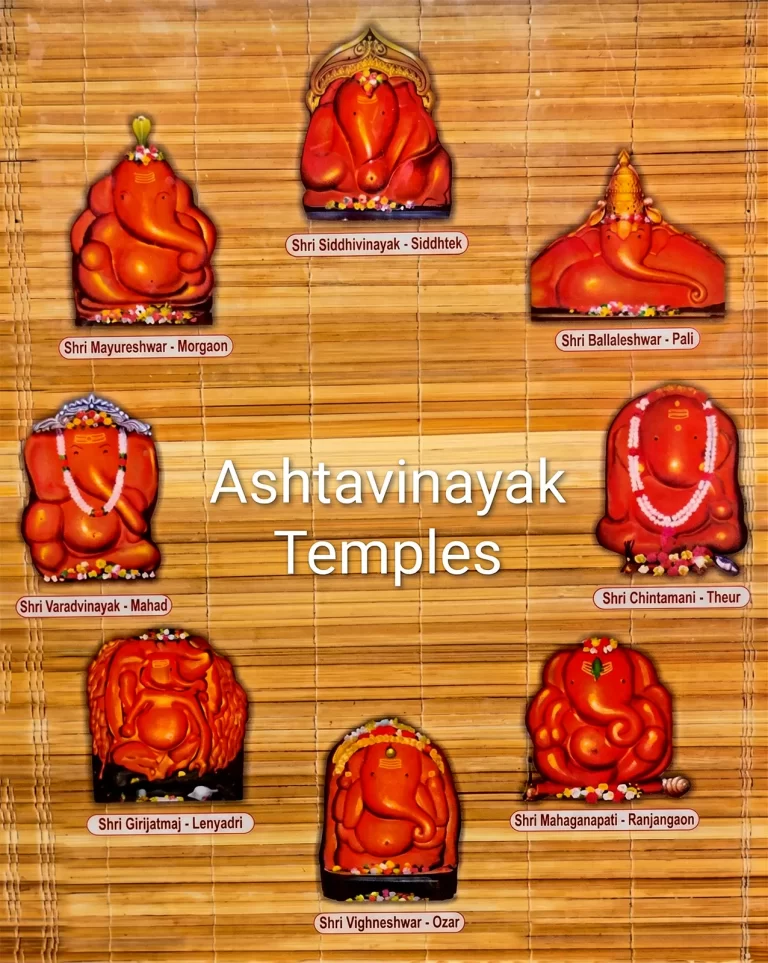
Chintamani Temple Theur is a sacred place which can be traced to very old times and is situated only 25 kilometers away from Pune City at Haveli taluka of Maharashtra, India. Lying precisely at the point of intersection of three important rivers Mula, Mutha, and Bhima, the Chintamani temple is one of the five most significant stops of Ashtavinayak yatra or pilgrimage comprising of eight Swayambhu shrines devoted to Lord Ganesha in Maharashtra.
I am a professional tour guide and have been leading groups through these religious places for years. This is my honor and pleasure to invite you to take a spiritual rejuvenating tour. The Chintamani Vinayaka Temple Theur has its fame across the entire Indian sub-continent as the place that provides absolute calm to restless minds and reveals the ultimate destination to wandering souls. No matter whether you are searching divine help as a pious pilgrim, want to uncover the stories of the Maratha Empire or explore the Indian culture, you have come to the right place.
The moment you enter the serene town of Theur, it feels as if you have left the chaos of the bustling city life behind you. The Chintamani Temple Theur is distinguished from all other Ashtavinayak temples because of the intense psychological and spiritual effect it leaves upon its visitors. The literal meaning of the word ‘Chintamani’ is “the gem that relieves all concerns and grants all pious wishes.” Thus, the Chintamani Vinayaka Temple Theur serves as the metaphysical retreat.
For the spiritually inclined person, it is the self-murti of Ganesha, sitting here to relieve the worries of life of all those who look at him through his diamond-embellished eyes. It is an open air museum for the historian to delve into the deeply ingrained beliefs of the rulers of the Maratha Peshwa dynasty. For the explorer, it is the combination of colossal stone walls and exquisite warm wood assembly chambers that form a pleasing sensory experience. This piece of content has been developed just for you as we reveal the legends, the architecture, and the spiritual energies within this sacred place.
Read More>> Kanipakam Varasiddhi Vinayaka Swamy
Chintamani Temple Theur Historical Background
The ancestry of the Chintamani Vinayaka Temple Theur can be likened to the plot of a historical film that starts from the ages of mythology and moves directly onto the glorious age of the Marathas.
Eras of Spiritual Renaissance
Whereas the manifestation of the deity is eternal, the construction of the current temple structure dates back to the 13th to the 17th century AD, and is strongly associated with Saint Morya Gosavi, who was a famous mystic belonging to the sect of Ganapatya.
It is stated that Saint Morya Gosavi carried out severe spiritual penances underneath the sacred Kadamba tree of Theur, and received divine enlightenment there. Thereafter, according to a divine vision, his descendant Dharanidhar Maharaj Dev built the current temple tank and inner shrine in stone.
Peshwa’s Chintamani Temple Connection
The chintamani temple theur is of immense sentimental significance to Maratha history due to the fact that it was the private temple of the Peshwas who were hereditary prime ministers of the Maratha Empire. Madhavrao I, one of the most competent and respected monarchs of the empire, was a devout worshipper of Chintamani Vinayaka.
On any day where politics or battle made him restless in mind, Madhavrao I would leave Shaniwar Wada in Pune for the sanctuary of this temple where he would seek guidance from his God. In what is considered the greatest tragedy in the history of the temple, Madhavrao was overcome by fatal tuberculosis at the age of 27 and preferred to spend his dying moments in this temple. It was on the temple ground that he drew his last breath while gazing at his idol. His faithful wife Ramabai performed the act of sati on his pyre near Mula-Mutha river.
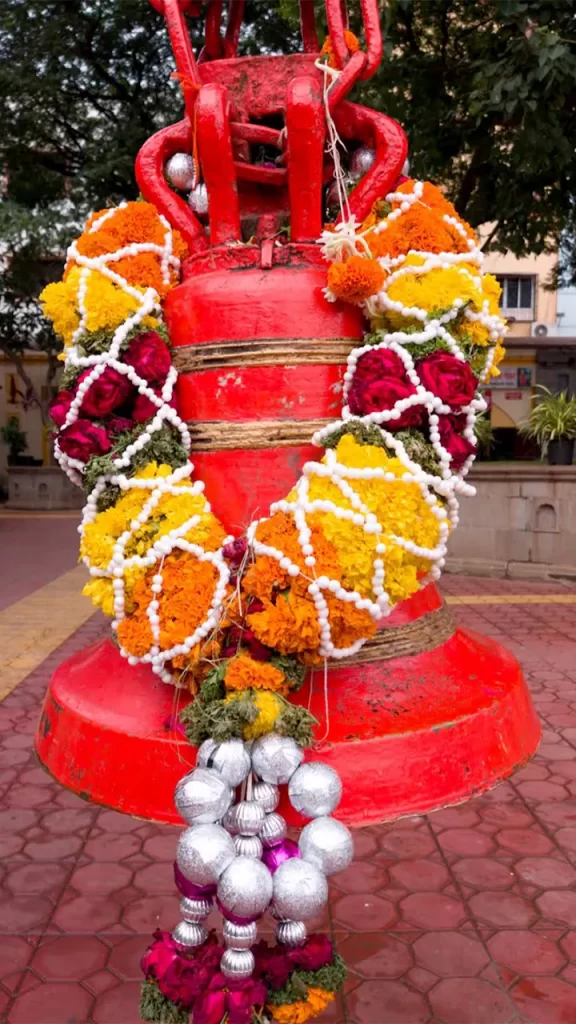
As a tribute to their heritage, a Peshwa Wada, palace of the Peshwas, stands next to the temple. Chimaji Appa, the brother of the valiant Peshwa Bajirao I, presented a grand European church bell to the Chintamani Vinayaka temple Theur. He had personally seized this bell as war booty after defeating the Portuguese at the historic Battle of Vasai in 1739.
Religious and Cultural Significance
For understanding why millions of devotees gather together at the Chintamani Temple, it is imperative for us to explore the age-old Hindu scriptures which validate the spiritual power possessed by this unique place.
Mentions in the Mudgala Purana
This Chintamani Vinayaka Temple of Theur does not belong to any particular region or state. Rather, it finds itself inscribed in the pages of the Mudgala Purana and Ganesha Purana. In the Mudgala Purana, there are three Leelas (pastimes) associated with this unique geographical location, as it happens to be a center of mental calmness.
Let us consider the sacred texts and story behind this temple. From the Puranas:
“Once, Lord Brahma, the creator, found himself plagued by mental restlessness before embarking on his cosmic duties. He was unable to concentrate and had to descend to the earth and observe strict penances to Lord Ganesha in this very spot. Lord Ganesha, pleased with Brahma’s devotion, calmed his restless mind. Thus, Brahma called this place ‘Sthāvara Kṣetra’.”
In due course of time, the common language changed Sthavar to Theur.
Read More>> Famous Tirumala Tirupati Venkateswara Swamy Temple Guide
The Legend of Sage Kapila and Prince Gana
The other important legend that is found in the Puranas tells about the origin of the name Chintamani. It is written in the religious texts that Sage Kapila had the magical and miraculous Chintamani Ratna in his possession with which he served and comforted the entire army that visited him, headed by the greed-filled prince Gana or Ganaraja who was the son of King Abhijit.
As prince Gana coveted the immense wealth-producing capabilities of the gemstone, he forcibly took away the gem from the hermitage of Sage Kapila. The sage felt highly aggrieved on account of which he prayed to Lord Ganesha. Ganesha arrived at Sage Kapila’s place, manifested a great army and killed the haughty Prince Gana in order to get the precious gem.
When Lord Ganesha offered the gemstone to the sage, Sage Kapila humbly declined to accept it. The sage said:
“Oh Lord! The peace your divine presence provides is more valuable than the worldliness provided by the gem. I respectfully request you to reside here permanently and be the Chintamani for all of humanity.”
Lord Ganesha complied with the request of Sage Kapila and wore the divine gemstone around his own neck, making the chintamani temple theur a place where worries are instantly dissolved.
The Emancipation of Lord Indra
A third myth revolves around Lord Indra, the king of heaven, who is cursed by Sage Gautama due to a moral fault regarding Ahalyā. Indra is tormented not only spiritually but physically as well because of his sins. Indra reflects on Lord Ganesha through the Shadakshari mantra among Theur trees. It was within these surroundings that Lord Indra was emancipated from all his fears, making the Chintamani Vinayaka Temple Theur the ultimate site for spiritual emancipation.
Architecture and Design
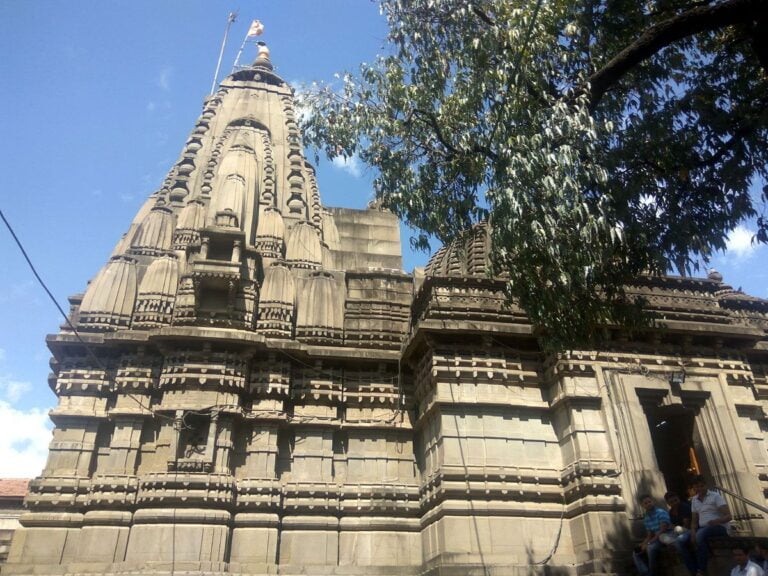
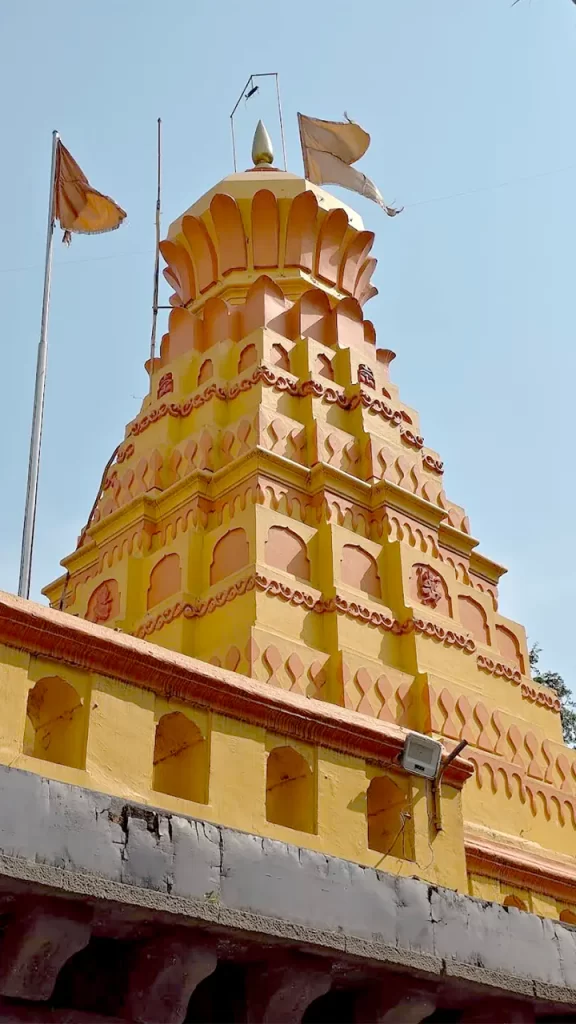
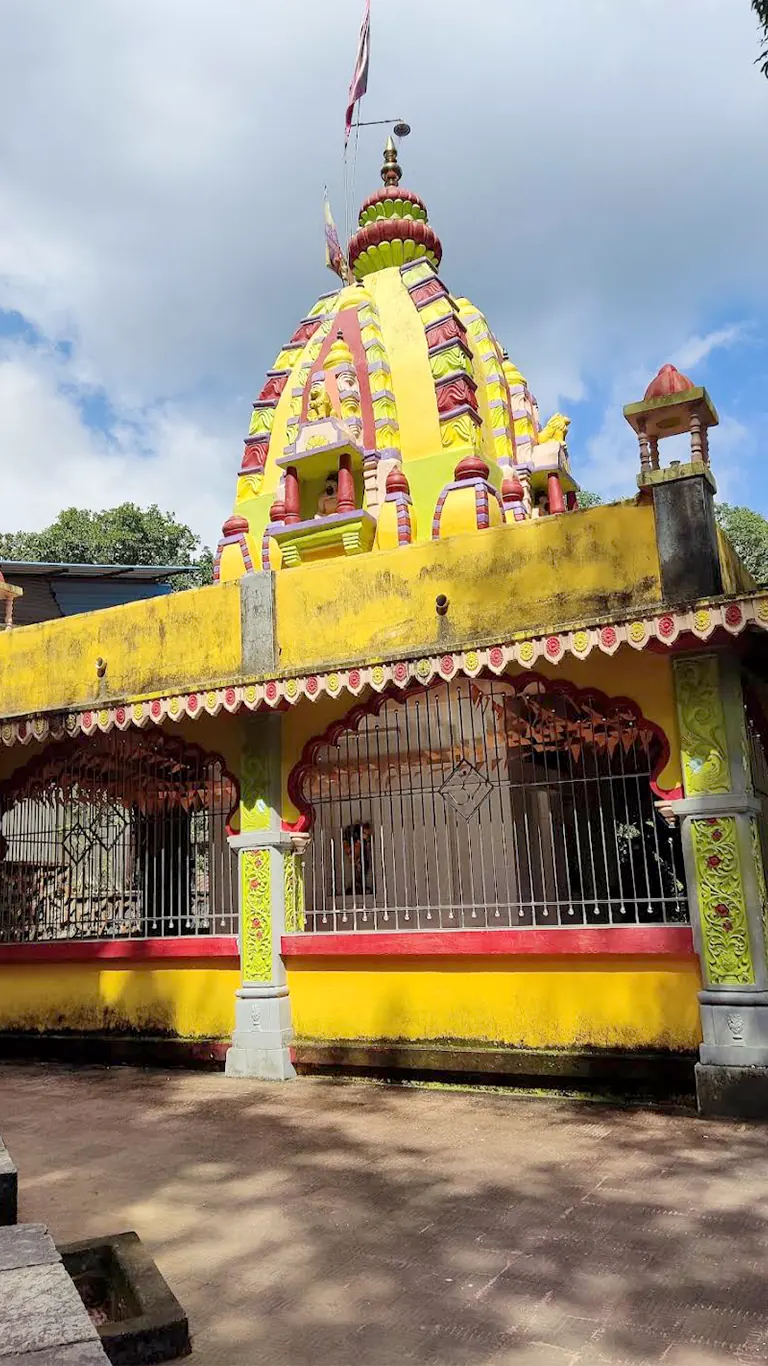
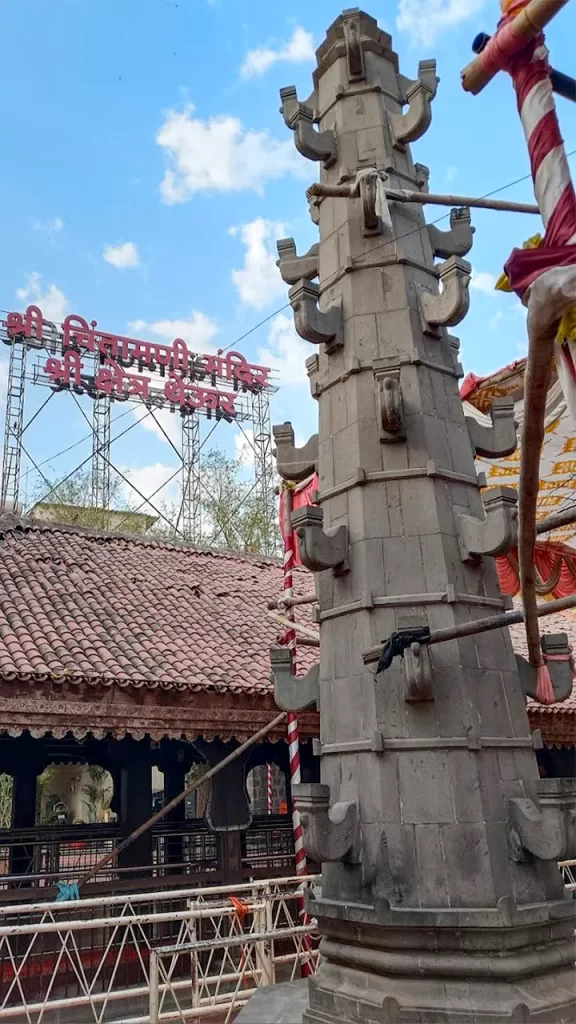
This is the best part of being a guide on the tour. As you observe the Chintamani temple theur, you will see a harmonious mixture of military-style medieval defense construction and welcoming wooden architecture. It is not a pure Dravidian or pure Nagara style found in northern India but shows the classic Maratha Temple Architecture Style that bears strong influences from Hemadpanthi style.
The Wooden Sabhamandapa: A Timber Wonder
The most amazing structure about the Chintamani Vinayaka Temple Theur is its huge wooden Sabhamandapa (assembly hall). Contrary to stone assembly halls typical for other Indian temples, the assembly hall of Chintamani temple is entirely made up of high quality, aged teakwood timber, personally monitored by Peshwa Madhavrao I.
While you walk through this wooden hall, observe the ceiling. You will find floral carvings and geometric relief designs that are an example of the simple elegance found in the Maratha court. The wooden structure of the hall has been designed in such a way that when you chant Maha Aarti, you can feel the vibrations in your chest cavity. In the middle of this paved floor, there lies an exquisite stone water fountain.
The Stone Garbhagriha and Defensive Walls
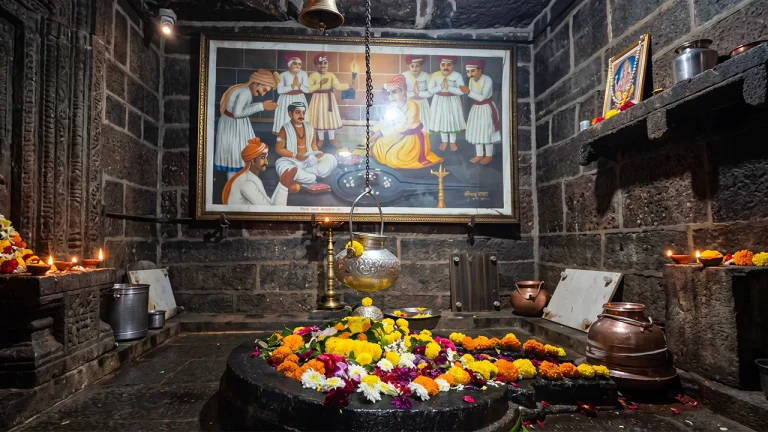
Unlike the wooden halls, this Garbhagriha (inner sanctum) has been made of thick basalt stones that have stood strong for centuries. The entire temple is surrounded by huge stone walls known as Prakara making it appear like a miniature fortress. Such defensive architecture was needed during the chaotic period of 18th century to keep the idol safe from any attack.
The temple’s main entrance is towards the north direction, which is not common with the Ganapati (Ganesha) temples. Nevertheless, the orientation of the inner sanctum is in such a way that the idol faces towards the east direction. As far as architecture is concerned, you start from the bright and open courtyard and end in the dark sanctum sanctorum of the temple.

Main Attractions or Highlights
Do not just quickly go through the primary attraction at chintamani temple theur and depart; there are various other hidden gems you need to uncover.
The Swayambhu Murti
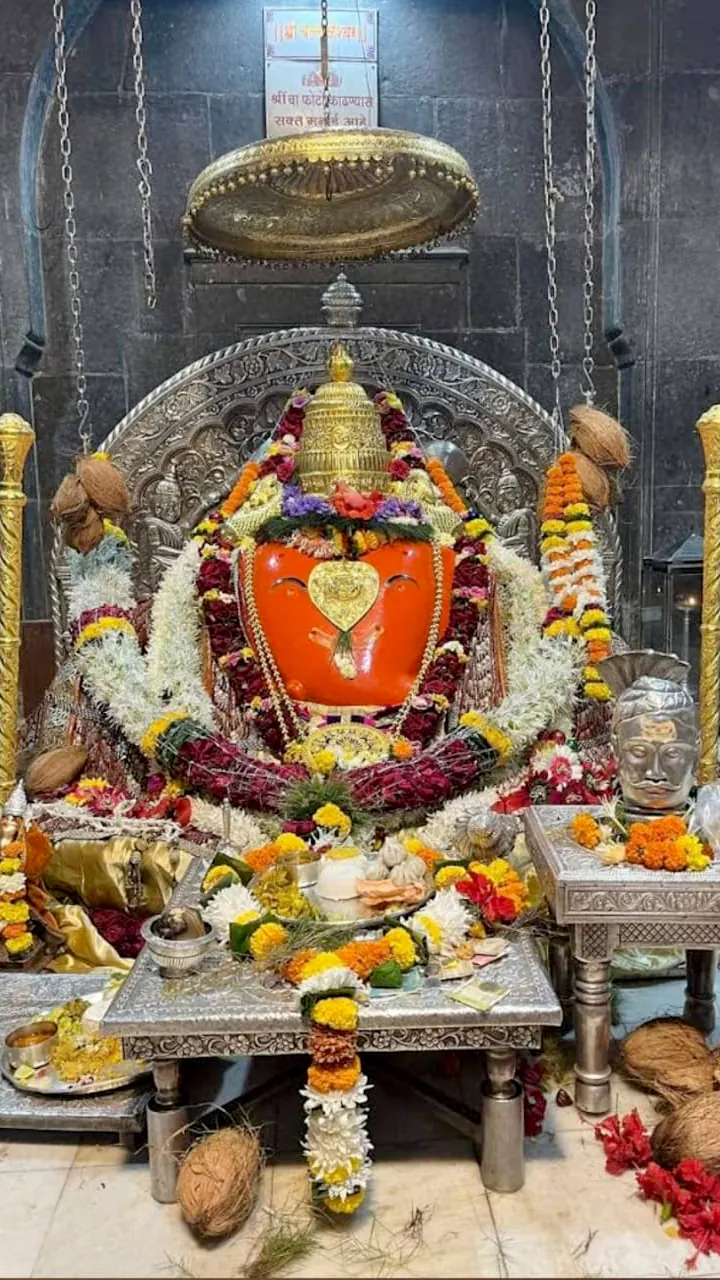
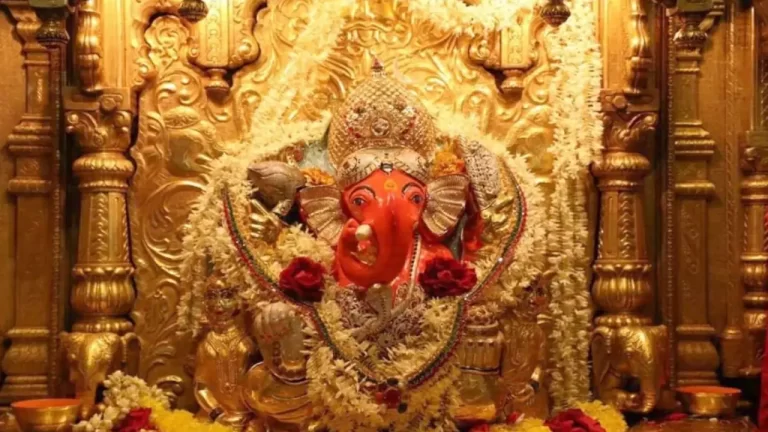
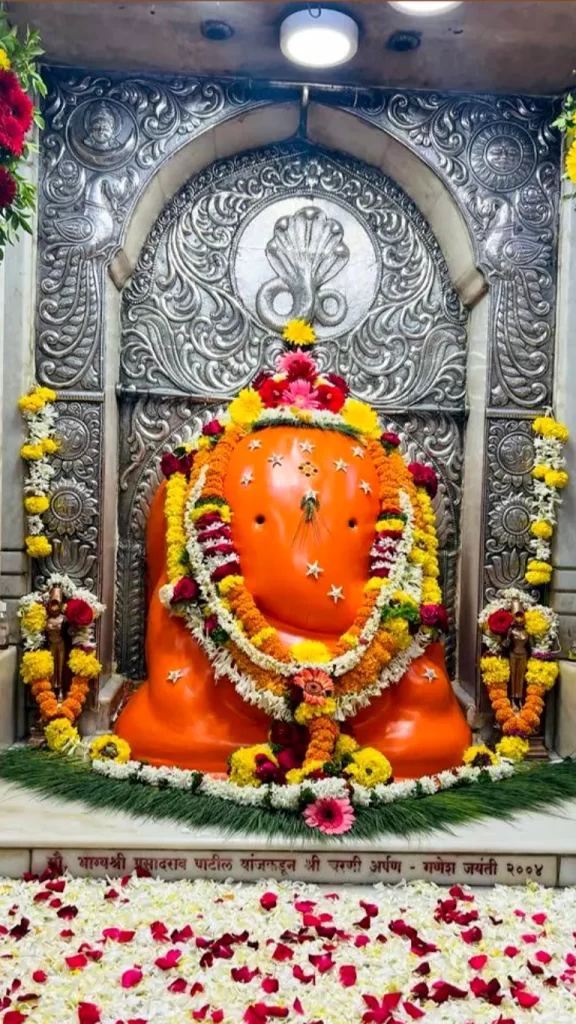
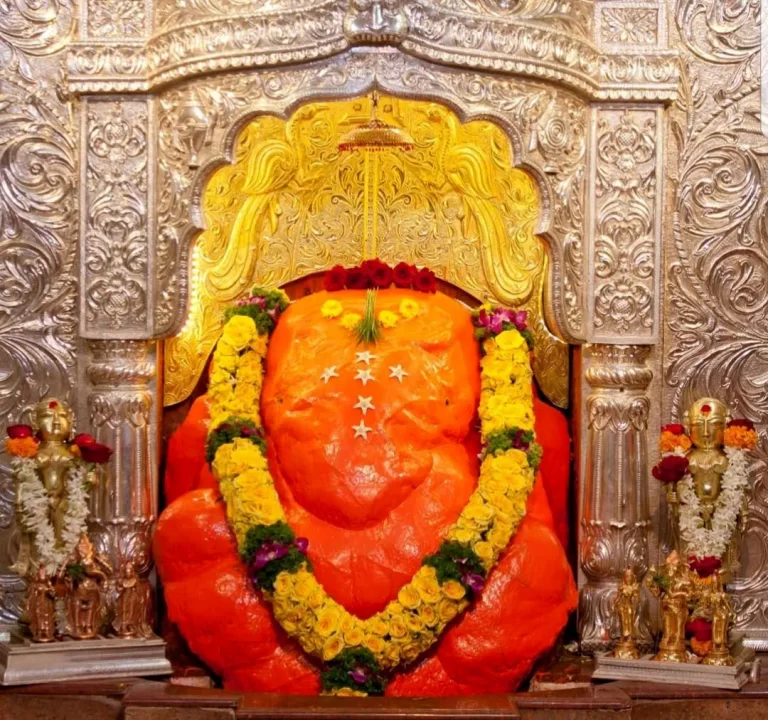
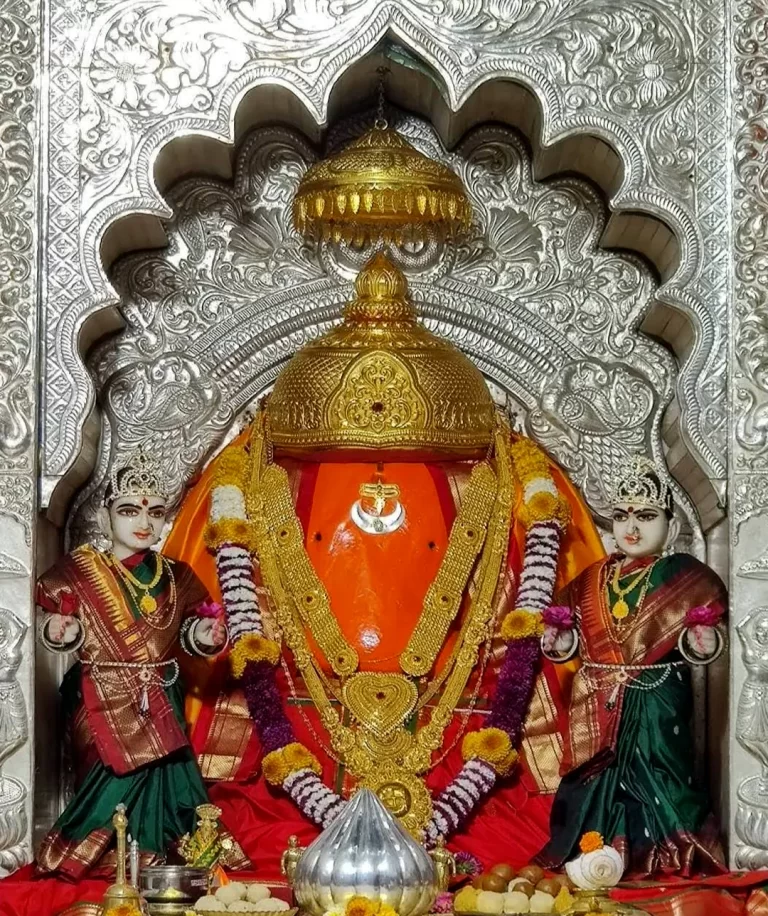
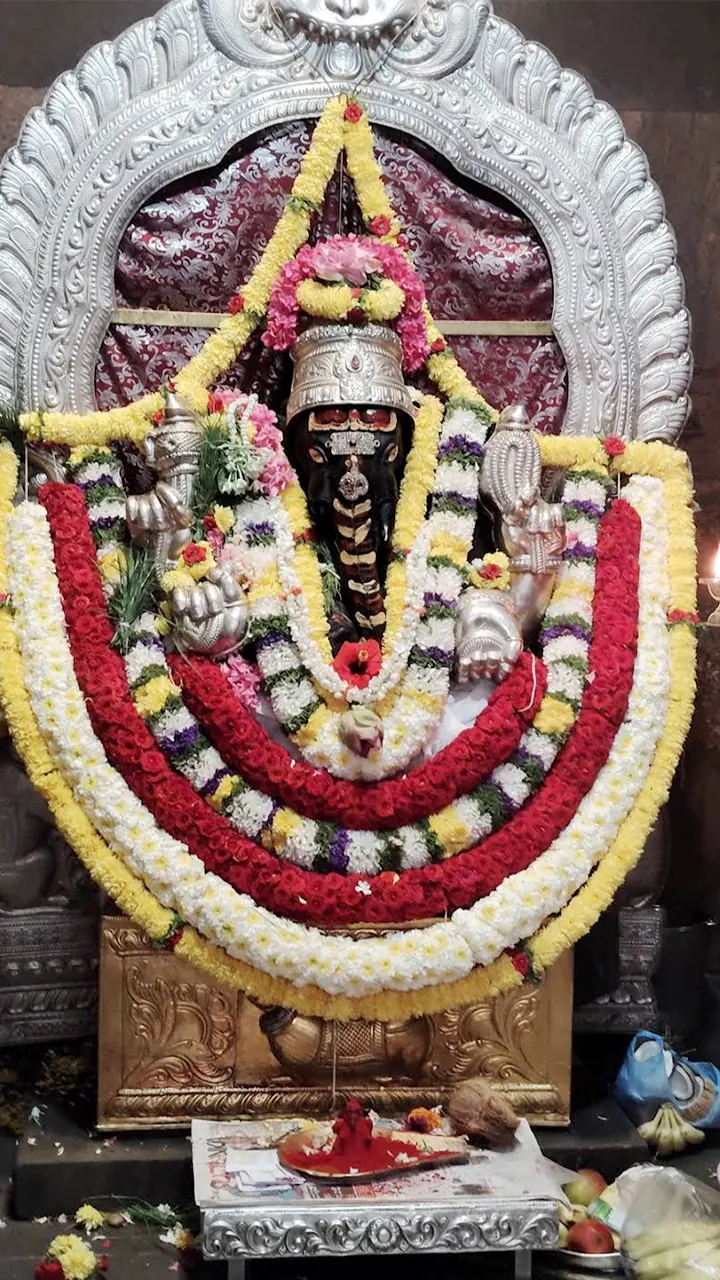
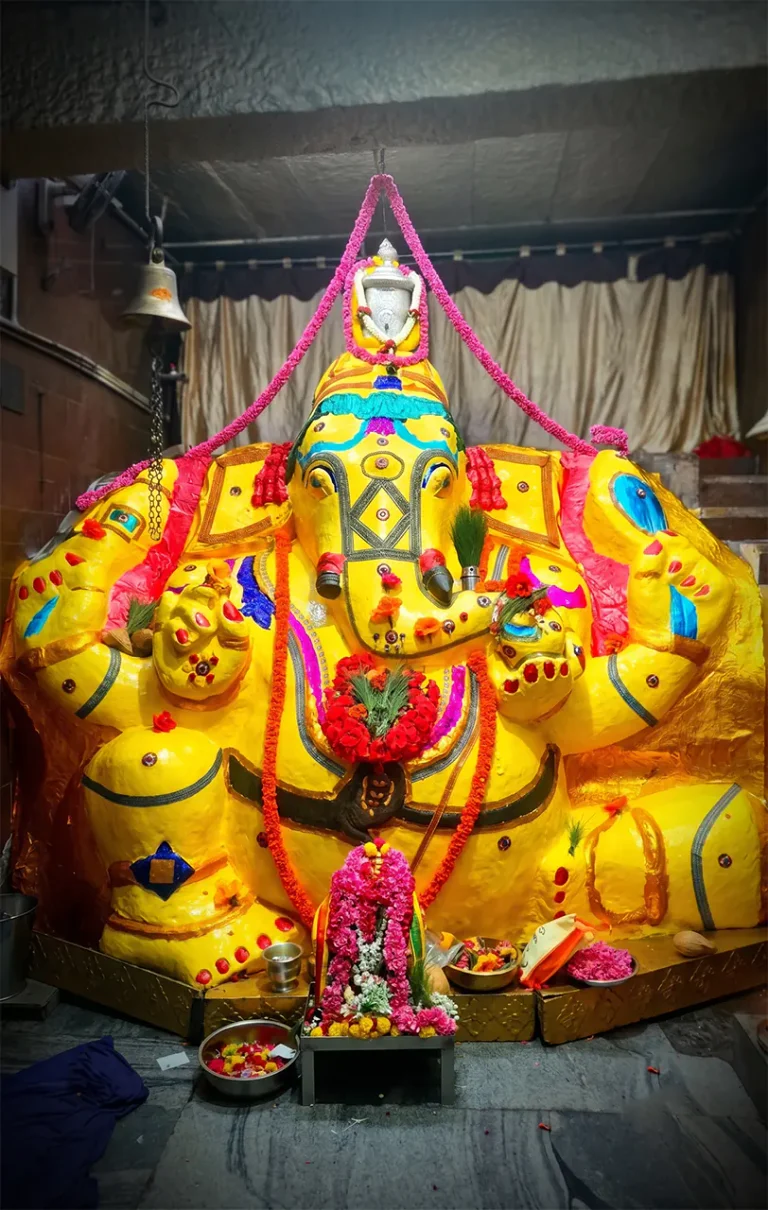
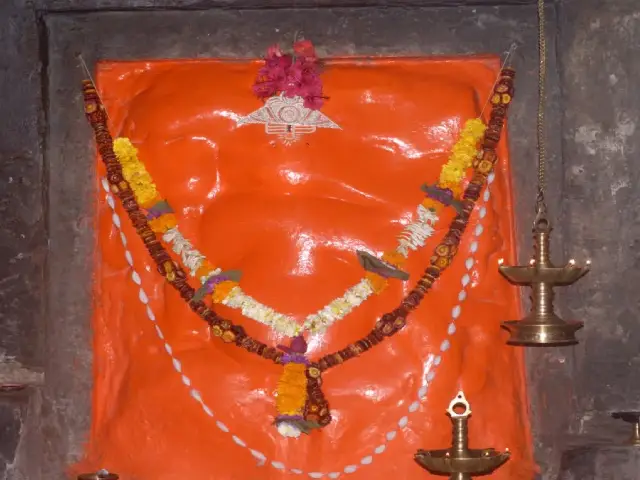
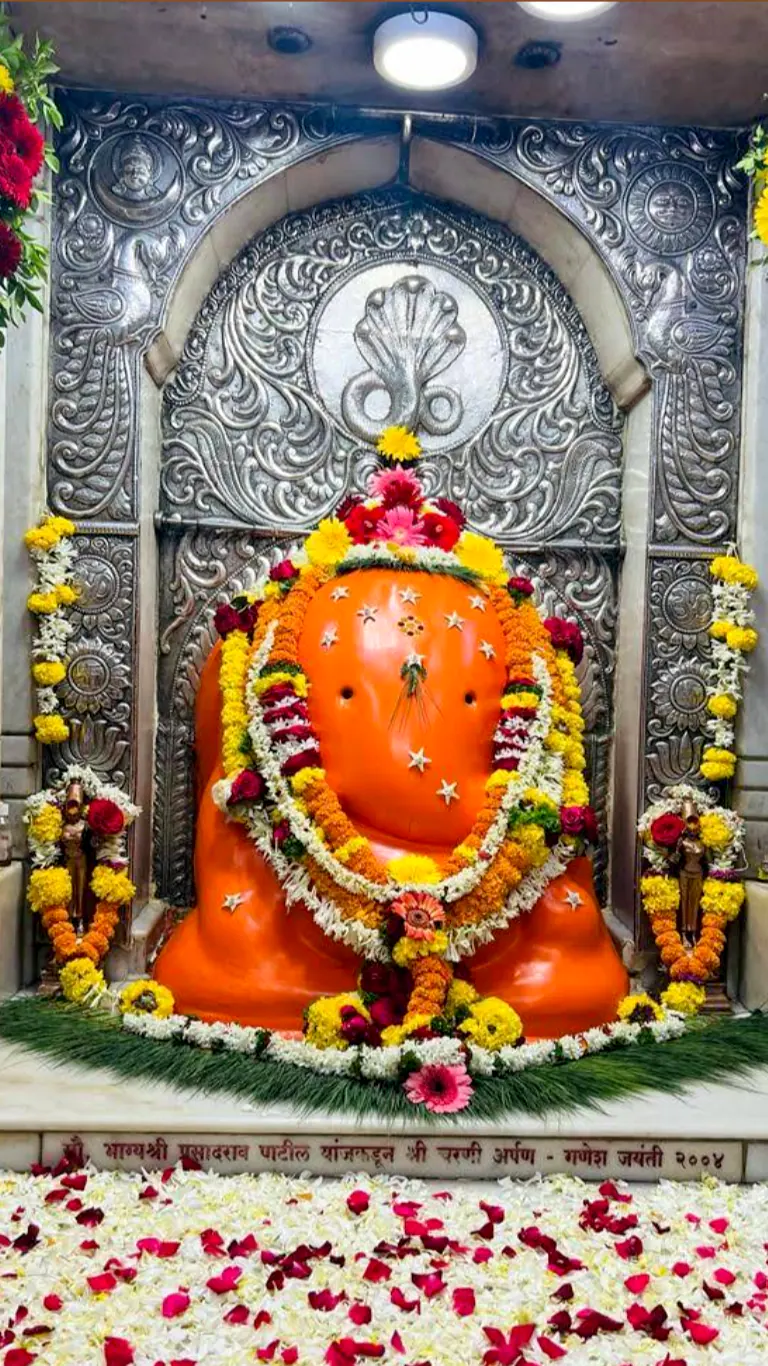
The undisputed gem at the heart of the Chintamani Vinayaka Temple Theur is the idol. It is a Swayambhu idol, in that it did not come about due to any man-made effort but is one of nature’s creations. The idol is shown in a comfortable sitting position (Padmasana).
Contrary to some other Avastha Vinayak idols, the idol of Chintamani Vinayaka has its trunk pointing towards the Left side. This idol is extensively coated with the holy orange vermillion (Sindoor). Its eyes are embedded with diamonds that sparkle brightly as reflected by the flames from the oil lamp.
Read More>> Sacred 12 Jyotirlingas in India: A Symbol of Eternal Spirit
The Historic Portuguese Bell
While entering the main courtyard, take a look at the huge bronze bell hanging from the roof strengthened with metal reinforcements. It is a living testimony to the rich military history of this temple. Having been captured from the fort of Vasai by Chimaji Appa, the bell bears intricate casting done in an old-fashioned European style. For more than two and a half centuries now, this bell has been ringing every morning and evening to mark the beginning and the end of the rituals being performed, its sound reverberating across the entire village of Theur.
| Attraction | Key Feature | Historical/Spiritual Significance |
| Swayambhu Murti | Left-turned trunk, diamond eyes | Removes mental stress and Chinta (worries) |
| Teakwood Sabhamandapa | Complete timber construction | Built by Peshwa Madhavrao I for royal assemblies |
| Portuguese Bell | Massive bronze bell with Latin insignias | War booty won by Chimaji Appa at the Battle of Vasai (1739) |
| The Overry (Meditation Cells) | Small, quiet stone rooms | The exact spot where historical saints meditated |
| Peshwa Wada Ruins | Traditional residential Maratha palace | The private quarters where Madhavrao I spent his final days |
Overry and Sub-Shrines
Along the stone wall perimeter surrounding the main temple building, you will notice several arches leading to tiny rooms. They are known as Overry and are used by the worshippers seeking to spend some time in silent meditation, repeating Ganesha prayers in solitude away from the hustle of the processional movement.
While doing Parikrama around the temple, you will also see beautifully kept sub-shrines dedicated to:
- Lord Shiva (with an ancient stone Lingam)
- Lord Vishnu and Goddess Laxmi
- Lord Hanuman (protector deity of the fort gates)
Chintamani Temple Theur Temple Timings and Rituals
It is very important to coordinate your visit to the Chintamani theur temple with the work schedule of the priests, because the temple is open for visitors over sixteen hours a day with machine-like precision.
Daily Working Schedule
- Opening Hour: 6:00 AM
- Closing Hour: 10:00 PM
However, on the days when a specific cosmic phenomenon happens, the temple opens earlier at 4:00 AM and remains open till 11:30 PM to cater to the crowds of devotees.
The Daily Schedule of Performing Aartis
Watching a performance of an Aarti in the Chintamani Vinayaka Temple Theur is one of the most memorable sensory experiences that one can have. This is how the schedule is divided:
- Pratah Aarti (Aarti in the Morning): 7:30 AM – This time, the God is awakened from the sleep, old flowers are replaced by new ones, and the God is coated with fresh sandalwood oil.
- Naivedya & Madhyan Aarti (Aarti at Noontime): 12:00 PM – A big meal with Modaks and Maharashtrian cuisine is offered as an offering to the Lord.
- Shejaarti (Aarti at Night): 10:00 PM – Last Aarti of the day, with dimming of the lights and singing of hymns to put the Lord to sleep.
Read More>> Matsya Narayana Temple Chennai
Custom Poojas for Devotees
Should you wish to observe any custom rites for the betterment of your family members, you are free to book special time slots at the temple administration office:
- Abhishek: Sacred ritual of bathing a small idol with milk, honey, curd, and sugarcane juice, conducted prior to 8:00 A.M.
- Sahastravartan: Chanting of the Ganesha Atharvashirsha thousand times by learned scholars of Vedas.
- Sankashti Chaturthi Special Archana: Offerings of Durva grass (21 blades) and red hibiscus flowers, both very precious to Chintamani Vinayaka.
Dress Code and Etiquette
Despite the absence of stringent religious requirements on dress at the chintamani temple theur, it is recommended that you maintain a decent and modest appearance.
- Males: Are encouraged to put on traditional dhotis, kurta pyjamas, or trousers. Do not come wearing sleeveless tops or shorts.
- Females: Should preferably come in sarees, salwar kameez, or any other form of ethnic wear from India.
- Footwear: Have to be taken off at the counters provided at the northern stone gate and kept there while walking around inside the temple premises.
Festivals and Events
As for the case of Chintamani Vinayaka Temple Theur, although the temple remains very quiet throughout the normal weekdays, things become lively during its major festivals of the year.
- Ganesha Prakatotsav (Bhadrapad Utsav)
This festival occurs during the month of Bhadrapad which lies within the period of August and September. In this particular event, which takes place in Theur, it commemorates the birthday of Lord Ganesha. Celebrations in the chintamani Vinayaka temple theur run up to eight days from Bhadrapad Shuddh Pratipada to Bhadrapad Shuddh Ashtami. The temple gets decorated with tonnes of rare marigold flowers and native orchids. Crowd levels during this particular period reach extremely high numbers with waiting queues running outside the stonewall fort for about 3 to 4 hours. - Maghotsav (The Great Winter Festival)
This festival takes place during the winter months of Magh (January – February). The main attraction in this particular event is the Dwaryatra and the evening procession (Ratha Yatra), during which a bronze statue of Chintamani Vinayaka is set on a wooden chariot and carried around through the streets of Theur.
- Rama-Madhav Punyotsav: A Rare Historical Event
As unique as this temple is compared to all the others that constitute the Ashtavinayak Yatra, one particular event held here makes it completely one-of-a-kind. This is the annual celebration held at Chintamani Vinayaka Temple Theur during Kartik (October-November), which pays tribute to Peshwa Madhavrao I and his wife, Ramabai.
This event involves organizing a grand classical music festival along with a fair in their honor every year on the eighth day of Kartik. The temple authorities hold this celebration, which is attended by many who love history, classical music, and Maratha warriors.
Read More>> 12th Century Babulnath Temple Mumbai
Crowd Dynamics and Optimal Visiting Time Window
In case you are looking for a serene, reflective, and meditative darshan, then try visiting the temple during Wednesday and Thursday in the winter months (October to February).
Tuesday, Sankashti Chaturthi, and Angaraki Chaturthi are days when the crowds at the temple will be overwhelming. During Angaraki Chaturthi, the temple sees more than 100,000 visitors, with the whole village being turned into a market place.
How to Reach and Visitor Amenities
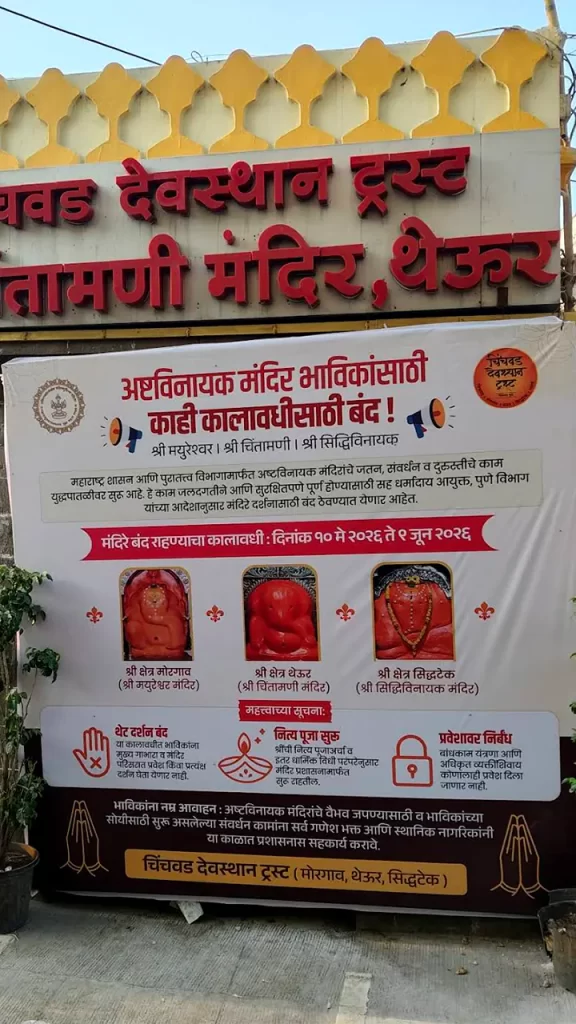
Accessing the chintamani temple theur is a hassle-free task due to its close location to Pune, which is the cultural hub of Maharashtra.
Road Route (Recommended)
Theur is situated only 25 to 27 kilometers away from Pune city.
- Route from Pune City: One can easily make use of the national highway route of Pune to Solapur. Take this route and go straight until you reach the major crossing at Loni Kalbhor, then take a left turn and head towards Theur Gaon. It will take about 45 minutes to one hour by road.
- Public Transport (City Bus): The city buses of Pune Mahanagar Parivahan Mahamandal Ltd (PMPML) run frequently and are available at very low cost from Hadapsar Gadital Bus Stand to Theur Gaon Bus Stand. Bus Number 183 is a popular choice among tourists.
Trains
- Pune Junction Railway Station, abbreviated as PUNE, is the closest main railway station connecting to all the cities in India via rail. Hiring an app-based taxi (Ola/Uber) or auto-rickshaw from the station will provide easy access to the temple.
- There is a local station at Loni which is 6 kilometers from the temple, and here only the local train stops.
Air
The nearest airport is the Lohegaon Pune International Airport with the IATA code PNQ, located approximately 22 kilometers from the temple. You can book a pre-paid airport taxi from the airport that reaches the temple within an hour.
Entry Fees and Maha Prasadam Facilities
- Entry Fee: The entry into the temple is absolutely Free of cost to all visitors.
- Maha Prasadam Thali: The temple authorities maintain a very good hygienic Prasadalaya. From 12 Noon till 2:00 PM, one can avail themselves of the tasty and healthy thali for the price of about ₹15. This will include one plateful of aromatic rice, typical Maharashtrian style Dal, a vegetable made of potatoes mixed with Chana, some Chapatis, and sweet dessert of Sooji Halwa (Sheera).
Facilities for Visually or Physically Challenged People
The temple management has taken a lot of initiative to provide the following facilities:
- Ground Floor Pathway: The temple management maintains an entrance path from the vehicle parking area to the Wooden Hall through which a person having trouble walking can easily come into the temple without encountering any steep staircases on the way.
- Wheelchairs: Wheelchairs are readily available at the Security Room at the temple entrance, and the side entrance routes have ramps to avoid climbing the staircase.
- Toilets: Modern toilets are provided just next to the main building.
Dos and Don’ts
In order to be culturally sensitive to the surroundings and make your pilgrimage comfortable for yourself and other visitors, here are some basic rules you should remember:
The Dos
- Do spend time in the Overry: Spend at least twenty minutes after your primary darshan to sit quietly in the meditation corridors formed by stones and experience the peace that emanates from within.
- Do purchase Durva grass from locals: Help the local women who sell Durva grass and red hibiscus flowers in bundles to worship the deity in the temple.
- Do go to the river confluence: Take a leisurely stroll to the back side of the temple where you can get the breathtaking view of the junction of the Mula-Mutha and Bhima rivers.
The “Don’ts”
- Do not do professional photography inside the sanctum: Though casual photography in the outer stone courtyard is allowed, it is strictly forbidden to photograph or record videos inside the wooden Sabhamandapa and the stone Garbhagriha.
- Do not carry bulky leather bags: Refrain from bringing any hefty or bulky objects like leather bags or anything else that might be considered prohibited into the inner temple line.
- Do not run in the line: Patience lies at the heart of the entire temple experience. Be disciplined while standing in the queue line (Darshan Line), particularly on crowded days.
Read More>> Sanghi Temple Hyderabad: Complete Guide
Nearby Attractions
When looking for a whole day itinerary from Pune, then you may conveniently integrate your visit to Chintamani Temple Theur along with a number of other exciting places close by.
- Ramdara Temple (13KM Away)
Just a little further away from Theur is another famous religious shrine named as Ramdara Temple. This temple is located in a serene valley and is the worship place for the Lord Rama, Goddess Sita, and Lord Shiva. Moreover, there is an artificial lake near the temple, and its beautiful reflection along with coconut trees adds up to make a heaven on earth. - Nisargopchar Ashram, Uruli Kanchan (15KM Away)
Another interesting spot located nearby is the Naturopathy Ashram. Founded in 1946 by the great leader of India Mahatma Gandhi, this ashram serves as a detoxifying place using natural ingredients of the surroundings only. - Ashtavinayak Shrines
If going for a trip involving the entire Ashtavinayak temples, then next on the list is Ranjangaon Mahaganpati Temple (43 Kilometers through NH 753F) or the Siddhatek Siddhivinayak Temple (83 kilometers through Solapur).
Frequently Asked Questions (FAQs)
Question 1: Why is Theur Ganpati temple referred to as Chintamani?
The temple derives its name from a mythological story wherein Lord Ganesha returns the wish-fulfilling Chintamani Ratna that had been taken by the greed-laden Prince Gana and given back to Sage Kapila. As a favor, Sage Kapila pleads with Lord Ganesha to settle here under the name of the wish-fulfilling gem and promise to take away all their Chinta (worries) from the minds of his devotees.
Question 2: What is the importance of having the trunk turned to the left in Theur?
A statue with the trunk bent to the Left is termed as Vamamukhi. It is an idol of calming and soothing qualities and denotes Ida Nadi. Ganesha statues with leftward trunk are considered mild, easy-to-please idols who bless people with wealth and happiness through regular prayer at home.
Q3: What is the duration of darshan in Chintamani Temple Theur?
On regular days such as Monday, Wednesday, Thursday, and Friday, you should expect to get darshan done within 15 to 30 minutes. On weekends, Tuesdays, and during Sankashti Chaturthi, your darshan may take anywhere from 1 to 2 hours. For major occasions like Maghi Ganesh Jayanti, you should be prepared for up to 3 to 4 hours.
Q4: Are accommodation facilities available nearby?
Being just 25 kilometers from Pune City, most people would rather take a trip to Chintamani Temple and return back home on the same day rather than having to spend the night at the place. For devotees looking forward to an early morning Pratah Aarti, there are guest house facilities available. They are quite basic yet extremely affordable. There are also budget hotels available close to the market center.
Q5: Is parking facility available in or around the temple premises?
There is a decent-sized car parking area available within 200 meters of the northern gateway of the temple premises. The parking charge depends on what type of vehicle you use. It usually varies from ₹20 to ₹30 per car or bike.
Conclusion
The chintamani temple theur is a perfect blend of history, divinity, and beautiful architecture. This place holds immense value since it has been mentioned as one of the holy sites in the famous Mudgala Purana and also has witnessed many real-life events such as the story of Peshwa Madhavrao I. For centuries, people from all walks of life have come here seeking comfort from their worries.
I would like to suggest taking time out from your busy life to spend some peaceful moments here early in the morning. Take a leisurely walk along the picturesque riverbanks, enter the ancient teak wood assembly halls, and get lost in the gaze of the diamond eyes of the Chintamani Vinayaka Temple Theur. You will soon realize that you are entering the realm of peace and stability of mind, which this sacred temple has been offering people for generations.
It’s time to pack your bags and enjoy an unforgettable spiritual road trip with your loved ones. Worry remover is here waiting for you!