Applying Tilak or Kumkum on the Forehead: 7 Powerful Reasons
Applying tilak or kumkum on the forehead is perhaps the most distinctive, beautiful, and personal practice in India. Regardless of whether you find yourself in a colorful temple in Madurai, at an intimate morning ritual puja in a Delhi residence, or in a Gujarati village household, there is no chance that you will not encounter somebody making a mark on his or her forehead. Did you ever ask yourself why we do it, what is this red substance, and why each individual wears something totally different on his or her forehead?

I clearly remember sitting next to my grandmother when I was a little kid during our morning prayers. She used to take some bright red powder, place it between my eyebrows with her thumb, and tell me: “This is to keep your mind peaceful and remember God.”
In this guide, you will learn all the ins and outs of the forehead marking practice with Tilak or Kumkum. We will explain its spiritual meaning, traditional finger placement, regional differences, and scriptural background using plain language and easy to understand wording.
Quick Answer
Applying Tilak or Kumkum on the forehead is a sacred Hindu practice of placing a mark between the eyebrows (the center of awareness or Ajna chakra). A Tilak is a general term for any religious forehead mark (made of sandalwood, ash, or clay), whereas Kumkum is specifically a vibrant red powder traditionally made from turmeric and slaked lime. The mark symbolizes devotion, protection, focus, and spiritual awareness.
What Is Tilak?
In order to explain this practice to you, it would be wise for us to begin with the basics.
The term ‘Tilak’ or ‘Tika’ or ‘Tilaka’ originated from the Sanskrit word ‘Til’, which means sesame seeds. However, in the past, a Tilak was known to mean a small dot like the one that can be made from a sesame seed. But nowadays, it refers to all kinds of designs.
A Tilak simply means a marking or design made on the forehead by applying paste or powder, in the form of a dot, a line, or even a shape of lotus or trident.
What Is Kumkum?
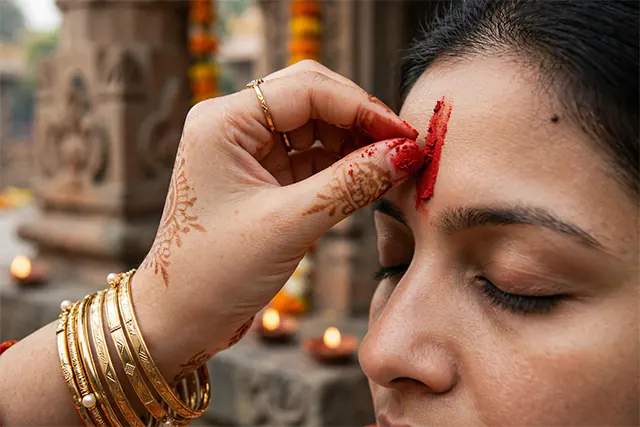
Although Tilak refers to the general marker, Kumkum is the particular bright red powder that is used to create the Tilak mark on the forehead.
Conventionally, real Kumkum is created using the combination of natural turmeric powder and slaked lime (Chuna). On contact between the two natural components, an amazing chemical process takes place to convert the yellow colored turmeric powder into a deep red one. This powder gives off an earthly scent and has great religious significance in Hindu practices.
What Does Tilak Mean?
Fundamentally, wearing a Tilak implies that you pledge to maintain inner calm and concentration towards religious ideals.
Did you know? Find out here… Mind Blowing Facts About Temple Gopurams
Why Do Hindus Apply Tilak or Kumkum on the Forehead?
There are various reasons for applying Tilak or Kumkum on the Forehead, which include:
Spiritual Reasons
From the spiritual point of view, the middle of your forehead between the eyebrows is regarded as the source of human consciousness and concentration. Applying the forehead marking ensures your mind stays focused on praying and any other activities.
Religious Reasons
This indicates how close you are to God. Various designs will indicate whether you follow this particular religion or belong to one of the deities, such as Lord Vishnu, Lord Shiva, or the Divine Mother.
Cultural Reasons
From a cultural perspective, putting a Tilak on your guest’s forehead is an Indian form of showing respect, love, and hospitality (Atithi Devo Bhava) for your guest who is blessed at your place.
Forehead Significance
This part symbolizes your mind, intellect, and thoughts. Thus, by applying the forehead mark, you dedicate your thoughts and intellect to do good work.

Why Is Kumkum Applied Between the Eyebrows?
The exact spot where Kumkum is applied is not random. It sits right in the center of the forehead, just above the bridge of the nose.
Ajna Chakra and Folk Traditions
According to Yoga and Tantra, subtle energy map theory, this location is known as Ajna Chakra, which means the “third eye.” It is considered the site of intuition and wisdom.
Spiritual Aspect
Using this sacred substance to exert mild pressure on the location serves as a reminder to look at the world through the eyes of wisdom and peace, and not through the eyes of hate and malice.
Science
Various websites mention that using Kumkum on the forehead can activate the pineal gland or cure headaches scientifically. Nevertheless, currently, there is no research-based evidence showing that this procedure affects pineal gland secretion or brain structures.
What is actually true is that applying pressure to this spot provides mild acupressure effect, relieving facial muscle tension and helping to feel relaxed. This beautiful ritual should be appreciated for its spiritual, psychological and cultural value alone!
Did you know? Find out here…What happens after death in Hinduism
What Is the Difference Between Tilak, Kumkum, Tika, Bindi and Sindoor?
These terms can get confusing! Here is a simple comparison chart to help you understand the differences clearly:
| Term | Primary Material | Main Purpose | Who Wears It? |
| Tilak | Sandalwood, Ash, Clay, Kumkum | Devotional, spiritual focus, temple rituals | Men, women, and children |
| Kumkum | Turmeric + Slaked Lime (Red powder) | Worship, auspiciousness, Shakti devotion | Everyone during puja; widely by women |
| Tika | Kumkum, Rice grains, Sandalwood | Celebratory mark (Raksha Bandhan, Bhai Dooj) | Brothers, sisters, guests |
| Bindi | Felt sticker, gel, powder | Decorative beauty, cultural sign of auspiciousness | Mostly women and young girls |
| Sindoor | Vermilion / Red powder | Applied along the hair parting as a symbol of marriage | Married women |

Different Types of Tilak
Different materials and shapes are used across Indian traditions:
Kumkum Tilak
Red dot or line drawn using red powder. Symbolizes Shakti (spiritual energy), heat, and protection.
Chandan Tilak
Drawn using ground sandalwood paste. Has a natural cooling effect and amazing fragrance, which soothes the mind especially during hot seasons or long prayers.
Vibhuti / Bhasma
Sankirtana of white ash prepared from burning some natural things, including cow dung cakes or holy wood of a havan. Acts as a gentle reminder that the body has to return to ashes someday.
Tripundra
Three horizontal stripes of white vibhuti painted on the forehead with a red Kumkum dot in between. This is the typical marking of Shaivism (followers of Lord Shiva).
Urdhva Pundra
A vertical U-shaped marking drawn using white clay (Gopi Chandan) or sandalwood paste, sometimes with a red or yellow central line. This is the marking of Vaishnavism (followers of Lord Vishnu).
Gopi Chandan
Yellowish-white clay found in Holy rivers and lakes (Vrindavan and Dwarka, mostly). Gentle and dear to the heart of Krishna followers.
Did you know? Find out here…What is Kamasutra in Hinduism
What Do Different Tilak Designs Mean?
- Red Dot: Symbolic of creation energy, concentration, and blessed fortunes.
- Three Horizontal Lines (Tripundra): Symbolic of clearing of three obstacles – ego, self-centeredness, and ignorance.
- Vertical U-shaped Marking (Urdhva Pundra): Symbolic of Lord Vishnu’s footmark, directing upward to spiritual elevation.
- Sandalwood Center Line: Symbolic of peace and purity directly in your mind.
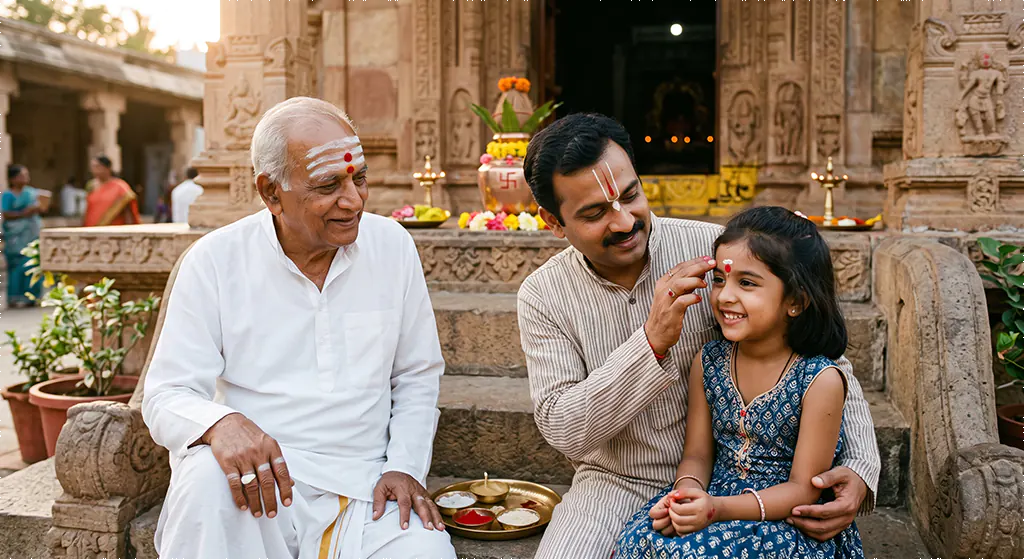
Method of applying tilak or kumkum on the forehead
- Material Preparation:Use fresh water or rosewater.
In a bowl, add a tiny bit of Kumkum powder or sandalwood powder to a few drops of fresh water or rosewater to prepare a non-flowing paste. - Sanitize Your Forehead:Make sure that the skin is dry.
Sanitize your forehead with some fresh water so that the paste adheres easily and remains intact during the entire day. - Identification of Spot at the Center of Your Eyebrows:Look for Ajna point.
Find the tender spot at the center of your eyebrows, just above the nose. - Application:Move your finger in an upward direction.
Using your preferred finger, apply gentle pressure to the point. For dot application, apply pressure only once, whereas, for line application, move your finger upwards. - Sanctified Rice (Optional):Used during special pujas.
During festivities or temple visit, press a few uncooked rice grains (Akshata) into the wet paste.
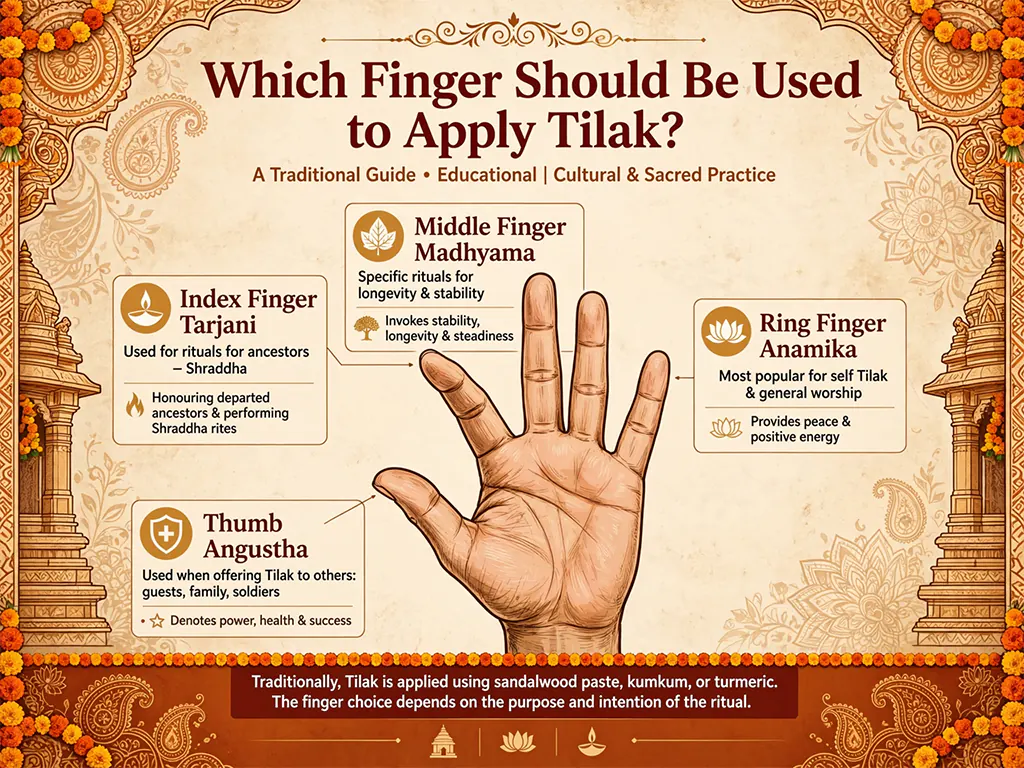
Which Finger Should Be Used to Apply Tilak?
Different fingers are used based on the situation and tradition:
Ring Finger (Anamika): Most popular for Tilak on one’s own self or during any general worship ceremony. It is believed to provide peace and energy.
Thumb (Angustha): Usually used when offering Tilak to others or to guests, family members, or to soldiers. It denotes power, health, and success.
Middle Finger (Madhyama): Specific rituals use the middle finger for longevity and stability.
Index Finger (Tarjani): Usually used for performing rituals in respect of ancestors (Shraddha).
When Should Tilak or Kumkum Be Applied?
- Morning Puja: Immediately after bath and morning prayers.
- Temple Offerings: By the priest in form of Prasad after offering prayers.
- Celebrations: To be worn during festivals such as Diwali, Raksha Bandhan, Navratri, and Holi.
- Weddings and Celebrations: To be used to welcome people at weddings or birthdays or to bless bride and groom.
- Before Big Occasions: For use before sitting for examinations, new ventures, and long journeys.
Can Men, Women, and Children Apply Kumkum?
- Men: Usually apply Chandan, Vibhuti, or Kumkum dot following morning prayers or after visiting temples.
- Women: Regularly wear Kumkum or Bindis during day-to-day activities and prayers.
- Children: Apply Sandalwood or Kumkum marks gently during rituals to ensure that they remain calm, concentrated, and safe.
What Is Kumkum Made Of?
Kumkum Traditions
Traditional Kumkum is made from 100% natural products:
- Ground dried Turmeric roots in the form of powder.
- Water and Chuna.
- Optional natural lemon juice (to adjust the color).
Commercial Kumkum
There are commercial products on the market that use artificial colors, which may contain some lead or chemical ingredients. They can cause skin problems like rashes and itching. Always buy pure organic Kumkum for your skin’s health!
Why Is Kumkum Red?
In Indian tradition, red is the color of:
- Shakti: Divine energy, life, and movement.
- Auspiciousness (Shubh): Joy, prosperity, and blessings.
- Warmth & Passion: The flow of life force (Prana).
Red stands out visually, catching the eye and instilling a sense of reverence and enthusiasm.
Scientific Reason for Applying Tilak
- The Traditional View: It aligns your energies, enhances concentration, and helps cool your forehead.
- The Scientific Evidence: Pressing your fingertips in-between your eyebrows using gentle pressure creates a light acupressure impact that helps ease tension in your facial muscles and induces mindfulness.
- Unsupported Assertions to Ignore: The idea that Kumkum “permanently heals pineal gland conditions” or “re-wires brain waves” does not have any scientific backing. It is best used for its spiritual significance and cultural value.
Religious Significance of Tilak in Different Hindu Traditions
- Vaishnavism: Worshippers of Lord Vishnu
The worshippers use white mud or Sandalwood as a vertical U-shaped marking (Urdhva Pundra). This signifies the holy feet of Lord Vishnu and helps them focus their minds on divine worship. - Shaivism: Worshippers of Lord Shiva
The worshippers use three horizontal lines of holy ashes (Tripundra). This shows how ephemeral the body is and the pure heart of the devotee. - Shaktism: Worshippers of the Divine Mother
The worshippers use a bright red Kumkum mark or dot. This signifies the highest creative power, protection, and life force (Shakti). - Smart Tradition: Universal Worship in Harmony
The worshippers can use Sandalwood paste, Kumkum, or Vibhuti depending on the personal preference of the worshipping devotee or the deity they are worshiping that day.
Tilak and Kumkum in Different Indian Regions
Forehead markings vary beautifully across India:
- South India (Tamil Nadu, Kerala, Karnataka, Andhra Pradesh, Telangana): Kumkum powder, sandalwood paste, and vibhuti lines are commonly applied after visiting temples on a daily basis.
- North India (Uttar Pradesh, Bihar, Punjab, Rajasthan): Red dots of Kumkum along with yellow turmeric or sandalwood are favored in celebrations and greetings.
- West India (Maharashtra & Gujarat): Chandi and Kumkum are applied in order to pay respect to the guests on various family gatherings and festivals such as Ganesh Chaturthi.
- East India (West Bengal & Odisha): Red Kumkum and Sindoor hold an important place in Durga Puja and weddings.
Tilak in Hindu Scriptures and Traditional Texts
Forehead marks are referenced in several classical texts:
“The forehead adorned with sacred ash or sandalwood shines like a lamp of wisdom, driving away darkness.”
— Puranic Commentary
In ancient texts such as the Padma Purana, Devi Bhagavata Purana, and Agama Shastras, the use of sacred markings is explained to aid in preparing one spiritually for worship by getting rid of daily distractions before worshiping.
Is Applying Tilak Mandatory?
No, applying Tilak is not mandatory.
Hindu religion grants absolute spiritual freedom. Wearing the Tilak depends on individual’s preference whether cultural, spiritual or just a choice. Not wearing it will not make you any less spiritually endowed but many people derive satisfaction from this act.
Common Myths About Tilak and Kumkum
- Myth 1: Every Hindu wears the exact same mark.Fact: Designs vary based on regional customs, family traditions, and personal beliefs.
- Myth 2: Kumkum and Sindoor are identical.Fact: Kumkum is used broadly for worship by everyone; Sindoor is specifically applied along the hair parting by married women.
- Myth 3: Tilak is only for women.Fact: Men, women, and children all wear Tilak across Indian traditions.
- Myth 4: Science has proven that Tilak activates the pineal gland.Fact: While acupressure provides gentle relaxation benefits, claims about pineal gland activation are unproven.
Frequently Asked Questions
Why do Hindus apply tilak?
To concentrate the mind, to honor the Divine, to celebrate special occasions, and to remind one of peace values through the day.
Why do Hindus apply kumkum?
Kumkum stands for Shakti (Divine energy), auspiciousness, and reverence in worship and rituals.
Why is kumkum applied between the eyebrows?
This region pertains to Ajna chakra (third eye chakra) which symbolizes intuition, concentration and wisdom.
What is the difference between tilak and kumkum?
Tilak is the generic term for any kind of forehead marking – ash, clay or paste. Kumkum means the specific red colored powder prepared out of turmeric and lime.
Is tilak and tika the same?
Yes, “Tika” is the local name for the forehead mark.
Is kumkum and sindoor the same?
No, because Kumkum is a generic forehead powder while Sindoor is applied only to the hairline by married women.
Why is tilak red?
Red color denotes warmth, energy, creativity and auspiciousness.
Why is sandalwood used for tilak?
It has natural cooling effect and nice smell which helps to calm the mind while praying.
Why is vibhuti applied to the forehead?
Sacred ash reminds about humbleness and concentration of mind on eternal spiritual truths.
What is Tripundra?
Three lines of white ash drawn horizontally on the forehead by devotees of Lord Shiva.
What is Urdhva Pundra?
Vertical mark of ash of U shape drawn by the devotees of Lord Vishnu symbolizing His foot marks.
Which finger is used to apply tilak?
Ring finger is used for personal application and self-praising, whereas thumb is used while blessing guests or relatives.
Can men apply kumkum?
Yes, men generally receive Kumkum dots post temple visits, pujas and family rituals.
Can unmarried women apply kumkum?
Yes, unmarried women and little girls wear Kumkum dots during worship, festivals and cultural functions.
Can children wear tilak?
Yes, Sandalwood or Kumkum marks are generally put on children to help them concentrate and bless them with love.
When should tilak be applied?
Morning prayers, visits to temples, festivals and before important events such as examinations or marriages.
Can we apply tilak every day?
Yes, many people apply a tiny mark of sandalwood or Kumkum dot every morning.
Is applying tilak mandatory?
No, it is a personal ritualistic practice.
What is the scientific reason for applying tilak?
Pressing fingers on the center of the brow gives mild acupressure effect to relax facial muscles and helps in concentration.
Is the Ajna chakra related to tilak?
Yes, according to the traditional yoga principles, Ajna chakra lies between the eyes, making it ideal for forehead marks.
Why is the forehead important in Hinduism?
The Forehead symbolizes mind, memory and intellect. Marking the forehead serves as a reminder to have pure thoughts.
Why do temples apply kumkum?
Temple distribute Kumkum as blessed Prasad to bring peace and energy back home.
What does a red dot on the forehead mean?
It is symbolic of concentrated energy, good luck, spiritual consciousness and divine protection.
Conclusion
The use of Tilak or Kumkum on one’s forehead has been a time-honored tradition in India that links religion and self-care. Whether you apply the soothing coolness of sandalwood paste during the scorching summer mornings or the vibrant red Kumkum during Diwali, it’s just a simple act of reconnecting yourself with an age-old tradition and a bit of mindfulness in your life.
Sources and References
- Padma Purana & Skanda Purana – Classical texts describing ritual customs, sacred materials, and devotional marks.
- Agama Shastras – Traditional manuals covering temple rituals, deity worship, and forehead markings.
- Sivananda, Swami. All About Hinduism. Divine Life Society. (Explains the spiritual purpose of Tilak and sacred marks).
- Achaya, K. T. Indian Food & Cultural Traditions. Oxford University Press. (Covers traditional preparation methods using turmeric and slaked lime).