Oachira Temple: Complete Guide to the Sanctum-Less Parabrahma Shrine
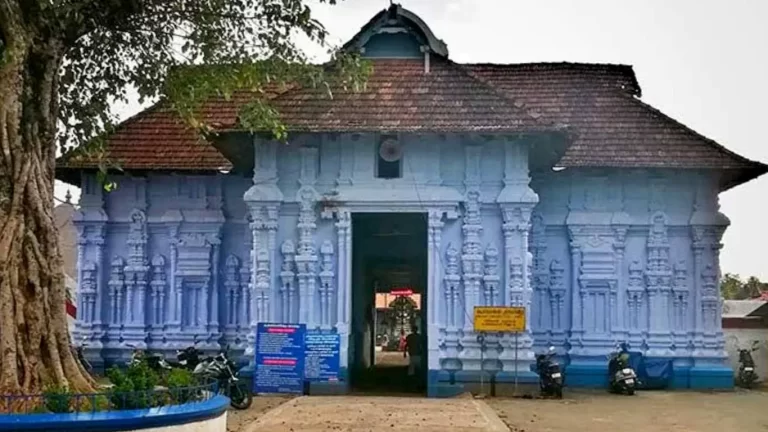
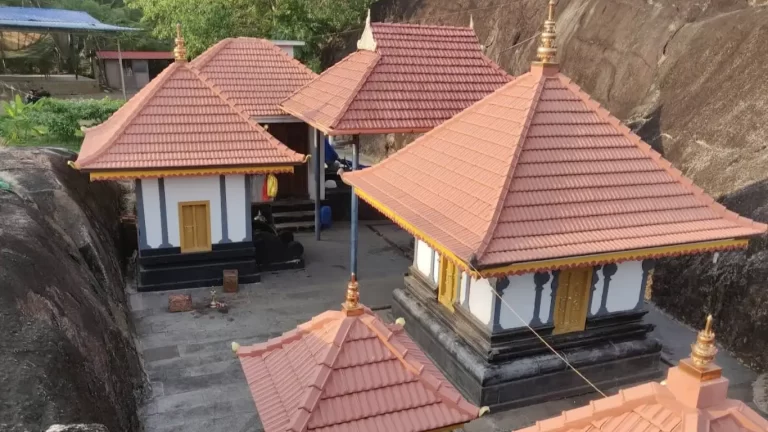
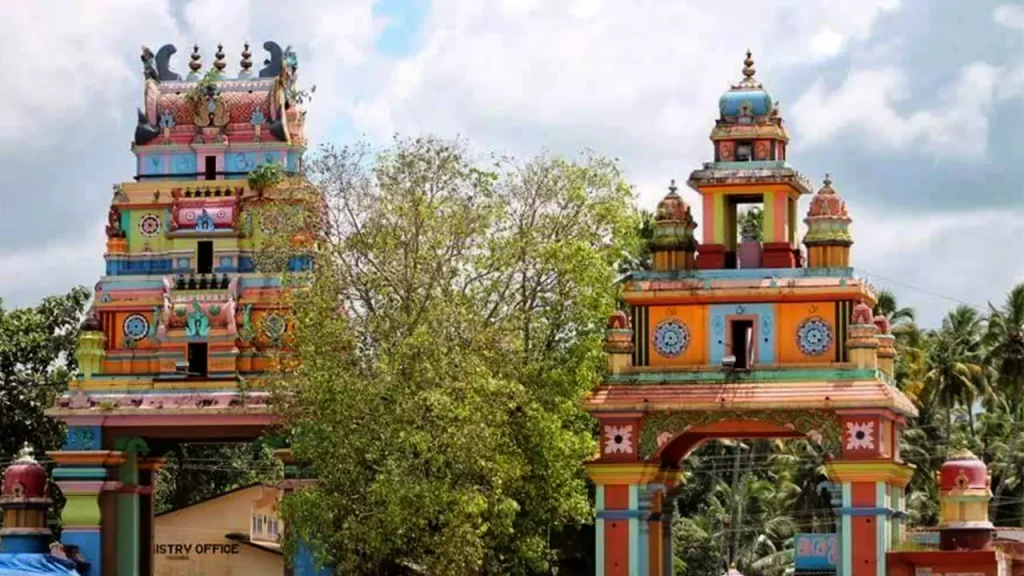
Oachira Parabrahma Temple is one of Kerala’s most distinctive spiritual sites. Located along National Highway 66 on the border of Kollam and Alappuzha districts, this ancient pilgrimage center breaks almost every convention of traditional South Indian temple design. There is no enclosing compound wall, no towering gopuram, no inner sanctum sanctorum (Sri Kovil), and no sculpted stone idol.
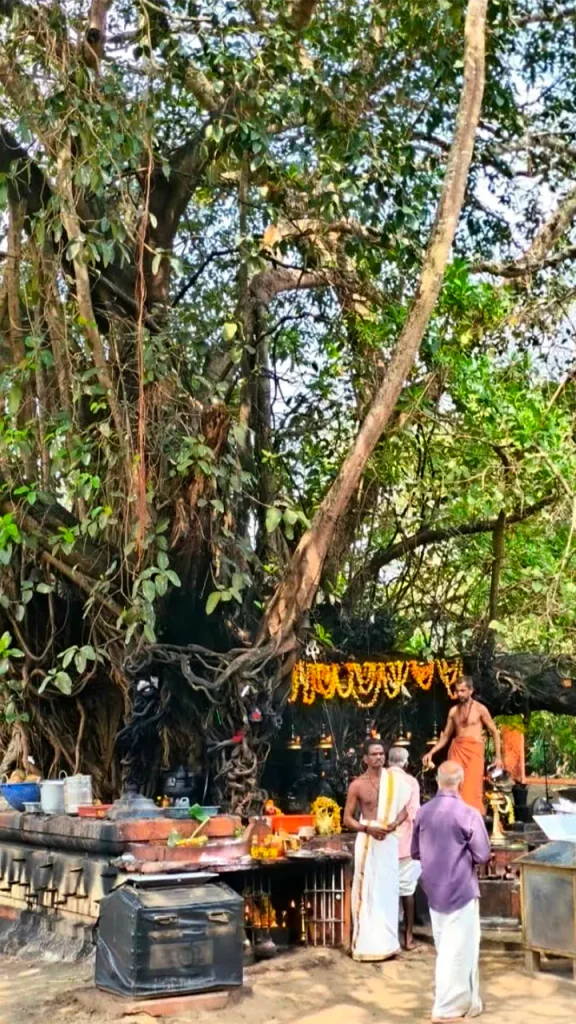
Instead, worship is directed to Parabrahma—the supreme, formless cosmic reality that pervades the universe according to Advaita Vedanta philosophy. Devotion takes place across a sweeping expanse of open ground under the canopy of ancient banyan trees.
Whether you are planning a visit during the famous Oachira Kali festival or seeking to understand this unique center of universal worship, this guide outlines the site’s layout, rituals, verified timings, and essential practical tips.
Oachira Temple at a Glance
| Feature | Details |
| Presiding Deity | Parabrahma (The Formless Absolute) |
| Temple Type | Open-air shrine; no conventional sanctum or stone idols |
| Location | Oachira, Kollam District, Kerala (adjacent to NH 66) |
| Key Platforms | Padinjattethara (Western Platform) and Kizhakkethara (Eastern Platform) |
| General Timings | Open ground accessible throughout the day; administrative/ritual counters operate roughly 04:30 to 20:30 |
| Primary Festivals | Oachira Kali (mid-June), Irupathiyettam Onam (Aug/Sept), Vrischika Mahotsavam (Nov/Dec) |
| Dress Code | Modest Indian attire; standard strict South Indian male shirt-removal rules do not apply to the open field |
| Nearest Railway Junction | Kayamkulam Junction (KYJ) – approximately 5 km |
Religious Significance: Worship of the Formless Absolute
In orthodox Hindu temple worship, the divine is generally accessed through an energized physical form (Murti Puja) installed inside an enclosed sanctum. Oachira operates on a fundamentally different theological premise.
Here, worship centers on Parabrahma—the eternal, infinite, formless principle described in the Upanishads. Because the divine is perceived as omnipresent and formless, the temple requires neither a physical image nor a roofed temple hall to contain it.
The spiritual focus is anchored at two primary open platforms raised around giant banyan trees:
- Padinjattethara: The western platform.
- Kizhakkethara: The eastern platform.
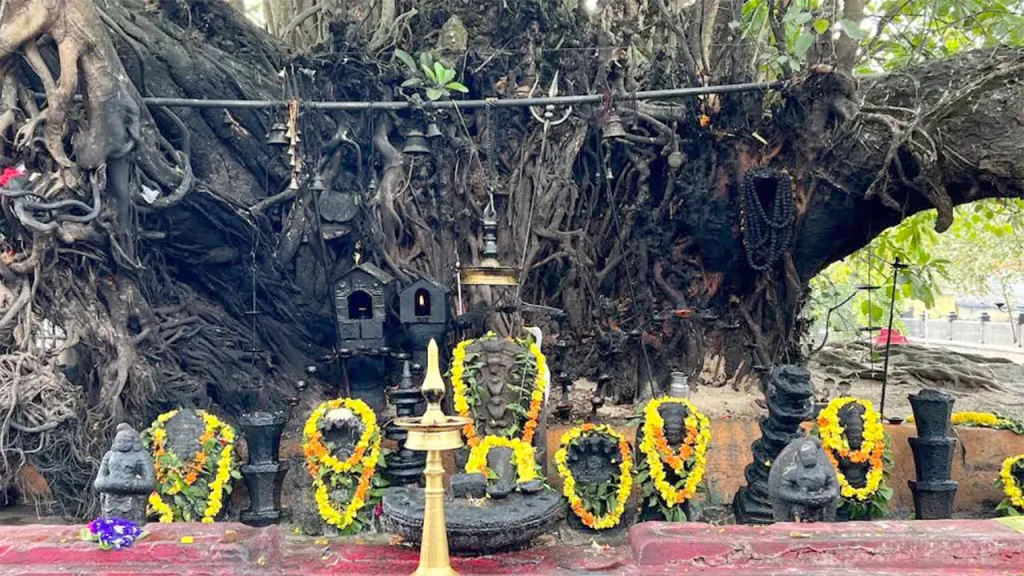
Devotees circumambulate these massive tree bases, light traditional earthen lamps (Chirathu), and meditate in the open air. The absence of traditional sectarian restrictions has historically made Oachira an open space for pilgrims of all communities, castes, and creeds.
History and Sthala Purana
The story of Oachira spans documented regional military history and layered spiritual traditions.
Documented History and the Padanilam
The vast open sandy plain at Oachira is historically known as the Padanilam (literally, “battlefield”). During the mid-18th century, the expansion of the Kingdom of Travancore under Maharaja Marthanda Varma brought him into conflict with Kayamkulam Rajah.
In 1746 CE, the forces of Travancore and Kayamkulam fought a decisive military engagement at this very site. Following the annexation of Kayamkulam into Travancore, the military heritage of the terrain remained etched into local community life. The annual Oachira Kali ritual combat directly commemorates this martial legacy.
Traditional Sthala Purana
Local sacred narratives explain the sanctity of the site long before the 1746 battle. One prominent tradition links Oachira to an itinerant holy man or mendicant who, when asked which deity resided there, simply closed his eyes and declared that the entire expanse belonged to the formless Supreme Reality.
Another regional tradition connects the area to the historical Akkarakkal and Karayamvattom families, whose ancestral devotions helped maintain the open-air customs without building a conventional roofed temple. Over centuries, attempts to construct a traditional stone roof over the deities were systematically rejected by the community to preserve the philosophical principle of boundless divine space.
Continue reading >> Divine Nalambalam Temples Circuit: Complete 1-Day Guide
Architecture and Layout: A Sacred Open Expanse
Visitors accustomed to classical Dravidian or Kerala-style tiled wooden architecture will find a unique environment at Oachira:
- The Padanilam: The main temple grounds cover an expansive area of sand and exposed earth dotted with venerable banyan and peepal trees.
- The Open Tharas (Platforms): Instead of sanctums, the sacred foci are stone and plaster platforms erected around the roots of ancient trees. Devotees walk directly upon the natural ground around them.
- Absence of Enclosing Walls: The grounds open outward into the surrounding town, visually symbolizing that the Supreme cannot be enclosed by mortar or boundary walls.
- Administrative Shrines & Offertory Points: Modern administrative offices, distribution counters for offering materials, and basic utility counters flank the perimeter of the open grounds.
Daily Rituals and Offerings
Because there is no traditional idol, the rituals at Oachira differ from standard temple abhishekams and elaborate flower decorations (alankaram).
- Unda Nercha: The signature offering at Oachira. Devotees purchase small, round balls prepared from jaggery, flour, and spices (Oachira Unda) and offer them at the base of the sacred trees or distribute them among fellow visitors.
- Deeparadhana: At dusk, hundreds of small earthen oil lamps (Chirathu) are lit along the ledges of the open platforms, transforming the tree canopy with soft firelight.
- Annadanam: The distribution of free meals to pilgrims and the needy has long been a core practice at Oachira, reflecting the egalitarian philosophy of Parabrahma worship.
- Sayana Pradakshinam & Urul Nercha: Devotees frequently perform rolling penance (Urul) across the sandy earth of the Padanilam in fulfillment of health or family vows.
Continue Reading >> Chelamattom Sreekrishna Swami Temple: Powerful Temple for Ancestors
Temple Timings and Operational Flow
Because the main area consists of open ground under natural tree canopies, pilgrims can walk the premises during daylight and early evening hours without physical gate barriers.
However, official administrative counters, ritual offerings, and office facilities follow regular operating hours:
- Morning Operations: 04:30 AM to 12:30 PM
- Evening Operations: 05:00 PM to 08:30 PM
- Deeparadhana (Lamp Lighting): Around sunset (typically 06:15 PM – 06:45 PM depending on the season)
Note: Special festival periods like Oachira Kali feature continuous day-and-night activity across the entire Padanilam.
Major Festivals
Oachira hosts two of the most distinct cultural spectacles in South Kerala.
1. Oachira Kali (June / Midhunam)
Held on the first two days of the Malayalam month of Midhunam (usually June 15–16), this festival commemorates the historic battle between the Kayamkulam and Travancore forces.
- Men and young boys undergo days of traditional martial discipline (Kalaripayattu training).
- The participants divide into opposing teams representing ancient territorial divisions (Karukal).
- Standing knee-deep in the rain-soaked, muddy waters of the Padanilam, the warriors engage in rhythmic, stylized mock battles brandishing wooden swords and shields, splashing water accompanied by percussion.
2. Irupathiyettam Onam (August / September)
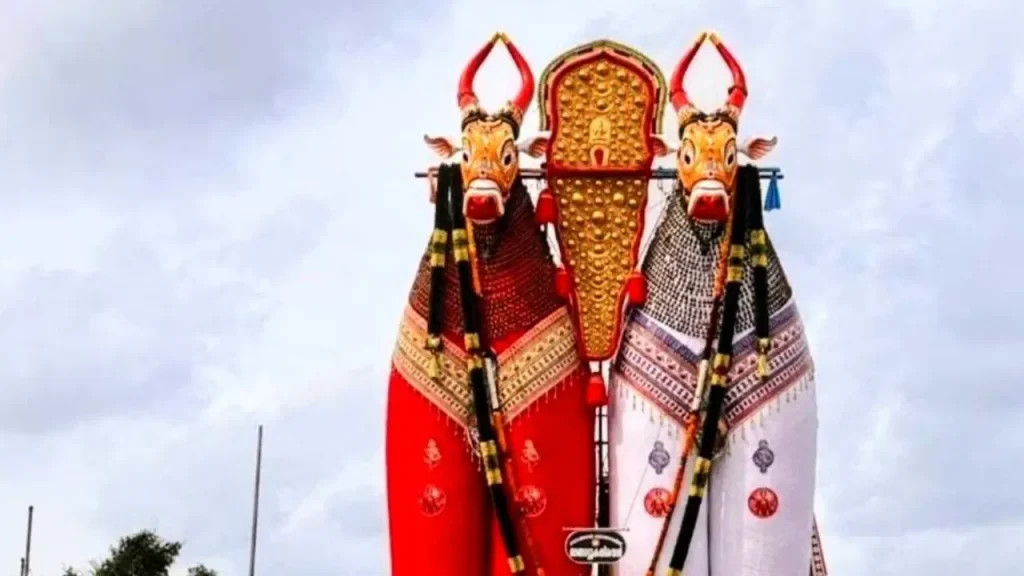
Celebrated on the 28th day following Thiruvonam (marking the close of the Onam festive season), this is one of South India’s largest cattle festivals.
- Devotees craft gigantic, ornately decorated effigies of pairs of sacred bulls (Kettukazhcha).
- Constructed using wooden armatures, straw, and brilliant white and red cloth, these colossal bull figures—sometimes reaching heights exceeding 50 feet—are dragged on wheeled platforms from surrounding villages to the temple grounds.
- The festival honors the agrarian heritage of the region, invoking divine protection for domestic livestock and harvests.
3. Vrischikam Mahotsavam (November – December)
During the first 12 days of the Malayalam month of Vrischikam, thousands of pilgrims pitch temporary thatched huts (Kudils) on the dusty grounds of the Padanilam. Families reside directly on the open field for twelve days, leading lives of simple contemplation, prayer, and community feeding.
Continue Reading >> Azhimala Shiva Temple 58 ft statue
Dress Code and Visitor Rules
Unlike many orthodox Kerala temples managed under strict Devaswom protocols where men must remove their shirts and women must wear traditional saris or mundu, Oachira has historically maintained a more relaxed standard across its open field:
- Acceptable Attire: Modest contemporary or traditional clothing is standard. Dhoti (Mundu), kurtas, trousers, shirts, salwar kameez, and saris are all permitted across the general open field.
- Footwear Policy: Footwear must be removed before stepping up onto the raised platforms (Tharas) surrounding the sacred banyans. However, walking across the vast open sand plain with footwear is generally tolerated, though devout visitors walk entirely barefoot across the central Padanilam.
- Photography: Photography of the open trees, the field, and public cultural performances during festivals is generally allowed. Commercial filming requires prior clearance from the Oachira Temple Administration.
How to Reach Oachira
Oachira sits along the primary transport corridor of coastal Kerala, making it straightforward to reach by road or public transit.
By Road
- Direct Highway Access: Oachira is situated right on NH 66, approximately 32 km north of Kollam city center and 5 km south of Kayamkulam.
- Taxis and Auto-rickshaws: Readily available from Kayamkulam town, Karunagappalli, and Kollam.
By Bus
- Kerala State Road Transport Corporation (KSRTC) buses running between Kollam and Alappuzha/Ernakulam stop directly at Oachira Junction.
- Private regional buses ply continuously between Karunagappalli and Kayamkulam along the highway, dropping passengers within a two-minute walk of the temple field.
By Train
- Oachira Railway Station (OCR): Located roughly 1.5 km from the temple; served primarily by regional passenger and select short-distance express trains.
- Kayamkulam Junction (KYJ): Located roughly 5 km north. This is a major rail junction where almost all long-distance trains running along both the Kottayam and Alappuzha routes halt. It is the recommended station for long-distance rail travelers; auto-rickshaws and buses operate constantly from outside the station.
By Air
- Trivandrum International Airport (TRV): Approximately 100 km to the south via NH 66.
- Cochin International Airport (COK): Approximately 135 km to the north via NH 66.
Continue Reading >> Vembinkulangara Sri Mahavishnu Temple
Visitor Facilities & Practical Planning
| Facility | Availability & Guidance |
| Footwear Storage | Unofficial / local stands operate near retail entry points; keep track of drop-off points during festivals. |
| Drinking Water & Restrooms | Basic municipal and temple-run toilet blocks exist near the perimeter administrative offices. |
| Dining Options | Numerous local vegetarian and general Kerala restaurants, tea stalls, and snack vendors operate along NH 66 adjacent to the temple ground. |
| Accommodation | Modest lodges are available in Oachira town. For high-standard or business hotels, travelers generally stay in Kayamkulam (5 km) or Kollam (32 km). |
| Accessibility | Because the temple grounds are primarily natural sand, dirt, and tree roots, standard wheelchairs encounter significant friction. Visiting the paved perimeter paths is straightforward, but navigating deep into the Padanilam requires physical assistance. |
Best Time to Visit
- Weather Conditions: The most comfortable climate occurs during the winter months from November through February, when daytime temperatures are manageable and evenings are relatively cool.
- Festival Atmosphere:
- If your goal is to witness the famous Oachira Kali, visit during mid-June. Be prepared for heavy monsoon downpours, muddy terrain, and dense crowds. Raincoats, umbrellas, and waterproof footwear are essential.
- For the cattle effigy spectacle (Kettukazhcha), plan your trip around the 28th day of Onam (August/September).
Nearby Places to Visit
If you are planning an extended itinerary in the Kollam–Alappuzha corridor:
- Krishnapuram Palace (Kayamkulam): Located about 6 km north. Built during the reign of Marthanda Varma, this 18th-century palace showcases traditional Kerala architecture, gabled roofs, narrow corridors, and the renowned Gajendra Moksham mural.
- Azheekal Beach: Located approximately 12 km west. A scenic coastal stretch featuring a long sea bridge/pulimuttu, popular for sunset walks where the backwaters meet the Arabian Sea.
- Amritapuri (Parayakadavu): Located roughly 10 km southwest, the international spiritual headquarters of Mata Amritanandamayi (Amma).
FAQ SECTION
Why is there no idol inside Oachira Temple?
Oachira Temple is dedicated to Parabrahma, the formless, infinite Supreme Consciousness in Advaita philosophy. Because this philosophical concept represents a cosmic principle rather than an anthropomorphic deity, the temple retains open-air ground without enclosed sanctums or sculpted stone figures.
Where is Oachira Temple located?
The temple is located at Oachira, situated immediately adjacent to National Highway 66 (NH 66). It sits at the northern boundary of Kollam district, directly bordering Alappuzha district in Kerala.
What is Oachira Kali?
Oachira Kali is an annual mock battle festival celebrated in mid-June (the Malayalam month of Midhunam). Trained participants step into the rain-soaked, muddy fields of the Padanilam with wooden swords and shields, performing stylized martial combat to commemorate the historical 1746 battle between Kayamkulam and Travancore forces.
What are the operational timings of Oachira Temple?
The physical open field is accessible throughout the day. Administrative offices, ritual counters, and official offerings typically operate from 04:30 AM to 12:30 PM in the morning and from 05:00 PM to 08:30 PM in the evening.
What is the primary offering made by devotees at Oachira?
The most popular offering is Unda Nercha, which consists of small round sweet balls made of jaggery, dried ginger, and flour. Devotees also offer oil for lamps, perform Urul Nercha (rolling on the sacred sand), and contribute toward mass community feeding (Annadanam).
What is the dress code at Oachira Temple?
The temple has a more relaxed dress code than most classical Kerala temples. Modest shirts, trousers, dhotis (Mundu), saris, and salwar suits are customary. Men are not required to remove their shirts to walk across the general grounds. Footwear must be removed before stepping onto the raised platforms around the sacred trees.
Which railway station is nearest to Oachira Temple?
Oachira has a small local railway station (OCR) 1.5 km away, but the major railhead is Kayamkulam Junction (KYJ), located just 5 km to the north. Kayamkulam has frequent express connections across India.
What is Irupathiyettam Onam at Oachira?
Irupathiyettam Onam (the 28th day after Thiruvonam) is a regional harvest and cattle festival. Villages surrounding Oachira build colossal, vibrant effigies of pairs of sacred bulls (Kettukazhcha) out of straw, wood, and cloth, pulling them onto the temple grounds to seek blessings for agricultural prosperity.