Koodalmanikyam Temple Irinjalakuda: Complete Pilgrimage, Timings, and Ritual Guide
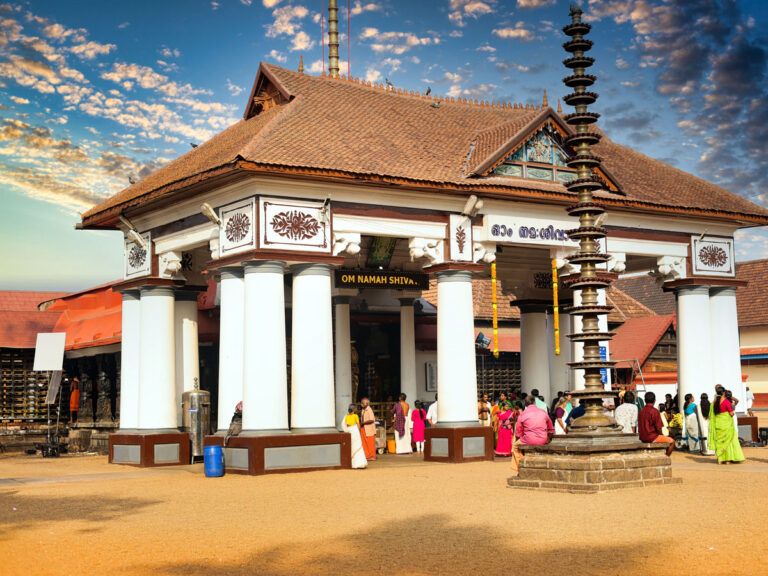
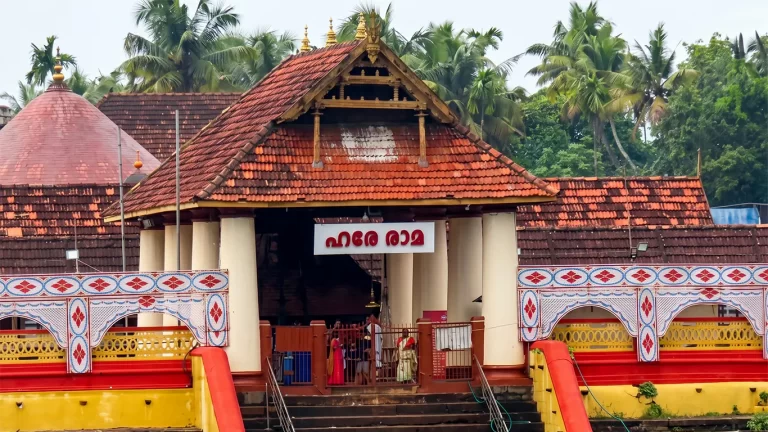
Koodalmanikyam Temple, located in Irinjalakuda, Thrissur District, Kerala, is an ancient Hindu pilgrimage shrine and the only prominent temple in India dedicated to Lord Bharata, the noble, self-sacrificing brother of Lord Sri Rama. Revered locally as Lord Sangameshwara, the deity is enshrined in a majestic four-armed form bearing the divine conch (Panchajanya), discus (Sudarshana Chakra), mace (Kaumodaki), and a garland of holy basil beads.
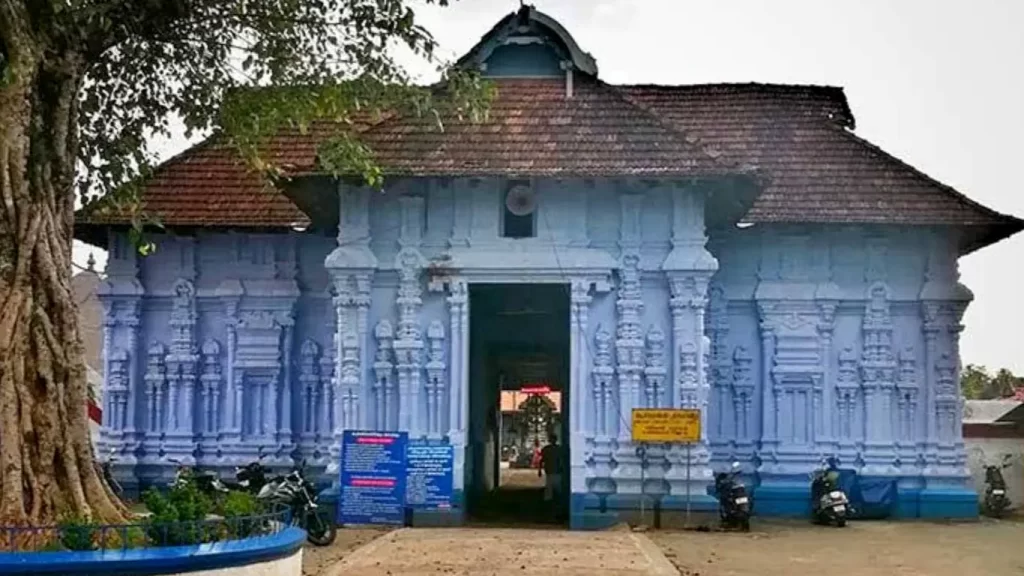
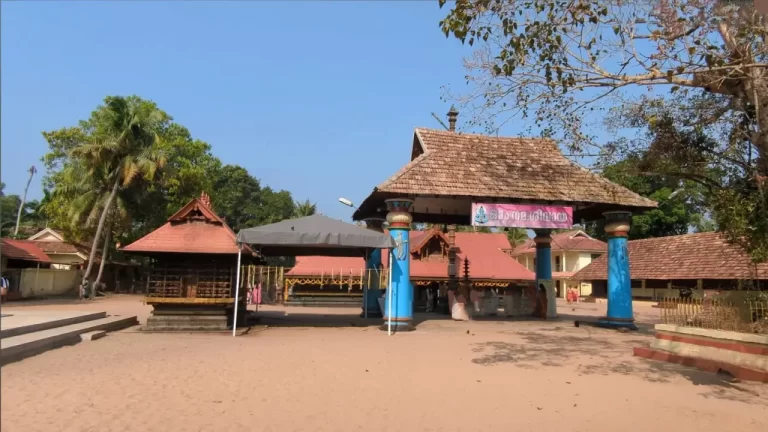
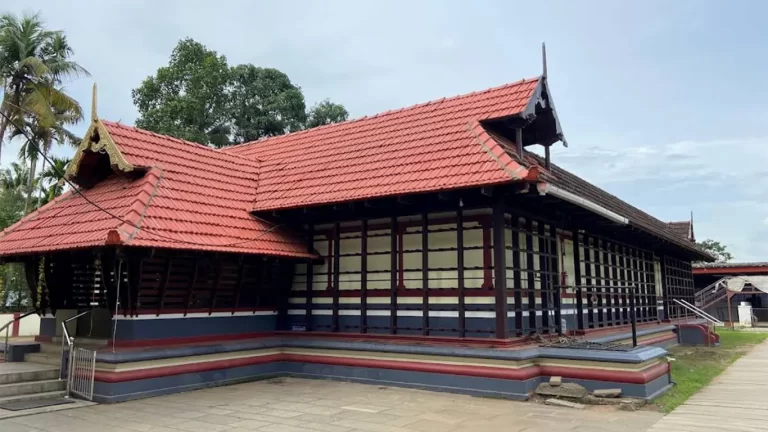
The temple forms the essential second stop of the revered four-temple Nalambalam Yatra circuit undertaken during the sacred Malayalam month of Karkidakam (July–August). Spanning over ten acres of serene temple grounds with pristine stone courtyards, historical wood carvings, an ancient Koothambalam, and four expansive temple ponds (theerthams), Koodalmanikyam stands as a masterwork of traditional Kerala temple architecture.
Quick Information: Koodalmanikyam Temple at a Glance
| Feature | Verified Temple Detail |
| Temple Name | Koodalmanikyam Temple (Irinjalakuda Sangameshwara Temple) |
| Presiding Deity | Lord Bharata (worshipped as Lord Sangameshwara / Maha Vishnu aspect) |
| Location | Irinjalakuda, Thrissur District, Kerala, India — PIN 680121 |
| Administration | Koodalmanikyam Devaswom Board |
| Standard Darshan Timings | Morning: 03:00 AM – 11:30 AM | Evening: 05:00 PM – 08:00 PM |
| Key Festivals | Annual Koodalmanikyam Utsavam (Medam: April–May), Karkidakam Nalambalam Yatra (July–August) |
| Unique Ritual Offerings | Thamara Mala (Garland of 101/1001 lotuses), Mukkudi Nivedyam (Ayurvedic herbal offering), Vazhuthinanga (Brinjal) Nivedyam |
| Sacred Water Bodies | Kulipini Theertham (sacred inner pond), Padinjare Kulam, Thekke Kulam, Kuttan Kulam |
| Dress Code | Strict traditional Kerala attire: Men in Mundu (bare chest; shirts/vests removed); Women in Saree, Set-Mundu, or modest Salwar Kameez |
| Nearest Railway Station | Irinjalakuda Railway Station (IJK) — approx. 9 km; Thrissur Railway Station (TCR) — approx. 23 km |
| Nearest Airport | Cochin International Airport (COK), Nedumbassery — approx. 38 km |
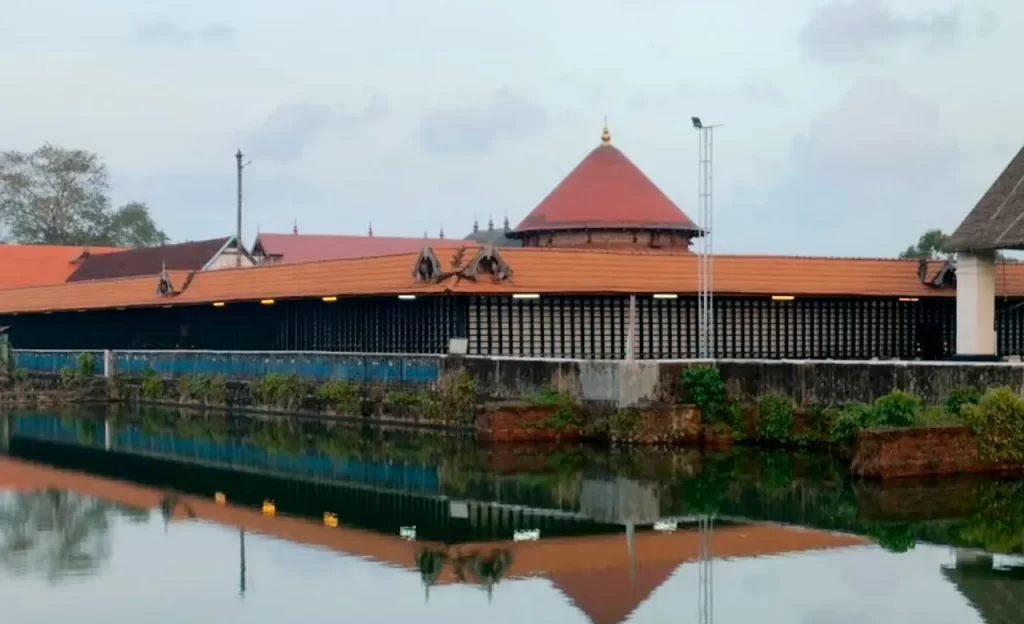
The Sacred Legend (Sthala Purana) of Koodalmanikyam
The Penance of Sage Kulipini
According to local temple lore, the antiquity of Irinjalakuda traces back to Sage Kulipini, an ascetic who performed intense penance to please Lord Maha Vishnu. Pleased by the sage’s deep devotion, the Lord, along with various celestial deities, graced the hermitage.
To ensure the land remained sanctified forever, Sage Kulipini consecrated the divine water body known today as Kulipini Theertham. Legend holds that all holy rivers were invited to flow into this pond, making its waters exceptionally sacred. Because of the sage’s spiritual presence, the deity manifested here is believed to absolve devotees of chronic ailments and mental anguish.
Read More >> Badami Cave Temples: 6CE India’s Ultimate Ancient Adventure
The Origin of the Name “Koodalmanikyam”
The name Koodalmanikyam carries a fascinating historical legend:
Centuries ago, the ruling chieftain and priests noticed an extraordinary, radiant glow emanating from the forehead of the consecrated idol. To verify if this luster matched the brilliance of a rare, royal ruby (Manikyam), a gem was brought from the royal treasury of the King of Kayamkulam.
As the priests held the King’s ruby close to the divine idol’s forehead to compare the brilliance, the gemstone miraculously slipped from their hands, merged into the forehead of the deity, and became one with the stone murti. Because the ruby joined and merged (koodal) with the idol, the temple became immortalized as Koodalmanikyam.
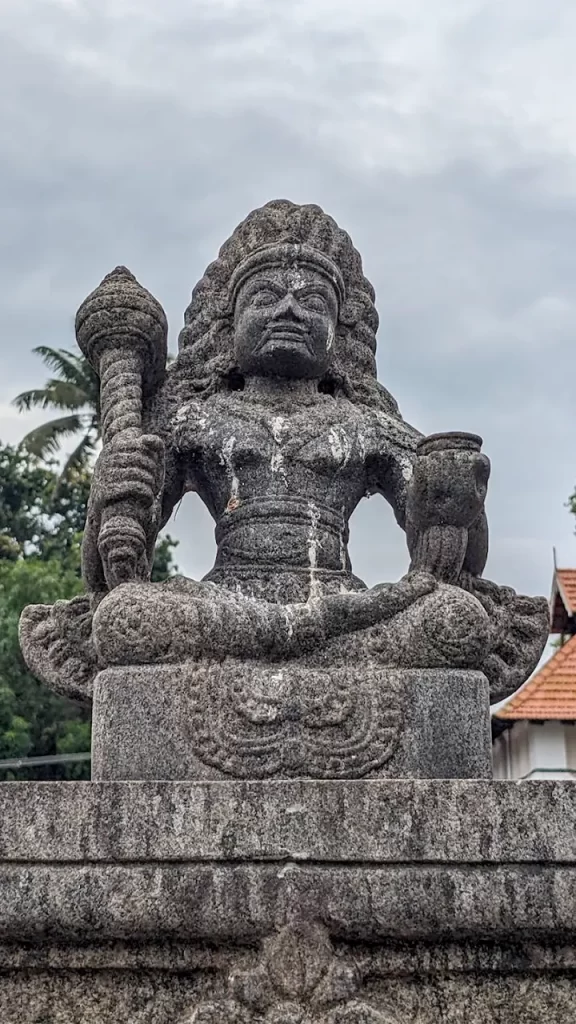
Presiding Deity and Iconography: Lord Bharata as Sangameshwara
While devotees across India revere Lord Rama, standalone temples dedicated to his devoted younger brother Bharata are extraordinarily rare. Koodalmanikyam is the paramount shrine in India where Bharata is worshipped as the central presiding deity.
Deity Form: The granite idol stands approximately six feet tall on a raised stone pedestal within the circular sanctum sanctorum (Srikovil).
The Concept of Sangameshwara: The deity is also invoked as Sangameshwara (Lord of the Confluence). While theological traditions link this to the confluence of divine spiritual energies gathered by Sage Kulipini, local geographical traditions also cite the historical merging of ancient streams that once nurtured Irinjalakuda.
Solemn Solitude: Unique among major Kerala temples, Koodalmanikyam houses no minor shrines (Upa-Devatas) within the inner courtyard (Chuttambalam). The entire spiritual focus of the sacred enclosure rests completely and exclusively upon the single, magnificent form of Lord Bharata.
Read More >> Vembinkulangara Sri Mahavishnu Temple
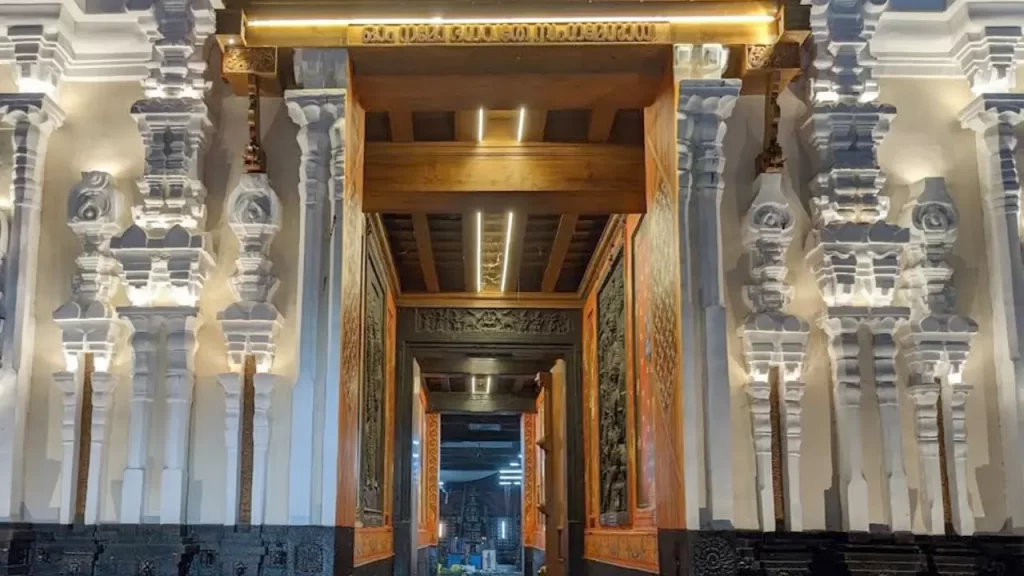
Unique Rituals and Sacred Offerings
The daily rituals at Koodalmanikyam are distinct, governed by strict Tantric protocols that differ notably from other Vaishnavite shrines.
1. Thamara Mala (The Sacred Lotus Garland)
Offering a garland crafted of fresh lotus blooms is one of the most auspicious services at Koodalmanikyam. Devotees offer:
- 101 Lotus Garlands
- 1001 Lotus Garlands (Valiya Thamara Mala)
This offering is sought for overcoming career obstacles, fulfilling long-pending vows, and seeking mental peace. Cultivated in nearby wetland ponds across Thrissur and Palakkad, hundreds of pristine pink and white lotuses are strung by traditional temple garland makers every morning.
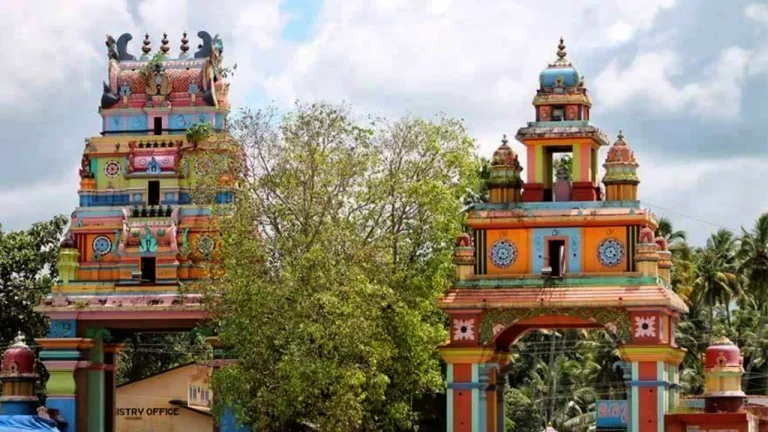

2. Mukkudi Nivedyam: The Ayurvedic Divine Medicine
Perhaps the most distinctive offering in Kerala’s temple landscape is Mukkudi Nivedyam, an Ayurvedic medicinal concoction prepared and offered to the Lord on the auspicious day of Avittom star in the Malayalam month of Thulam (October–November).
- The Heritage: Prepared according to secret traditional formulations under the direct supervision of the Kuttancherry Mooss, one of Kerala’s legendary Ashta Vaidya (hereditary Ayurvedic physician) families.
- Significance: Legend recounts that Lord Sangameshwara once suffered from severe stomach pain due to an offering imbalance. The celestial physicians, the Ashwini Kumaras, guided the traditional Vaidyas to formulate this medicinal buttermilk-and-herb tonic.
- Devotee Belief: Consuming a spoonful of consecrated Mukkudi is believed to heal chronic gastrointestinal ailments and ensure physical vigor.
3. Vazhuthinanga Nivedyam (Brinjal Offering)
Devotees offer dishes prepared from green brinjal (eggplant) to the deity. This unique agrarian offering has roots in ancient sthala puranas relating to Sage Kulipini’s penance and is sought by people suffering from respiratory and respiratory-related health challenges.
Architectural Grandeur of Koodalmanikyam
Constructed in traditional Kerala architectural style, the temple exhibits exceptional wooden craftsmanship, stone masonry, and vast open courtyards.
The Circular Sanctum (Vatta Srikobil)
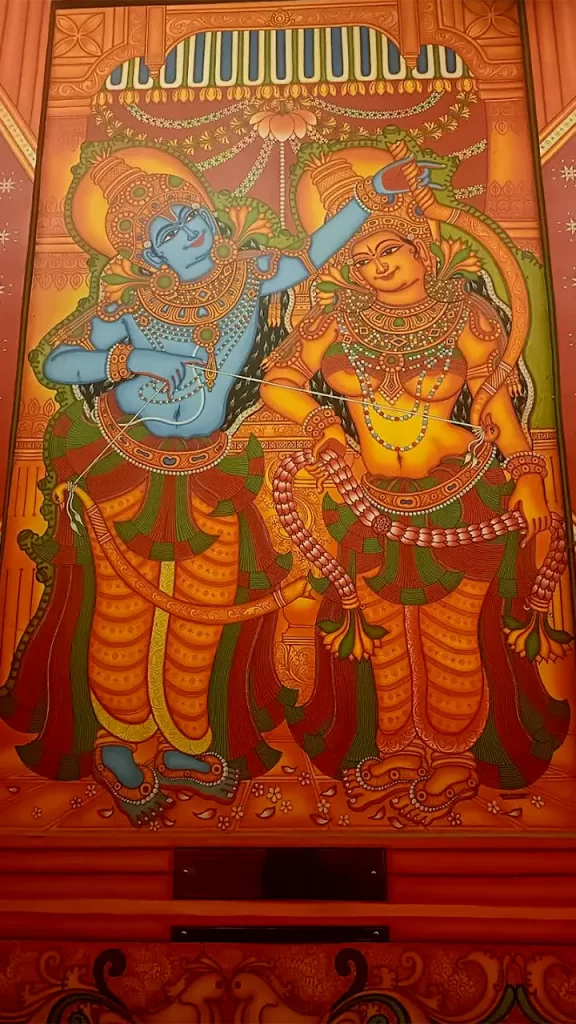
The central sanctum sanctorum is a majestic, circular stone structure crowned with a conical copper-sheet roof. The stone base (adhisthana) features intricate baseline moldings, while the wooden rafters beneath the eaves showcase masterfully carved panels depicting scenes from the Ramayana and Bhagavata Purana.
Read More >> Chinnamasta Devi Temple Jharkhand
The Historic Koothambalam
Within the outer courtyard stands the grand Koothambalam (temple theater hall). Considered one of the largest and most acoustically perfected classical theater spaces in Kerala, it serves as the sacred stage for traditional performing arts:
- Koodiyattam: The UNESCO-recognized classical Sanskrit temple theater.
- Chakyar Koothu: The traditional solo socio-spiritual satire performed by the Chakyar community.
The pillars supporting the Koothambalam ceiling are fashioned from solid timber and granite, decorated with lifelike figures of celestial dancers, serpents, and mythological guardians.
The Four Sacred Ponds (Theerthams)
Koodalmanikyam is framed by four expansive water bodies covering substantial land area:
- Kulipini Theertham: Located in the northern section of the inner complex, this is the sanctified pond created by Sage Kulipini. Devotee access to its waters is strictly regulated; ordinary bathing is barred to preserve its ritual purity.
- Padinjare Kulam: Located on the western periphery, used for traditional ritual bathing.
- Thekke Kulam: Situated to the south of the temple complex.
- Kuttan Kulam: Positioned towards the eastern access route.
Read More >> Karmanghat Hanuman Temple made Aurangzeb Shiver to Destroy
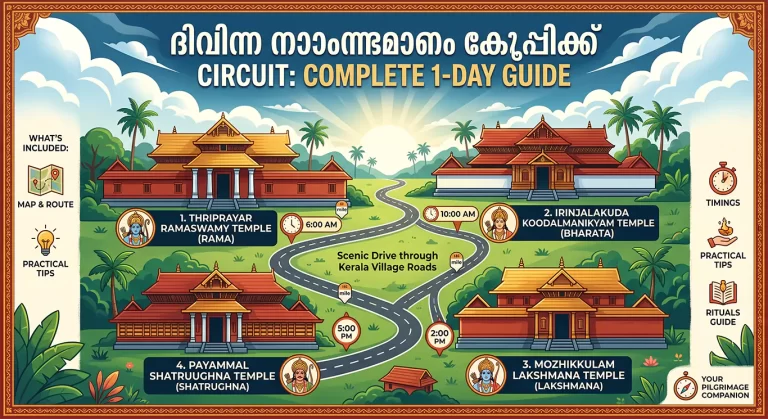
The Nalambalam Yatra: Kerala’s Sacred Ramayana Circuit
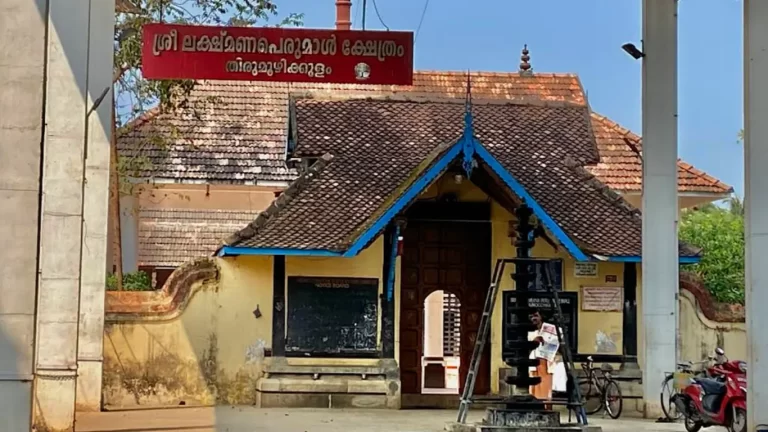
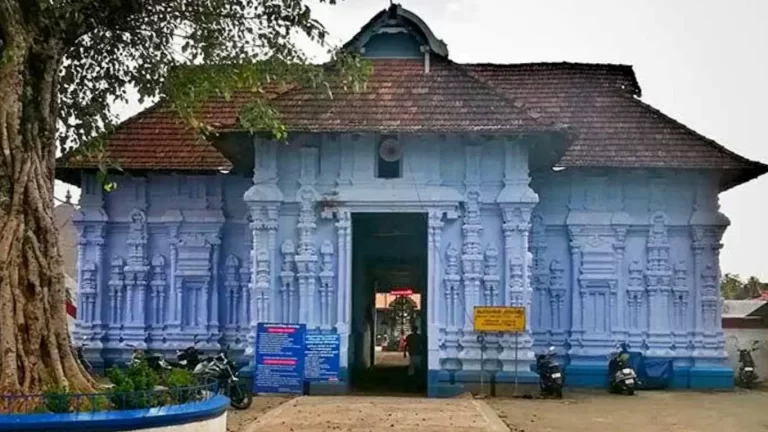
During the monsoon month of Karkidakam (mid-July to mid-August), millions of devotees undertake the holy Nalambalam Yatra—a pilgrimage to four specific temples dedicated to Lord Rama and his three brothers, all situated within Thrissur and Ernakulam districts.
To complete the traditional pilgrimage, devotees must visit all four shrines between dawn and noon in the strict chronological birth order of the divine brothers:
Visiting Koodalmanikyam as the second shrine represents honoring Bharata’s supreme sacrifice, righteousness (Dharma), and unbroken surrender to the divine will of Rama.
Read More >> Sri Bhoosameta Venkateswara Swamy Temple Dokiparru
Major Festivals Celebrated at Koodalmanikyam
1. Koodalmanikyam Utsavam (Annual Festival)
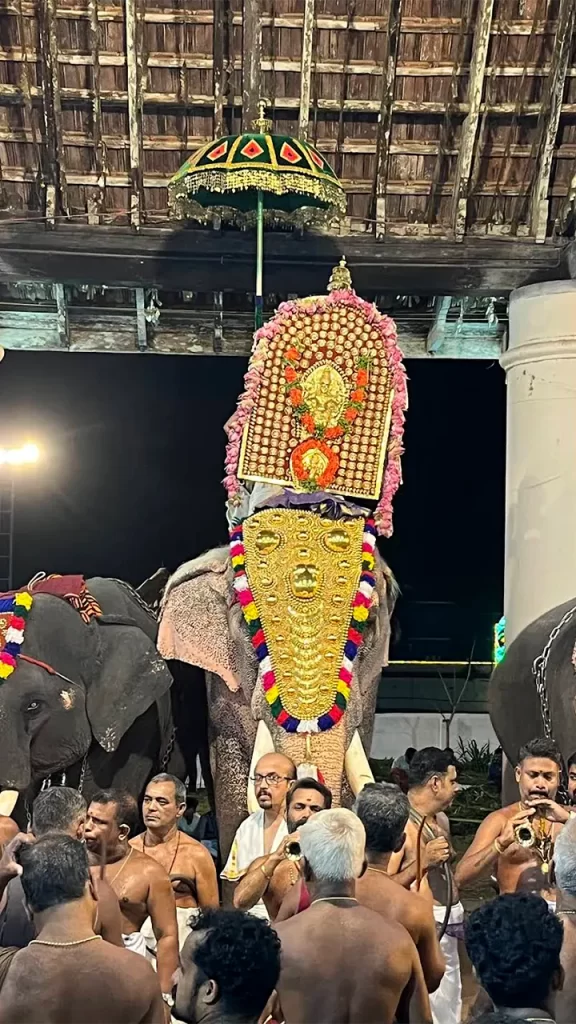
Held in the Malayalam month of Medam (April–May), this 10-day extravaganza is one of central Kerala’s most vibrant temple celebrations:
- Elephant Processions: Featuring up to 17 magnificently caparisoned caparisoned tuskers marching in synchronization.
- Panchari Melam: Hours-long traditional percussion ensembles performed by master drummers of Chenda, Ilathalam, Kurumkuzhal, and Kombu.
- Koodiyattam Performances: Nightly classical Sanskrit theater staged inside the grand Koothambalam.
- Pallivetta and Arattu: The ceremonial holy hunt and the grand cleansing bath that conclude the festivities on the tenth day.
2. Karkidakam Ramayana Month
Throughout the month of Karkidakam, the temple experiences an immense spiritual influx. Sanctified Karkidaka Kanji (medicinal rice porridge) is distributed, daily Ramayana parayana (recitation) resonates across the halls, and the shrine remains open for extended hours to accommodate hundreds of thousands of Nalambalam pilgrims.
Read More >> Karni Mata Temple Udaipur
Visitor Guidelines, Dress Code, and Temple Etiquette
To ensure a smooth, respectful darshan, visitors must observe the following long-standing traditions:
- Traditional Dress Code:
- Men: Must wear a clean traditional Mundu (Dhoti). Shirts, t-shirts, vests, and modern garments must be removed before passing through the outer gate.
- Women: Must wear Sarees, Set-Mundu (half-saree), or modest Salwar Kameez with dupatta. Jeans, tight trousers, short skirts, and sleeveless tops are strictly prohibited.
- Prohibited Items: Mobile phones, cameras, leather accessories (belts, wallets, watchstraps), and outside food products are strictly forbidden inside the inner stone enclosure (Nalambalam). Secure locker facilities are available near the East Nada.
- Photography: Strictly prohibited inside the inner temple complex. Filming is permitted only in the outer public grounds with required Devaswom clearances.
- Pond Etiquette: Devotees must not step into or wash their feet in the inner Kulipini Theertham; its waters are reserved strictly for the sanctified ritual purifications performed by the temple priests (Thanthris and Melshanthies).
How to Reach Koodalmanikyam Temple, Irinjalakuda
Irinjalakuda is well connected by road, rail, and air:
- By Road:
- Irinjalakuda is situated approximately 23 km south of Thrissur city and 20 km north of Chalakudy.
- State Highway 61 connects directly to the temple town. Frequent Kerala State Road Transport Corporation (KSRTC) and private buses run between Thrissur, Chalakudy, Kodungallur, and Irinjalakuda.
- By Train:
- Irinjalakuda Railway Station (IJK): Located at Kallettumkara, approximately 9 km from the temple. Auto-rickshaws and local feeder buses connect the station to the temple town continuously.
- Thrissur Railway Station (TCR): A major nationwide rail hub 23 km away, where all major express and superfast trains halt.
- By Air:
- Cochin International Airport (COK): Located at Nedumbassery, approximately 38 km away (around a 1-hour drive via NH 544). Pre-paid airport taxis are readily available directly to Irinjalakuda.
Frequently Asked Questions (FAQ)
Who is the main deity of Koodalmanikyam Temple?
The presiding deity is Lord Bharata, the younger brother of Lord Sri Rama. In the temple, he is venerated as Lord Sangameshwara, carrying the traditional four-armed divine form of Lord Maha Vishnu.
What are the daily darshan timings at Koodalmanikyam?
The temple generally opens for morning darshan from 03:00 AM to 11:30 AM and reopens for evening rituals from 05:00 PM to 08:00 PM. During festival seasons and the Karkidakam Nalambalam Yatra, these timings are extended to accommodate large pilgrim queues.
What is the most important offering here?
The signature offerings are the Thamara Mala (garland of 101 or 1001 fresh lotuses), the medicinal Mukkudi Nivedyam for digestive wellness, and Vazhuthinanga (brinjal) nivedyam.
Can visitors bathe in the sacred Kulipini Theertham?
No. General bathing is strictly prohibited in the inner Kulipini Theertham to maintain ritual purity. Devotees may perform ablutions in the designated outer ponds such as Padinjare Kulam.
What is the dress code for men and women?
Men must wear a traditional Mundu and remain bare-chested inside the inner precinct. Women must wear traditional Indian attire, such as a Saree, Set-Mundu, or modest Salwar Kameez. Modern casual clothing (such as jeans, t-shirts, and western dresses) is not allowed.