Kukkuteswara Swamy Temple Pithapuram: History, Legends, Timings, and Visitor Guide
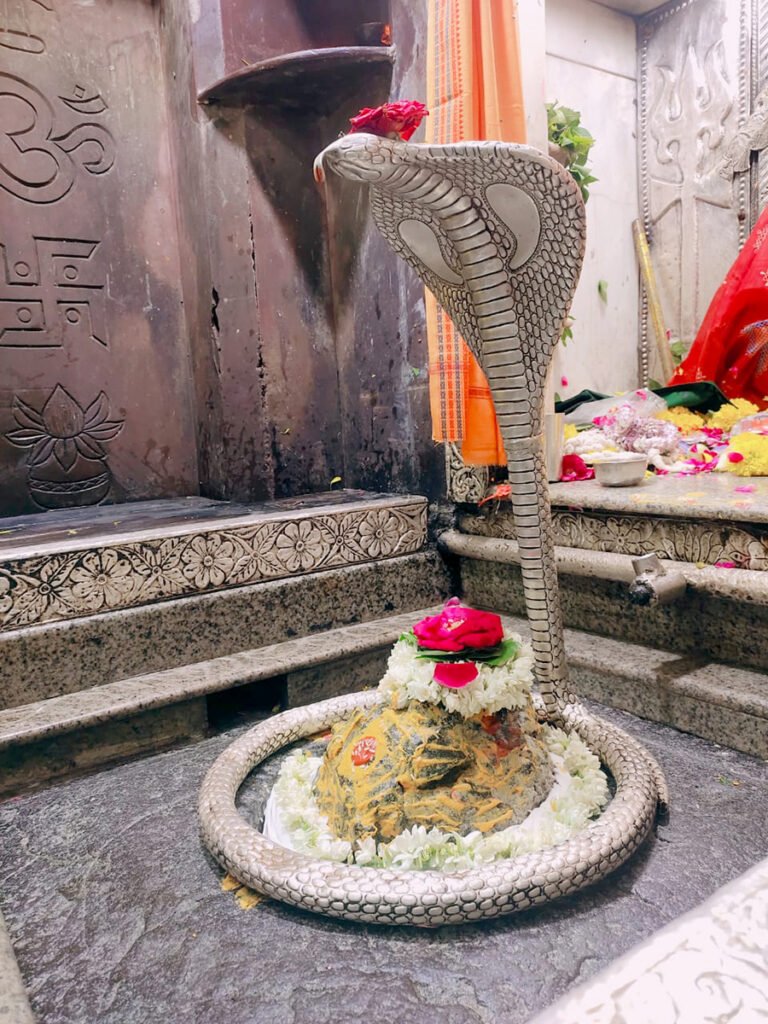
Kukkuteswara Swamy Temple is an ancient Hindu temple located in Pithapuram town in the Kakinada district of Andhra Pradesh, India. Dedicated to Lord Shiva in the rare form of a self-manifested rooster-shaped Lingam, this sacred complex also houses Sri Puruhutika Devi, one of the eighteen Maha Shakti Peethas, and serves as the revered Pada Gaya pilgrimage site for ancestral rituals.
For centuries, devotees have traveled to Pithapuram because few places bring together so many important Hindu traditions in one temple courtyard. Whether you are planning a peaceful darshan, visiting the Shakti Peetha, or performing pinda pradanam for your ancestors, this guide covers the temple’s history, sacred legends, timings, and travel details.
Quick Information: Kukkuteswara Swamy Temple
| Feature | Verified Details |
| Temple Name | Sri Kukkuteswara Swamy Temple |
| Presiding Deity | Lord Shiva (as Sri Kukkuteswara Swamy) |
| Consort & Associated Deities | Sri Rajarajeswari Devi, Sri Puruhutika Devi (10th Shakti Peetha), Lord Dattatreya |
| Location | Pithapuram, Kakinada District, Andhra Pradesh – 533450, India |
| Sacred Classifications | Swayambhu Shiva Kshetra, Ashtadasha Shakti Peetha, Pada Gaya Kshetra |
| General Darshan Timings | Morning: ~6:00 AM – 12:30 PM; Evening: ~4:00 PM – 8:00 PM (confirm seasonal updates before travel) |
| Major Festivals | Maha Shivaratri, Kartika Masam, Devi Navaratri, Datta Jayanti |
| Nearest Railway Station | Pithapuram Railway Station (PIT) – approx. 2 km; Samalkot Junction (SLO) – approx. 12 km |
| Nearest Airport | Rajahmundry Airport (RJA) – approx. 55–60 km |
| Entry Fee | General darshan is free; special sevas and ritual tickets carry nominal charges |
| Official Portal | Andhra Pradesh Endowments Department portal |
Why Kukkuteswara Swamy Temple Is Sacred
Most Hindu temples are known for a single presiding deity or one regional festival. Kukkuteswara Swamy Temple stands out because four major spiritual traditions meet in Pithapuram:
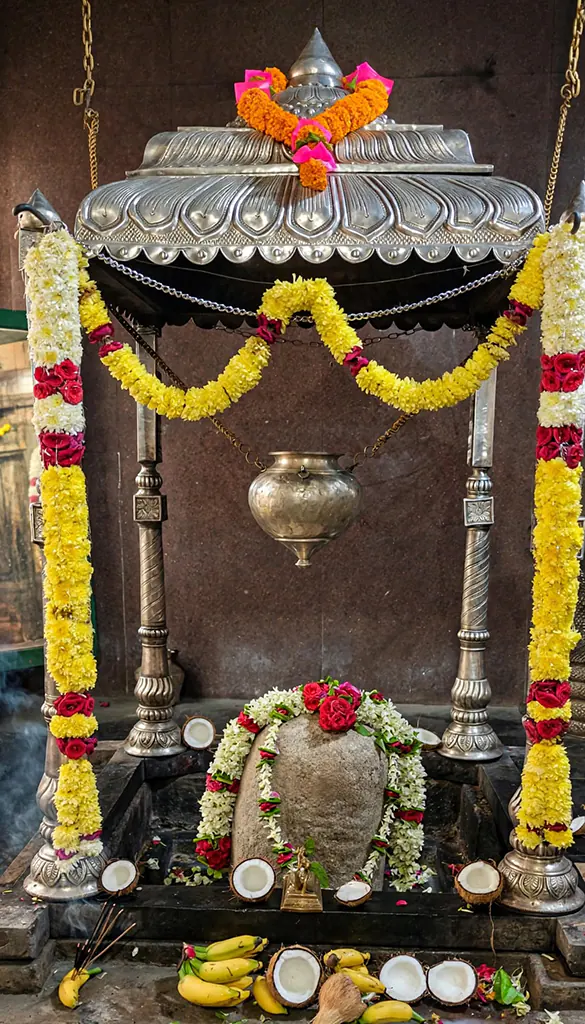
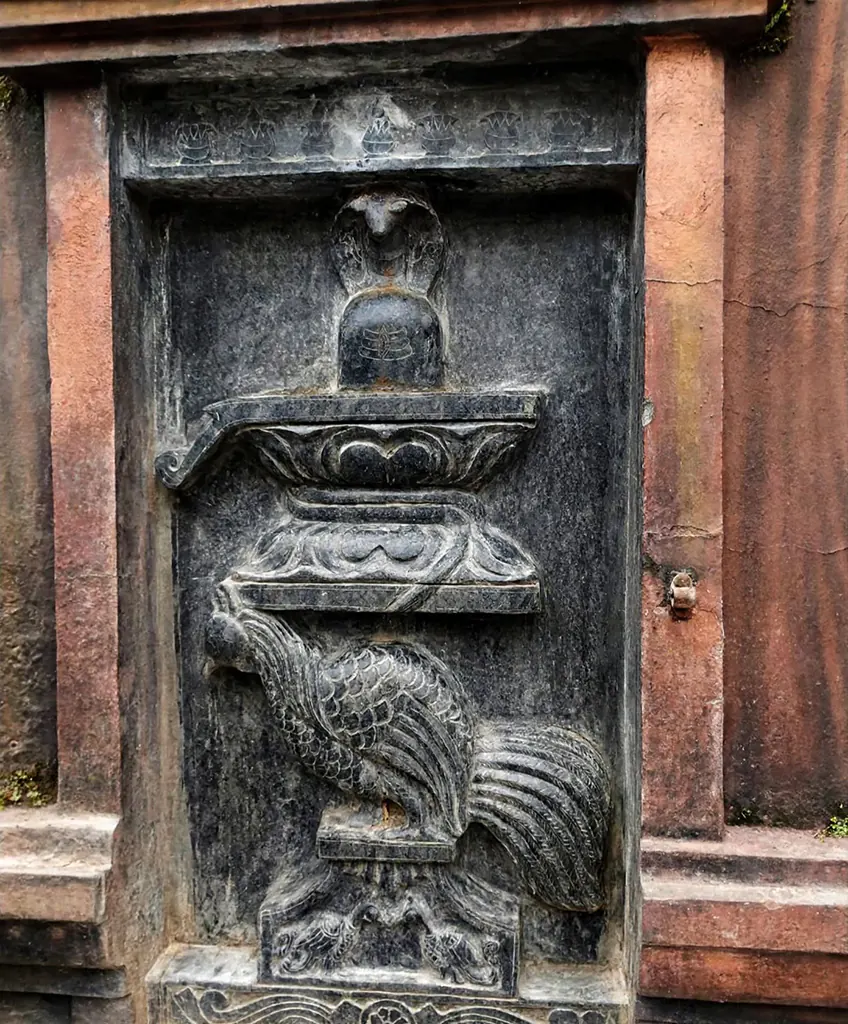
- A Rare Swayambhu Shiva Lingam: The main Shiva Lingam is believed to be Swayambhu (self-manifested) and naturally resembles a rooster (Kukkuta in Sanskrit). Unlike sculpted stone Lingams, this natural form is tied directly to the creation story of the temple.
- One of the 18 Maha Shakti Peethas: Inside the same temple compound stands the shrine of Goddess Puruhutika Devi. Traditional sacred texts list her as the tenth of the Ashtadasha Shakti Peethas, the eighteen primary shrines of Goddess Shakti across the Indian subcontinent.
- The Sacred Pada Gaya Kshetra: In Hindu tradition, performing rituals for departed ancestors at Gaya brings peace to their souls. Pithapuram is revered as Pada Gaya (the place where the feet of Gayasura rested), making it one of the most important spots in South India for shraddha and pinda pradanam ceremonies.
- Connection to Lord Dattatreya: Pithapuram is the birthplace of Sripada Sri Vallabha (14th century CE), revered by devotees as the first historical avatar of Lord Dattatreya. An idol of Lord Dattatreya is also worshipped within the Kukkuteswara Swamy temple premises.
Because Shaiva, Shakta, Vaishnava, and Datta traditions all thrive here side by side, Pithapuram is often described as a center of spiritual unity.
The Sacred Legend of Gayasura and Pada Gaya
To understand why Lord Shiva is worshipped as a rooster here, we have to look at the traditional Sthala Purana (sacred temple lore) passed down through generations of devotees.
Gayasura’s Penance and Boon
According to Puranic tradition, a powerful demon named Gayasura performed intense penance to please the gods. Impressed by his devotion, the gods granted him a boon: anyone who looked upon Gayasura or touched him would be freed from their sins and attain liberation (moksha).
Soon, the boon created an unexpected problem. Even people who committed serious wrongs looked at Gayasura and bypassed the natural laws of karma. Seeing cosmic order disturbed, Lord Brahma, Lord Vishnu, and Lord Shiva decided to intervene.
The Sacred Yagna on Gayasura’s Body
The Trimurti approached Gayasura and requested his pure, sanctified body as an altar to perform a great fire sacrifice (yagna) for the welfare of the universe. Gayasura agreed with humility and stretched his massive body across the earth.
His body spanned a vast distance:
- His head rested in Gaya (in modern-day Bihar), known as Siro Gaya.
- His navel rested in Jajpur (in modern-day Odisha), known as Nabhi Gaya.
- His feet rested in Pithapuram (in modern-day Andhra Pradesh), known as Pada Gaya.
Why Lord Shiva Took the Form of a Rooster
During the ritual, Gayasura agreed to remain completely still until the yagna finished. However, if he moved before sunrise, the yagna would remain incomplete, and the gods planned to subdue him if the ritual failed.
Knowing that Gayasura’s devotion was sincere, Lord Shiva wished to help him fulfill his promise without suffering harm. Before the actual dawn arrived, Lord Shiva took the form of a rooster (Kukkuta) and crowed loudly.
Hearing the rooster’s call, Gayasura believed morning had arrived and that the yagna was over. When he began to rise, Lord Vishnu placed his sacred foot on Gayasura to keep the earth steady, while Lord Shiva manifested permanently at the site of Gayasura’s feet in the form of the rooster-shaped Lingam—Kukkuteswara Swamy.
Before attaining liberation, Gayasura requested that any family offering prayers and pinda pradanam at his head, navel, or feet should bring peace to their ancestors. Thus, Pithapuram became known forever as Pada Gaya.
Documented History of Pithapuram and the Temple
While the Sthala Purana explains the spiritual meaning of the shrine, historical records and stone inscriptions show that Pithapuram has been an important cultural center for over 1,600 years.
Ancient Pishtapura
In ancient times, Pithapuram was known as Pishtapura. One of the earliest historical references appears in the famous Allahabad Pillar Inscription of Emperor Samudragupta in the 4th century CE. The inscription records that Samudragupta defeated King Mahendragiri of Pishtapura during his southern campaign.
This confirms that Pishtapura was already a fortified capital and thriving settlement in the early classical period of Indian history.
Royal Patronage and Inscriptions
Over the following centuries, several South Indian dynasties ruled the coastal Godavari region and supported its temples:
- Eastern Chalukyas: From the 7th century CE onward, the Eastern Chalukyas of Vengi controlled this region. Numerous stone inscriptions from their era record land grants, lamp endowments, and donations to temples in and around Pithapuram.
- Velanati Chodas and Regional Rulers: Medieval inscriptions from the 11th and 12th centuries mention local chiefs and royal patrons who expanded temple halls and supported daily worship at Kukkuteswara Swamy Temple.
- Pithapuram Zamindars: During the 18th and 19th centuries, the Rajas of Pithapuram were prominent patrons of Telugu literature, music, and temple upkeep, helping preserve the shrines in the town.
Historically, Pithapuram also stood out for religious harmony, with major Shaiva, Shakta, and Vaishnava temples flourishing within walking distance of each other.
Presiding Deities Inside the Temple Complex
When you enter the main courtyard of Kukkuteswara Swamy Temple, you can visit several distinct shrines within a single visit. Taking time to understand each deity helps make your darshan much more meaningful.
Sri Kukkuteswara Swamy
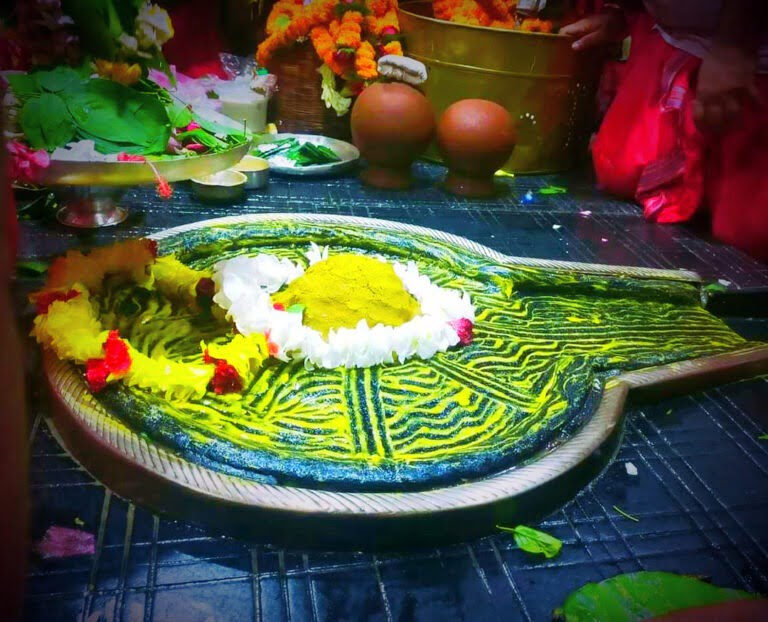
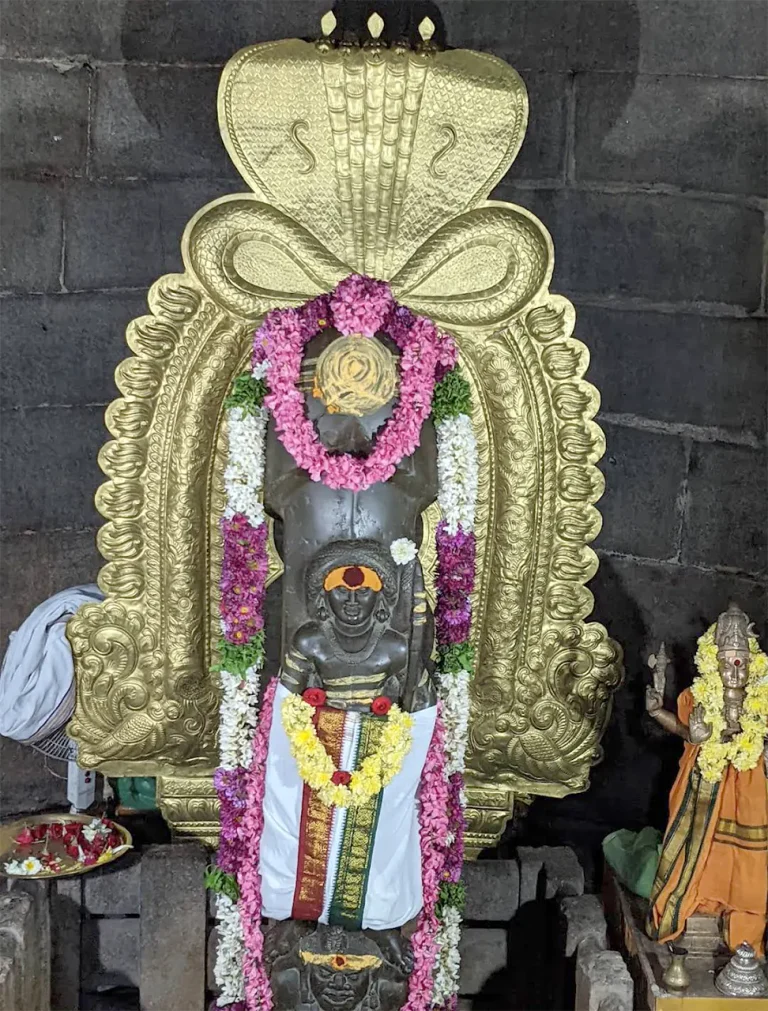
The central sanctum (garbhagriha) houses Sri Kukkuteswara Swamy. The Swayambhu Shiva Lingam is comparatively short and has an unusual natural contour resembling a rooster. Priests decorate the Lingam with sacred ash (vibhuti), bilva leaves, and flowers during daily rituals, offering milk and water as part of traditional Shiva Abhishekam while devotees chant Om Namah Shivaya.
Sri Rajarajeswari Devi
As the divine consort of Kukkuteswara Swamy, Goddess Rajarajeswari Devi is worshipped in a dedicated shrine within the temple complex. Her presence represents the nurturing, sovereign aspect of the Divine Mother alongside Lord Shiva.
Sri Puruhutika Devi (Ashtadasha Shakti Peetha)
Located inside the same temple compound is the famous shrine of Sri Puruhutika Devi. In the Ashtadasha Shakti Peetha Stotram, Pithapuram is named as the sacred seat where the hip or back portion (Prishtha) of Goddess Sati fell.
Goddess Puruhutika Devi is depicted with four arms holding sacred attributes, radiating calm and grace. Many pilgrims visit Pithapuram specifically to seek her blessings, especially during Fridays, Tuesdays, and the autumn festival of Devi Navaratri.
Lord Dattatreya and Other Shrines
The temple complex also contains a revered shrine dedicated to Lord Dattatreya (depicted with three heads representing Brahma, Vishnu, and Shiva). Because Pithapuram is the birthplace of Sripada Sri Vallabha, Datta devotees consider a visit to Kukkuteswara Swamy Temple an essential part of their pilgrimage. Small shrines for Lord Ganesha, Lord Subrahmanya (Kartikeya), and the Navagrahas also surround the main courtyard.
Temple Architecture and Sacred Tank
Kukkuteswara Swamy Temple reflects traditional South Indian coastal temple architecture, shaped by centuries of renovations and additions.
Entrance Gopuram and Mandapams
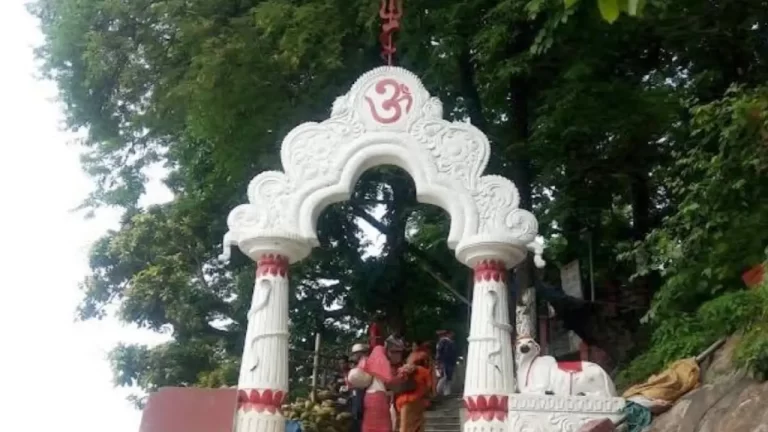
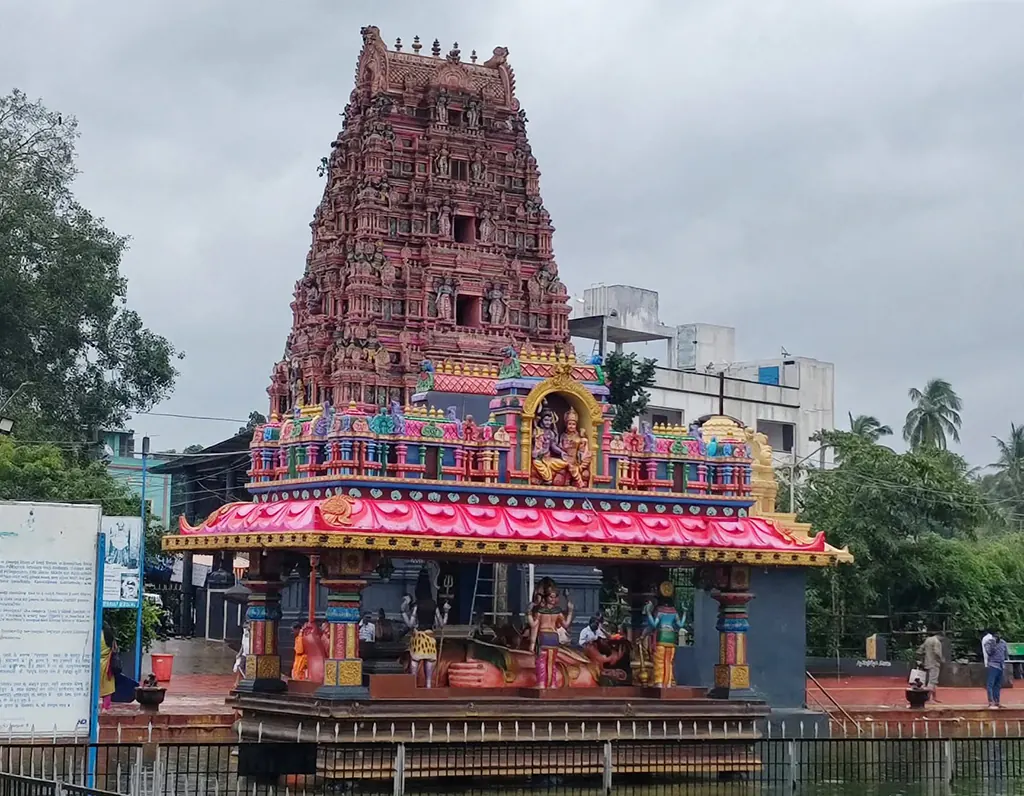
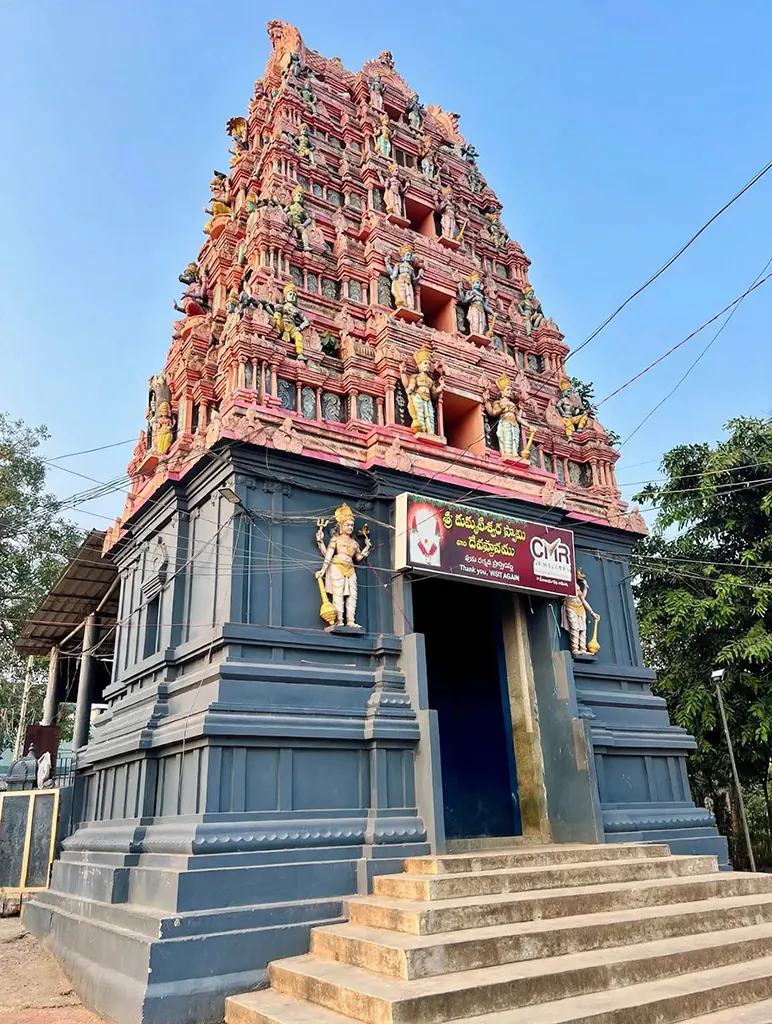
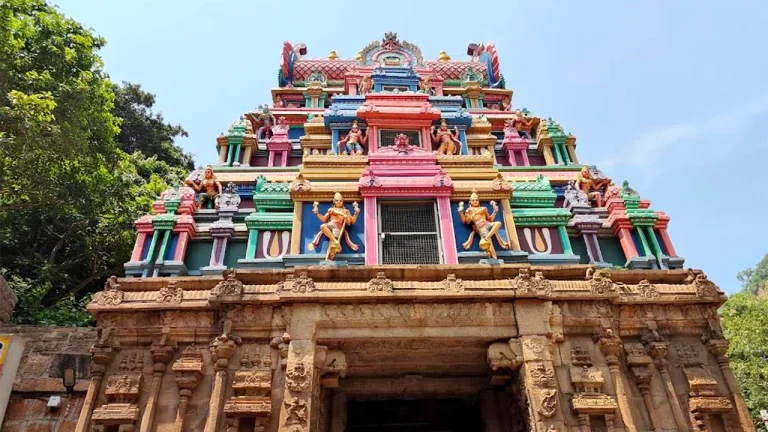
Visitors enter through a traditional tiered gopuram (entrance tower) adorned with stucco sculptures of Shiva, Parvati, and mythological figures. Inside, a spacious open courtyard surrounds the main shrines, allowing devotees to perform pradakshina (circumambulation) comfortably.
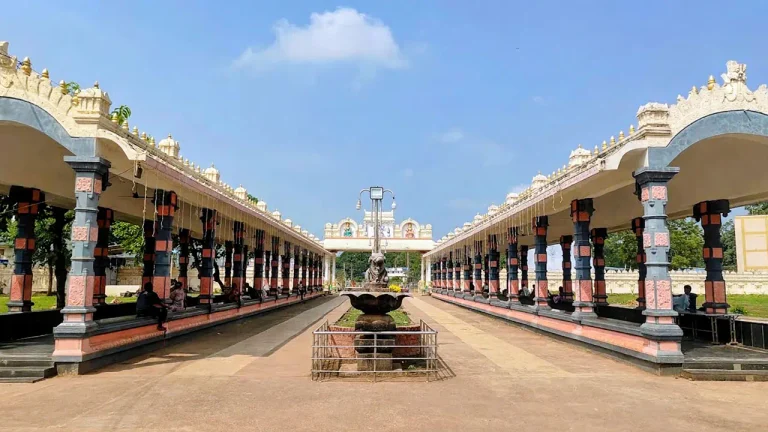
Pillared halls (mandapams) in front of the sanctums feature carved stone columns and inscriptions that bear witness to medieval donations. While parts of the complex have been modernized to handle festival crowds, the inner sanctums retain their ancient stone character.
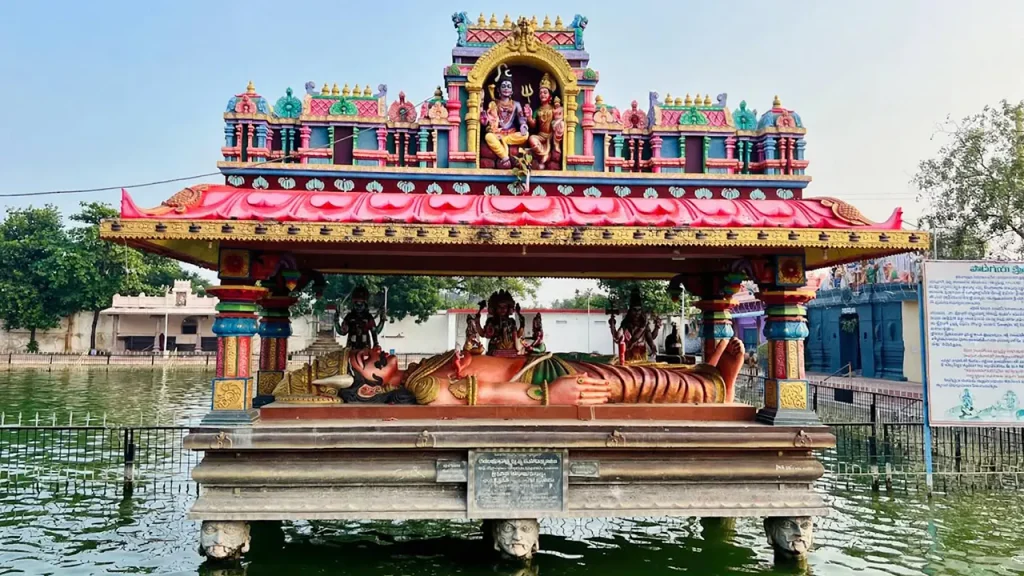
The Pada Gaya Pushkarini (Sacred Tank)
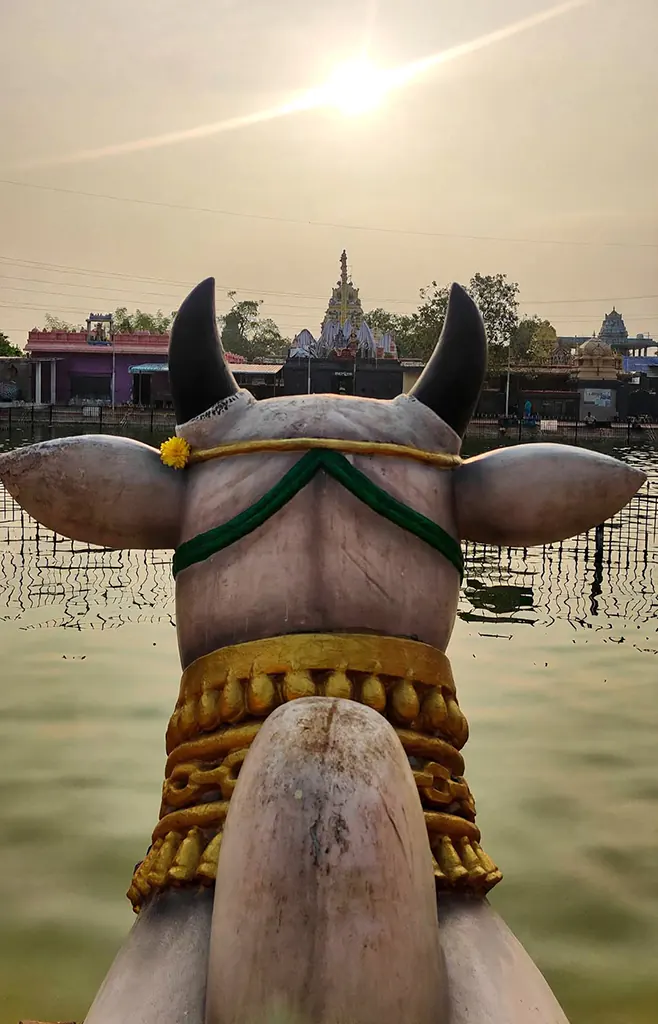
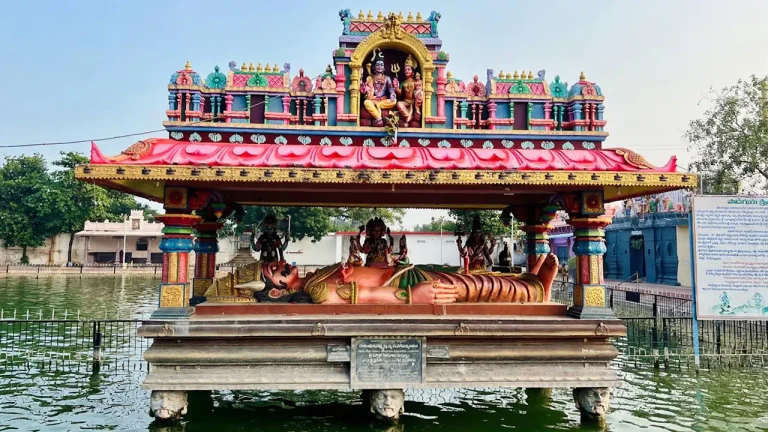
Just outside the main temple complex lies the large sacred temple tank known as the Pada Gaya Pushkarini. Stone steps lead down to the water on all sides.
This tank plays a central role in the spiritual life of Pithapuram:
- Pilgrims take a holy dip or sprinkle water from the tank before entering the temple for darshan.
- Families gather along the steps and designated ritual halls near the tank to perform pinda pradanam and tarpanam for departed ancestors.
Daily Darshan and Pooja Timings
Kukkuteswara Swamy Temple follows a traditional daily worship schedule, opening early in the morning and closing for an afternoon break before reopening in the evening.
| Session | Typical Timings | Key Rituals Observed |
| Morning Session | ~6:00 AM to 12:30 PM | Suprabhatam, Abhishekam to Kukkuteswara Swamy, Archana, Kumkumarchana at Puruhutika Devi shrine |
| Afternoon Break | ~12:30 PM to 4:00 PM | Temple doors close after midday naivedyam (food offering) |
| Evening Session | ~4:00 PM to 8:00 PM | Pradosha Kala Pooja, Evening Harathi, Sarva Darshanam |
Important Note on Timings: Temple opening and closing hours frequently extend on Mondays, Amavasya (New Moon days), throughout Kartika Masam, and during Maha Shivaratri and Devi Navaratri. Before finalizing your travel schedule, check current seva notifications on the Andhra Pradesh Endowments Department portal or verify locally upon arrival.
Pada Gaya Rituals and Ancestral Offerings
Because Pithapuram is one of the three sacred Gaya Kshetras, performing ancestral rites here holds deep significance for Hindu families.
Why Families Perform Pinda Pradanam Here
In Hindu belief, offering pindas (rice balls mixed with sesame seeds and ghee) and tarpanam (water offerings) at Pada Gaya satisfies departed ancestors (Pitru Devatas) and brings peace and prosperity to living generations. Many families who cannot travel to Gaya in Bihar visit Pithapuram instead, as scriptural tradition accords equal merit to rituals performed at Pada Gaya.
How the Ritual Works
- Morning Arrival: Ancestral rituals are performed during morning hours, usually between 6:30 AM and 11:30 AM, before midday offerings.
- Holy Bath: Participants take a ceremonial bath at the Pada Gaya Pushkarini or wear clean traditional clothes.
- Sankalpam and Pinda Pradanam: With the guidance of authorized temple priests (purohits), the family performs Sankalpam (stating their lineage and intent), offers pindas, and concludes with water offerings.
- Temple Darshan: After completing the ritual, families visit Kukkuteswara Swamy, Puruhutika Devi, and Kunti Madhava Swamy to conclude their pilgrimage.
Practical Tip: You do not need to carry heavy ritual supplies from home.Authorized priest counters near the temple tank provide the required materials (samagri) for a fixed, modest fee.
Major Festivals Celebrated at the Temple
While the temple welcomes devotees every day, several annual festivals transform Pithapuram into a vibrant center of devotion:
- Maha Shivaratri (February/March): The biggest annual festival at the temple. Devotees observe day-long fasting, participate in special Rudrabhishekam rituals, and stay awake through the night (Jagarana) chanting Shiva’s name.
- Kartika Masam (October/November): Every Monday (Kartika Somavaram) and the full moon day (Kartika Pournami) draw tens of thousands of pilgrims. Devotees light oil lamps (Kartika Deepam) across the courtyard and around the sacred tank.
- Devi Navaratri / Dasara (September/October): Celebrated with grandeur at the Sri Puruhutika Devi shrine. Goddess Puruhutika Devi is decorated in different sacred forms (Alankarams) each day, and special Chandi Homam and Kumkumarchana rituals take place.
- Datta Jayanti (December): Celebrated with devotional bhajans, parayana (scriptural readings), and special prayers honoring Lord Dattatreya and Sripada Sri Vallabha.
- Mahalaya Amavasya (September/October): During Pitru Paksha, large numbers of families visit the Pada Gaya tank to offer prayers for their ancestors.


How to Reach Kukkuteswara Swamy Temple
Pithapuram is well connected by rail and road to major cities in Andhra Pradesh and Telangana.
By Train
- Pithapuram Railway Station (PIT): Located roughly 2 km from the temple. Several passenger and express trains on the Visakhapatnam–Vijayawada railway line stop here. Auto-rickshaws are easily available outside the station.
- Samalkot Junction (SLO): Located about 12 km away, Samalkot is a major railway junction where almost all superfast trains between Chennai, Vijayawada, Hyderabad, and Visakhapatnam halt. From Samalkot, you can reach Pithapuram in 20 minutes by auto, taxi, or local bus. You can check train schedules and book tickets through the IRCTC official railway booking portal.
By Air
- Rajahmundry Airport (RJA): The nearest domestic airport, situated about 55 to 60 km from Pithapuram (roughly 1.5 hours by road). Taxis are readily available from the airport.
- Visakhapatnam Airport (VTZ): An international and major domestic airport located approximately 155 to 165 km north of Pithapuram (around 3 to 3.5 hours via National Highway 16).
By Road
Pithapuram lies just off National Highway 16 (NH-16), which connects Chennai, Vijayawada, Rajahmundry, and Visakhapatnam.
- From Kakinada: ~20 km (30–40 minutes by APSRTC bus or car).
- From Rajahmundry: ~60 km (1.5 hours by bus or car).
- From Vijayawada: ~215 km (4 to 4.5 hours via NH-16).
For broader regional travel routes and district tourism support, you can also refer to the Andhra Pradesh Tourism official portal.
Best Time to Visit Pithapuram
Because Pithapuram is located near the Bay of Bengal coast, the weather is tropical and warm for much of the year.
- October to March (Best Overall Season): Temperatures are pleasant, ranging between 20°C and 30°C. This period also coincides with major spiritual seasons including Devi Navaratri, Kartika Masam, Datta Jayanti, and Maha Shivaratri.
- April to June (Hot Summer): Coastal humidity and temperatures above 38°C can make midday travel tiring. If visiting in summer, arrive early at 6:00 AM for darshan and avoid afternoon heat.
- July to September (Monsoon): Moderate to heavy rainfall refreshes the region, though occasional coastal storms can affect road travel.
Dress Code, Temple Rules, and Visitor Facilities
Following basic temple etiquette ensures a smooth and respectful visit for everyone:
- Dress Code: Traditional Indian attire is strongly recommended. Men are encouraged to wear a dhoti, kurta-pyjama, or modest trousers and shirt. Women should wear a saree, salwar kameez, or modest long skirt. Shorts, sleeveless tops, and revealing outfits are discouraged inside the sanctum areas.
- Footwear and Belongings: Remove footwear at the designated stands outside the main entrance before stepping into the temple courtyard.
- Photography Rules: Photography and video recording are strictly prohibited inside the main sanctums (garbhagriha) of Kukkuteswara Swamy and Puruhutika Devi. Switch mobile phones to silent mode before entering.
- Facilities Available: Drinking water points, basic washrooms, footwear counters, and open parking areas are available near the temple complex.
- Accessibility: The main courtyard is flat and accessible for senior citizens, though short stone steps lead into the inner shrines. Visiting during non-peak weekday mornings is easiest for elderly devotees.
Nearby Temples to Visit Around Pithapuram
If you are traveling to Pithapuram, you can easily cover several other famous temples in the same region within a one- or two-day trip:
Kunti Madhava Swamy Temple (Pithapuram): Located right in Pithapuram town, this ancient Vishnu shrine is one of the five Pancha Madhava temples and is traditionally visited alongside Kukkuteswara Swamy Temple.
Sripada Sri Vallabha Maha Samsthanam (Pithapuram): Located close by in Pithapuram, this serene temple marks the ancestral home and birthplace of Sripada Sri Vallabha.
Annavaram Satyanarayana Swamy Temple (~30 km): Situated atop Ratnagiri Hill on the banks of the Pampa River, this is one of Andhra Pradesh’s most famous pilgrimage centers.
Samarlakota Kumararama Bhimeswara Swamy Temple (~13 km): One of the five sacred Pancharama Kshetras of Lord Shiva, located near Samalkot Junction.
Draksharamam Bhimeswara Swamy Temple (~45 km): Another major Pancharama Kshetra and Shakti Peetha (Manikyamba Devi), renowned for its massive two-story Shiva Lingam and ancient inscriptions.
Frequently Asked Questions
1. Why is Lord Shiva worshipped as a rooster at Kukkuteswara Swamy Temple?
According to the Sthala Purana, Lord Shiva took the form of a rooster (Kukkuta) and crowed before dawn to help the devotee-demon Gayasura complete a sacred fire sacrifice (yagna) without breaking his vow. Afterward, Lord Shiva manifested permanently at the site as a self-manifested rooster-shaped Shiva Lingam.
2. Is Puruhutika Devi Temple inside Kukkuteswara Swamy Temple?
Yes. The shrine of Goddess Puruhutika Devi, revered as the 10th of the eighteen Maha Shakti Peethas, is located inside the same Kukkuteswara Swamy Temple complex in Pithapuram.
3. Why is Pithapuram called Pada Gaya?
In Puranic tradition, when Gayasura stretched his body across India for a divine yagna, his head rested in Gaya (Bihar), his navel in Jajpur (Odisha), and his feet (pada) in Pithapuram. Because his feet rested here, Pithapuram is called Pada Gaya and is a major pilgrimage center for ancestral pinda pradanam rituals.
4. What are the darshan timings at Kukkuteswara Swamy Temple?
The temple generally opens from around 6:00 AM to 12:30 PM in the morning and 4:00 PM to 8:00 PM in the evening. Timings extend on Mondays, Amavasya days, Kartika Masam, and Maha Shivaratri.
5. How far is Kukkuteswara Swamy Temple from Annavaram?
Kukkuteswara Swamy Temple in Pithapuram is approximately 30 kilometers south of Annavaram Satyanarayana Swamy Temple via National Highway 16, taking about 40 to 45 minutes by road.
6. Is there a dress code for visiting Kukkuteswara Swamy Temple?
Yes. Devotees are expected to wear modest, traditional attire such as sarees, salwar kameez, dhotis, or full-length trousers and shirts. Western beachwear, shorts, and sleeveless tops are not appropriate inside the temple premises.
Conclusion
Kukkuteswara Swamy Temple in Pithapuram offers a rare pilgrimage experience where ancient history, sacred legends, and living traditions come together in one peaceful courtyard. From seeking the blessings of the self-manifested rooster-shaped Shiva Lingam and Goddess Puruhutika Devi to honoring ancestors at the sacred Pada Gaya tank, every corner of this temple carries deep spiritual meaning.
If you are planning a visit, aim for the pleasant months between October and March, arrive early in the morning for a calm darshan, and set aside extra time to explore Pithapuram’s nearby shrines and the hilltop temple at Annavaram.