
Danteshwari Temple Dantewada
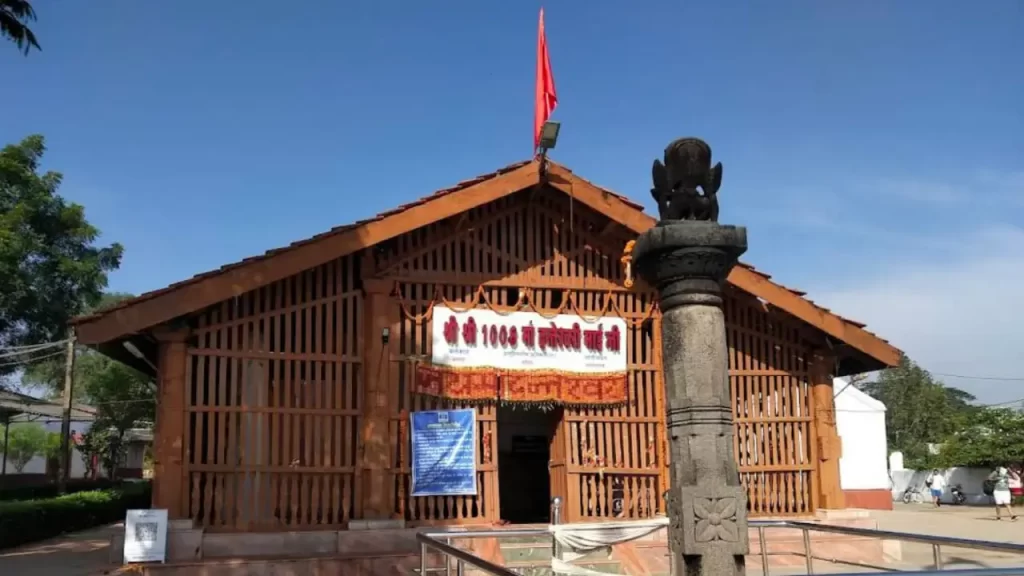
Danteshwari Temple Dantewada: Nestled in the picturesque town of Dantewada, in the southern part of Chhattisgarh, this ancient temple is not just a place of worship; it’s a living testament to centuries of faith, culture, and profound legends. It rises majestically over the meeting place of the sacred Shankini and Dankini rivers, whose waters, paradoxically, have different colors – one which was said to be reddish, the other blackish, a sight that serves only to enhance the mysterious reputation of the temple. Come, let us delve into it together.
Contents
- 1 Danteshwari Temple History: Whispers from the Past
- 2 The Legend of Danteshwari Temple: Where Myth Meets Reality
- 3 Cultural Significance of Danteshwari Temple: A Brocade of Traditions
- 4 Spiritual Significance of Danteshwari Temple: A Beacon of Faith
- 5 Mythological Significance of Danteshwari Temple: Divine Myths
- 6 Festivals at Danteshwari Temple: A Kaleidoscope of Celebrations
- 7 Major rituals in Bastar Dussehra are:
- 8 Distinct Architectural Patterns and Sculptures of Danteshwari Temple: The Stone Does the Talking
- 9 Myths and Beliefs Regarding Danteshwari Temple: Whispers of the Sacred
- 10 Special Poojas and Rituals at Danteshwari Temple: Connecting with the Divine
- 11 Danteshwari Temple Timings: Plan Your Pilgrimage
- 12 Accommodation Options in Dantewada: A Comfortable Stay
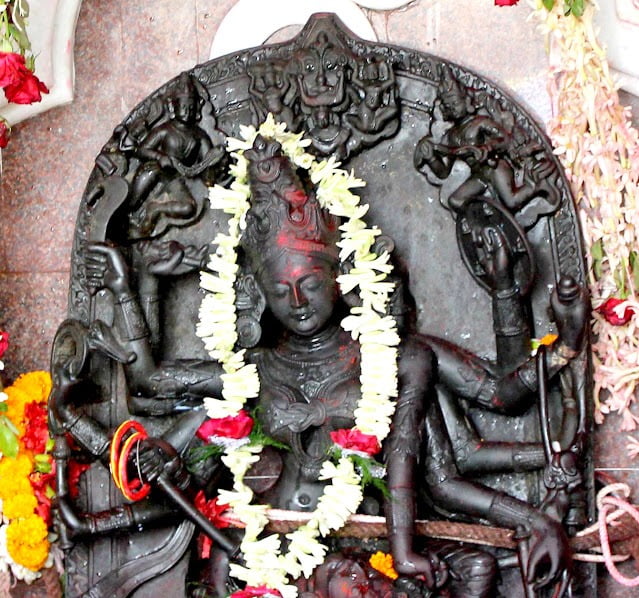
- 12.0.1 Shri Jogadya Shaktipeeth, Kshirgram, West Bengal
- 12.0.2 Vibhash Shakti Peeth | Kapalini (Bhimarupa) Shaktipeeth
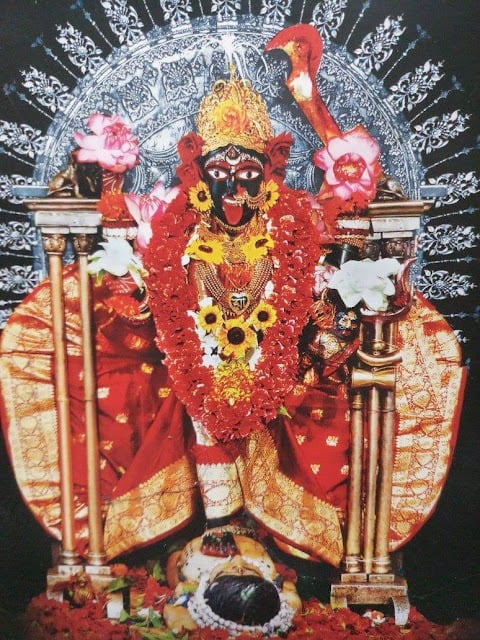
- 12.0.3 Ujani Shaktipeeth Shri Mangal Chandi Temple
- 12.0.4 Nandikeshwari Temple | Nandipur Shakti Peeth, Sainthia
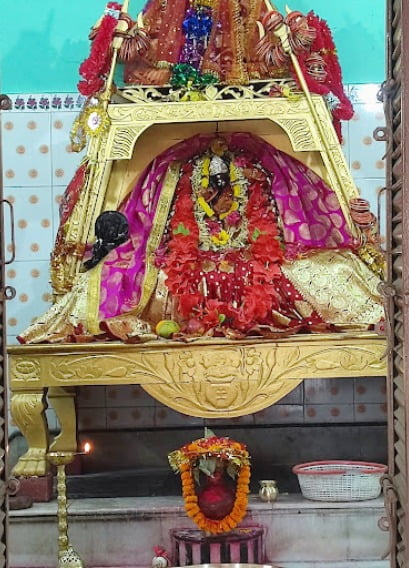
- 12.0.5 Shree Trishrota Maa Bhramoree Debir Shaktipeeth Temple
- 12.0.6 Anandamayee Shakti Peeth Temple
- 13 How to Reach Danteshwari Temple: Your Path to Devotion
- 14 FAQ and Practical Tips for Visiting Danteshwari Temple:
Danteshwari Temple History: Whispers from the Past
Our excursion into the history of Danteshwari Temple Dantewada is taken back in time to the 14th century. Imagine a time when great kingdoms flourished and declined, and faith was the foundation of society. This glorious temple was built by the Kakatiya dynasty that ruled the state, namely King Annamdev. He is said to have been chosen by God himself to build the kingdom of Bastar, and the Danteshwari Temple Dantewada served as its spiritual center. She remains, to this day, the Kuldevi (family goddess) of the Bastar royal dynasty and has maintained a record position in the hearts of the local people, including the aboriginal tribal populations.
The architectural style of the Danteshwari Temple Dantewada is influenced both by South Indian and local designs, a stunning blend symptomatic of the multilayered cultural tides that nurtured this land. Across the centuries, it has seen countless seasons come and go, braved numerous storms, and stood as a constant source of hope and faith to millions. Though its beginnings are lost in time, the current temple, a shining example of tenacious devotion, testifies eloquently of the craftsmen and pilgrims who gave their hearts to its construction.
Read More>> Shri Devikoop Bhadrakali Temple
The Legend of Danteshwari Temple: Where Myth Meets Reality
Now, let us proceed to the interesting legend that makes Danteshwari Temple Dantewada one of the 52 (some legends say 108) Shakti Peethas of India. For the uninformed, Shakti Peethas are very sacred temples, each representing a location where a part of Goddess Sati’s body is said to have fallen. The story is very much rooted in Hindu mythology:
It all started with Daksha Yagna. King Daksha, Sati’s father, organized a grand Yagna (fire sacrifice) and deliberately insulted his son-in-law, Lord Shiva, by not inviting him. Unable to bear this humiliation of her beloved husband, Goddess Sati immolated herself in the sacrificial fire. Lord Shiva, consumed by grief and rage, began his cosmic dance of destruction, the Tandava, carrying Sati’s lifeless body on his shoulder. In order to rescue the universe from the fury of Shiva and restore him to his sense, Lord Vishnu employed his Sudarshan Chakra to cut Sati’s body into pieces. The pieces fell at different locations throughout the Indian subcontinent and each was named a sacred Shakti Peeth.
It is here, at this very location, in Dantewada, that Maa Sati’s ‘Dant’ or tooth is said to have fallen. This is the manner in which the goddess became Danteshwari, and the location, Dantewada. This powerful incident is mentioned in many Puranas, affirming the ancient and sacred heritage of the temple. Thus, the Devi Bhagwat Purana and Kalika Purana detail the creation of Shakti Peethas at length.
Though a particular verse actually mentioning “Danteshwari Temple Dantewada” may be hard to identify as the nomenclature changed across time, the overall descriptions of Sati’s body parts dropping and creating these divine sites are everywhere. The Puranas make it explicit that through their visits to these places, pilgrims can achieve sacred merit and emancipation. Thus, each pilgrimage to Danteshwari Temple Dantewada is perceived as an immediate link to this ancient divine feminine force.
Apart from this larger-than-life narrative, regional folklore also colors the history of the temple. According to it, the goddess herself directed King Annamdev to build his kingdom here, indicating her divine presence and favor over the area.
Read More>> Chintpurni Shakti Peeth: Where Wishes Find Fulfillment
Cultural Significance of Danteshwari Temple: A Brocade of Traditions
The Danteshwari Temple Dantewada is far from a place of worship; it’s a living center of the Bastar region’s rich culture. The religiosity here is deeply interconnected with the native tribal societies – the Gonds, Halbas, and so on – who have worshipped Maa Danteshwari for ages. Their age-old traditions, customs, and lifestyle are closely intertwined with the temple’s rituals.
At festivals, you can experience a wonderful amalgamation of tribal traditions and mainstream Hindu rituals, forming a very unique cultural experience. The colorful folk dances, authentic music, and painted garments of the tribal folk contribute an unmatched beauty to the temple culture. The temple is also a repository of local arts and crafts, facilitating the preservation of distinctive forms such as Bastar metalwork. It’s an environment in which you really feel the beat of a living, rich heritage.
Read More>> Vidyashankara Temple Sringeri 12 Pillars Reveal Your Destiny
Spiritual Significance of Danteshwari Temple: A Beacon of Faith
For the faithful, the Danteshwari Temple Dantewada is a site of great spiritual energy. Individuals come from far and near, braving difficult journeys, just to get the blessings of Maa Danteshwari. She is said to be a great fulfiller of wishes, a safeguard against evil, and a provider of strength and bravery. Numerous individuals come here to pray for prosperity, good health, success, and to overcome adversity in their lives.
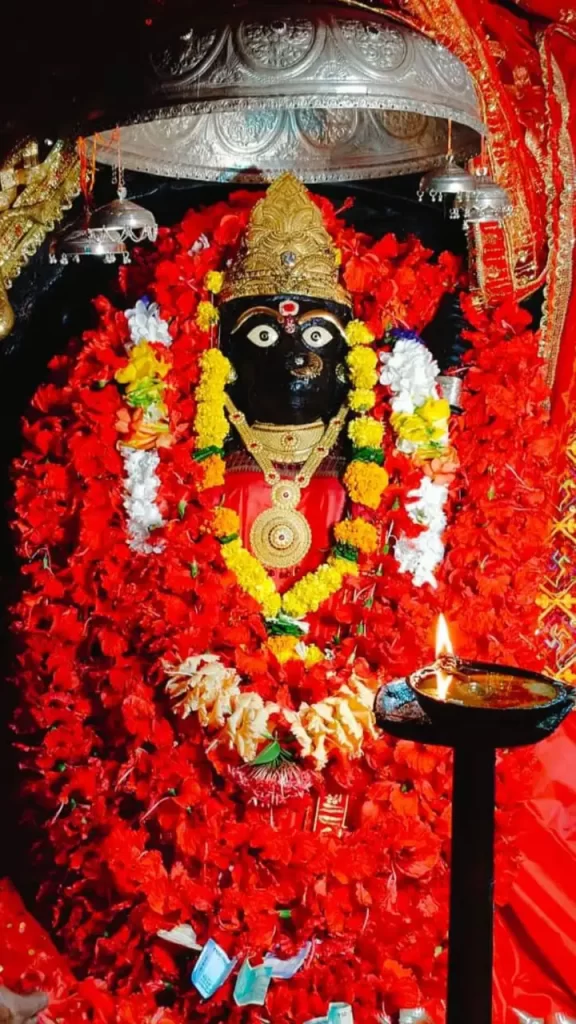
The black stone image of Maa Danteshwari, an enchanting manifestation of the divine feminine, radiates a tangible aura of serenity and divine energy. People stand in front of her and feel a deep sense of tranquility and an abiding connection to the divine world. The perpetual sounds of mantras and the harmonious sounds of bells create a devout atmosphere filled with fervor, beckoning all to join in its sanctity. It is actually a spiritual haven where religion flowers.
Read More>> Konark Sun Temple 13th Century Gem
Mythological Significance of Danteshwari Temple: Divine Myths
Once again emphasizing its importance, the Danteshwari Temple Dantewada occupies a prime position in Hindu mythology because of its being a Shakti Peeth. The premise of Shakti, the divine feminine cosmic power, is at the core of Hinduism. Maa Danteshwari, being the incarnation of Shakti (Goddess Parvati/Durga), embodies power, creation, protection, and destruction. Her existence here guarantees their continuity of these divine powers.
The mythological stories that belong to the temple remind us of the universal balance between good and evil, the power of devotion, and the loving nature of the divine mother. Each ritual, each prayer offered at the Danteshwari Temple Dantewada links the devotee to these old and potent cosmic verities, making it an enriching experience for anyone seeking deeper currents of Hindu wisdom.
Festivals at Danteshwari Temple: A Kaleidoscope of Celebrations
If you would like to see the Danteshwari Temple Dantewada in its most vibrant and stunning form, plan a visit to one of its grand festivals. The festive mood at such times is just amazing!
The most notable celebration, of course, is Bastar Dussehra. Unlike the Dussehra in other parts of India, which mainly honors the victory of Lord Rama over Ravana, Bastar Dussehra is a 75-day long special festival in honor of Maa Danteshwari and other local goddesses. It’s a beautiful mix of ancient tribal ceremonies and Hindu customs, highlighting the region’s rich cultural diversity. The idol of the goddess is shifted ceremoniously from Dantewada to Jagdalpur, bringing along thousands of devotees and tribal leaders.
Read More>>Chinese Kali Temple Tangra Kolkata
Major rituals in Bastar Dussehra are:
Pat Jatra: The first ritual in which forest wood, utilized for the making of the great chariots, is ritually worshipped.
Kachingadi: Procuring the blessings of the clan deity Kachindevi for the uneventful progress of the festival. A little girl, supposed to be possessed by the deity, is forced to lie on a bed of thorns!
Kalash Sthapana and Jogi Baithai: Placing sacred urns and penance performed by a ‘Jogi’ (ascetic) from the Halba tribe, who remains buried waist-deep in a hole for nine days to guarantee the success of the festival.
Rath Parikrama: The ceremonial circumambulation of the temple with beautifully decorated chariots. Two chariots, one with four wheels and another with eight, are used for various processions.
Maoli Parghav: The ceremonial reception of Devi Maoli, regarded as Danteshwari’s elder sister, arriving from Dantewada.
Navratri, celebrated twice a year (Chaitra Navratri during spring and Sharad Navratri during autumn, which culminates in Dussehra), is yet another time of fervent devotion at the Danteshwari Temple Dantewada. The whole temple complex gets decorated with lights, and special poojas and aartis are conducted during all nine days. Thousands of jyoti kalashas (earthen lamps) are lit by people who seek the blessings of the goddess.
Other prominent festivals are Fagun Mela, which is celebrated in spring with much fervor. In the major festivals, particularly Dussehra and Navratri, the temple sees peak crowd density. If you are one who likes to visit in peace, it is advisable to stay away from these peak festive seasons. But if you want to live the cultural canvas and religious fervor, these are the times you should be here.
Distinct Architectural Patterns and Sculptures of Danteshwari Temple: The Stone Does the Talking
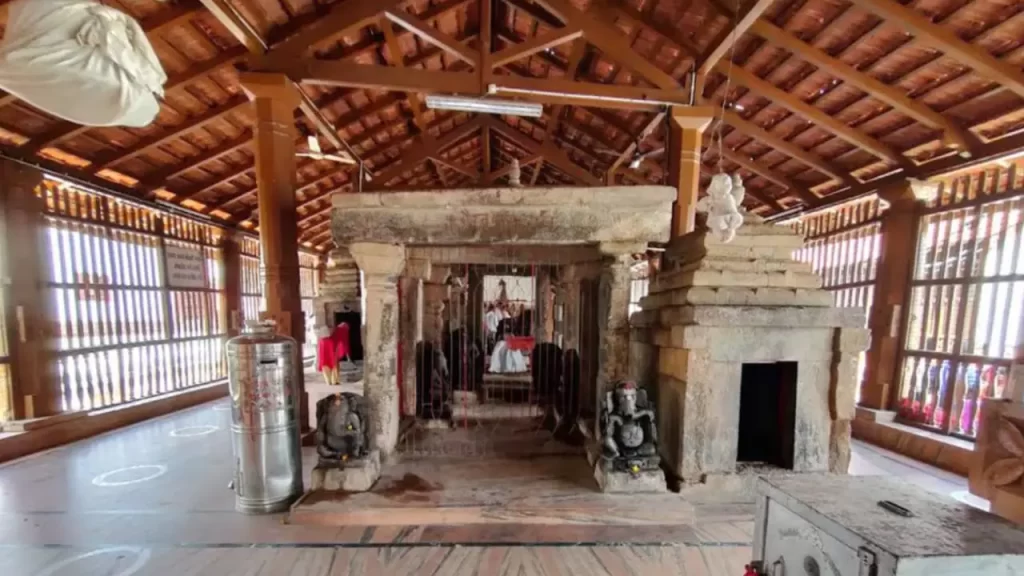
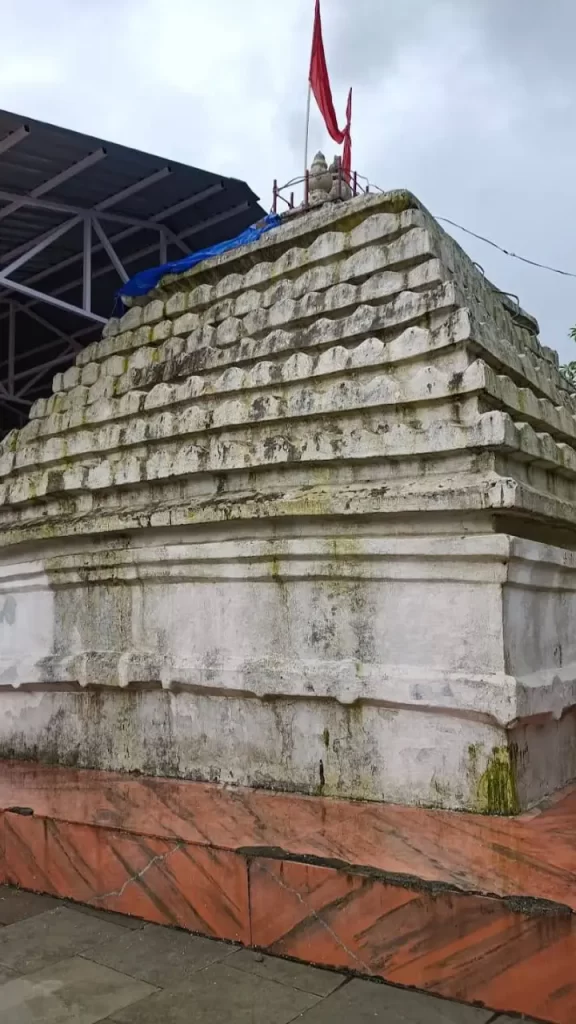
At first glance of the Danteshwari Temple Dantewada, you will be instantly impressed by its characteristic architectural look. It is constructed in a mix of South Indian (Dravidian) and Nagara styles indigenous to the region, resulting in a visual experience unlike any other. The temple complex is divided into four broad sections:
Garbha Griha: The sanctum sanctorum, housing the principal idol of Maa Danteshwari.
Maha Mandap: The spacious hall which connects with the sanctum.
Mukhya Mandap: The principal hall.
Sabha Mandap: The hall of assembly.
The Garbha Griha and Maha Mandap were primarily constructed with stone pieces, showcasing remarkable craftsmanship. One of the most striking features is the magnificent black stone idol of Maa Danteshwari, exquisitely carved and radiating divine power. In front of the temple entrance, you’ll notice a tall Garuda Pillar, a common feature in Vishnu temples, reflecting a syncretic blend of traditions.
Temple walls and shikhara (spire) are finished with delicate sculptural luxury and precise carvings, featuring multiple deities, mythological figures, and ornamental patterns. Every carving has a story to tell, a silent story of faith and artistic talent which has lasted through centuries. The massive gopuram (tower) that serves as the main entrance is an awe-inspiring spectacle, frequently representing Mount Meru, the world mountain. The locale, where the Shankini and Dankini rivers meet, with their demarcating colors, adds to the temple’s peaceful and mystical environment.
Read More>> Chamundeshwari Temple Mysore: Architectural Marvel & Spiritual Wonder
Myths and Beliefs Regarding Danteshwari Temple: Whispers of the Sacred
Apart from the wide Puranic legend, the Danteshwari Temple Dantewada abounds in local myths and beliefs that have structured the lives of the locals. One of the well-known local legends is about the travel of King Annamdev: Maa Danteshwari vowed to accompany him while he founded his empire on one condition, i.e., that he should never glance back. He traveled from Basroor towards Rajim, keeping an ear for her anklets. But at the meeting point of the rivers, there was soft sand that muffled her anklets, so the king doubted and glanced back. It was at that very location that Maa Danteshwari halted, and a temple was constructed. This myth reflects the sensitive harmony of belief and trust.
Another strong belief lies in the temple’s connection with Tantric cults. The Danteshwari Temple Dantewada is held to be a key site for Tantric worship, drawing practitioners who wish for spiritual enlightenment and powers through these secret rituals. This feature lends another dimension of mystery to the temple’s ambiance.
The local tribes also have their own adaptations and interpretations of these legends, and they worship different forms of Danteshwari, commonly known as the “Batthis Behna” (32 sisters), with each one having its own importance and different rituals. These beliefs highlight the strong spiritual link that the locals have with the goddess and the temple.
Read More>> Divine Mata Vaishno Devi Temple | Shaktipeeth Complete Guide
Special Poojas and Rituals at Danteshwari Temple: Connecting with the Divine
The Danteshwari Temple Dantewada is one where piety finds expression through a range of poojas and ceremonies conducted round the clock and throughout the year. The daily schedule involves various aartis and poojas in which priests diligently make offerings of prayer, flowers, and incense to the deity. These everyday rituals form a central aspect of the temple’s rich spiritual heritage.
Devotees can do Jyoti Kalash Sthapana on Navratri, an important ritual in which earthen lights are ignited and burnt for nine days, representing perpetual divine light and blessings. Certain havans and yagnas are also conducted for specific reasons, including achieving peace, prosperity, or fulfillment of particular wishes. For those who want blessings for their family, or who want to overcome some specific problem, special archanas (offering of prayers with names) and abhishkes (ritual bathing of the deity) can be coordinated through the temple authorities. The fame of the temple as a hub for Tantric worship is such that some esoteric poojas also take place, though these are not generally open to the general public.
Danteshwari Temple Timings: Plan Your Pilgrimage
The Danteshwari Temple Dantewada remains accessible to worshippers for the better part of the day, with plenty of time for darshan and prayers. As a rule, the temple remains open from 6:00 AM to 7:00 PM, but it is always a good idea to confirm special timings or changes in case of major festivals or holidays, since the timings may be altered for the benefit of the larger crowds and longer rituals. Morning visit can provide a peaceful experience since you can shun the crowd, particularly on ordinary days.
Sites to See Around Danteshwari Temple: Taking Your Spiritual Trip Further
It’s quite easy to extend your trip to Danteshwari Temple Dantewada to see other important Hindu spots around, each full of history and charm:
Dholkal Ganesh Temple: Situated on a hilltop in the Bailadila hill range, this temple is renowned for its old, intricately carved idol of Ganesh. The journey to Dholkal is itself a major adventure, with spectacular views.
Mama Bhanja Temple, Barsur: Located in the ancient city of Barsur, which was a capital of the Nagavanshi kings, this temple complex houses several shrines such as the Mama Bhanja Temple, which has some unusual architecture and sculptures.
Battisa Temple, Barsur: Yet another historic treasure of Barsur, this temple is well-known for its 32 pillars, intricate carvings, and unusual architectural style, evoking a sense of a past era.
Samlur Shiva Temple: Just a stone’s throw from Dantewada, this ancient Shiva temple is still intact and provides a serene spiritual experience.
Chandraditya Temple, Barsur: Another of the prominent temples in Barsur, this again reflects the abundance of archaeological history in the area.
Visiting these nearby places will provide you with greater understanding of the spiritual and historical fabric of the Bastar region, making your pilgrimage to Danteshwari Temple Dantewada all the more rewarding.
Read More>> Enchanting Beauty of Madurai Meenakshi Amman Temple
Accommodation Options in Dantewada: A Comfortable Stay
To ensure your comfort, there are different accommodation options available in Dantewada, albeit since it is a small town, options may be few as compared to bigger cities. You can get:
Hotels: You can get basic-facility hotels like Hotel Anurag Palace, which are usually found near the bus stand.
Dharamshalas: The temple town also boasts old and new dharamshalas (pilgrim rest houses) that offer budgetary accommodation for pilgrims.
PWD Rest Houses, Forest Resthouses, Circuit Houses: These are normally available but generally need advance booking, particularly for government officials, although occasionally tourists are accommodated.
Homestays: In recent years, there have been local homestays that have popped up near and around Dantewada, giving a more personal and local experience, commonly revealing more of local life and food. Subham Home Stay or Dandak Home Stay are such options that appear in approved tourism publications.
It’s always a good idea to pre-book your stay, particularly if you intend visiting during peak festival times such as Dussehra, as the town gets extremely busy.

How to Reach Danteshwari Temple: Your Path to Devotion
Getting to the Danteshwari Temple Dantewada is quite easy, with reasonable connectivity from major cities.
By Air: The closest airport is Swami Vivekananda Airport (Raipur, RPR) which is about 400 km away from Dantewada. From Raipur, you can take a taxi or bus to Dantewada. Jagdalpur Airport (JGB) – a nearer alternative, around 88 km, but with lesser connectivity – is another possibility.
By Train: Dantewada is blessed with its own railway station, Dantewada Railway Station (DWZ), which is hardly 5 km from the temple. It is well-connected with broad-gauge railway line from Visakhapatnam (Vizag). There are regular trains from Visakhapatnam to Dantewada.
By Road: Dantewada is connected by road to all major cities in Chhattisgarh and surrounding states. There are regular bus services from Raipur, Jagdalpur, Durg, Bilaspur, and other towns. You could also rent private taxis or drive your own cars. The temple is a short taxi ride from the Dantewada town center. The place where the Shankini and Dankini rivers meet, the location where the temple is situated, is easily accessible.
FAQ and Practical Tips for Visiting Danteshwari Temple:
As your guide, let me address some common questions and offer practical tips for your visit to Danteshwari Temple Dantewada:
What is the ideal time to visit? The best time to visit is during the winter (October to March) when the climate is good. If you wish to witness the vibrant festivals, then October-November (Dussehra/Navratri) is the season, but you must be ready to brave huge crowds.
Is there a dress code? Yes, it is recommended to dress modestly with respect for the religious feelings. Traditional Indian clothing or comfortable Western clothing that covers shoulders and knees is suggested.
Is photography allowed? Photography is generally allowed in the outer temple complex, but often restricted inside the Garbha Griha or during special rituals. Always check with temple authorities before taking pictures.
Are there guides present at the temple? Although official tour guides may not always be present at the temple itself, locals are generally very accommodating and willing to provide information.
And safety? Dantewada is safe for visitors in general. Still, it’s good sense to be conscious of your environment, particularly where it’s crowded, and be cautious as you would anywhere new.
Can I say prayers or conduct special rituals? You can join the daily aartis and say simple prayers. For special poojas, contact the temple office.
Are there restaurants or food stalls nearby? There are local restaurants and small eateries in Dantewada town offering plain, local food.