Naulakha Mandir, Deoghar: History, Timings, Architecture & Complete Visitor Guide
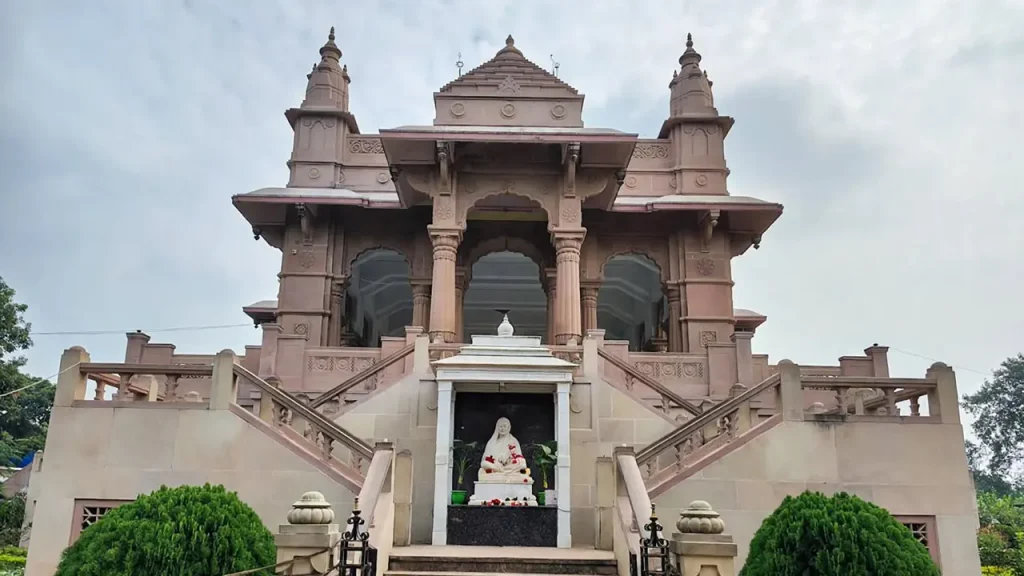
Naulakha Mandir is a famous Hindu temple dedicated to Radha and Krishna in Deoghar, Jharkhand. Located about 1.5 to 2 kilometers from the sacred Baba Baidyanath Jyotirlinga temple, it gets its name from its construction cost of nine lakh rupees (nau lakh). Built in the mid-twentieth century by Queen Charushila Devi, the temple is celebrated for its towering spires that closely resemble Belur Math in West Bengal.
For millions of pilgrims who travel to Deoghar each year, Naulakha Mandir offers a quiet, peaceful contrast to the bustling lanes around Baba Baidyanath Dham. Whether you are planning a family pilgrimage, exploring religious history, or looking for practical travel details, this guide covers everything you need to know before visiting.
Quick Information: Naulakha Mandir, Deoghar
| Feature | Details |
| Temple Name | Naulakha Mandir (also spelled Navlakha Temple) |
| Presiding Deities | Radha and Krishna (with a shrine to Sri Balananda Brahmachari) |
| Location | Karnibad / Caster’s Town area, Deoghar, Jharkhand 814112 |
| Patron / Builder | Rani Charushila Devi (Pathuriaghata royal family, Kolkata) |
| Architectural Inspiration | Modeled after Belur Math (Ramakrishna Mission), Howrah |
| Approximate Height | Around 146 feet |
| General Darshan Timings | Morning: ~6:00 AM – 12:00 PM; Evening: ~3:00 PM – 8:00 PM (subject to seasonal changes) |
| Entry Fee | Free for all visitors |
| Best Time to Visit | October to March (pleasant weather); early morning or late afternoon |
| Distance from Baidyanath Temple | Approximately 1.5 to 2 km |
| Nearest Railway Stations | Deoghar Junction (~3–4 km) and Jasidih Junction (~8–10 km) |
| Nearest Airport | Deoghar Airport (DGH), approximately 10–12 km away |
Why Naulakha Mandir Is Important in Deoghar
Deoghar is best known across India as Baidyanath Dham, home to one of the twelve sacred Jyotirlingas of Lord Shiva. Because of this, most visitors arrive in the town focused on Shaiva pilgrimage traditions.
Naulakha Mandir adds a deeply cherished Vaishnava and Guru-bhakti dimension to the city. Dedicated to Radha and Krishna, the temple stands as a symbol of selfless devotion, spiritual healing, and architectural grace.
For pilgrims, the temple serves two important purposes:
- A Peaceful Spiritual Retreat: While the main Jyotirlinga complex often sees massive queues and intense energy, Naulakha Mandir sits inside a spacious, open compound where devotees can sit quietly, chant, and meditate.
- An Architectural Landmark: Rising high above the surrounding neighborhood, its distinctive white-and-cream structure is one of the most recognizable monuments listed by Jharkhand Tourism in the Santhal Pargana region.
History of Naulakha Mandir and the Story Behind Its Name
Unlike ancient stone temples that date back a thousand years, Naulakha Mandir has a well-remembered modern history rooted in personal tragedy and spiritual surrender.
Who Built Naulakha Mandir?
The temple was funded by Rani Charushila Devi, a queen belonging to the prominent Pathuriaghata royal family of Kolkata (Calcutta). According to historical accounts and local tradition, Rani Charushila suffered devastating personal losses when both her husband and her young son passed away.
Overwhelmed by grief, she turned away from worldly comforts and sought spiritual guidance. She became a devoted disciple of Sri Balananda Brahmachari, a revered saint who had established his ashram in Deoghar.
How the Temple Got Its Name
To help channel her grief into lasting service and devotion, Sri Balananda Brahmachari advised Rani Charushila to build a grand temple dedicated to Radha and Krishna in Deoghar.
She embraced the instruction wholeheartedly and donated nine lakh rupees for the project. In Hindi and Bengali, nine lakh is spoken as nau lakh. Because nine lakh rupees was an extraordinary fortune during the late 1930s and 1940s, local residents began calling the shrine Naulakha Mandir—literally meaning “the temple built for nine lakhs.”
Construction began in the late 1930s and was completed in the 1940s (with regional records commonly citing completion between 1940 and 1948). Over the decades, the name Naulakha Mandir became so popular that it is now used universally by devotees, locals, and tourism authorities alike.
Deities Worshipped Inside the Temple
When you step inside the main prayer hall of Naulakha Mandir, your attention is drawn directly to the serene sanctum.
Radha and Krishna
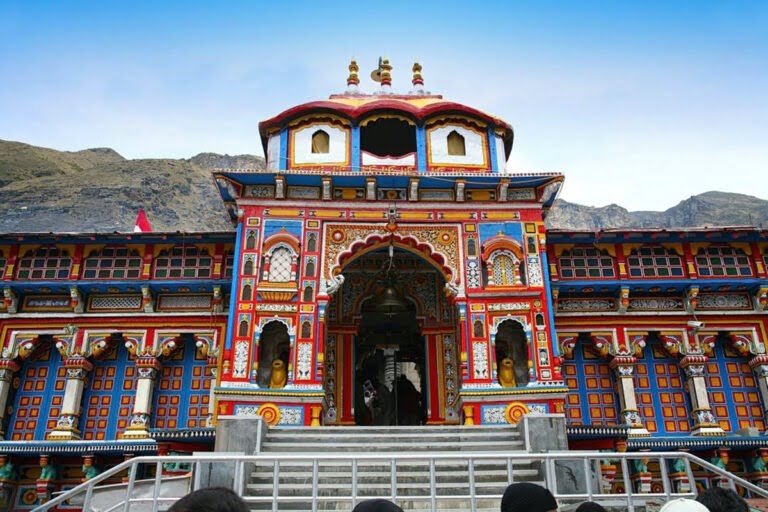
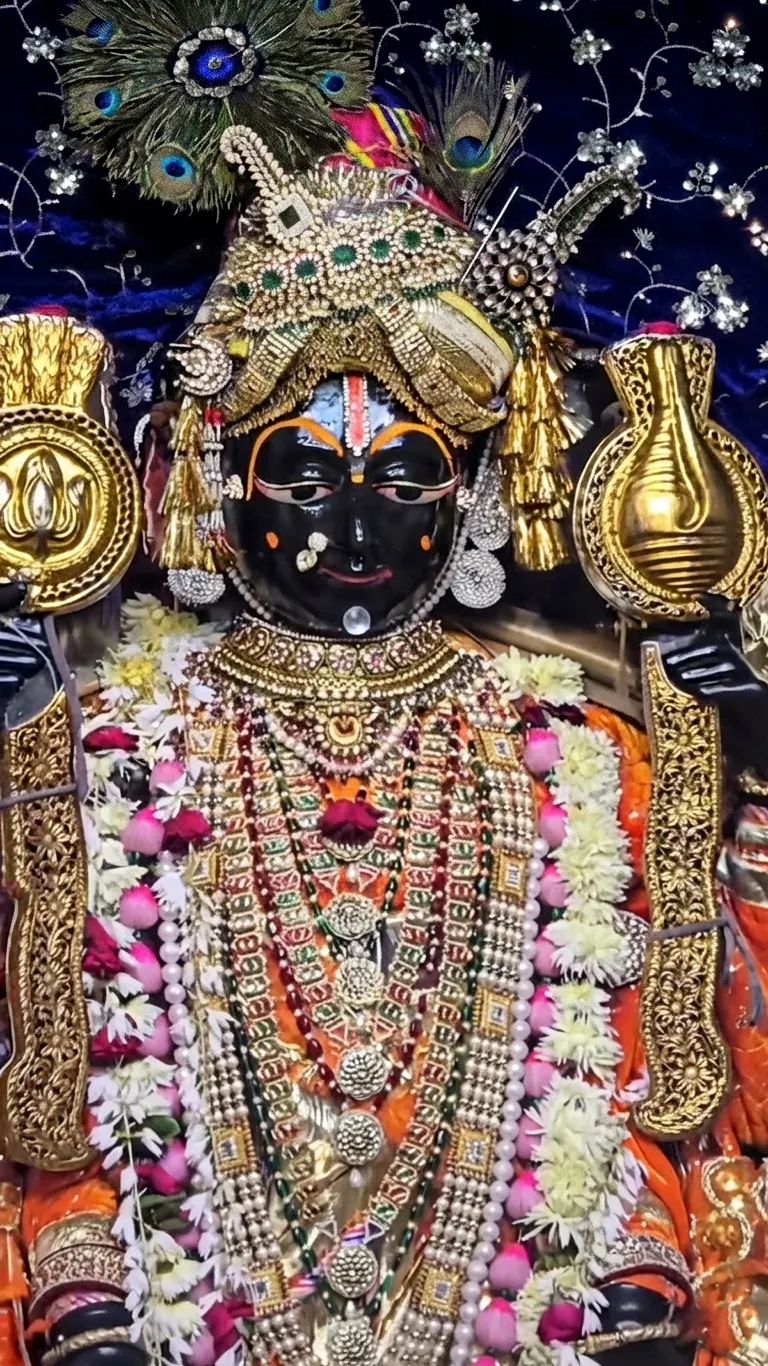
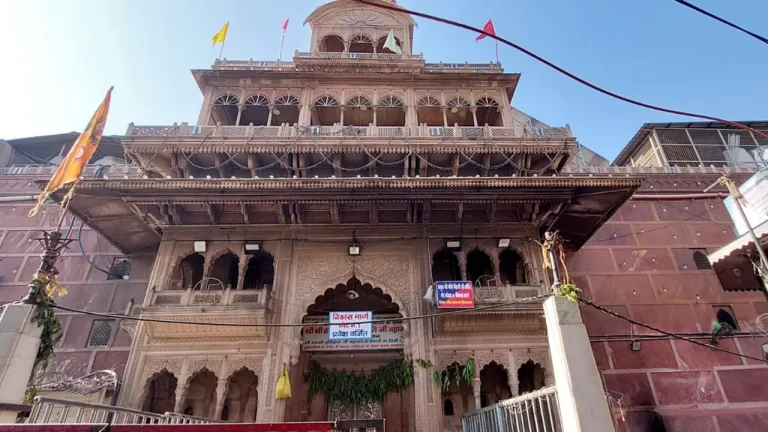
The central idols inside the sanctum are Lord Krishna and Goddess Radha. Much like at revered Krishna shrines such as Banke Bihari Temple in Vrindavan and Dwarkadhish Temple in Dwarka, the deities here are adorned in traditional silk garments, floral garlands, and ornaments that reflect gentle, loving devotion (bhakti). Devotees gather before the sanctum to offer prayers for peace, family harmony, and spiritual strength.
Sri Balananda Brahmachari
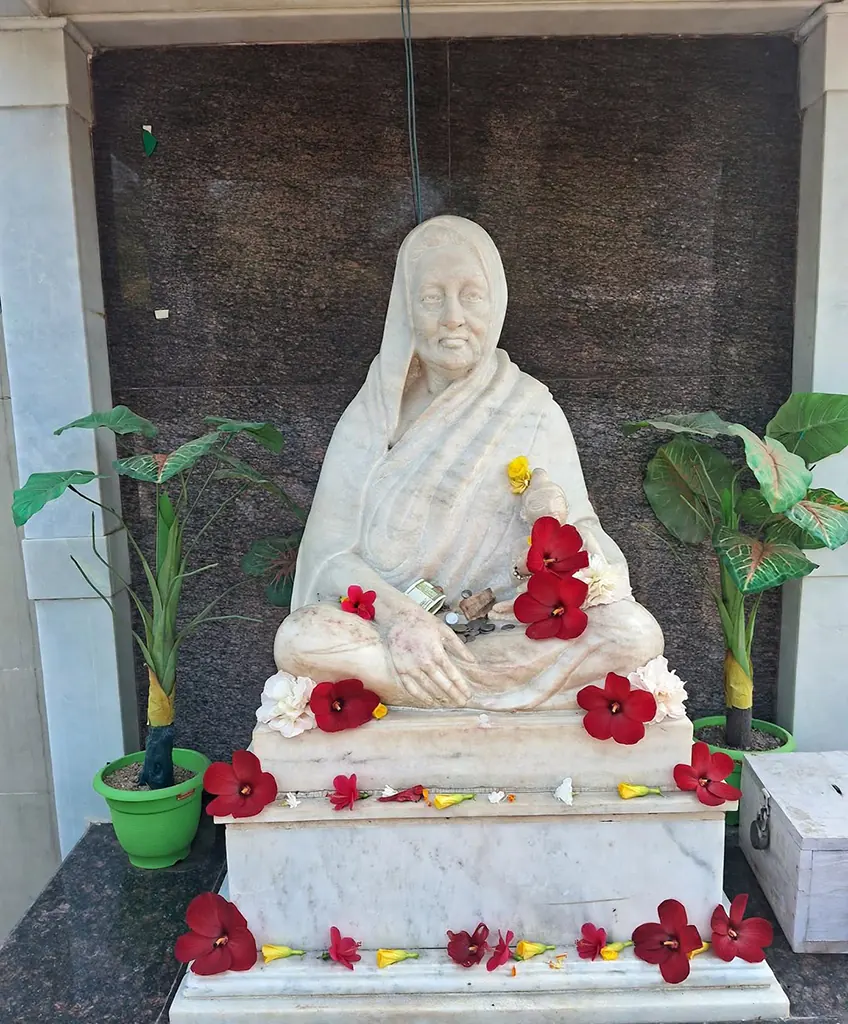
Alongside the Radha-Krishna sanctum, the temple complex honors Sri Balananda Brahmachari, whose spiritual guidance inspired the creation of the temple. Many visitors offer respects to his image and remember the guru-disciple bond that turned a grieving queen’s devotion into a public sanctuary for thousands of pilgrims.
Architecture and Notable Features
One of the first things visitors notice about Naulakha Mandir is that it looks quite different from traditional North Indian Nagara temples or South Indian Dravidian temples.
Resemblance to Belur Math
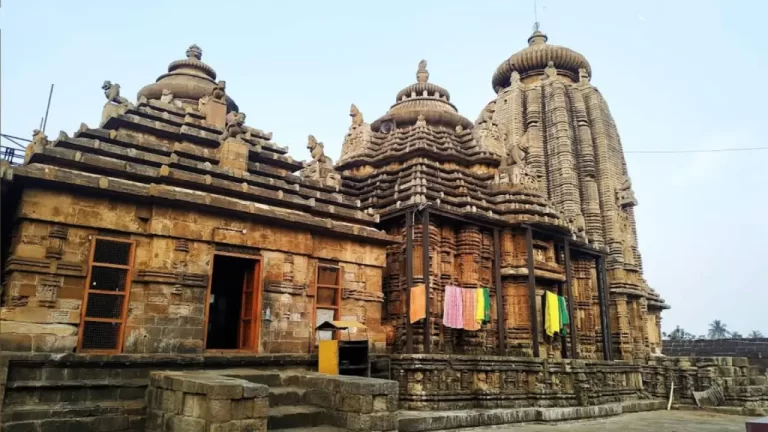
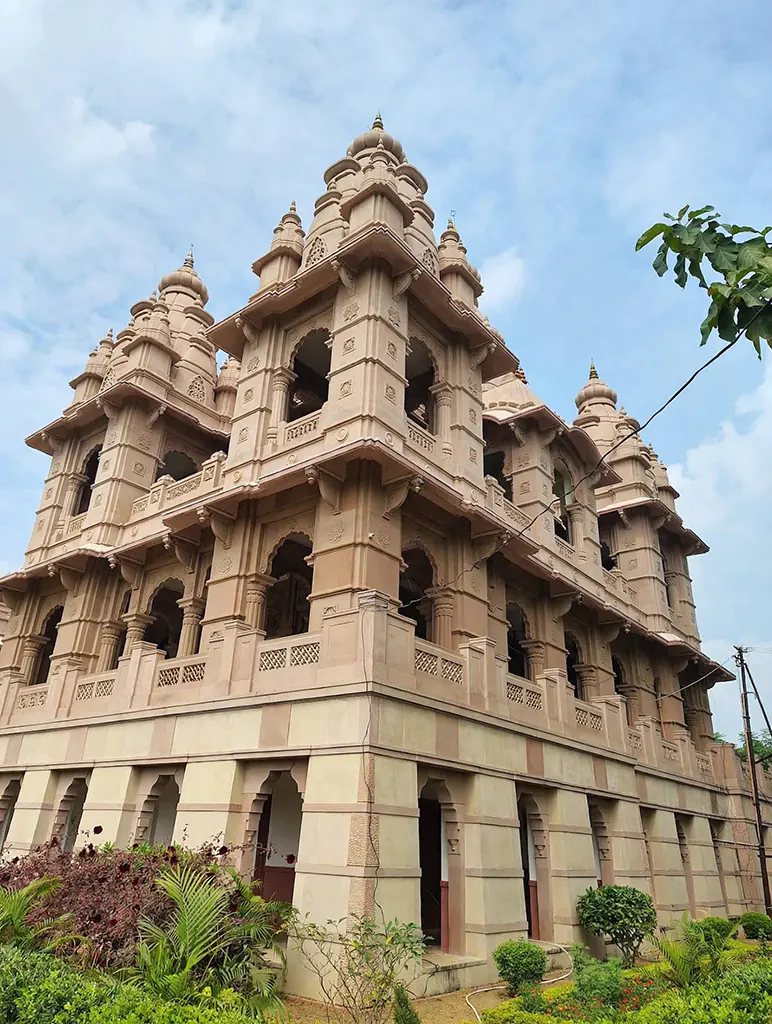
The design of Naulakha Mandir closely mirrors the famous Belur Math in Howrah, the headquarters of the Ramakrishna Mission. Both structures share a distinct neo-traditional Bengali temple style that blends classical Indian temple spires with grand arched entrances and wide, airy halls.
Key Architectural Highlights
- Towering Height: The central spire of Naulakha Mandir rises to roughly 146 feet, making it visible from several parts of Deoghar town.
- Multiple Spires and Domes: Surrounding the tall central tower are smaller cluster spires and domed canopies that give the temple a balanced, symmetrical silhouette against the sky.
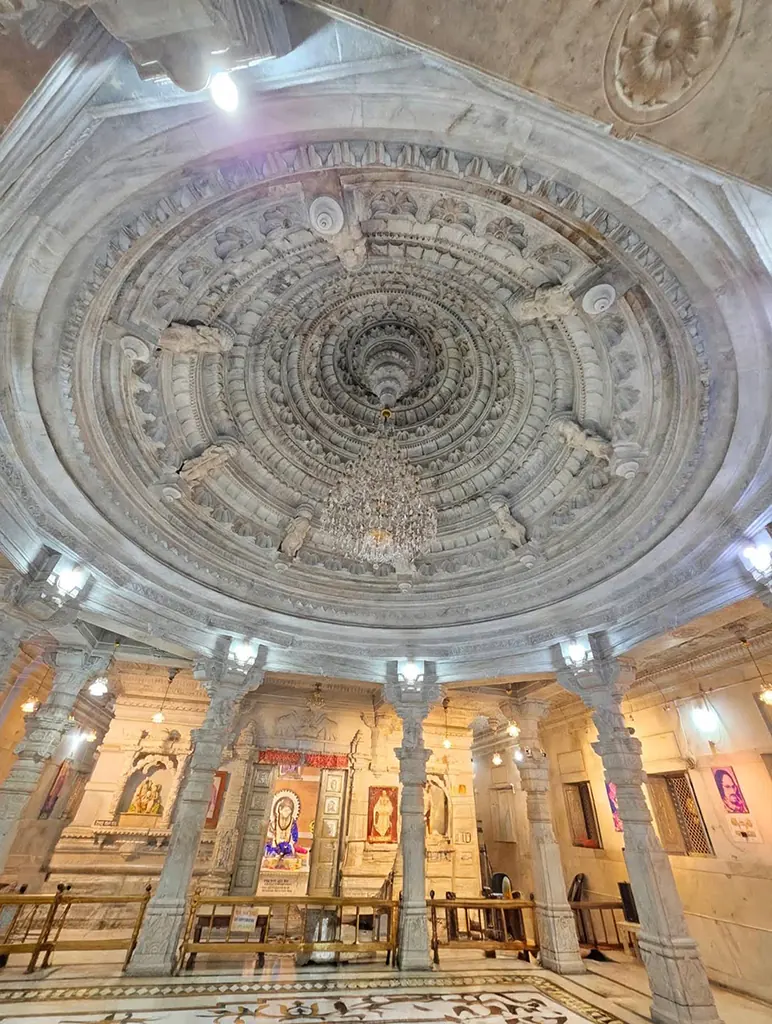
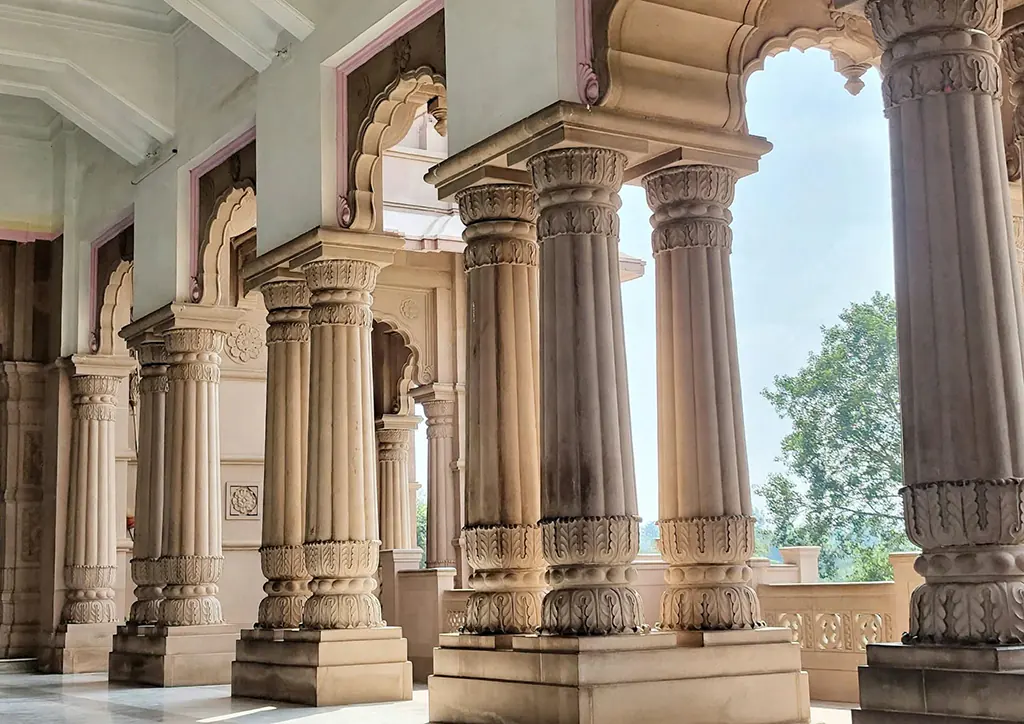
- Spacious Prayer Hall: Inside, a wide pillared hall allows large groups of devotees to stand comfortably during morning and evening aartis without feeling crowded.
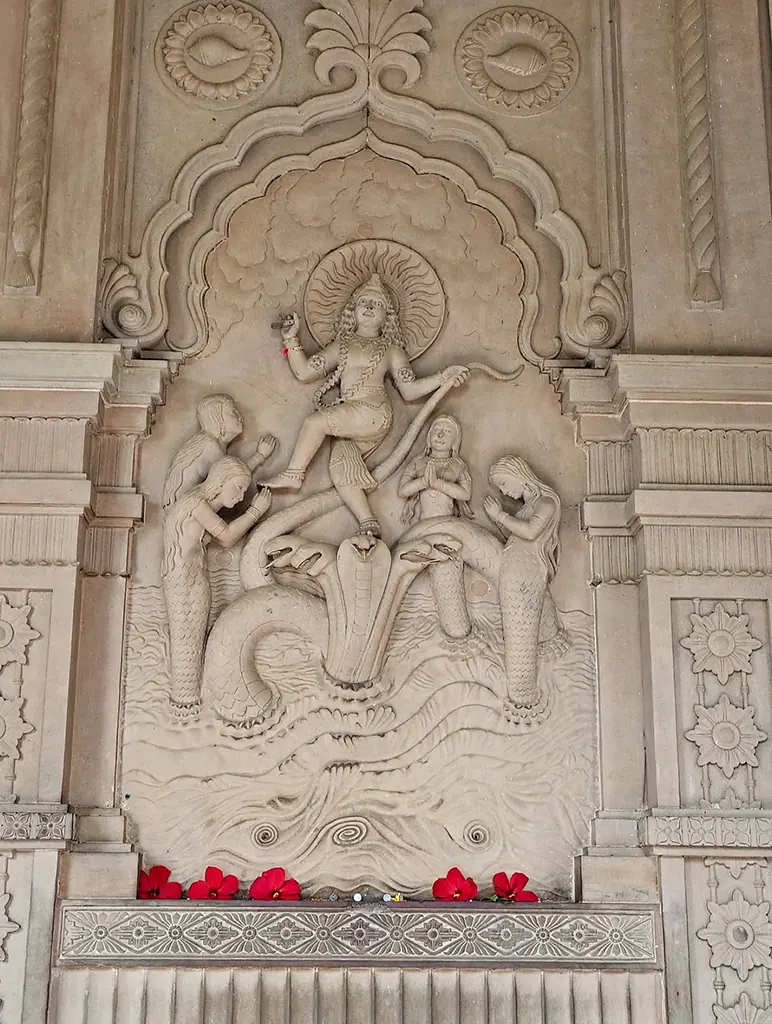
- Open Courtyard and Grounds: The temple sits in the middle of a broad, clean courtyard bordered by greenery. Visitors can walk around the entire perimeter (parikrama) while admiring the intricate carvings and arches on the exterior walls.
Darshan Timings, Aarti, and Entry Details
Naulakha Mandir follows a traditional daily worship schedule, though exact hours can shift slightly between summer and winter months.
Typical Daily Schedule
- Morning Darshan: Approximately 6:00 AM to 12:00 PM
- Afternoon Closure: Approximately 12:00 PM to 3:00 PM (the sanctum closes while the deities rest)
- Evening Darshan: Approximately 3:00 PM to 8:00 PM
Note for Visitors: Temple opening and closing times may change during major festivals or special lunar days. If you are visiting right around noon or late in the evening, confirm the exact closing hour locally at the temple gate or through the Deoghar District Administration official portal.
Entry Fee and Special Darshan
- Entry Fee: There is no entry fee to visit Naulakha Mandir. Darshan is completely free for all devotees.
- Queues: Unlike Baba Baidyanath Temple, where wait times can stretch for hours during peak seasons, darshan at Naulakha Mandir is usually smooth and quick. Most visitors complete their darshan within 15 to 30 minutes.
Major Festivals Celebrated at Naulakha Mandir
While the temple welcomes devotees every day of the year, several Hindu festivals bring vibrant decorations, devotional music, and larger crowds to the complex:
- Krishna Janmashtami: Celebrated as the birth anniversary of Lord Krishna, this is one of the biggest events of the year at Naulakha Mandir. The temple is illuminated with lights, special midnight prayers are held, and devotees gather for bhajans and kirtans.
- Radhashtami: Observed fifteen days after Janmashtami to honor Goddess Radha, featuring special floral decorations and offerings.
- Jhulan Yatra: During the monsoon month of Shravan, the idols of Radha and Krishna are placed on a decorated swing (jhula), drawing evening crowds of local families and pilgrims.
- Holi (Dol Purnima): Celebrated with devotional songs and traditional festivities honoring Radha and Krishna.
- Shravani Mela (July–August): Although Shravani Mela is primarily centered on offering Gangajal to Baba Baidyanath, hundreds of thousands of Kanwariyas and pilgrims visit Naulakha Mandir as part of their sacred Deoghar yatra.
Best Time to Visit Naulakha Mandir
Best Season
The most comfortable months to visit Deoghar and Naulakha Mandir are October to March. During autumn and winter, daytime temperatures stay pleasant (roughly 15°C to 26°C), making it easy to walk across the open stone courtyard and explore nearby hills.
Summer months (April to June) can get very hot in Jharkhand, with afternoon temperatures rising above 38°C. Monsoon months (July and August) bring heavy rains along with the massive Shravani Mela crowds.
Best Time of Day
- Early Morning (6:30 AM – 8:30 AM): Ideal if you want cool weather, soft sunlight for exterior photography, and a quiet morning prayer atmosphere.
- Late Afternoon to Sunset (4:30 PM – 6:30 PM): The golden evening light looks stunning against the tall spires, and the evening aarti creates a deeply uplifting experience.
How to Reach Naulakha Mandir, Deoghar
Naulakha Mandir is located right within Deoghar city, making it easy to reach by road, rail, or air.
From Baba Baidyanath Temple
The temple is roughly 1.5 to 2 kilometers from the main Baba Baidyanath Jyotirlinga complex. You can easily hire a cycle-rickshaw, e-rickshaw, or auto-rickshaw outside the main temple area. The ride takes about 5 to 10 minutes.
By Train
Deoghar is served by two main railway stations:
- Deoghar Junction (DGHR): Located about 3 to 4 kilometers from Naulakha Mandir. Auto-rickshaws and e-rickshaws are readily available outside the station.
- Jasidih Junction (JSME): A major railway junction on the Howrah–Patna–Delhi main line, situated about 8 to 10 kilometers from the temple. Shared autos, e-rickshaws, and private taxis connect Jasidih Junction directly to Deoghar town in 20 to 30 minutes.
- You can check live train schedules and seat availability to Jasidih Junction (JSME) or Deoghar Junction (DGHR) on IRCTC.
By Air
Deoghar Airport (DGH) has direct domestic flights connecting Deoghar with cities such as Kolkata, Patna, Ranchi, and New Delhi. The airport is approximately 10 to 12 kilometers from Naulakha Mandir, and pre-paid taxis or local cabs take around 20 to 25 minutes to reach the temple.
By Road
Deoghar is well connected by state highways to Ranchi, Patna, Bhagalpur, Gaya, and Kolkata. State buses and private coaches arrive at the Deoghar bus stand, from where local transport reaches the temple within minutes.
Dress Code, Temple Rules, and Visitor Facilities
Dress Code
Naulakha Mandir does not enforce a strict written dress code, but modest, traditional, or respectful clothing is expected as in all Hindu places of worship.
- Men typically wear trousers, shirts, kurtas, or dhotis.
- Women commonly wear sarees, salwar kameez, or modest full-length outfits.
- Avoid shorts, sleeveless tops, or revealing beachwear out of respect for local religious customs.
Temple Rules and Etiquette
- Footwear: Remove your shoes or sandals at the designated shoe stand outside the temple entrance before stepping onto the inner courtyard.
- Photography: Exterior photography of the courtyard and temple architecture is generally permitted, while photography directly inside the inner sanctum may be restricted. Always look for posted signs or check with temple staff before taking photos indoors.
- Silence and Cleanliness: Keep mobile phones on silent mode inside the prayer hall, observe traditional etiquette such as ringing the temple bell upon entering, and avoid littering in the surrounding gardens.
Accessibility and Facilities
- Elderly Visitors: The outer courtyard is wide and flat, making it easy for senior citizens to walk around. However, reaching the main elevated prayer hall requires climbing a flight of stone steps, as modern wheelchair ramps are limited.
- Basic Amenities: Drinking water, shoe-keeping counters, and small shops selling flowers, incense, and prasad are available near the temple entrance. Parking space for cars and auto-rickshaws is available outside the main gate.
Nearby Temples and Places to Visit in Deoghar
Because Naulakha Mandir takes about 30 to 45 minutes to explore, you can easily combine it with other major sacred and scenic spots in Deoghar:
- Baba Baidyanath Dham, Deoghar (~1.5–2 km): The spiritual heart of Deoghar and one of the twelve sacred Jyotirlingas of Lord Shiva.
- Nandan Pahar (~3 km): A small hilltop park and temple spot known for its Shiva and Nandi shrines as well as panoramic sunset views over Deoghar.
- Satsang Ashram (~4 km): The serene spiritual headquarters founded by Sri Sri Thakur Anukulchandra, known for its disciplined community atmosphere and prayer halls.
- Tapovan Caves and Hills (~10 km): Famous for ancient meditation caves associated with Sage Valmiki and a hilltop Shiva shrine.
- Trikuta Parvat (~13–15 km): A scenic three-peaked hill range steeped in Ramayana legends, offering trekking trails and sweeping valley views.
Practical Tips for Planning Your Visit
- Plan Your Timing Around Baidyanath Dham: If you are visiting Deoghar for a single day, complete your Baba Baidyanath darshan early in the morning, rest during the hot midday hours, and visit Naulakha Mandir around 4:30 PM when the weather cools down.
- Carry Cotton Socks in Summer: The open stone courtyard absorbs heat quickly between April and June. Wearing clean cotton socks protects your feet while walking barefoot inside the compound.
- Confirm E-Rickshaw Fares Before Boarding: E-rickshaws are the most convenient way to move between Baidyanath Temple, Naulakha Mandir, and Nandan Pahar. Agree on the fare before starting your ride.
- Keep Cash for Small Offerings: While UPI works at many shops in Deoghar town, carrying small denomination notes is helpful for flower vendors, shoe stands, and local rickshaws.
Frequently Asked Questions About Naulakha Mandir
Why is Naulakha Mandir in Deoghar called Naulakha?
It is called Naulakha Mandir because its construction cost nine lakh rupees (nau lakh), which was donated by Rani Charushila Devi of Kolkata in the late 1930s and 1940s.
Which god is worshipped in Naulakha Mandir, Deoghar?
The presiding deities of Naulakha Mandir are Goddess Radha and Lord Krishna, accompanied by a shrine honoring the saint Sri Balananda Brahmachari.
How far is Naulakha Mandir from Baba Baidyanath Temple?
Naulakha Mandir is located roughly 1.5 to 2 kilometers from Baba Baidyanath Jyotirlinga Temple. It takes about 5 to 10 minutes to reach by auto-rickshaw or e-rickshaw.
Is there any entry fee for Naulakha Mandir?
No, entry to Naulakha Mandir is completely free for all devotees and tourists.
What are the opening and closing timings of Naulakha Mandir?
The temple generally opens in the morning around 6:00 AM to 12:00 PM and reopens in the evening from 3:00 PM to 8:00 PM. Timings can vary slightly by season or festival day.
Which famous monument does Naulakha Mandir resemble?
The architecture of Naulakha Mandir closely resembles Belur Math in Howrah, West Bengal, featuring a tall central spire (~146 feet) surrounded by smaller domed towers.
How much time is needed to visit Naulakha Mandir?
Most visitors spend 30 to 45 minutes offering prayers inside the main sanctum, walking around the courtyard, and enjoying the peaceful surroundings.
Final Thoughts
Naulakha Mandir stands as one of Deoghar’s most meaningful landmarks—not only for its 146-foot Belur Math–inspired spires, but for the story of devotion and healing that brought it into existence. Pairing a peaceful afternoon visit here with your morning darshan at Baba Baidyanath Dham gives you a fuller, richer experience of Deoghar’s living spiritual heritage.