Miraculous Shirdi Sai Baba Temple
Shirdi Sai Baba Temple in the serene town of Shirdi, Maharashtra, India. Picture us walking through this wonderful place hand in hand, as I share with you all about the incredible saint, Sai Baba, and what draws so many from around the globe to visit.
Contents
- 1 My Journey to Shirdi: A Personal Touch
- 2 History of the Temple: How It All Began
- 3 Legends of Shirdi Sai Baba: Wonderful Stories
- 4 Miracles of Shirdi Sai Baba:
- 5 Cultural and Spiritual Significance: Why Shirdi is So Unique
- 6 Mythological Importance: Connecting with Ancient Wisdom
- 7 Festivals and Special Days: Times of Joy and Celebration
- 8 Special Architecture and Carvings: A Delightful Sight to See
- 9 Myths and Beliefs: What People Believe About Shirdi Sai Baba
- 10 Special Poojas and Offerings: Showing Our Love
- 10.0.1 Karmanghat Hanuman Temple made Aurangzeb Shiver to Destroy
- 10.0.2 Basara Gnana Saraswati Temple
- 10.0.3 Kondagattu Anjaneya Swamy Temple
- 10.0.4 Ramappa Temple: An 800 Years Old Architectural Marvel
- 10.0.5 Thousand Pillar Temple: India’s Amazing 1000 Pillar Temple!
- 10.0.6 Tadbund Hanuman Temple: The Most Powerful Temple in Telangana
- 11 Temple Timings and Darshan: When Can We Visit?
- 12 Places of interest near the Shirdi Sai Baba Temple:
- 13 Accommodation Options: Where to Stay in Shirdi
- 14 Reaching the Shirdi Sai Baba Temple is really easy!
My Journey to Shirdi: A Personal Touch
With each trip to Shirdi, I’m enveloped with a sense of peace. It’s walking into a warm, comforting hug. The atmosphere here is different, with prayers and the blessings of Sai Baba. My first visit, I was a bit apprehensive, but once I saw the lovely temple, all my fears just vanished. It really is a place where magic occurs, where hearts get lighter, and wishes are granted.
The Story of Shirdi Sai Baba: Who Was He?
Sai Baba was not a king or a superhero with a cape, but he was really something else. Nobody knows when he was born or how he came to be, and that only makes his tale more magical and intriguing! He first arrived in Shirdi when he was a young teenager, sitting under the shade of a neem tree and meditating for many, many hours with no food or water. The villagers were immensely surprised and curious about this little boy.
He educated everybody with a very valuable lesson: “Sabka Malik Ek,” that is, “One God rules all.” He used to think that regardless of what religion you belong to or whatever name you would call God, we are all children of the same loving God. He devoted his life to serving people, curing them, and guiding them the right way with compassion and wisdom.
He lived a very simple life and used to beg for a meal from only five homes a day, and then distribute it to all, even to birds and animals! He lived in a crumbling mosque, which he fondly referred to as “Dwarkamai,” and maintained a sacred fire burning there, known as a dhuni. The ash of this dhuni, known as Udi, was said to have magical healing properties, and individuals still get it to this day!
Read More>> Secret Goddess: Guhyeshwari Temple
History of the Temple: How It All Began
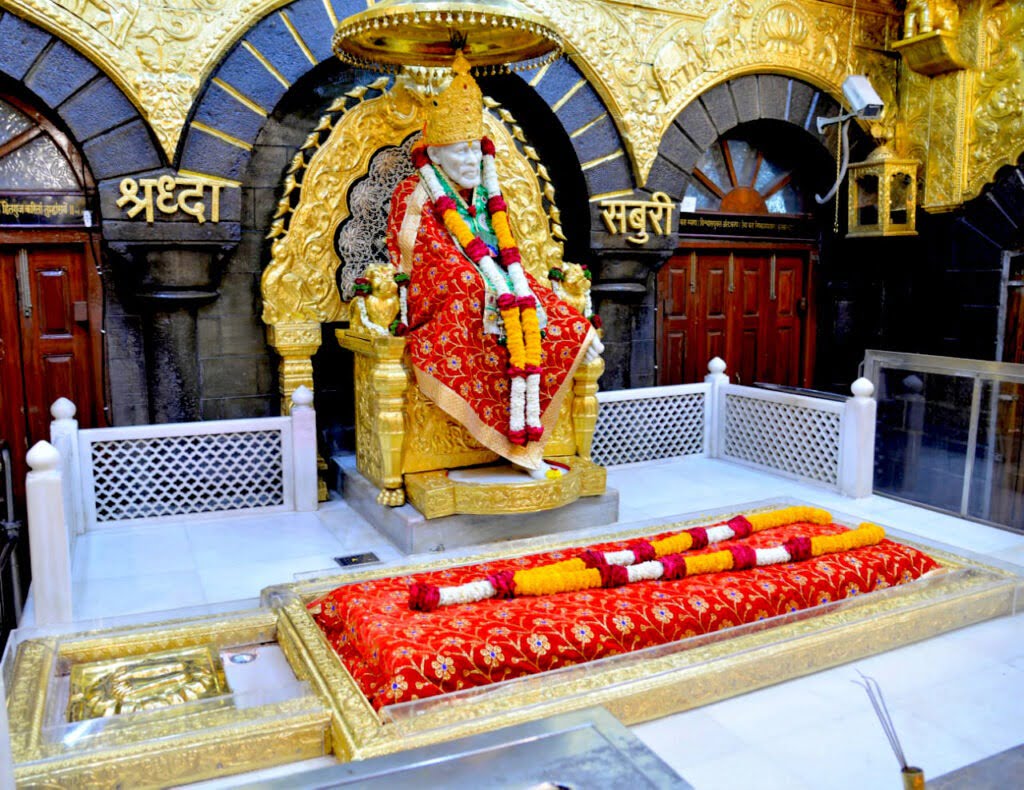
The Shirdi Sai Baba Temple you can see today wasn’t always so majestic. When Sai Baba resided in Shirdi, he led a very simple life. When he died in 1918, his devoted devotees constructed a small shrine above his samadhi (which is more of a holy resting place). This was in 1922. As more and more people over many, many years experienced the love and blessings of Sai Baba, the temple expanded and expanded. Now, it’s an enormous, lovely complex with lots of halls and amenities for all the pilgrims. It’s really a proof of the love and devotion of millions of individuals who come to visit the Shirdi Sai Baba Temple.
Read More>> Chamundeshwari Temple Mysore: Architectural Marvel & Spiritual Wonder
Legends of Shirdi Sai Baba: Wonderful Stories
There were countless wonderful things that Sai Baba did that people refer to as miracles. They are not mere tales, but they give us lessons about devotion, patience, and compassion.
One popular anecdote is about how he lit lamps using water! The shopkeepers, who used to provide him with oil for his lamps, refused to do so one day. Sai Baba did not lose his temper. He poured water into his lamps, and guess what? The lamps lit up and burned well! This was a demonstration to all that with faith, all things are possible!.
Another occasion, a devastating storm was approaching, and everyone was extremely frightened. Sai Baba just glanced at the sky and appeased the storm with his words, preventing the village from facing much trouble. He even cured many ill people by merely offering them a little bit of Udi or a light touch. All these tales make the Shirdi Sai Baba Temple all the more remarkable, reminding us of his unlimited mercy.
Miracles of Shirdi Sai Baba:
Healing the Sick: Sai Baba was an extraordinary healer. He would cure varied illnesses and diseases. Many report miraculous recoveries in the wake of his blessing or Udi.
Materializing Objects: Satguru was believed to have the power of materializing objects and things into reality directly from thin air. He used to produce sweets, jewelry, holy ash, and many other things which he distributed to the devotees as blessings.
Granting Wishes: People would generally come to Sai Baba with their wishes and desires. Very few used to come claiming that they got their wishes fulfilled, and even their prayers received through his grace. It might be personal matters, financial difficulties, or even spiritual aspirations.
Foreknowledge: Sadguru is said to have had extraordinary foresight, and in fact, he was often said to predict future events or guide people about the forthcoming happenings. His correct predictions of future events and people’s lives gave him the name of having godly intuition.
Relieving Suffering: Baba showed immense compassion towards the disturbed and suffering soul. There are a hundred stories where he would relieve physical and mental pain, calm the disturbed, and bring peace to a troubled mind.
Reviving the Dead: It is said that Sai brought back the dead after they had already moved over to the world of the afterlife. He was believed to have the authority to revive life with his divine grace.
A few more Miracles:
- He had the power of bio location i.e. to be visible in many places at the same time
- He had the power to lift himself in the air without support
- He made rivers Ganga and Yamuna Rivers stream with his foot fingers.
- He lighted lamps with the help of water
- He cured many incurable diseases
- He appeared beaten when his devotee was beaten
- He was raised from his death after three days – This happened even with Lord Jesus
- He stopped falling from the mosque on innocent people.
- Yatbhavan tat bhavathi – He was visible in many forms of gods according to his devotee’s beliefs.
All of the above are only a few incidents. Many devotees reported that he cured many diseases from many locations on his chant. People believe that we need not come to Shirdi to pray for him, it is enough if we can pray for him from the place where he stands, and you just need to pray for him wholeheartedly.
During his time, he used to cure many diseases with the help of “udhi”. udhi is said to have miracle powers. If it is mixed in water followed by Baba prayer, will give you good health and cure many diseases. It is said that the plague and many more diseases were cured with this miracle Sai Baba Udhi
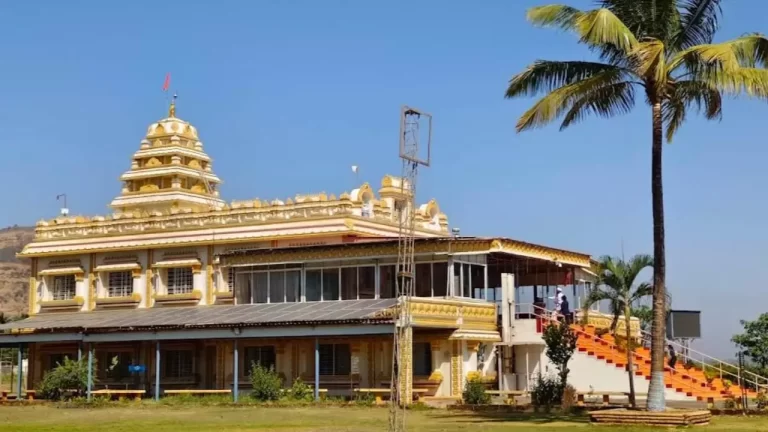
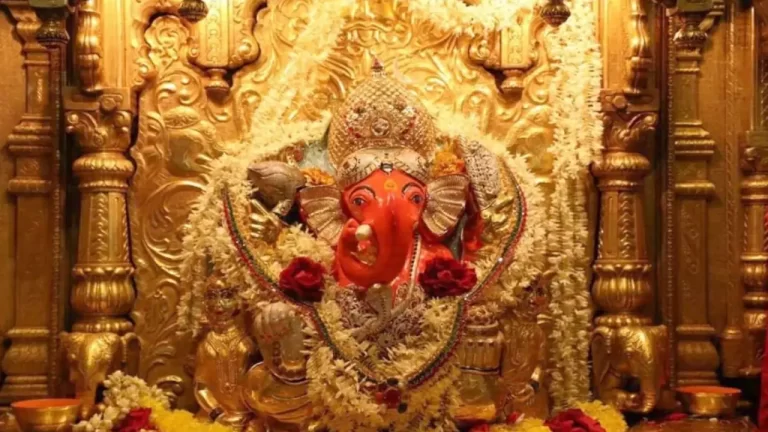

Cultural and Spiritual Significance: Why Shirdi is So Unique
Shirdi Sai Baba Temple is not a structure; it’s an experience! It’s where one finds the unity of people from all walks of life and all religions. You’ll find Hindus, Muslims, Christians, and others praying and feeling close to Sai Baba. This indicates how his “One God” message really works here. It’s a unifying place, a harmonious place.
Once you’re within the temple premises, you can sense the quiet calm. It’s a spiritual center where individuals visit to gain solace, seek blessings, and be connected to something greater than themselves. Many still sense the presence of Sai Baba today, who guides them and addresses their issues. The Shirdi Sai Baba Temple is a testament to his teachings.
Read More>> Nainativu Nagapooshani Amman Temple
Mythological Importance: Connecting with Ancient Wisdom
You may wonder if Sai Baba is spoken of in extremely ancient Hindu accounts or Puranas. Sai Baba was much later than the days when these old books were composed. Yet, his teachings are quite similar to the wisdom of those ancient texts! He did not only talk about love, how to help others, kindness, having faith, and patience – these are all crucial lessons you learn from Hindu texts such as the Bhagavad Gita and the Ramayana.
He demonstrated how to live a good life, the same way the ancient sages and saints lived. So, even if his name is not there, his spirit and messages are really attached to the very old and wise Indian traditions. The Shirdi Sai Baba Temple represents these age-old principles.
Festivals and Special Days: Times of Joy and Celebration
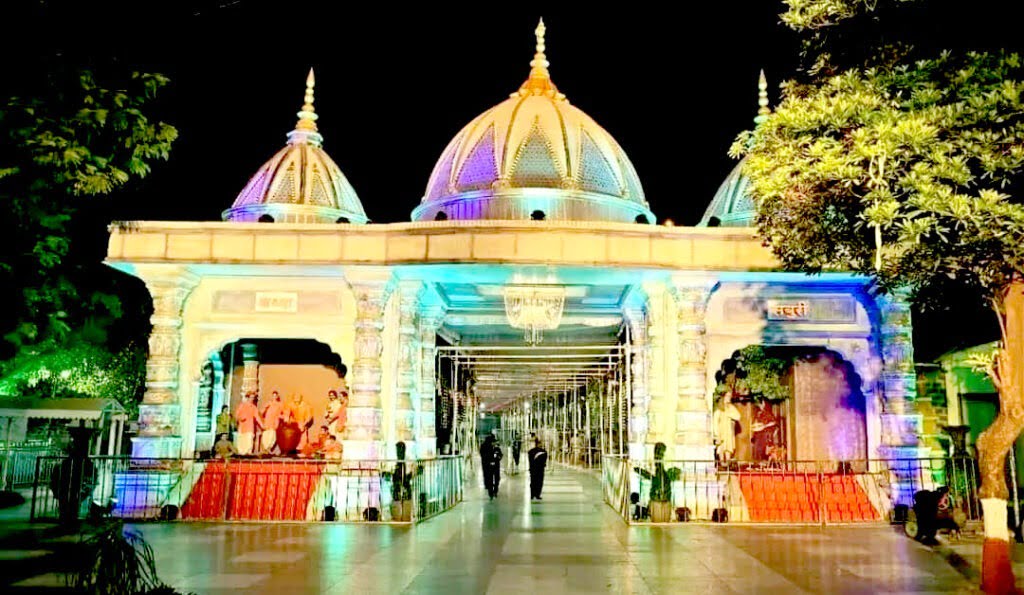
Shirdi is even more vibrant and colorful during festivals! These are the times when the Shirdi Sai Baba Temple is particularly crowded, but also particularly joyful.
Ram Navami (March/April): This is Lord Rama’s birthday, and even Sai Baba celebrated it. Here in Shirdi, it’s a big event with special singing and music.
Guru Purnima (July): This is the day for teachers, and for Sai Baba’s followers, he is the Supreme Guru (teacher). They come to thank him and take his blessings. You can hear plenty of singing and dancing.
Vijayadashami (September/October) – Sai Baba’s Mahasamadhi Day: This is the day Sai Baba passed on from his physical body. It’s a significant day, and although it’s a day of remembrance, it’s also a celebration of his eternal presence.
These days, the temple is brimming with even more devotees. You’ll witness lovely processions with Sai Baba’s palanquin (a decorated carriage) and chariot. There are special aartis (lamps with prayers) and bhajans (devotional songs) which continue for hours!
Weekends, particularly Thursdays (which is Sai Baba’s day), and bank holidays tend to be the busiest days for the Shirdi Sai Baba Temple. Therefore, if you prefer a less busy visit, weekdays are preferable.
Read More>> Nelluvaya Sree Dhanwanthari Temple
Special Architecture and Carvings: A Delightful Sight to See
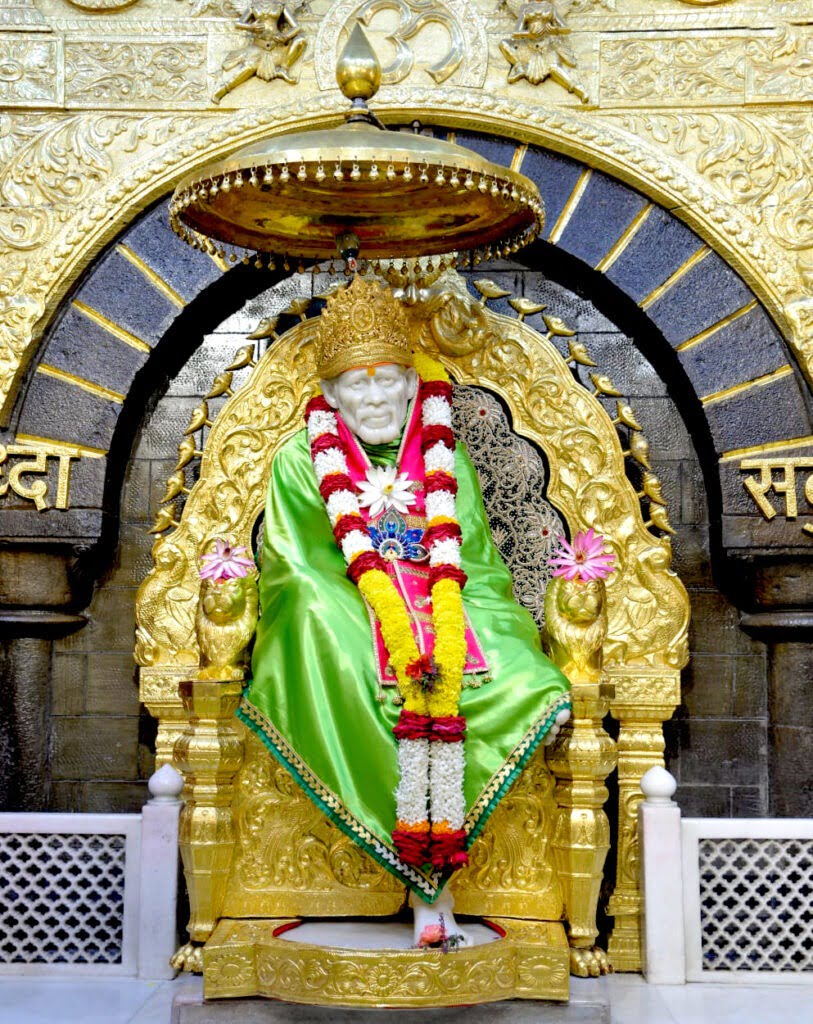
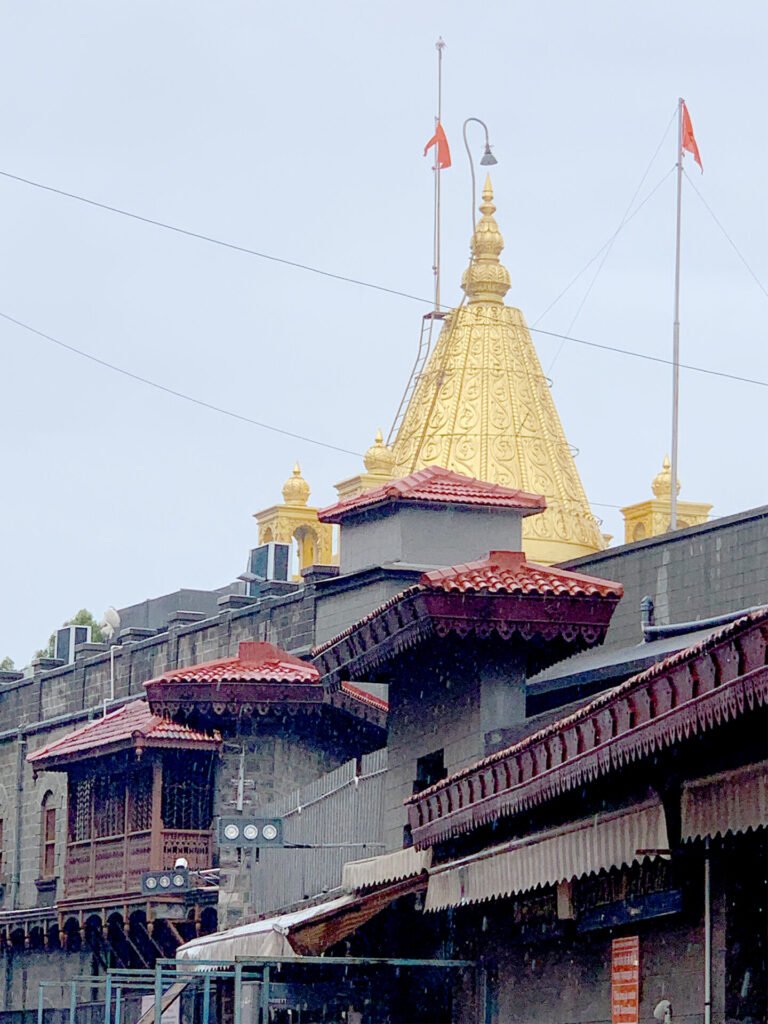
Shirdi Sai Baba Temple is constructed in a very unique manner. The central temple, where the samadhi of Sai Baba is situated, is constructed to be very grand and serene. It’s primarily constructed from white marble, which gives it an extremely pure and serene look. The construction helps your eyes focus on the lovely statue of Sai Baba.
You’ll find that the temple’s architecture frequently employs 11-sided patterns, and that’s due to some unique math concepts and also to help make a very serene environment. Within, the idol of Sai Baba is so realistic, it’s as if he is actually present, gazing at you with his gentle eyes. The environment within the Shirdi Sai Baba Temple is created to help calm and bring you closer.
Myths and Beliefs: What People Believe About Shirdi Sai Baba
There are a lot of lovely beliefs people have about Sai Baba. One of the best-known is that he always assists his devotees. Many feel that if you pray sincerely to him, your desires will be fulfilled. The Udi (sacred ash) from his dhuni at Dwarkamai is believed to heal diseases and bring good fortune.
There’s also a famous neem tree in Shirdi under which Sai Baba used to sit. People believe that its leaves, which are usually bitter, taste sweet because of his divine presence! It’s a small detail, but it speaks volumes about the connection people feel to the Shirdi Sai Baba Temple and its surroundings.
Read More>> Bhojpur Shiva Temple | Bhojeshwar Temple Holds Huge Lingam
Special Poojas and Offerings: Showing Our Love
If you go to the Shirdi Sai Baba Temple, there are numerous ways you can express your love and respect for Sai Baba. What most people do is go for darshan, that is, they see the idol of Sai Baba.
Aartis are also performed four times a day within the temple. These are quite sacred prayer services with lights and singing, and they are great to watch:
Kakad Aarti (Early Morning): Early morning, to wake up Sai Baba.
Madhyan Aarti (Mid-day): During lunchtime.
Dhoop Aarti (Sun Set): At sunset time.
Shej Aarti (Night): To bed Sai Baba for the night.
You can present flowers, garlands, and sweets to Sai Baba. Several of you also present dakshina (money), which the temple utilizes on noble causes such as feeding pilgrims. Special abhishek poojas are also available, which include bathing the idol, and you can reserve them online or at the temple. These are some of the methods through which devotees manifest their devotion within the Shirdi Sai Baba Temple.
Temple Timings and Darshan: When Can We Visit?
The Shirdi Sai Baba Temple is open almost all day! It usually opens very early in the morning, around 4:00 AM or 4:45 AM, and stays open until late at night, around 10:00 PM or 10:30 PM.
It’s always best to verify the timings of the aartis and special events on the official website of the Shree Saibaba Sansthan Trust if you’re visiting during a festival. The darshan queue is usually long, particularly on busy days, so prepare to wait patiently. It’s all part of the journey to the Shirdi Sai Baba Temple.
Read More>> 4 CE Gokarna Mahabaleshwar Temple
Places of interest near the Shirdi Sai Baba Temple:
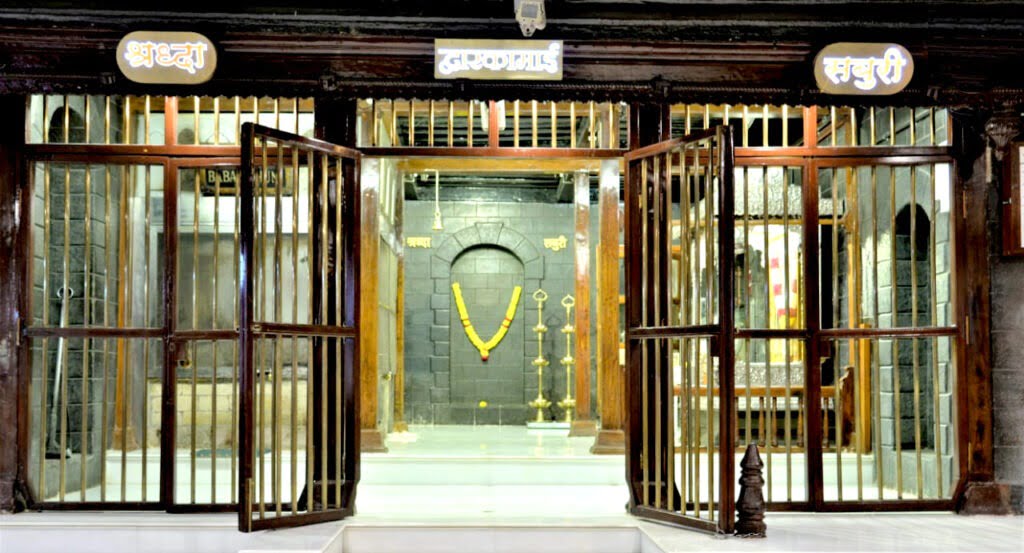
Dwarkamai: A sanctum sanctorum, Dwarkamai is a place located besides the Shirdi Sai Baba temple. Here was spent a large part of his life and this is a place where every Sai devotee has to visit and understand the reason behind it.
Shani Shingnapur : It is located 70 km from Shirdi, which is dedicated to the Hindu god in charge of the planet Saturn-Shani. Locals had believed that nobody in this village needed a door or a lock since Lord Shani would secure the locality.
Nashik is about 90 kilometers away from Shirdi. Nashik is the holy city that comes with Kumbh Mela, one of the most colossal religious congregations on earth. Nashik is known as the wine capital of India, famous for its vineyards.
Oldest places of worship The oldest places of worship are: Trimbakeshwar Temple Near Nashik, the Trimbakeshwar Temple is dedicated to Lord Shiva and one of the twelve Jyotirlingas in India. It is one of the sacred abodes in India where a few have come to find devotees for the Supreme God Lord Shiva.
Few hours must be given to the time of recreation. Shirdi Water Park includes water slides, swimming pools, and many more other fun-filled attractions. It is one among the best places in which you would like to relax and enjoy with family and friends.
Thiur is a theme park situated alongside the Shirdi Sai Baba Temple, wherein the visitor experiences the ambience and lifestyle of what life was when Sai Baba used to live there. Glimpses of the history and culture of Shirdi appear.
Sai Teerth Theme Park: One of the theme parks is quite distinct in that it comprises all aspects of Sai Baba’s life and introduces them to the guests in a variety of multi-media and interactive presentations. Tourists here can have a highly engaging experience and consider this one of the special attractions of Shirdi.
Read More>> Powerful Balkampet Yellamma Temple: 15 CE Swayambhu Idol
Accommodation Options: Where to Stay in Shirdi
There are plenty of options for accommodation in Shirdi, ranging from basic guest houses to cozy hotels that are family-friendly. The Shree Saibaba Sansthan Trust also has its own accommodations which are mostly very cheap and neat. You can get hotels immediately next to the Shirdi Sai Baba Temple, some even within walking distance, which is very helpful if you have kids accompanying you. Most hotels have family rooms and decent facilities to ensure your stay is comfortable.
Reaching the Shirdi Sai Baba Temple is really easy!
By Air: The nearest airport is Shirdi’s own Sri Saibaba International Airport (SAG), which receives flights from major cities such as Mumbai, Delhi, and Hyderabad. From the airport, you can reach the temple by taxi or bus.
By Train: Sainagar Shirdi Railway Station (SNSI) is the nearest railway station, approximately 3 km from the temple. There are several trains linking Shirdi with major Indian cities. Kopergaon Railway Station (KPG) is also an option, located at a distance of approximately 16 km. Auto-rickshaws and taxis can be easily found from both the stations.
By Road: Shirdi is extremely well networked by roads. You can travel in a private or government bus from cities such as Mumbai, Pune, Nashik, and Aurangabad. Alternatively, you can also take a private car or taxi. The journey is scenic and comfortable.
Regardless of the mode of transportation, the travel to the Shirdi Sai Baba Temple is always a blessed one.