
Thousand Pillar Temple: India’s Amazing 1000 Pillar Temple!
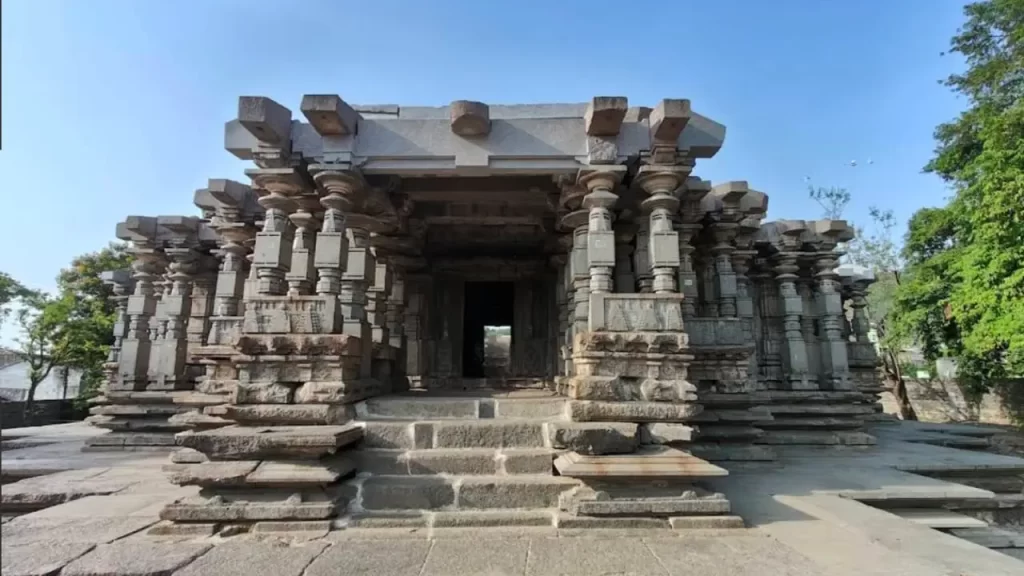
Visit the amazing Thousand Pillar Temple in Hanamkonda, Warangal, Telangana, India. Think of a place constructed long, long ago, with so many pillars that it’s almost like being in a mythical forest of stone! That’s precisely what the Thousand Pillar Temple is – a stunning representation of ancient skills and faith.
Contents
- 1 A Journey Through Time: Thousand Pillar History
- 2 The Legends of the Temple: Whispers from the Past
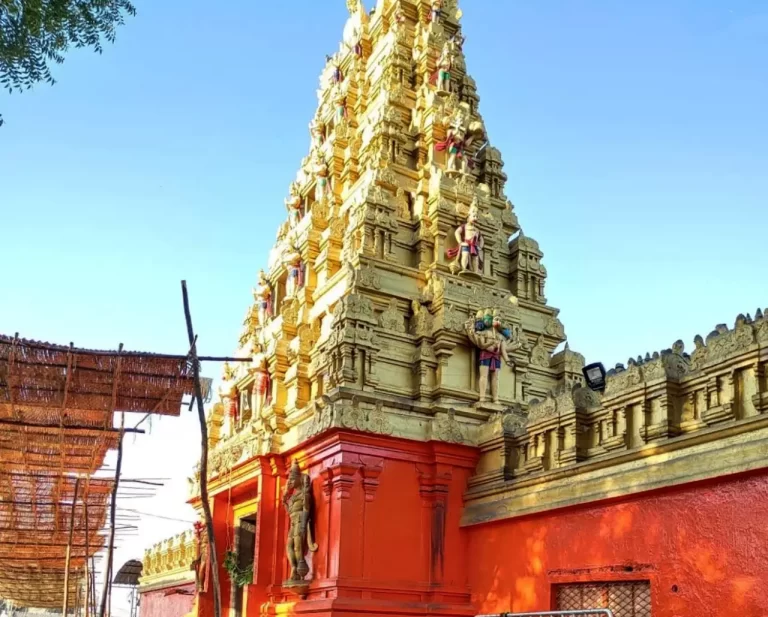
- 2.0.1 Karmanghat Hanuman Temple made Aurangzeb Shiver to Destroy
- 2.0.2 Basara Gnana Saraswati Temple
- 2.0.3 Kondagattu Anjaneya Swamy Temple
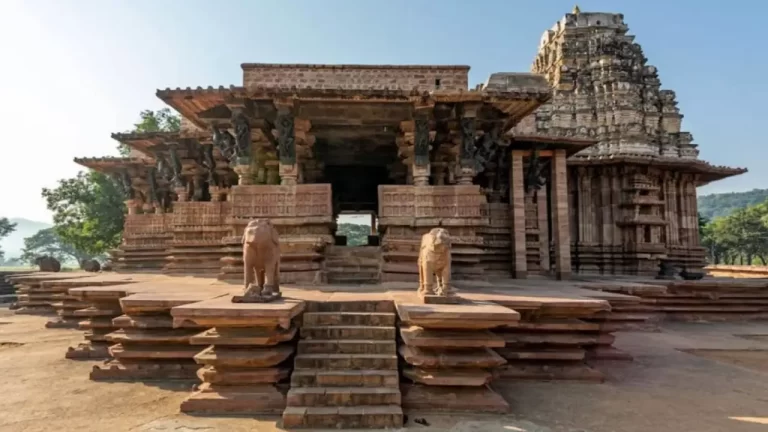
- 2.0.4 Ramappa Temple: An 800 Years Old Architectural Marvel
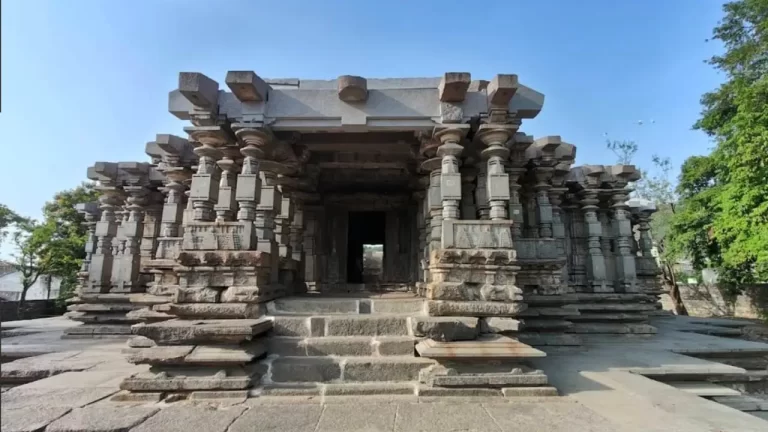
- 2.0.5 Thousand Pillar Temple: India’s Amazing 1000 Pillar Temple!
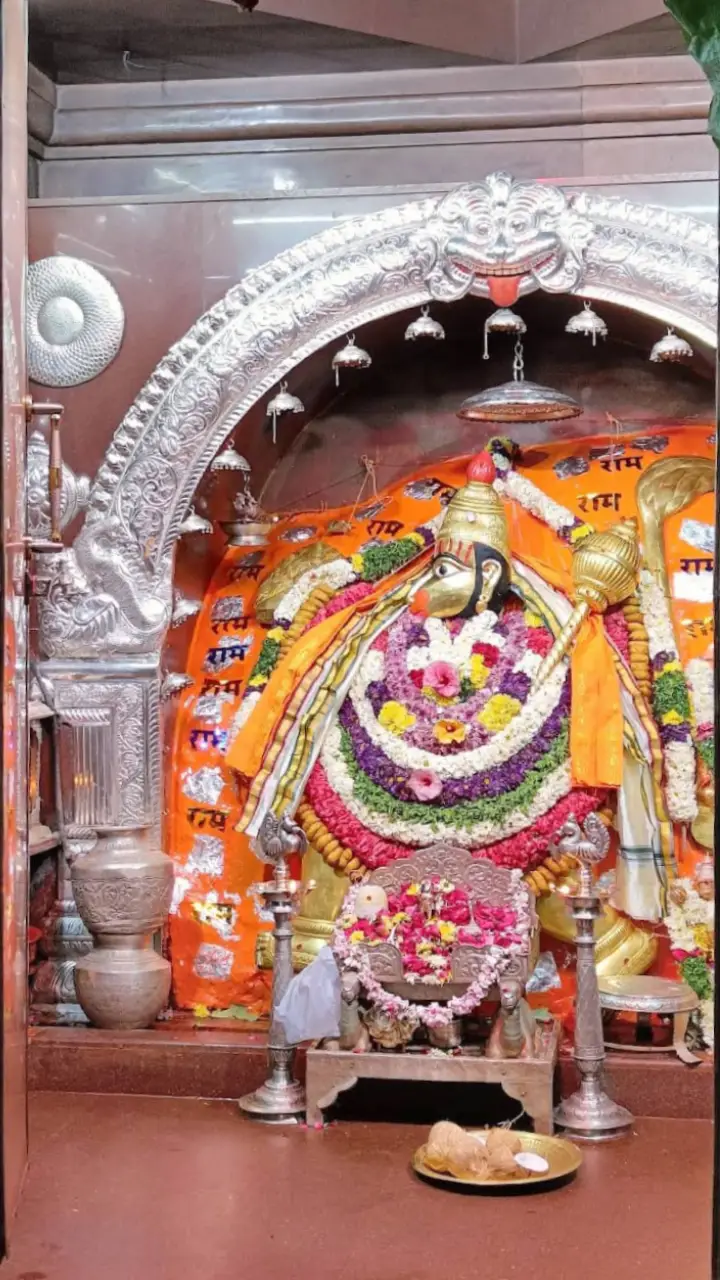
- 2.0.6 Tadbund Hanuman Temple: The Most Powerful Temple in Telangana
- 3 The Significance of the Temple: Why It’s So Important
- 4 Architecture: A Stone Wonderland
- 5 Myths and Beliefs: Enchanting Tales of the Temple
- 6 Thousand Pillar Temple Timings: When the Doors Open
- 7 Special Rituals and Days: A Celebration Divinely Given
- 8 Sites to Visit Around the Temple: See More Wonders!
- 9 How to Reach the Temple: Your Journey to the Past
A Journey Through Time: Thousand Pillar History
Our journey starts with the tale of how the Thousand Pillar Temple was built. It wasn’t an overnight construction; it took years and hard labor of countless expert laborers! This majestic temple was constructed by a extremely powerful and artistic line of kings named the Kakatiya dynasty. They governed a large portion of South India a very, very long time ago, between the 12th and the 14th centuries.
King Rudra Deva constructed the Thousand Pillar Temple in 1163 AD. Can you imagine that? That’s more than 800 years ago! Can you even believe something this old still stands so grandly today? King Rudra Deva was not only a valorous king; he was also an excellent art and architecture enthusiast. He wished to construct a temple which would be a masterpiece in itself, one where one could pray and feel united with the divine. And boy, did he ever deliver!
The Thousand Pillar Temple is a temple for three very significant Hindu deities: Lord Shiva, Lord Vishnu, and Lord Surya (the Sun God). That makes it a Trikutalayam, or a temple of three shrines. It’s like having three VIP houses for three significant visitors, all in one roof!
The temple experienced many trials throughout centuries. There were moments when intruders attempted to ruin it, and a few parts were indeed destroyed. But despite all of that, the spirit of the Thousand Pillar Temple stood strong. More recently, a lot of devoted individuals have worked extremely hard to restore and conserve this precious monument so that generations to come, like you, can also appreciate its beauty and history. It’s proof that something really beautiful and holy can survive the test of time.
Read More>> Harihareshwar Temple | Kalbhairav Yogeshwari Temple
The Legends of the Temple: Whispers from the Past
Each ancient and imposing structure has its own enchanting tales, and the Thousand Pillar Temple is no different! These are tales passed on to generations, so the temple becomes all the more interesting.
Although the Thousand Pillar Temple is not named in extremely ancient Hindu texts such as the Vedas or the early Puranas, the gods that it enshrines – Lord Shiva, Lord Vishnu, and Lord Surya – are highly acclaimed in these texts. For instance, the Vishnu Purana writes eloquently of Lord Vishnu’s glory, and the Skanda Purana writes about Lord Shiva’s excellence.
The presence of a temple devoted to these three main deities combined (a Trikutalayam) is an indication of a great spiritual tradition on par with the overall Hindu philosophy expressed in several Puranas, where many call for the veneration of multiple forms of the Divine. The practice of worshipping multiple deities in harmony is a central theme in several Hindu traditions, representing the single supreme reality expressing itself in many forms.
One of the most popular myths related to the Thousand Pillar Temple is how it was built. They say that the Kakatiya builders and sculptors were so meticulous and skilled that they left their heart and soul in each of the pillars and sculptures. It was believed that a few of the pillars were endowed with a magical quality, emitting a different sound when struck! A singing temple, imagine that! Though we cannot hear them sing today, it makes you think about the great workmanship of those days.
Another legend, though not specifically about the Thousand Pillar Temple itself but about the Kakatiya dynasty, is about the powerful goddess Kakati. It is said by some that the Kakatiya kings were followers of this goddess, and her blessings enabled them to construct such grand buildings. This reveals the strong faith that motivated the construction of this temple.
These myths, although more in the nature of marvelous folk tales than historical realities, give us a sense of the deep devotion and creative genius that went into the construction of the Thousand Pillar Temple. They put us in touch with people who lived here centuries ago and who cherished this spot so much.

The Significance of the Temple: Why It’s So Important
You may be wondering, “Alright, it’s a really old temple with lots of pillars, but why is the Thousand Pillar Temple so particularly significant?” Well, let me tell you, it has a very special place in the heart of Telangana and in Indian history.
Firstly, it’s a brilliant example of Kakatiya architecture and sculpture. The Kakatiya dynasty was famous for its beautiful and distinctive building style, and this temple is one of the best places to witness it! It’s like a textbook of ancient Indian architecture cut into stone. Every pillar, every sculpture, speaks about the artistic talent of the people who constructed it. For those interested in the history and art of the past, the Thousand Pillar Temple is like a treasure chest.
Secondly, it’s a living testament to faith. Despite being so old, the temple remains a place of worship for people. It is a reminder of the unshakable faith that has prevailed in this country for centuries. Looking at the fine carvings of gods and goddesses, heavenly beings, and mythological episodes, you can sense the spiritual aura that pervades the atmosphere. It makes people feel a connection to their traditions and their faith.
Third, the Thousand Pillar Temple is a source of pride for Telangana people. It symbolizes their rich heritage and cultural identity. You will see how much the locals love this temple when you visit. It’s a reminder of a glorious past and encourages them for the future.
And lastly, its importance lies in the fact that it is dedicated to three principal gods: Lord Shiva, Lord Vishnu, and Lord Surya. This blend signifies the inclusive aspect of God-worship in Hinduism, where many gods are worshipped as forms of the one supreme being. It’s one location where different paths to devotion converge under one holy roof. Thus, the Thousand Pillar Temple is not merely a structure; it’s an art, a religious, and heritage monument.
Read More>> Kondeshwar Temple Pune
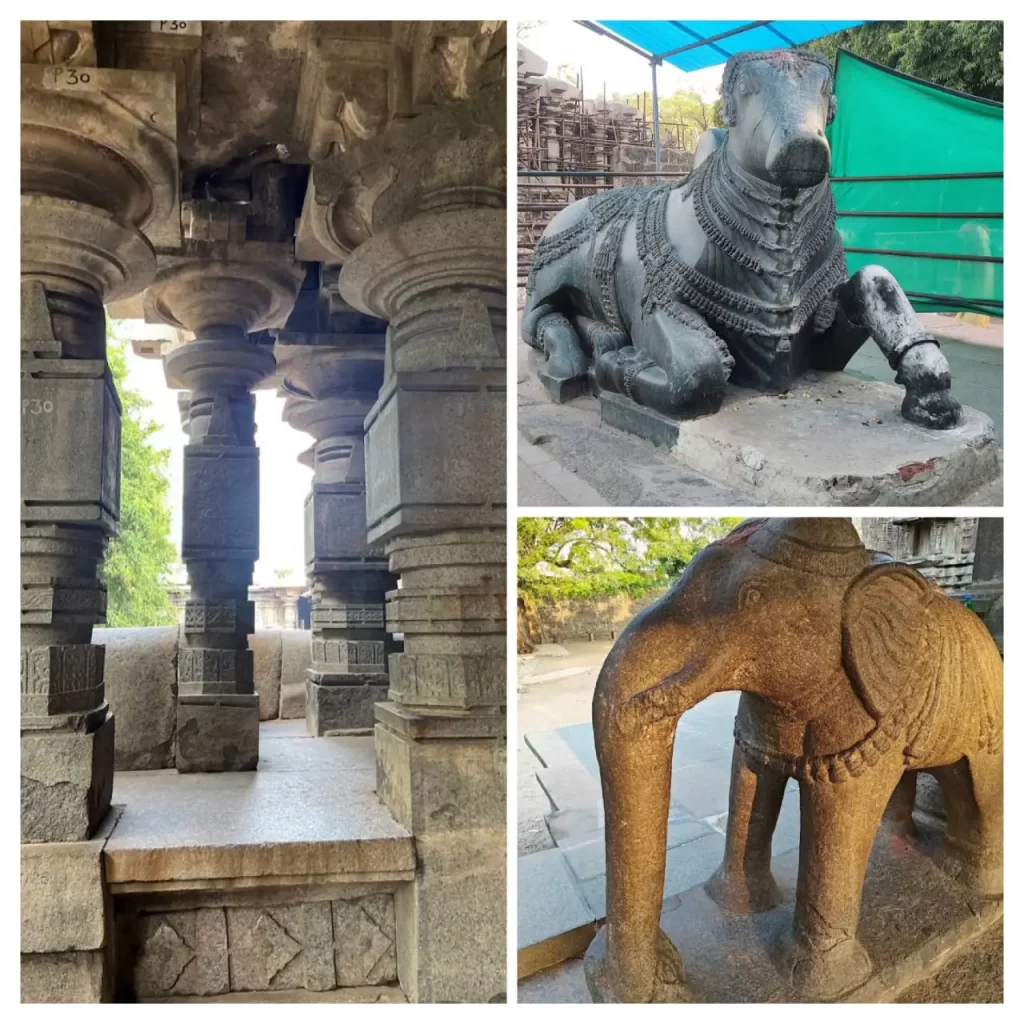
Architecture: A Stone Wonderland
Moving on to what makes the Thousand Pillar Temple such a visual treat – its incredible architecture! Prepare yourselves for being awe-struck by a stone wonderland.
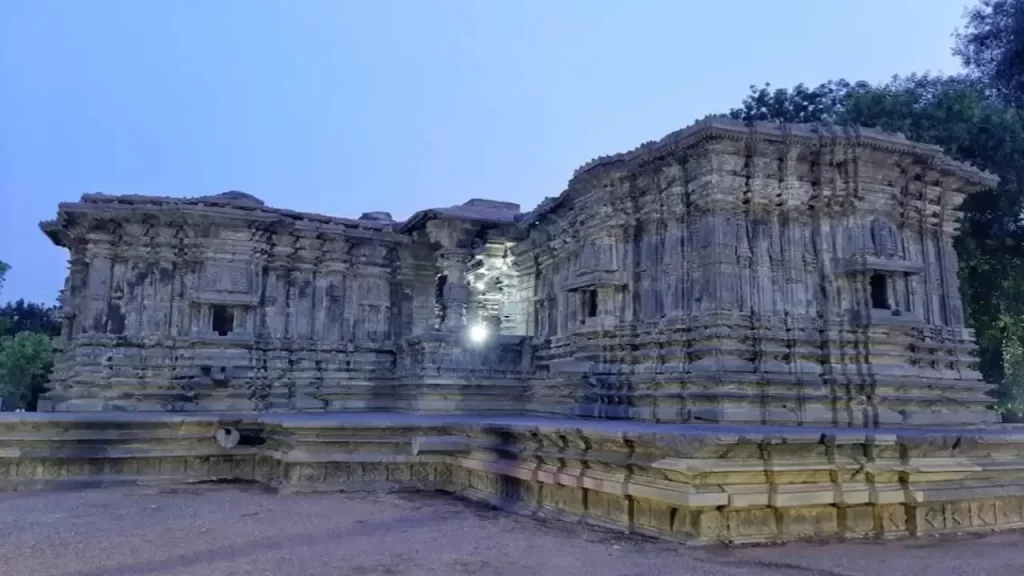
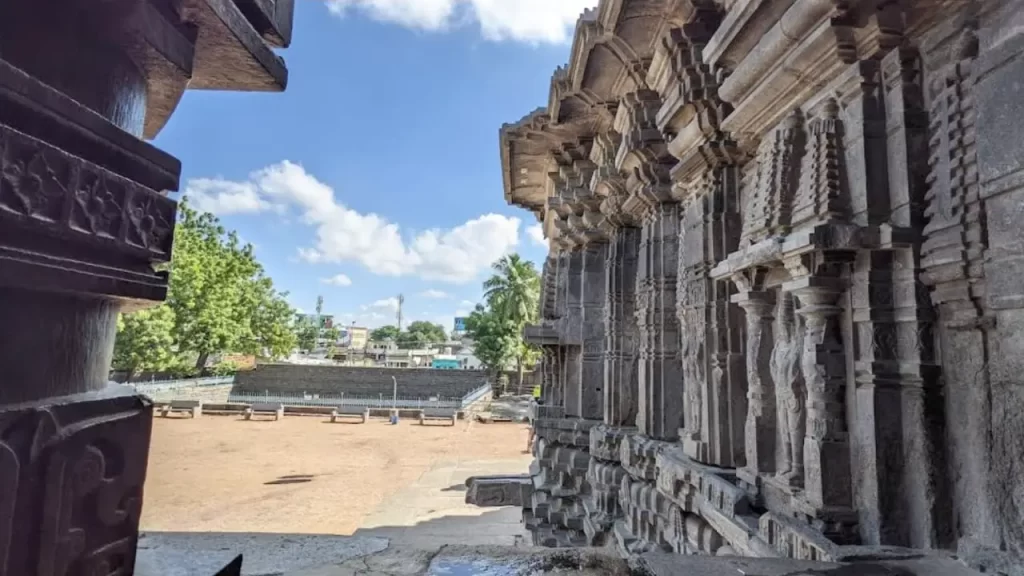
The striking attraction, as the name hints, are the thousands of pillars! Though you may not see precisely 1,000 standing pillars now because of centuries past, the sheer quantity of intricately carved pillars lends it an iconic name. Picture yourself strolling through a hall where every way you turn, there is another gorgeous carved pillar! Each pillar is distinct, featuring varying designs, patterns, and even tiny sculptures. It’s a giant puzzle where each piece is art.
The Thousand Pillar Temple is constructed in a unique style referred to as Kakatiya architecture. What is so unique about this style?
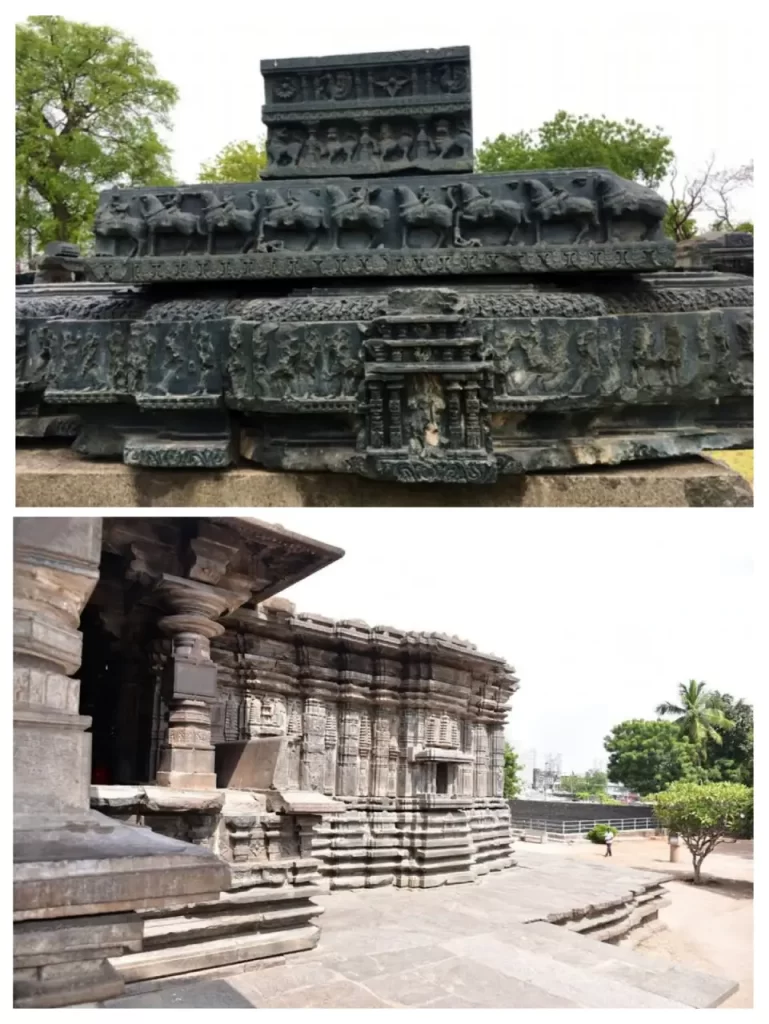
Star-shaped Platform (Garbhagriha): While most temples are square-based for their central shrines, the Thousand Pillar Temple has a star-shaped platform (or jagati) for its main shrines. This is very distinctive in shape and is breathtakingly beautiful. It is as if a celestial body has descended right here on earth!
Shiny Black Basalt Stone: The temple is primarily constructed from a black, shiny stone known as black basalt. The stone appears so smooth and shiny when polished, almost like a mirror. It was a hard stone to carve, but the Kakatiya sculptors were expert craftsmen at doing this. They made subtle details look so real.
Delicate Carvings: Around every corner, you’ll find stunning carvings. There are idols of gods and goddesses, mythical creatures such as lions and elephants, heavenly dancers, and even scenes from daily life from centuries ago. It’s as if the stone is speaking stories! Take a close look at the pillars and walls, and you’ll find something new each time.
Seperate Nandi Pavilion: In front of the central Shiva shrine, there is a stunningly carved big statue of Nandi, the bull of Lord Shiva. This Nandi is sculpted from one piece of black basalt and polished to a shine. It’s a stunning view and a reflection of the skill of the sculptors. The pavilion containing Nandi is usually detached from the main temple building, another characteristic of Kakatiya architecture.
Perforated Screens: You may also see lovely stone screens with tiny holes or designs cut into them. They are jali work or perforated screens, through which light and air can filter while producing lovely shadow patterns.
The designers of the Thousand Pillar Temple were truly brilliant. They created the temple in a manner that despite all those pillars, it gives the feeling of being open and airy. It is a space where art, engineering, and faith merged to give us something truly magical. The Thousand Pillar Temple is a work of art that inspires awe and wonder even today.
Myths and Beliefs: Enchanting Tales of the Temple
As with most ancient temples, the Thousand Pillar Temple also has some great myths and legends surrounding it that contribute to its mystique and spiritual energy. These are not merely ancient tales; they form part of the living faith that sustains the temple.
One of the common beliefs, generally attributed by locals, has to do with the actual architecture of the Thousand Pillar Temple and its amazing longevity. It is claimed that the people who constructed this temple were guided by God. They employed a special method of joints binding stones without using much mortar, so the building became amazingly strong and earthquake-resistant. While these methods are analyzed by modern engineers with scientific instruments, for the pilgrims, it’s an indication of divine favor and ancient prudence.
Another belief pertains to the co-existence of the three principal deities – Lord Shiva, Lord Vishnu, and Lord Surya – within one temple. It is believed that by walking around each of the three shrines in the Thousand Pillar Temple, one can gain the blessings of these mighty gods combined, resulting in happiness, prosperity, and spiritual development. It’s as if getting three times the divine blessings!
There is also a deep faith in the healing energies of the temple, particularly at certain lucky times. Although not exactly a myth concerning the origin of the temple, countless people make their pilgrimage here in search of blessings for good health and well-being. The serene and devotional ambiance itself is thought to exert a soothing and healing influence on body and mind.
Locals tell some stories that indicate the presence of hidden rooms or tunnels underneath the temple, which the kings employed to pass undetected or hide treasures. Though these are typically mere intriguing stories, they bring mystery and adventure to the Thousand Pillar Temple.
These myths and legends are well embedded in the local culture and add to the immense respect people have for the Thousand Pillar Temple. They make it more than a mere aggregate of stones, infusing it with divine presence and unnumbered marvels.
Read More>> Bhadraj Temple Mussoorie: Famous Lord Balabhadra Temple
Thousand Pillar Temple Timings: When the Doors Open
If you’re eager to go to the Thousand Pillar Temple, understanding its opening and closing times is quite crucial! You don’t want to miss your chance by going when they are closed and not welcoming visitors.
The Thousand Pillar Temple receives visitors every day of the week. It usually opens early in the morning and closes late in the afternoon, taking a brief break in between.
Here are the usual timings for the Thousand Pillar Temple:
Morning Hours: Typically between 6:00 AM and 12:00 PM (noon)
Afternoon Break: Typically closes down for a short break, typically between 12:00 PM to 2:00 PM or 2:30 PM. This is a reasonable time for the temple staff to rest and get ready for the afternoon.
Evening Hours: Reopens around 2:00 PM or 2:30 PM and remains open until 8:00 PM.
Important Note for Visitors: While these are the general timings, it’s always a good idea to double-check the current timings before your visit. Sometimes, on special festival days or during very significant rituals, the timings might change slightly. A quick search online or a call to a local tourist information center can confirm this.
Weekends and holidays tend to be more crowded than weekdays because more people are off work and have free time to go there. If you want a quiet trip to the Thousand Pillar Temple and enjoy taking your time reading the carvings and basking in the tranquility, it’s best to visit during a weekday morning or late afternoon. Still, even on peak days, the temple is large enough for there to be ample room for everyone to appreciate its splendor.
Read More>> Udupi Sri Krishna Temple: Mathura of South India
Special Rituals and Days: A Celebration Divinely Given
The Thousand Pillar Temple may not have everyday grand processions as some of the other temples, but it indeed celebrates special Hindu festivals with lot of fervor and gets lot of devotees coming to it. These are the days when the temple comes alive in colors, music, and prayers.
Maha Shivaratri: This is among the most significant festivals that are held at the Thousand Pillar Temple, as Lord Shiva happens to be among the major deities worshipped here. Maha Shivaratri normally occurs in February or March. There are fasts by devotees on this day, special prayers to Lord Shiva, and the temple receives a large number of visitors. The environment is pervaded by the chanting of “Om Namah Shivaya” and bhajans. It’s a very religious and congested day.
Makara Sankranti (approximately January 14th): This festival celebrates the sun’s entry into the zodiac sign of Makara (Capricorn). Because Lord Surya (the Sun God) is also revered at the Thousand Pillar Temple, this is a sacred day. Individuals perform prayers and celebrate the harvest.
Ugadi (Telugu New Year – March/April): Being a major temple in Telangana, Ugadi is observed with traditional ceremonies, ushering in a new year with optimism and happiness.
Diwali (Festival of Lights – October/November): Although not unique to the deities in the Thousand Pillar Temple, Diwali is a major festival within Hinduism and is observed throughout India, with the temple complex being resplendent with lights and drawing families out for evening prayers and festive celebrations.
Navaratri: The nine-day Navaratri festival in honor of the Goddess Durga is also celebrated, particularly because the Kakatiyas were great adorers of the different manifestations of the Mother Goddess.
Read More>> Peddamma Thalli Temple Jubilee Hills
Special Poojas:
While poojas are done daily for the gods, there are very few distinct special poojas done exclusively at the Thousand Pillar Temple that vary from standard Hindu temple practices. Most devotees do individual archanas (prayer offering using flowers and mantras), abhishekam (ritual bathing of the deity, particularly Shiva lingam), and Deeparadhana (lamp offering). On festivals, these are done on a grand scale with better decorations and devotional singing.
Crowded Days:
As stated, Maha Shivaratri is the most busiest day at the Thousand Pillar Temple. Be prepared for a huge turnout of devotees, long lines for darshan (seeing the deity), and an extremely festive but devotional atmosphere. Weekends, particularly school holidays, also witness a decent crowd of visitors. If you want a quiet experience, visit on a weekday.
These festive days and ceremonies affirm the long-standing devotion and cultural value of the Thousand Pillar Temple, solidifying it as a living hub of worship and celebration.
Read More>> Kuber Bhandari Temple: 2500-Year-Old Legacy
Sites to Visit Around the Temple: See More Wonders!
Warangal, the city that is home to the Thousand Pillar Temple, is a treasure of history, culture, and other such fantastic Hindu spots! Once you’ve discovered the grand temple, there’s simply so much more to discover and experience around. It’s like a whole city just waiting to share its stories with you!
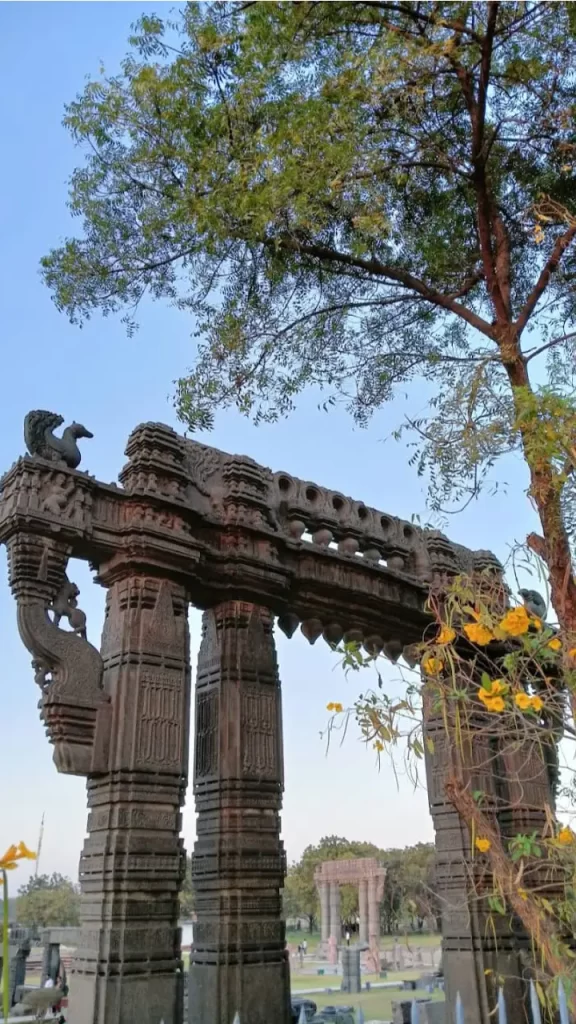
Warangal Fort: A definite must-see! Only a few miles from the Thousand Pillar Temple, the Warangal Fort was constructed by the Kakatiya dynasty as well. It’s an old fort with enormous stone gateways (Kirti Toranas), which are so intricately carved they resemble giant, ornate picture frames. It’s easy to imagine kings and queens once calling this place home centuries ago! It’s an archaeological marvel and a fantastic place to further learn about the Kakatiya kings and queens.
Bhadrakali Temple: Situated on top of a hill between Hanamkonda and Warangal, this temple is for Goddess Bhadrakali, a fierce manifestation of the Mother Goddess. It’s an old temple with a very strong and peaceful aura. Several devotees come here to obtain the blessings of the Goddess. The scenery on top of the hill is also quite pleasant!
Padmakshi Temple: This is one more lovely and ancient temple in Warangal, constructed by the Kakatiya kings. It’s for Goddess Padmakshi, who is a form of Lakshmi. The temple is famous for its stunning architecture and a pretty pond adjacent to it.
Siddeshwara Temple: This is another of the Kakatiya period and is also a temple of Lord Shiva. It’s famous for its distinctive and elaborate carvings, highlighting the great artistic skill of the time. It may be smaller than the Thousand Pillar Temple, but no less quaint.
Eturnagaram Wildlife Sanctuary (a little longer): If you have some more time and are nature lovers, this wildlife sanctuary is a bit of a ride but provides an opportunity to spot several animals and birds in their natural surroundings. Although not a temple, it offers another form of spiritual experience in nature.
Visiting these neighboring sites will further acquaint you with the Kakatiya heritage and the affluent cultural landscape of Warangal. Every site is bestowed with its own tale and charm, rendering your journey all the more special. It’s like undertaking several journeys in a single grand trip!
How to Reach the Temple: Your Journey to the Past
Accessing the Thousand Pillar Temple is relatively easy, since Warangal is a well-accessed city in Telangana. Let us see the various means through which you can access this amazing heritage location.
By Air (Aeroplane): The closest major airport to Warangal is the Rajiv Gandhi International Airport (HYD) in Hyderabad. Hyderabad is the capital of Telangana and is roughly 150 kilometers (approx. a 3-hour drive) from Warangal. After you arrive in Hyderabad, you have a few choices to get to Warangal:
Taxi/Cab: You can easily book a pre-paid taxi or private cab straight from the airport to Warangal.
Bus: There are regular bus services from Hyderabad to Warangal from different bus stations.
Train: It is also possible to take a train from Hyderabad to Warangal.
By Rail (Train): Warangal boasts a local railway station, the Warangal Railway Station (WL). The station is well connected to big Indian cities like Hyderabad, Delhi, Chennai, Bangalore, and Kolkata. It’s a really convenient means of reaching the city. From the Warangal Railway Station, the Thousand Pillar Temple at Hanamkonda is only around 5-6 kilometers from there. You can easily spot auto-rickshaws or local taxis right in front of the station to drop you at the temple directly.
By Road (Car/Bus): Warangal is extremely well-linked by a well-developed road network.
From Hyderabad: Govt and private bus facilities are available frequently from Hyderabad to Warangal. It takes around 3 hours. Alternatively, you can drive your own vehicle or take a taxi for a pleasant journey.
From other cities in Telangana and Andhra Pradesh: Frequent bus services link Warangal with other major cities and towns of the region.
Once you are in Warangal, especially in Hanamkonda where the Thousand Pillar Temple is situated, local transport can be easily accessed. Auto-rickshaws are the most prevalent and easy means of getting around the city and to the temple from your hotel or the railway station.
3 Comments