Kuchanur Saneeswaran Temple: Complete Guide to the Swayambhu Shani Shrine in Theni
Kuchanur Saneeswaran Temple (Sri Kuchanur Saneeswara Bhagavan Temple) is a revered Hindu pilgrimage shrine located in the village of Kuchanur in the Theni district of Tamil Nadu. It is one of the extremely rare temples in India where Lord Saneeswara (Saturn) presides as the sole, independent primary deity in a natural, self-manifested (Swayambhu) form. Devotees visit this sacred shrine on the banks of the Surabhi River primarily to perform pariharam (remedial prayers) for relief from the planetary afflictions of Saturn, including Sade Sati (Ezharai Sani), Janma Sani, and Ashtama Sani.
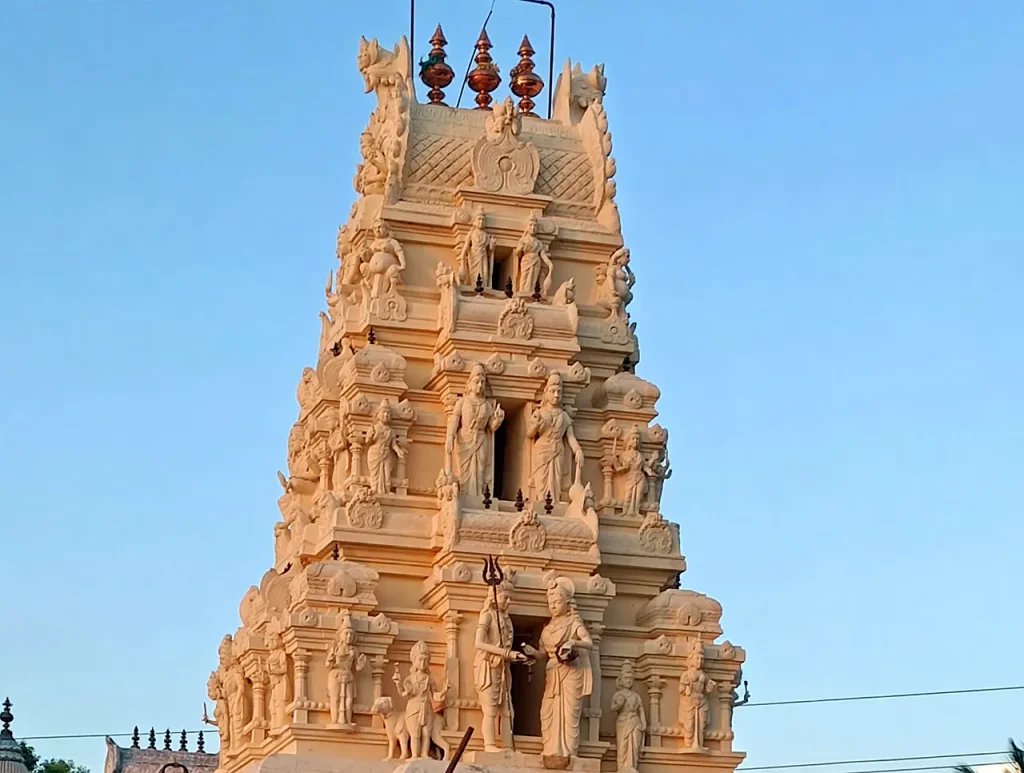
Unlike most traditional South Indian shrines where Lord Saneeswara is housed as a secondary planetary deity within a Navagraha enclosure or alongside a Shiva Lingam, Kuchanur gives central prominence to Lord Shani alone. The sacred idol emerged naturally from the earth and continues to attract thousands of pilgrims, especially on Saturdays and during the annual Tamil month of Aadi.
Quick Information: Kuchanur Saneeswaran Temple
| Feature | Verified Detail |
| Temple Name | Sri Kuchanur Saneeswaran Temple (Sri Saneeswara Bhagavan Temple) |
| Main Deity | Lord Saneeswara (Saturn) — Self-manifested (Swayambhu) stone idol |
| Location | Kuchanur Village, Uthamapalayam Taluk, Theni District, Tamil Nadu, India |
| Governing Body | Hindu Religious and Charitable Endowments (HR&CE) Department, Tamil Nadu |
| Temple Darshan Timings | Daily Morning: 06:00 AM – 12:00 PM Daily Evening: 04:30 PM – 08:00 PM (On Saturdays, the sanctum opens earlier around 05:00 AM and remains open through the afternoon depending on crowd density) |
| Primary Ritual Offerings | Ellu Deepam (sesame oil lamps tied in black cloth), offering black sesame seeds (ellu), crow feeding, blue cloth (neela vasthiram) offering |
| Major Festivals | Aadi Festival (all Saturdays of the Tamil month of Aadi, mid-July to mid-August), Sani Peyarchi (Saturn transit festival) |
| Sacred Water Body (Theertham) | Surabhi (Surabi) River (branch of the Periyar river system) |
| Nearest Town / Transport Hub | Chinnamanur (approx. 8 km), Theni (approx. 25 km), Uthamapalayam (approx. 12 km) |
| Nearest Railway Station | Theni Railway Station (approx. 25 km); Madurai Junction (approx. 100 km for broad-gauge connectivity) |
| Nearest Airport | Madurai International Airport (IXM) — approx. 105 km |
| Dress Code | Traditional Hindu temple attire: Dhotis or formal trousers for men (upper garment removed or covered respectfully); Sarees, half-sarees, or salwar kameez for women |
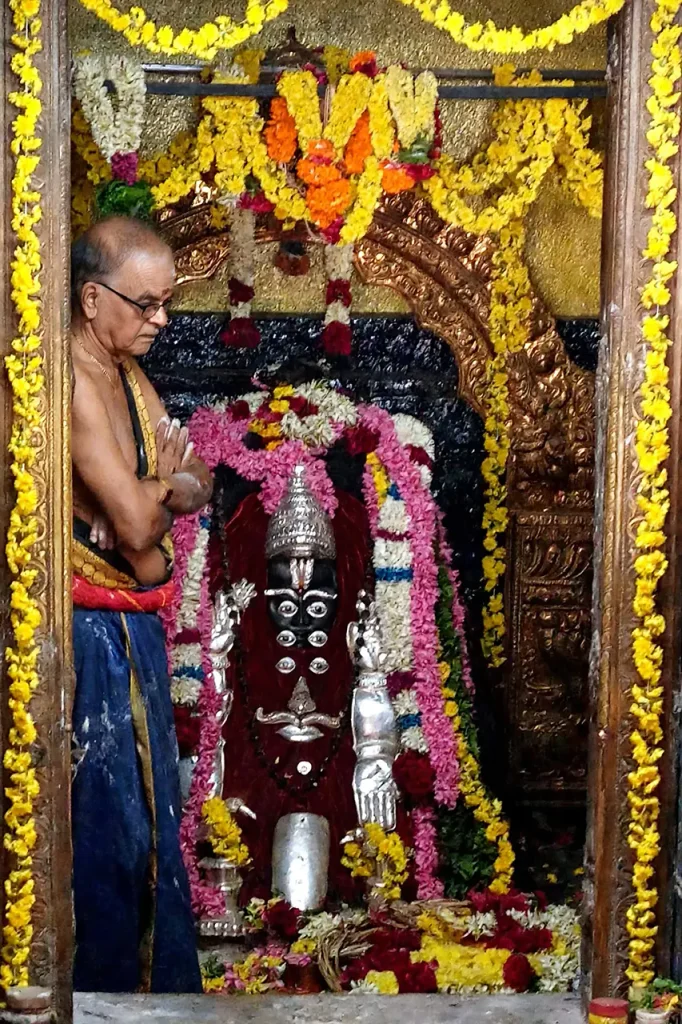
The Sacred Swayambhu Manifestation: What Makes Kuchanur Unique?
In traditional Hindu temple architecture and iconography, planetary deities belonging to the Navagraha cluster are almost universally positioned in an auxiliary pavilion within a larger Shiva temple. For instance, in the world-famous Thirunallar Dharbaranyeswarar Temple in Karaikal, the primary presiding deity is Lord Shiva (Dharbaranyeswarar), and Lord Saneeswara is worshiped as an important presiding sub-deity.
Kuchanur is fundamentally different in three significant ways:
- Independent Primary Sanctum: Lord Saneeswara is not an auxiliary deity here; he is the sovereign Lord of the temple (Moolavar). The entire shrine’s spiritual energy and daily liturgy center directly on him.
- Natural Swayambhu Stone Form: The idol inside the sanctum sanctorum was not sculpted by human hands. It is a natural rock formation that emerged spontaneously from the ground. Traditional belief holds that the stone grows gradually over centuries, displaying a distinct crown-like ridge at the top.
- Absence of Vahana (Mount) Under the Main Idol: While Lord Saneeswara is iconographically depicted riding a crow (Kaaka vahanam), the Swayambhu stone of Kuchanur stands as a raw, concentrated representation of cosmic karmic balance, embodying Lord Saturn’s role as a dispenser of justice.
In North India, shrines such as Shani Shingnapur in Maharashtra are similarly renowned for an open-air Swayambhu black stone idol of Lord Shani. In South India, Kuchanur holds that identical status of veneration.
Historical Origins and Sthala Purana
The origins of Kuchanur are preserved through regional puranic literature, local temple epigraphs, and folk traditions that date back several centuries.
Read More>> Skandagiri Temple of Sri Subrahmanya Swamy
The Penance of King Dinakaran
According to the Sthala Purana (sacred history of the temple), the region was historically known as Shenbaganallur, celebrated for its lush groves of champak trees and natural water springs. A righteous king named Dinakaran ruled this province with wisdom and benevolence.
Despite his noble deeds, King Dinakaran was childless for many years. He prayed intensely to Lord Shiva, who blessed him with a son named Chandravadanan. As Prince Chandravadanan grew into adulthood, royal astrologers evaluated his horoscope and delivered a grave prophecy: the prince was entering his seven-and-a-half-year period of planetary Saturn affliction, known as Ezharai Sani (Sade Sati).
Knowing the severe hardships associated with this karmic transit, King Dinakaran refused to let his beloved son suffer. The king resolved to bear the karmic weight himself. He renounced his royal comforts, traveled to the quiet champak forests along the Surabhi River, and engaged in deep, unbroken penance (tapas) dedicated to Lord Saneeswara.
Moved by the father’s devotion, selflessness, and austere meditation, Lord Saneeswara appeared before King Dinakaran. The deity explained that the cosmic laws of karma cannot be waived entirely, as every soul must experience the fruits of past actions. However, pleased by the king’s humility, Lord Saneeswara reduced the severity of the affliction and agreed to manifest permanently at that very spot as a self-formed lingam-shaped stone to protect sincere devotees who seek refuge in him with an honest heart.
From Shenbaganallur to Kuchanur
Following the appearance of the deity, King Dinakaran constructed a humble temple around the self-manifested stone. Over generations, the village of Shenbaganallur came to be associated with Kuchan—one of the traditional regional names linked to ascetic penance and holy grasses. Over time, colloquial usage transformed “Kuchan-oor” into its modern name, Kuchanur.
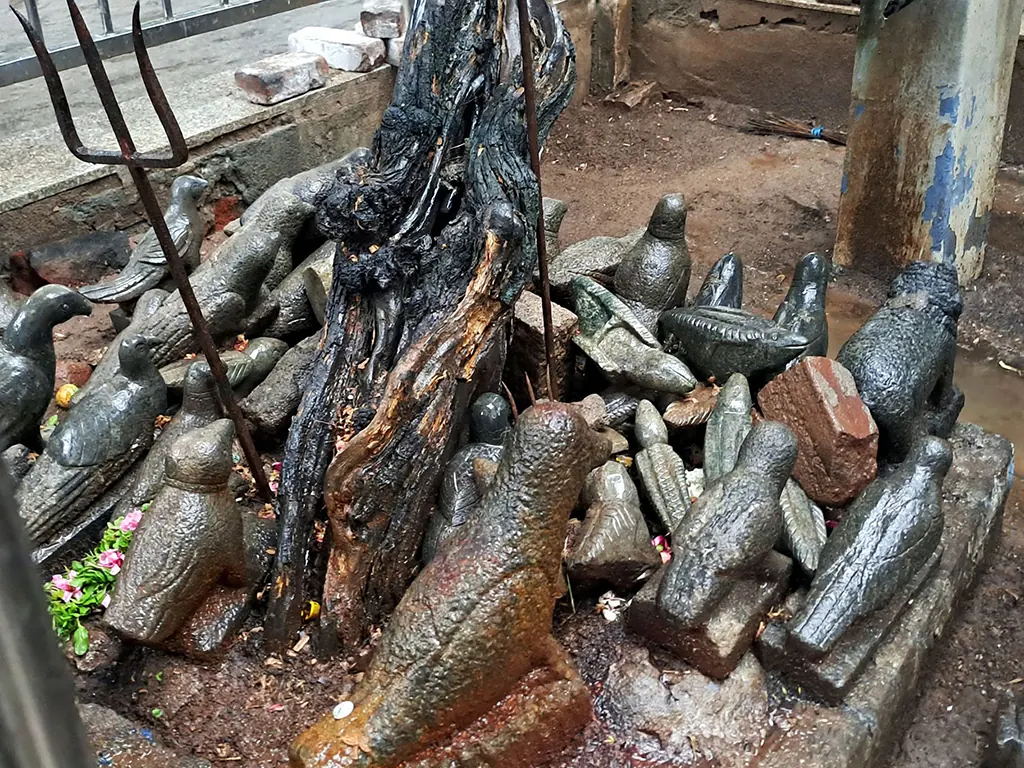
The Sacred Layout and Sub-Shrines
Although compact compared to the massive temple complexes of the Chola and Pandya dynasties, the Kuchanur temple is carefully arranged in accordance with local Agama traditions.
1. Vadakkurukki Vinayagar (North-Facing Ganesha)
Before entering the presence of Lord Saneeswara, devotees first offer prayers to Vadakkurukki Vinayagar. This rare north-facing idol of Lord Ganesha is considered spiritually powerful. Tradition mandates that one must seek Ganesha’s blessings first to remove all psychological and worldly obstacles before beginning the Shani pariharam rituals.
2. The Swayambhu Saneeswara Sanctum
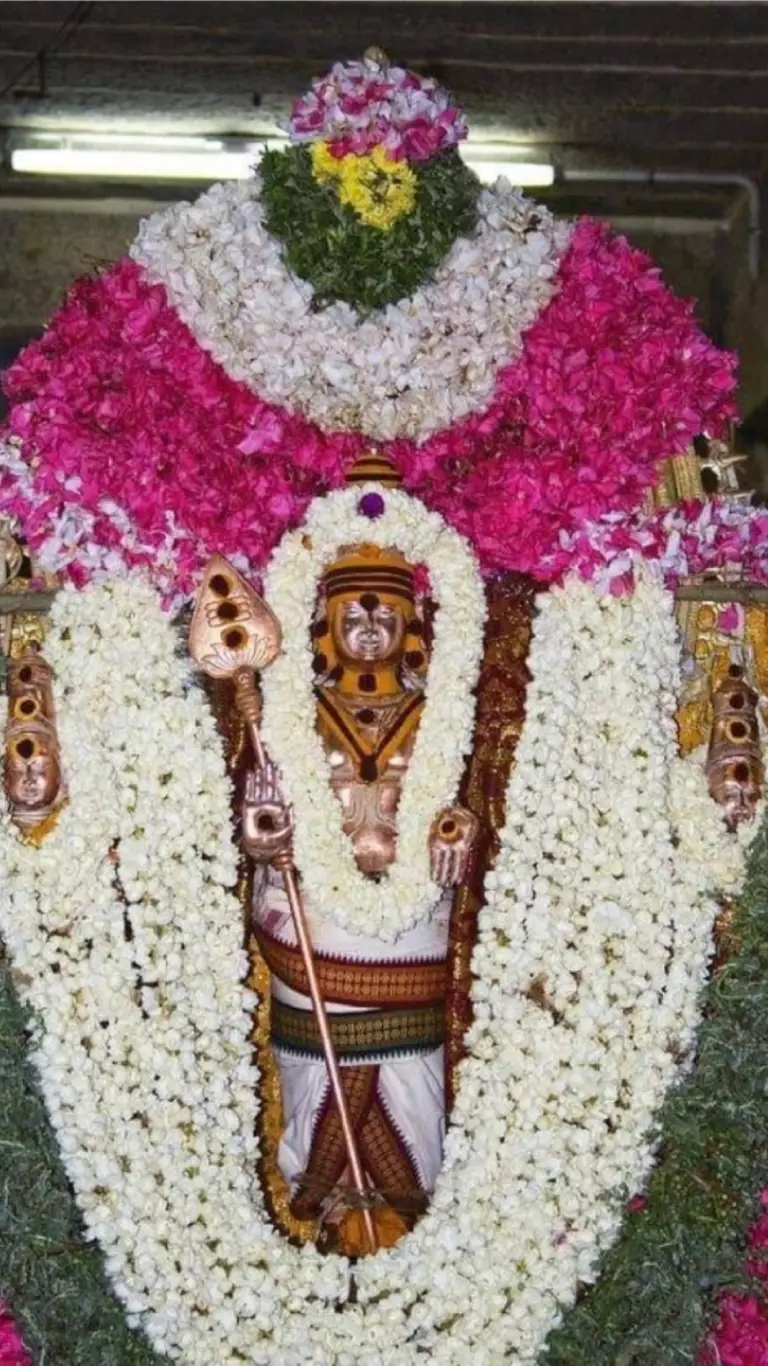
The inner chamber houses the revered self-manifested stone deity. The idol is adorned with floral garlands, a traditional silver or gold mask (kavacham), and dark blue silks. Devotees stand in the prayer hall (Maha Mandapam) facing the sanctum to witness the Deeparadhana (flame waving ritual), which creates an aura of quiet reverence.
3. Sonai Karuppasamy (Guardian Deity)
Within the outer precincts of the temple stands the shrine of Sonai Karuppasamy, a fierce guardian folk deity (Kaval Deivam) deeply venerated across southern Tamil Nadu. Devotees offer special prayers here for protection against negative energies, evil spirits, and unexplained domestic distress.
Read More>> Parthasarathy Temple Chennai
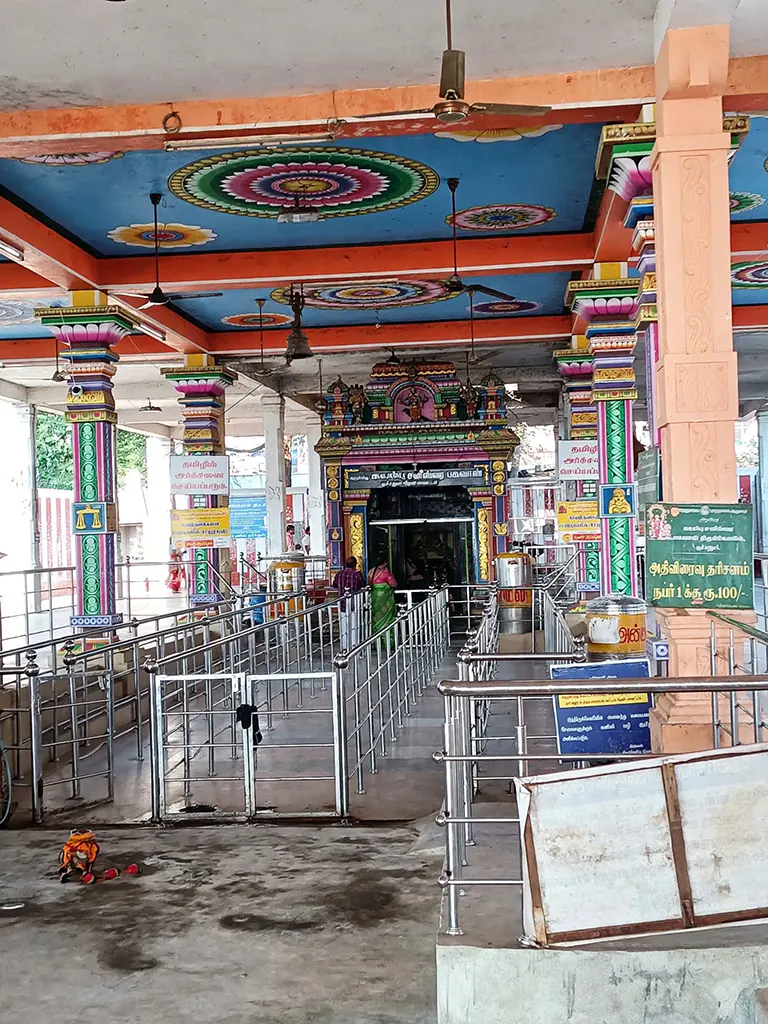
Complete Pariharam Procedure: How to Worship at Kuchanur
Devotees visit Kuchanur to seek relief from various forms of Shani doshas, including:
- Ezharai Sani (7.5 years of Sade Sati)
- Ashtama Sani (Saturn transiting the 8th house)
- Kantaka Sani / Ardhashtama Sani (Saturn transiting the 4th, 7th, or 10th houses)
- Shani Dasha or Antardasha in one’s personal birth chart
To perform the rituals with proper reverence, follow these established steps:
1. Sacred Bath and Cleansing
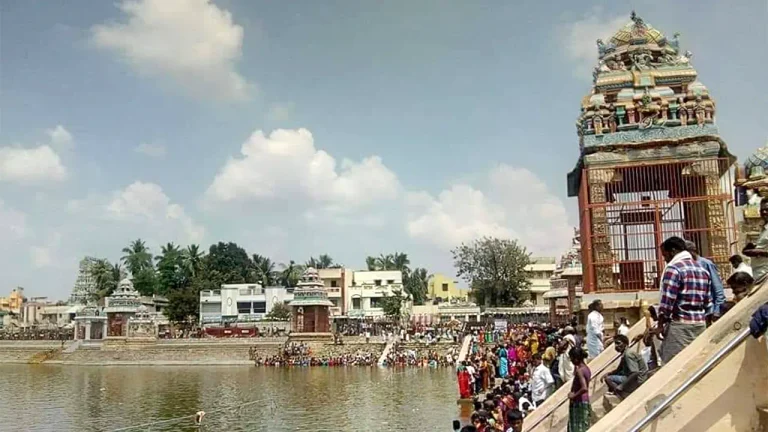
Traditionally, pilgrims take a holy dip or wash their feet and hands in the adjacent Surabhi River. If water levels are low during dry summer months, clean bathing and wash facilities are available near the temple approach road. Wear clean, traditional attire before entering the temple.
2. First Offering to Ganesha
Begin by breaking a coconut or offering prayers at the shrine of Vadakkurukki Vinayagar. Pray for mental clarity and the removal of hurdles during your pilgrimage.
3. The Main Darshan
Proceed through the queue complex into the central hall. Devotees may book general darshan or special entry queues managed by the HR&CE staff. Offer blue flowers (such as blue shankupushpam), a dark blue cloth (neela vasthi), and black sesame packets to the temple priests for archana.
Read More>> Mayapur Temple of the Vedic Planetarium
4. Lighting the Ellu Deepam (The Sesame Oil Lamp)
The most essential ritual at Kuchanur is lighting the Ellu Deepam.
- Small portions of unpolished black sesame seeds (ellu) are tied neatly inside small squares of coarse black or unbleached cloth to form small pouches (ellu kizhi).
- These pouches are placed in earthen clay lamps (agal vilakku) and thoroughly soaked in pure gingelly (sesame) oil.
- Devotees light these lamps in designated, safe open-air lamp enclosures outside the inner sanctum.
- While lighting the wick, meditate on Lord Shani with humility, acknowledging personal mistakes and praying for patience, endurance, and ethical clarity.
5. Feeding Crows (Kaaka Sadham)
Because the crow is the divine vahana (mount) of Lord Saneeswara, feeding crows is an inseparable part of the pariharam. Devotees mix cooked white rice with black sesame seeds and pure sesame oil, forming it into small balls. These are placed on elevated platforms outside the temple. According to traditional belief, when crows accept this food, the planetary lord accepts the devotee’s repentance.
6. Charity and Anna Dhanam
A core philosophical tenet of Saturn worship in Hinduism is compassion toward laborers, disabled individuals, and the impoverished. Feeding the hungry (Anna Dhanam) and donating footwear, umbrellas, or dark blankets to those in genuine need around the temple town is considered far more meritorious than mere ritualistic display.


Major Festivals and Best Time to Visit
| Season / Festival | Tamil Calendar Timing | Pilgrim Experience |
| Aadi Festival (Aadi Thiruvizha) | Tamil month of Aadi (Mid-July to Mid-August) | The biggest annual festival. All five Saturdays of Aadi witness massive crowds, special abhishekams, and village chariot processions. |
| Sani Peyarchi (Saturn Transit) | Once every 2.5 to 3 years (as per planetary transit) | Thousands of devotees travel from across India to perform remedies when Saturn moves into a new zodiac sign (Rasi). |
| Weekly Saturdays | Every Saturday throughout the year | Regular peak days. The temple opens early in the morning and experiences extended afternoon darshan hours. |
| Winter Months (November to February) | Karthigai to Thai months | Pleasant weather, comfortable temperatures for traveling with elders and children. |
Weather Considerations
Theni district experiences tropical weather. Summers (March to June) can be quite hot, with afternoon temperatures reaching 36°C to 39°C. The post-monsoon and winter period from October to February offers pleasant weather, making it the ideal window for families planning combined trips to nearby hill stations like Megamalai or Kodaikanal.
Read More>> Komuravelli Mallanna Temple
How to Reach Kuchanur Saneeswaran Temple
Kuchanur is well-connected by paved state highways running through the fertile Cumbum Valley in Theni District.
By Road
- From Theni (25 km): Theni is the district headquarters. Frequent government and private buses run between Theni, Chinnamanur, and Bodi. Take any bus heading toward Chinnamanur or Uthamapalayam, and board a local connector bus or auto-rickshaw directly to Kuchanur.
- From Madurai (100 km): Take NH 85 via Usilampatti and Andipatti to reach Theni, then proceed south toward Chinnamanur and Kuchanur. Taxis and private cars take approximately 2 to 2.5 hours.
- From Dindigul (100 km): Travel via the Dindigul–Theni highway (NH 45 / NH 85), which takes approximately 2 hours by road.
By Train
- Theni Railway Station (25 km): Broad-gauge rail lines connect Theni with Madurai and other regional junctions. Passenger and express trains run on this route.
- Madurai Junction (100 km): For travelers coming from Chennai, Bengaluru, Coimbatore, or northern states, Madurai Junction serves as the premier railway hub with daily superfast trains. Taxis and direct state transport buses are easily available from Madurai to Theni and Chinnamanur.
By Air
- Madurai International Airport (IXM): Located about 105 km away. The airport operates direct daily domestic flights to Chennai, Bengaluru, Hyderabad, Mumbai, and New Delhi, as well as select international flights to Colombo and Singapore. You can hire a pre-paid taxi directly from the airport terminal to Kuchanur.
Practical Visitor Tips and Etiquette
- Be Mindful of Saturday Crowds: If you plan to visit on a Saturday, expect long queues. Arrive before 6:30 AM to complete your darshan comfortably. On weekdays (Monday through Friday), the temple is peaceful, and visitors can complete rituals within 30 to 45 minutes.
- Purchasing Pooja Items: Earthen lamps, sesame oil, black cloth pouches, and flowers are sold by local vendors right outside the temple gates. Ensure that the oil purchased is unadulterated sesame oil for lighting the lamps.
- Footwear Storage: Dedicated footwear stands are managed near the main road approach. Avoid leaving expensive footwear unattended near the river steps.
- Photography Restrictions: In compliance with Tamil Nadu HR&CE regulations, photography and videography inside the inner sanctum and main prayer mandapam are strictly prohibited.
- Where to Stay: Kuchanur is a small rural village with limited lodging options. Pilgrims are advised to book accommodations in Theni town (25 km away) or Chinnamanur (8 km away), where comfortable family hotels, lodges, and restaurants are readily available.
Read More>> Shani Shingnapur: Only Village With no Doors to Houses
Nearby Spiritual and Scenic Attractions in Theni District
A visit to Kuchanur Saneeswaran Temple can be easily combined with several prominent religious and nature destinations within a 30 to 50 km radius:
- Suruli Falls (approx. 35 km): A breathtaking two-stage waterfall situated on the slopes of the Western Ghats, famous for its medicinal waters, rock-cut caves, and the ancient Suruli Velappar Murugan Temple.
- Chinna Suruli Falls (approx. 30 km): A scenic, tranquil cascade located near Kombaithozhu village, surrounded by dense green forest foliage.
- Veerapandi Gowmariamman Temple (approx. 18 km): A historic 14th-century temple on the banks of the Mullai River built by King Veerapandiya, revered for its miraculous healing powers.
- Megamalai Hill Station (approx. 55 km): Known as the “High Wavy Mountains,” this serene hill retreat is famous for cool tea estates, mist-clad peaks, and wildlife viewing.
Frequently Asked Questions (FAQs)
What makes Kuchanur Saneeswaran Temple different from Thirunallar?
In Thirunallar, Lord Saneeswara is worshiped as a sub-deity within the temple of Lord Shiva (Dharbaranyeswarar). At Kuchanur, Lord Saneeswara is the sole, primary presiding deity (Moolavar) of the temple, manifesting naturally from the earth as a Swayambhu idol without a Shiva Linga above him.
What is the most important pariharam to do at Kuchanur?
The most important pariharam is lighting the Ellu Deepam (black sesame seeds tied in small cloth packets soaked in sesame oil inside earthen lamps) and feeding black sesame rice balls to crows (Kaaka Sadham).
What are the daily temple timings at Kuchanur?
The temple generally opens from 06:00 AM to 12:00 PM in the morning and from 04:30 PM to 08:00 PM in the evening. On Saturdays and festive days like Aadi Saturdays, the temple opens earlier (around 05:00 AM) and remains open during the afternoon based on pilgrim flow.
Can pregnant women and children visit the temple?
Yes, families with children and devotees of all ages can visit. While traditional folk belief sometimes cautions against prolonged stays in Saturn-centric parihara temples during advanced pregnancy, there is no official ban, and all devotees are treated respectfully.
How much time is needed for darshan at Kuchanur?
On regular weekdays, darshan and lighting the sesame lamp take roughly 30 to 45 minutes. On regular Saturdays, expect 1.5 to 3 hours. During major events such as Sani Peyarchi and Aadi Saturdays, queues may take 4 to 6 hours.
Plan Your Pilgrimage Responsibly
Kuchanur Saneeswaran Temple remains an invaluable spiritual anchor in Tamil Nadu’s sacred geography. Whether you are visiting to fulfill a specific pariharam vow during a challenging astrological transit or traveling to witness one of the subcontinent’s rare self-manifested Shani shrines, approach the temple with humility, patience, and a spirit of charity toward all beings.