Banapuriswarar Temple Kumbakonam: Complete Pilgrim & History Guide
Banapuriswarar Temple, also known as Sri Banapureeswarar or Vanathurai Nathar Temple, is an ancient Hindu temple dedicated to Lord Shiva situated in the sacred town of Kumbakonam in Thanjavur district, Tamil Nadu. The temple holds exceptional spiritual importance as one of the twelve core Shaivite shrines historically connected to the prestigious Kumbakonam Mahamaham festival. It marks the sacred site where Lord Shiva released his divine arrow to break open the pot of celestial nectar (Amrita Kumbha), bringing forth renewed life across the cosmos.

Quick Information: Sri Banapuriswarar Temple
| Feature | Details |
| Temple Name | Sri Banapuriswarar Temple (Sri Banapureeswarar / Vanathurai Nathar) |
| Presiding Deity | Lord Shiva (worshipped as Banapuriswarar / Swayambhu Lingam) |
| Goddess / Consort | Goddess Somakamalambikai (also called Malaiyala Mangai) |
| Location | Banadurai, Kumbakonam, Thanjavur District, Tamil Nadu, India |
| Temple Type | Historic Chola-era Shaivite Temple (Associated with Mahamaham) |
| Darshan Timings | Morning: 06:30 AM to 11:30 AM | Evening: 04:30 PM to 08:30 PM |
| Pooja Schedule | Kala Santhi (Morning), Uchikalam (Noon), Sayaratchai (Evening), Arthajamam (Night) |
| Entry Fee | Free general darshan; nominal fees may apply for special archana |
| Dress Code | Traditional attire (Dhoti/Kurta for men; Saree/Salwar for women; no shorts or sleeveless) |
| Best Time to Visit | October to March (Comfortable weather) and during Masi Magam / Mahamaham |
| Nearest Railway Station | Kumbakonam Railway Station (KMU) — Approx. 2.5 km |
| Nearest Airport | Tiruchirappalli International Airport (TRZ) — Approx. 95 km |
The Sacred Origin and Sthala Purana of Banapuriswarar
To appreciate the profound sanctity of Banapuriswarar Temple, one must understand the ancient cosmic legend (Sthala Purana) that gave the town of Kumbakonam its very identity.
According to traditional Hindu accounts, prior to the onset of the great cosmic deluge known as the Pralaya, Lord Brahma approached Lord Shiva in distress, seeking a way to protect the divine seeds of creation and the knowledge of the Vedas from being destroyed. Lord Shiva instructed Brahma to prepare a divine earthen pot filled with the divine nectar of immortality (Amrita), sacred sands, and the essence of creation.
Lord Shiva advised Brahma to place this sacred vessel atop Mount Meru. When the floods of the deluge submerged the earth, the celestial pot floated across the swollen cosmic waters, eventually drifting southward toward the Kaveri delta.
As the waters began to recede, the pot came to rest at the spot where the famous Adi Kumbeswarar Temple stands today. To allow the essence of life to flow out into the world, Lord Shiva took the guise of a divine hunter (Kiratamurthy). Standing at this sacred quarter, he strung his bow and released a piercing arrow (Banam in Sanskrit and Tamil) directly at the pot.
The spot from which Lord Shiva shot his divine arrow became known as Banadurai (or Vanathurai), and the sanctified shrine established here was titled Sri Banapuriswarar Temple—literally, “The Lord of the Sacred Arrow City.”
The impact of the arrow cracked the pot, causing the sacred nectar to spill into two prominent reservoirs. The larger collection formed the world-renowned Mahamaham Tank, while the secondary portion created the Potramarai Tank. Because the pot (Kumbha) broke at its nose (Kona), the surrounding holy city came to be revered across India as Kumbakonam.

Role in the Kumbakonam Mahamaham Festival
The temple is widely celebrated for its integral role in the grand Mahamaham festival, often referred to as the Kumbh Mela of South India. Celebrated once every twelve years in the Tamil month of Masi (February–March) when Jupiter enters the astrological sign of Leo (Simha Rasi) and the full moon aligns with the Makha constellation, this event draws millions of pilgrims.
During the festival, the processional deities (Utsava Murthis) from twelve prominent Shaivite temples across the town are carried in ceremonial palanquins to the Mahamaham Tank in Kumbakonam. Sri Banapuriswarar is honored as one of these twelve primary deities. The participating shrines include:
- Sri Kasi Viswanathar Temple
- Sri Adi Kumbeswarar Temple
- Sri Nageswaran Temple
- Sri Someswarar Temple
- Sri Kotiswarar Temple
- Sri Kalahasteeswarar Temple
- Sri Gowthameswarar Temple
- Sri Abhimukeswarar Temple
- Sri Banapuriswarar Temple
- Sri Amirthakadeswarar Temple (Sakkottai)
- Sri Kambatta Viswanathar Temple
- Sri Ekambareswarar Temple
On the climactic day of the festival, known as the Theerthavari, the sacred trident (Astra Deva) of Lord Banapuriswarar is bathed in the consecrated waters of the Mahamaham Tank simultaneously with the other deities, sanctifying the water for the gathered devotees.

Architectural Features and Temple Layout
While many of Kumbakonam’s temples showcase towering, multi-tiered gopurams that dominate the skyline, Sri Banapuriswarar Temple offers an atmosphere of meditative serenity, retaining the classical proportions of medieval Chola temple architecture with subsequent Nayaka-period renovations.
The Entrance and Outer Prakaram
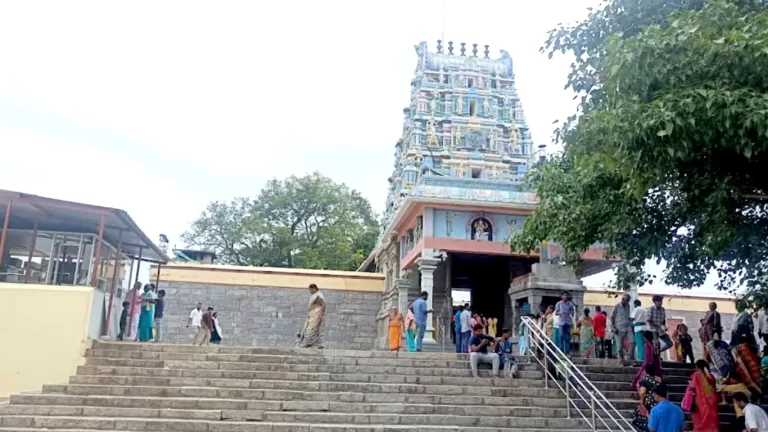
The temple is fronted by an attractive, modest Raja Gopuram facing east, welcoming devotees into a stone-flagged outer courtyard (Prakaram). As you step inside, you immediately notice the Dhvajastambha (flagstaff), Bali Peedam (altar), and the seated stone image of Nandi the sacred bull, all aligned directly with the central axis of the inner sanctum.
The Sanctum Sanctorum (Garbhagriha)
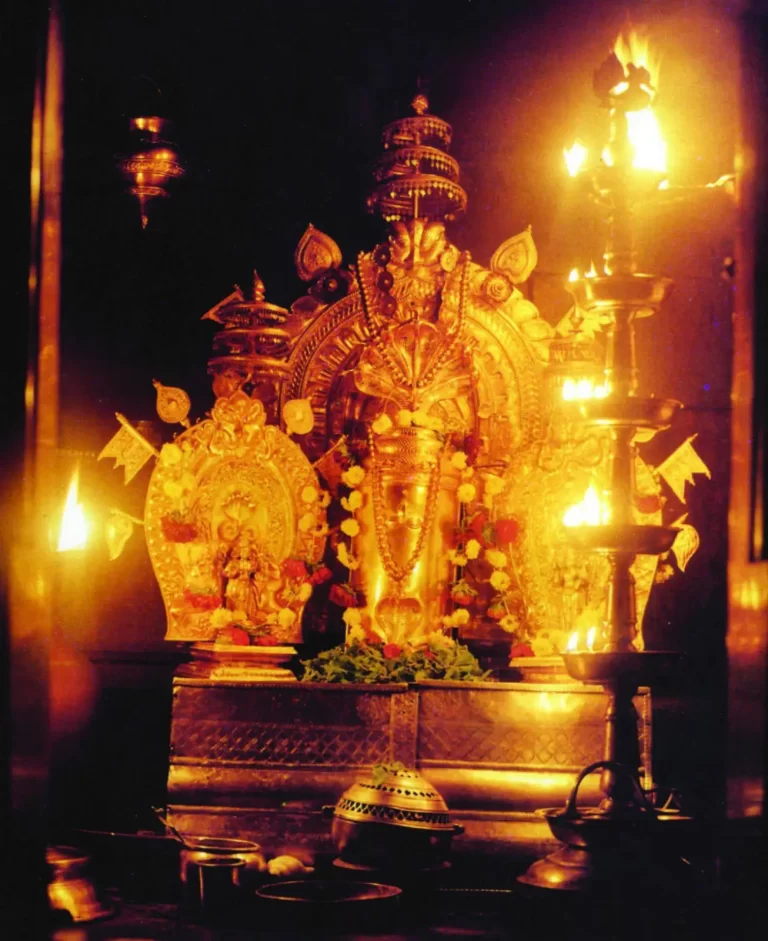
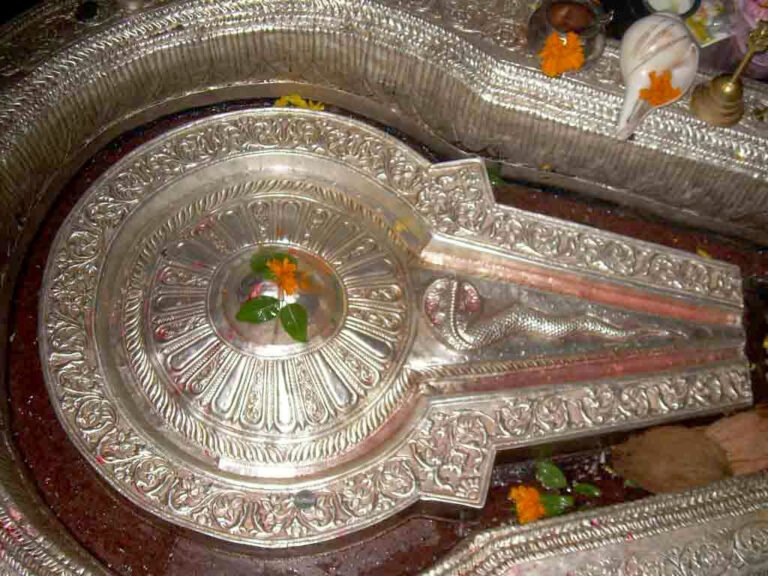
The sanctum sanctorum houses the presiding deity, Lord Banapuriswarar, manifested in the form of a majestic stone Swayambhu Lingam. The lingam radiates quiet spiritual energy, adorned daily with fresh bilva leaves, fragrant flower garlands, and traditional sandal paste. Devotees pray here for clarity of focus, courage, and relief from karmic afflictions, invoking the divine marksman who pierced through ignorance.
Shrine of Goddess Somakamalambikai
Facing south in a dedicated adjoining mandapam is the shrine of the divine mother, Goddess Somakamalambikai (affectionately hailed in Tamil tradition as Malaiyala Mangai). Depicted in a graceful standing posture with four hands, she holds the sacred lotus blossoms while extending her lower hands in the Abhaya (protection) and Varada (boon-giving) mudras. Devotees pay homage here seeking domestic harmony, prosperity, and blessings for marriage.
Parivara Devatas (Surrounding Shrines)
As you circumambulate the inner corridor, you will encounter beautifully sculpted niche deities (Koshta Murthis) along the outer wall of the sanctum:
- Lord Dakshinamurthy: The primordial guru facing south, imparting wisdom beneath the sacred banyan tree.
- Lord Mahavishnu & Lingodbhava: Occupying the western wall niche, capturing the infinite pillar of fire.
- Lord Brahma: Placed in the northern niche, receiving quiet morning worship.
- Goddess Durga: Guarding the northern flank, revered for removing obstacles and negative influences.
Additionally, separate sub-shrines within the courtyard honor Lord Ganesha (Vinayakar), Lord Murugan with Valli and Devasena, the Navagrahas (the nine planetary deities), Chandikeswara, and Bhairava.

Daily Pooja Timings and Sacred Rituals
The temple follows classical Shaivite Agamic traditions, conducting daily worship across four regular periods (Kalas).
- Morning Opening: 06:30 AM
- Kala Santhi Pooja: 07:30 AM (Morning awakening, abhishekam, and offering)
- Uchikala Pooja: 11:00 AM (Noon worship and naivedyam)
- Mid-Day Closing: 11:30 AM
- Evening Reopening: 04:30 PM
- Sayaratchai Pooja: 06:00 PM (Sunset lamp-lighting and deeparadhana)
- Arthajama Pooja: 08:00 PM (Final night aarti and closing rituals)
- Night Closing: 08:30 PM
(Note: During solar/lunar eclipses or special festival days such as Maha Shivaratri, temple hours may vary. Devotees are encouraged to visit during the morning or evening pooja hours to witness the complete deeparadhana).
Major Festivals Celebrated
While daily worship continues throughout the year, the temple comes alive with heightened devotional fervor during annual Tamil festivals:
- Masi Magam & Mahamaham (February–March): The most important festival period, featuring special theerthavari processions and deeparadhana.
- Maha Shivaratri (February–March): Celebrated with four distinct midnight abhishekams through the night, accompanied by devotional chanting of the Sri Rudram.
- Pradosham (Fortnightly): Observed twice every month during the twilight hour (Sandhya Kalam), drawing local devotees for the sacred abhishekam of the Nandi and Shiva Lingam.
- Margazhi Festival (December–January): Early morning poojas featuring recitation of Thiruvempavai.
- Navaratri & Aadi Pooram: Dedicated to Goddess Somakamalambikai, with colorful floral decorations (Sandana Kappu) and special alankaram.
Practical Pilgrimage Guide: Planning Your Visit
A visit to Sri Banapuriswarar Temple can easily be integrated into a broader spiritual tour of Kumbakonam.
Dress Code and Temple Etiquette
To preserve the spiritual sanctity of the temple, visitors are requested to dress traditionally:
- Men: Dhoti with angavastram, or formal trousers with a modest shirt. Shorts, Bermudas, and sleeveless shirts are strictly avoided.
- Women: Sarees, half-sarees, or modest salwar kameez with dupatta.
- Footwear: Footwear must be removed outside the entrance gopuram; secure storage counters are available nearby.
- Photography: Photography inside the inner sanctum is strictly prohibited to respect worship traditions.
Suggested Itinerary Route in Kumbakonam
Because Banapuriswarar Temple is centrally located in Banadurai, you can visit it as part of an organized circuit:
- Start early at Adi Kumbeswarar Temple (the primary Pralaya site).
- Visit Sri Banapuriswarar Temple in Banadurai (the site where the arrow was released).
- Proceed to the exquisite Chola architectural landmark, Nageswaran Temple Kumbakonam.
- Complete your afternoon by visiting the grand Vaishnavite chariot shrine, Sarangapani Temple.
How to Reach Sri Banapuriswarar Temple
Kumbakonam is one of the most accessible pilgrimage hubs in Tamil Nadu, with comprehensive rail and road networks connecting it across South India.
- By Train: Kumbakonam Railway Station (Station Code: KMU) is an important junction on the Southern Railway line, receiving daily express trains from Chennai, Tiruchirappalli, Thanjavur, Madurai, and Bengaluru. The temple is located just 2.5 kilometers from the station, easily reached in 10 minutes via local auto-rickshaw.
- By Bus: The Kumbakonam Central Bus Stand operates frequent state and private express buses from Thanjavur (40 km), Tiruchirappalli (90 km), Mayiladuthurai (35 km), and Chennai (300 km).
- By Air: The nearest airport is Tiruchirappalli International Airport (TRZ), situated approximately 95 kilometers southwest of Kumbakonam. Taxis and intercity buses from the airport reach Kumbakonam in roughly 2 to 2.5 hours.
Frequently Asked Questions (FAQs)
What makes Banapuriswarar Temple unique among Kumbakonam temples?
Sri Banapuriswarar Temple marks the exact sacred spot where Lord Shiva, in the form of a hunter (Kiratamurthy), shot his divine arrow (Banam) to pierce the Amrita Kumbham during the cosmic deluge (Pralaya), causing the life-giving nectar to flow and create the sacred Mahamaham Tank.
What are the daily darshan timings at Banapuriswarar Temple?
The temple is open every day from 06:30 AM to 11:30 AM in the morning and from 04:30 PM to 08:30 PM in the evening.
Is there an entry fee to visit the temple?
No. General entry and darshan are completely free for all devotees. Nominal charges may apply if you request a personal archana ticket.
Is Banapuriswarar Temple one of the 12 Mahamaham temples?
Yes. It is one of the twelve core Shiva temples in Kumbakonam whose processional deities participate in the ceremonial Theerthavari at the Mahamaham Tank during the 12-year festival.
How far is Banapuriswarar Temple from Kumbakonam Railway Station?
The temple is located in the Banadurai locality, approximately 2.5 kilometers from Kumbakonam Railway Station, taking less than 10 minutes by auto-rickshaw or taxi.