2 Koodalmanikyam Temple
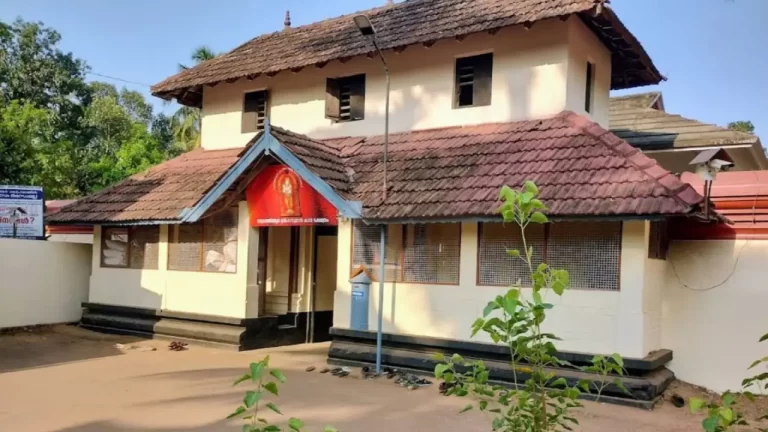
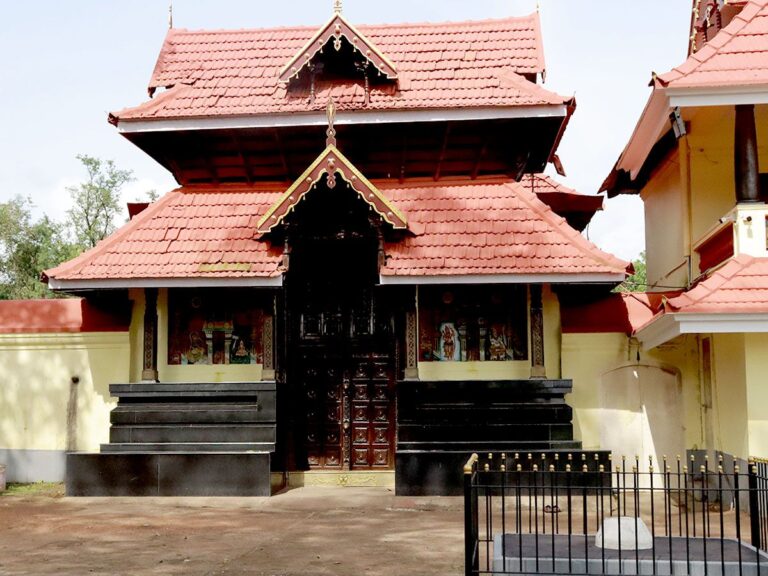
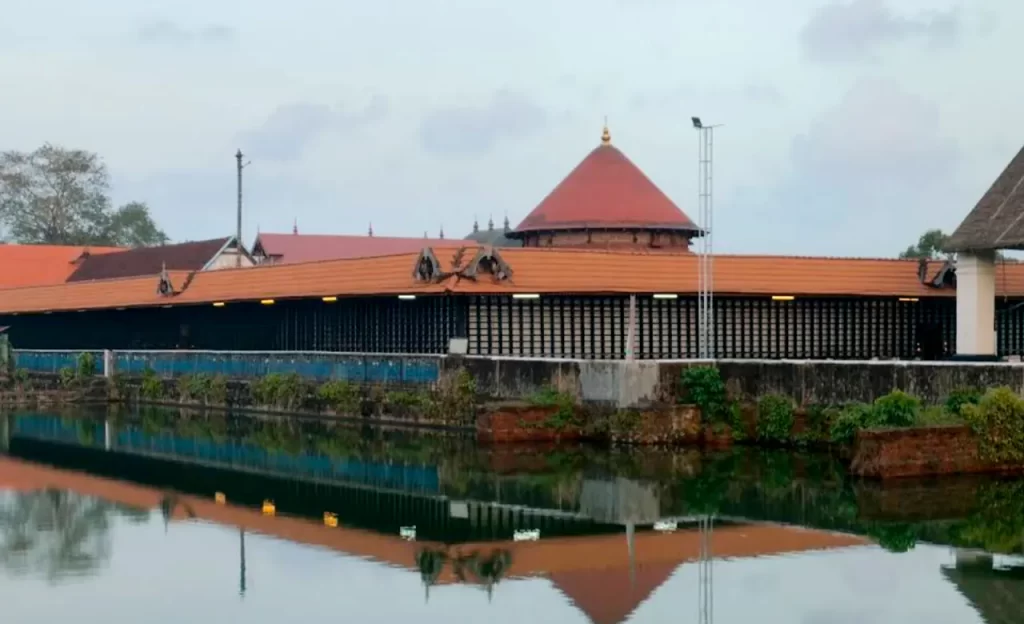
The Koodalmanikyam Temple in the middle of Irinjalakuda Municipality, Thrissur District of Kerala in India is more than just a site on a tourist’s list. As soon as you cross the majestic entrance gates of the historical building, you immerse into the experience.
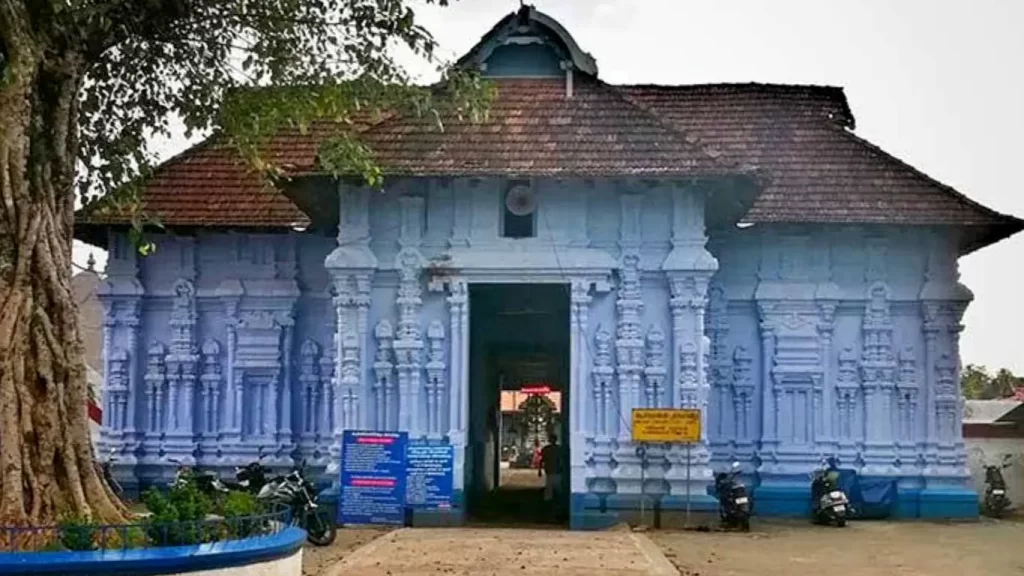
Irinjalakuda is a rustic town that will certainly give you a sense of peacefulness when you step out there for the first time. However, as you approach the temple from the Municipal Bus Station which is about 150 meters away, you will feel yourself surrounded by silence and smell of tulsi and oil lamps.
Why is this holy place so unique and captivating? Firstly, this is the sole ancient temple in the whole India that is dedicated entirely to the worshiping of Lord Bharata, the embodiment of selflessness and devotion according to the Ramayana epic. Although there are thousands of temples all around the world honoring Lord Rama, the sacrifice of Bharata, who served his exiled brother’s shoes (Padukas) rather than ruled as a king, was eternalized exactly in this temple.
If you are a devout pilgrim who needs some consolation, a history lover who wants to interpret the stone inscriptions of the 9th century, or a tourist who wants to see the finest classical Kerala architecture, there is something for everyone. This place gives a certain weighty peace that requires one to slow down and watch everything. Let us take a deeper look at how this spiritual fortress was built through time.
Koodalmanikyam Temple History: Of Dreams, Dynasties, and Divine Radiance
To be able to enjoy the beauty of the stones we are seeing, we have to travel way back in time, more than a millennium ago, when the Koodalmanikyam Temple came into existence. It is a perfect balance of historical facts backed up by documents and local tales told from generation to generation.
The Legend of Vakkay Kaimal
The most famous legend starts with the story of a powerful chief who lived in the locality called Vakkay Kaimal. On one night, he had a very vivid but strange dream wherein a divine being showed up and told him that four idols of the divine brothers in the Ramayana were washed off and could be found in the beach nearby. He was instructed to take them and establish them in certain places.
Inspired by his dream, he found the four idols on the shore just as he was told. He followed the blueprint of the architecture very precisely:
- Lord Rama was installed at Thriprayar.
- Lord Bharata was consecrated here at Irinjalakuda.
- Lord Lakshmana was established at Moozhikulam.
- Lord Shatrughna was settled at Payammal.
Read More >> Badami Cave Temples: 6CE India’s Ultimate Ancient Adventure
The Mystery of the Merging Gems
If you are a devout pilgrim who needs some consolation, a history lover who wants to interpret the stone inscriptions of the 9th century, or a tourist who wants to see the finest classical Kerala architecture, there is something for everyone. This place gives a certain weighty peace that requires one to slow down and watch everything. Let us take a deeper look at how this spiritual fortress was built through time.
It is natural to ask: what is the secret behind such a special name as “Koodalmanikyam”? The name itself contains an incredible story. “Koodal” in Malayalam language means merging while “Manikyam” – ruby or quartz.
Many years ago, the image of the deity started shining in mysterious and unusual manner on its forehead. This fact puzzled the representatives of local authorities and priests. In order to reveal the mystery of that bright light, the Raja of Kayamkulam came to the temple with precious reflective quartz gem (Manikyam) from his treasury.
When the priests put the gem next to the forehead of the idol to compare the light, it mysteriously slipped from their hands, flew to the idol and totally got absorbed in the idol! The two precious things united and gave this place its famous name “The Place of the Merged Ruby”. It is surprising but the same mysterious visual brightness started appearing from the image of the deity again in 1907.
The Hard Historical Evidence
However, as far as history is concerned, the age of this temple cannot be questioned at all. The earliest historical evidence of the Koodalmanikyam Temple can be found on an inscription written on stone during the reign of the celebrated king of Chera Perumal dynasty Sthanu Ravi Kulasekhara dating back to 854/855 AD.
The historical evidence shows that vast areas of land were leased out by the king for supporting the functioning of the temple, thus making it clear that the temple had been influential long before the 9th century.
For many years, the temporal and spiritual power of this temple and its huge area belonged to the very revered spiritual chief called the Thachudaya Kaimal. This family is so old that they got mentioned in the holy Skanda Purana. They continued to hold sovereignty over the temple properties till 1971 when the Government of Kerala took control of the administration of the temple through a Devaswom committee headed by the District Collector of Thrissur.
Religious and Cultural Significance: The Hermit Prince and Purana Proofs
As you find yourself before the inner sanctum, observe the energy that surrounds the place. Whereas in most of the temples where the king is shown in his royal glory, the deity in the Koodalmanikyam Temple is shown to depict a certain emotion-filled moment of the Ramayana story.
Form of the Deity
The idol of worship here is Lord Bharata who is in a highly austere state, comforting his sad heart in the absence of his brother in exile. He is shown as a Digambara or an ascetic sage, having renounced all pleasures of life, waiting for the safe arrival of his brother.
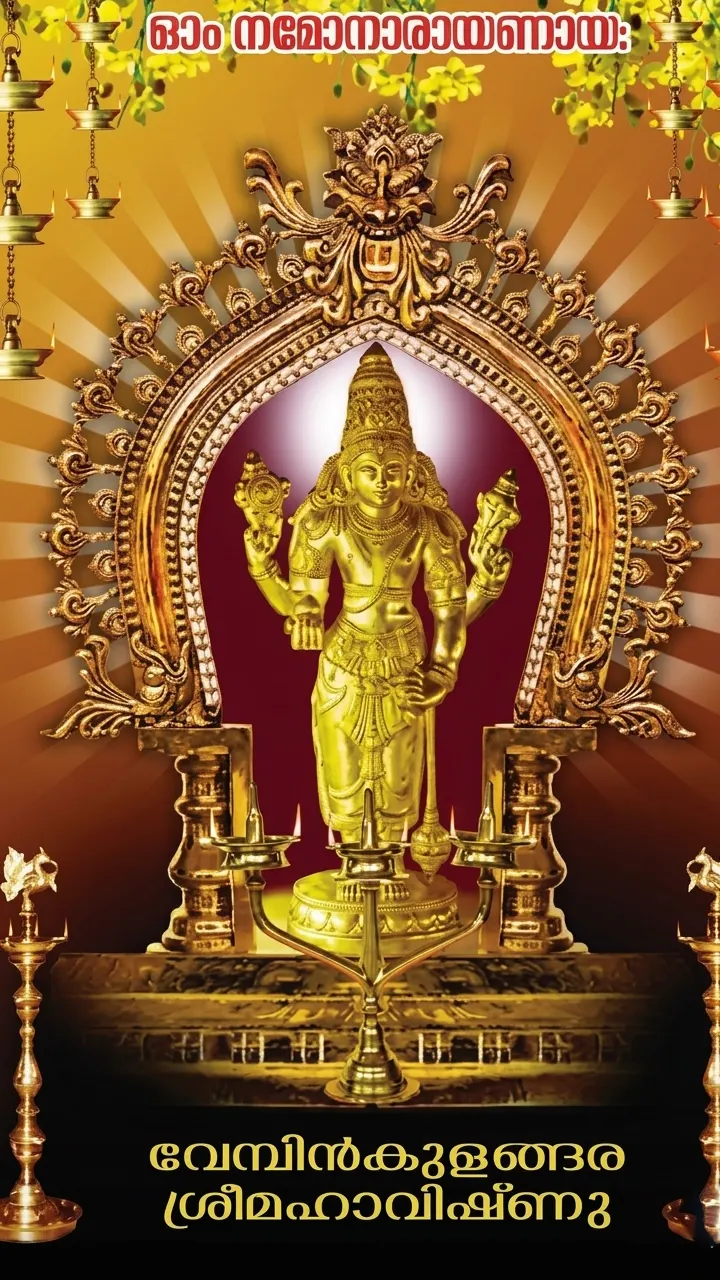
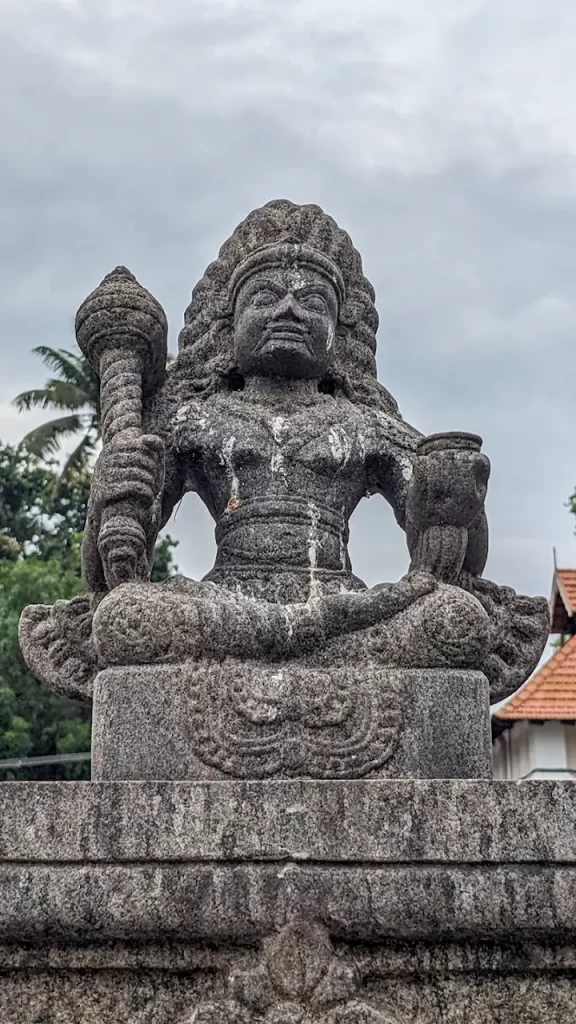
The idol is a majestic four-armed (Chathurbahu) Vishnu form, carrying the Panchajanya conch, Sudarshana chakra, Kaumodaki gada (mace), and a Japamala (prayer beads). He is also lovingly referred to as Sangameshwara, Lord of the Confluence.
Read More >> Vembinkulangara Sri Mahavishnu Temple
Scriptural References and Divine Proofs
The divine significance of this particular place finds proof from the ancient scriptures. One such is the Skanda Purana which is one of the eighteen mahapuranas of Hindu religious literature.
“Kulpini Maharshi Mukti Kshetre, Sangameshwara Charana Kamalayo…”
As per the text, millions of years back, the place where we stand now was a wild and untamed wilderness known as the Yagabhoomi of Sage Kulipini. These sages, along with other very evolved rishis, went through severe penance (Tapas) to please Lord Maha Vishnu.
While appearing before them and asking what their wish is, these sages did not ask anything for themselves. In fact, they wished that the Lord should reside forever at that very place so that he could spiritually elevate humanity. Their wish was granted, and thereafter, these sages asked Goddess Ganga to bless the land. Holy streams of River Ganga started flowing from beneath the ground, and thus, these rishis took one last bath and disappeared forever in the divine energy of the earth.
Architecture and Design: A Masterclass in Classical Kerala Style
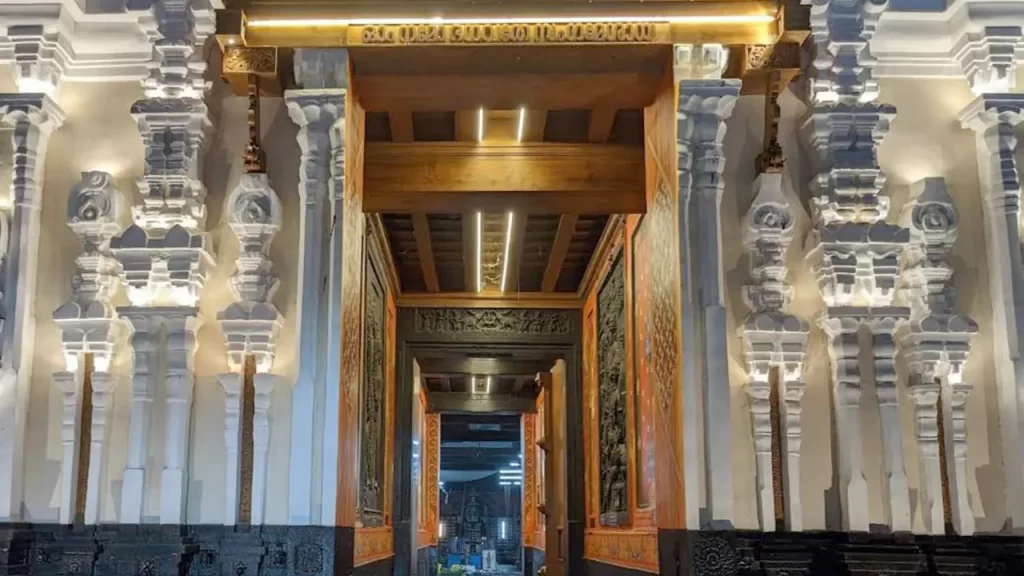
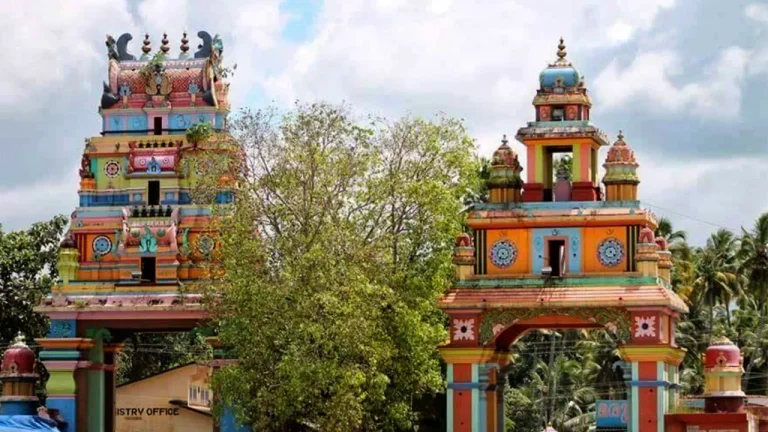
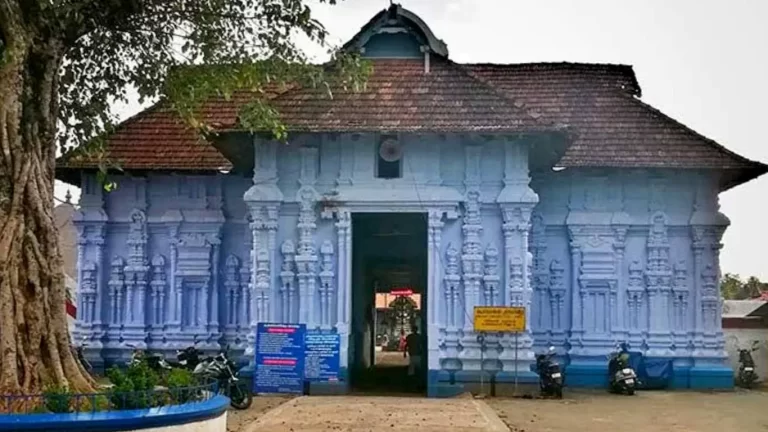
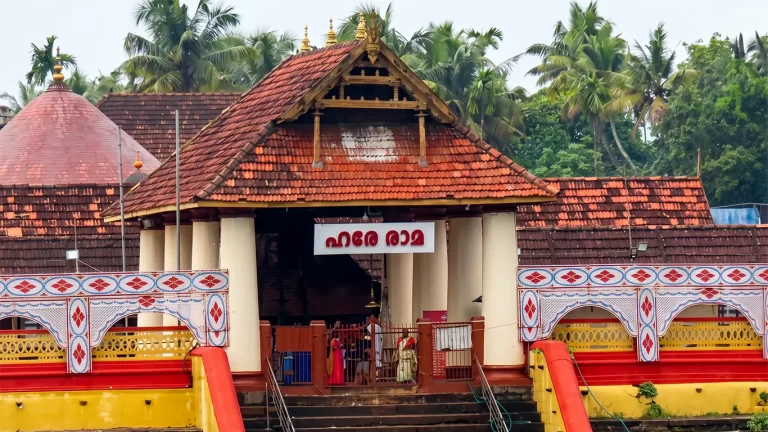
Pause for a moment and admire the sheer elegance of the building itself. The Koodalmanikyam Temple is a truly magnificent example of Kerala Architecture in India, characterized mainly by early Dravidian architecture templates. The temple complex spans over a large and immaculate 10 acre site that is walled with strong laterite stone walls.
The Shikhara and Sanctum
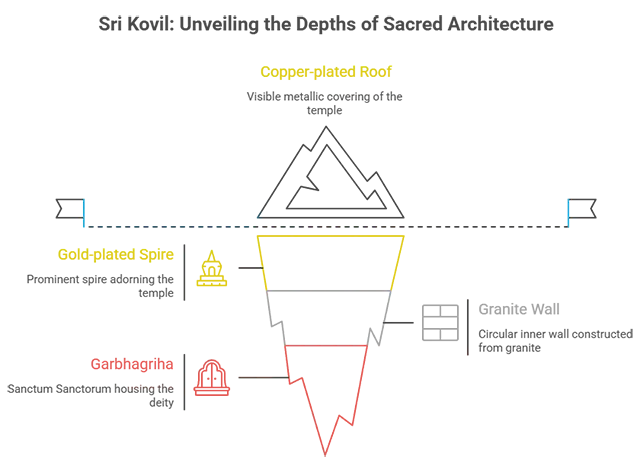
While standing in the inner courtyard of this magnificent edifice, the greatest asset of this architectural marvel lies in the form of the Sri Kovil (sanctuary). While the Tamil temples have huge gopurams with rectangular roofs, the sanctum of this temple is completely circular in shape (Vatta Sreekovil), roofed completely in copper plates.
From the very center of this dome shaped roof, rises a six feet tall Thaazhikakudam (gold plated sacred pinnacle spire), made of bell metal.
The Majestic Koothambalam
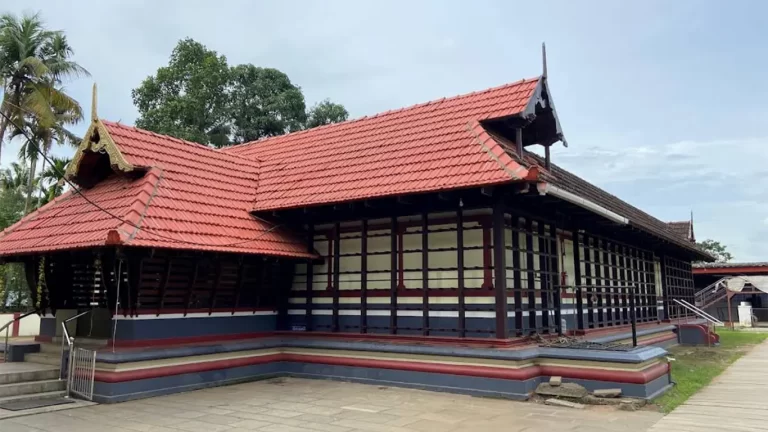
Come along with me to the south courtyard. Look at that gigantic wooden hall with a high roof. This is the famous Koothambalam—a theatre within the temple dedicated to the performance of classical Sanskrit temple art forms such as Chakyar Koothu and Koodiyattam.
Architects across the globe visit this place just to take a look at this one building. The pillars in the hall are carved out of solid and polished teak wood with beautiful carvings of stories from the Puranas and Mahabharatha. The acoustics of the hall are a masterpiece of ancient engineering, and even a murmur from the central performance stage reaches every corner of the hall.

Main Attractions or Highlights: Exploring the Hidden Corners
Now that I am your guide, let me highlight for you the exact locations within the Koodalmanikyam Temple premises that you cannot afford to overlook.
Garbhagriha (Sanctum Sanctorum)
Here lies the spiritual hub. The six-foot-tall statue of Lord Bharata sits in an enclosed stone room illuminated by the yellow glow of traditional oil lamps. Complete lack of any modern electric lighting in the sanctuary makes it a place full of mysticism.
Four Holy Water Sources
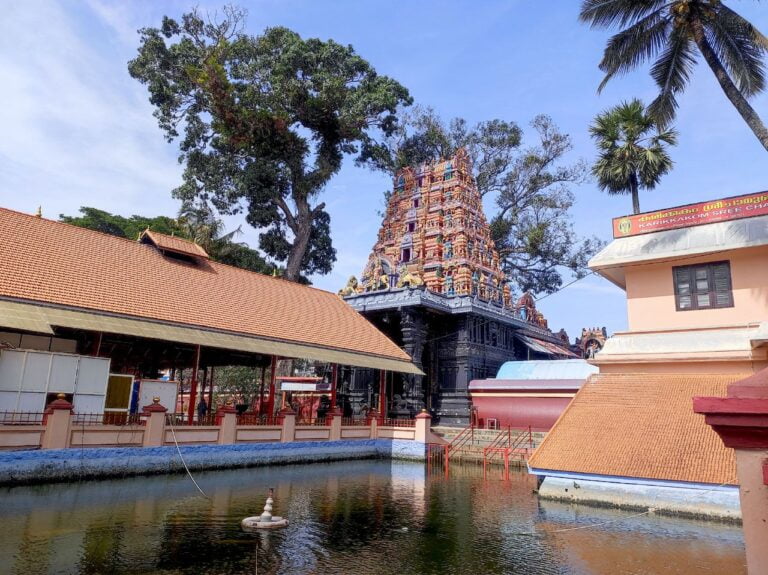
The significance of water in the spiritual cleansing process here cannot be underestimated. There are four large ponds around the temple, which occupy as much area as the entire construction of the temple:
- Kuttan Kulam: This huge public pond exists beyond the east gates where the visitors cleanse themselves at the very beginning of the visit.
- Padinjare Kulam: This pond is situated on the western end of the property.
- Thethe Kulam: This pond is found near the southern end.
- Kulipini Theertham: This is the holiest of all, located near the north temple walls.
Kulipini Theertham – An Ecstatic Experience: This is the inner pond at which sage Kulipini conducted his sacred Vedic Yajna. The water of this pond is extremely holy and it is venerated just like the sanctum sanctorum.
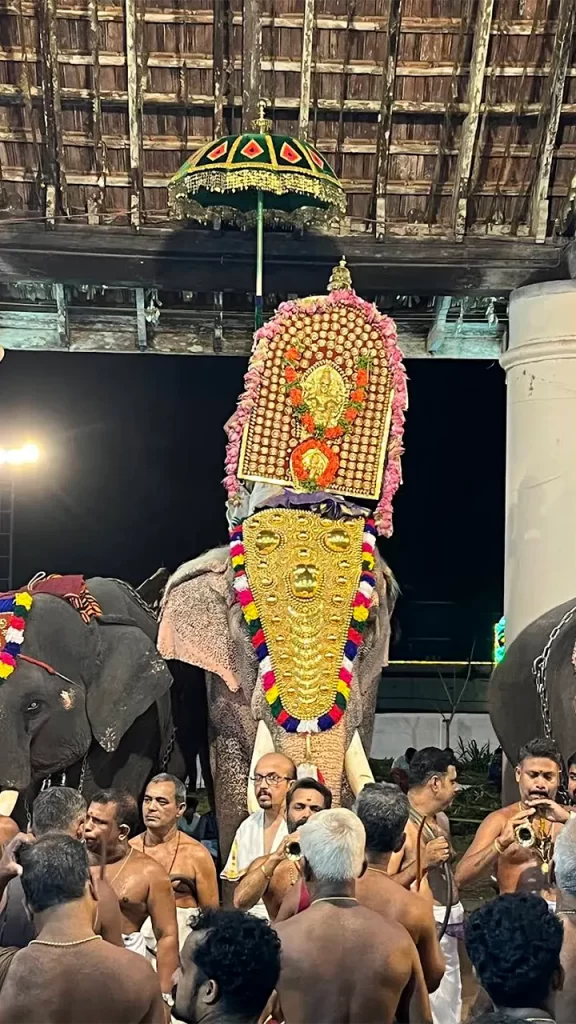
This is an interesting biological mystery: Although other ponds in temples are full of frogs, water snakes, and insects, no such creatures can be found in Kulipini Theertham. The water in the pond is pure with sacred fish being the only occupants of this divine pool. Puffed rice or Poraiya is considered a spiritually rewarding act for devotees to feed these fish.
Koodalmanikyam Temple Timings and Rituals: The Quirks That Define the Space
Next comes the schedule of the temple’s routine activities. The Koodalmanikyam Temple is a temple with an exceptionally peculiar ritual schedule, which makes it quite different from all the other temples in Kerala.
The Daily Schedule
The schedule of the temple timings consists of two parts for each day:
• The Morning Darshan lasts from 3:30 AM till 11:30 AM
• The Evening Darshan takes place from 5:00 PM till 8:30 PM
The Broken Norms of Kerala Worship
If you have seen other major temples in Kerala, you can easily make out the absence of many things here. Normally, all Kerala temples have five main pujas and three Seeveli ceremonies (Sivelis) per day.
But in Koodalmanikyam:
- There are just three pujas per day (Ethirthu Puja, Uccha Puja, and Athazha Puja).
- There is simply no Seeveli (procession) per day. The idol is taken out only during the annual temple festival.
- Deeparadhana is absent. Camphor is normally waved in front of the deity during sunset in temples. But here, burning camphor and incense is strictly prohibited within the shrine. Oil lamps and ghee lamps alone are used to worship the deity.
- Flower Rule: Not every flower can be offered here. Only three particular flowers are acceptable – Lotus, Tulsi, and Thechi (Ixora). No other flowers can be offered beyond the doors of the shrine.
Read More >> Chinnamasta Devi Temple Jharkhand
Unique Poojas and Offerings
If your family and you face some medical concerns, you should focus more on what follows. There are two medically-themed Prasadams (food offerings) that make the temple famous:
- Vazhuthinanga Nivedyam (Brinjal Offering): One of the most popular Prasadams. Followers offer special brinjals to Lord Sangameshwara to be cured of long-lasting stomach disorders, severe pains inside the body, as well as other digestive diseases.
- Mukkudi Nivedyam: An ancient, highly secret Ayurvedic medical buttermilk preparation made according to the instructions of physicians (Vaidyans). Offered to the god and then distributed to followers on certain days in order to have lifetime physical health.
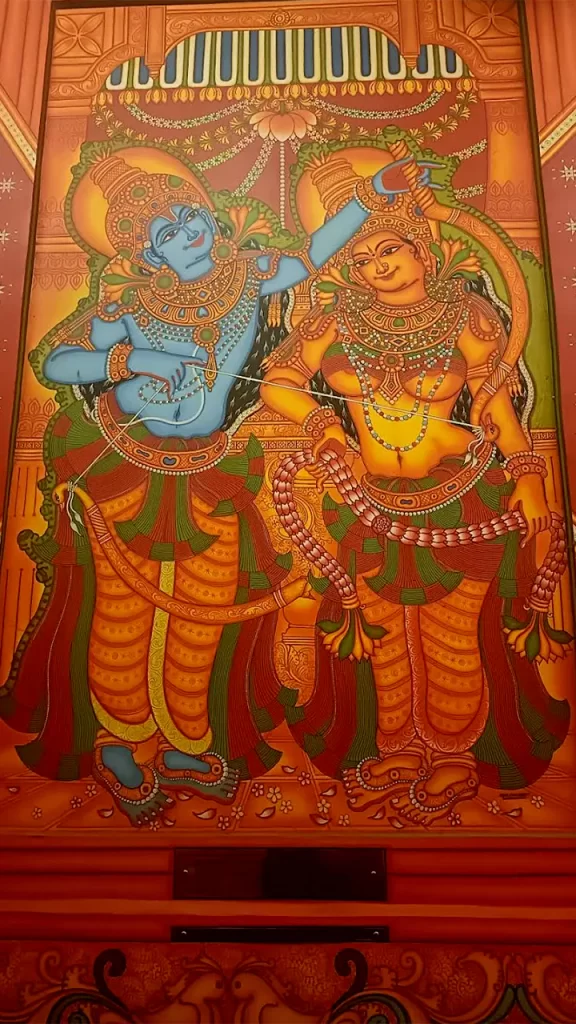
- Thamara Mala (The 101 Lotus Garland): Stunning garland created from no less than 101 lotus flowers. Offered to the god. Followers order this offering several months before to have career problems solved and achieve inner peace.
Festivals and Events: When Irinjalakuda Comes Alive
Though the temple remains a peaceful haven of meditation all year round, there are two particular times of the year when the whole town turns into a colorful, musical, and divine carnival.
The Grand Koodalmanikyam Utsavam
This is the grandest festival held annually at the temple over 11 fantastic days in the Malayalam month of Medam (April-May). The grand event begins just a day after the conclusion of the famous Thrissur Pooram Festival held in the nearby city of Thrissur, thus closing the classical temple festival season of central Kerala.
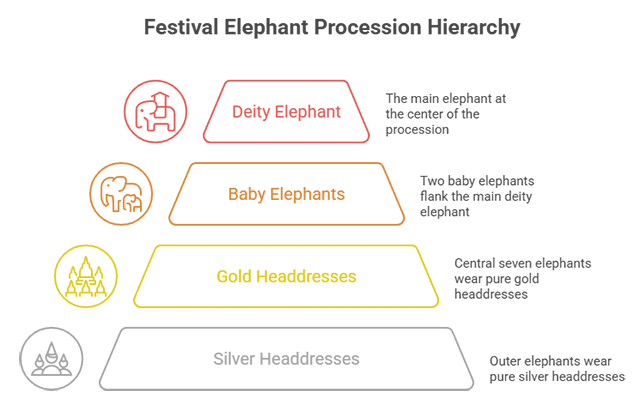
For 11 days, this festival witnesses a grand elephant show in which 17 caparisoned elephants are used. The procession (seeveli) is performed twice a day along with the awe-inspiring tunes of Panchari Melam and Panchavadyam.
This too is the golden chance to see traditional art forms such as Kathakali, Tholpavakoothu (the shadow play), and Ottamthullal being presented on their own turf under the starry sky till late hours of the night.
The Nalambala Darshana Pilgrimage
The second significant event is held during the rainy month of Karkidakam (mid-July to mid-August), often referred to in Kerala as the Ramayana Month.
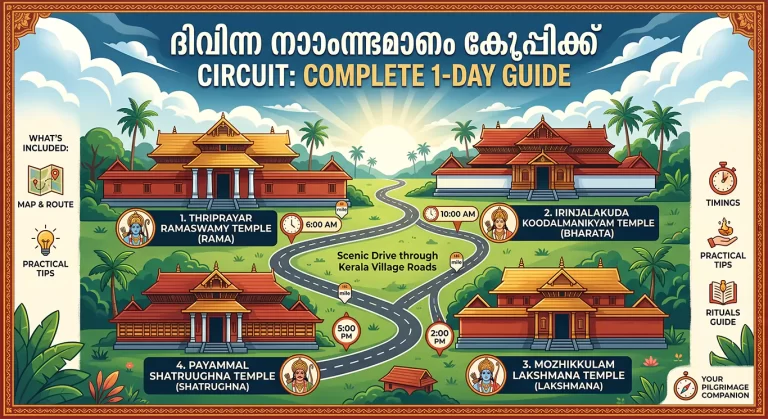
During this sacred month, millions of devotees undertake the strenuous yet very fulfilling journey of the Nalambala Yatra, which is a swift one-day pilgrimage tour to pay homage at all the four brother temples. The visitor traffic is extremely high during this month, with people lining up from outside the boundary walls of the temple complex.
Should you choose to visit during this period, I strongly suggest you reach the gates at least by 2:30 AM to avoid the crowd that comes in from the other states in tourist buses.
Read More >> Karmanghat Hanuman Temple made Aurangzeb Shiver to Destroy
Practical Travel Guide: Reaching the Sanctuary Safely
Let us chart the logistics of reaching Koodalmanikyam Temple in order to make your travel hassle-free.
How to Reach Here
- By Air: The nearest airport is Cochin International Airport (COK), which is about 37 to 40 kilometers from the place. It is easy to get prepaid airport taxis from the airport straight to the town of Irinjalakuda in one hour along a smooth highway road.
- By Rail: The nearest rail station is Irinjalakuda Railway Station (IJK), which is located at a distance of 9 kilometers east of the main town. Not all express trains halt there. For more options, you can opt for a stopover at Thrissur Railway Station, which is at a distance of 21 kilometers and serves as the major rail junction connecting all Indian major cities.
- By Road: The place is well-connected with both state-run KSRTC buses as well as private cars. The town lies amidst the two big cities of Thrissur and Ernakulam.
Entry Fees and Essential Amenities
There is no entry cost whatsoever in visiting the temple and seeing the god. The administration has provided clean and simple toilets and changing rooms next to the outer eastern gate of the temple where pilgrims need to have a quick bath prior to entering the complex.
Although the historical uneven flooring of the outer compound of the temple may be difficult for old pilgrims or those using wheelchairs, there is no problem at all as the temple employees are highly cooperative and will assist disabled persons using alternative smooth routes to the temple.
Read More >> Sri Bhoosameta Venkateswara Swamy Temple Dokiparru
Dos and Don’ts: Honoring the Living Traditions
Due to the strong discipline followed in maintaining the age-old practices of the temple, tourists must be guided by the operational protocols not to offend the locals unintentionally.
Dress Code Protocol
- Men are supposed to wear a traditional white or off-white Mundu (dhoti) wrapped around the waist. You are supposed to enter the inner courtyard structure (Chuttambalam) entirely bare-chested. Leather belts and wallet are supposed to be tucked inside your bag.
- Females are supposed to wear saree, half-saree, or salwar kameez sets. Short dresses, modern clothing such as shorts or ripped jeans are strictly prohibited beyond the entrance gate.
General Etiquette
- Status of Photography: The usage of cameras and video recorders is entirely forbidden in the premises enclosed by walls of the temple. You may take pictures of the gorgeous structures of the gateways and the ponds from the public streets lying beyond the temple wall. But kindly ensure that you keep your mobile phones away inside the complex.
- Items Forbidden: Shoes, tobacco, liquor, flesh, and leather goods are entirely forbidden from being brought inside the sacred sand box.
- Entry Rules: Following the age-old traditions of the numerous historic temples found in the state of Kerala, only persons following the religion of Hinduism can enter the inner sanctum complex.
Read More >> Karni Mata Temple Udaipur
Nearby Attractions: Maximizing Your Central Kerala Itinerary
Having reached all the way to Irinjalakuda, don’t return to your hotel directly after seeing the temple. There are plenty of historical wonders lying around in the vicinity that will make the whole trip worthwhile.
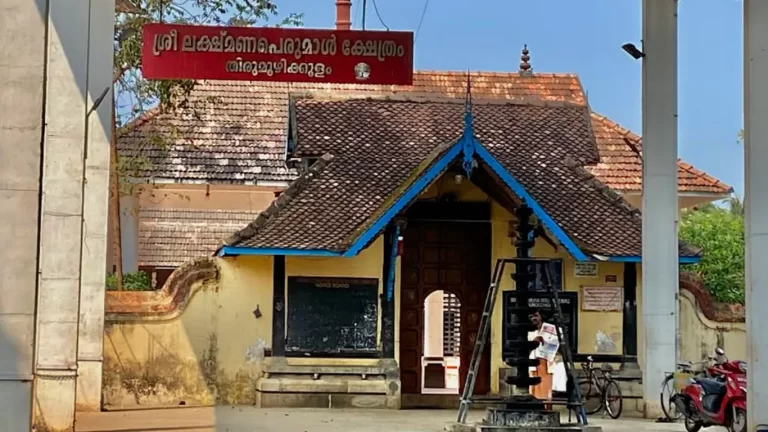
- Nalambala Circuit Temples: Complete your circuit of sanctity! Take a ride in the local auto-rickshaw and visit the Triprayar Sree Rama Temple (22 km from here), Payammel Shatrughna Temple (just 5 km south from here) and the wonderful Moozhikkulam Lakshmana Temple (30 km away) for the complete aura of the Ramayana brothers.
- Vadakkunnathan Temple, Thrissur: Just 21 kilometers north of here is the stone marvel and UNESCO Heritage-listed Vadakkunnathan Temple, which is the abode of Lord Shiva located right at the heart of Kerala’s cultural hub.
- Historical Places of Anandapuram: It’s a short drive out of town into the lush greenery of spice plantations and villages where traditional artisans are seen making their pottery wares by the age-old methods.
Frequently Asked Questions (FAQs)
Q1: Is the God in Koodalmanikyam Temple Vishnu or Bharata?
A: Well, this is one great question which baffles many people who visit for the first time! While the idol is the traditional stone idol of Lord Vishnu with the conch, wheel, mace, and beads in its four hands, the prana-pratishta or the divine cosmic energy is of Lord Bharata, and hence, the temple worships only the latter.
Q2: Why is there no Deeparadhana in this temple?
A: It is recorded in the temple history books that since the temple worships Lord Bharata in the form of a mourning hermit, who performs intense penance, the grand spectacle of waving lit camphor in front of the idol (Deeparadhana) is deliberately avoided so as not to disturb His meditation!
Q3: Do you provide accommodation near the temple premises?
A: Absolutely! The Irinjalakuda Devaswom provides pilgrim lodges near the eastern gate of the temple. There are also many good budget hotels and serviced apartments within 2 km radius from the municipal bus stand.
Q4: Why is the temple fish so unique?
A: The fish in the Kulipini Theertham tank are believed to be the spiritual successors of the old aquatic creatures who have been eye-witnesses to the great yajna by Sage Kulipini. It is also said that buying and feeding them with special puffed rice would help remove the bad karmas that may have accumulated in your body.
Q5: When should I come here to avoid crowds?
A: If you would like to enjoy the serenity of this temple at its best, the best time for your visit would be the cool months between November to February. Stay clear of the monsoon rush of the month of Karkidakam (July–August) and the festive rush of Medam (April–May).