3. Moozhikkulam Lakshmana Temple
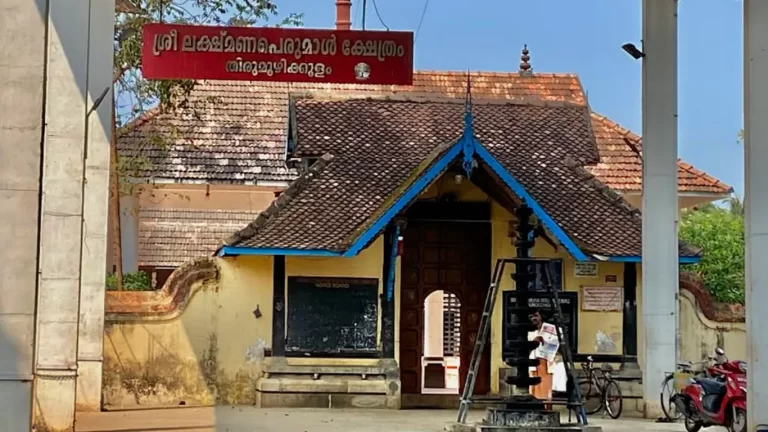
The Moozhikkulam Lakshmana Temple is a magnificent structure that can be found in the tranquil hamlet of Thirumoozhikulam, situated near Aluva and Angamaly in the Ernakulam District of Kerala, India. This fascinating temple is constructed by the banks of the Chalakuddy River, which was formerly referred to as Poorna River. It is a tall monument of brotherly affection, divine penance, and cultural legacy of South India.
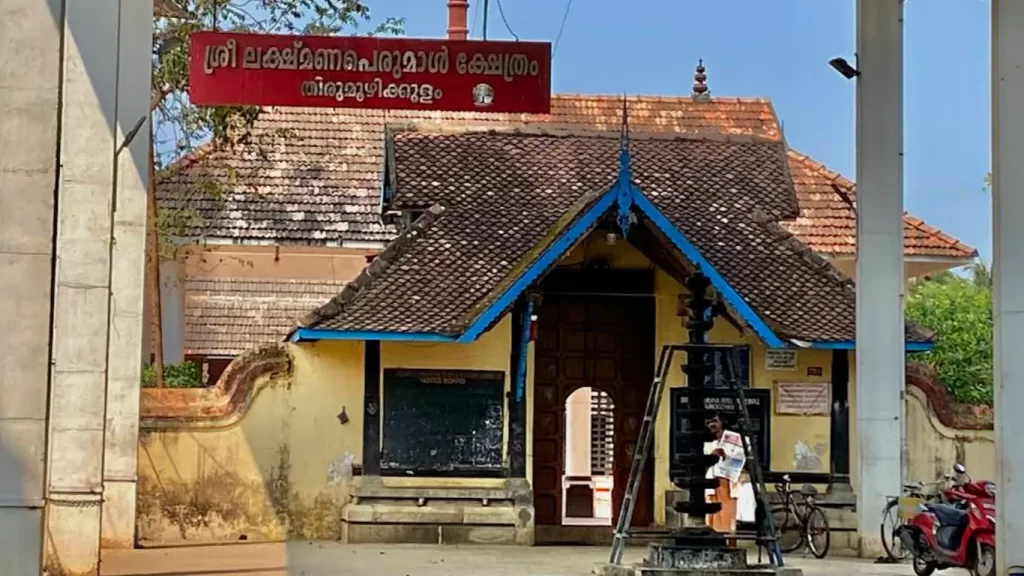
This is definitely not your usual temple when it comes to the Moozhikkulam Lakshmana Temple. This is a unique temple since this temple is one of the few temples in the entire nation that is devoted solely to Lord Lakshmana who is the younger brother of the great Sri Rama. In a continent which has numerous temples that praise Lord Rama, having a major temple devoted to Lakshmana is truly rare and unique.
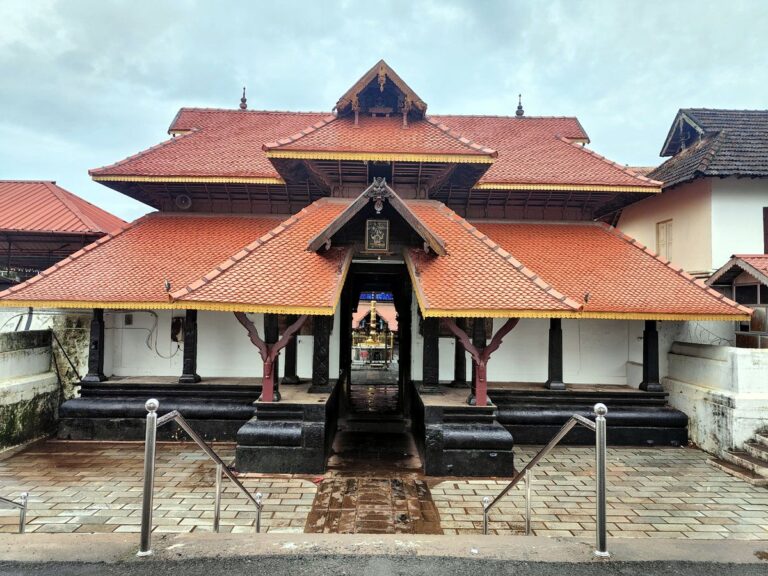
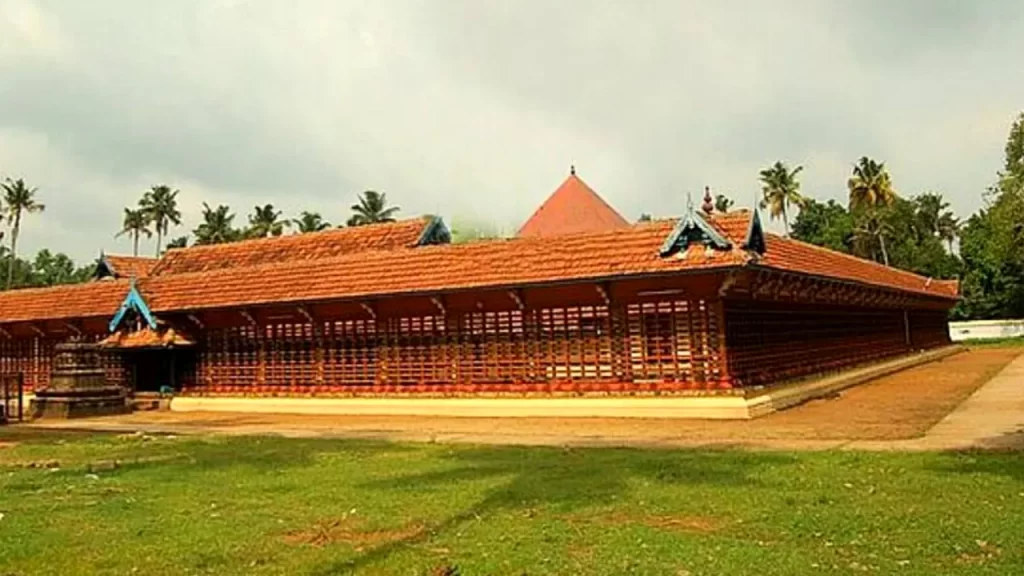
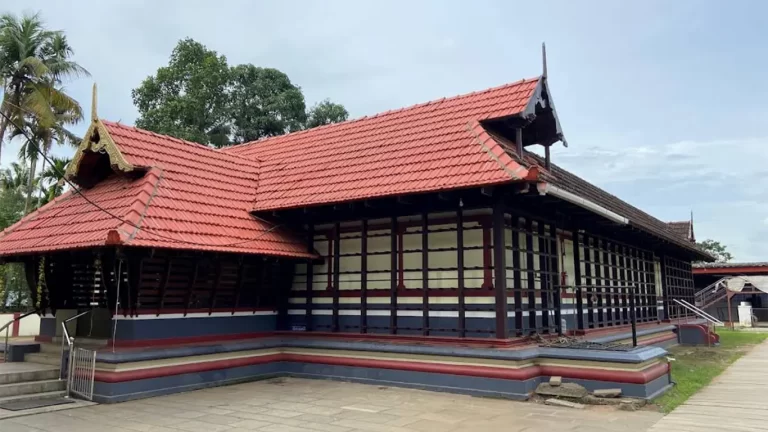
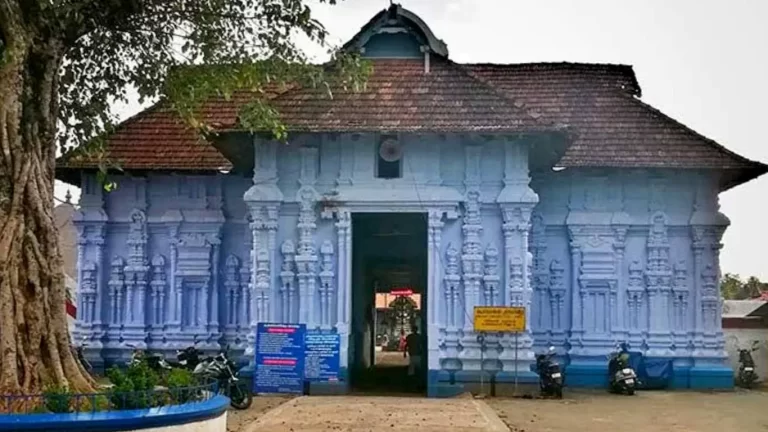
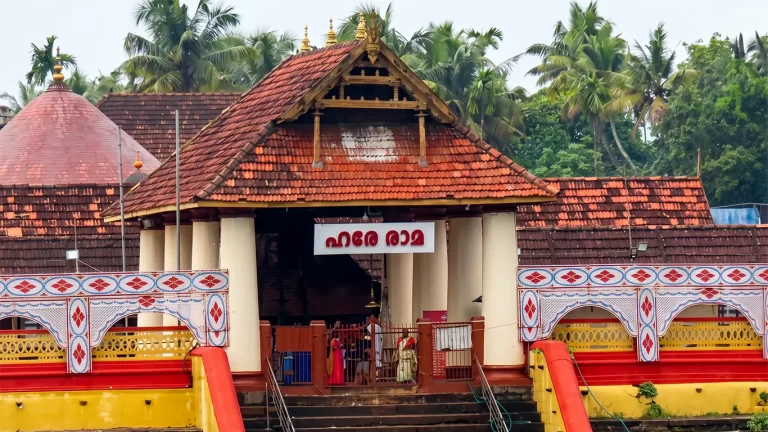
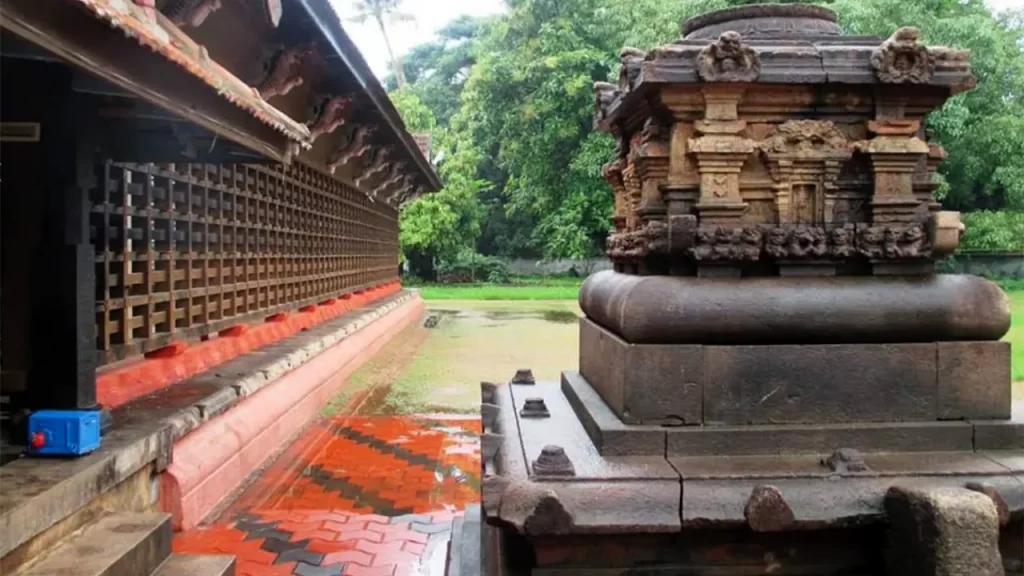
As we proceed towards the huge outer walls, the feeling of spiritual significance is bound to overwhelm you. The temple structure itself is a marvelous example of indigenous Keralite architecture, featuring extensive sloping roofs, magnificent woodwork, and spacious planning to match the cosmic energy.
Irrespective of whether you are a devout pilgrim looking for the completion of the renowned Nalambalam Yatra (four temples tour), an enthusiastic historian who is excited to decode ancient Vattezhuthu scripts engraved on the stones, or an ordinary tourist interested in the eco-spiritual landscape of Kerala, there is an incredible story that the Moozhikkulam Lakshmana Temple can narrate to you. Put on your walking shoes, prepare to embrace the mystery of this timeless monument with your soul.
Historical Background: Of Divine Revelations and Repentant Words
Now let us flip back the pages of history to get acquainted with the genesis of Moozhikkulam Lakshmana Temple. To grasp this temple in its totality, we need to know two very old and interesting legends connected with it.
Legend of Hareetha Maharishi
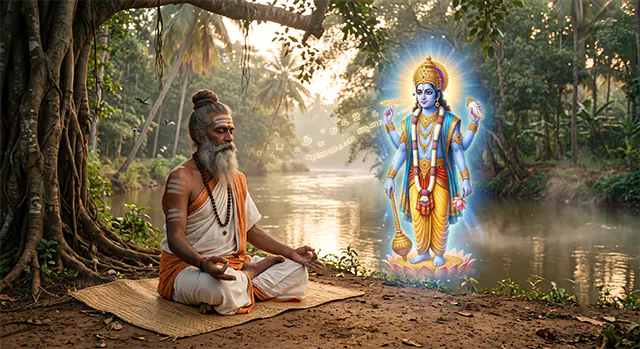
The first legend revolves around a very respected sage, Hareetha Maharishi. At the dawn of Kali Yuga, the great saint carried out his rigorous penance on the banks of the river, Poorna. Deeply impressed by the saint’s devotion, Lord Maha Vishnu appeared in front of him. Worrying about the degradation of humanity due to Kali Yuga, Hareetha Maharishi sought help from the God regarding the path which could lead mankind to righteousness (Varnashrama Dharma).
Lord Vishnu spoke some of the most sacred words which were the key to salvation. These sacred words in ancient Tamil and Malayalam languages were called Thiru Mozhi (Thiru means sacred and Mozhi means words). The place from where these sacred words emanated was named Thirumozhikkalam (Kalam means place). After passing through several centuries of language changes, the name was changed to Moozhikkulam.
The Ramayana Connection: Reconciliation at Chitrakoot
The second story takes us right into the core of Ramayana itself. It is stated that when Sri Rama was exiled, his younger brother Bharatha came looking for him into the forest of Chitrakoot asking him to come back to Ayodhya. However, Lakshmana, who is known to be very protective towards Rama, seeing his coming accompanied by the army, assumed some bad intentions behind that act and considered that Bharatha wanted to do away with Rama.
Lakshmana got enraged and was going to kill him at once. Very shortly afterwards, complete purity of Bharatha’s intentions and sincere sorrow was exposed. Suffering from the guilt of the evil thoughts towards his own brother and from his own sudden outburst of jealousy, Lakshmana subsequently visited this holy place to repent.
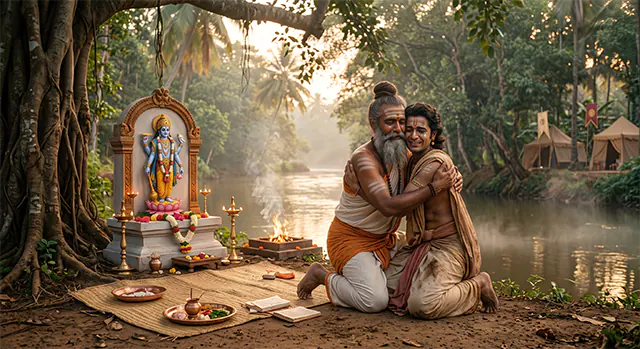
This is the place where eventually, Bharatha found out the whereabouts of Lakshmana. The two brothers embraced each other with tears of joy, spoke to each other lovingly, and made peace (Thiru-mozhi). They even prayed at this place, sitting together. This is why the Moozhikkulam Lakshmana Temple is such a monument of forgiving each other and making amends for misunderstanding and heartbreak.
The Recovery of the Four Idols
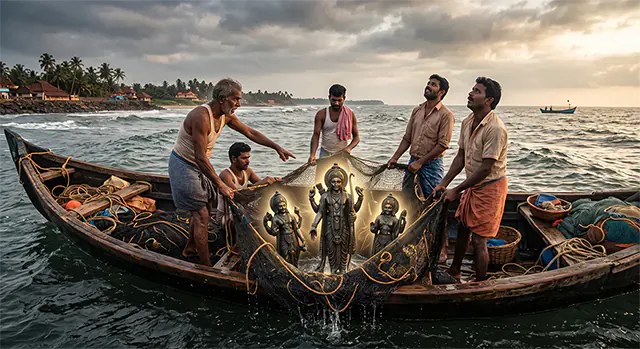
There is one more narrative about the Moozhikkulam Lakshmana Temple that goes back to the end of Dvapara Yuga. According to legend, Lord Sri Krishna performed worship ceremonies in honor of four four-armed idols of the Ramayana brothers in his capital, Dwarka. When he left his mortal life and Dwarka sank into the ocean, these idols were flooded and carried away by the ocean waves.
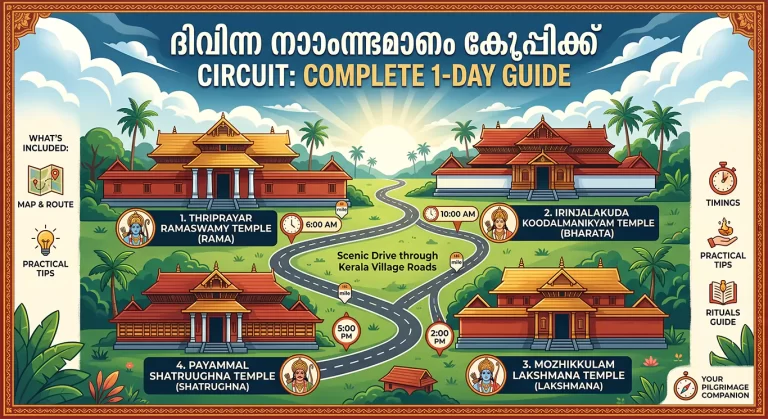
Many years later, some fishermen from Kerala happened to catch these idols in their fishing nets and took them to the local chieftain called Vakkayil Kaimal, who was told in his dreams that he needed to perform the consecration ceremony for each brother separately. He decided to do so in the following places:
- Sri Rama at Triprayar
- Bharatha at Irinjalakuda
- Lakshmana right here at Moozhikkulam
- Shatrughna at Payammel
Historical Records and Dynastic Ties
Traditionally, the Moozhikkulam Lakshmana Temple had great patronage by the ancient Chera Dynasty, which ruled over large portions of present-day Kerala. There are many priceless stone carvings inside the temple complex, and they are written using the ancient Vattezhuthu script.
History Note by the Guide: The historic “Moozhikkulam Katcha,” or Moozhikkulam Laws, engraved on these stones were one of the early attempts at formulating laws of temple administration and tenant right in South India. This proves that the temple was indeed a thriving center of socio-political administration and higher learning!
Sadly, like most of the great constructions in the area, the temple was severely damaged by the invasion of Tipu Sultan in the late 18th century. But the locals and later kings of Travancore kingdom rebuilt the temple into what you see today.
Religious and Cultural Significance: A Jewel Among Divya Desams
The real reasons behind the high reverence attached to the Moozhikkulam Lakshmana Temple in Hinduism should be found in the religious scriptures. It is considered to be one of the 108 Divya Desams – the most holy places on earth which are dedicated to Lord Vishnu and glorified by legendary Tamil Vaishnava saints named the Alvars. Among those, it belongs to the group of 13 Malai Nadu (hill country/Kerala region) Divya Desams.
Scriptural Proofs: The Verses of the Alvars
The great saints Nammazhwar and Thirumangai Alvar who visited the place during 7th – 9th centuries CE were highly impressed by the divine energy that the temple possessed and sang their verses (Pasurams) in devotion to the deity as Moozhikkalathaan or Sree Sookthinathar.
Now let us refer directly to the ancient scriptures Nalayira Divya Prabhandham as historical evidence of its importance. Thirumangai Alvar sings in his Periya Thirumozhi (1553):
பனி ஏய் பரங் குன்றின் பவளத் திரளே முனியே திருமூழிக்களத்து விளக்கே இனியாய் தொண்டரோம் பருகும் இன் அமுது ஆய கனியே உன்னைக் கண்டுகொண்டு உய்ந்தொழிந்தேனே
Translation: “O radiant gem of the misty mountain! O great sage! O eternal lamp that illuminates the holy land of Thirumoozhikkulam! You are the sweetest nectar that your humble devotees drink, the ripe fruit of my spiritual yearning. Having seen you here, my soul has found its absolute salvation!”
Furthermore, in verse 2776, Thirumangai Alvar beautifully proclaims:
…என்னை மனங்கவர்ந்த ஈசனை, – வானவர்த்தம் முன்னவனை மூழிக் களத்து விளக்கினை
Translation: “…He is the Lord who completely stole my heart, the foremost leader of all the heavenly gods, the divine and undying light shining brilliantly at Moozhikkulam!”
Read More >> Shreenathji Nathdwara Temple
The Core Deity: Lakshmana as Vishnu
While the temple is dedicated to Lakshmana, but considering the iconographic essence of the idol, it is nothing less than an awesome embodiment of Lord Maha Vishnu. The name ‘Lakshmana’, according to the Vishnu Sahasranama (The Thousand Names of Vishnu) is a manifestation of the Supreme Being himself.
The six-foot-high granite statue is oriented in an eastward direction and holds in its hands the Shankha (conch), Chakra (discus), Gada (mace) and Padma (lotus). In terms of cultural significance, he is worshipped here in the spirit of vigilance to defend the righteous – just like the timeless role of the devoted brother.
The Ultimate Center of Nalambalam Yatra
In today’s cultural context, the Moozhikkulam Lakshmana Temple forms an integral part of the much-acclaimed Nalambalam Yatra. During the Malayalam month of Karkidakam (which spans from July to August) and which is celebrated as “Ramayana Month”, millions of people undertake this amazing journey to visit all four brothers within the same day.
Performing this particular yatra is said to remove any kind of obstacle from one’s life, settle any sibling rivalry, and bring immense mental peace.
Architecture and Design: A Masterclass in Kerala Vastu Shastra
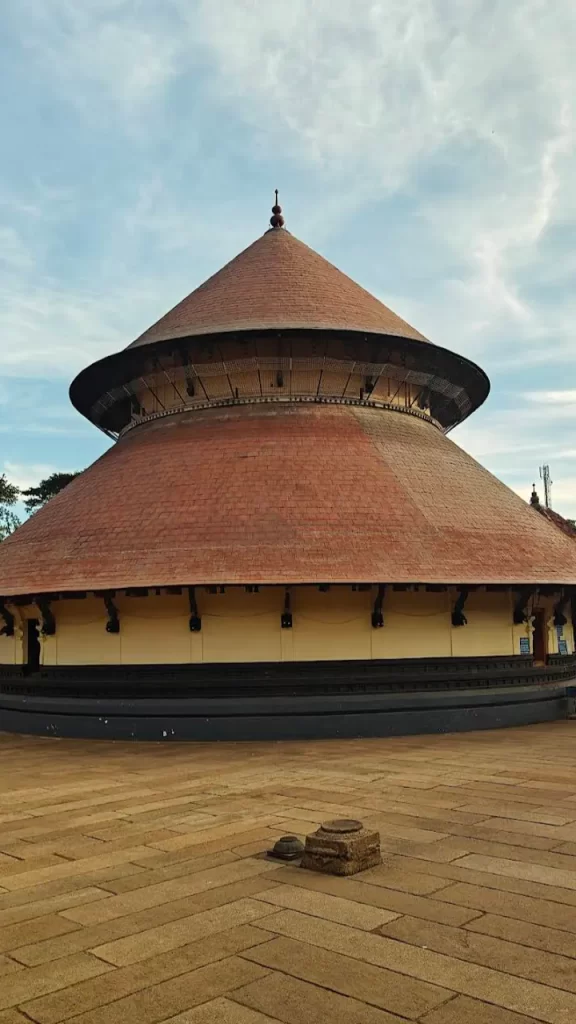
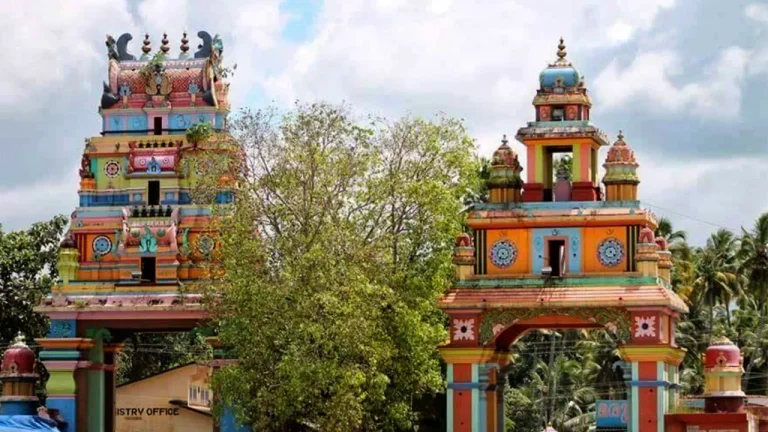
As the tour guide for today, this is the place where I truly want you to take time to look around. The Moozhikkulam Lakshmana Temple is one that lacks the soaring stone towers known as Gopurams seen in other examples of the Dravidian architecture of the Tamil Nadu style. Rather, this temple is an excellent example of the clean and beautiful Kerala Temple Architecture, which draws extensively on the concepts of Vastu Vidya.
The Layered Layout: Ground Plan Elements
Let us try to understand the great edifice in detail:
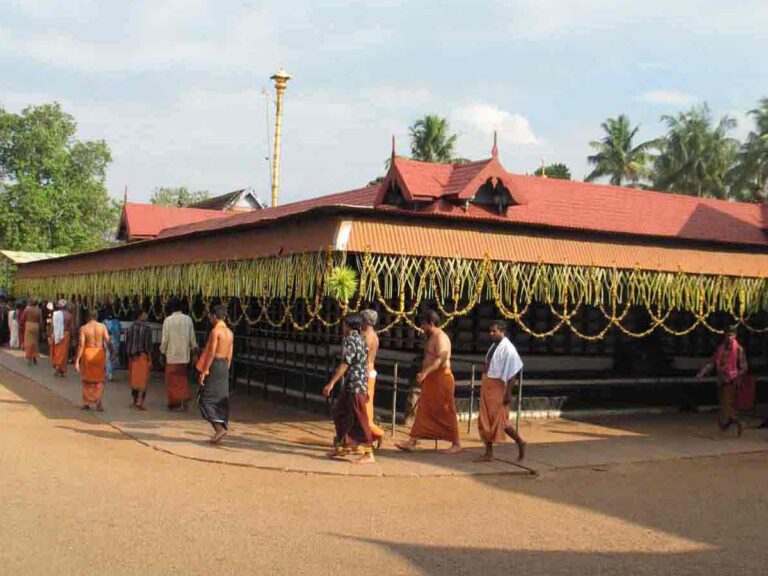
- Chuttambalam and Nalambalam: The temple complex has an extremely large outer enclosure wall that is constructed with blocks of laterite stone plastered with indigenous mixes of lime. Entering through its walls will take one into the Nalambalam, which is the large, rectangular walkway encircling the inner court.
- Vilakkumadam: Stretching along the exterior of the inner buildings is the magnificent Vilakkumadam. It is a large wooden framework housing thousands of brass oil lamps. Lighted together at night during festivals, the whole temple appears like a palace floating in fire.
- Sri Kovil (Sanctum Sanctorum): Placed in the very center of spirituality is the sanctum called Sri Kovil. In the case of the Moozhikkulam Lakshmana Temple, the sanctuary has a conventional ground plan with circular or square shape topped with the conical roof with copper sheets covering the whole roof completely. This is meant to be the funnel that directs the spiritual energy into the Garbhagriha.

Building Materials and Smart Engineering
The true genius of this building is that it is sustainable. The bases of this structure have been created by using pure and unrefined black granite stone to carry the heavy weight of this magnificent building.
The upper portions have been constructed using mature teakwood and jackfruit wood that have been joined to each other using perfect joinery techniques that do not involve any iron nails. This ancient building has walls that have been plastered with the help of lime, egg whites, coconut water and natural plant extracts making it cool inside despite the tropical heat outside.
Read More >> Ashtavinayak Temples Tour: 8 Shrines, 1 Perfect Road Plan
Mastery in Art and Secret Symbolism
Look carefully at the wooden brackets that are holding up the overhanging roof of this structure and you will find detailed wood carvings representing different aspects of the Puranas, Mahabharata, and Ramayana. You will also be able to notice small carvings of celestial dancers (Apsaras), playful monkeys and floral designs.
Everything in this structure represents a symbolism; the short height of doors reminds you to take off your ego before entering the infinity.

Main Attractions or Highlights: Exploring the Sacred Compounds
Now let’s begin our walk around the inner complex. Let me point out the places which you absolutely can’t afford to miss.
Sanctum Sanctorum (Garbhagriha)
Here’s where the real magic happens. In the dark interior of the main Sri Kovil, you get to see the central deity who is Moozhikkalathan (Lord Lakshmana). The idol of the god is made of the most beautiful black stone.
An Interesting Visual Fact: Notice how the priest manipulates the camphor light. The main stone idol is in front of which there is another idol made of movable metal bas-relief. The Abhishekam and Pooja ceremonies are done on the front idol to prevent any erosion damage to the extremely old stone idol!
The South Window Darshan
As you walk around the south side of the round Sri Kovil, you will notice an intricately carved wooden window. Look out of it humbly. There, at close proximity to the building, you will be able to have the view of Ganapati (Lord Ganesha), Dakshinamurthy (Lord Shiva as the ultimate teacher), and miniature representation of Sri Rama, Sita Devi, and Lord Hanuman. It is a very strong concentration of divine energies in one single spot.
Sub-Shrines and the Outer Praharam
Now as we venture into the vast sandy courtyard (Praharam), let us tour the other shrines:
- Gosala Krishna: This is a lovely little sub-shrine devoted to Lord Krishna in the form of the divine cowherd. The practice of offering butter in this shrine is very common.
- Saptamatrikas and Ashtadikpalakas: On the granite flooring of the temple, you can see an array of stylized stones representing the Seven Mother Goddesses and the Guardians of the Eight Directions that safeguard the sanctum from any spiritual hindrance.
- Shiva Lingam: This is a lovely little open-air shrine dedicated to Lord Shiva and showcasing the harmonious co-existence of Vaishnava and Shaiva schools of thought at this old temple complex.
The Sacred Tanks (Theerthams)
A tour to any Kerala temple will not be complete without water bodies. The Moozhikkulam Lakshmana Temple contains the tanks famous from ancient times, like the Sanga Theertham and the Suktha Theertham Tank along with its proximity to the river Chalakudy or Chittaru River. It is believed that the waters of these tanks possess medical herbal runoff which makes the water extremely purifying for the body and mind.
Moozhikkulam Lakshmana Temple Timings and Rituals:
In order to witness the magic of the temple, one must know the pattern of its day. The operations of the temple run according to a stringent timetable set by the Travancore Devaswom Board.
Daily Timings: The doors of the temple are opened early in the morning before dawn, and the following is their usual timetable:
- Morning Service: 05:00 AM to 11:00 AM
- Evening Service: 05:00 PM to 08:00 PM
Exception Note: During the Ramayana Month (Karkidakam), the doors are opened even earlier, around 03:30 AM or 04:30 AM because of the large number of pilgrims!
| Ritual Time | Name of the Ritual | Core Significance |
| 05:30 AM | Nirmalya Darshanam & Abhishekam | Seeing the deity decorated with the previous night’s flowers; followed by the morning holy bath. |
| 07:00 AM | Usha Pooja | The early morning prayer offering to kickstart the day’s spiritual energies. |
| 07:30 AM | Usha Sheeveli | A grand procession where the portable deity is carried around the inner walls to offer food to celestial guards. |
| 10:30 AM | Ucha Pooja & Ucha Sheeveli | The elaborate noon puja; the absolute peak of the morning energy before the doors close for the afternoon rest. |
| 06:30 PM | Deeparadhana | The breathtaking evening twilight ritual of waving multi-tiered oil lamps in the dark. |
| 07:30 PM | Athazha Pooja & Sheeveli | The night prayer ritual, putting the deities to rest. |
| 08:00 PM | Nada Adakkal | Closing of the sanctum doors for the night. |
Special Poojas to Cleanse Your Karma
For those who wish to make offerings (Vazhipadu):
- Pal-Payasam & Unniyappam: This is an exquisite, slow-cooked sweet milk rice pudding and deep-fried rice cake which is offered to Lakshmana. It is said that partaking of the Prasad made in this form brings health and prosperity to the family.
- Elluthiri (Lamps of Sesame Oil): Lighting the sesame oil lamp ceremony is an important one that is attended by thousands and helps remove the evil influence of Saturn on the structure.
- Muttarukkal (Cracking of Coconuts): This unique offering in Kerala involves cracking a coconut by the priest in your name and birthstar for breaking any life barriers such as delayed marriage, career problems or ill health.
Temple Dress and Behavior
Pay heed to what your guide says about the culture as they have rigidly laid down rules at the entrance:
Men:
- It is mandatory for men to wear Mundu (dhoti).
- You should take off your shirt while entering the inner enclosure.
- Slacks, jeans, and shorts are strictly prohibited.
Women:
- Saree, Set-Mundu, or salwar kameez should be worn by women.
- Modern wear like jeans, short skirts, or sleeveless tops are not allowed.
Behavior:
- Clean your feet at the point of entry before entering the stone flooring.
- Do not touch the inner walls and maintain complete silence inside Nalambalam.
Festivals and Events: When the Devaloka Descends to Earth
The Annual 10-Day Utsavam
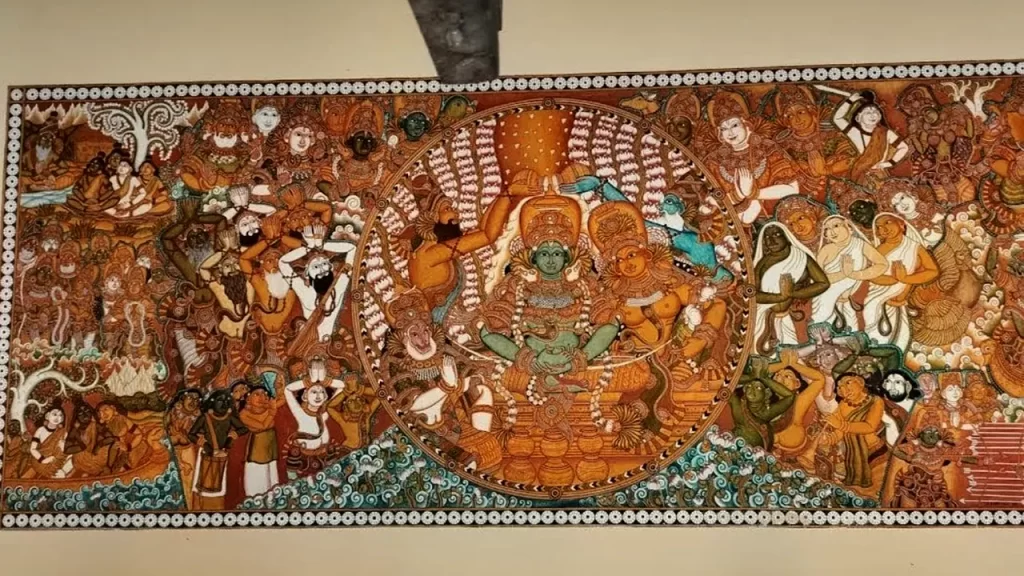
Celebrated in the Malayalam month of Medam, which happens to fall during April-May, this is the major festival of the Moozhikkulam Lakshmana Temple. This begins with the waving of the sacred flag, popularly known as Kodiyettam, on the golden flag mast (Dhwaja Stambha).
For ten days, there is a complete transformation of the entire village. Nights are dedicated to performance arts including Kathakali, Chakyar Koothu and Koodiyattam. Aarattu is the final ritual that involves taking the deity down to the river for bathing with the accompaniment of Panchavadyam and caparisoned elephant.
Karkidakam (The Ramayana Month Peak)
This is by far the busiest time to visit the temple. During the period July mid-August to mid-August, there will be a complete rush of people at the temple. People flocking to the temple start coming as early as 03:00 AM in large numbers.
There will be a feeling of spirituality through chants of the Adhyatma Ramayanan penned by Thunchaththu Ezhuthachan. Although this is very beautiful, one should expect long lines and crowds.
Vaikunta Ekadashi
It is celebrated in the month of November-December and is seen as the symbolic opening of the gates to the heaven of Lord Vishnu. The whole temple is decorated by several thousand Elluthiri and oil lamps. This day is observed through fasting and singing throughout the night.
Read More >> Hidden Power of Haridwar Mansa Devi Temple: #1 Wish Granted!
Traveler’s Logistics: How to Get There and Stay Comfortable
How to Get to the Temple
By Air: Lucky you! The Moozhikkulam Lakshmana Temple is quite close to Cochin International Airport (COK) at Nedumbassery, which lies just around 12 kilometers away. You can get a pre-paid airport taxi from here and reach the temple premises in 20-25 minutes.
By Rail: The closest rail stations include Angamali station for Kalady (around 9-10 km distance) and the Aluva Railway Station (12-15 km distance), both of which are important stations that have connectivity with important Indian cities. You can easily get an auto or a taxi from outside these stations.
By Road: This temple is conveniently located just off the National Highway 544 (NH 544). In case you plan on reaching the temple by road from Kochi city, it is just a drive of 30-35 km towards the North from here. There are numerous state KSRTC buses and private buses running directly from Aluva or Angamali to Parakadavu/Moozhikulam.
Entry Fees and Costs
The Moozhikkulam Lakshmana Temple has zero charges at all for darshan or for visiting the temple premises. There is nothing that will cost you even a single rupee for entering this temple irrespective of your nationality and religion (as long as you maintain the dress code of the temple). If you want to conduct special pujas or purchase Prasadam, you can contact the officials at the devalayam office.
Facilities and Amenities
- Restrooms and Washrooms: Clean public rest rooms can be accessed at the outer parking areas.
- Food and Dining: The temple authorities arrange for community free food for thousands of pilgrims at the time of festivals like Karkidakam. You can have your meals in the multi-cuisine restaurants available at the nearby small towns of Angamaly and Aluva that serve authentic Kerala vegetarian meals.
- Accommodations: There are a few pilgrim accommodations in Moozhikulam village but I recommend you to opt for Aluva or Angamaly that provide different varieties of stay options including luxurious business hotels.
Access for the Elderly and the Differently Abled
The design of the temple is basically flat, hence making it easy to walk around. But since the interior architecture of the temple is very old, there are elevated stone thresholds called Padipura at the entrances which one needs to step carefully over. During the non-festive period from September to March, the staff of the temple are extremely obliging and ready to help give access for darshan of elderly people without queuing up.
Read More >> 11 CE Adinath Temple Khajuraho
Dos and Don’ts: Honoring the Living Traditions
The Dos
- Make sure that you wear yourself according to the traditional attire rules before reaching the entrance gates of the temple.
- Make sure that you receive the holy Prasadam (sandalwood paste, flowers or sweets) only by the use of your right hand.
- Always do Pradakshinam (a complete walk around the temple sanctum) in a clockwise direction.
- Check the timings for the evening Deeparadhana through the temple counter clerks if you wish to attend.
The Don’ts
- No Photography: It is strictly prohibited from photographing or filming inside the Nalambalam walls area of the temple. Make sure that your mobiles are turned off or are on silent mode inside your bags.
- No Prohibited Items: Make sure that you do not carry any of the following items inside the temple premises – luggage, leather items, cigarettes, alcohol, and non-vegetarian foodstuffs.
- Line Up: Make sure that you do not jump queues and disturb older pilgrims.

Nearby Attractions: Expanding Your Spiritual Footprint
Having enjoyed your spiritually rejuvenating darshan experience at the Moozhikkulam Lakshmana Temple, don’t feel the need to move immediately! There are plenty of amazing places of interest around this area, enough to create a great day’s tour schedule!
The Other Nalambalam Shrines
In case you’re visiting during the lucky month of Karkidakam, it would be wise for you to do a full circuit of all the temples:
- Triprayar Sree Rama Temple: This temple is situated on the banks of the picturesque Theevra River in Thrissur District and features a stunning interior of huge wooden sculptures.
- Koodalmanikyam Temple (Irinjalakuda): Another architectural marvel dedicated to Bharatha and known for its huge ponds and ancient lotus carvings.
- Payammel Shatrughna Temple: A small shrine dedicated to the youngest brother located close to Irinjalakuda.
Adi Shankara Janmabhoomi Kshethram (Kalady)
Located some 15-18 kilometers away from the eastern side of Moozhikulam lies the place named Kalady which was the birthplace of Jagadguru Adi Shankaracharya, the great philosopher of the 8th century AD who rejuvenated the philosophy of Advaita Vedanta, an integral part of Hindu religion. Located on the banks of Periyar river, the place boasts a very peaceful and meditative environment along with a serene temple and 8-storied Sri Adi Shankara Keerthi Sthamba Mandapam.
Thrikkakara Vamana Moorthy Temple
This is another unique historical Divya Desam temple located in a few kilometers distance from Kochi. The uniqueness of this temple lies in its sole dedication to the Vamana avatar of Lord Vishnu. This temple has been known historically as the epicenter of Kerala’s National festival of Onam.

FAQs: Trending Questions Answered
Q1: Can non-Hindus enter the inner sanctum of the Moozhikkulam Lakshmana Temple?
A: In line with the tradition of the administrative regulations adopted by the majority of the ancient temples run by the Devaswom boards in Kerala, access inside the inner Nalambalam is usually closed only to the practitioners of Hindu religion. Nonetheless, everyone can be invited to enjoy the vast outer premises, admire the amazing outer architecture and take part in the interesting cultural shows held during the annual festivals.
Q2: When will it be the best time of the year to come here?
A: If you dream of visiting the place in a cool and tranquil way, the most favorable period of the year to go there will be the winter after monsoon season from September till March. The weather will be pleasant and warm, while there will not be any crowds. However, if you are going there for the sake of spiritual enlightenment, then you need to brave the crowds and visit the temple during the Ramayana Month.
Q3: What is the reason behind naming the chief deity as ‘Moozhikkalathan’?
A: This name is an exact representation of the historical name of the location. The term ‘Moozhikkalam’ means “the place of the sacred words” uttered by Lord Vishnu to Sage Hareetha. Thus, ‘Moozhikkalathan’ can be interpreted as ‘The Lord ruling over the sacred land of Moozhikkulam’.
Q4: Can the complete Nalambalam Yatra be done on a single day via public transportation?
A: Yes, indeed it is! But, for this, it is necessary that one should be well planned and have a very early start! Many pilgrims prefer to travel in a private taxi or in temple tour buses, which run quite often during the month of Karkidakam. The conventional itinerary begins at Triprayar, passes through Irinjalakuda, reaches the Lakshmana temple at Moozhikkulam, and ends up by noon at the shrine of Shatrughna at Payammel.