Chaturshringi Temple Pune: Timings, History, Steps & Complete Pilgrim Guide
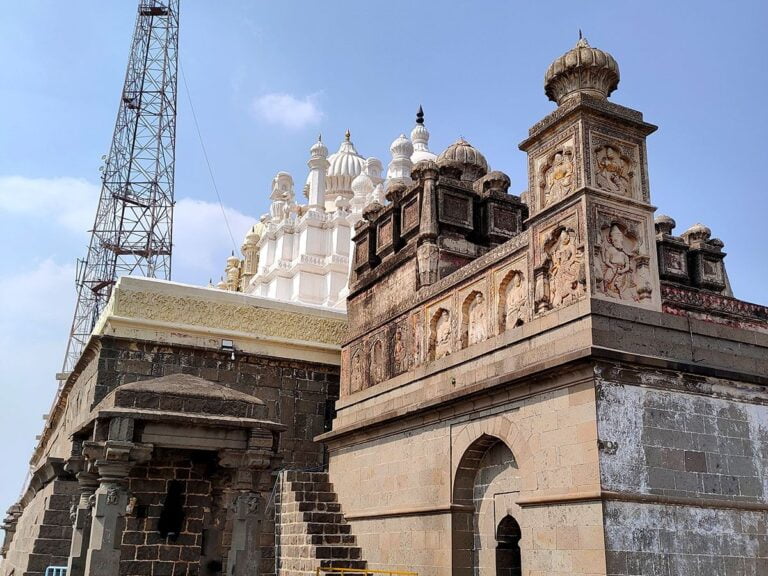
Chaturshringi Temple (officially known as Shri Chattushringi Devi Mandir) is a historic Hindu temple located on the slope of a four-peaked hill along Senapati Bapat Road in Pune, Maharashtra. Dedicated to Goddess Chattushringi—revered as the presiding guardian deity of Pune—the shrine dates back to the Maratha era and attracts thousands of devotees daily, especially during Shardiya Navratri.
Rising 90 feet high against a green hillside backdrop in the heart of the city, this temple blends deep devotional heritage with panoramic views of Pune. Whether you are planning a peaceful morning darshan, climbing the stone steps during Navratri, or exploring the famous temples in Maharashtra, this guide covers everything you need to know before your visit.
Quick Information: Chaturshringi Temple Pune
| Temple Feature | Verified Details |
| Official Temple Name | Shri Chattushringi Devi Mandir |
| Alternate Spellings | Chaturshringi Temple, Chattushrungi Temple |
| Presiding Deity | Goddess Chattushringi (also revered as Ambareshwari, Mahakali, Mahalakshmi, and Mahasaraswati) |
| Associated Shrines | Goddess Durga, Lord Ganesha, and 8 miniature Ashtavinayaka idols across four hillocks |
| Location | Slope of Chaturshringi Hill, Senapati Bapat Road, Gokhalenagar, Pune, Maharashtra 411016 |
| Daily Ritual Schedule | Abhishek & Pooja: 8:15 AM – 10:00 AM; Morning Aarti: 10:00 AM – 10:15 AM; Naivaidyam: 11:00 AM – 11:30 AM; Evening Aarti: 8:00 PM – 8:10 PM |
| General Darshan Window | Typically 6:30 AM – 9:00 PM daily (Tuesdays and Fridays may have a midday break around 12:30 PM; verify locally) |
| Steps to Main Shrine | Over 100 to 200+ stone steps across terraced hill levels (with resting spots every 6 steps) |
| Entry Fee | Free for all visitors (special poojas and abhishekam available through the trust) |
| Major Festivals | Shardiya Navratri, Chaitra Navratri, Vat Purnima, Tripuri Purnima, Diwali, and Ganesh Chaturthi |
| Best Time to Visit | October to March for pleasant weather; 6:30 AM – 8:30 AM for quiet darshan |
| Nearest Railway Station | Shivajinagar Railway Station (~4 km) and Pune Junction (~6–7 km) |
| Nearest Airport | Pune International Airport, Lohegaon (~14–15 km) |
| Administering Trust | Shri Devi Chattushringi Mandir Trust (https://chattushringidevasthanpune.org/) |
Spiritual Significance of Goddess Chaturshringi
For generations of Pune residents, Goddess Chaturshringi is far more than a neighborhood shrine. She is widely revered as the presiding deity (gramadevata and protector goddess) of Pune city. Before starting new businesses, buying vehicles, celebrating weddings, or sitting for important exams, many families in Pune climb this hill first to seek her blessings.
The name Chaturshringi comes from two Sanskrit words: Chatu (meaning four) and Shringi (meaning peaks). It refers directly to the four-peaked mountain slope on which the temple stands. Within the temple’s worship tradition, the Goddess is also worshipped as Ambareshwari and is viewed as a unified manifestation of the three supreme feminine energies—Mahakali, Mahalakshmi, and Mahasaraswati.
In the broader Hindu tradition of sacred Shakti Peethas across the Indian subcontinent, hilltop Goddess shrines hold special spiritual weight as seats of protective maternal power (Shakti). While Chaturshringi Temple is not counted among the classical 51 Shakti Peethas, local devotion connects her spiritual lineage directly to Saptashrungi Mata of Nashik, one of Maharashtra’s revered Sadetin (three-and-a-half) Shakti Peethas.
History and Origin Legend of Chaturshringi Temple
Understanding Chaturshringi Temple requires looking at both documented Maratha-era history and the deeply cherished devotional story passed down through generations in Pune.
Documented Historical Background
Historical records and heritage documentation associate the temple’s establishment with the Maratha period. According to the Sahapedia cultural heritage documentation on Chaturshringi Mandir, the temple was founded in 1786 during the Peshwa era, while some local historical accounts trace the earliest shrine at the site back to the reign of Chhatrapati Shivaji Maharaj.
Over the last two centuries, the shrine grew from a modest hillside sanctuary into a grand multi-level temple complex. Today, the temple’s administration, daily rituals, and festival arrangements are managed by the Shri Devi Chattushringi Mandir Trust.
The Devotional Legend of Durlabhsheth Mahajan
In sacred temple tradition (sthala purana), the origin of Chaturshringi Temple centers on Durlabhsheth Pitambardas Mahajan, a wealthy and deeply devout merchant who lived in Pune during the Maratha era.
Every year on the full moon day of Chaitra (Chaitra Purnima), Durlabhsheth traveled all the way from Pune to Vani in Nashik district to offer prayers at the Saptashrungi Devi Temple in Vani, Nashik. He maintained this arduous pilgrimage faithfully for many years.
As Durlabhsheth grew older, his physical strength declined, and the long journey to Nashik became impossible. Heartbroken that he could no longer visit his beloved Goddess on Chaitra Purnima, he prayed tearfully for forgiveness. According to traditional accounts, the Goddess appeared to him in a dream that night. She consoled her aging devotee and told him that if he could no longer come to her seven-peaked mountain in Vani, she would come to him on a four-peaked hill in the northwest of Pune.
The following morning, Durlabhsheth climbed the hill described in his dream. While searching the rocky slope, he uncovered a swayambhu (self-manifested) stone idol of the Goddess. Overwhelmed with gratitude, he built a temple right at that sacred spot so he and the people of Pune could worship her daily.
Temple Architecture and Sacred Complex Layout
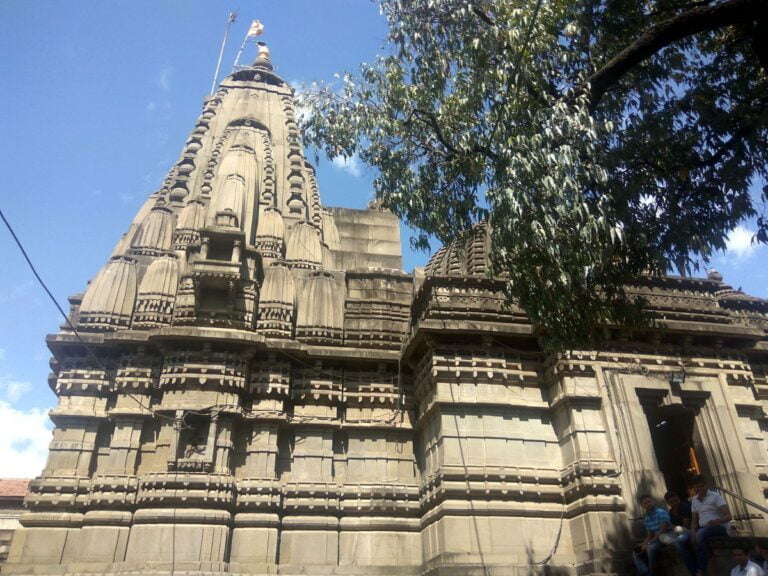
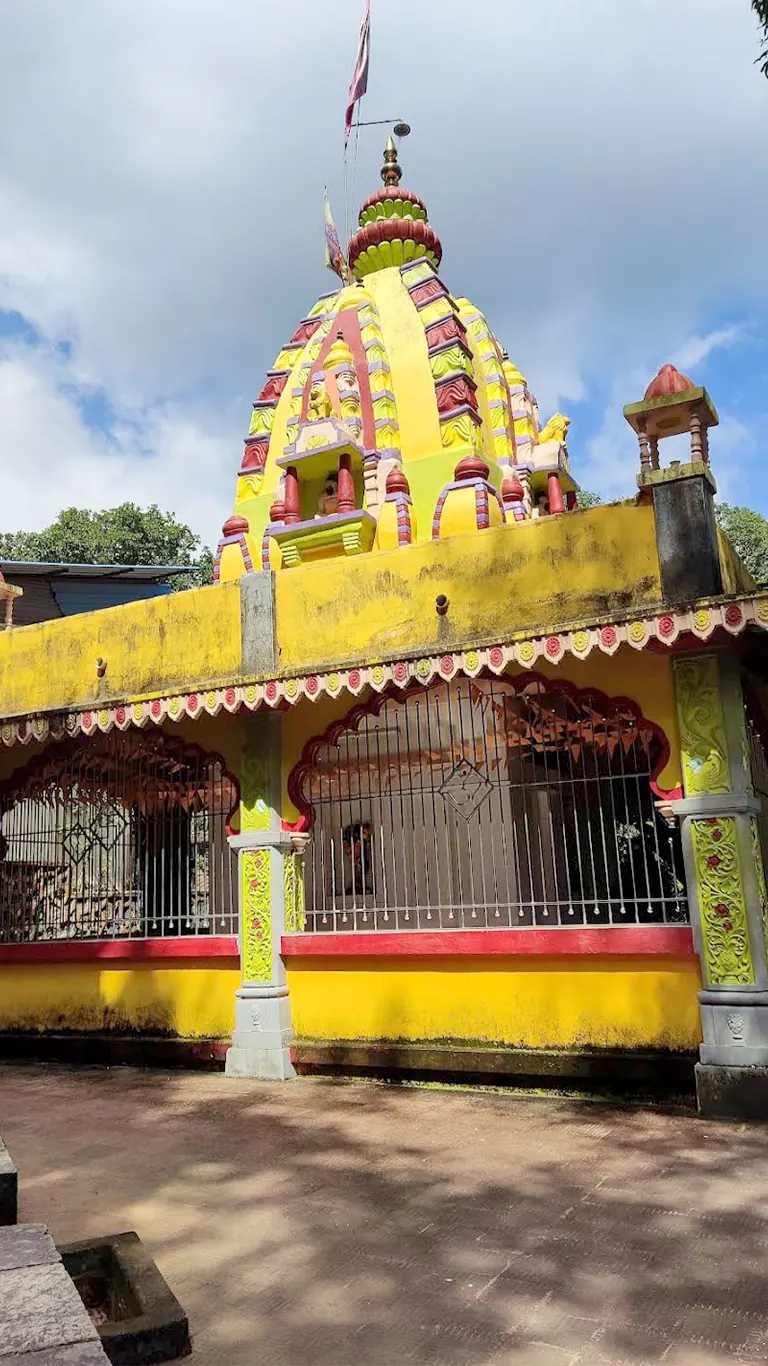
Built in traditional Western Indian temple style, the main structure of Chaturshringi Temple measures approximately 90 feet in height and 125 feet in width. Because it rests on a natural mountain slope rather than flat ground, visitors experience the complex in ascending tiers.
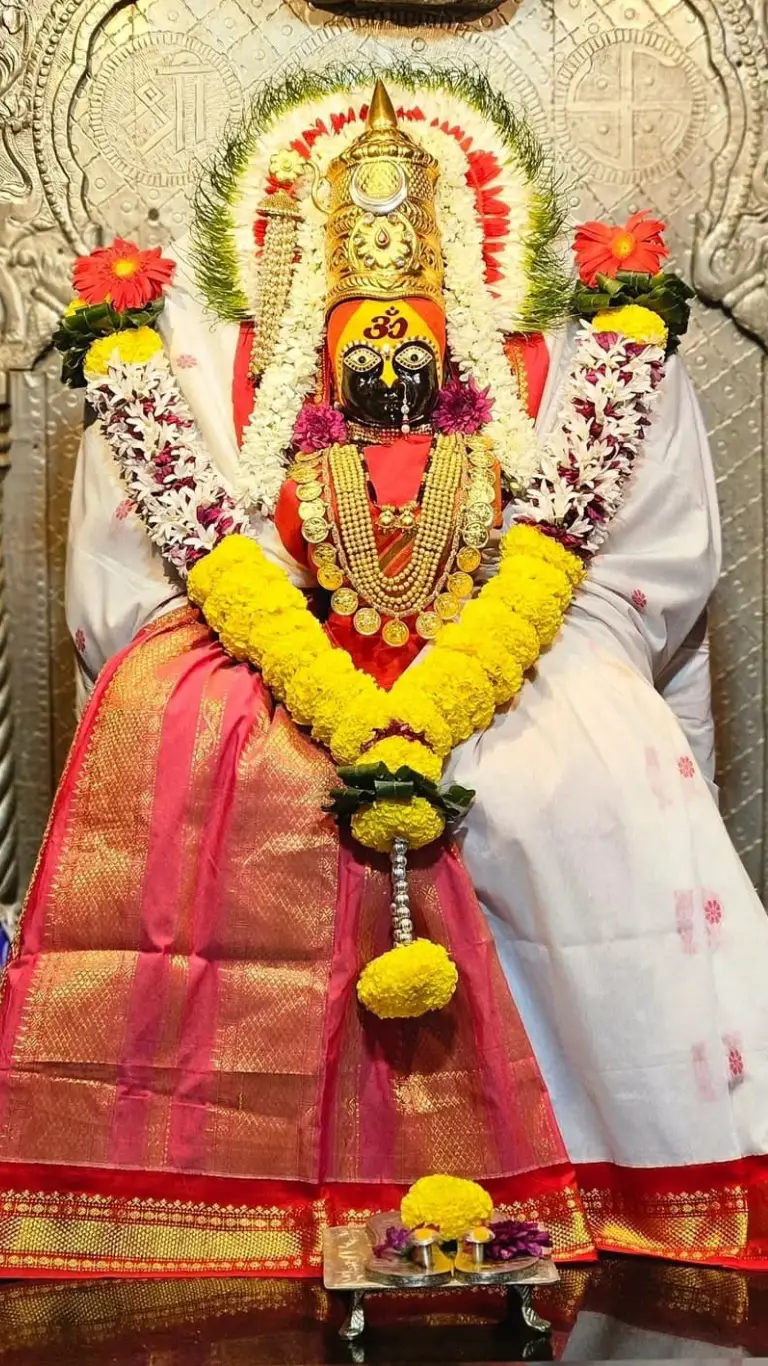
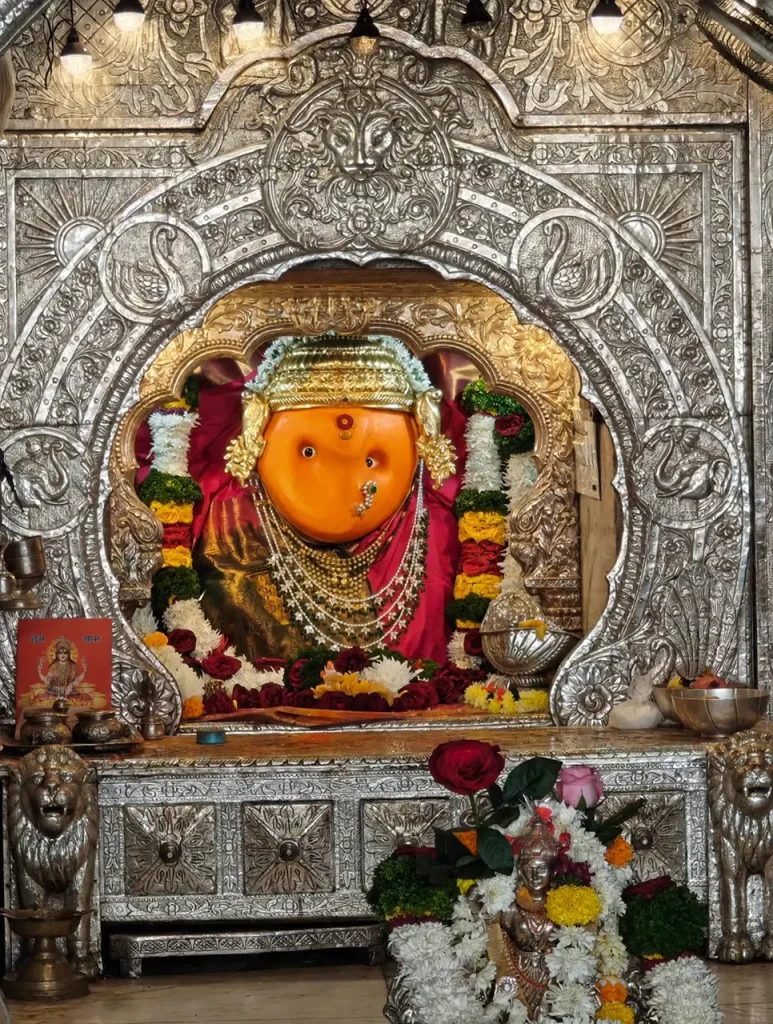
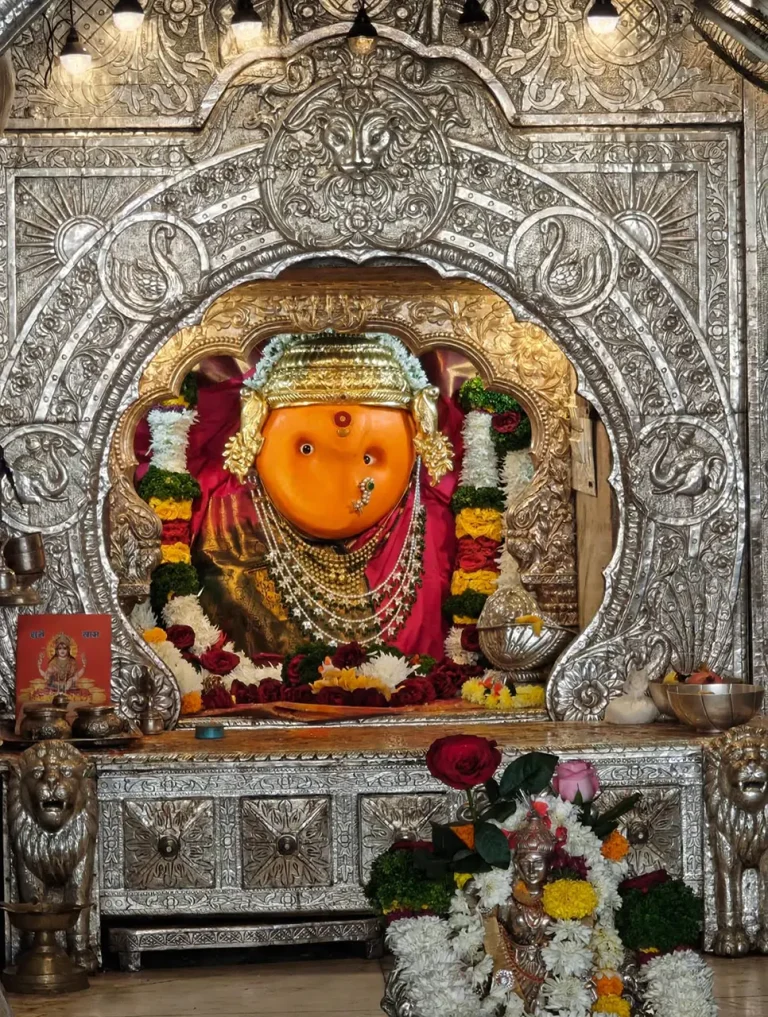
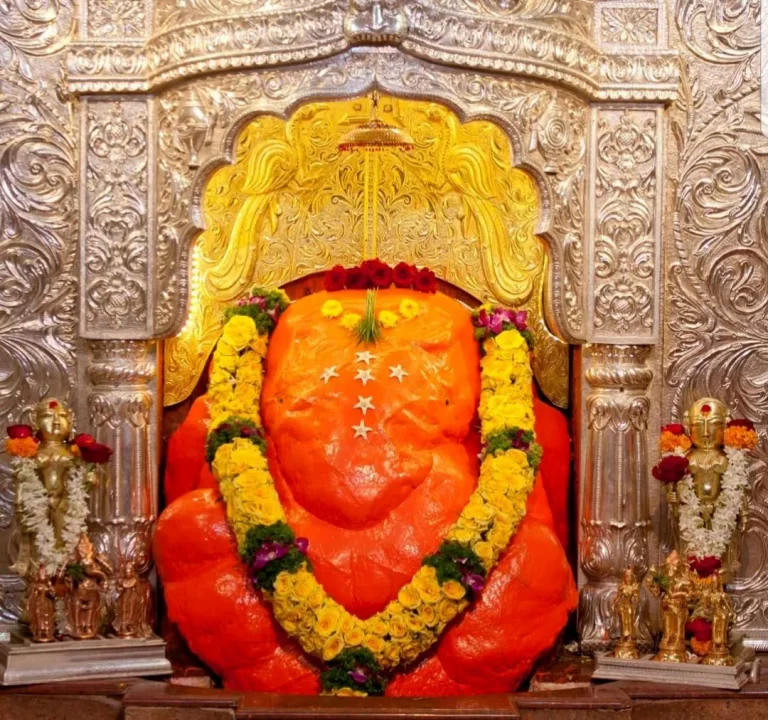
- The Main Sanctum (Garbhagriha): The central shrine houses the revered idol of Goddess Chaturshringi. Carved into the natural rock face and adorned with traditional Maharashtrian ornaments, silver work, silk sarees, and kumkum, the deity radiates a serene yet commanding presence.
- Sabhamandap and Terraces: In front of the sanctum sits a spacious assembly hall (sabhamandap) where devotees gather for daily aarti and devotional chanting. From the upper temple terraces, visitors get sweeping bird’s-eye views across Senapati Bapat Road and northwestern Pune.
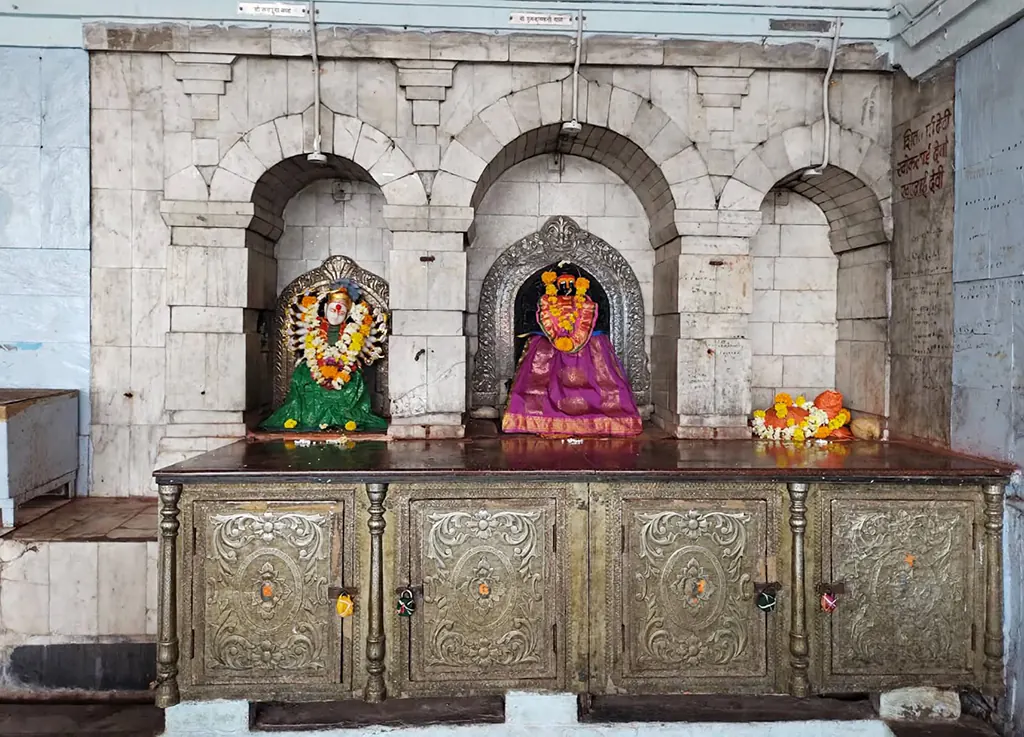
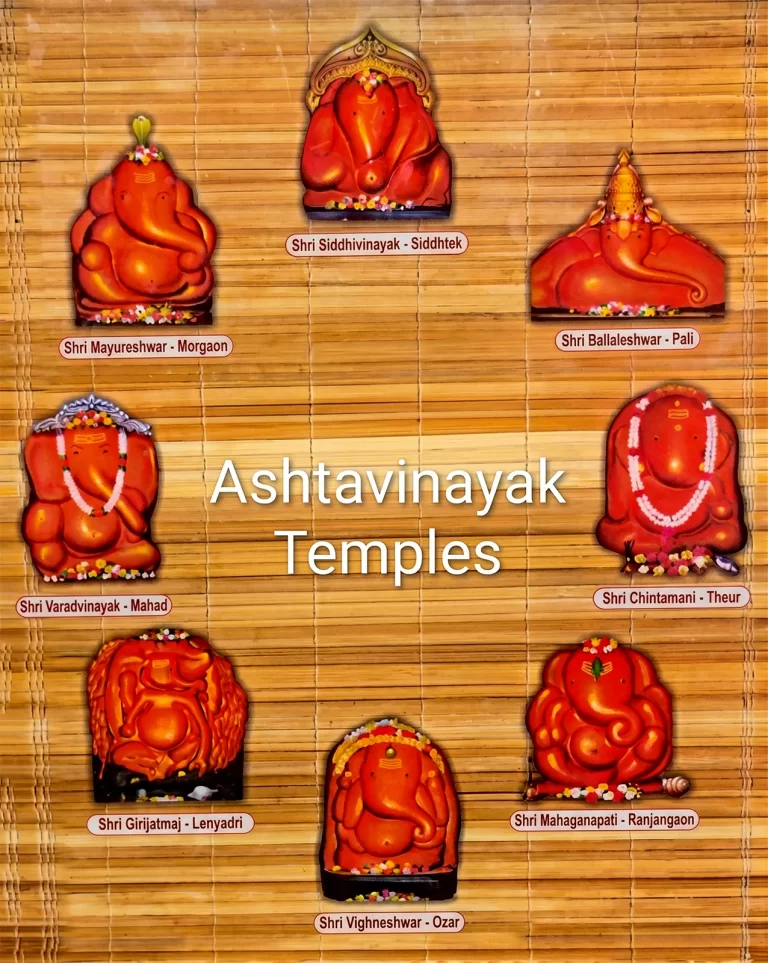
- Shrines Across the Four Hillocks: The wider temple premises spread across four small hillocks. Alongside the main Devi shrine, devotees can visit dedicated shrines to Goddess Durga and Lord Ganesha. Notably, the complex also features eight miniature idols representing the Ashtavinayaka—giving visitors a symbolic darshan of the sacred Ashtavinayak temples of Maharashtra in a single hillside walk.
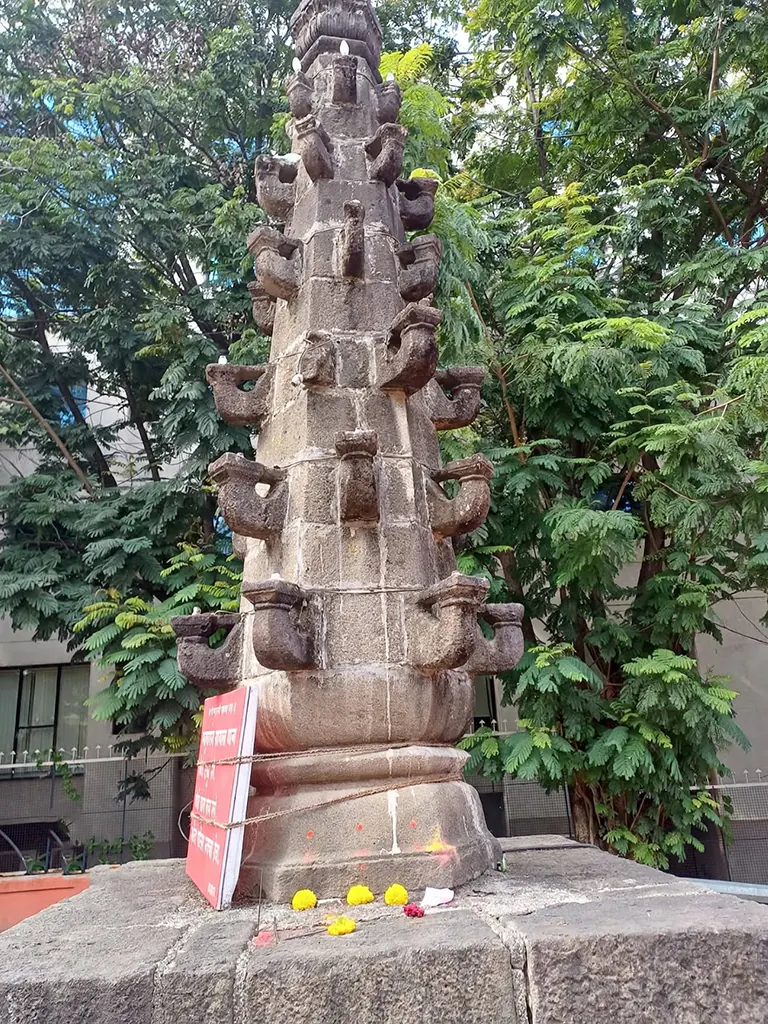
- Courtyard Gardens and Deepastambha: Traditional lamp pillars (deepastambhas), landscaped gardens, and shaded seating areas line the pathways between the lower entrance and the upper shrines.
Chaturshringi Temple Timings, Daily Aarti, and Pooja Schedule
If you are planning your visit around specific rituals, knowing the official daily schedule helps avoid waiting during sanctum preparations.
Official Daily Ritual Schedule
According to the Shri Devi Chattushringi Mandir Trust, the daily worship routine follows this schedule:
| Daily Ritual / Event | Start Time | End Time | What Happens |
| Abhishek, Pooja & Vastra | 8:15 AM | 10:00 AM | Sacred bathing ritual, dressing the Goddess in fresh robes, and daily adornments |
| Morning Aarti | 10:00 AM | 10:15 AM | Main morning lamp offering and devotional prayers |
| Naivaidyam | 11:00 AM | 11:30 AM | Sacred midday food offering to the Goddess |
| Evening Aarti | 8:00 PM | 8:10 PM | Grand evening lamp ceremony attended by local devotees |
General Darshan Hours and Midday Variations
While the official trust publishes the exact ritual timings above, general temple gate opening and closing hours are typically 6:30 AM to 9:00 PM on regular days.
- Tuesday and Friday Midday Note: Several local Pune visitor guides note that the inner sanctum may close briefly around 12:30 PM on Tuesdays and Fridays for midday rituals and cleaning before reopening for afternoon darshan.
- Festival Extensions: During Shardiya Navratri and Chaitra Navratri, the temple opens much earlier and stays open late into the night to accommodate large crowds.
- Special Sevas: Devotees who wish to sponsor Abhishekam, Kumkum Archana, Panchopchar Pooja, Shodashopchar Pooja, or Mahapooja can check current seva availability directly on the official trust portal.
Climbing the Steps and Accessibility Guide
Because Chaturshringi Temple sits partway up a hill, climbing the stone staircase is an essential part of the pilgrimage experience.
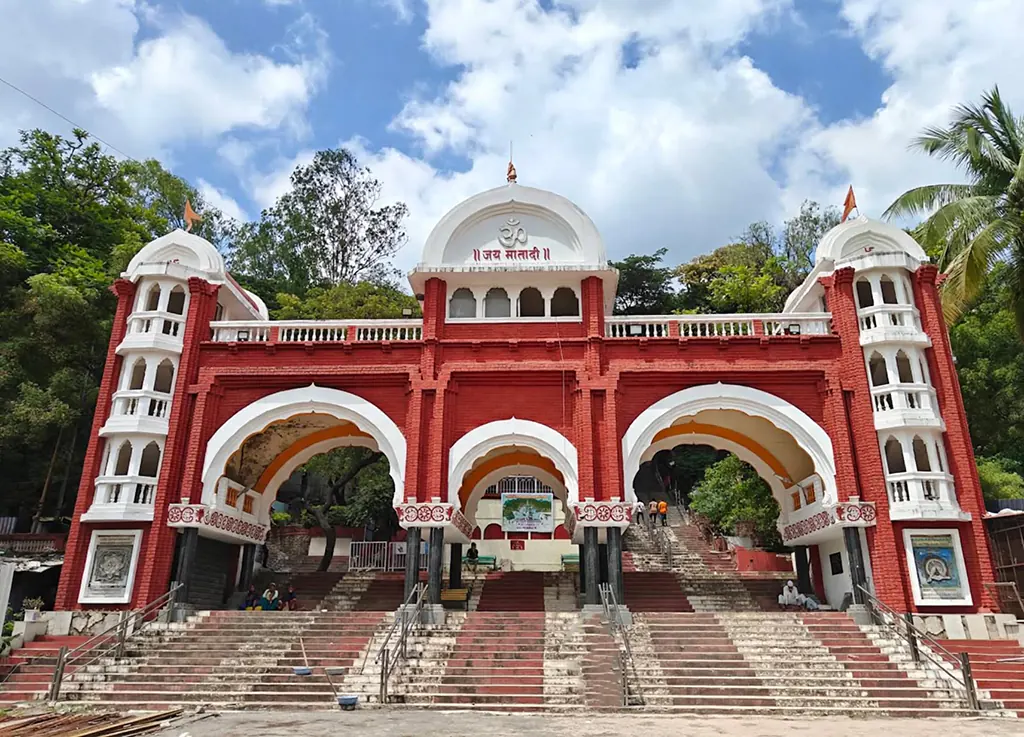
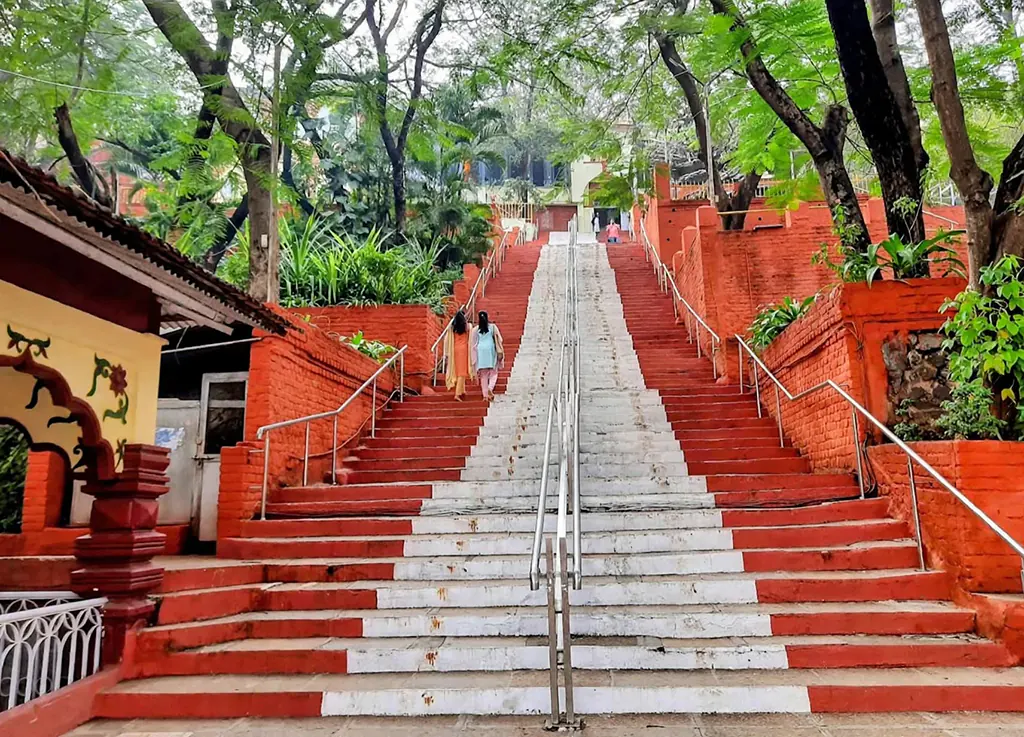
- How Many Steps Are There? Visitors often see different numbers online—ranging from 100+ steps to 170 or over 200 steps. This difference happens because the complex has multiple terraced levels. Reaching the main Devi courtyard requires climbing just over 100 main stone steps, while exploring the upper shrines across the four hillocks adds additional stairs.
- Pace and Difficulty: For most healthy adults and children, the main climb takes 10 to 15 minutes at a relaxed pace. The steps are wide, well-paved, and lined with sturdy railings.
- Resting Points for Seniors: The temple trust has built resting landings after every six steps, along with shaded garden benches and drinking water points along the route. Elderly visitors can take their time without feeling rushed.
- Stalls Along the Stairway: The lower approach and stairway corridor feature small shops selling fresh marigolds, lotus flowers, coconuts, kumkum, haldi, bangles, and traditional prasad items.
- Accessibility Updates: Because steep hill stairs can be challenging for wheelchair users and frail elders, the temple trust has explored mechanical access upgrades (such as escalators) in recent years. Visitors with severe mobility limitations should check with temple staff at the base gate before ascending.
Major Festivals Celebrated at Chaturshringi Temple
While the temple welcomes devotees every day of the year, its spiritual energy reaches extraordinary heights during major Hindu festivals.
1. Shardiya Navratri (September – October)
Shardiya Navratri is the largest and most celebrated festival at Chaturshringi Temple. Beginning on Ashwin Shuddha Pratipada with Ghatasthapana (the sacred installation of the ceremonial pot) and culminating on Vijayadashami (Dussehra), the nine-night celebration draws hundreds of thousands of devotees from across Maharashtra.
During these nine days:
- The entire hillside, stairway, and temple facade are illuminated with thousands of festive lights and fresh flower garlands.
- Priests conduct a sacred Navchandi Yagna for health, prosperity, and protection.
- A vibrant annual Navratri fair (jatra) takes place at the foothills along Senapati Bapat Road, bringing traditional music, cultural performances, and bustling crowds.
If you enjoy experiencing Maharashtra’s grand Navratri traditions, you can also read about how the festival is celebrated at the historic Tulja Bhavani Temple in Tuljapur.
2. Chaitra Navratri and Chaitra Purnima (March – April)
Observed in spring, Chaitra Navratri holds special emotional meaning here because of Durlabhsheth Mahajan’s historic Chaitra Purnima devotion to Saptashrungi Mata. Special poojas, floral decorations, and devotional recitations mark these days.
3. Vat Purnima (May – June)
During Vat Purnima in the lunar month of Jyeshtha, married women visit the temple grounds to tie ceremonial threads around the sacred banyan tree and pray for the health and longevity of their husbands, honoring the Mahabharata story of Savitri and Satyavan.
4. Tripuri Purnima (November – December)
On Tripuri Purnima (the full moon night of Kartik), the temple hosts a mesmerizing festival of light. Around 1,000 tiny earthen oil lamps (panati) are lit across the temple steps, courtyards, and deepastambha, bathing the entire hillside in a warm golden glow.
5. Other Annual Observances
The temple also marks Gudi Padwa (Chaitra Padwa), Ganesh Chaturthi, Diwali, and Holi with special alankaram (deity adornments) and community prayers.
Best Time to Visit Chaturshringi Temple
Choosing the right season and time of day makes a big difference to your darshan experience:
- Best Season (October to March): Post-monsoon and winter months bring cool, crisp mornings and pleasant evenings in Pune, making the stairway climb effortless.
- Monsoon Season (June to September): The surrounding hillocks turn lush green during the rains. Walk carefully on wet stone steps and carry an umbrella.
- Summer Season (April to May): Afternoon temperatures in Pune can get hot, so plan your visit before 9:30 AM or after 6:30 PM.
- Best Time of Day:
- Early Morning (6:30 AM – 8:30 AM): Quietest atmosphere, cool breeze, and minimal queues—ideal for peaceful meditation and photography outside the sanctum.
- Evening (7:30 PM – 8:30 PM): Great for witnessing the 8:00 PM Evening Aarti and seeing the city lights shimmer below.
- Days to Plan Carefully: Tuesdays and Fridays are traditionally dedicated to Goddess worship in Maharashtra and draw significantly larger local crowds than Mondays, Wednesdays, or Thursdays.
How to Reach Chaturshringi Temple, Pune
Chaturshringi Temple sits on Senapati Bapat Road (SB Road) near the Savitribai Phule Pune University junction, making it one of the most accessible landmarks in central-west Pune.
By Air
- Pune International Airport (PNQ), Lohegaon is approximately 14 to 15 km away.
- App-based cabs (Ola/Uber) and prepaid airport taxis take roughly 35 to 50 minutes depending on Pune traffic.
By Train
- Shivajinagar Railway Station is the closest railhead, located about 4 km from the temple. Auto-rickshaws outside the station reach the temple gate in 10 to 15 minutes.
- Pune Junction (Main Railway Station) is approximately 6 to 7 km away. Taxis, auto-rickshaws, and city buses connect directly to Senapati Bapat Road.
By Pune Metro
- Travelers looking to bypass street traffic can take the Pune Metro Purple Line to Shivajinagar Metro Station (around 2.5 to 3 km from the temple) or the Aqua Line to Deccan Gymkhana / Garware College Metro Stations (around 3.7 to 4.2 km away).
- From any of these metro stations, a quick 10-minute auto-rickshaw ride drops you right at the Chaturshringi foothill entrance.
By Bus and Private Vehicle
- PMPML City Buses: Frequent municipal buses run along Senapati Bapat Road and Ganeshkhind Road, stopping right at the Chaturshringi Paytha (Foothill) Bus Stop.
- Driving & Parking: If driving your own car or two-wheeler, designated parking areas are available near the base of the hill on regular days. During Navratri, traffic diversions are enforced on Senapati Bapat Road, so public transport or auto-rickshaws are strongly recommended.

Dress Code, Visitor Rules, and Temple Facilities
Respecting local temple customs ensures a smooth and harmonious visit for everyone:
- Dress Code: While there is no strict formal dress uniform enforced at the gate, visitors are expected to wear modest, respectful attire. Traditional Indian wear such as sarees, salwar kameez, kurtas, or full-length trousers and modest tops is ideal. Avoid shorts, mini-skirts, or sleeveless gym wear.
- Footwear Rules: Remove your shoes or sandals at the designated footwear stand near the base entrance before ascending the sacred stairway.
- Photography Guidelines: Photography of the hillside, courtyard, and exterior architecture is generally permitted, while photography inside the inner sanctum (garbhagriha) is restricted. Always follow signage and instructions from temple volunteers.
- On-Site Facilities:
- Free drinking water stations along the steps and upper courtyard.
- Footwear storage counter at the base.
- Restrooms near the foothill entrance.
- Shaded resting benches and landscaped gardens.
- Traditional Dharmashala and Nagarkhana structures maintained within the trust premises.
Famous Temples to Visit Near Chaturshringi Temple
If you are planning a wider spiritual itinerary in and around Pune, consider combining Chaturshringi darshan with these revered shrines:
- Shreemant Dagdusheth Halwai Ganpati Temple (Budhwar Peth, ~6 km): Pune’s most famous Ganesha temple, easily visited on the same morning or evening circuit.
- Kasba Ganpati Temple (Kasba Peth, ~6 km): Revered alongside Chaturshringi Devi as the historic gramadevata (guardian deity) of old Pune.
- Pataleshwar Cave Temple (Jangli Maharaj Road, ~4 km): An 8th-century rock-cut cave temple dedicated to Lord Shiva, located just minutes away from Shivajinagar.
- Bhimashankar Jyotirlinga Temple (~110 km): Situated in the Sahyadri hills of Pune district, the sacred Bhimashankar Jyotirlinga Temple makes an unforgettable full-day pilgrimage excursion from Pune.
- Ashtavinayak Shrines Near Pune: Devotees with extra time can visit nearby Ashtavinayak temples such as Chintamani Temple in Theur (~28 km), Mayureshwar Temple in Morgaon (~65 km), or Mahaganapati Temple in Ranjangaon (~52 km). For a longer multi-day Devi pilgrimage across Maharashtra, you can also plan a journey south to the Mahalakshmi Temple in Kolhapur.
Frequently Asked Questions About Chaturshringi Temple
1. What are the daily timings of Chaturshringi Temple in Pune?
Chaturshringi Temple is generally open for darshan from 6:30 AM to 9:00 PM. According to the official trust schedule, daily Abhishek and Pooja run from 8:15 AM to 10:00 AM, Morning Aarti takes place at 10:00 AM, Naivaidyam is offered at 11:00 AM, and Evening Aarti is held at 8:00 PM. On Tuesdays and Fridays, the inner sanctum may close briefly around 12:30 PM.
2. How many steps are there to reach Chaturshringi Temple?
Visitors climb over 100 stone steps to reach the main Goddess Chaturshringi courtyard, and more than 200 steps in total if exploring the upper shrines across all four hillocks. Resting landings are built after every six steps to make the climb comfortable.
3. Is there any entry fee to visit Chaturshringi Temple?
No, entry to Chaturshringi Temple is completely free for all visitors. Devotees who wish to perform special rituals such as Abhishekam or Kumkum Archana can opt for paid seva tickets through the temple trust.
4. Who built Chaturshringi Temple and why?
Traditional accounts credit Durlabhsheth Pitambardas Mahajan, a wealthy Maratha-era merchant, with establishing the temple. When old age prevented him from traveling to Saptashrungi Mata in Nashik, the Goddess appeared in his dream and guided him to a self-manifested (swayambhu) idol on Pune’s northwestern hill, where he built the shrine.
5. Why is the temple named Chaturshringi?
In Sanskrit, Chatu means “four” and Shringi means “peaks”. The temple is named after the mountain with four peaks on whose slope it stands.
6. Can senior citizens visit Chaturshringi Temple easily?
Yes, most active senior citizens manage the climb comfortably because there are shaded resting spots every six steps and drinking water stations along the pathway. Visiting early in the morning (between 6:30 AM and 8:30 AM) on weekdays other than Tuesday or Friday ensures cooler weather and smaller crowds.
7. Which metro or railway station is nearest to Chaturshringi Temple?
Shivajinagar Railway Station (about 4 km away) is the nearest train station. For metro travelers, Shivajinagar Metro Station (Purple Line) and Deccan Gymkhana Metro Station (Aqua Line) are roughly 2.5 to 4 km away, with auto-rickshaws readily available outside both stations.
Conclusion
Standing gracefully above Senapati Bapat Road, Chaturshringi Temple embodies the living spiritual heart of Pune. From its Maratha-era roots and devotional bond with Saptashrungi Mata to its terraced hillocks, Ashtavinayaka shrines, and glowing Navratri and Tripuri Purnima celebrations, the temple offers a deeply rewarding experience for both pilgrims and cultural travelers. Plan an early morning visit for quiet darshan or arrive at dusk for the 8:00 PM Evening Aarti to experience Pune’s guardian Goddess at her most serene.