The Sacred Mystery of Guruvayur Temple, Kerala: Legends, Miracles, and Pilgrim Guide
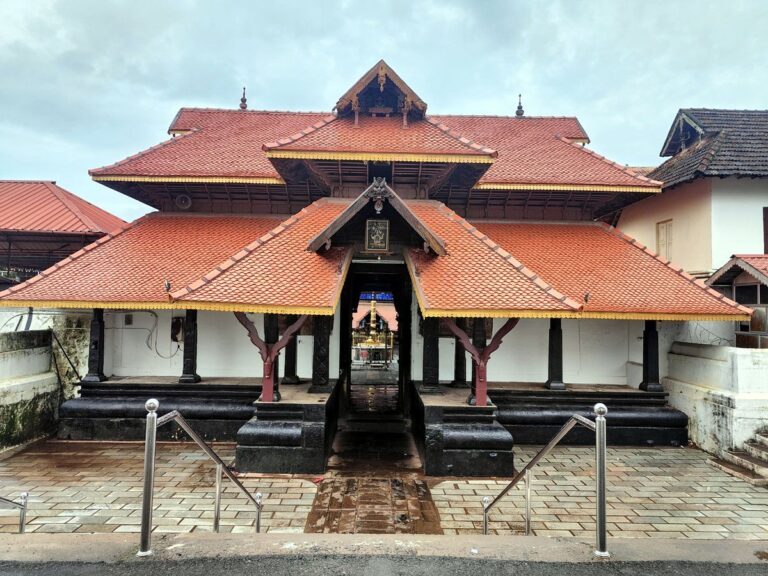
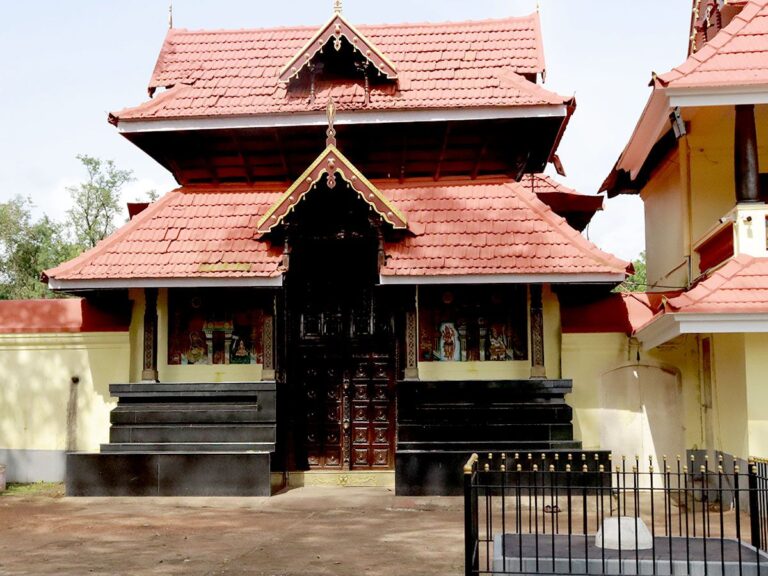
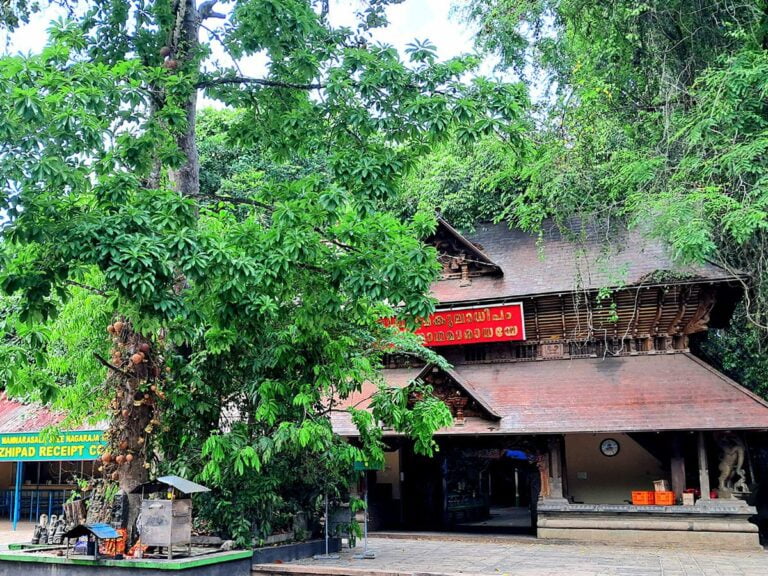
The mystery of Guruvayur Temple in Kerala centers on its sacred idol carved from rare Patala Anjana Sila, its legendary journey from submerged Dwarka, and centuries of documented miraculous healings. Revered as Bhuloka Vaikunta (the earthly abode of Lord Vishnu), this world-renowned shrine in Thrissur district preserves an unbroken Vedic ritual system established by Adi Shankaracharya that continues to draw millions of devotees seeking spiritual solace, health, and liberation.

Unlike typical temple idols carved from granite or cast from Panchaloha (five sacred metals), the presiding deity—Lord Guruvayurappan—is manifested as an enchanting four-armed form of Lord Krishna holding the Conch (Panchajanya), the Discus (Sudarshana), the Mace (Kaumodaki), and a lotus with a holy basil garland. Devotees believe that standing before this consecrated form relieves severe physical ailments, mental grief, and past karmic burdens.
Whether you are curious about the sacred science behind its miraculous idol, the story of how the elements Guru and Vayu salvaged it, or you are planning your first pilgrimage, this guide unpacks the sacred mysteries, living traditions, and essential visitor guidelines of Guruvayur.
Quick Information: Guruvayur Sree Krishna Temple
| Feature | Detail |
| Temple Name | Guruvayur Sree Krishna Swamy Temple (Bhuloka Vaikunta) |
| Main Deity | Lord Guruvayurappan (Mahavishnu in Balagopala / Unnikrishnan form) |
| Location | Guruvayur, Thrissur District, Kerala, India |
| Sanctum Material | Patala Anjana Sila (a rare medicinal, magnetic stone) |
| Daily Darshan Timings | Morning: 3:00 AM – 1:30 PM | Evening: 4:30 PM – 9:15 PM |
| Sacred Offering (Prasadam) | Palpayasam (sweet milk kheer), Neypayasam, Vakacharthu powder |
| Special Rituals | Thulabharam, Udayasthamana Pooja, Chuttuvilakku |
| Strict Dress Code | Men: Mundu/Dhoti (bare chest, no shirts or vests). Women: Saree, Set Mundu, or Salwar Kameez. |
| Entry Restrictions | Strict entry for practicing Hindus only. Electronic devices, leather items, and footwear are prohibited inside the inner complex. |
| Nearest Railway Station | Guruvayur Railway Station (GUV) – 1 km; Thrissur Railway Station (TCR) – 28 km |
| Nearest Airport | Cochin International Airport (COK) – approx. 80 km |
| Official Website | Guruvayur Devaswom Board |
Read More>> Enchanting Chidambaram Nataraja Temple: 5 Formless Akasha Lingam

The Mystery of the Sacred Idol: What is Patala Anjana Sila?
One of the greatest mysteries of Guruvayur Temple lies in the physical composition of the deity’s idol. Most ancient temples across South India house deities sculpted from hard black granite or cast using sacred alloys. However, ancient temple records and the Gurupavanapura Mahatmyam document that the idol of Lord Guruvayurappan is sculpted from Patala Anjana Sila.
This stone is an exceptionally rare, sacred compound believed to contain distinct mineral, herbal, and natural magnetic qualities.
The Medicinal Mystery of Abhishekam
Every single morning, priests perform the elaborate ritual bath (Abhishekam) using water, pure cow’s milk, tender coconut water, rosewater, sandalwood paste, and sesame oil. In ordinary stone sculptures, centuries of daily exposure to acidic and oily substances cause visible surface erosion. Yet, the idol of Guruvayurappan has retained its intricate carvings, smooth finish, and deep luster across centuries.
Devotees believe that the Abhisheka Theertham (the consecrated runoff water collected from the bath) absorbs minute trace elements from the Patala Anjana Sila. Historically, consuming a few drops of this consecrated water has been associated with physical rejuvenation, specifically aiding devotees suffering from digestive, neuromuscular, and skin disorders.
Read More>> Sabarimala Temple: Abode of Lord Ayyappa

The Origin Legend: How the Idol Survived the Great Deluge
Why is this sacred temple located in lush Kerala when the deity is intimately tied to Lord Krishna of Dwarka? The sthala purana narrates a dramatic journey spanning eras.
According to sacred tradition recorded in the Bhagavata Purana, Lord Krishna Himself worshipped this very idol in his coastal kingdom of Dwarka. Before ascending to his heavenly abode at the conclusion of the Dwapara Yuga, Krishna instructed his devotee and minister, Uddhava, with an urgent warning:
“Seven days after my departure, the sea will rise and submerge Dwarka completely. You must retrieve my personal worship idol from the waves and hand it over to Brihaspati, the Guru of the Devas.”
As predicted, the great ocean swallowed Dwarka. Uddhava sought the help of Guru (Brihaspati, the planet Jupiter) and Vayu (the Wind God). Divinely guided, Vayu stirred the ocean waves while Guru retrieved the floating four-armed idol from the deluge.
Guru and Vayu carried the sacred murti southward across the Indian subcontinent in search of an auspicious spot for its permanent installation.
Read More>> Arunachaleswara Temple.
Lord Shiva’s Sacred Sanctuary at Rudratheertha
Arriving at a picturesque lake covered with lotuses in present-day Kerala, they were greeted by Lord Shiva and Goddess Parvati. Lord Shiva informed them that this very location—known as Rudratheertha—was where he had spent centuries performing intense penance.
Recognizing that the idol of Vishnu needed an earthly home to protect humanity during the coming trials of Kali Yuga, Lord Shiva generously moved his own seat to nearby Mammiyoor to make way for the shrine.
Because the temple was consecrated jointly by Guru and Vayu, the holy town received the eternal name Guruvayur, and the presiding lord came to be adored as Guruvayurappan (the Lord of Guru and Vayu).

Miracles of Guruvayur: The Cure of Melpathur Narayana Bhattathiri
Among the documented historical miracles associated with Guruvayur, none is more celebrated than the composition of the Narayaneeyam in the late 16th century (circa 1587 CE).
Melpathur Narayana Bhattathiri, a brilliant Sanskrit scholar and poet from Malabar, was struck down by acute, debilitating rheumatism (Vatha rogam). Unable to move or write, he had himself carried into the sanctum sanctorum of Guruvayur Temple on a cot. Surrendering completely to Lord Guruvayurappan, he vowed to summarize the vast 18,000 verses of the Srimad Bhagavatam into a concentrated devotional hymn.
Every day, sitting in the temple courtyard, Bhattathiri composed ten verses (Dasakam) addressing the Lord directly, praying for healing:
- On the 100th day, as he completed the final verse describing the magnificent physical beauty of Lord Krishna from head to toe (Kesadipada Varnanam), Bhattathiri experienced a divine vision.
- He stood up completely healed, devoid of pain or paralysis.
This 1,036-verse masterpiece—the Narayaneeyam—is recited to this day by devotees seeking recovery from chronic health issues, standing as timeless literary and spiritual testimony to the healing grace of Guruvayur.
Read More>> Konark Sun Temple 13th Century Gem
The Devotion of Guruvayur Keshavan: A Divine Bond
The mystery of Guruvayur is not confined to human devotees; it extends to the animal kingdom. The most celebrated elephant in modern Kerala history was Guruvayur Keshavan, an elephant gifted to the temple by the Royal Family of Nilambur in 1922.
Keshavan served the temple for over five decades with an astonishing degree of reverence:
- He never displayed aggression during temple processions, even when surrounded by dense crowds and loud temple percussion (Panchavadyam).
- He would bend his knees respectfully before the temple flagstaff (Kodimaram) and refused to consume food before the temple rituals were completed.
- On Ekadashi Day in December 1976, fasting on the sacred day of Lord Krishna, Keshavan turned toward the sanctum sanctorum, raised his trunk in a final salute of surrender, and peacefully left his body.
Today, a life-sized statue of Keshavan stands near the temple complex, reminding pilgrims of the profound, selfless love between the deity and his devotee.

Daily Rituals and Mystical Timings
The temple follows an exact liturgical schedule formulated by Adi Shankaracharya that has been preserved unchanged by the hereditary Thantri (chief priest) families of Kerala.
Nirmalya Darshan (3:00 AM): Devotees witness the deity adorned with the previous evening’s flowers and garlands. Seeing the Lord in this divine early-morning state is considered the most spiritually potent darshan of the day.
Vakacharthu (3:30 AM): The deity is gently massaged with natural herbal oils and rubbed down with the fragrant powder of the Vaka tree bark (Albizia lebbeck), creating a golden-brown glow over the black stone idol.
Seeveli (Morning, Noon, and Evening): The Utsava Vigraha (processional idol) is mounted atop a beautifully caparisoned elephant and paraded around the inner quadrangle three times, accompanied by traditional Melam drumming to offer food to the guardian deities.
Deeparadhana (Sunset): The temple lamps are ignited. Hundreds of small brass oil lamps embedded in the external wooden lattice walls (Chuttuvilakku) flicker to life, turning the entire temple structure into a brilliant cage of living flame.

Essential Pilgrim Guide: Rules, Dress Code, and Offerings
Guruvayur maintains some of the strictest sanctum discipline in India to preserve its sanctity. Understanding these rules ensures a smooth and respectful pilgrimage.
Strict Dress Code Regulations
- Men: Must wear a clean Mundu (white cotton dhoti) around the waist. Shirts, vests, T-shirts, trousers, and shorts are strictly banned. Men must enter with a bare torso; carrying a small white cloth (Angavastram) folded over the shoulder is permitted.
- Women: Traditional Sarees, Kerala Set Mundu, or modest Salwar Kameez are accepted. Western clothing, jeans, skirts, and sleeveless tops are not allowed inside the main temple walls.
- Prohibited Items: Mobile phones, cameras, smartwatches, leather belts, shoes, and bags must be deposited at the official cloakrooms outside before joining the darshan queue.
Unique Offerings You Can Book
- Thulabharam: Devotees sit on one side of a massive balance scale while the other side is loaded with offerings equal to their body weight. Popular materials include sugar, jaggery, plantains, coconuts, and sesame oil.
- Choroonu (First Rice Feeding): Thousands of parents bring their six-month-old infants to Guruvayur for their very first intake of solid food (sanctified rice), praying for the child’s lifelong wisdom and health.
- Udayasthamana Pooja: An elaborate, dawn-to-dusk sequence of 18 special poojas. Due to immense demand, bookings through the official Devaswom are often reserved decades in advance.
Read More>> Panch Kedar Yatra: Ultimate Travel Guide to 5 Divine Shiv Temples
How to Reach Guruvayur Temple
- By Train: Guruvayur has its own railway station (Station Code: GUV) connected via passenger trains to Thrissur. Thrissur Junction (TCR), located 28 kilometers away, is a major railway hub with frequent direct trains to Chennai, Bengaluru, Mumbai, and Delhi.
- By Air: The nearest airport is Cochin International Airport (COK), situated approximately 80 kilometers south. Taxis, private ride services, and Kerala State Road Transport Corporation (KSRTC) buses connect the airport directly to Guruvayur within two to two-and-a-half hours.
- By Road: Guruvayur is well-connected by National Highway 66 and state expressways, with continuous KSRTC bus services departing from Thrissur, Ernakulam, Kozhikode, and Palakkad.

Frequently Asked Questions About Guruvayur Temple
What is the mystery behind the Guruvayur temple idol?
The idol is sculpted from a unique, rare material called Patala Anjana Sila rather than traditional granite or metal. According to tradition, this sacred stone absorbs herbal properties, withstands daily abhishekam without wearing down, and originated in the sacred city of Dwarka before being rescued by Guru and Vayu.
Can non-Hindus enter the Guruvayur Temple?
Under Kerala temple entry customs and current Devaswom rules, entry into the inner sanctum of Guruvayur is permitted only for practicing Hindus. Devotees of other faiths are welcome to visit the outer perimeters, admire the traditional architecture, and explore the nearby elephant sanctuary at Punnathur Kotta.
Why do pilgrims visit Mammiyoor Temple immediately after Guruvayur?
Legend states that Lord Shiva originally resided at the site of Guruvayur and relocated to nearby Mammiyoor to allow Guru and Vayu to install Lord Krishna’s idol. By tradition, a pilgrimage to Guruvayur is considered incomplete without offering prostrations to Lord Shiva at Mammiyoor.
What is the best time of the year to visit Guruvayur?
The ideal months to visit are between October and March, when the weather across Kerala is pleasantly cool. The annual Guruvayur Utsavam (February/March) and Guruvayur Ekadashi (November/December) are spiritually exhilarating times to visit, though you should expect heavy pilgrimage queues.
The spiritual magnetism of Guruvayur Sree Krishna Temple endures not merely because of ancient lore, but because of the palpable peace experienced inside its sanctum. Standing in the soft golden glow of oil lamps, smelling the sacred basil and sandalwood, and catching a glimpse of Lord Guruvayurappan, every pilgrim realizes why this haven is celebrated as heaven brought down to earth.