Gokarna Mahabaleshwar Temple: History, Sparsha Darshan & Travel Hacks
Gokarna Mahabaleshwar Temple: Location, Importance and What to Expect
The Gokarna Mahabaleshwar Temple sits on the Arabian Sea coast in the historic town of Gokarna, located within the Uttara Kannada district of Karnataka. Dedicated to Lord Shiva in his supreme manifestation as Mahabaleshwar (“the Lord of Great Strength”), this holy shrine houses the legendary Atmalinga—the sacred, primordial emblem of Shiva believed to possess his ultimate cosmic power. In classical Hindu geography, the temple is revered as the Dakshina Kashi (the Varanasi of the South), carrying spiritual merit equal to the sacred pilgrimage centers of northern India.

Unlike many grand South Indian temples governed strictly by distant viewing, the Mahabaleshwar Temple allows devotees to walk directly into the sanctum sanctorum (garbhagriha) and physically touch the top of the sacred Atmalinga during specific darshan rituals. The deity here is not a polished stone pillar rising toward the ceiling. Instead, it is embedded deep within a subterranean granite cavity, with only the crown of the linga exposed through a small opening in a square stone pedestal (Saligrama Peetha).
A visit to Gokarna differs profoundly from standard pilgrimage circuits. Here, ancient ritual traditions remain closely tied to the natural landscape. Pilgrims begin their spiritual journey with a ritual cleansing dip in the roaring waves of Gokarna Main Beach, pause to worship Lord Ganesha at the adjacent Maha Ganapati Temple, and then step onto the cool, oil-scented stone flagstones of the Mahabaleshwar temple complex. Whether you are traveling as a lifelong devotee seeking ancestral rites, a family exploring coastal heritage, or an international cultural traveler wanting to understand living Vedic practices, this guide provides the verified historical, architectural, ritual, and logistical insights required for a smooth pilgrimage.
Quick Information Table
| Information | Details |
| Temple Name | Sri Mahabaleshwar Temple (Gokarna) |
| Main Deity | Lord Shiva (Mahabaleshwara / Atmalinga) |
| Location | Car Street, Gokarna Town, Arabian Sea Coast |
| District | Uttara Kannada |
| State | Karnataka, India (PIN: 581326) |
| Temple Architecture | Classical Dravidian (Kadamba & Vijayanagara influence) |
| Puranic Reference | Skanda Purana (Sahyadri Khanda), Shiva Purana |
| Main Festival | Maha Shivaratri (February/March) |
| Daily Temple Timings | 06:00 AM – 12:30 PM & 05:00 PM – 08:00 PM |
| Special Poojas | Rudrabhisheka, Panchamrita Abhisheka, Navagranthi Pooja |
| Best Time to Visit | October to March (Pleasant coastal weather) |
| Nearest Railway Station | Gokarna Road Station (GOK, ~9 km); Kumta (KT, ~31 km) |
| Nearest Airport | Dabolim Airport, Goa (GOI, ~140 km); Manohar Intl (GOX, ~175 km) |
| Official Management | Dedicated Temple Administrative Committee / Trust |
| Dress Code | Traditional Hindu attire (Men: Dhoti/veshti, bare chest; Women: Saree, salwar kameez) |
| Entry Fee | Free general entry; nominal government-approved fees for special sevas |
Read More>> Famous Kollur Mookambika Temple: Discover the Unseen Powers
History of Gokarna Mahabaleshwar Temple
Origin and Founding Story
The architectural and institutional origins of the Mahabaleshwar Temple trace back more than 1,500 years. Epigraphic and regional historical evidence indicates that the earliest stone sanctuary was established by the rulers of the Kadamba Dynasty, who ruled northern Karnataka and the Konkan coast from their imperial capital at Banavasi between the 4th and 6th centuries CE.
Mayurasharma, the founding monarch of the Kadamba empire, is traditionally credited in local copper plates and regional historical texts with patronizing the temple and settling learned Vedic scholars (primarily belonging to the Havyaka Brahmin community) in Gokarna to maintain ritual worship according to ancient Vedic traditions. While coastal storms, sea winds, and centuries of exposure required subsequent rebuilding, the sacred ground itself has supported continuous ritual worship without interruption since antiquity.
Historical Development
As dynastic control over coastal Karnataka shifted over the centuries, successive empires recognized the spiritual authority of Gokarna and contributed to the temple’s physical expansion:
- The Rashtrakutas and Western Chalukyas (8th–12th Century CE): Inscriptions found in the surrounding Uttara Kannada district record grants of fertile land, coconut groves, and toll exemptions intended to fund the daily burning of temple lamps (nanda-deepa) and support free food distribution (annadana) for pilgrims crossing the Sahyadri mountains.
- The Vijayanagara Empire (14th–16th Century CE): Gokarna experienced its most significant architectural renaissance during the Vijayanagara period. Rulers, including Emperor Harihara II and their imperial governors in coastal Honnavar, commissioned extensive renovations to the pillared pavilions (mukhamandapa), expanded the temple corridors (prakaram), and established endowments ensuring Vedic recitations during solstices and lunar eclipses.
- The Nayakas of Keladi (16th–18th Century CE): Following the decline of Vijayanagara, the Keladi Nayakas (specifically Queen Chennammaji and King Somasekhara Nayaka) protected the coastal temples from regional skirmishes and colonial incursions, financing granite restorations and building defensive walls around the temple tank (Kotiteertha).
Kings, Dynasties, and Patrons
Unlike landlocked temples that relied purely on royal fiat, the Mahabaleshwar Temple was supported by a hybrid patron base consisting of imperial royalty, maritime merchant guilds (nanadesis), and local chieftains. In the late 17th century, the Maratha ruler Chhatrapati Shivaji Maharaj visited coastal Karnataka during his southern campaigns; local historical accounts note that he made offerings and offered prayers at the Mahabaleshwar shrine. In later centuries, the pontiffs of the nearby Ramachandrapura Math and the Sringeri Sharada Peetham provided spiritual oversight, religious guidance, and philosophical stewardship to the resident priestly lineages.
Saints, Poets, and Important Personalities
Gokarna has drawn philosophical titans and devotional poets across Indian history:
- Adi Shankaracharya (8th Century CE): The great Advaita philosopher visited Gokarna during his digvijaya across the Indian subcontinent. Tradition records that he meditated on the Atmalinga, established scriptural practices for local scholars, and visited the sacred shrine of Goddess Bhadrakali at the northern entrance of the town.
- Appar and Sambandar (7th Century CE): The Tamil Shaivite saints (Nayanmars) praised the glory of Gokarna (Tirukokarnam) in the canon of the Tevaram, counting it as one of the northernmost Paadal Petra Sthalams (shrines sung in Tamil hymns). They celebrated the shrine where the waves of the Western Sea wash the feet of Shiva.
- Sant Eknath and Sant Tukaram: During the medieval Bhakti movement, prominent saints from Maharashtra traveled down the Konkan coastline to Gokarna, leaving Marathi devotional verses describing the spiritual surrender felt when seeing the submerged linga.

Legends Associated with Gokarna Mahabaleshwar Temple
The Legend of the Atmalinga and Ravana
The central legend of Gokarna, preserved in the Sahyadri Khanda of the Skanda Purana, explains how the supreme emblem of Shiva became anchored forever on this coastal shore.
नमोऽस्तु रावणेशाय महाबलवपुर्धृते ।
गोकर्णनिलयायास्तु मुक्तिमुक्तिप्रदायिने ॥
Transliteration: Namo’stu Ravaneshana Mahabalavapurdhrite | Gokarnanilayayastu Muktimuktipradayine ||
Meaning: “Salutations to the Lord who liberated Ravana from his pride, who assumes the form of immense strength (Mahabala), who resides eternally in Gokarna, and who grants both worldly fulfillment and supreme liberation.”
According to the Puranic narrative, Ravana, the king of Lanka, performed severe penances (tapas) in the Himalayas to appease Lord Shiva. Pleased with his ascetic discipline, Shiva appeared and granted him a boon. Ravana asked for the Atmalinga—the Lord’s inner spiritual essence—desiring to take it to Lanka so his kingdom would become unconquerable and immortal.
Shiva granted the boon with one strict condition:
“Take this linga, Ravana, but remember: wherever you place it down upon the earth, there it will permanently fix itself. You will never be able to lift it again.”
Alarmed by the prospect of an invincible, demon-ruled kingdom, the Devas appealed to Lord Vishnu and Lord Ganesha for help. As Ravana journeyed southward along the Konkan coast, sunset approached. Being a devoted Brahmin, Ravana needed to perform his mandatory evening prayers (sandhyavandanam), but he could not hold the holy linga while offering water libations.
At that moment, Lord Vishnu used his Sudarshana Chakra to obscure the sun, creating the illusion of premature twilight. Seeing a young cowherd boy nearby (who was Lord Ganesha in disguise), Ravana called him over and pleaded:
“Hold this sacred linga for a few moments while I finish my prayers in the sea. Do not, under any circumstance, set it on the ground.”
The young cowherd agreed, but added a condition of his own:
“I will call your name three times. If you do not return to relieve me, I will set the linga down upon the earth and leave.”
While Ravana was performing his rituals in the sea, Ganesha called out his name three times in rapid succession. When Ravana failed to return in time, Ganesha placed the heavy Atmalinga firmly onto the ground. The base sank instantly and merged deep into the bedrock of the earth.
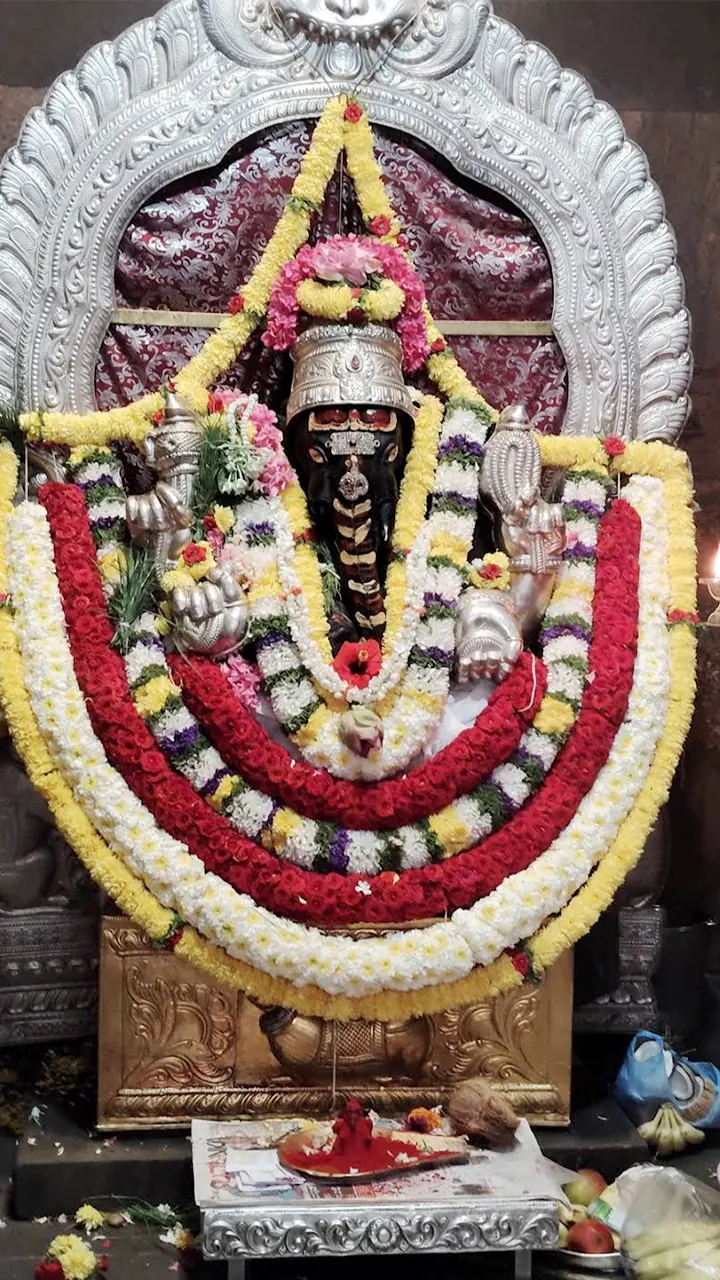
When Ravana ran back and saw the linga set on the ground, he realized the divine trick. Enraged, he struck the young boy on the head with his fist (a detail preserved in the nearby Maha Ganapati Temple, where the stone Ganesha image still features a distinct indentation on its crown). Ravana then tried with all his twenty hands to tear the linga out of the earth using raw, physical force.
As he pulled with all his might, the linga resisted, twisting and stretching like molten matter. His violent pulls scattered fragments of the casing across the coastline:
- Surathkal (Sadashiva Temple): Where the cloth covering the linga fell.
- Sajjeshwar: Where the casket lid was thrown.
- Guneshwar (Gunavanthe): Where the strings wrapping the linga landed.
- Murudeshwar: Where the decorative wrapping cloths (vastra) were cast down.
- Gokarna (Mahabaleshwar): The core root (moola) of the Atmalinga remained unmoved, establishing Shiva’s supremacy as Mahabaleshwara (“The Lord of Supreme Strength”). Exhausted and humbled, Ravana acknowledged that the cosmic will of Shiva could not be uprooted by physical pride.
Read More>> Famous Mehandipur Balaji Temple: Unveiling the Miracles of Hanuman
The Sacred Meaning of the Name “Gokarna”
The geographical and spiritual name Gokarna translates literally from Sanskrit as “Cow’s Ear” (Go = cow; Karna = ear). Regional tradition offers two explanations:
- Puranic Emergence: When the earth goddess (Bhoodevi) was submerged and distressed by moral decay, she assumed the form of a cow and prayed to Lord Shiva. Shiva emerged out of her ear to comfort her and establish his seat of peace, sanctifying this specific stretch of land.
- Geographical Contours: The physical layout of the ancient settlement, bounded by the Arabian Sea to the west and two mountain rivulets (the Gangavali and Aghanashini rivers) flowing into the ocean to the north and south, creates a natural landmass contour resembling the ear of a cow when viewed from the surrounding Sahyadri hills.
Religious and Cultural Significance
Dakshina Kashi and Ancestral Rites (Pitru Karya)
For centuries, Gokarna has functioned as southern India’s prime center for ancestral rites. In traditional Hindu belief, three pilgrimage destinations possess unique spiritual power for releasing departed souls (pitrus): Kashi (Varanasi) in the North, Gaya in the East, and Gokarna in the South.
Thousands of families travel to the Mahabaleshwar Temple every year to perform:
- Shraddha and Tarpana: Offering sesame seeds and sacred water to ancestors.
- Pinda Pradhana: Rice-ball offerings performed along the banks of the sacred Kotiteertha tank or on the seashore.
- Tripindi Shraddha: An elaborate ritual aimed at appeasing unsettled ancestral spirits and resolving generational spiritual unrest (pitru dosha).
The presence of the living sea directly beside an anchored Atmalinga makes the town spiritually potent for rituals balancing life, death, and liberation (moksha).
The Pancha Kshetras of the Atmalinga
Gokarna serves as the primary sanctuary (Moola Sthana) among the five sacred shrines (Pancha Kshetras) formed by the fragments of Ravana’s Atmalinga:
- Gokarna (Mahabaleshwar): The central root linga.
- Murudeshwar: The cloth wrapping; home to a massive coastal Shiva statue.
- Gunavanthe: The sacred binding thread.
- Dhareshwar: The sacred casket container.
- Sajjeshwar: The covering lid of the linga.
Completing a pilgrimage across all five coastal temples is traditionally held to cleanse past karmas and bring spiritual clarity.
Read More>> Bagheswari Temple Guwahati Assam
Who Is Worshipped at Gokarna Mahabaleshwar Temple?
Lord Mahabaleshwara (The Atmalinga)
The presiding deity of the sanctum is Lord Shiva, worshipped here as Mahabaleshwara.
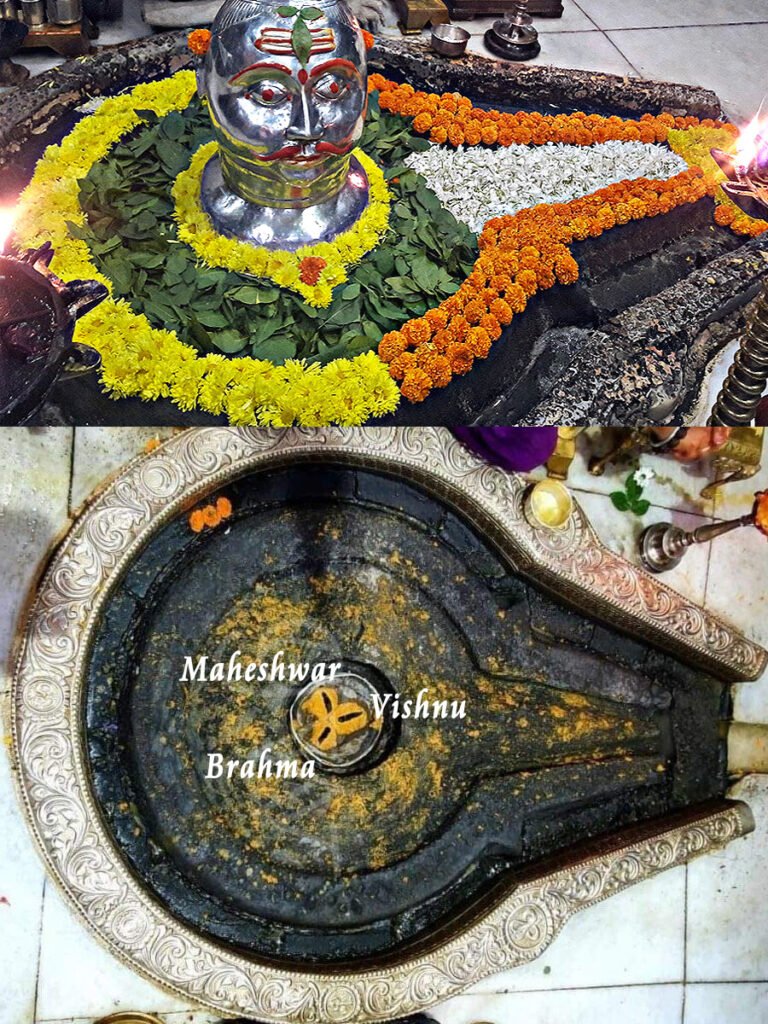
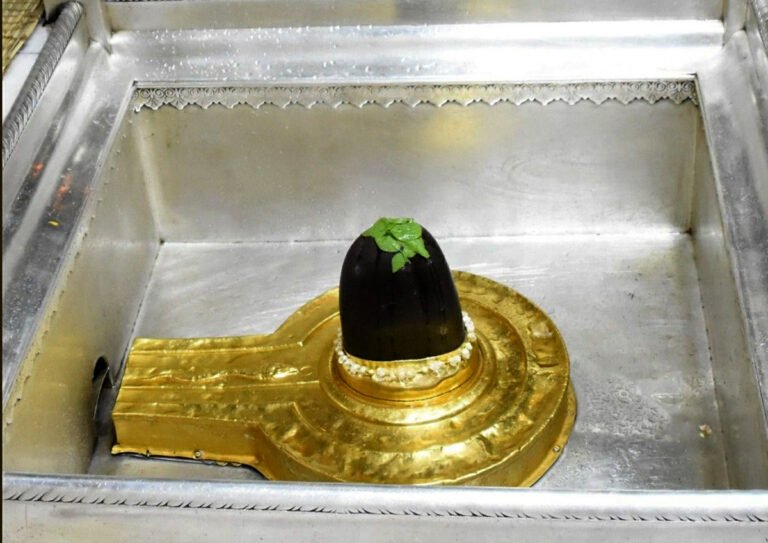
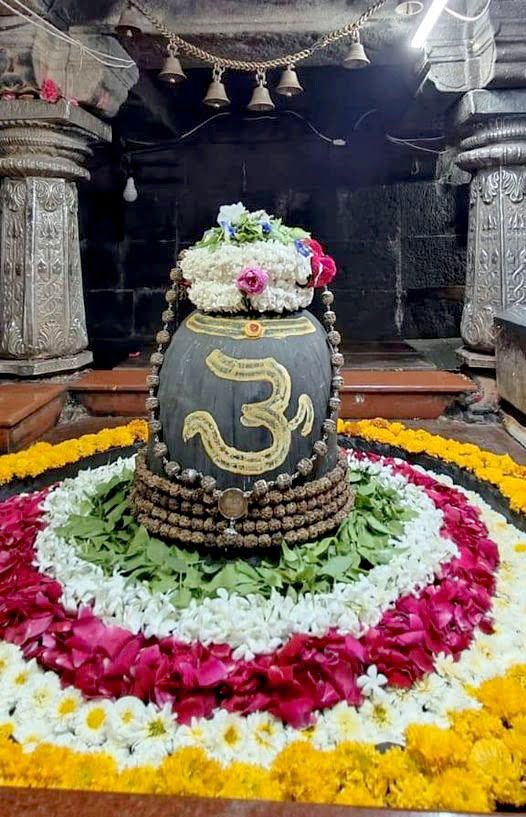
The deity does not appear in the standard anthropomorphic (human-like) form or as a tall, polished stone pillar (bana linga). Instead, the deity is a natural, uncarved stone protrusion (Svayambhu or self-manifested) set deep inside a square floor pit.
- The Saligrama Peetha: A dark, carved stone platform rests over the sanctum floor with a central aperture approximately 2 inches in diameter.
- Physical Darshan: Devotees peek through this opening to see the crown of the Atmalinga. During special Sparsha Darshan (touch darshan), pilgrims are guided by priests to reach their fingers into the aperture and touch the stone crown of the linga directly.
- The Ashta-Bandhana: Every forty years, the temple conducts the grand Ashta-Bandhana Kumbhabhishekam, resealing the junction between the living rock and the stone casing using an ancient paste composed of natural herbs, conch powder, lac, and tree resins.
Associated Shrines within the Complex
While Mahabaleshwara commands the sanctum sanctorum, several essential subsidiary deities share the inner and outer courtyards:
- Goddess Tamra Gauri: Located directly behind the main sanctum, this shrine houses Goddess Parvati holding a balancing scale (tula). Tradition states she is weighing the spiritual merits of Gokarna against Kashi, confirming that Gokarna’s sacred soil carries immense spiritual weight.
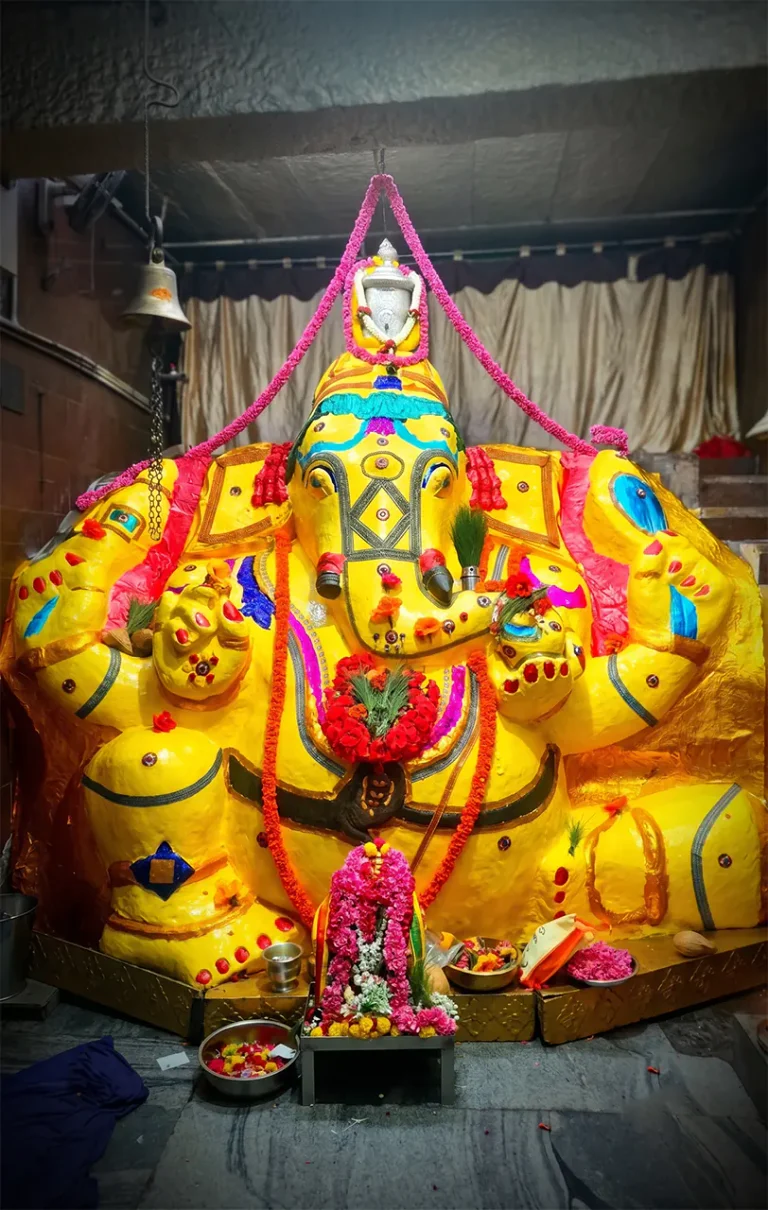
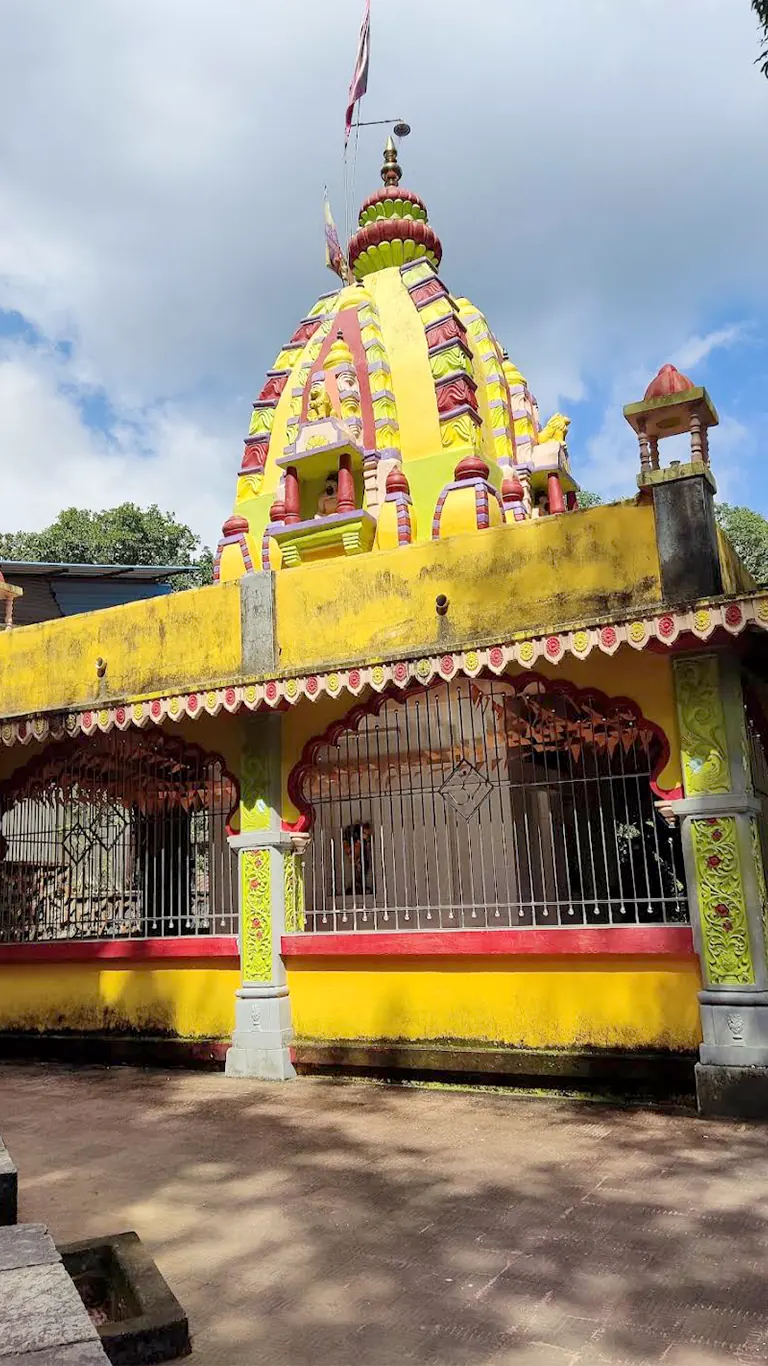
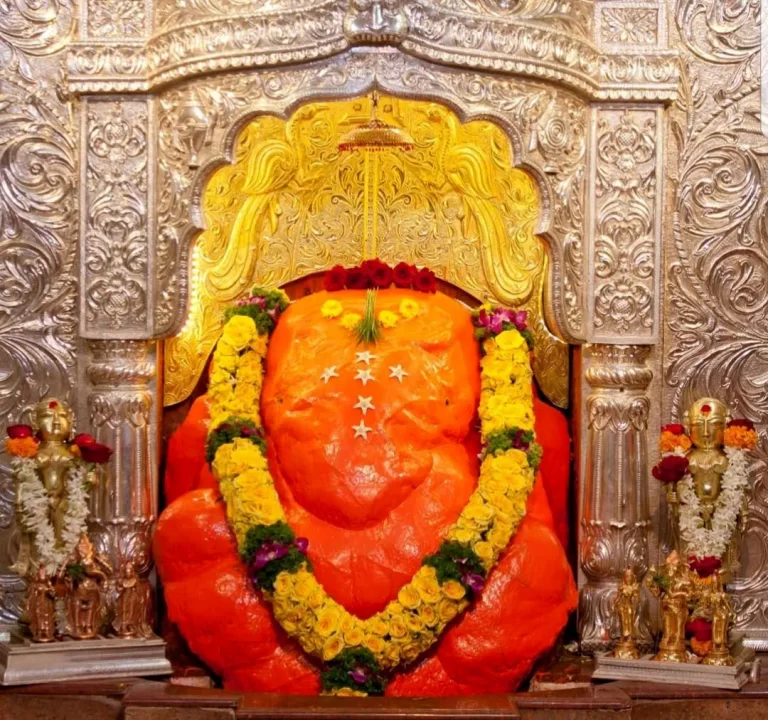
- Maha Ganapati Shrine: Situated just a few paces north of the main temple entrance, this ancient temple is home to a standing, two-handed black stone Murti of young Ganesha (Dvibhuja Ganapati). Local custom insists that visitors must offer prayers to Ganesha first before proceeding to Mahabaleshwar.
- Lord Kalabhairava: The guardian deity of the temple stands vigil in the northern corridor. Devotees offer prayers here before leaving the complex to show respect to the protector of holy sites.
- Goddess Bhadrakali: Located about 1 kilometer from the temple complex, Bhadrakali is honored as the town’s guardian goddess (Grama Devata), protecting the settlement against coastal storms and epidemics.
Architecture of Gokarna Mahabaleshwar Temple
Architectural Style
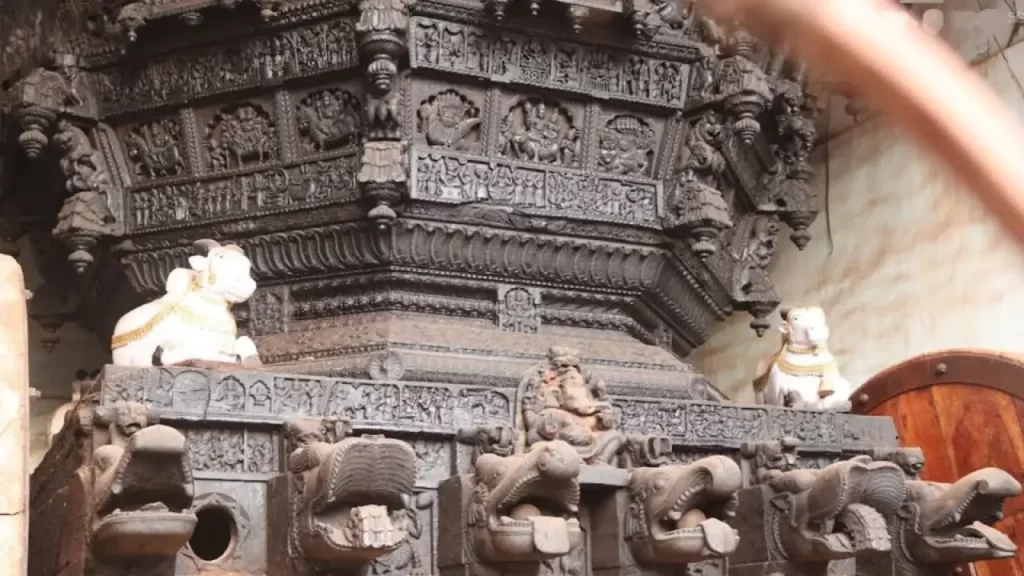
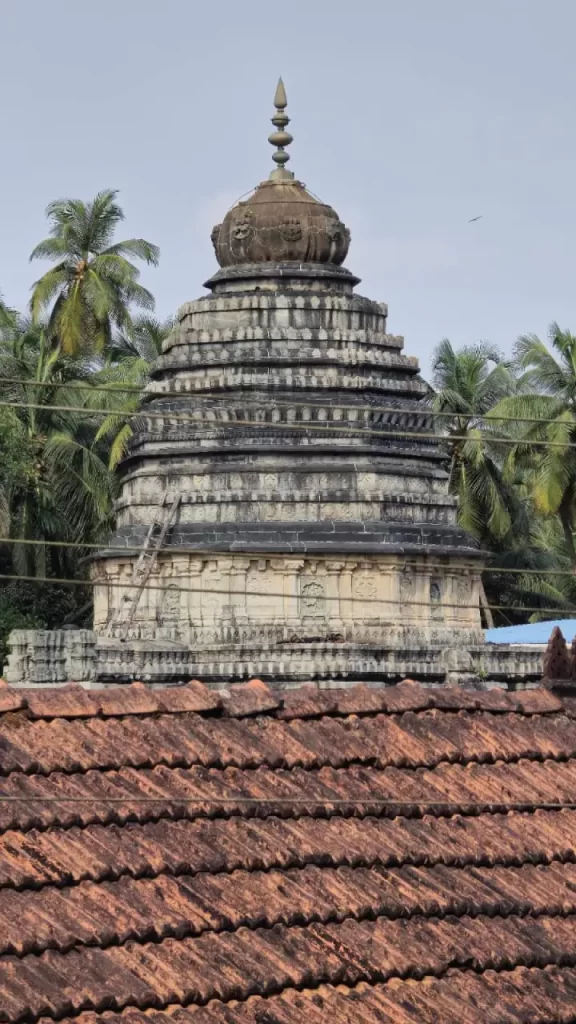
The architectural vocabulary of the Gokarna Mahabaleshwar Temple reflects a classical Dravidian stone style, modified by regional coastal adaptations designed to withstand heavy southwest monsoon rains. Thick laterite and granite walls, steeply pitched tiled eaves over outer timber mandapas, and heavy stone lintels define its exterior structure.
The Sanctum Sanctorum (Garbhagriha)
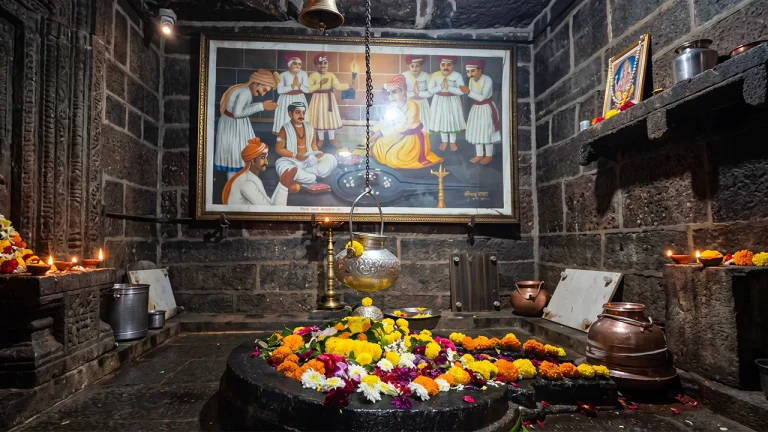
The core garbhagriha is square, dark, and intimate. Built using heavy granite blocks laid without modern cementing mortar, it holds a serene, concentrated atmosphere. Oil lamps (deepas) flicker against polished stone surfaces, casting warm reflections across the brass fittings framing the subterranean linga pit.
The sanctum’s low ceiling directs the viewer’s attention downward toward the earth, emphasizing the deity’s role as an anchored, immovable linga.
Mandapams and Pillars
Surrounding the sanctum are distinct structural chambers:
- The Mukhamandapa: A grand pillared assembly hall supported by fluted granite columns carved during the late Vijayanagara period. The capital of each pillar features stylized motifs of lions (yalis), floral creepers, and miniature relief carvings depicting scenes from the Ramayana and Mahabharata.
- Nandi Mandapa: Positioned directly along the primary east-west axis facing the sanctum sits a massive, beautifully polished black-stone sculpture of Nandi, the sacred bull. His gaze remains fixed on the inner doorway of the garbhagriha.
Inscriptions and Archaeological Records
Epigraphical surveys by the Archaeological Survey of India (ASI) in the coastal Uttara Kannada region have documented stone inscriptions (shilashasanas) around the temple precincts:
- Kadamba Inscriptions: Fragmentary records dating between the 5th and 7th centuries celebrate royal land endowments granted for daily milk oblations (Ksheerabhisheka).
- Vijayanagara Records: Inscriptions in Old Kannada script on the stone basement wall document financial gifts from local merchant guilds who contributed a percentage of their maritime customs revenues to fund temple upkeep and annual chariot festivals.
Read More>> The Secret of Aruvikkal Sree Shiva Subrahmanya Swami Temple
What to See Inside Gokarna Mahabaleshwar Temple
Walking through the Mahabaleshwar Temple complex reveals centuries of layered ritual architecture. Here is what to observe as you make your way through the site:
1. The Car Street (Ratha Beedi) Approach
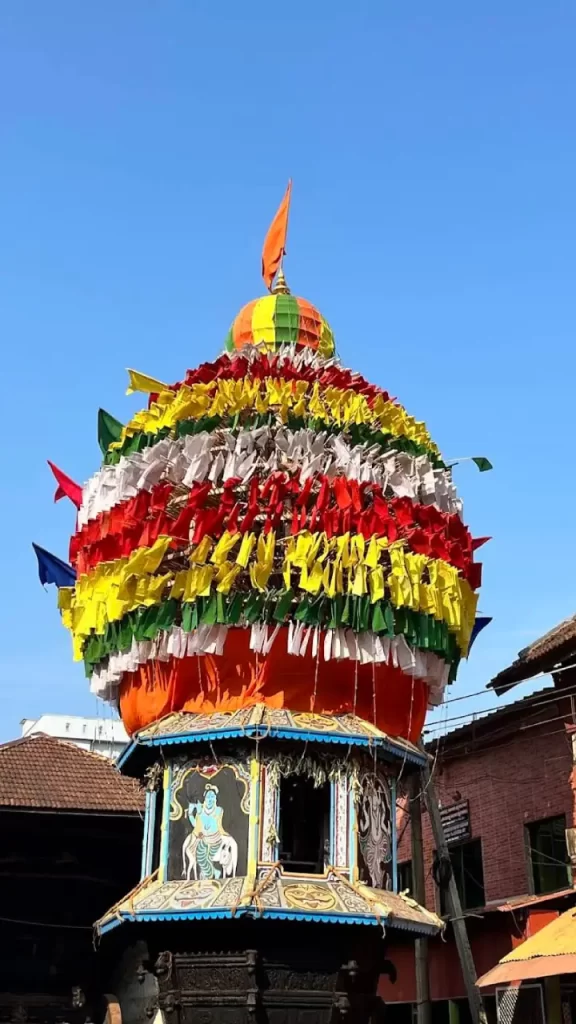
Your walk begins along the vibrant Car Street, flanked on both sides by traditional tiled-roof Brahmin residences, flower stalls selling strings of fragrant jasmine and crossandra, and shops offering copper puja vessels, rudraksha beads, and incense. During major festivals, two massive wooden temple chariots (rathas) rest along this street, towering above the surrounding rooftops.
2. The Main Entrance and Outer Gateway
As you take off your footwear and step across the stone threshold, you enter the outer courtyard (prakaram). The floor is paved with smooth granite slabs worn slick by millions of bare feet over centuries. The humid, salty sea air mingles with the scent of burning camphor, pure sesame oil lamps, and wet bilva leaves.
3. The Nandi Pavilion
Directly inside the main pavilion, pause before the stone Nandi. Devotees touch Nandi’s flanks, whisper personal prayers near his ears, and look between his horns to align their sight with the inner sanctum.
4. The Garbhagriha and Atmalinga Pit
When you step into the inner sanctum line, the temperature drops noticeably. Priests in traditional dhotis guide pilgrims around the central stone platform. Looking down into the circular brass-encircled opening in the floor, you will see the black, uneven crown of the subterranean Atmalinga, often covered with cool water, fresh bilva leaves, and white flowers.
5. The Shrine of Goddess Tamra Gauri
After completing your circumambulation (pradakshina) of the main sanctum, turn to the rear corridor to view Goddess Tamra Gauri. The bronze-toned stone murti stands gracefully, holding a balancing scale in her hands, watching over the inner courtyard.
6. The Temple Well and Sacred Courtyard
In the northern quarter of the interior courtyard, you will notice a stone well supplying water for daily abhishekam. The priests draw water using traditional copper buckets, ensuring no modern plumbing or outside water sources interrupt the purity of the sanctum rituals.


Daily Poojas and Rituals at Gokarna Mahabaleshwar Temple
Rituals at the temple follow ancient Agama traditions, beginning before dawn and continuing until night:
1. Morning Opening and Nirmalya Darshan (06:00 AM)
The temple doors open to the sound of blowing conches and temple bells. The first darshan of the day is Nirmalya Darshan, during which devotees view the Atmalinga adorned with the previous evening’s flowers and offerings. Viewing the linga in this undisturbed morning state is considered deeply auspicious.
2. Morning Abhishekam and Sparsha Darshan (07:00 AM to 12:30 PM)
The primary window for elaborate personal sevas takes place during the morning. Priests chant the Sri Rudram and Chamakam while pouring continuous streams of clean well water, pure cow’s milk, curds, honey, and tender coconut water over the Atmalinga. Devotees participating in paid sevas are escorted directly to the edge of the pit to perform Sparsha Darshan (physically touching the linga with wet hands).
3. Midday Maha Pooja and Aarti (12:30 PM)
The morning rituals culminate in the grand Maha Mangala Aarti. Priests hold heavy, tiered brass lamps filled with burning camphor, waving them in concentric circles before the Atmalinga while temple bells, drums (mridangam), and trumpets resonate through the halls. The sanctum doors then close for the afternoon.
4. Evening Darshan and Deeparadhana (05:00 PM to 08:00 PM)
The temple reopens as the late afternoon heat begins to cool. At dusk, the priests perform Sandhya Aarti, illuminating every corner of the mandapa with oil lamps.
5. Night Closure (Shayanotsava) (08:00 PM)
The day concludes with quiet chanting and lullabies (Shayanotsava), settling the divine presence for the night. The final curtain drops across the inner doorway at 08:00 PM.
Special Poojas at Gokarna Mahabaleshwar Temple
| Pooja / Seva Name | Religious Significance | Common Timing | Booking Method |
| Rudrabhisheka | Chanting of Sri Rudram with milk, water, and honey offerings | Morning (07:30 AM – 11:30 AM) | Counter on arrival |
| Maha Rudrabhisheka | 11 recitations of Namakam and Chamakam by Vedic priests | Early morning by appointment | In advance at temple office |
| Panchamrita Abhisheka | Five sacred nectars (Milk, Honey, Ghee, Curd, Sugar) poured on the linga | Daily morning batches | Counter on arrival |
| Navagranthi Pooja | Sacred knot tying to overcome chronic illnesses and career obstacles | Morning hours | Registered at temple counter |
| Bilva Archana | Chanting the 1,000 holy names of Shiva (Sahasranama) with fresh bilva leaves | Morning and evening | Counter on arrival |
| Tripindi Shraddha | Ancestral propitiation ritual performed to bring peace to departed family members | Morning (Outside sanctum / hall) | Prior booking with verified temple priests |
Note: All pooja fees and tokens must be purchased directly from official temple counters inside the administrative office. Do not pay unauthorized intermediaries or touts lingering outside Car Street.
Festivals Celebrated at Gokarna Mahabaleshwar Temple
1. Maha Shivaratri (February / March)
Maha Shivaratri is the premier annual festival of Gokarna, drawing tens of thousands of pilgrims from Karnataka, Goa, Maharashtra, and Andhra Pradesh:
- All-Night Vigil (Jagaran): The temple sanctum remains open throughout the night. Four distinct Prahar poojas are performed every three hours from dusk to dawn with continuous chanting of the Vedas.
- The Grand Chariot Procession (Rathotsava): The climax of the celebration occurs when the utsava murtis (processional festival idols) of Lord Shiva and Goddess Parvati are seated inside a massive, multistoried wooden chariot (Brahma Ratha). Hundreds of barefoot devotees haul the thick coir ropes with bare hands, pulling the chariot down Car Street amid showers of flowers and bananas tossed by the crowds.
- The Sea Bathing Ritual (Avabhritha Snana): The festival concludes with the processional deities carried down to the Arabian Sea for a ceremonial bath, followed by thousands of pilgrims diving into the surf alongside the priests.
2. Kartika Masa Deepotsava (October / November)
During the holy month of Kartika, the entire temple complex glows with thousands of clay oil lamps (earthen deepas) arranged along every stone cornice, plinth, and pillar. The sight of the reflection of flickering lamps across the waters of the nearby Kotiteertha tank is stunning.
3. Ganesh Chaturthi (August / September)
Celebrated with high energy across coastal Karnataka, Ganesh Chaturthi highlights the central role played by the adjacent Maha Ganapati Temple. Devotees offer sugarcane, coconuts, and modaks to thank Ganesha for rescuing the earth from Ravana’s pride.
Best Time to Visit Gokarna Mahabaleshwar Temple
Choosing when to visit Gokarna depends on your tolerance for heat, rainfall, and festive crowds:
October to March (The Ideal Season)
This is the most comfortable window for travel. The southwest monsoon winds have receded, the sea is calm, daytime temperatures hover comfortably between 24°C and 30°C, and evening sea breezes make walking down Car Street pleasant.
April to May (Summer Heat)
Coastal Karnataka becomes hot and humid during peak summer, with midday temperatures routinely exceeding 35°C and high relative humidity. The stone flagstones of the temple can become quite warm by 11:00 AM. If visiting in summer, plan your darshan early in the morning (06:00 AM – 08:30 AM) or after sunset.
June to September (Monsoon Months)
The Western Ghats and coastal belt receive heavy rainfall during the monsoon season. Gokarna transforms into a lush, green landscape. While beach activities and swimming are strictly banned due to dangerous surf, temple crowds are at their lowest. If you enjoy dramatic rain and quiet, unhurried darshans, monsoon visits can be rewarding.
Weekly Crowd Patterns
- Busiest Days: Saturdays, Sundays, Mondays (sacred to Shiva), Pradosham days, and Amavasya (new moon days, when ancestral rites peak).
- Quietest Days: Tuesday through Thursday afternoons generally see shorter queues.
Gokarna Mahabaleshwar Temple Timings
The temple maintains a consistent daily schedule:
- Morning Opening: 06:00 AM
- Sparsha Darshan & Abhishekam Hours: 07:00 AM to 12:30 PM
- Afternoon Closure: 12:30 PM to 05:00 PM (Sanctum doors closed)
- Evening Reopening: 05:00 PM
- Evening Aarti & Deeparadhana: 07:00 PM to 07:30 PM
- Night Closure: 08:00 PM
Important Visitor Note: Temple timings can change during Maha Shivaratri, solar or lunar eclipses, and special festival occasions. Always plan your arrival during the primary morning window (07:00 AM to 11:00 AM) to ensure you can complete both holy dips and your darshan before the afternoon break.
Dress Code and Rules at Gokarna Mahabaleshwar Temple
To preserve the sanctity and traditional Vedic decorum of the ancient shrine, the temple trust enforces a strict dress code:
Essential Temple Etiquette
- Footwear: No footwear of any kind is permitted within the outer gateway. Leave shoes, sandals, and slippers at the free municipal shoe stand or in your hotel room.
- Mobile Phones and Cameras: Photography and video recording are strictly prohibited inside the inner temple complex. Keep your phone switched off or tucked away in your bag.
- Physical Purity: If you take a holy dip in the sea, take a quick fresh-water shower at the nearby beach tap facilities or your hotel room before entering the inner sanctum. Walking into the sanctum with wet sea sand on your feet is strictly frowned upon.
How to Reach Gokarna Mahabaleshwar Temple
Gokarna is accessible by road, rail, and air along the central Konkan coast:
By Road
Gokarna connects directly to National Highway 66 (NH 66), the major multi-lane highway linking Mumbai, Goa, Mangaluru, and Kochi.
- From Goa (Panaji/Margao): Drive south via NH 66 across the Karwar border. The 135 to 150 km drive takes roughly 3 to 3.5 hours.
- From Bengaluru: Take the route via Tumakuru, Shivamogga, Sagara, and Honnavar to join NH 66 heading north (approx. 490 km, 9 to 10 hours driving time). Overnight KSRTC sleeper buses run daily between Bengaluru and Gokarna.
- From Mangaluru: Drive north along NH 66 via Udupi, Kundapura, and Bhatkal (approx. 230 km, 4.5 to 5 hours).
By Train
- Gokarna Road Railway Station (GOK): Located 9 km east of town on the Konkan Railway network. Several passenger and express trains (including the Matsyagandha Express and local Konkan Karwar trains) stop here. Auto-rickshaws and shared taxis are readily available at the station exit to take you to the temple (approx. 20–25 minutes).
- Kumta Railway Station (KT): Located 31 km south of Gokarna. Major long-distance superfast trains that skip Gokarna Road stop at Kumta. You can hire a private taxi directly from Kumta station to Gokarna (approx. 45 minutes) or take a KSRTC bus from the Kumta bus stand.
By Air
- Dabolim International Airport, Goa (GOI): Located 140 km north of Gokarna. Taxis are available at the airport prepaid counters. Driving time is roughly 3.5 hours.
- Manohar International Airport, Mopa, Goa (GOX): Located 175 km north (approx. 4.5 hours drive).
- Hubballi (Hubli) Airport (HBX): Located 150 km east. It offers strong domestic flight connectivity to major Indian metros. The drive descends the Western Ghats via the Arbail Ghat road.
Entry Fee, Parking and Facilities
Entry Fee and Pooja Booking
- General Entry: Free for all visitors via the standard general queue.
- Special Darshan / Seva Passes: During peak festivals or crowded holiday weekends, special fast-track darshan tokens can be purchased at the administrative office inside the temple for fees ranging from ₹100 to ₹500 depending on the seva chosen (e.g., direct Sparsha Darshan or special Bilva Archana).
Parking
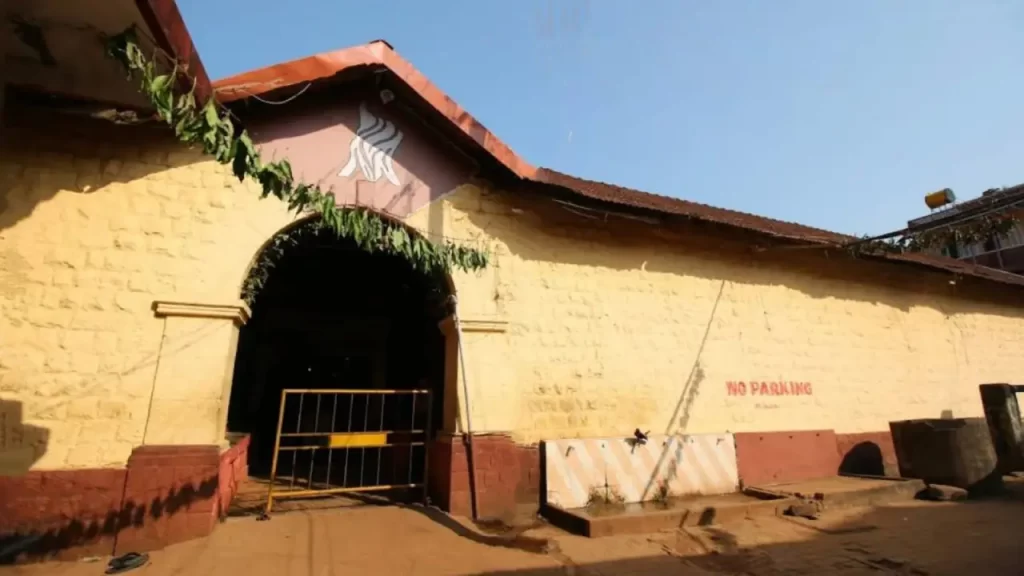
Parking directly on Car Street is prohibited.
- Main Municipal Parking Area: Located near the entrance arch of Gokarna town (near the KSRTC bus stop), about 600 to 800 meters from the temple.
- Beachside Parking: Several open ground parking lots are available near Gokarna Main Beach, requiring an easy 5-minute walk through the market alley to the temple.
Restrooms and Cloakrooms
- Shoe Stands: Free and nominal pay shoe counters operate near the Maha Ganapati Temple entrance.
- Baggage / Mobile Cloakrooms: Run by the temple administration; you can safely deposit mobile phones, bags, and electronic items for a small fee before joining the line.
- Restrooms: Basic public washrooms and bathing facilities are available near Gokarna Main Beach and around the perimeter of the Kotiteertha tank.
Prasadam and Annadanam
The temple provides Nitya Annadanam (free daily lunch prasadam) to all visiting pilgrims in the dining hall (Bhojana Shala) between 12:30 PM and 02:00 PM. The meal features a traditional, satisfying satvik menu: hot steamed rice, coastal Karnataka sambar (flavored with fresh coconut), rasam, buttermilk, and a sweet dish.
Accessibility at Gokarna Mahabaleshwar Temple
Visitors traveling with elderly family members or individuals with mobility impairments should keep the following practical conditions in mind:
- Stone Thresholds and Steps: The temple is an ancient heritage structure. The pathways feature raised stone doorframes (dehleez), uneven historic stone paving, and a short flight of steps leading down into the inner pradakshina corridor.
- Sanctum Pit Access: The Atmalinga sits in a sunken floor pit. Reaching down to touch the linga during Sparsha Darshan requires bending down or kneeling. Temple priests assist elderly pilgrims who find this movement difficult.
- Wheelchair Access: Standard modern ramps are limited within the historic sanctum areas due to architectural constraints. However, manual wheelchairs can navigate the outer Car Street, the main courtyard, and the outer mandapa hall.
- Special Assistance: If visiting with a senior citizen who cannot stand for extended periods, inform the temple security guards near the main threshold. During non-peak hours, they often allow seniors to bypass long outer queues and enter directly through the side corridor.
Dos and Don’ts at Gokarna Mahabaleshwar Temple
Dos
- Do visit Maha Ganapati first: Honor the ancient tradition by offering prayers at the adjacent Maha Ganapati Temple before entering the Mahabaleshwar complex.
- Do follow the dress code: Change into traditional clothing before reaching the temple gates. Men should be prepared to remove their shirts and vests.
- Do wash your feet: Use the water taps near the entrance to wash away street dust or beach sand before stepping on the inner flagstones.
- Do circumambulate clockwise: Always walk around the inner sanctum and subsidiary shrines in a clockwise direction (pradakshina).
- Do carry small cash: Carry small-denomination currency notes for buying puja flowers, paying shoe-keep tokens, or making voluntary offerings in the official temple donation boxes (hundi).
Don’ts
- Do not photograph inside: Keep cameras and smartphones put away inside the inner courtyards and sanctum.
- Do not wear synthetic Western clothing: Avoid jeans, track pants, shorts, skirts, and T-shirts; security staff will turn you away at the gate.
- Do not carry leather goods: Avoid wearing leather belts or carrying large leather bags into the main sanctum.
- Do not hire unauthorized touts: Ignore private agents on the street offering “guaranteed immediate private touch-darshans.” Work directly with uniformed staff or counter clerks at the temple office.
- Do not litter: Keep Car Street, the beach, and the sacred waters of Kotiteertha clean by disposing of plastic and waste responsibly.
What Makes Gokarna Mahabaleshwar Temple Special?
What sets Gokarna apart from almost every other Shaivite shrine in India is the rare convergence of living sensory participation, elemental geography, and complete mythological grounding:
- The Rarity of Physical Contact (Sparsha): In most ancient South Indian temples, devotees remain at a distance, viewing the deity across railings while a priest performs the rituals. At Gokarna, you can lean over the sanctum pit and touch the primordial stone linga yourself. Feeling the cool, water-washed surface connects you directly to the living continuity of Hindu worship.
- The Coastal Holy Dip (Samudra Snana): At Gokarna, the Arabian Sea serves as the temple’s natural outer tank. Pilgrims treat the rhythmic waves as a cleansing force, bathing in the surf before stepping across the threshold to meet the Lord of Immense Strength.
- A Living Mythological Landscape: The surrounding geography directly matches the Puranic stories. You pray to the Ganesha who has a dent in his head from Ravana’s fist, touch the linga that could not be moved, and stand before the scale held by Goddess Tamra Gauri.
Places to Visit Near Gokarna Mahabaleshwar Temple
Nearby Temples
- Maha Ganapati Temple (Adjacent): Located barely 50 meters from the Mahabaleshwar gateway. The 5-foot black stone image of standing Ganesha honors the divine trick that saved the Atmalinga from being carried to Lanka.
- Bhadrakali Temple (1 km north): Dedicated to the fierce guardian goddess of Gokarna. It is customary to pay your respects here to complete the traditional temple circuit.
- Tamra Gauri Shrine (Within the complex): Located directly behind the Mahabaleshwar sanctum, honoring Goddess Parvati.
- Venkatramana Temple (Car Street): A historic 17th-century Vaishnavite temple dedicated to Lord Venkateshwara, showing the harmonious balance of Shaivite and Vaishnavite traditions within the town.
Sacred Water Bodies
- Kotiteertha (800 meters east): A massive, rectangular sacred stone tank ringed by heritage mansions, coconut trees, and monastic hermitages. The name signifies the presence of “ten million holy springs.” Devotees light lamps and perform ancestral offerings along its stone steps.
Nature and Coastal Attractions
- Gokarna Main Beach (200 meters west): A long, open sandy coastline running directly parallel to Car Street. The southern edge offers stunning views of the coastal cliffs meeting the Arabian Sea.
- Kudle Beach (2 km south): A wide, crescent-shaped cove separated from Gokarna town by a hillock. Popular for peaceful walks, seaside cafes, and sunsets.
- Om Beach (6 km south): Named after its natural shoreline shape, which resembles the sacred Sanskrit symbol ॐ (Aum) when viewed from the surrounding bluffs.
- Half Moon Beach and Paradise Beach: Accessible via walking paths along the coastal cliffs or by small passenger boat ferries operating from Om Beach.
Local Markets and Regional Food
Car Street provides a look into coastal Karnataka’s culinary and artisanal traditions:
- Spices and Cashews: Uttara Kannada produces some of India’s finest organic black pepper, wild cardamom, and fresh cashew nuts.
- Traditional Brahmin Diners (Khanavalis): Look for small, unpretentious dining rooms serving classic South Kanara meals on banana leaves, along with cooling glasses of fresh kokum juice (punarpuli).
One-Day Pilgrimage Itinerary
This balanced one-day itinerary covers sacred darshans, ancestral rituals, and coastal walks without unnecessary rushing:
- 06:00 AM – 07:00 AM: Begin your morning with a ritual walk to Gokarna Main Beach. Take a purifying dip in the waves as the sun rises over the coastal hills. Return to your room to rinse off the saltwater and change into clean, traditional temple attire.
- 07:00 AM – 07:30 AM: Walk down Car Street to the Maha Ganapati Temple. Offer a coconut and pray before the standing image of Ganesha, observing the indentation left by Ravana’s fist.
- 07:30 AM – 09:30 AM: Enter the Gokarna Mahabaleshwar Temple. Join the morning seva queue for Sparsha Darshan and Rudrabhisheka. Take your time in the sanctum to touch the top of the Atmalinga and offer bilva leaves. Complete your pradakshina by visiting the shrine of Goddess Tamra Gauri directly behind the sanctum.
- 09:30 AM – 10:30 AM: Step out into the morning sunshine for breakfast at a nearby traditional diner. Enjoy local specialities like steamed idlis, crispy medu vadas, and coastal Karnataka bisi bele bath, accompanied by hot filter coffee.
- 10:30 AM – 12:30 PM: Walk east toward the quiet banks of Kotiteertha. Spend time soaking in the peaceful atmosphere along the ancient stone steps, then proceed to the Bhadrakali Temple to offer prayers to the town’s guardian goddess.
- 12:30 PM – 01:30 PM: Return to the Mahabaleshwar Temple dining hall (Bhojana Shala) to enjoy hot, satvik Annadanam prasadam alongside fellow pilgrims.
- 01:30 PM – 04:30 PM: Retreat to your hotel room to rest during the hottest hours of the afternoon when the sanctum is closed.
- 04:30 PM – 06:45 PM: Take an auto-rickshaw to Om Beach. Walk along the cliff paths to view the natural dual-crescent shoreline shaping the sacred “Aum” symbol, and watch the sun dip below the horizon of the Arabian Sea.
- 07:00 PM – 08:00 PM: Return to the Mahabaleshwar Temple to experience the quiet beauty of Sandhya Aarti. Watch the stone halls glow under the warm light of brass oil lamps as bells sound the close of the ritual day.
- 08:30 PM: Conclude your day with a simple dinner along Car Street before heading in for the night.
Visiting Gokarna Mahabaleshwar Temple for the First Time?
If you are planning your first trip to Gokarna, this straightforward step-by-step checklist will help you navigate your arrival smoothly:
- Before Leaving Your Room: Make sure your attire matches the mandatory dress code. Men should wear a clean cotton dhoti and carry an angavastram; leave your leather belts, wallets, and watches locked safely in your room. Women should wear a modest saree or traditional salwar kameez.
- Approaching Car Street: If arriving by car, park at the main municipal ground near the bus station. Take a relaxed 8-minute walk to the entrance arch of Car Street.
- Managing Footwear: As you near the Maha Ganapati Temple, deposit your shoes at the designated shoe counter. Memorize your counter token number before walking on the smooth stone path.
- Prioritize Maha Ganapati: Always walk into the small Maha Ganapati shrine first. Spend a quiet moment before the deity to establish the mythological starting point of the Gokarna pilgrimage.
- Entering Mahabaleshwar: Walk across the main threshold into the stone complex. If you wish to perform milk abhishekam or touch the Atmalinga, step up to the official booking counter on your left to purchase your seva pass.
- Experiencing the Darshan: Follow the line into the inner sanctum. Keep your attention focused on the floor aperture. When directed by the priest, bend forward, place your right hand gently into the circular opening, and touch the cool crown of the stone Atmalinga.
- Collecting Prasadam: After paying your respects at the Tamra Gauri shrine and walking the clockwise path around the sanctum hall, collect your prasadam (kumkum and bilva leaves) from the priests stationed in the outer hall.
Frequently Asked Questions About Gokarna Mahabaleshwar Temple
1. Where is the Gokarna Mahabaleshwar Temple located?
The temple is situated along Car Street in the coastal town of Gokarna, within the Kumta taluk of the Uttara Kannada district, in the southwestern state of Karnataka, India.
2. What are the daily darshan and pooja timings?
The temple is open every day from 06:00 AM to 12:30 PM for morning darshan, abhishekam, and sparsha darshan, and reopens in the evening from 05:00 PM to 08:00 PM for darshan and deeparadhana.
3. What makes the Gokarna Mahabaleshwar Temple famous across India?
The temple houses the sacred Atmalinga of Lord Shiva, brought from Mount Kailash by Ravana and anchored into the coastal bedrock through a divine trick played by Lord Ganesha. It is celebrated as Dakshina Kashi.
4. Can visitors touch the Shiva Linga directly?
Yes. Unlike most major South Indian shrines, the temple allows devotees to perform Sparsha Darshan (physically touching the top of the subterranean Atmalinga inside its stone floor opening) during designated morning seva hours.
5. What is the dress code for men and women?
Traditional clothing is mandatory. Men must wear a dhoti or veshti and remove their shirts and vests before entering the sanctum. Women must wear a saree, a half-saree, or a traditional salwar kameez with a dupatta. Western clothing (jeans, shorts, mini-skirts, and T-shirts) is strictly prohibited.
6. Is there an entry fee to visit the temple?
General entry to the temple is entirely free. Nominal, regulated fees apply if you choose to participate in special morning sevas, such as Rudrabhisheka, Panchamrita Abhisheka, or direct fast-track Sparsha Darshan.
7. Why should visitors pray at the Maha Ganapati Temple first?
According to the Skanda Purana, Lord Ganesha saved the Atmalinga from being carried to Lanka by placing it down in Gokarna. Devotees offer prayers at his shrine first to thank him and seek permission before meeting Lord Shiva.
8. What is the best season of the year to visit Gokarna?
The ideal travel season spans the post-monsoon and winter months between October and March, when coastal temperatures are mild (24°C to 30°C) and the sea remains calm.
9. Which days see the heaviest crowds?
Crowds are highest during the annual Maha Shivaratri festival (February/March), on Pradosham days, on Shravana Mondays, on Amavasya (new moon days for ancestral rites), and on general weekend holidays.
10. How can I reach Gokarna by train?
The closest railhead is Gokarna Road Railway Station (GOK), located 9 km east of town on the Konkan Railway route. The larger Kumta Railway Station (KT), 31 km south, provides stops for long-distance superfast trains.
11. What is the nearest airport to Gokarna?
Dabolim Airport in Goa (GOI) is the closest international airport, located approximately 140 km north of Gokarna (roughly a 3.5-hour drive via NH 66).
12. Are free meals provided at the temple?
Yes. The temple serves daily free Annadanam (satvik lunch prasadam) to all pilgrims in its dining hall (Bhojana Shala) between 12:30 PM and 02:00 PM.
13. Is photography permitted inside the temple?
No. Photography, video filming, and smartphone usage are strictly forbidden inside the inner temple courtyards and sanctum sanctorum.
14. What ancestral rituals are performed at Gokarna?
Gokarna is a major center for Pitru Karya. Families perform Shraddha, Tarpana, Pinda Pradhana, and Tripindi Shraddha along the seashore and at the historic Kotiteertha tank to pray for departed ancestors.
15. Is the temple accessible for elderly visitors using wheelchairs?
Wheelchairs can move through the outer Car Street, the main courtyard, and the outer mandapa. However, historic stone doorframes, raised lintels, and steps prevent direct wheelchair access into the inner sanctum. Elderly visitors can request assistance from security staff to use shorter side lines.
16. What is Kotiteertha and where is it located?
Kotiteertha is a large, sacred rectangular temple tank situated about 800 meters east of the Mahabaleshwar Temple. Its name translates to “ten million sacred springs,” and it is an essential site for ancestral rites and festive lamp-lighting.
17. What other temples are linked to the Gokarna Atmalinga legend?
The four other coastal shrines formed by the fragments of the Atmalinga’s casing are Murudeshwar, Gunavanthe (Guneshwar), Dhareshwar, and Sajjeshwar. Together with Gokarna, they make up the sacred Pancha Kshetras.
18. Where can I park my car when visiting the temple?
Direct parking along Car Street is prohibited. Visitors should use the large municipal parking grounds located near the KSRTC town bus stand (an 8-minute walk from the temple) or the open lots near Gokarna Main Beach.
19. How much time is needed to complete the darshan?
On average non-festival weekdays, going through the line and completing your darshan takes between 30 and 60 minutes. During long weekends or festival days, queue times can extend to 2 to 4 hours.
20. Are decent accommodation options available near the temple?
Yes. Gokarna offers a wide range of stay options, from traditional pilgrim guesthouses (dharmashalas) and simple family lodges along Car Street to comfortable seaside hotels, family resorts, and eco-cottages along Kudle and Om beaches.
Conclusion: Why Gokarna Mahabaleshwar Temple Is Worth Visiting
The Gokarna Mahabaleshwar Temple represents one of India’s rare places where intense spiritual tradition remains closely intertwined with the natural coastal landscape. It is not an isolated museum of past architecture, nor is it a commercialized spiritual theme park. Instead, Gokarna continues to function just as it has for over fifteen hundred years: as an active, living center of ancient Vedic sound, ritual discipline, and devotion.
When you step off the busy sands of the Arabian Sea, walk through Car Street between traditional homes, and enter the cool, stone halls of the inner temple, the centuries seem to collapse. Kneeling before the small floor opening to reach down and touch the ancient Atmalinga leaves a lasting impression. In that brief moment of contact with the cool stone, you join hands with millions of pilgrims who have knelt in this same coastal sanctuary across the ages, seeking peace from the Lord of Immense Strength. A journey to Gokarna is more than a holiday along the coast—it is a direct encounter with the enduring soul of classical India.