Vigneshwara Temple Ozar
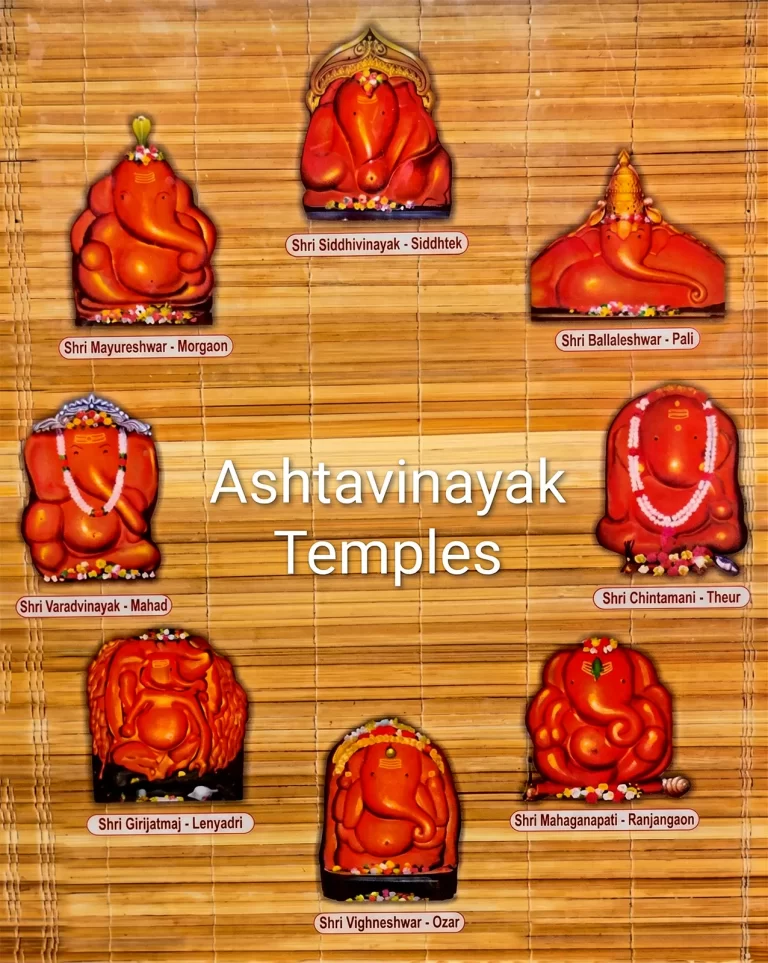
Vigneshwara Temple Ozar, located gracefully along the gently flowing river named Kukadi in the tranquil and picturesque village of Ozar in the Junnar Taluka of Pune district in Maharashtra state, this religious landmark is a time-honored source of peace and solace. Also known as the impressive Ozar Ganpati Temple, this place of worship is more than just another monument made up of stones and cement as it stands as a testimony to the miraculous powers of God. It holds a proud status of being the seventh among the Ashtavinayak temples found in Maharashtra state.
Whether you are a devoted pilgrim who wishes to demolish all hurdles in your way, a history lover willing to retrace the path followed by the mighty Maratha Empire, or a wanderer desiring a peaceful refuge from the hectic noise of urbanization, the ozar ganpati temple is a haven waiting to make you experience its magical effect. In the following guide, which is complete and comprehensive, I shall guide you to the temple just like I would if I was beside you in the temple premises hearing the tinkling sound of temple bells and enjoying the aromatic smell of burning incense sticks.
Historical Background: The Legends, Sages, and Royal Patrons
In order to understand the great energy surrounding the Vigneshwara Temple Ozar, one has to go way back in time—not centuries, but eons. Each brick in this ancient ozar ganpati temple is full of its own story to tell.
The Genesis of The Myth: Victory Over Vighnasura
The origin story of the Vigneshwara Temple Ozar is a timeless tale of pride, devastation, and ultimate downfall. According to legends, there once ruled a mighty king by the name of Abhinandana. In his greed for total dominance in all planes, King Abhinandana performed an extremely lavish Maha Yagna (fire sacrifice). But, being proud of himself, he did not invite the King of Heaven, King Indra, to participate in his sacred ceremony.
Angered at this great disrespect, King Indra decided to thwart this ceremony in its tracks. He called forth Kaala (Time and Death) and asked him to impose a great barrier on the king’s sacrifice. Kaala took on the shape of a horrifying demon known as Vighnasura (demon of hindrances).
But Vighnasura didn’t just leave off by spoiling the king’s yagna. The power bestowed upon him made him go berserk in the universe by stopping all spiritual activities of humans, meditations of sages, chanting of Vedic mantras, and other righteous actions done by people. The whole world entered a phase where spiritual darkness prevailed and chaos reigned.
The Surrender and the Naming
Feeling helpless and hopeless, the sages and gods immediately took refuge with Lord Brahma and Lord Shiva. Both told them about one savior who could get rid of the demon. In response to the earnest prayers of the saints, Lord Ganesha fought a great war against Vighnasura. Understanding that fighting with Ganesha was a futile act that would surely end up in failure, Vighnasura gave up his weapons and fell down at Lord Ganesha’s feet.
Vighnasura then pleaded for forgiveness and promised that he would not cause trouble to the devotees of Ganesha anymore. A sacred agreement was reached between the two where Ganesha declared that Vighnasura (obstacles) can stay anywhere but those places where Lord Ganesha is worshipped.
Impressed by the grace of the Lord, the repentant demon pleaded for one last time with a sincere desire. He requested that the name be given to him forever so that he can remember the change that he underwent. Ganesha accepted the plea of the demon and took the name of Vighneshwara (Lord and Master of Obstacles) or Vighnahar (The Destroyer of Obstacles). The sages were absolutely delighted and performed the sacred rite of installation of a self-manifested deity at Ozar to celebrate the triumph, resulting in creation of the temple known as the Vigneshwara Temple Ozar.
Read More>> Scriptural Mystery of Khatu Shyam Temple: Legend of 3 Arrows
The Maratha Empire and the Peshwa
Connection Although the origins of the ozar ganpati temple belong to the celestial world, it is only the human world that gave it its tangible form, which happened in the glorious times of the Maratha Empire.
Chimaji Appa, the remarkable military strategist and the younger brother of Peshwa Baji Rao I, had waged an epic war against the Portuguese forces during the time of the Vasai Fort. Prior to waging the difficult war, there was a legend that he asked for blessings from the Lord before entering into it. In appreciation of the glorious victory that he had won in 1739, he reconstructed the famous Vigneshwara Temple Ozar.
It was no mere reconstruction; it was built with fort-like defenses, and the most famous thing that he did was cover the Shikhara (temple tower) with gold leaves, thus making it look like a royal crown from miles away. However, the structure was enhanced once again in 1833 A.D. In 1967, an ardent devotee of Lord Ganesha by the name of Appa Shastri Joshi took up the reconstruction work again.
Religious and Cultural Significance: The Anchor of the Ashtavinayak
The significance of the Vigneshwara Temple Ozar is one that is incomparable and unrepeatable in the cultural fabric of both Maharashtra and the greater Hindu universe. In order to fully comprehend why countless people make their way into the gates of the ozar ganpati temple, we must examine the spirituality of the ozar temple in detail.
Scriptural Proof: The Echoes from the Puranas
This is no ordinary religious place of worship for the Hindus, as its sanctity is supported by various references from the oldest Hindu scriptures. References to the story of Ozar and his slaying of Vighnasura can be found in the Mudgala Purana, Skanda Purana, and even from the Vinayaka Purana of old Tamil literature.
The Mudgala Purana, a dynamic scripture devoted entirely to the incarnations of the Lord Ganapati, elaborates upon the Vighnaraja Avatara (Avatara that destroys Vighnas). According to this scripture:
“Vighnarajo Ganeshasya prathamah parikirtitah, Vighnasura-vinashaya dharitah sa gajananah.”
It proves from the above religious scripture that it was through assuming this particular elephant-faced form that Ganesha was able to control the demon of obstacles and thus confirming Ozar to be the precise location where the divine act occurred.
Why It’s So Important to Have One There
In Hindu philosophy, Vighna refers to a hindrance or an obstacle, a hurdle or a psychological block that prevents people from realizing their goals or desires either spiritually or materially. As a result, the ozar ganpati temple stands out as the place to go in case you feel like you’re trapped.
The faithful believe with total confidence that in order for one to make a breakthrough in life whether when launching a business, getting married, purchasing property, or moving forward in life, it requires a visit to the Vigneshwara Temple Ozar first.
Read More >> Sanwariya Seth Temple: Tycoons Secretly Offer 50% Profits
Architecture and Design: A Fortified Masterpiece of the Peshwa Era
In our role as your guide, now would be the time when we invite you to pause and look upward to notice the immediate environment around you. The architecture of the Vigneshwara Temple Ozar has a very distinctive appearance that differs markedly from the majority of temples found across India.
The Architectural Style: Traditional Peshwa Defense Structure
The ozar ganpati temple has an overwhelmingly dominant structure based on the traditional Maharastrian/Peshwa architectural style with elements of North Indian architectural style known as Nagara mixed with medieval defense aspects. Being that the area experienced much political instability in the medieval period, the temple itself had a fortress-like appearance.
The entire complex of the temple is enclosed by tall walls consisting of dense basalt rocks. The whole structure of the temple gives a very similar impression of a Maratha fort.
Important Features, Murals, and Golden Shikhara
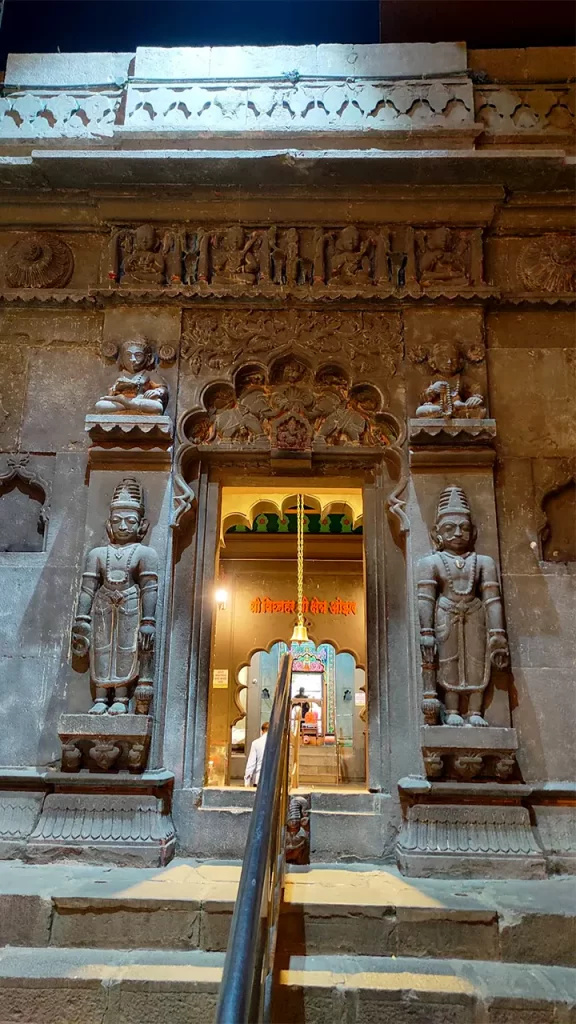
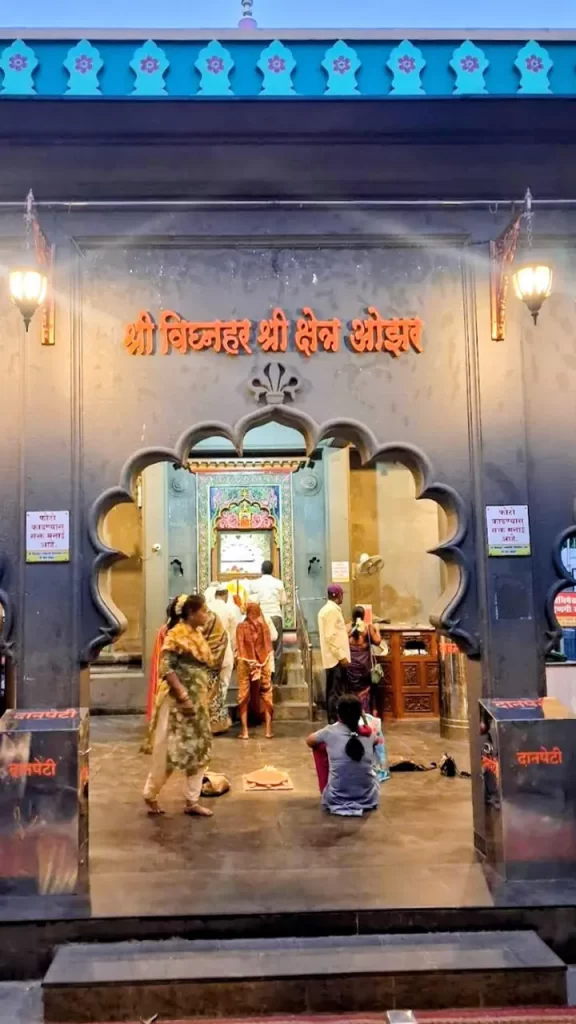
- The Massive Gateway: The magnificent gateway consists of an elaborately sculpted multi-tiered stone structure that guards a pair of massive statues of the celestial gatekeepers Jaya and Vijaya. Above the gateway entrance is an intricately carved lintel that includes the figures of four musicians. Along with depictions of monkey and parrot images, which are carved around the trees, the lintel reflects the perfect amalgamation of nature.
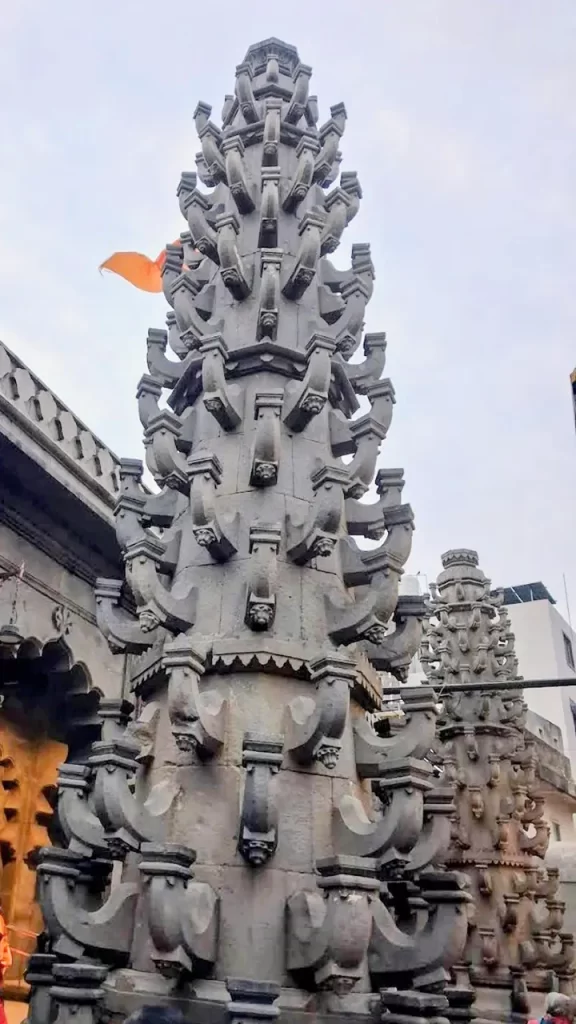
- Deepmalas (Lamp Towers): Upon entering the magnificently tiled courtyard area, two massive stone structures called Deepmalas (multi-tiered lamp towers) will attract your attention. Thousands of oil wicks placed on these stone structures create a marvelous sight when lit during the festival nights.
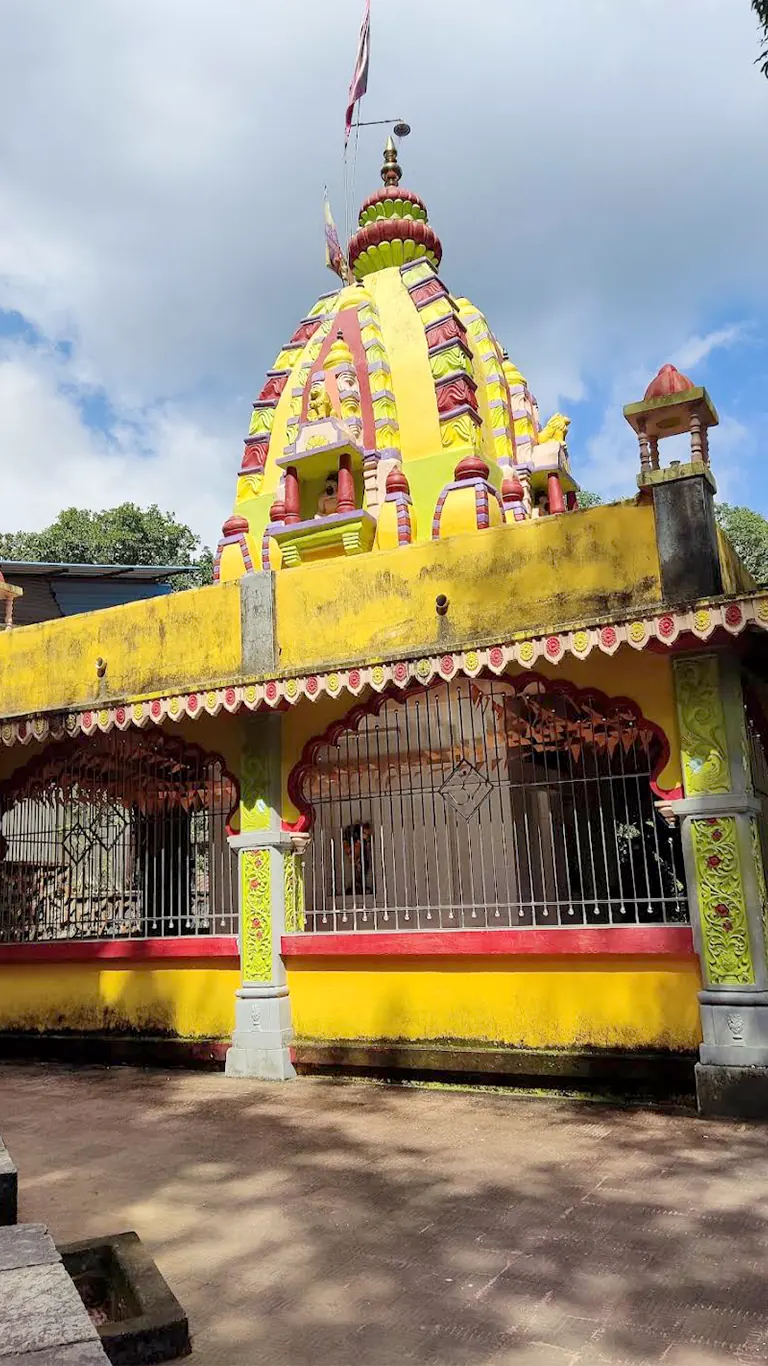
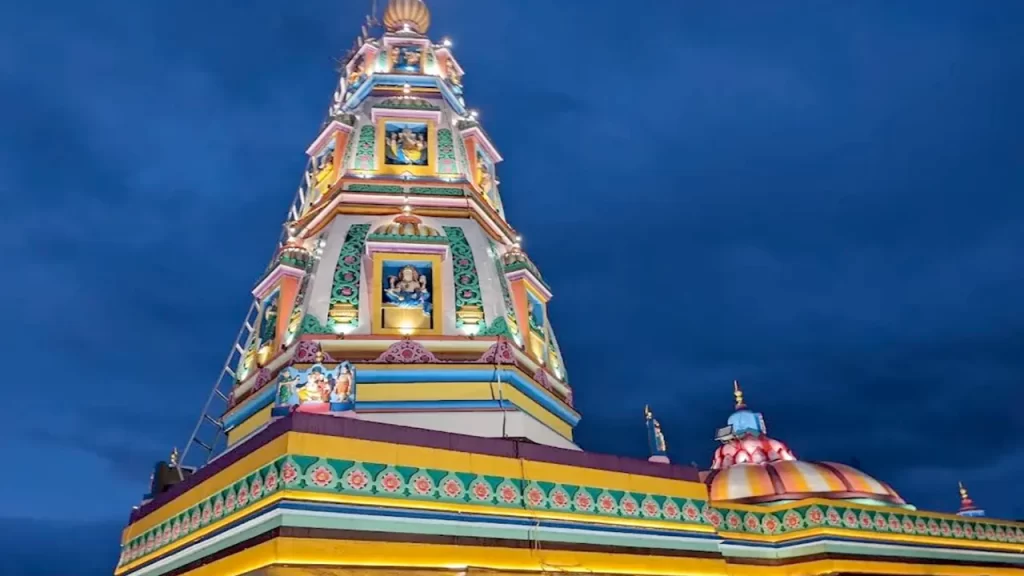
- Golden Spire: Raise your eyes to the heavens, and you will behold the majestic glory of the temple, the magnificent Shikhara (domed structure). Decorated with gold leaf extensively by Chimaji Appa, the spire shines brightly under the sun’s rays and serves as a guiding light for all who come to visit.
- Mural Paintings on Temple Walls: The interiors of the temple halls are decorated with paintings of the Ganesha Purana, the elephant-headed deity in various postures, along with heroic stories of the Maratha warriors, maintaining the 18th-century Maharastrian artistic tradition.
Main Attractions or Highlights: Inside the Sanctum
Come along into the depths of the Vigneshwara Temple Ozar, from the outside courtyard to the mysterious energies inside the temple.
Sabhamandap (First Hall)
There are two distinct yet interconnected Sabhamandaps in this temple. First is the main Sabhamandap which is nothing but an architectural wonder that stands tall at 20 feet. There are side exits in this hall to the north and south directions. In this hall, you will see a beautifully carved idol of Dhundiraj Ganesha. The pillars in the hall are very strong stone pillars that have been standing strong for about two-and-a-half centuries.
Inner Mandap & Mushika
Coming inside, there is a second inner hall, which lowers its ceiling down to a height of 10 feet. The second part is decorated with a beautiful, smooth white marble Mushika (vehicle of Lord Ganesha), who sits in the middle devotedly. People usually tell their secrets to this marble mouse, hoping that it carries their words to the Lord.
Garbhagriha (Sanctum Sanctorum)
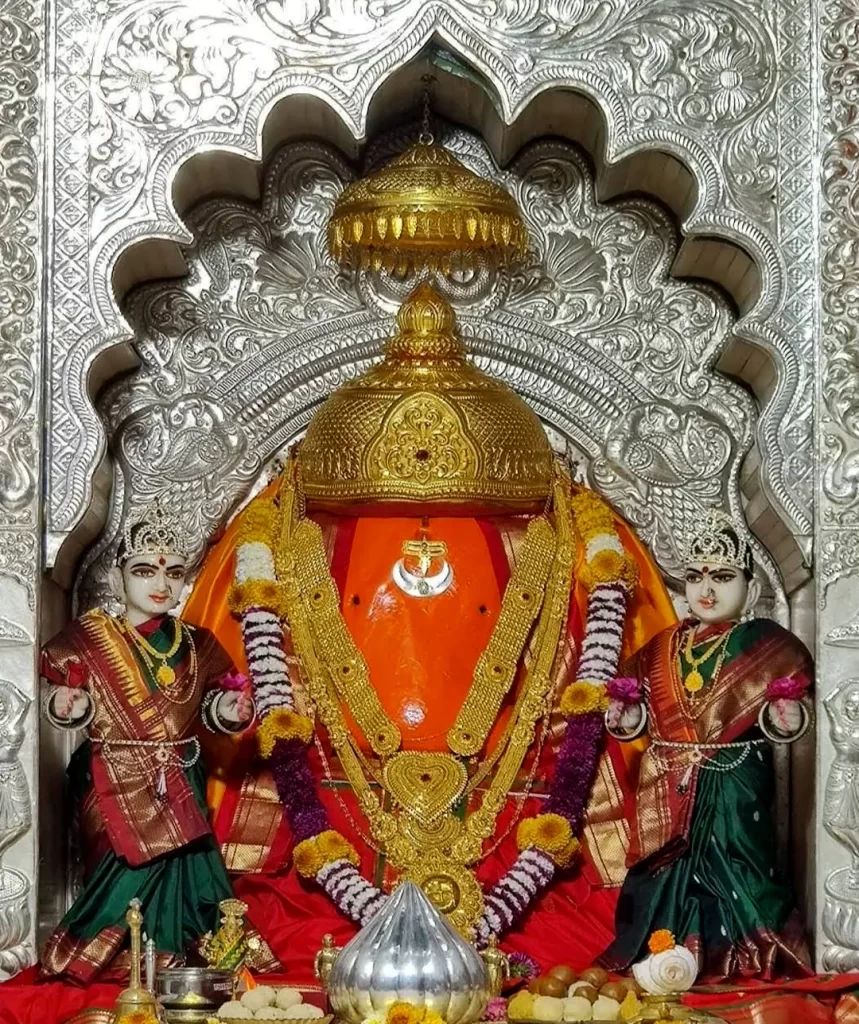
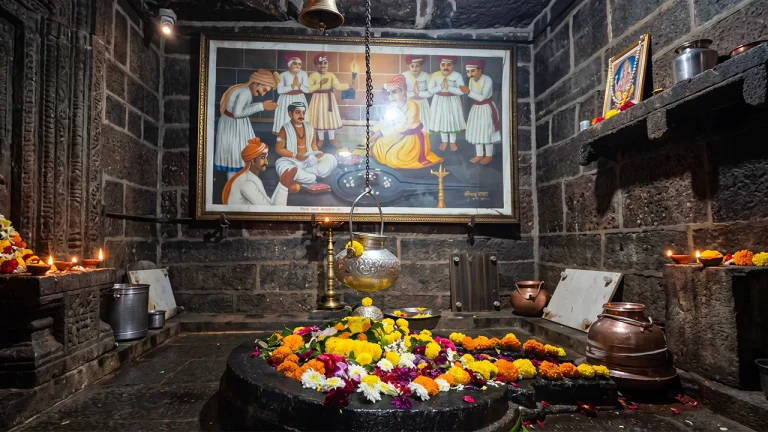
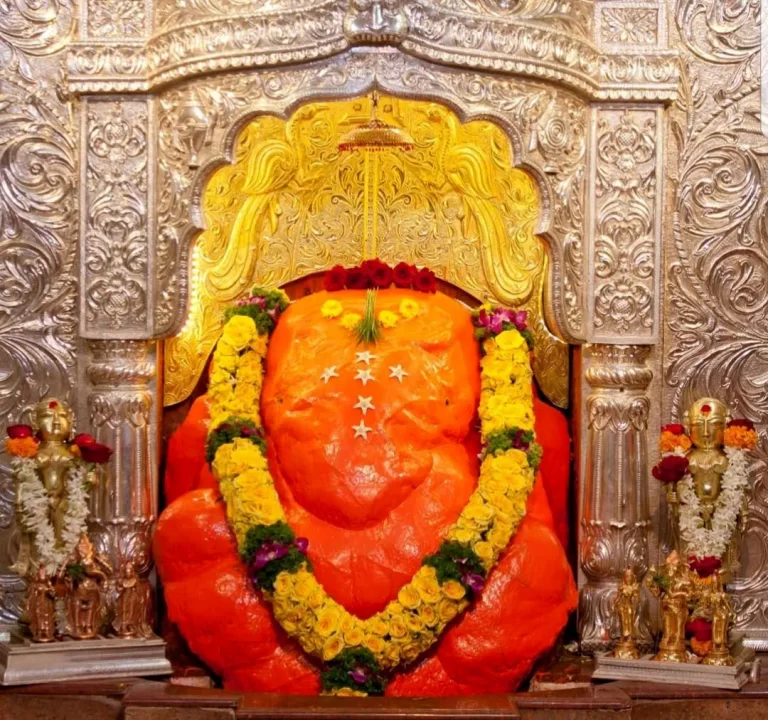
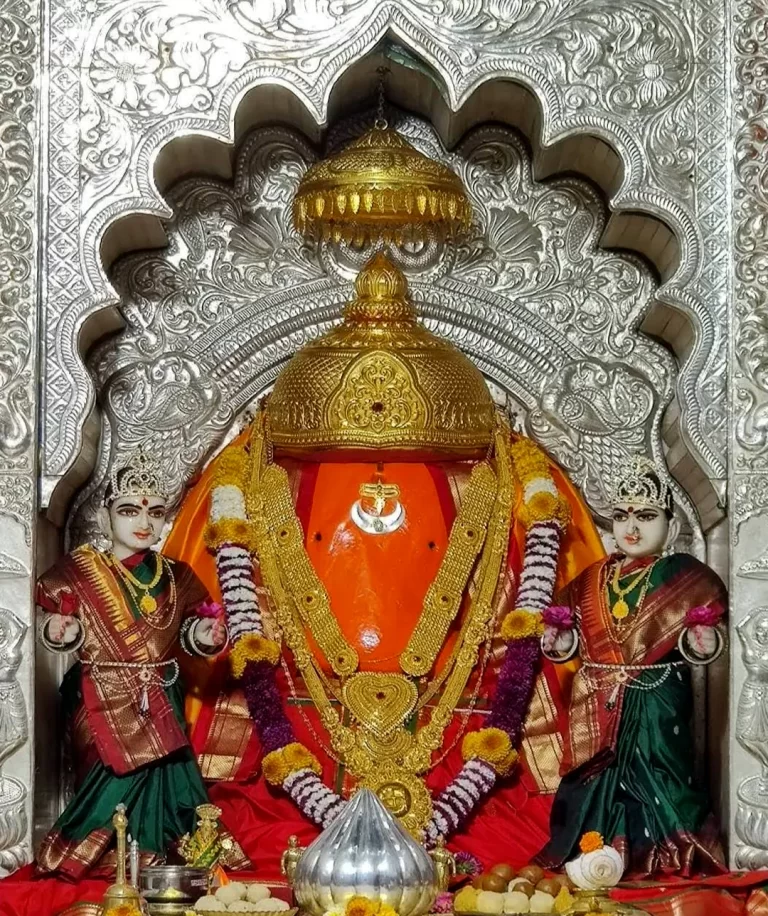
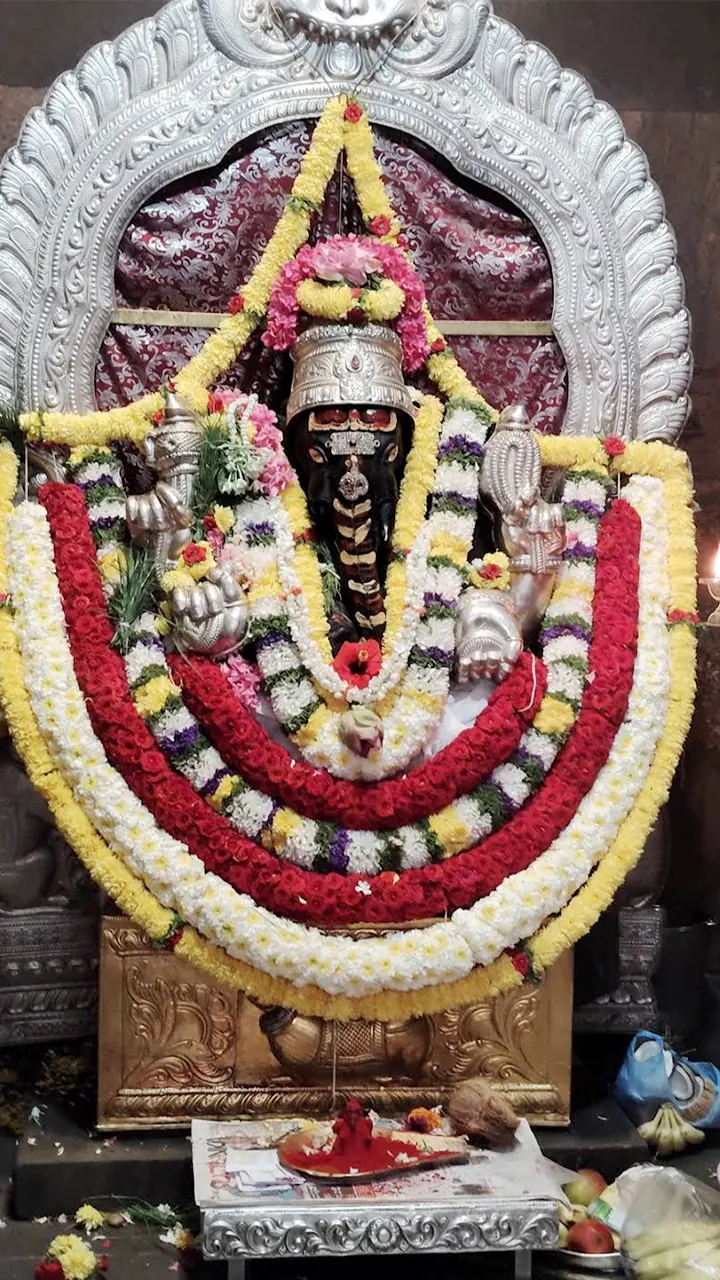
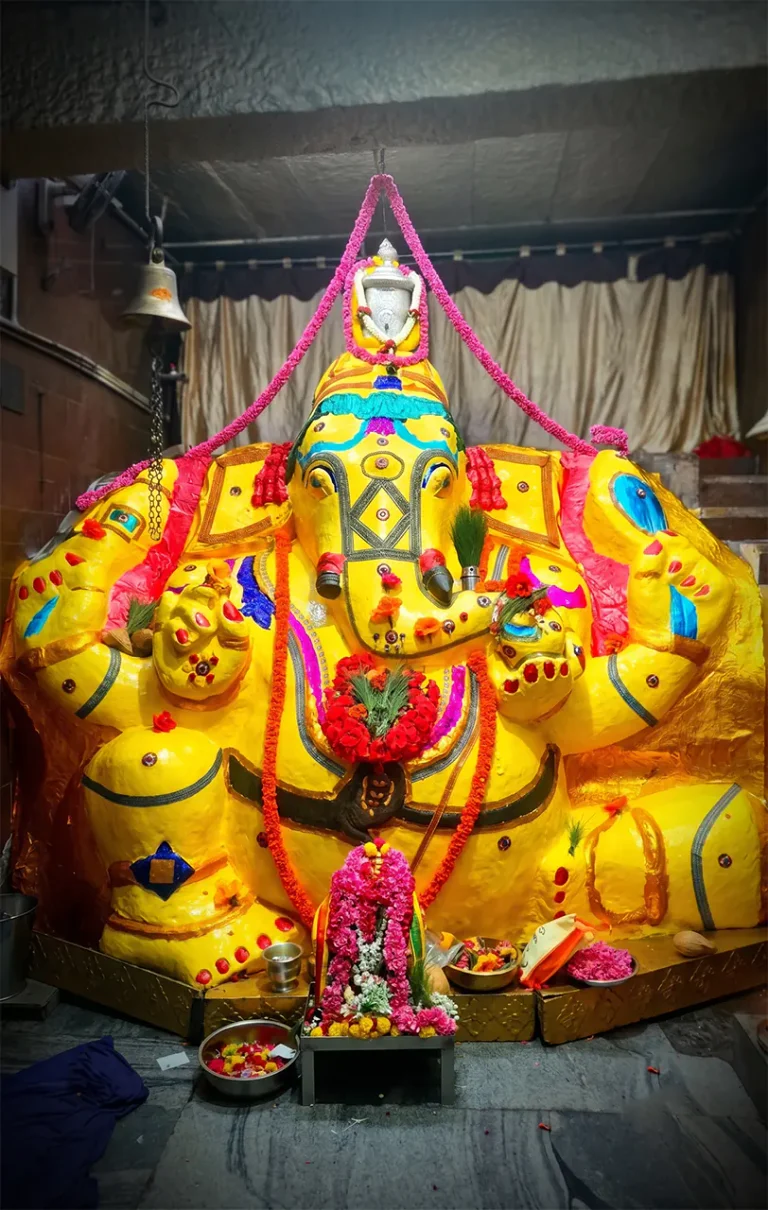
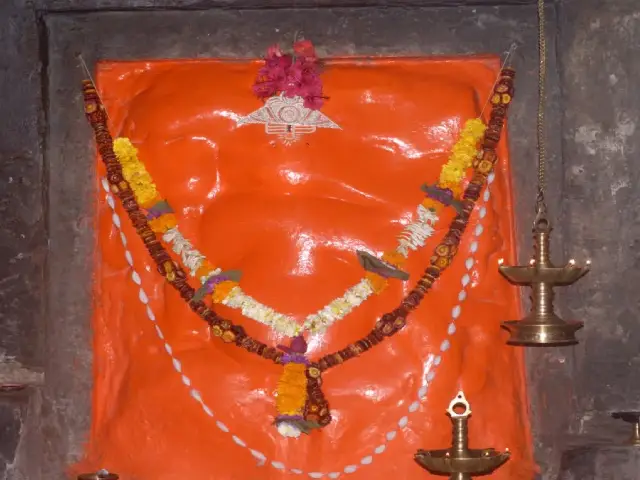
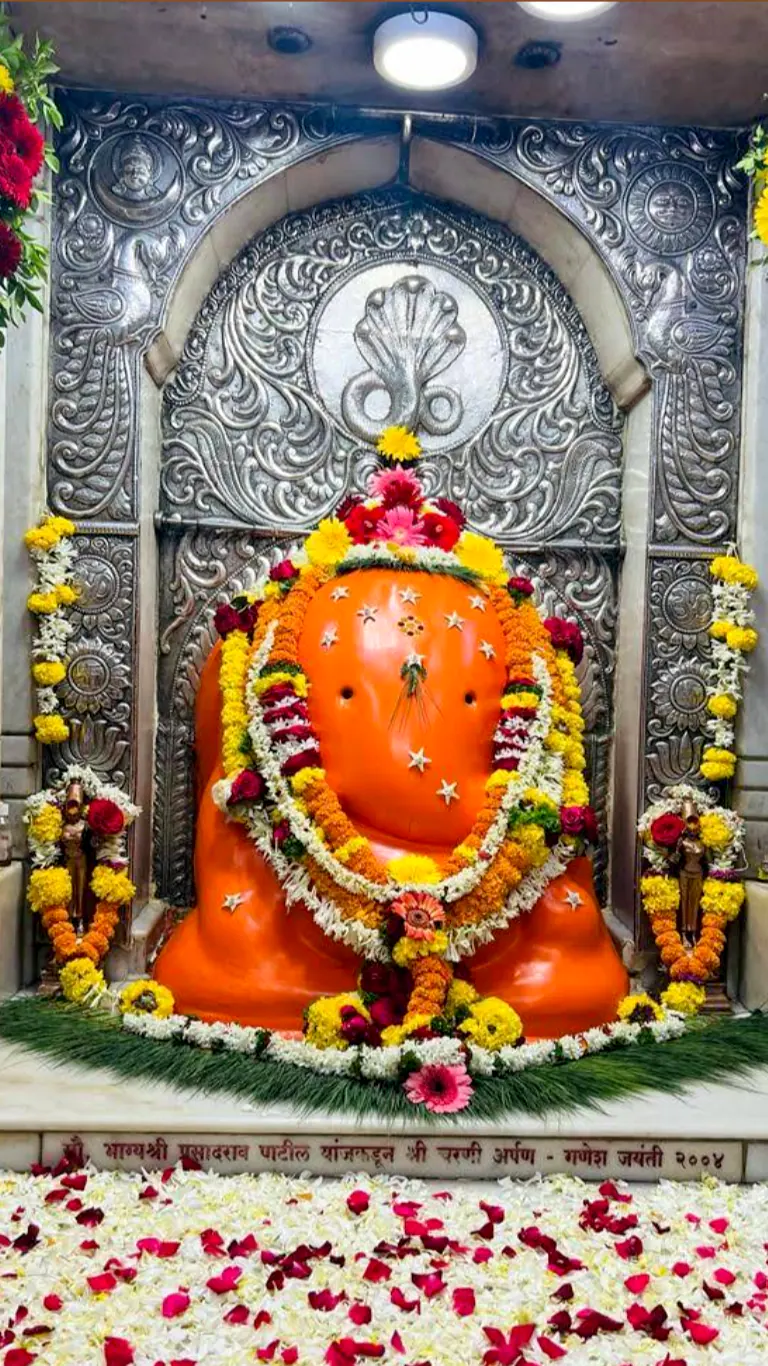
Lastly, we reach the entrance of the Garbhagriha. The main deity of the ozar ganpati temple looks towards the eastern direction to receive the morning sun rays. This idol is a Svayambhu idol, that is, not created by any person, and found naturally in the form of an elephant-headed stone.
The idol is fully covered with orange-colored Sindoor (a red pigment used as vermillion). However, what really takes your heart away are the Lord’s eyes, which are made of two very sharp and bright emerald stones. There is a diamond studded in the Lord’s forehead and another in his navel. The Lord sits in a comfortable crossed-legged posture, with his trunk resting on the left side (peace, bliss, and domestic prosperity). On each side of the Lord stand two beautiful brass idols of his consorts, which are:
- Riddhi (Prosperity, Wealth, and Material Success)
- Siddhi (Spiritual Power, Wisdom, and Enlightenment)

Vigneshwara Temple Timings and Rituals: A Day in the Divine Abode
In order to get the best out of your spiritual experience in Vigneshwara Temple Ozar, you have to time your trip with the daily cycle of activities in the temple, which goes according to Vedic tradition.
Opening and Closing Times
During normal days, the gates of the temple open and close on time as follows:
- Normal Opening-Closing Time: 5:00 AM – 11:00 PM
- Angarkhi Chaturthi Opening-Closing Time: 4:00 AM – 11:00 PM (the temple gates open one hour earlier to accommodate the crowds of devotees).
The Daily Pooja Timings
If you want to witness the real ritualistic activities in the ozar ganpati temple, I would advise you to reach there during the following timings:
| Time | Ritual Name | Description |
| 5:00 AM | Waking of the Deity | The priests softly open the doors and chant morning hymns to wake the Lord. |
| 5:30 AM | Prakshalana Pooja | The ritualistic washing of the inner sanctum and preparation of the deity. |
| 7:00 AM | Panchopachara Pooja | Offering of five sacred elements, light incense, and the morning Naivedya (food). |
| 7:30 AM | Maha Aarti | The grand morning light ceremony. The air fills with the thunderous sound of drums and bells. |
| 10:00 AM – 1:00 PM | Maha Prasad Distribution | Sacred, blessed lunch is served to all visiting devotees. |
| 12:00 PM | Madhya Aarti / Maha Pooja | The midday prayers and elaborate food offerings (Mahanaivedya). |
| 3:00 PM | Prakshalana Pooja & Poshakh | The deity is bathed again and adorned in majestic, colorful royal robes (Poshakh). |
| 8:00 PM | Dhooparti | The evening incense ritual, cleansing the entire environment with holy smoke. |
| 8:30 PM | Maha Aarti & Mantra Pushpa | The main evening prayers accompanied by the collective chanting of ancient Vedic verses. |
| 10:00 PM | Shej Aarti | The beautiful lullaby ritual. The Lord’s crown is softly removed, curtains are drawn, and the temple closes. |
Guide’s Pro-Tip: Devotees are normally not allowed to enter the innermost circle of the Garbhagriha for security purposes. But if you plan to visit on an off-peak period of the day, you can get a blessing by performing a special Aarti ceremony from the threshold itself!
Read More>> Azhimala Shiva Temple with 58 ft statue
Special Poojas that Can Be Done
For some personal offering to ensure the well-being of your family, here are some ceremonies that can be performed at the temple:
- Abhishekam Ceremony: An elaborate bathing ceremony involving the priestly blessings wherein the deity is ritually bathed with offerings of milk, honey, sugarcane juice, and sacred water.
- Sahasra Modaka Havan: This is a majestic ceremony where in 1000 sweet delicacies (Modakas), which are the favorite food items of Lord Ganesha, are individually offered into a sacred fire pit by chanting of blocking-clearing mantra.
Festivals and Events: When Ozar Comes Alive
While the Vigneshwara Temple Ozar maintains a calm, meditative aura on standard weekdays, it completely transforms into an explosion of color, music, and divine energy during major annual festivals. Let’s look at the times when this village becomes the beating heart of Maharashtra.
Ganesh Chaturthi (Bhadrapad Shudh Chaturthi)
- When it occurs: During the months of either August or September.
- What it’s like: This is THE festival! A ten day extravaganza which makes the whole village of Ozar turn into a carnival of sorts, where the entire Ozar Ganpati Temple Complex is adorned with thousands of colorful fairy lights as well as lots of exquisite flowers. Continuous Kirtan Groups are present day and night.
- Crowd Density: Extremely high – you can expect a lot of long queues of up to six hours on end for Darshan, but the experience is totally worth it!
2. Ganesh Jayanti (Magh Shudha Chaturthi)
- When it Occurs: In either January or February.
- What it’s like: Observed as the official birthday of Ganesha within the Hindu Calendar system, it’s a traditional five day festival featuring special script reading, huge Abhisheks as well as a community wide Mahaprasad distribution event.
- Crowd Density: Very high, with huge crowds drawn to this event from cities like Pune, Mumbai, and Nashik, especially on the day itself.
3. Kartik Purnima & Deepotsav
- Date: November or December.
- The Experience: For all photography buffs who love surreal aesthetics of the world, this is undoubtedly the best time to visit. Marking the celebration of the autumn full moon, a five-day-long Deepotsav (Festival of Lights) is held in the temple. The two colossal Deepmalas made up of stones along with thousands of tiny oil lamps (diyas) are lit up in the evening by the villagers. It is impossible not to be fascinated by the image of the golden dome reflected on the surface of the waters of the Kukadi River, among the dancing flames of which it floats.
- Crowd levels: Moderate. It’s very busy in the evenings but easy enough during the day.
4. Angarkhi Chaturthi
- Date: Every few months, during any Chaturthi falling on a Tuesday (Angarak/Mars).
- The Experience: An auspicious day to resolve any life issues once and for all, this day is marked with the opening hours extended to almost all day long from 4:00 AM.
- Crowd Levels: Very High. Lots of visitors come here at once for one day only.
Practical Travel Guide: How to Reach, Facilities, and Accessibility
Well, time to get down to business. Any responsible tour guide must ensure that the members of their tour party know how to reach the destination, eat, and rest. All of this information has been provided below for reaching the Vigneshwara Temple at Ozar.
How to Reach Ozar
The village of Ozar is situated in Junnar Taluka of Pune district, and it is well-connected via an extensive highway network.
By Road (The Best Way To Go):
- From Pune (~85 km/2.5 to 3 hours): Drive on the NH60 which runs between Pune and Nashik. Take the road via Chakan, Rajgurunagar and Manchar until you arrive in Narayangaon. In Narayangaon, Ozar Ganpati temple is 8 km away via a short scenic drive.
- From Mumbai (~170 km/ 5 hours): You can take the route of either Kalyan Ahmednagar highway which takes you across Malshej Ghat or Mumbai-Pune expressway and then a short drive toward Narayangaon.
- Public Transportation: State transport buses (MSRTC) from Pune’s Shivajinagar bus stand or Mumbai to Junnar or Narayangaon. From there, you can easily avail auto rickshaw, jeep and other local transport services to Ozar.
By Train: The nearest train station is Pune Railway Station (85 km). The trains from Pune run on a very convenient timetable, ensuring connectivity to all major cities across India. Otherwise, one can consider the nearby Nashik Road Railway Station (143 km). You can easily avail yourself of a private cab service or a state bus from any of these stations.
By Air: The nearest airport to this temple is Pune International Airport (PNQ), situated at about 80 kilometers from the place. Once at the airport, you can directly hire a prepaid taxi that would take you to Ozar in less than 3 hours.
Read More>> Gowdagere Chamundeshwari Temple: Famous 61 ft Panchaloha statue
Entry Fees and Prasadam Charges
- Temple Entry: COMPLETELY FREE. No charges whatsoever for entering the Vigneshwara Temple of Ozar or receiving a darshan here.
- Maha Prasad (Meal): The temple kitchen provides you an incredible hygienic and healthy meal of typical Maharashtrian cuisine (with plain rice, varan/dal, vegetable preparation, and chapati). The prasadam charges are minimal or zero at times (₹20 – ₹30).
On-site Facilities and Accommodation
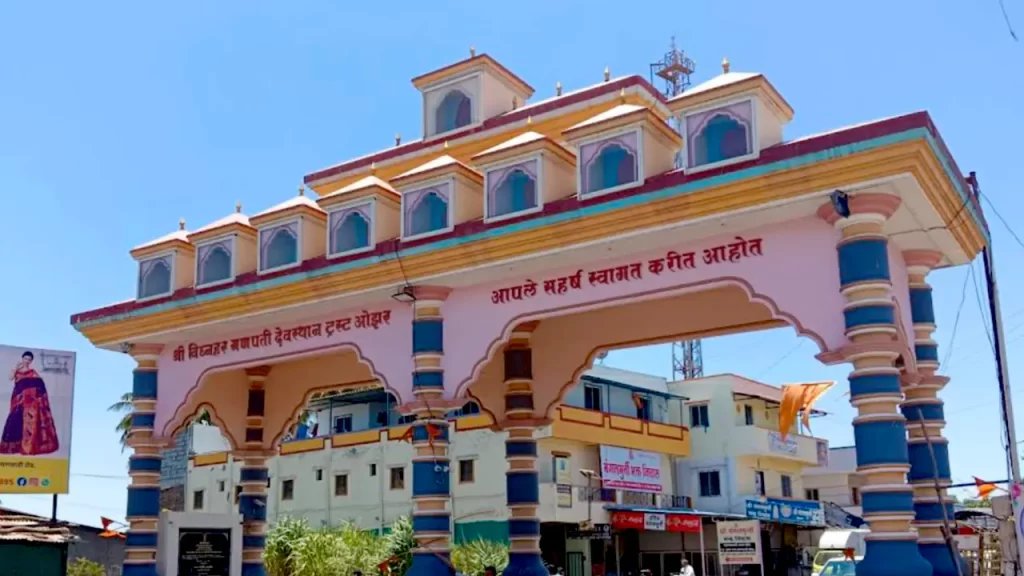
- Bhakta Niwas (Pilgrim Lodges): The Shri Vighnahar Ganpati Devasthan Trust provides a variety of safe and hygienic accommodations known as Bhakta Bhavan just adjacent to the temple premises. They provide inexpensive Non AC accommodation, AC rooms, and spacious hostels for families. This facility is open round-the-clock; however, these rooms get occupied very quickly on festival days.
- Toilets and Cloakroom: The premises of the temple include restrooms and cloakrooms where you can keep your shoes and electrical gadgets securely before joining the long queues inside the temple complex.
- Food Choices: In the market outside the entrance gate, you will find many khanavals or restaurants that serve tasty local Maharashtrian dishes such as Misal Pav, Kanda Bhaji, and Puran Poli.
Accessibility for the Elderly and Handicapped
The temple administration has done a commendable job in ensuring that the Ozar Ganpati Temple is easily accessible to all kinds of visitors:
- In contrast to the other Ashtavinayak temples of Lenyadri, which involves walking over 300 steep steps up the mountain side, the Vigneshwara Temple Ozar is constructed on even terrain.
- Specialized ramp arrangements have been made available for wheelchairs both during entry and exit from the temple premises.
- During off peak times, if you inform the authorities about your severely handicapped or old relatives at the temple gate, they will facilitate you with easy access into the temple without having to stand in a long queue.
Dos and Don’ts: Cultural Etiquette for a Smooth Visit
To make your trip to Vigneshwara Temple Ozar enjoyable, honorable, and totally hassle-free, remember the following basic principles of respect:
The Do’s
- Wear Appropriate Clothing: It is a traditional and still active temple. Therefore, dress conservatively. Men should prefer wearing traditional clothes such as kurtas, dhotis, or even formal pants. Women usually wear sarees, salwar kameez, or other conservative outfits that cover their shoulders and knees.
- Wear No Shoes Inside: Take off your shoes before entering through the stone fort gates and leave them either inside your car or at the shoe counter (Vahan Chappal Stand) near the entrance for a little payment.
- Shout Not Inside the Inner Chamber: As you get closer to Garbhagriha, try not to speak loudly since the inner chambers were designed to be echoing. Silence will help everyone around to feel the sacred energy.
- Receive Prasadam Honorably: If the priest gives you Pedha or Udi (holy ash), make sure to give him your right hand.
The Don’ts
- Photography Is Strictly Prohibited Inside the Temple: You can definitely capture the breathtaking views of the stone fort walls, the deep malas, and the golden shikharas from the open courtyard; however, photography or video recording inside the temple, and especially before the image of the main deity is strictly not allowed. Turn off your mobile phones and keep them quietly inside your bag.
- Avoid Using Leather Items Inside the Main Temple: Keeping in view the traditional reverence associated with this site, refrain from using leather belts or any other items made up of leather when visiting the temple.
- Don’t Get Impatient: If there is a rush on a Saturday or Sunday, remain calm. Do not jump the queue as this is the very ground where the demon of impatience is believed to have been vanquished!
Nearby Attractions: Expanding Your Journey
But if you’re going all the way to Ozar then it would indeed be such a regret to head directly back home without taking advantage of the fantastic sights which are located right there, close to it. Junnar is a place full of history, fresh air, and beautiful landscapes. These are some of the best attractions that can be easily visited after the Ozar Ganapat Temple visit:
- Girijatmaj Temple, Lenyadri (Only 8 km Away)
Combine your trip with visiting two of the eight Ganapat temples in one day! Only a brief 15-minute drive away from Ozar is found Lenyadri, which is home to magnificent 30 rock-cut caves, which date back to 1st and 3rd centuries A.D. Inside cave number 7 is located the amazing temple of Girijatmaj Ganesha. You will have to climb a challenging yet enjoyable trek of about 300 stone steps up to the temple.
Warning for tourists: The steps in Lenyadri are infested by highly intelligent monkeys that like to play pranks on visitors. Make sure your sunglasses, snacks, and bags are securely locked in your backpacks.
- Shivneri Fort (16 km from here)
Are you interested in history? Then head straight for the majestic hill fort that serves as the birthplace of Chhatrapati Shivaji Maharaj, the founder of the mighty Maratha Empire. Take a well-maintained hiking route with awe-inspiring stone gateways (Darwazas) up to the fort. From here, you will be able to visit the place of worship where the king was born, the historical rock-cut water storage systems called Ganga-Jamuna, and enjoy the most stunning views of the entire Sahyadri mountain range. - Malshej Ghat (40 km from here)
Should you plan your pilgrimage to Vigneshwara Temple Ozar during the wonderful rainy season (June – September), taking a drive up to Malshej Ghat is a must-do activity. The popular hill resort turns into a heaven of never-ending rolling green mountains, thick clouds floating close to the ground, refreshing mist from the mountains and hundreds of waterfalls falling down directly on the roads leading through them. - Khodad GMRT Giant Metrewave Radio Telescope
Not very far from here lies another wonderful attraction that stands in stark contrast to the historic temple. The GMRT is one of the biggest arrays of radio telescopes in the world run by the National Centre for Radio Astrophysics. It is indeed a fascinating experience for everyone to see how those huge and futuristic-looking satellite dishes are spread out across the fields of Junnar.
FAQs: Trending Questions Answered
Now, coming to the concluding part of this escorted journey, let’s answer a few commonly asked queries from visitors who wish to embark on a pilgrimage to the ozar ganpati temple.
Q1: Can one cover both the Ozar and Lenyadri Temples within the same day?
Of course! Since the distance between Vigneshwara Temple Ozar and Lenyadri Caves is just 8 kms or 15-minute drive, all the devotees visiting here manage to see both. The easiest way to do it would be going to Ozar early in the morning at 7:00 am to watch the Maha Aarti of morning on flat land, taking an enriching breakfast, and then moving to Lenyadri at 9:30 am before the scorching mid-day heat starts its assault on the 300 steps.
Q2: In what ways is the Ozar Ganpati temple unique amongst the other seven Ashtavinayak shrines?
Two important differences make the ozar ganpati temple a unique destination in terms of structure and looks. Firstly, it has a unique Sonayacha Kalash, which means that it is the only Ashtavinayak shrine that has a completely golden dome and pinnacle made as a gift from Chimaji Appa. Secondly, its construction differs greatly in terms of fort-like structure with big stone yard and
Q3: Is there a particular dress code in place for general admission?
Although there is no such strict dress code imposed by the temple authorities prohibiting tourists from wearing western clothes like jeans and T-shirts, it is highly recommended that all guests wear appropriate, modest, and clean dress. It is advised not to wear short skirts or sleeveless dresses due to local sentiments towards such dressing, and in order to respect the age-old traditions.
Q4: Why is there the presence of green emerald eyes for the idol?
According to the local tradition of the temple, the use of green emeralds in the eyes of the Svayambhu stone idol symbolizes the divine eyesight of Lord Ganesha as the ultimate master of intellect, tranquility, and balance of nature. In addition to emeralds, the dazzling diamonds at Lord Ganesh’s forehead and belly are illuminated under the evening lights of the lamps.
Q5: How can you arrange for Abhishekam or Pooja when you do not have the physical ability to travel?The Shri Vighnahar Ganpati Devasthan Trust provides exemplary tele-services. You can connect with the official temple administration department through their contact numbers or even go to their official office counter. The priests at the temple will conduct the Abhisheka/Archana ceremony in your name and gotra. They will then ensure that the Prasadam and holy vermilion are dispatched to your address by post!
Conclusion: The Lasting Peace of Ozar
And now, ladies and gentlemen, as we bid goodbye to our virtual tour, let us take a glance at the brilliant gold dome of the Vigneshwara Temple Ozar mirrored in the calmness of the Kukadi River.
Visiting the stunning ozar ganpati temple is not simply about ticking off a box from the list in the most popular tourism map – it’s a very personal experience of soul-searching. It is the place where the ancient and timeless stories of the Puranas and the strong architectural history of the Maratha Empire meet. However, first and foremost, it is the spiritual haven, reminding each visitor that regardless of how frightening or seemingly insurmountable the “Vighnas” in the life of today’s person are, all the obstacles can be overcome with humility and patience.
Exiting through the impressive stone arches of Ozar, hearing the faint sounds of musical instruments, you will certainly take with you much more than a bag of delicious modaks and an orange mark of sindoor on the forehead. You will take with you the light-heartedness and peacefulness of your mind.
Thanks a lot for choosing me as your guide on this holy adventure. Get ready to pack your bags, make arrangements for your travel, and let your coming trip to the wonderful Vigneshwara Temple Ozar be full of nothing but blessings, happiness, and no obstacles at all! Ganpati Bappa Morya!