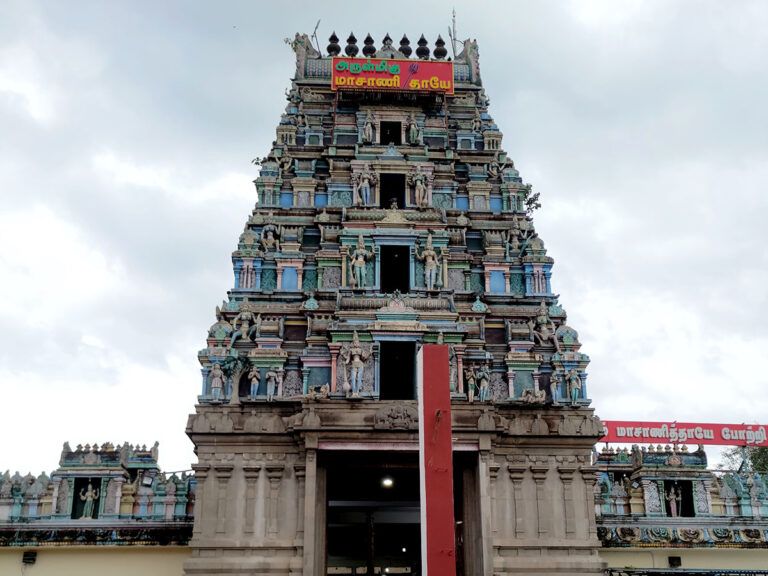
Nainamalai Temple Guide: Timings, 3500 Steps Trek & Rules
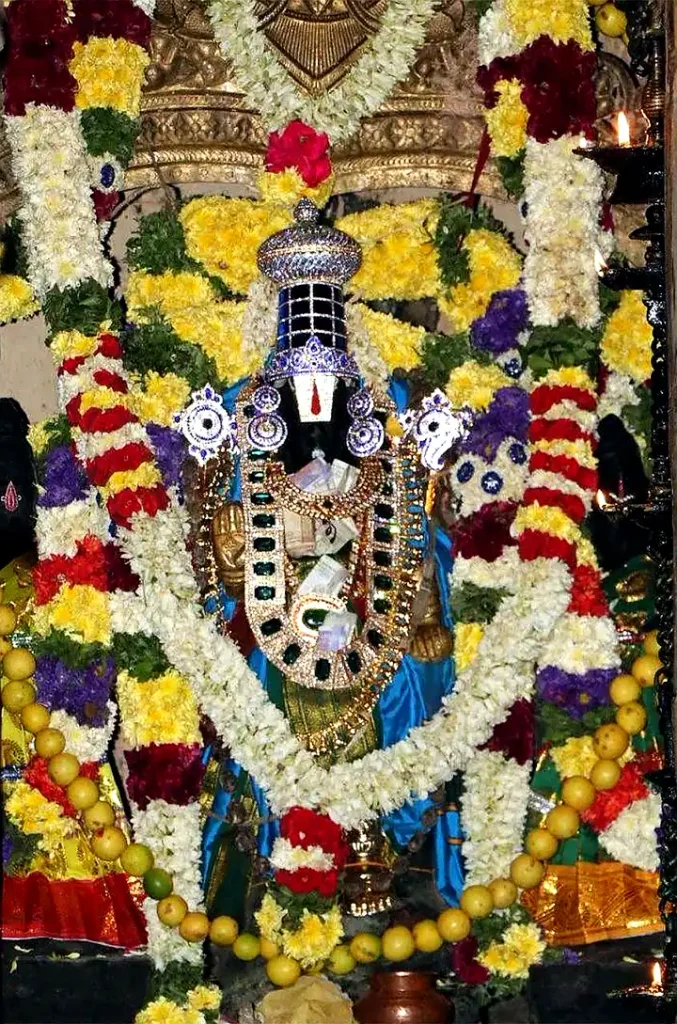
Nainamalai Temple, officially known as the Sri Varadaraja Perumal Temple, sits atop a 2,500-foot granite peak near Sendamangalam in the Namakkal district of Tamil Nadu. Devotees climb this ancient hill shrine to seek the blessings of Lord Vishnu, venerated here in his standing Varadaraja posture.
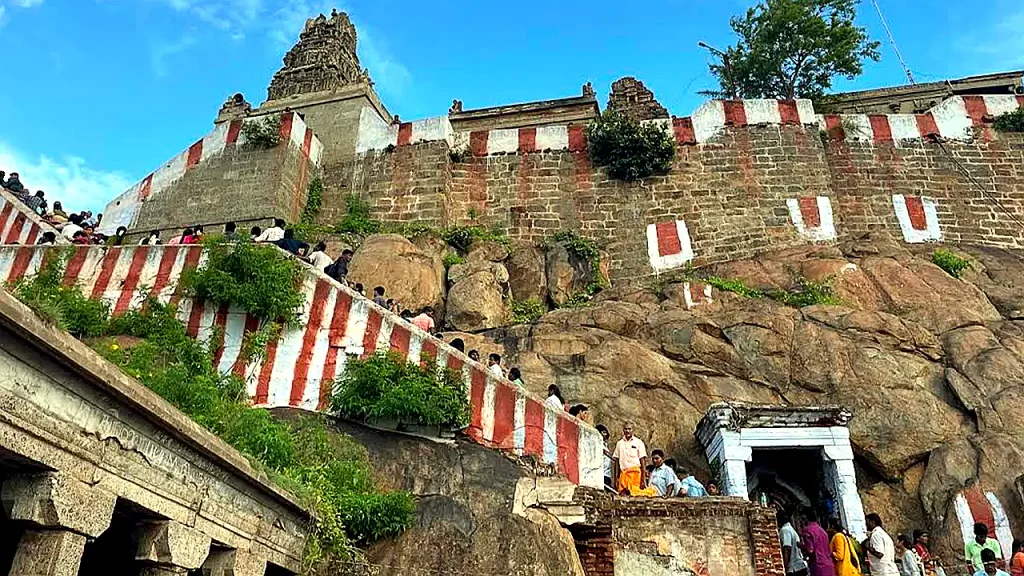
Nainamalai Temple opens on regular Saturdays from 6:00 AM to 6:00 PM, and on Purattasi Saturdays from 4:00 AM to 9:00 PM. Entry is free. Devotees must climb approximately 3,500 stone steps; traditional modest attire is mandatory, and plastics are strictly prohibited.
Quick Facts Card:
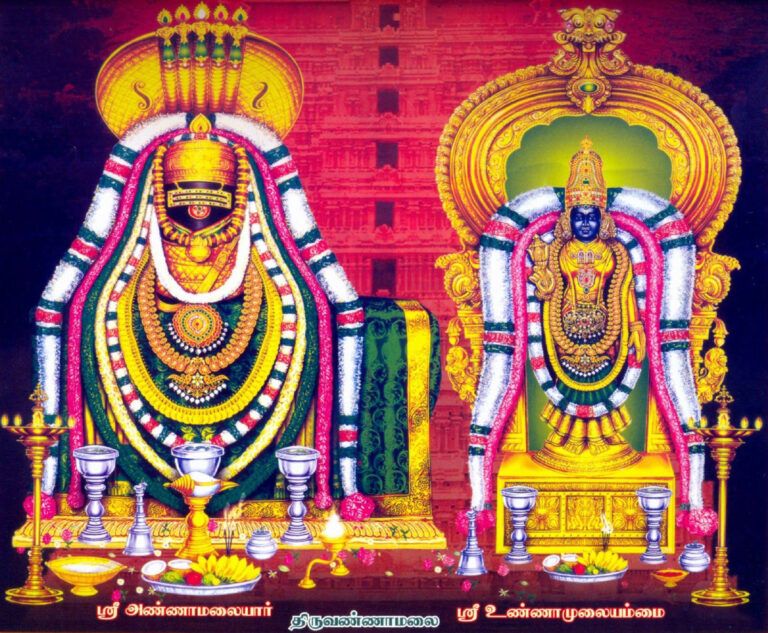
- 🛕 Presiding Deity: Sri Varadaraja Perumal (Lord Vishnu) with Consorts Sridevi and Bhoodevi; facing East
- 📍 Exact Address: Nainamalai Foot Hills, Sendamangalam Main Road, Perumalpatti, Namakkal District, Tamil Nadu 637409
- ⏰ Regular Temple Timings: Saturdays only (6:00 AM – 6:00 PM); Special timings apply during Tamil Purattasi month (4:00 AM – 9:00 PM)
- 🎟️ Entry Fee: Free General Entry | Special Darshan: ₹20 / ₹50 (festival periods)
- 👕 Dress Code: Men: Dhoti/Veshti with Angavastram, or plain Kurta-pyjama/trousers; Women: Saree or Salwar Kameez with Dupatta
- ⏳ Zero-Queue Slot: Regular non-Purattasi Saturdays between 6:30 AM and 8:00 AM
- 🚌 Nearest Transit: Sendamangalam Bus Stand (3.5 km) | Namakkal Bus Stand (12 km) | Namakkal Railway Station (14 km)
- ♿ Accessibility: Not wheelchair-accessible; requires an arduous climb of ~3,500 steep stone steps without road access or ropeway
Origin, Sthala Mahatmya & Scriptural Heritage
The sacred hill gets its name “Naina Malai” from its unique shape, resembling a divine eye (Nayanar Malai or Naina Malai), and from the sage Nayanar who performed penance here. The shrine dates back over a thousand years, with historical patronage credited to the Chola dynasty, subsequently renovated and fortified by the Vijayanagara rulers and Ramachandra Nayakar of Sendamangalam. Local epigraphs confirm that royal dynasties endowed perpetual lamps and land grants to ensure round-the-clock worship on this rugged hill fort.
According to regional Sthala Purana, Sage Durvasa and later Thirumangai Azhwar revered this summit as a potent Maha Kshetram. When the sage sought a vision of Lord Vishnu, the Lord manifested here as Varadaraja Perumal, granting boons (varam) to all who conquer the arduous physical climb with pure devotion.
Scriptural Invocation to Lord Varadaraja:
Devanagari Script:
दन्तिक्षमाधरनिषण्णमहौषधीयः सन्तन्वते भुवि नृणां दुरितोपशाम्यम् ।
कारुण्यपूरपरिपूरितचित्तवृत्तिं वन्दे वरप्रदमहं वरदं मुकुन्दम् ॥
IAST Transliteration:dantikṣamādhara-niṣaṇṇa-mahauṣadhīyaḥ santanvate bhuvi nṛṇāṁ duritopaśāmyam |kāruṇyapūra-paripūrita-cittavṛttiṁ vande varapradamahaṁ varadaṁ mukundam ||
Simple Meaning:“I bow to Lord Varada, the giver of supreme boons, whose heart overflows with deep compassion, and who resides upon the sacred hill like a divine celestial herb curing all sins and sorrows of humanity.”
Daily Darshan Timings, Crowd Patterns & Best Visiting Hours
Nainamalai Temple opens its summit gates primarily on Saturdays from 6:00 AM to 6:00 PM without an afternoon closure. During the Tamil month of Purattasi (mid-September to mid-October), the sanctum opens continuously from 4:00 AM to 9:00 PM.
On non-festival weekdays (Monday through Friday), the summit sanctum remains closed for regular public darshan, though pilgrims can trek up to the outer prakaram gates. Full priest-led daily aradhana occurs every Saturday, which is sacred to Lord Vishnu.
Queue & Trek Waiting Dynamics:
| Day / Season | Summit Peak Hours | Average Wait / Climb Time | Fast-Track / Special Line |
| Regular Saturdays | 10:00 AM – 2:00 PM | Trek: 2–2.5 hrs | Darshan: 15–30 mins |
| Purattasi 1st & 2nd Saturday | 6:00 AM – 3:00 PM | Trek: 3–4 hrs | Darshan: 1.5–3 hrs |
| Purattasi 3rd & 4th Saturday | 4:00 AM – 6:00 PM | Trek: 4–5 hrs | Darshan: 3–5 hrs |
| Vaikunta Ekadashi | 5:00 AM – 1:00 PM | Trek: 3 hrs | Darshan: 2 hrs |
3 Practical Tips to Beat the Queues:
- Start the Climb at 4:30 AM: Beginning your ascent before sunrise avoids both the scorching midday heat radiating from the granite rocks and the mass bus arrivals from Salem and Trichy.
- Carry Exact Cash for Special Passes: During Purattasi, pass counters at the base and mid-station accept only cash; keeping ₹20 and ₹50 notes ready avoids long coin-exchange halts.
- Use the Early Descent Window: Begin your downward trek before 12:30 PM to avoid oncoming two-way foot traffic bottlenecks along narrow rocky step cuttings.
Read More >> Navagraha Circuit Kumbakonam: 9 Temples Map, Timings, Route & Guide
Daily Pujas, Sacred Sevas & Holy Prasadam
Priests follow traditional Vaidika Pancharatra Agama protocols. On open days, rituals proceed strictly according to sunrise and sunset calculations:
- Viswaroopa Seva (Dawn): 5:30 AM – Awakening the deity, initial flower offerings, and Suprabhatam recitation.
- Kala Sandhi Abhishekam: 7:30 AM – Holy bath performed with milk, curd, honey, panchamritam, and fragrant sandalwood paste.
- Uchikkala Puja (Noon): 12:00 PM – Grand Maha Deeparadhana with Neivedyam (cooked rice offerings).
- Sayaratchai / Sandhya Aradhana: 5:00 PM – Evening camphor arati and flower decoration.
- Ardha Jama Puja & Temple Closing: 6:00 PM (Regular Saturdays) / 9:00 PM (Purattasi Saturdays) – Final closure of the hill sanctum gates.
Major Sevas and Offering Fees:
| Seva / Offering | Significance & Procedure | Approximate Fee (₹) | Booking Window |
| Archana (Sahasranamam) | Name chanting with Tulsi garlands and coconut offering | ₹10 – ₹20 | Walk-in counter at sanctum |
| Special Abhishekam | Full panchamrita abhishekam performed on chosen Saturdays | ₹250 – ₹500 | Advance booking at base office |
| Thirumanjanam Seva | Sacred ceremonial bath with herbal waters and new vastram | ₹1,000 | Book 2 weeks prior via HR&CE counter |
| Garland Offering (Mala Seva) | Donating fresh holy basil (Tulsi) and lotus flower garlands | ₹50 – ₹100 | Foothill flower vendors |
Prasadam Logistics:
Free Anna Dhanam (community meal) operates at the foothill base hall between 11:30 AM and 2:30 PM on all Saturdays. At the hilltop counter, pilgrims can purchase fresh Puliyodarai (Tamarind Rice, ₹20), Sakkarai Pongal (Sweet Jaggery Rice, ₹20), and authentic Laddu (₹15). Packaged items are sold in eco-friendly leaf bowls (donnais).
Dress Code, Footwear Protocol & Temple Rules
Visitors must wear modest, traditional Indian attire to enter Nainamalai Temple. Men should wear a dhoti, veshti, or full trousers with shirts; women must wear sarees or churidars with a dupatta. Shorts, lungis, sleeveless shirts, and mini-skirts are prohibited.
- Men: Plain dhotis, cotton veshtis, or full-length trousers paired with shirts or kurtas. Traditional bare-chest worship is accepted during inner sanctum darshan.
- Women: Traditional sarees, half-sarees, or salwar-kameez sets with the chest covered by a pinned dupatta. Tights, denim jeans, western crop tops, and short skirts are strictly disallowed by HR&CE guidelines.
- Footwear Counter: Devotees typically deposit their footwear at the designated base-level shoe racks (nominal token charge of ₹5 per pair). Walking up the 3,500 granite steps barefoot is traditional, though grippy climb socks are permitted on the hot stones.
- Electronics & Cameras: Mobile phones must remain switched off or silenced inside the inner sanctum (Garbhagriha). Photography of the presiding deities is strictly illegal under Tamil Nadu temple governance rules. Landscape photography is permitted along the staircase trail.
Dos and Don’ts Checklist:
- Do carry at least 2 litres of drinking water per person and electrolyte sachets.
- Do pack a light bamboo walking stick (available for ₹20 at the foothill shops) for knee support.
- Do safeguard personal bags against wild bonnet macaque monkeys along the forest stairs.
- Don’t carry single-use plastic bags or discard plastic water bottles along the forest reserve steps.
- Don’t attempt the climb past 3:00 PM on regular days; the summit lacks streetlights on descent paths.
- Don’t feed the hill monkeys; it triggers aggressive group snatching.

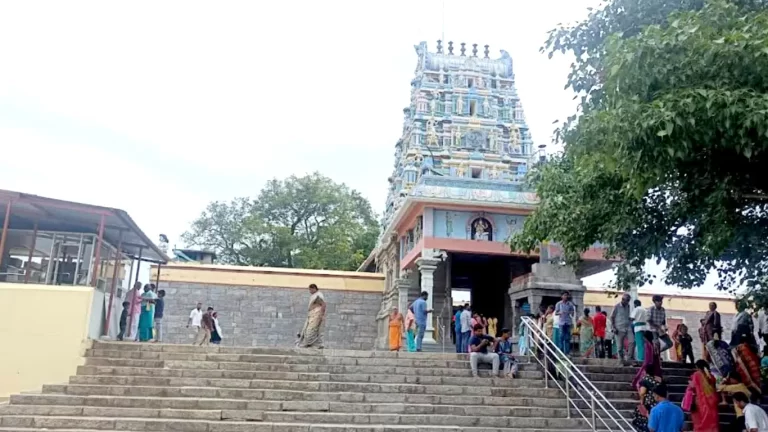

Architecture & Step-by-Step Walking Guide
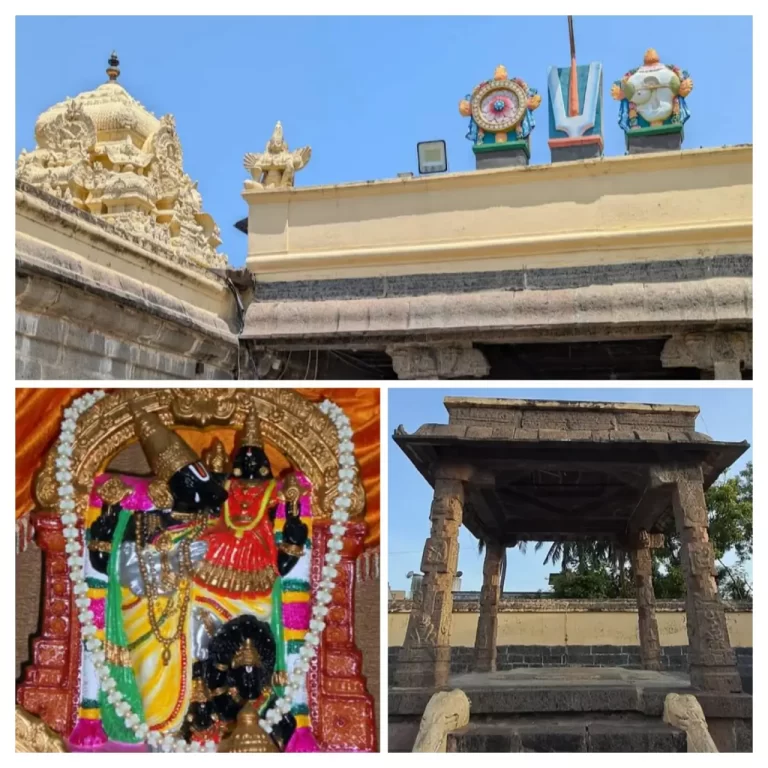
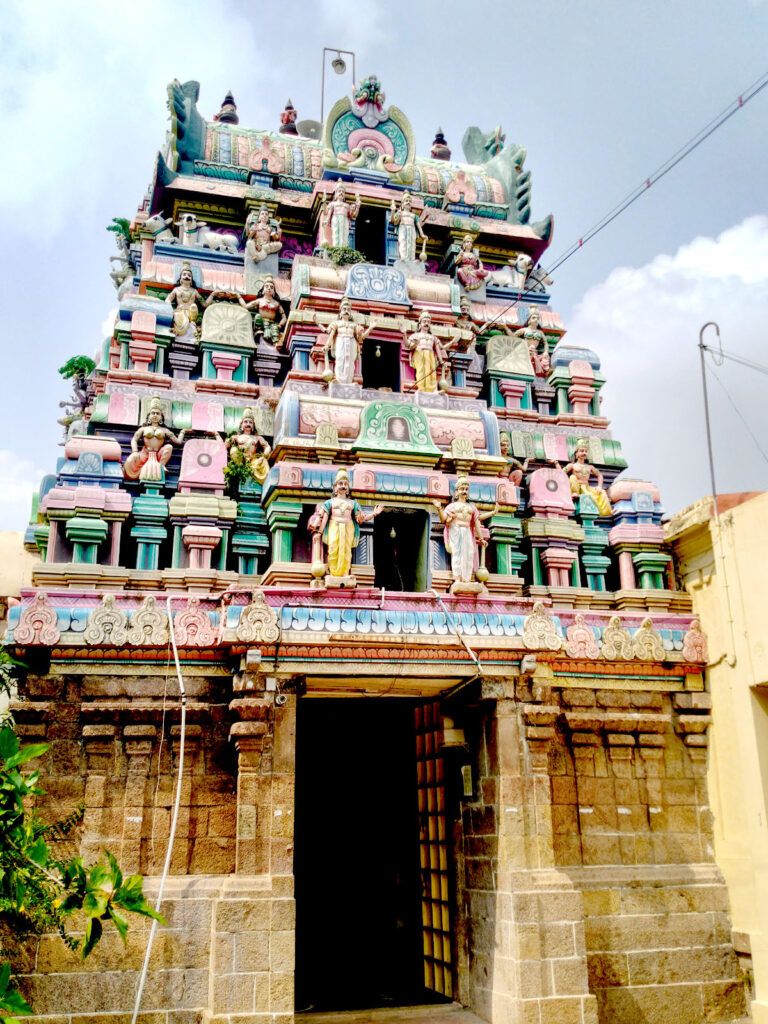
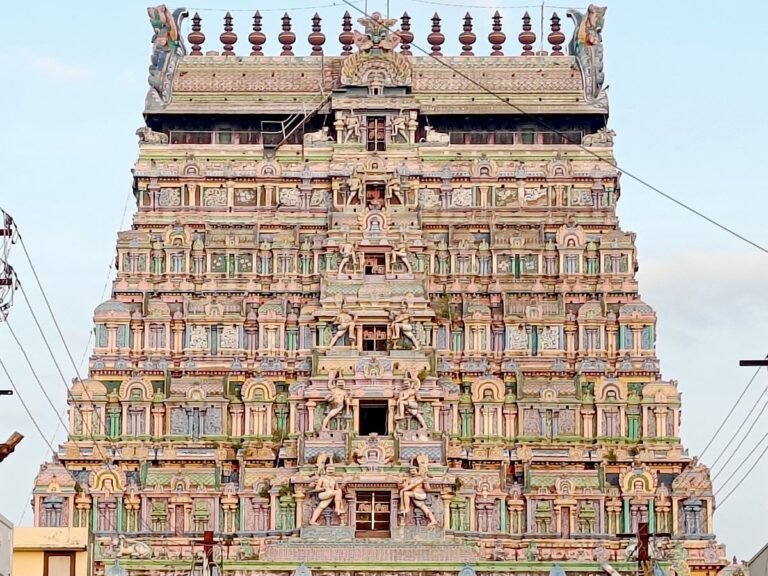
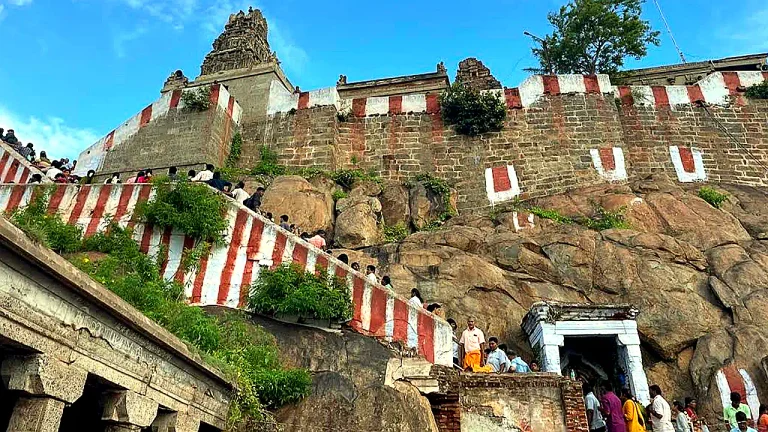
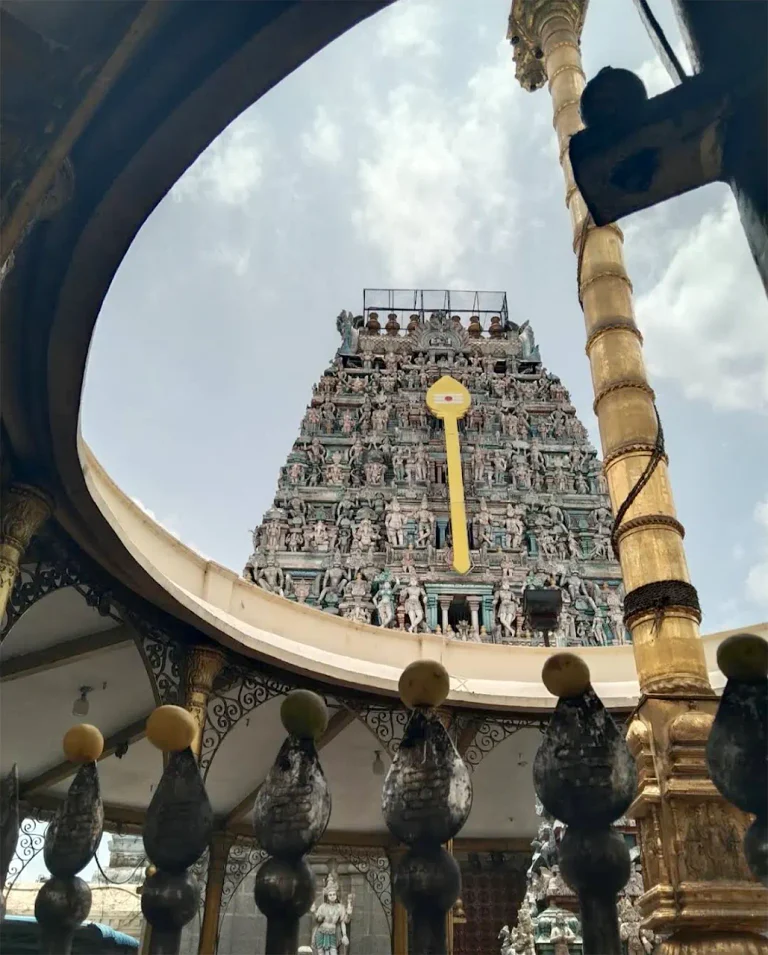
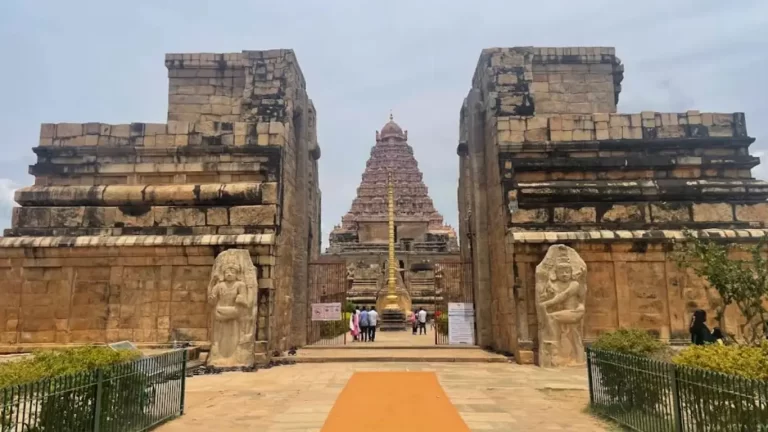
Nainamalai Temple reflects classic Tamil Dravidian granite architecture blended with Vijayanagara defense ramparts. The temple sits inside a natural stone fortress surrounded by precipitous cliff faces. The massive stone mandapams feature carved pillars depicting Garuda, Hanuman, and Narasimha.
- Foothill Arch & Initial Shrines: Before beginning the step ascent, devotees break a coconut at the Vinayagar (Ganesha) shrine to pray for a safe climb.
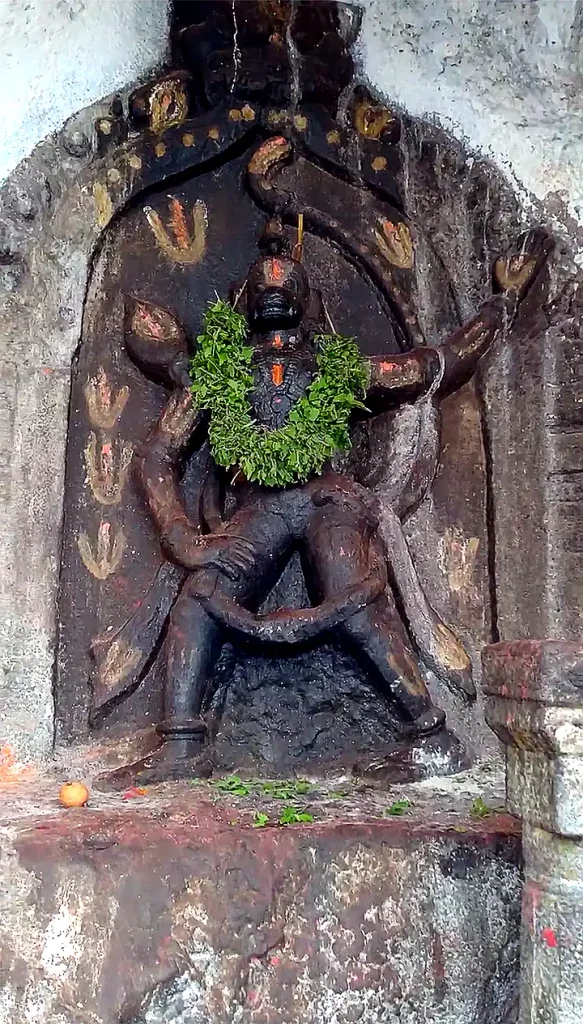
- The 3,500-Step Mountain Trail: Stone steps cut straight through scrub jungle and natural boulders. At the 1,000th step, a small Hanuman shrine marks a frequent resting spot, followed by natural rock-cut caverns where cool winds funnel through the valley.
- Dwajasthambam (Flagstaff) & Deepa Sthambam: At the final flight of steps, pilgrims cross the ancient stone fort gate to reach the broad stone platform hosting the brass-plated flagstaff and a massive stone pillar used for lighting the holy beacon during Karthigai Deepam.
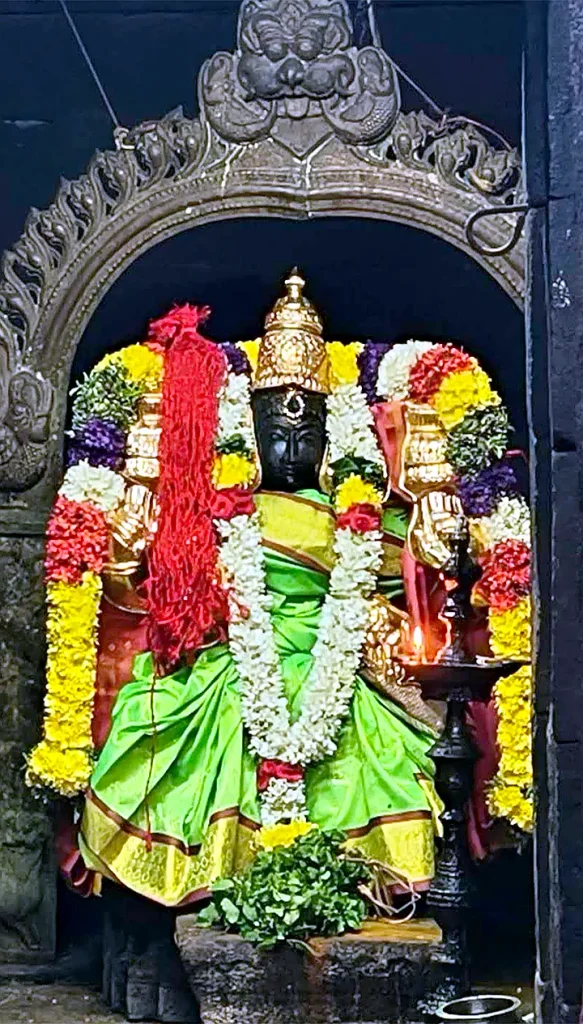
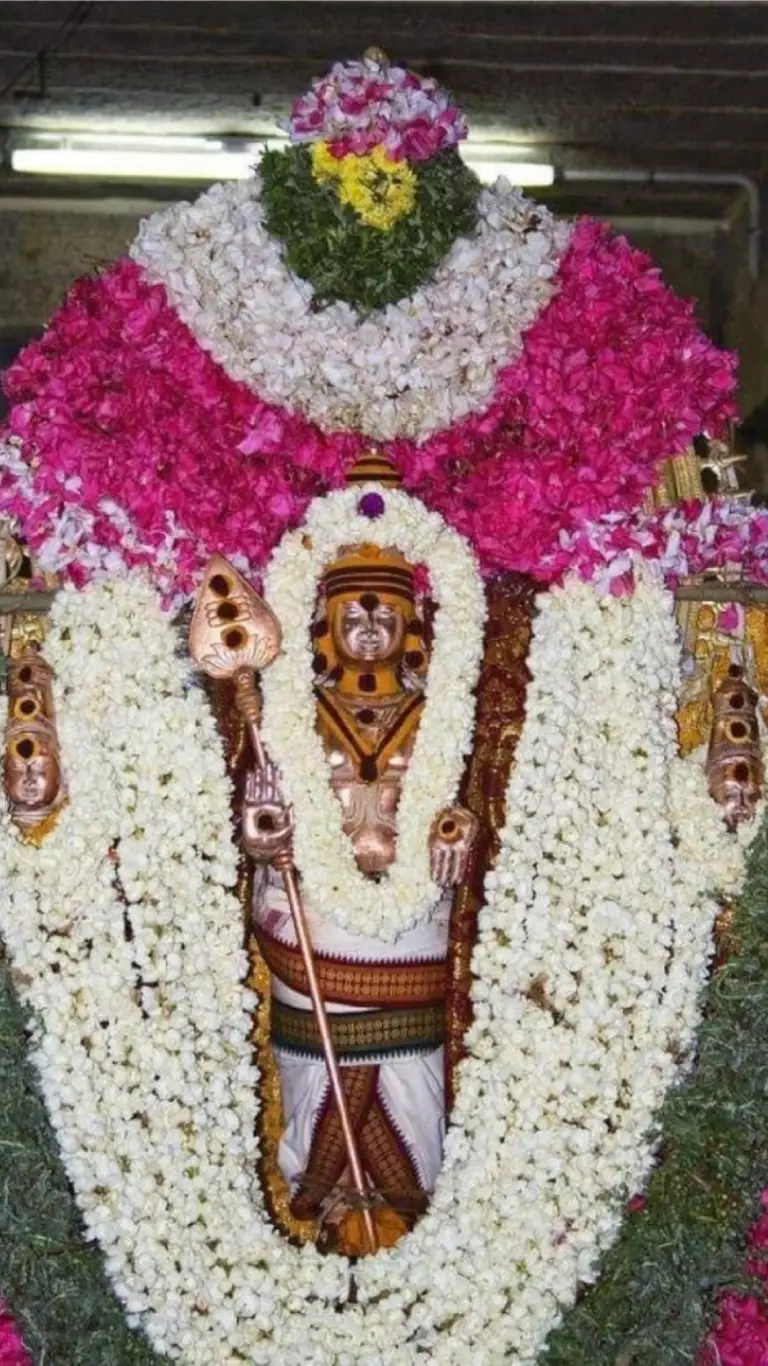
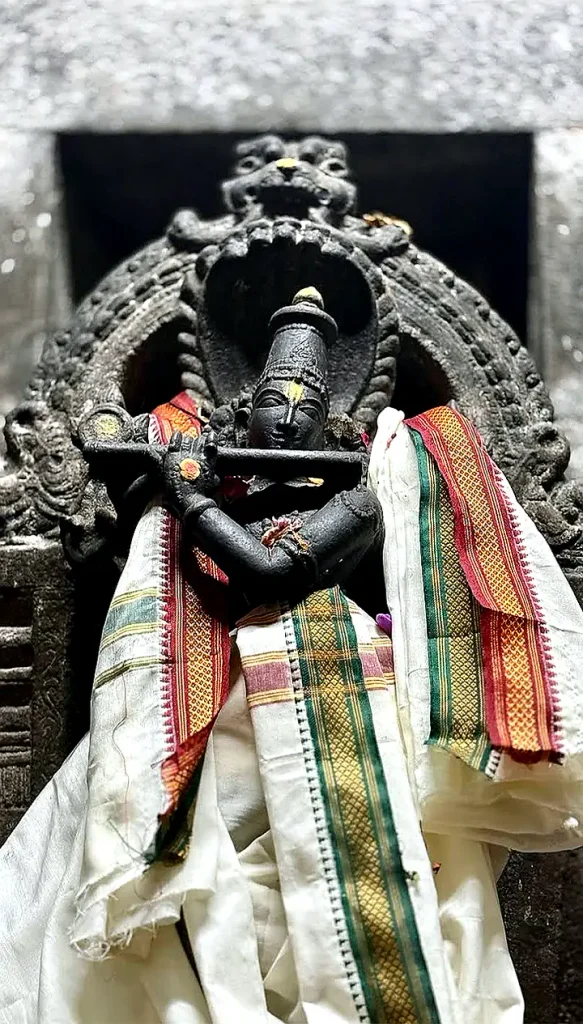
- Garbhagriha (Sanctum Sanctorum): Entering the pillared Maha Mandapam leads directly to the cool, incense-filled granite inner sanctum. Lord Sri Varadaraja Perumal stands majestically, holding the Shankha (conch) and Chakra (discus), accompanied by Goddess Sridevi and Goddess Bhoodevi.
- Parivara Devatas & Hill Viewpoint: Walking the outer pradakshina path reveals sub-shrines for Chakrathazhwar, Lord Anjaneya facing the main sanctum, and a rear cliff view overlooking the plains of Namakkal and Kolli Hills.
How to Reach: Commuter & Parking Logistics
Nainamalai is located roughly 12 km northeast of Namakkal town and 3.5 km from Sendamangalam.
- By Train / Suburban Transit: The nearest railway station is Namakkal Railway Station (NMKL), 14 km away. From the station, pre-booked autos charge roughly ₹250–₹350 to the foothills, or you can take a city bus to Namakkal Central Bus Stand. Salem Junction (SA), 55 km north, serves as the nearest major multi-state rail junction.
- By Bus: Regular government town buses run from Namakkal Central Bus Stand toward Sendamangalam and Rasipuram.
- Key Bus Routes: Route 9, Route 11, and Route 15 (Namakkal to Sendamangalam via Nainamalai stop). Buses run every 15 to 20 minutes from 5:00 AM to 9:00 PM.
- By Car & Two-Wheeler:
- From Chennai (360 km): Take NH 45 through Ulundurpet, Attur, and Rasipuram to Sendamangalam road.
- From Bengaluru (240 km): Take NH 44 south via Dharmapuri and Salem; take the Namakkal bypass and branch onto the Sendamangalam State Highway (SH-95).
- Road Condition: The single-lane access road from Sendamangalam highway to the base parking lot is paved and well-maintained.
- Parking Facilities: A dedicated open-ground parking lot sits at the temple base. Two-wheeler parking costs ₹10; cars and SUVs pay ₹30. Capacity handles roughly 200 cars and 800 motorbikes.
Read More >> Salai Kumaraswamy Temple Tirunelveli
Visitor Amenities & Local Knowledge
- Restrooms & Drinking Water: Clean municipal pay-and-use toilets (₹5) are located at the foothill base next to the shoe stand. No running-water restrooms exist at the summit; plan your bio-breaks before starting the ascent. A reverse-osmosis (RO) drinking water kiosk operates at the base, but summit tanks run out quickly on festival days—bring your own canteen.
- Senior Citizen Realities: There are no battery carts, ramps, palanquins (dolis), or ropeways. Seniors with severe arthritis, cardiovascular disease, or respiratory limitations should not attempt the climb. Those who cannot climb often offer prayers at the foothill temple mandapam.
- 3 Ground-Level Tips:
- Connectivity: Airtel and Jio maintain spotty 4G coverage along the climb; digital UPI payment apps often fail due to signal drops at the summit. Carry ₹300–₹500 in paper currency for offerings and refreshments.
- Breakfast Spots: The foothills feature small village tea stalls selling hot idlis and medu vadas. For a full south Indian breakfast, stop at hotels along the Namakkal Collectorate road (such as Hotel Santhosh or Aasai Vasantha Bhavan), 10 km away.
- Wind Warning: The summit platform experiences heavy crosswinds exceeding 40 km/h between July and October. Hold onto railings tightly when approaching the outer viewing perimeter.
1-Day Pilgrimage Circuit (Within 15–20 km)
- Stop 1: Nainamalai Sri Varadaraja Perumal (5:00 AM – 10:30 AM): Complete the early 3,500-step ascent, attend the morning puja, descend by 10:00 AM, and take a quick tender coconut break at the base.
- Stop 2: Namakkal Sri Anjaneyar & Narasimhaswamy Temples (11:15 AM – 1:00 PM): Drive 12 km west into Namakkal town. Worship the 18-foot single-stone open-sky idol of Lord Hanuman, then visit the 8th-century rock-cut cave temple of Sri Lakshmi Narasimha carved directly into the central cliff face.
- Lunch Break (1:00 PM – 2:30 PM): Dine at Hotel Coastal Residency or Sree Saravana Bhavan near the Namakkal bus stand for vegetarian thali meals.
- Stop 3: Namakkal Rock Fort (Namakkal Durgam) (3:00 PM – 5:00 PM): Walk up the monolith rock fortress built by the Madurai Nayakas during the 17th century, offering panoramic sunset views across the entire Kongu region.
Frequently Asked Questions
How many steps are there in Nainamalai Temple?
Nainamalai Temple has approximately 3,500 steep, rock-cut stone steps leading from the base to the hill summit. The average healthy adult takes between 1.5 to 2.5 hours to climb up and roughly 1 to 1.5 hours to descend carefully.
Is Nainamalai Temple open on all days of the week?
No, Nainamalai Temple is officially open for sanctum darshan only on Saturdays from 6:00 AM to 6:00 PM. During the Tamil month of Purattasi, the shrine opens on all days with extended hours, while non-festival weekdays offer access only to foothill shrines.
What is the best time to start climbing Nainamalai?
The best time to start climbing Nainamalai is between 4:30 AM and 5:30 AM to avoid midday heat. Early morning climbs let visitors catch the sunrise, complete the return hike before the granite steps become hot, and avoid long weekend afternoon queues.
Is there a palanquin (doli) or ropeway service at Nainamalai?
No, Nainamalai does not provide ropeway, cable car, or licensed doli (palanquin) services for elderly or disabled pilgrims. Every visitor must complete the 3,500-step trek on foot, making this shrine unsuitable for individuals with mobility impairments or heart conditions.
What is the significance of Purattasi Saturdays at Nainamalai?
Purattasi Saturdays are sacred to Lord Vishnu, drawing over 50,000 pilgrims who climb the hill barefoot for special blessings. Devotees believe that enduring the strenuous mountain pilgrimage during this auspicious Tamil month absolves ancestral sins and brings long-term material prosperity.
Are monkeys a problem on the Nainamalai steps?
Yes, large troops of bonnet macaque monkeys inhabit the tree-covered step sections and routinely snatch visible plastic bags. Carry all belongings in a zipped backpack, avoid holding food or flowers in open polythene bags, and refrain from feeding or antagonizing them.
What should I wear when visiting Nainamalai Temple?
Devotees must wear traditional Indian attire such as dhotis or trousers for men and sarees or churidars for women. Shorts, sleeveless shirts, bermudas, and western dresses are forbidden under Hindu Religious and Charitable Endowments (HR&CE) department regulations.
Where can I park my car at Nainamalai Temple?
Visitors can park cars and motorbikes in the large open-air lot situated directly at the foothill base. Parking fees are ₹10 for two-wheelers and ₹30 for four-wheelers; the lot is staffed by local panchayat attendants during Saturday operating hours.
Practical Visitor Wrap-Up
A pilgrimage to Nainamalai is as much an athletic mountain hike as a religious visit. To ensure a smooth experience, arrive at the foothill parking lot before 5:00 AM on a Saturday, dress in breathable cotton clothes that conform to temple guidelines, and keep at least ₹500 in physical cash for footwear, offerings, and emergency refreshments. Treat the sacred hill with care by bringing back all trash and keeping plastics off this pristine Western-Eastern Ghats boundary zone.