Baba Tarakeswar Temple Guide: Timings, History, and Travel Tips
Baba Tarakeswar Temple is one of the most famous and sacred Shiva shrines in West Bengal. Located in the historic town of Tarakeswar in Hooghly district, this holy shrine is dedicated to Lord Shiva, worshipped here as Baba Taraknath. Millions of devotees visit this temple every year to seek peace, good health, and spiritual blessings. Devotees revere the Shiva lingam resting inside the sanctum as a self-manifested Swayambhu lingam, making it an essential pilgrimage site in Eastern India.
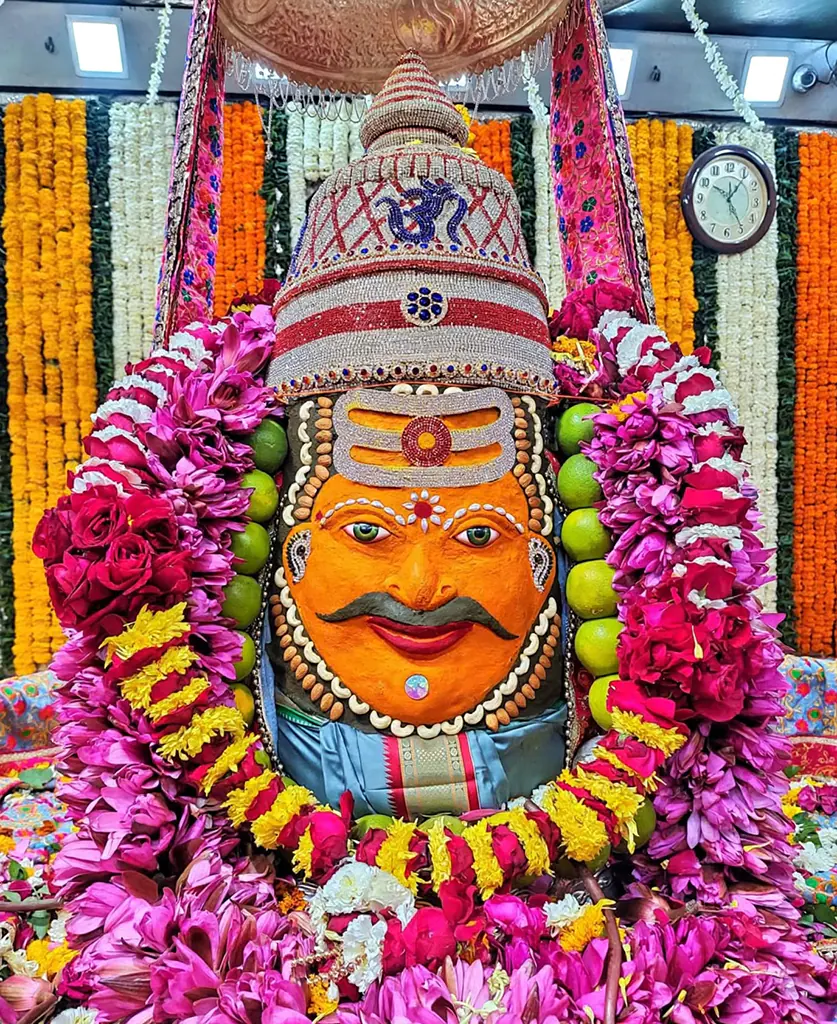
Whether you are planning your first pilgrimage, taking a holy dip in the sacred Dudhpukur tank, or travelling from Kolkata by local train, this comprehensive guide provides everything you need to plan a smooth, peaceful, and spiritually rewarding journey.
Quick Information: Baba Tarakeswar Temple
| Feature | Details |
| Temple Name | Baba Tarakeswar Temple (Taraknath Mandir) |
| Primary Deity | Lord Shiva (worshipped as Baba Taraknath) |
| Location | Tarakeswar town, Hooghly district, West Bengal, India |
| Pin Code | 712410 |
| Temple Architecture | Traditional Bengal Atchala (eight-roofed) style |
| Year of Construction | 1729 CE (built by Raja Bharamalla) |
| Sacred Water Tank | Dudhpukur (located adjacent to the temple) |
| Morning Darshan Timings | 6:00 AM to 1:30 PM |
| Evening Darshan Timings | 4:00 PM to 8:30 PM (often extended on festivals) |
| Major Festivals | Maha Shivaratri, Chaitra Gajan, Shravani Mela |
| Nearest Railway Station | Tarakeswar Railway Station (TAK) – approx. 1 km |
| Nearest Airport | Netaji Subhash Chandra Bose International Airport, Kolkata (CCU) – approx. 68 km |
| Official Administrative District | Detailed on the Hooghly District official administration portal |
Why Baba Tarakeswar Temple Holds Great Spiritual Power
In Hindu tradition, Lord Shiva is known as the protector, the healer, and the ocean of mercy. At Tarakeswar, devotees view Him as “Taraknath,” the supreme redeemer who guides souls safely across the ocean of worldly troubles.
Pilgrims visit this temple with deep faith. Much like devotees who journey to Baba Baidyanath Dham in Deoghar
, people come here to perform special prayers (Manat) for the recovery of sick family members, the birth of a child, or guidance through difficult life challenges. When their prayers are answered, devotees return on foot or travel long distances to offer milk, flowers, and holy Ganga water to the deity. The vibrant chants of “Bhole Baba Paar Karega” echoing through the corridors give the temple a deeply inspiring spiritual energy.
The Sacred History and Legend of Baba Taraknath
The history of Baba Tarakeswar Temple combines sacred oral legends with documented regional history.
The Story of Raja Bharamalla and the Cowherd
According to local belief, the sacred Shivalingam was discovered during the early 18th century. A wealthy resident named Raja Bharamalla lived in this forested part of Bengal. One of his cowherds noticed something unusual happening every day. A cow named Kapila would walk into the dense jungle, stand above a hidden black stone, and release her milk naturally onto the ground.
Surprised by this daily event, the cowherd informed Raja Bharamalla. The king went into the forest to investigate. When workers began digging into the earth around the stone, they found a smooth, deep Shivalingam embedded firmly in the soil. That very night, Lord Shiva appeared in Raja Bharamalla’s dream, revealing that the stone was a Swayambhu manifestation of divine consciousness and instructing him to build a temple over the spot.
Regional traditions like this show how local communities have long celebrated natural sacred sites across Bengal and Bihar, much like the veneration seen at the historic Shiva shrine at Bateshwar Sthan. Raja Bharamalla fulfilled his divine promise and consecrated the shrine, establishing daily worship services that continue to this day.
Historical Construction in 1729 CE
Historical records state that the present brick structure of Baba Tarakeswar Temple was built around 1729 CE. While Raja Bharamalla laid the foundation of the modern pilgrimage, later rulers and local zamindars from surrounding Bengal estates added large prayer halls, perimeter walls, and marble flooring.
Over the centuries, the management of the temple passed through a lineage of dedicated spiritual heads known as Mohants. These guardians preserved the ancient rituals, organized large-scale community feeding kitchens, and maintained the temple complex through changing historical eras.
Unique Bengal Atchala Temple Architecture
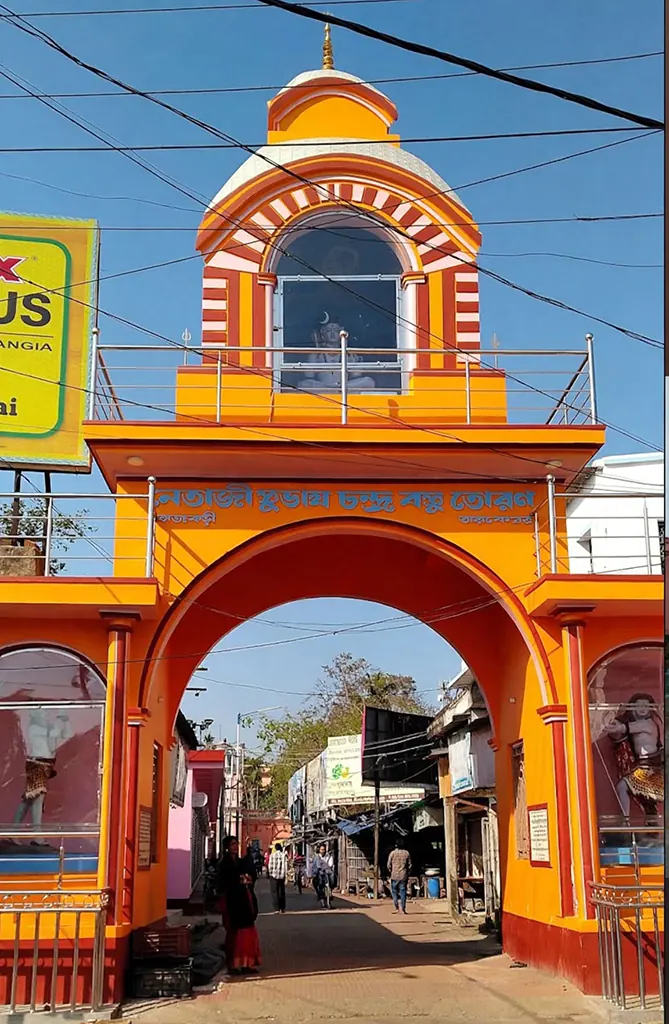
The architecture of Baba Tarakeswar Temple is a magnificent example of classical Bengali temple building. While grand southern shrines feature towering stone gopurams like the sacred stone architecture of Airavatesvara Temple, traditional Bengal temples were constructed using high-quality local clay bricks, lime mortar, and curved roof designs adapted to heavy monsoon rains.
The Main Sanctum and Natmandir
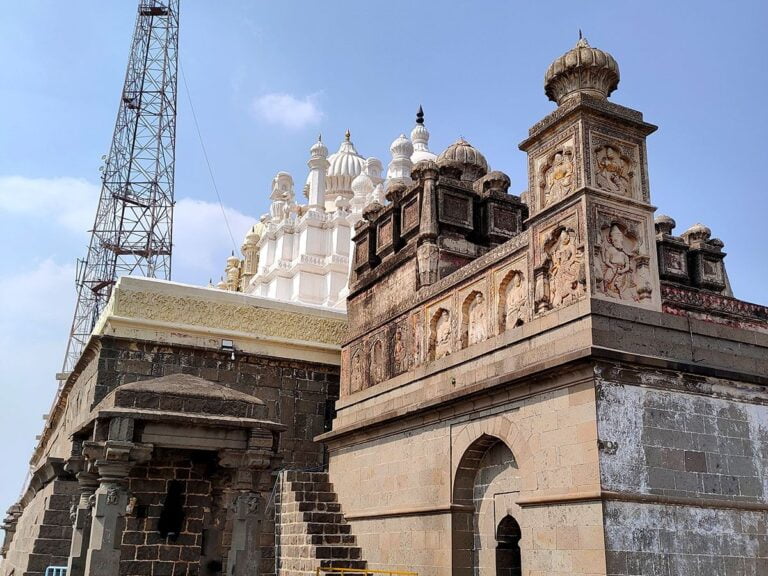
The main temple features an Atchala structure, which literally translates to an eight-roofed construction—a classic Bengali design also admired at the renowned Kalighat Kali Temple in Kolkata. This architectural style mimics the gentle curve of traditional thatched village huts, topped with a smaller imitation roof structure to create an elegant tiered tower.
Key architectural components include:
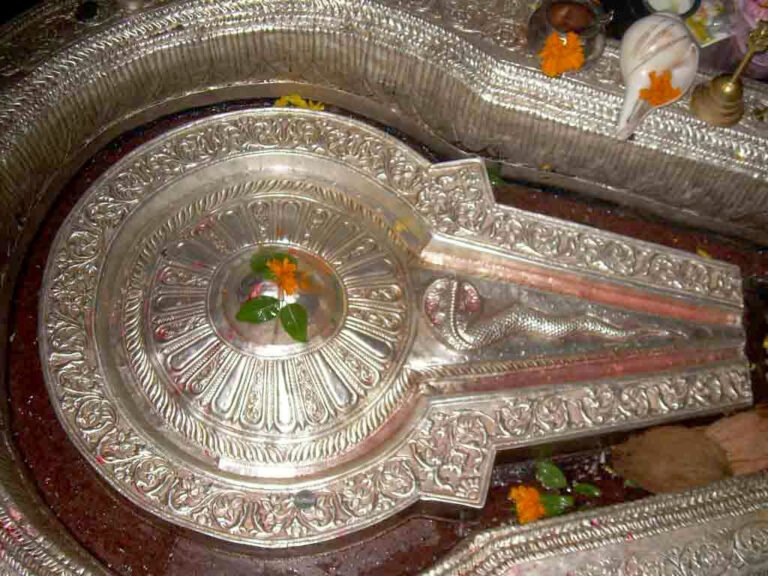
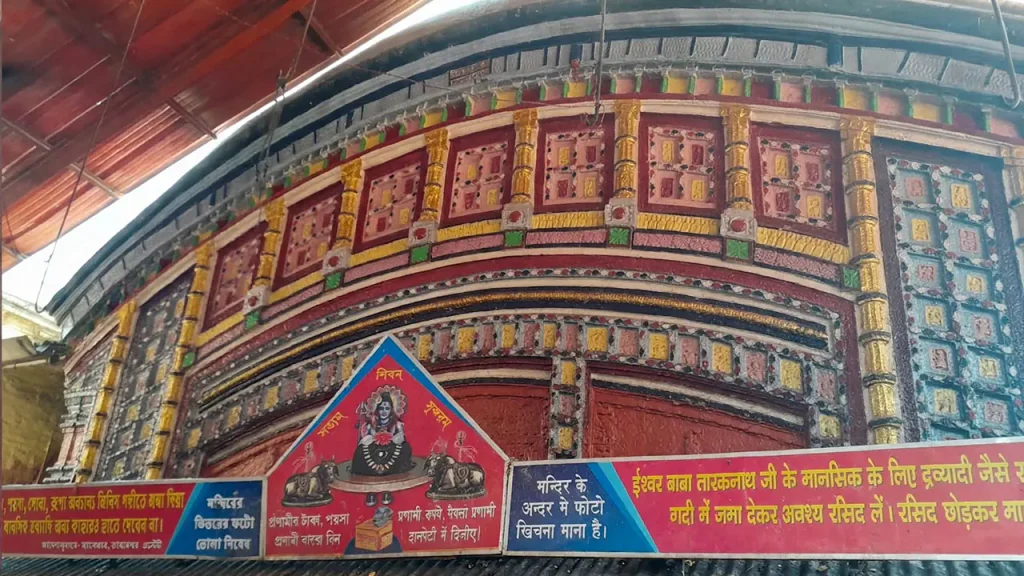
- The Garbhagriha (Sanctum Sanctorum): The inner sanctum sits slightly below the outer floor level. The self-manifested Shivalingam rests inside a brass-lined circular basin, continuously bathed with holy water and fresh flowers.
- The Natmandir (Pillared Hall): Positioned directly in front of the main shrine is a large covered hall where thousands of pilgrims gather for kirtans, community prayers, and darshan lines. Unlike the intricate stone pillar engineering seen at Vidyashankara Temple, the Natmandir here emphasizes open space, natural airflow, and wide sightlines to accommodate massive festive crowds.
- Shikhara and Finial: The top of the temple is crowned with a ceremonial trident (Trishula) and flag, visible across the town of Tarakeswar.
The Holy Dudhpukur Tank
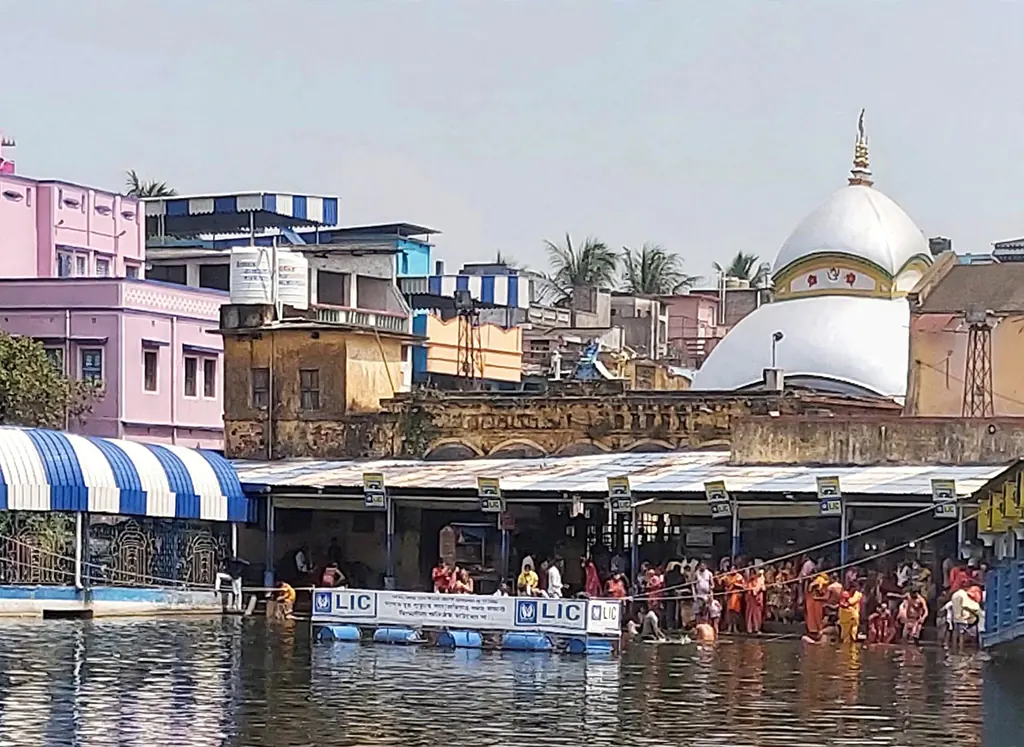
Just north of the main temple compound lies Dudhpukur, a large freshwater pond whose name translates to “The Milk Pond.” Sacred tradition says that this pond was originally fed by the milk offered during the discovery of the Shivalingam.
Pilgrims consider a bath in Dudhpukur essential before entering the temple. The water is believed to refresh the body and prepare the mind for worship. Clean concrete steps surround the tank, allowing devotees to safely step into the water. Devotees also collect water from Dudhpukur in copper pots to offer at the outer sanctum during special prayer days.
Daily Darshan and Pooja Timings
The daily schedule at Baba Tarakeswar Temple begins before sunrise and continues until late in the evening. Following the daily timings helps visitors avoid crowded queue hours.
Morning and Afternoon Darshan Schedule
- Morning Opening: The temple gates open at 6:00 AM. Priests perform the sacred awakening rituals (Mangala Aarti), clean the sanctum, and decorate the Shivalingam with sandalwood paste and bilva leaves.
- Public Worship: Devotees enter for general darshan and water offerings from 6:30 AM to 1:00 PM.
- Afternoon Bhog and Closure: At approximately 1:30 PM, priests offer the afternoon cooked food (Anna Bhog) to Baba Taraknath. The temple gates then close for the deity’s rest period until 4:00 PM.
Evening Aarti and Special Offerings
- Evening Reopening: The gates reopen to visitors at 4:00 PM.
- Sandhya Aarti: Between 7:00 PM and 7:45 PM, priests perform the grand evening aarti with glowing lamps, incense, ringing bells, and traditional conch shells.
- Night Closure: Final prayers (Shayan Aarti) take place around 8:30 PM, after which the doors close for the night.
Note: On special festival days, Mondays, and throughout the holy month of Shravana, the temple remains open much later to accommodate crowds.
Major Festivals Celebrated at Tarakeswar
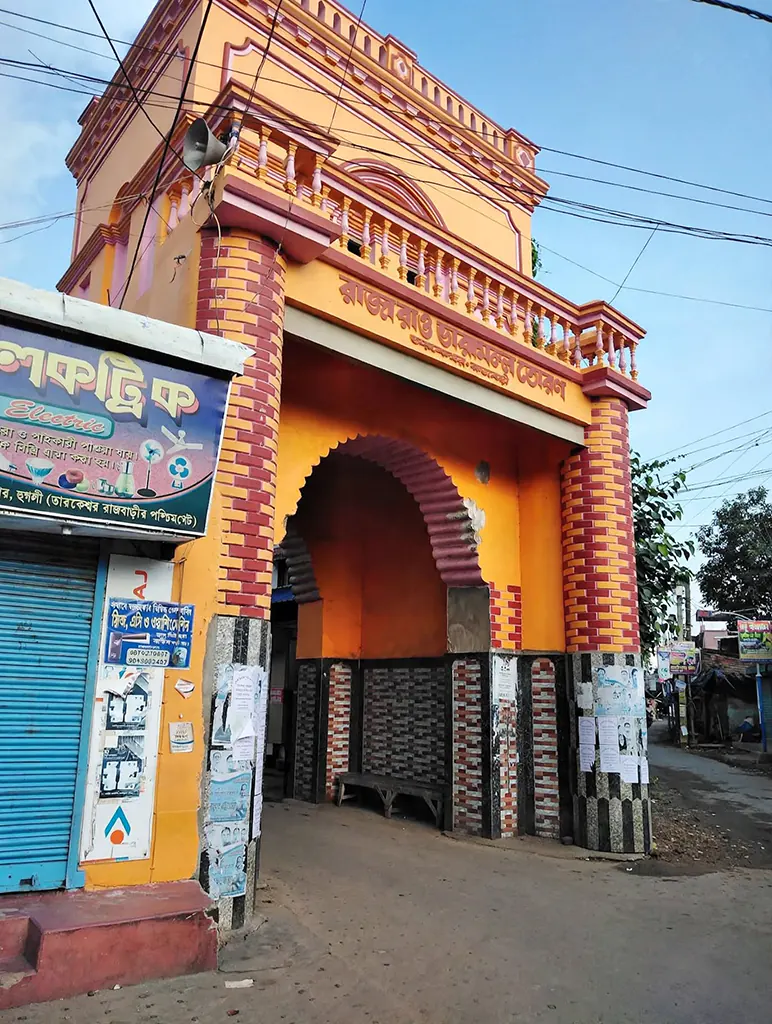
While daily prayers draw continuous visitors, the town comes alive with incredible color and spiritual devotion during major annual festivals celebrated across West Bengal, supported by event arrangements coordinated by the West Bengal Tourism Development Corporation.
1. The Holy Shravani Mela
The Hindu monsoon month of Shravana (July to August) is the most famous time to visit Tarakeswar. Hundreds of thousands of pilgrims, known as Kanwariyas, dress in vibrant saffron clothes and walk barefoot to the temple.
Many pilgrims begin their journey at Sheoraphuli Ghat on the banks of the sacred Hooghly River. They collect river water in small earthen or brass pots balanced on bamboo poles (Kanwar), carry the load on their shoulders, and walk nearly 40 kilometres to Tarakeswar—echoing the grand Shaivite pilgrimage spirit seen across the twelve sacred Jyotirlingas of India. Along the route, local residents set up free food stalls, clean water points, and rest tents to support the walkers.
2. Chaitra Gajan and Charak Mela
Celebrated during the final days of the Bengali month of Chaitra (mid-April), Gajan is an ancient folk festival dedicated to Lord Shiva. Male devotees, called Sannyasis, take temporary vows of strict simplicity, fasting, and discipline for one month.
During the festival, these devotees perform traditional devotional songs, dance with sacred props, and take part in the famous Charak Mela. The town transforms into a vibrant carnival with street performances, traditional handicraft stalls, and sweets.
3. Maha Shivaratri
Maha Shivaratri is celebrated with great devotion across the night. Reflecting the deep spiritual significance of Maha Shivaratri, the temple remains open for 24 hours, allowing pilgrims to perform abhishekam with milk, honey, curd, and water at designated platforms. Chants of Om Namah Shivaya fill the air as families keep an all-night vigil (Jagaran).
How to Reach Baba Tarakeswar Temple
Tarakeswar is well-connected to Kolkata and all major districts of West Bengal through reliable rail and road networks.
Taking the Local Train from Howrah Station
Travelling by train is the fastest, cheapest, and most popular way to reach the temple:
- Board at Howrah: Go to Howrah Railway Station (HWH) suburban platforms.
- Choose Your Train: Take a direct Howrah–Tarakeswar EMU local train operated by Eastern Railway. Trains depart every 25 to 40 minutes throughout the day. You can review official route timings and updates via the Eastern Railway official portal.
- Travel Duration: The train covers the 57-kilometre distance in approximately 1 hour and 20 minutes to 1 hour and 35 minutes.
- Arrival at Tarakeswar (TAK): From Tarakeswar Railway Station, the temple is just 1 kilometre away. You can easily walk to the temple gates in 15 minutes or hire an electric rickshaw (Toto) or cycle rickshaw for a quick 5-minute ride.
Reaching by Road from Kolkata and Nearby Towns
- By Car / Taxi: The driving distance from central Kolkata to Tarakeswar is around 60 kilometres. The best route runs via the Kona Expressway, turning onto National Highway 19 (Durgapur Expressway), and following State Highway 2 via Singur and Haripal. Under normal traffic conditions, the car journey takes around 2 to 2.5 hours.
- By State Bus: Direct state transport buses (SBSTC) and private buses depart regularly from Kolkata (Esplanade bus terminus, Karunamoyee, and Howrah bus stand) directly to Tarakeswar Bus Stand.
Nearest Airports
- Kolkata International Airport (CCU): Netaji Subhash Chandra Bose International Airport is the nearest airport, located approximately 68 kilometres east of Tarakeswar. You can hire an airport taxi directly to the temple or take an airport shuttle to Howrah Station to catch a suburban local train.
Step-by-Step Pilgrim Guide: What to Do on Arrival
To make your temple visit peaceful and organized, follow these simple steps once you arrive in Tarakeswar:
Store Your Belongings: Leave heavy bags at your hotel or the official temple locker rooms. Deposit your shoes at the designated footwear stalls outside the main entrance.
Take a Dip in Dudhpukur: Walk to the northern steps of Dudhpukur. Take a holy dip or wash your hands, feet, and face thoroughly before entering the sacred courtyard.
Purchase Pooja Items: Small stalls around the temple sell brass pooja baskets containing bilva leaves (Bel Patra), sweet batasha, fresh flowers, incense, and bottled milk. Understanding the rules and meaning of offering Bilva leaves adds deeper mindfulness to your offering.
Join the Main Darshan Queue: Follow the barricaded lines into the Natmandir hall. During busy weekends, separate lines manage male and female devotees to ensure safety.
Offer Your Prayers: As you approach the sanctum, offer your prayers and hand your offerings to the temple assistants.
Receive Blessings and Prasad: Collect the sacred water (Charnamrita) and sweet prasad before exiting through the side corridors.
Dress Code, Rules, and Visitor Tips
- Dress Code: There is no strict traditional uniform, but visitors must wear modest and respectful clothing. Traditional Indian attire, such as sarees, salwar suits, dhotis, or simple kurtas, is strongly recommended. Avoid shorts, sleeveless tops, and beachwear.
- Leather Items: Belts, wallets, and bags made of pure animal leather are not permitted inside the sanctum area. Keep these in your hotel room or vehicle.
- Mobile Phones and Photography: Taking photos or recording videos inside the sanctum sanctorum is strictly prohibited. Keep your phone in silent mode throughout your visit.
- Handling Crowds: Mondays are sacred to Lord Shiva and always attract larger crowds. If you prefer a quiet, calm experience with shorter waiting lines, plan your visit on Tuesday, Wednesday, or Thursday mornings.
- Beware of Touts: Always buy your pooja materials from established shops with clear prices. Do not pay private individuals who claim they can help you skip the queue for cash.
Accommodation and Food Options in Tarakeswar
Where to Stay
- Temple Trust Dharamshalas: The Tarakeswar temple administration and regional religious trusts operate affordable dharamshalas near the shrine. These provide clean, basic rooms with fans and attached bathrooms for families.
- Private Guest Houses and Lodges: Several budget hotels and family guest houses are located along Station Road and near the main bazaar, offering air-conditioned rooms, clean drinking water, and round-the-clock room service.
Food and Prasadam
Tarakeswar is famous for authentic Bengali vegetarian meals and sweets:
- Temple Anna Bhog: Devotees can purchase coupons at the temple office in the morning to receive the sacred afternoon bhog, which typically includes hot khichdi, labra (mixed vegetable curry), tomato chutney, and sweet payesh (rice pudding).
- Local Sweet Shops: No trip to Tarakeswar is complete without tasting fresh Bengal sweets. Look for hot sandesh, mishti doi, and crisp kachoris served with spiced potato curry at the sweet shops lining the temple streets.
Nearby Pilgrimage Places to Extend Your Trip
If you have extra time during your Hooghly district pilgrimage, consider visiting these respected regional shrines:
- Khanakul (Hooghly District): Located within the same district is the revered Anandamayee Shakti Peeth Temple in Khanakul, a serene Shakta shrine situated along the banks of the Kana Damodar River.
- Kamarpukur and Jairambati: Roughly 35 to 40 kilometres from Tarakeswar lie the peaceful birthplaces of Sri Ramakrishna Paramahamsa and Sri Sarada Devi, offering quiet spiritual retreats.
- Birbhum Shaiva-Shakta Circuit: Devotees travelling further north into rural Bengal often combine their journey with a visit to Bakreshwar Temple and hot springs, famous for its sacred Shiva shrine and natural thermal kunds.
Frequently Asked Questions About Baba Tarakeswar Temple
1. What are the best days to visit Baba Tarakeswar Temple?
Tuesdays, Wednesdays, and Thursdays are the best days to visit if you wish to avoid long queues. Mondays, full moon days (Purnima), and festival dates attract heavy pilgrim traffic with longer waiting times.
2. Can I pour milk directly on the Shivalingam?
During regular, uncrowded days, devotees are permitted to pour milk and holy water into the designated copper channels leading directly to the lingam. On heavy festival days, temple priests manage the offerings on behalf of pilgrims to keep the queue moving safely.
3. How far is Baba Tarakeswar Temple from Howrah Station?
The temple is approximately 57 kilometres from Howrah Railway Station. A direct local train from Howrah takes around 1 hour and 25 minutes.
4. Is there an entry ticket or fee for darshan?
General entry to Baba Tarakeswar Temple is completely free. There are small optional charges for special puja receipts, direct milk abhishekam rituals, or afternoon bhog coupons purchased at the official counter.
5. Is it safe to take a bath in Dudhpukur tank?
Yes, thousands of devotees bathe in Dudhpukur every day. The tank has wide, solid stone steps and safety handrails. However, children and elderly visitors should always be accompanied, and visitors must avoid stepping into deeper sections of the pond.
6. Are locker facilities available at the temple?
Yes, basic storage lockers and supervised shoe counters are available near the main temple entry gates for a nominal fee.
Conclusion: Planning Your Sacred Visit to Tarakeswar
Baba Tarakeswar Temple is more than an ancient monument; it is a living center of deep faith, heritage, and peace. From the quiet morning hours when chants echo over Dudhpukur to the grand festive energy of the Shravani Mela, this historic shrine offers an unforgettable spiritual experience.
Whether you travel by local train from Howrah or drive through the green countryside of Hooghly district, a journey to Baba Taraknath fills the heart with devotion and clarity. Pack your simple traditional clothes, keep your schedule flexible, and prepare to experience one of Eastern India’s most cherished Shiva pilgrimage destinations.