Kalahasteeswarar Temple Kumbakonam: Timings, History, and Rahu-Ketu Pariharam Guide
Sri Kalahasteeswarar Temple in Kumbakonam is an ancient Hindu temple dedicated to Lord Shiva, located in the heart of the temple town of Kumbakonam in Tamil Nadu’s Thanjavur district. Revered as one of the prominent twelve Shiva temples associated with the legendary Mahamaham festival, this historic shrine is celebrated across South India as an important parihara sthalam (remedial pilgrimage site) for alleviating Rahu and Ketu sarpa doshas.
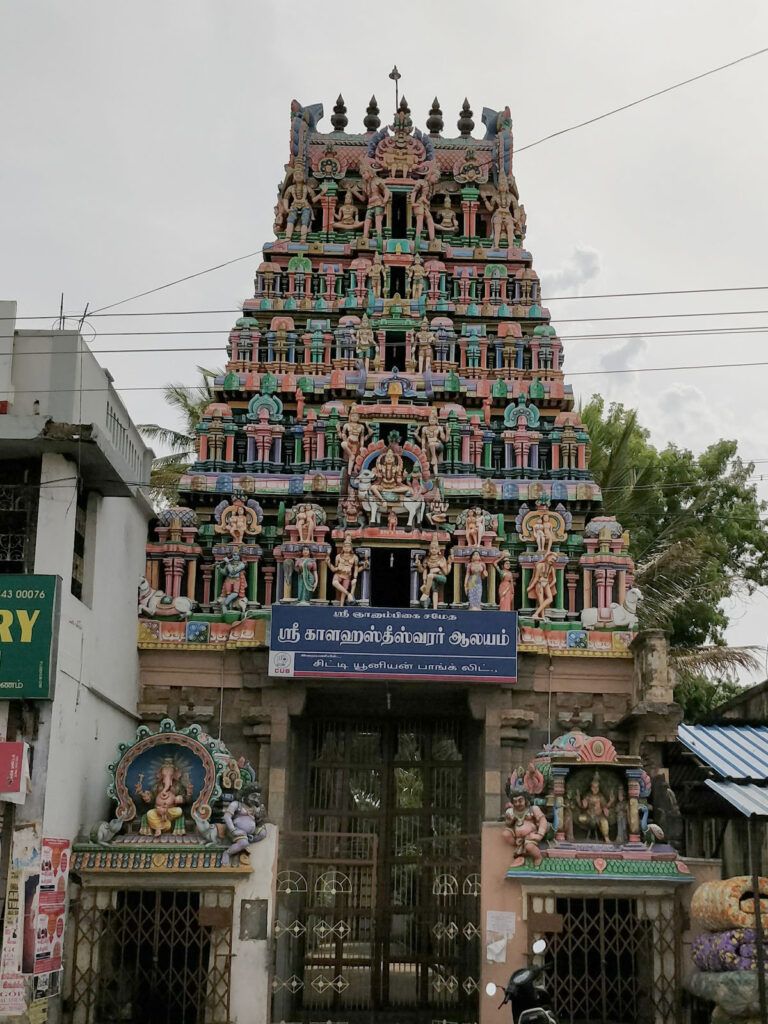
While many pilgrims know the renowned Srikalahasti temple in Andhra Pradesh, fewer realize that Kumbakonam houses its own venerable counterpart. Here, Lord Shiva is enshrined as Kalahasteeswarar alongside His divine consort, Goddess Gnanambigai. The temple offers a peaceful, deeply spiritual sanctuary where devotees can offer prayers to mitigate planetary afflictions, participate in traditional milk abhishekam during Rahu Kalam, and marvel at centuries-old Chola and Nayaka architectural craftsmanship.
Quick Information: Sri Kalahasteeswarar Temple, Kumbakonam
| Feature | Details |
| Temple Name | Sri Kalahasteeswarar Temple (also known as Sri Kalahastheeswarar Swamy Temple) |
| Main Deity | Lord Shiva (worshipped as Sri Kalahasteeswarar / Lingam) |
| Consort (Ambal) | Goddess Parvati (worshipped as Sri Gnanambigai) |
| Location | Kumbakonam Town, Thanjavur District, Tamil Nadu, India |
| Historical Period | Core sanctum dated to the Later Chola dynasty; subsequent pillared halls by Vijayanagara and Thanjavur Nayaka kings |
| Pilgrimage Significance | One of the 12 sacred Shiva temples linked to the 12-year Mahamaham festival and sacred tank; powerful Rahu-Ketu parihara sthalam |
| Daily Darshan Timings | Morning: 6:00 AM – 12:00 PM; Evening: 4:00 PM – 8:30 PM (Timings extend during festival days) |
| Important Ritual Days | Pradosham, Maha Shivaratri, Rahu Kalam (Tuesdays & Sundays), Monthly Sankatahara Chaturthi, Tamil New Year |
| Dress Code | Traditional Hindu pilgrimage attire (Dhoti/Kurta for men; Saree/Salwar for women). Western casuals like shorts and sleeveless tops are not permitted. |
| Entry Fee | Free general darshan; nominal fees apply for special archana, abhishekam, and parihara tickets issued at the temple counter |
| Nearest Railway Hub | Kumbakonam Railway Station (KMU) — approximately 2 km away |
| Nearest Airport | Tiruchirappalli International Airport (TRZ) — approximately 90 km away |
| Administrative Body | Hindu Religious and Charitable Endowments (HR&CE) Department, Government of Tamil Nadu |
Read More>> Mahabaleshwar Temple Maharashtra: 1200 yrs Sacred Atmalinga

Divine Legends and Spiritual Significance
The sanctity of the Sri Kalahasteeswarar Temple in Kumbakonam is woven from multiple sacred legends found in the regional Sthala Puranas of the Cauvery delta.
The Divine Amrita Pot and the Mahamaham Connection
According to regional sacred lore, when the cosmic deluge (Pralaya) threatened to submerge the world, Lord Brahma fashioned a holy pot (Kumbha) containing the divine nectar of immortality (Amrita) and seeds of all cosmic creation. The pot was set afloat on the rising floodwaters and drifted southward.
Lord Shiva took the guise of a divine hunter (Kirata) and shot an arrow into the floating Kumbha at the spot now occupied by the sacred Adi Kumbeswarar Temple. The nectar spilled across multiple locations in the holy town, each droplet consecrating the soil and giving rise to a revered Shiva Lingam.
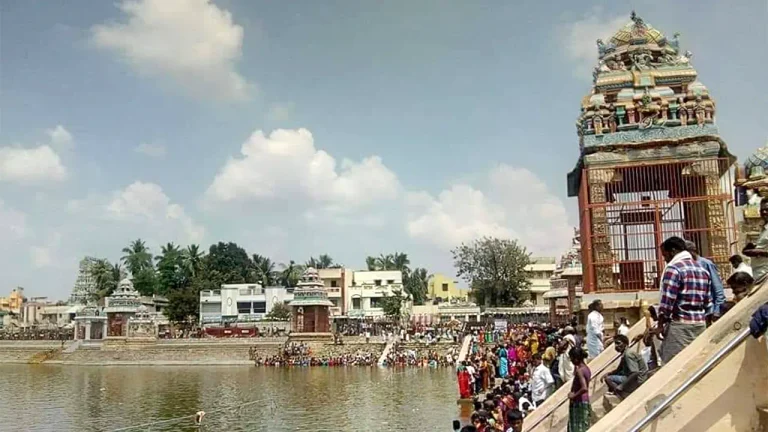
The site where the decorative sacred grass (Dharba) and celestial elements from the pot settled became the sanctified seat of Sri Kalahasteeswarar. Because of this divine origin, the temple holds a place of pride as one of the twelve sacred Shiva shrines where the festival deities (Utsava Murthis) receive ceremonial theerthavari (purifying holy bath) at the Mahamaham Tank during the sacred Mahamaham festival, held once every twelve years.
Read More>> Ranganathaswamy Temple Srirangam
Sage Agastya’s Penance
Tradition holds that the diminutive Vedic sage Agastya visited this sacred spot during his travels through South India. Seeking to comprehend the highest truths of spiritual knowledge, Agastya installed and worshipped a Shiva Lingam here.
Pleased by the sage’s steady devotion, Lord Shiva and Goddess Parvati appeared before him, granting him the sacred vision of their divine union and blessing the Mother Goddess with the name Gnanambigai—the Mother who bestows divine spiritual knowledge (Jnana) and removes inner ignorance. To this day, students and spiritual seekers offer special prayers at Goddess Gnanambigai’s shrine for clarity of mind and intellectual wisdom.
Read More>> Arunachalam Giri Pradakshina: Sacred 8 Lingams of Tiruvannamalai
The Devotion of Hunter Kannappa
The temple also preserves the sacred memory of Kannappa Nayanar, the legendary tribal hunter whose devotion to Lord Shiva is celebrated throughout Tamil Shaivite literature.
Just as Kannappa offered his own eyes to heal the bleeding Lingam at the great Srikalahasti shrine on the banks of the Swarnamukhi River in Andhra Pradesh, a dedicated niche within this Kumbakonam temple commemorates his self-sacrificing faith. Devotees honor his devotion as an enduring reminder that sincere spiritual love transcends ritual formality.

The Role of the Temple in Rahu-Ketu Pariharam
One of the primary reasons pilgrims seek out Sri Kalahasteeswarar Temple in Kumbakonam is its spiritual power as a remedial centre for astrological afflictions related to the lunar nodes, Rahu (North Node) and Ketu (South Node).
In Vedic astrology, planetary combinations that place all natal planets between the axis of Rahu and Ketu are known as Kala Sarpa Dosha or Kala Sarpa Yoga. Similarly, afflictions involving these shadowy planets can cause Naga Dosha or Sarpa Dosha, believed to create obstacles in marriage, delays in childbirth, career instability, and chronic health challenges.
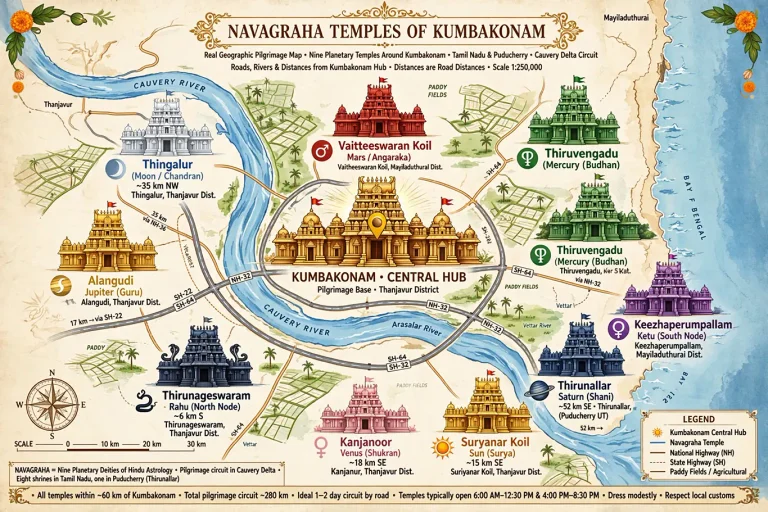
While millions travel to the famous Thirunageswaram Rahu Temple (located just 6 km outside Kumbakonam) and the Kizhaperumpallam Ketu Temple in the wider Cauvery belt, the Kalahasteeswarar Temple inside Kumbakonam serves as a dedicated sanctum where both Rahu and Ketu can be propitiated together in front of Lord Shiva.
Read More>> Brihadeeswarar Temple: Timeless Marvel of Chola Architecture
How the Pariharam Pooja Is Conducted
- Timing the Pooja: Devotees typically choose the Rahu Kalam window on Tuesdays (ruled by Mars) or Sundays (ruled by the Sun) for optimal remedial benefits. Pradosham evenings and Amavasya (New Moon) days are also considered auspicious.
- Offerings: Devotees bring raw cow’s milk, blue or black cloth (symbolic of Rahu), multi-colored or grey cloth (symbolic of Ketu), sesame seeds, urad dal, fragrant flowers, and traditional ghee lamps.
- Milk Abhishekam: Under the guidance of the temple priests, milk is poured over the consecrated snake idols (Naga Vigrahas) and the processional deities. In traditional South Indian belief, offering milk to the snake forms cools their fiery planetary energy, transforming potential afflictions into protective spiritual blessings.
- Circumambulation (Pradakshina): Following the archana, devotees perform circumambulations around the sanctum, chanting the sacred Panchakshari mantra (Om Namah Shivaya) and specific Navagraha stotras.

Architectural Heritage and Temple Layout
Sri Kalahasteeswarar Temple exhibits the classic evolution of Dravidian temple architecture, bearing the structural hallmarks of both the Later Chola Empire and the subsequent embellishments of the Thanjavur Nayakas.
The Gopuram and Outer Courtyard
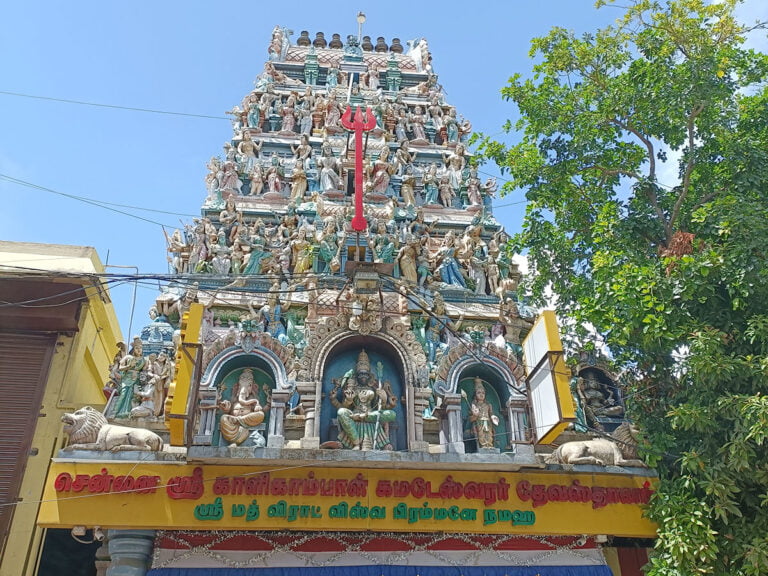
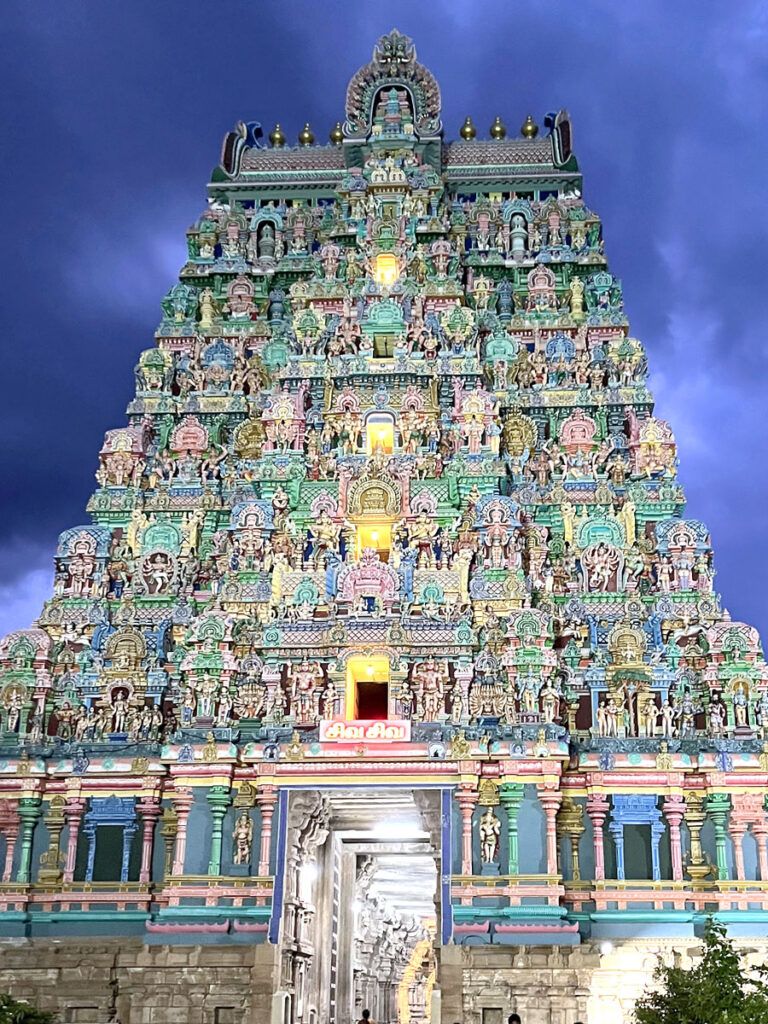
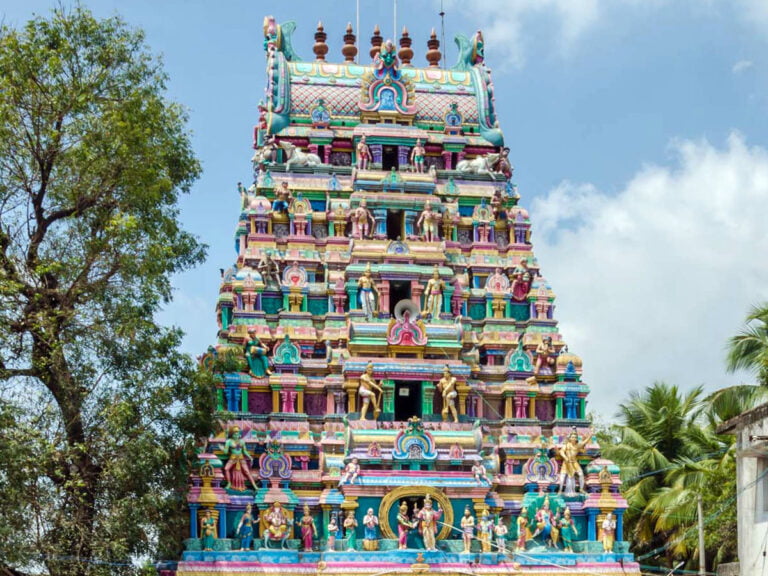
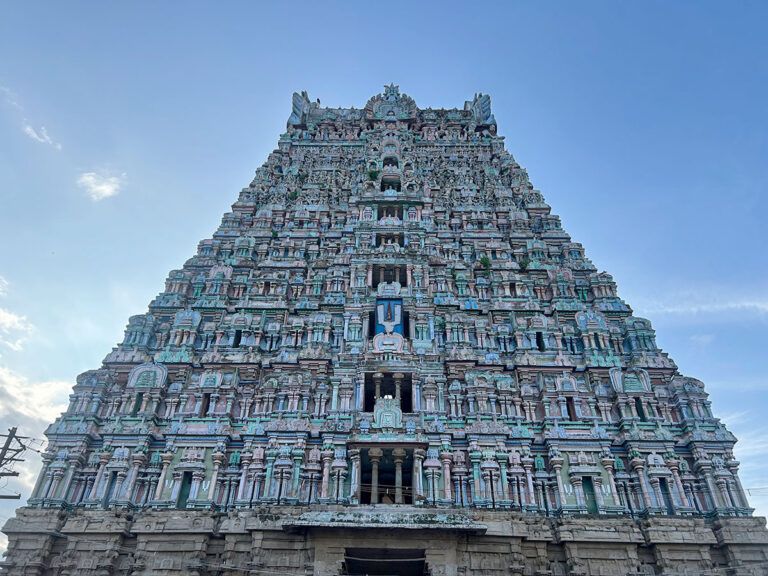
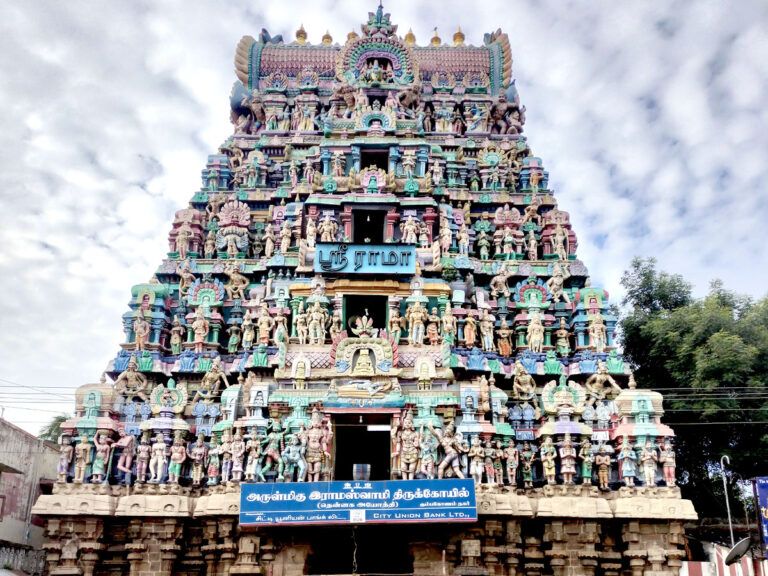
Approaching the temple from the bustling street, visitors are greeted by a graceful eastern Rajagopuram (gateway tower). Adorned with intricately molded stucco sculptures depicting various manifestations of Lord Shiva—including Dakshinamurthy, Nataraja, and Tripurantaka—the gopuram displays the refined proportions characteristic of 16th-century Vijayanagara-Nayaka restorations.
Passing through the main threshold, visitors enter the outer prakaram (circumambulatory corridor). Immediately facing the sanctum is the stone Nandi Mandapam, where the sacred bull Nandi sits in eternal contemplation of his Lord, accompanied by the traditional stone Dhwajasthambham (flagstaff) and Bali Peetham (altar platform).
The Sanctum Sanctorum (Garbha Griha)
The core sanctum houses the sacred Shiva Lingam of Sri Kalahasteeswarar. Carved from dense, dark granite, the Lingam rests upon a sturdy round avudaiyar (pedestal).
The atmosphere within the inner stone hall (Ardha Mandapam) is cool and tranquil, dimly lit by traditional bronze oil lamps that cast a soft golden glow across the polished stone walls. Above the sanctum rises a stone Vimana constructed according to strict Vastu Shastra and Shaiva Agamic proportions.
Goddess Gnanambigai Shrine
Situated in a dedicated sanctum adjacent to the main shrine, Goddess Gnanambigai stands in a graceful posture, facing south. Sculpted with four arms, She holds the sacred pasha (noose) and ankusha (goad) in Her upper hands, while Her lower hands display the Abhaya (fear-dispelling) and Varada (boon-granting) mudras. The peaceful expression carved onto Her granite face conveys both maternal compassion and profound spiritual wisdom.
Subsidiary Shrines (Parivara Devatas)
The temple compound includes meticulously maintained subsidiary shrines housing:
- Lord Vinayaka (Ganesha): Positioned near the entrance to receive first prayers and remove all obstacles.
- Lord Murugan with Valli and Devasena: Honored with special pujas during Sashti and monthly Krithika days.
- Lord Dakshinamurthy: Facing south on the outer sanctum wall, depicted under the sacred banyan tree as the cosmic teacher of silent wisdom.
- Chandikeswarar: The celestial custodian of the temple’s spiritual wealth, before whom devotees softly clap their hands to show they depart carrying only divine grace.
- Nagaraja Shrines: A stone collection of carved serpent deities set beneath sacred trees within the temple courtyard, where devotees light oil lamps to appease Rahu and Ketu.

Daily Pooja Timings and Sacred Rituals
The temple follows the ancient Shaiva Agamic traditions with daily pooja services conducted by qualified hereditary priests.
Daily Pooja Schedule
| Pooja Name | Approximate Time | Spiritual Significance |
| Ushakkala Pooja | 6:30 AM – 7:00 AM | Morning awakening pooja, mangala aarti, and traditional naivedyam |
| Kalasandhi Pooja | 8:00 AM – 9:00 AM | Forenoon ritual featuring formal abhishekam and mantra chanting |
| Uchikala Pooja | 11:30 AM – 12:00 PM | Midday ritual conducted before the temple doors close for the afternoon |
| Sayaratchai Pooja | 5:30 PM – 6:30 PM | Evening twilight service featuring elaborate oil lamp illuminations |
| Arthajama Pooja | 8:00 PM – 8:30 PM | Night closing ritual signifying the withdrawal of cosmic energies into the divine rest |
Note: Temple timings and specific pooja hours may be extended during major festival days, Solar and Lunar eclipses, and special regional occasions.
Major Festivals and Auspicious Occasions
Visiting Sri Kalahasteeswarar Temple during a festival offers a direct look into the living spiritual heritage of Tamil Nadu.
1. The Mahamaham Festival (Held Every 12 Years)
The grandest celebration in Kumbakonam is the Mahamaham festival, often described as the Kumbh Mela of the South. Occurring once every twelve years when the planet Jupiter (Guru) transits into the zodiac sign of Leo (Simha Rasi) on the full moon day of the Tamil month of Masi (February–March), this festival draws millions of devotees from around the world.
During the festival, the processional deity (Utsava Murthi) of Sri Kalahasteeswarar is brought in a colorful ceremonial palanquin through the historic streets of Kumbakonam to the banks of the sacred Mahamaham Tank for the solemn Theerthavari ritual, sanctifying the waters for bathing pilgrims.
2. Maha Shivaratri (February – March)
Maha Shivaratri is observed with continuous night-long vigils. Four distinct Kala Abhishekam ceremonies take place across the four quarters of the night (Char Kala Pooja). Thousands of oil lamps illuminate the stone corridors, accompanied by the resonant chanting of the Sri Rudram and Tamil Shaiva hymns from the Thiruvasagam.
3. Pradosham (Twice Monthly)
Occurring on the thirteenth lunar day (Trayodashi) of both the waxing and waning fortnights, Pradosham is dedicated to the worship of Lord Shiva and Nandi Deva. Special abhishekams using milk, curd, honey, panchamritam, and tender coconut water are performed over the stone Nandi, followed by a circumambulatory procession around the temple corridors.
4. Margazhi Utsavam (December – January)
During the sacred Tamil month of Margazhi, the temple doors open before dawn around 4:30 AM. Devotees gather in the morning air to sing the Thiruvempavai hymns composed by Saint Manikkavacakar, receiving the blessings of Goddess Gnanambigai and hot sweet pongal prasadam.


Practical Pilgrimage Guide: Planning Your Visit
A visit to Sri Kalahasteeswarar Temple can be seamlessly incorporated into a broader Kumbakonam temple tour guide itinerary. Here are essential practical guidelines to help you plan your pilgrimage comfortably.
How to Reach the Temple
- By Train: Kumbakonam Railway Station (station code: KMU) is an important junction on the Southern Railway network, featuring regular daily express trains connecting directly to Chennai Egmore, Tiruchirappalli, Madurai, Thanjavur, and Bengaluru. The temple is situated just 2 kilometers from the station, reachable within 10 minutes by local auto-rickshaw or taxi.
- By Road: Kumbakonam possesses two main bus stations with frequent public buses operating across Tamil Nadu. State express buses link the town to Chennai (280 km), Thanjavur (40 km), Tiruchirappalli (90 km), and Mayiladuthurai (35 km).
- By Air: The nearest airport is Tiruchirappalli International Airport (TRZ), situated approximately 90 kilometers southwest of Kumbakonam. Taxis are readily available at the airport arrivals terminal, offering a comfortable 2 to 2.5-hour drive via National Highway 36.
Recommended Attire and Visitor Etiquette
As an active place of orthodox Hindu worship administered by the Tamil Nadu HR&CE Department, all visitors must follow traditional dress standards:
- Gentlemen: Expected to wear a traditional dhoti (veshti) or pyjama pants paired with a formal kurta or plain shirt. T-shirts with commercial graphics, shorts, and three-quarters are not permitted inside the inner prakarams.
- Ladies: Expected to wear sarees, half-sarees (dhavani), or modest salwar-kameez suits with a dupatta. Western garments such as jeans, short skirts, or sleeveless tops should be avoided.
- Footwear: Must be removed prior to entering the temple gopuram. A footwear storage area is maintained near the entrance.
- Photography: Taking photographs or recording videos inside the inner mandapams and sanctum sanctorum is prohibited to maintain the sanctity of worship. Photography of the outer gopuram is permitted.
Accessibility for Senior Citizens
The temple layout is relatively flat and compact, making it manageable for elderly pilgrims. While there are a few shallow stone steps at the entrance and between mandapams, caretakers can assist senior citizens during non-peak hours.
To avoid the warmest hours and mid-day crowds, elderly visitors are advised to schedule their darshan between 7:30 AM and 9:30 AM or between 5:00 PM and 6:30 PM.
Suggested Half-Day Temple Circuit in Kumbakonam
Because Sri Kalahasteeswarar Temple is located centrally within town, it can be combined with other major shrines in a half-day walking or auto-rickshaw circuit:
Stop 1: Sri Kalahasteeswarar Temple: Begin your morning at 6:30 AM with the quiet Ushakkala darshan and participate in the early Rahu-Ketu parihara archana.
Stop 2: Sri Nageswaran Temple: Travel 1.2 kilometers to visit this 9th-century Chola architectural masterpiece, famous for its miniature stone sculptures and its unique solar alignment, where sunlight falls directly on the Lingam on specific days of the year.
Stop 3: Sri Adi Kumbeswarar Temple: Head to the principal Shaivite shrine of the town, honoring the divine clay pot from which all creation emerged.
Stop 4: Mahamaham Tank and Kasi Viswanathar Temple: Conclude your circuit by walking around the massive 6.2-acre sacred tank, taking in the 16 stone mandapams that encircle its holy perimeter.
Frequently Asked Questions (FAQs)
Is this the same as the Srikalahasti temple in Andhra Pradesh?
No. The famous Vayu Lingam temple of Srikalahasti is situated in the Tirupati district of Andhra Pradesh. The temple described in this guide is the Sri Kalahasteeswarar Temple located in Kumbakonam, Tamil Nadu. However, both temples share identical spiritual origins honoring the same divine manifestation of Lord Shiva, and both are revered as powerful parihara sthalams for pacifying Rahu and Ketu doshas.
What are the best days to visit for Rahu-Ketu pariharam?
Tuesdays and Sundays during the Rahu Kalam period are considered the most effective for performing snake-dosha remedial abhishekams. Additionally, Pradosham evenings, monthly Shivaratri, and Amavasya (New Moon) days offer auspicious opportunities for pariharam prayers.
Can I perform the Rahu-Ketu pooja directly at the temple?
Yes. Devotees can purchase special archana and pooja tickets directly from the temple’s official counter inside the premises. The temple priests provide the required offerings, assist in chanting the appropriate sankalpa (sacred intention) using your birth star (Nakshatra) and rasi (Moon sign), and conduct the ceremonial milk abhishekam.
How much time is needed for a complete darshan?
On normal weekdays, a peaceful darshan and circumambulation takes approximately 30 to 45 minutes. If you intend to sit for a formal Rahu-Ketu parihara archana or milk abhishekam, plan for 1 to 1.5 hours. During Pradosham or festival periods, wait times can extend to 2 hours.
Are there accommodations available near the temple?
Yes. As a major pilgrimage town, Kumbakonam offers a wide variety of accommodation options, ranging from comfortable budget lodges near the railway station to modern mid-range hotels along TSR Big Street and the Thanjavur Main Road. Most town hotels are located within a 5 to 10-minute drive of the temple.
A visit to Sri Kalahasteeswarar Temple in Kumbakonam offers a direct connection to both spiritual solace and ancient heritage. Whether you arrive seeking astrological relief through time-tested Rahu-Ketu pariharam rituals, or simply wish to spend a quiet morning admiring Chola architecture away from crowded tourist circuits, this sacred town shrine remains an essential and rewarding stop in Tamil Nadu’s Cauvery delta heartland.