Why Do We Offer Water to Sun God? Meaning, Benefits and Surya Arghya
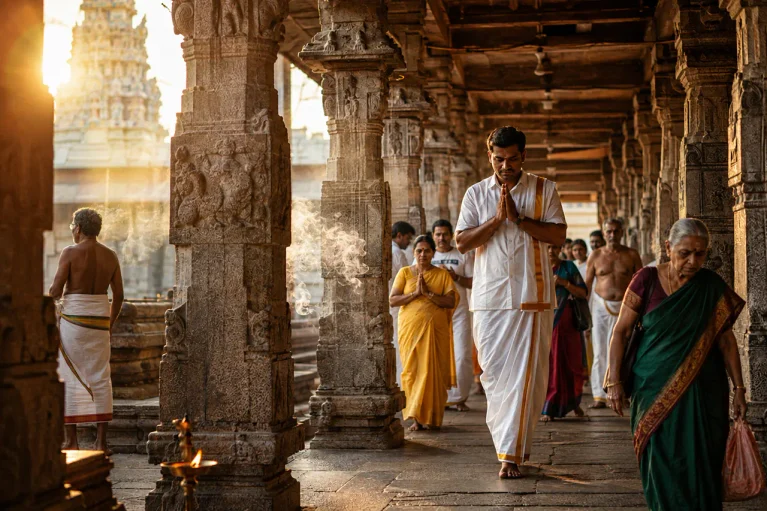
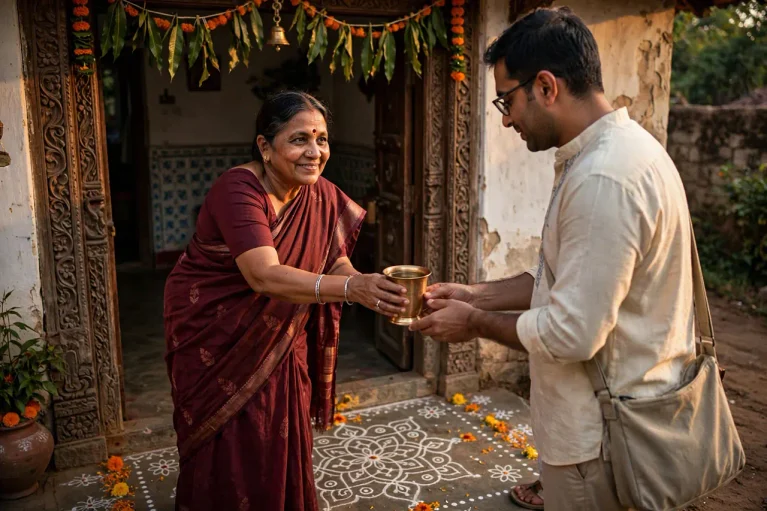
Why do we offer water to Sun God? Across riverbanks, temple courtyards, and home terraces throughout India—from the sacred ghats of Varanasi to local communities across Andhra Pradesh—devotees begin their morning by holding a small vessel of water toward the eastern horizon. In Hindu tradition, offering water to the rising Sun, known as Surya Arghya, is a timeless practice of offering reverent gratitude to the Sun as the visible giver of life, light, and energy.
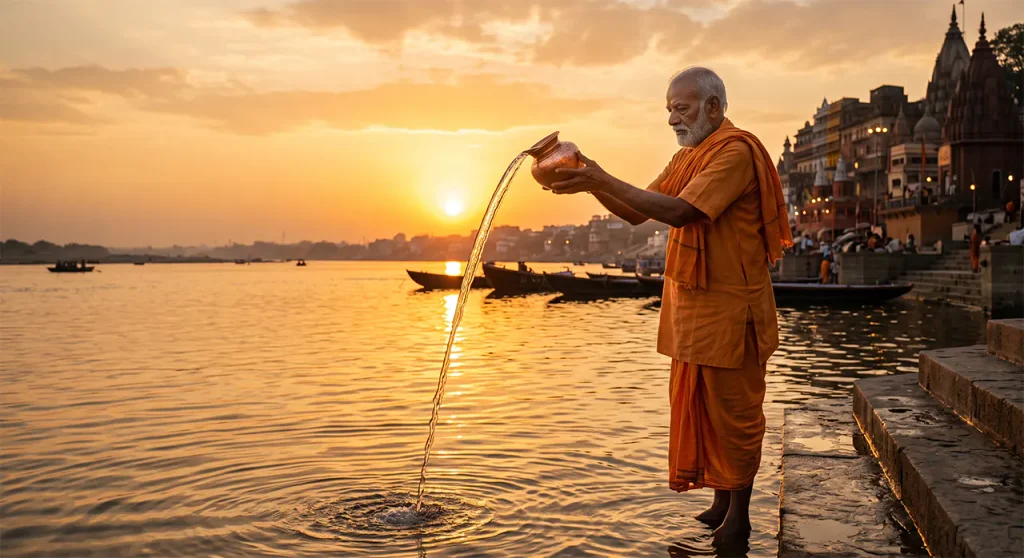
Like many of us, my curiosity began while watching mythological serials like Mahabharat on TV, seeing great warriors and sages standing in the water at dawn. That curiosity turned into genuine wonder during a visit to the sacred Kashi Vishwanath temple. Standing along the ghats of the holy Ganga, I watched people greet the morning light—some pouring water gently from bright copper vessels, others lifting it simply with their bare, cupped hands, all quietly chanting sacred mantras. Seeing such deep devotion made me wonder: What is the real meaning behind this ancient morning ritual?
Digging into that question led to this complete guide. Below, we explore the spiritual symbolism, scriptural origins, step-by-step ritual procedures, traditional benefits, and common misconceptions surrounding this timeless daily act of devotion.
What Is Surya Arghya?
Quick Answer: Surya Arghya is a devotional Hindu ritual where clean water is poured from a vessel toward the rising Sun as an offering of honor, hospitality, and thanksgiving.
| Aspect | Traditional Practice |
| Primary Deity | Surya Bhagwan / Aditya |
| Principal Offering | Clean water (Arghya) |
| Traditional Time | Early morning during sunrise (Prātahkāla) |
| Primary Direction | East (toward the rising Sun) |
| Core Purpose | Gratitude, spiritual focus, discipline, and reverence |
| Common Name | Surya Arghya / Arghyadan |
Meaning of Surya Arghya
The term breaks down into two Sanskrit words:
- Surya: The Sun, revered as the visible celestial deity representing cosmic light and cosmic order (Rta).
- Arghya: A respectful offering presented to an esteemed guest or deity.
What Does Arghya Mean?
In ancient Indian hospitality traditions (Upachāra), when an honored guest entered a home, the host offered them water to refresh their hands and feet, followed by water to drink. In Hindu temple and domestic worship, Arghya forms part of the standard 16-step worship ritual (Shodashopachara Puja). Presenting Arghya to Surya Dev is a formal gesture of hospitality offered to the cosmic deity who lights up the universe.
Why Is Water Used as an Offering?
Water (Jala or Apas) represents the purest, most accessible element on Earth. It is a universal symbol of life, purification, and humility. By offering plain water, a devotee acknowledges that humanity cannot give anything material to the Sun that does not already originate from nature. Water serves as a humble, egoless vehicle of prayer.
Why Is the Sun Worshipped as Surya Dev?
In Vedic philosophy, the Sun is not merely a burning ball of hydrogen and helium; it is viewed as the physical manifestation of divine consciousness, referred to as Pratyaksha Devata (the visible God). While many aspects of the divine are abstract, the Sun can be seen and felt every day sustaining life across our planet.
Why Do We Offer Water to Sun God?
The practice of offering water to Surya Dev carries multiple layers of meaning across traditional, theological, and philosophical dimensions.
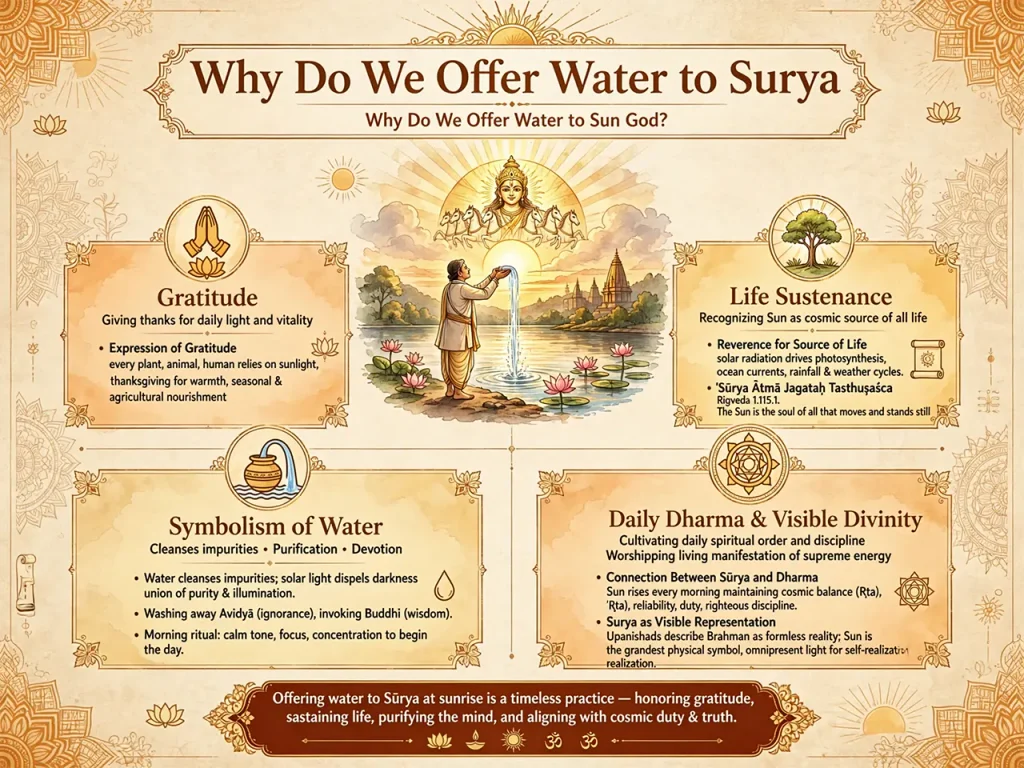
Expression of Gratitude
Every plant, animal, and human relies directly or indirectly on sunlight. The most fundamental reason for offering water is heartfelt thanksgiving. Before asking for personal blessings, the devotee acknowledges the unceasing gifts of warmth, seasonal rhythms, and agricultural nourishment that the Sun provides without expectation.
Reverence for the Source of Life
Solar radiation drives photosynthesis, oceanic currents, rainfall, and weather cycles. Traditional Hindu thought considers the Sun the soul of the universe (Surya Atma Jagatas Tasthushashcha — Rigveda 1.115.1). Offering water is a mindful acknowledgment of this ecological and cosmic reality.
Symbolism of Water
Water cleanses physical impurities, while solar light dispels darkness. When water meets sunlight during Arghya, it represents the union of purity and illumination—washing away inner ignorance (Avidya) and invoking clarity of thought (Buddhi).
Purification and Devotion
Beginning the day with a focused ritual sets a calm, devotional tone for one’s waking hours. Pouring water in steady streams requires gentle concentration, pulling the mind away from daily stress and anchoring it in divine contemplation.
Connection Between Surya and Dharma
The Sun rises every single morning without fail, maintaining cosmic balance (Dharma and Rta). By standing before the Sun each dawn, a practitioner commits to living a life of reliability, duty, and righteous discipline.
Surya as a Visible Representation of Divine Power
The Upanishads speak of Brahman (the ultimate, formless reality). For everyday contemplation, the Sun stands as the grandest, most majestic physical symbol of that omnipresent light, guiding the inner soul toward self-realization.
Spiritual Significance of Offering Water to Surya
Beyond external rituals, Surya Arghya functions as an inner meditative discipline:
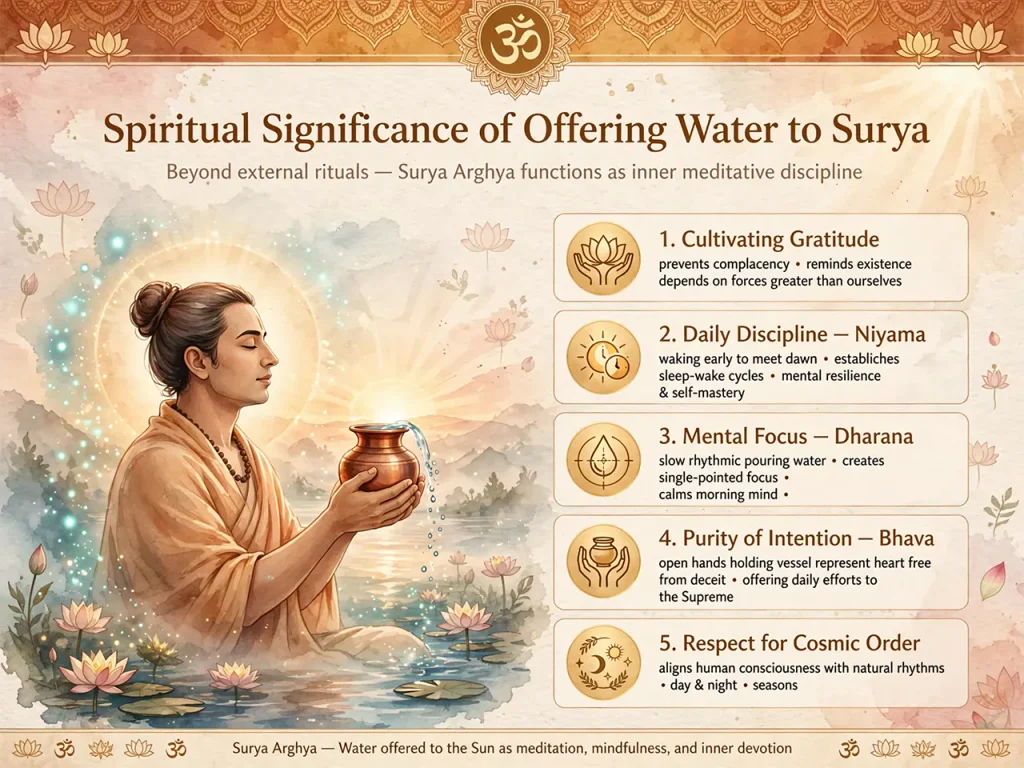
- Cultivating Gratitude: It prevents complacency by reminding us each morning that our existence depends on forces far greater than ourselves.
- Daily Discipline (Niyama): Waking up early to meet the dawn establishes regular sleep-wake cycles, fostering mental resilience and self-mastery.
- Mental Focus (Dharana): The slow, rhythmic pouring of water creates a single-pointed focus, calming the morning mind.
- Purity of Intention (Bhava): The open hands holding the vessel represent a heart free from deceit, offering one’s daily efforts to the Supreme.
- Respect for Cosmic Order: It aligns human consciousness with the natural rhythms of day, night, and seasons.
Is Offering Water to the Sun Mentioned in Hindu Scriptures?
Sun worship holds a central place throughout ancient Indian literature. However, it is essential to distinguish between ancient Vedic solar worship and the later formalized ritual of offering water from a small vessel (Lota).
                           Scriptural Evolution

  Vedic Era (c. 1500–500 BCE)      Puranic & Epic Literature         Classical Smriti Traditions
  ─────────────────────────      ───────────────────────────      ───────────────────────────
  Rigvedic Solar Hymns            Ramayana (Aditya Hridayam)       Formalized Sandhyavandanam
  Gayatri Mantra (Savitr)         Mahabharata (Surya Stotras)      Nitya Karma Daily Water
  Solar Deity Invocations         Puranic Solar Lineages           Offering Procedures
1. The Vedas
The Rigveda contains numerous suktas dedicated to solar deities such as Surya, Savitr, Mitra, Pushan, and Ushas (the Dawn):
- The celebrated Gayatri Mantra (Rigveda 3.62.10), revealed by Sage Vishvamitra, is addressed to Savitr (the inspiring solar life-force), praying for the illumination of human intellect.
- In the Vedic Sandhyavandana tradition (prescribed across the Yajurveda and Samaveda branches), offering water (Arghyapradanam) during morning, noon, and evening twilights (Sandhyas) became an established ritual duty (Nitya Karma).
2. The Epics (Itihasa)
- The Ramayana (Yuddha Kanda, Sarga 105): Sage Agastya initiates Sri Rama into the holy hymn Aditya Hridayam on the battlefield of Lanka. Agastya instructs Rama to worship the rising Sun to conquer mental exhaustion and defeat Ravana. The hymn praises Surya as the embodiment of all divinities.
- The Mahabharata: Yudhishthira prays intensely to Surya Dev when faced with the challenge of feeding sages in exile, receiving the inexhaustible cooking vessel (Akshaya Patra). Karna, renowned for his unmatched charity, faithfully performed daily noon Sun-worship and water offerings.
3. Puranic Literature
Puranas like the Brahma Purana, Surya Purana, Samba Purana, and Bhavishya Purana dedicated extensive chapters to solar worship, temple installations, and pilgrimage sites, detailing specific materials, flowers, and mantras for offering Arghya.
How to Offer Water to the Sun God (Step-by-Step)
Exact rituals vary according to family lineages, regional traditions, and personal practices. Below is the standard, simple, non-sectarian method:
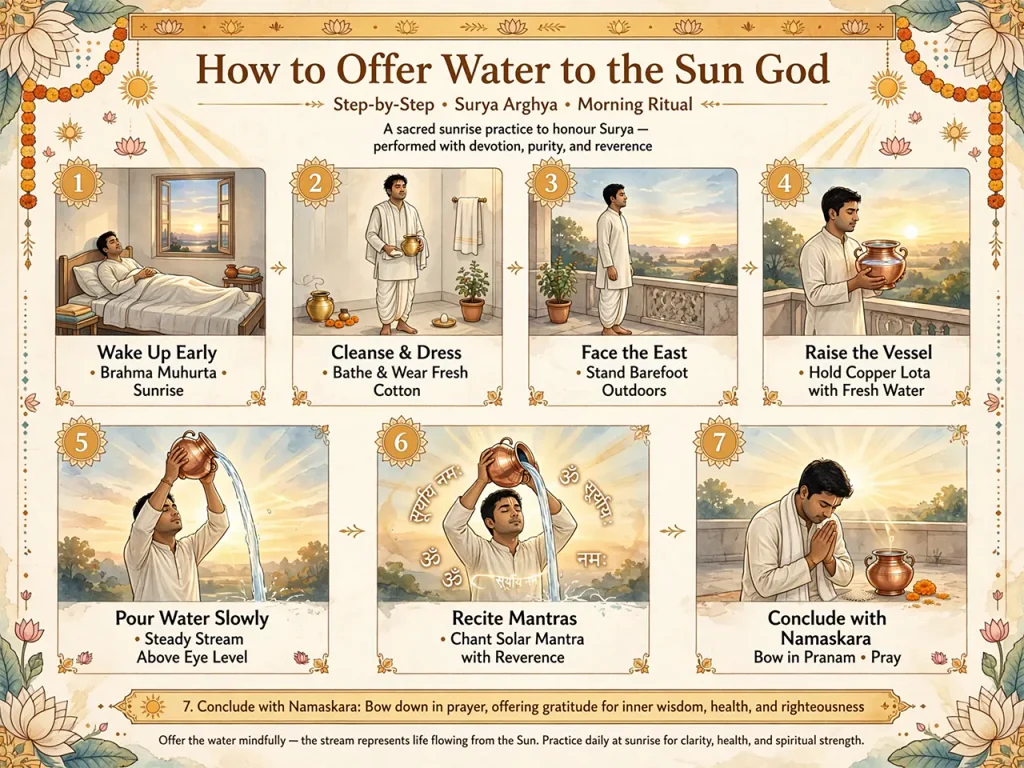
- Step 1 — Wake Up and Prepare: Rise during early dawn hours (Brahma Muhurta or near sunrise).
- Step 2 — Bathe and Wear Clean Clothes: Cleanse your body. Wear fresh, modest clothing (traditionally light cotton).
- Step 3 — Face the Rising Sun: Stand barefoot outdoors, on a balcony, or near an open window facing east.
- Step 4 — Hold the Water Vessel: Fill a clean copper or brass vessel (Kamandalu or Lota) with fresh water. Hold the vessel with both hands at chest level, fingers securely wrapped around the sides.
- Step 5 — Offer Water Slowly: Raise the vessel above eye level (or slightly above forehead level) and tilt it gently so the water pours down in an unbroken, steady stream.
- Step 6 — Recite a Mantra or Prayer: While the water flows, chant your chosen solar mantra with reverence.
- Step 7 — Complete the Prayer: Bow down in a traditional greeting (Pranam or Namaskara). Take a moment to pray for inner wisdom, health, and righteousness.
What Is the Best Time to Offer Water to the Sun?
- Sunrise (Prātahkāla): The most auspicious and universally recommended time is during or immediately after sunrise, when the solar disc appears soft, golden, or mild red.
- Morning Hours: If precise sunrise is missed due to weather or schedules, offerings can be made during the early morning hours before the Sun becomes scorching.
- Midday Worship (Madhyahna Sandhya): In traditional Vedic Sandhyavandanam, water is also offered at solar noon. However, this is part of a structured priestly liturgy distinct from casual domestic sunrise offerings.
- Sunset (Sayam Sandhya): Some lineages offer evening prayers to acknowledge the setting Sun, thanking the divine light as it transitions into night.
Which Direction Should You Face?
- East: The universally standard direction for morning Surya Arghya is facing east, toward the rising Sun.
- South-East / North-East: If an eastern view is obstructed by tall buildings or dense tree cover, turning generally toward the visible morning sunlight is entirely acceptable.
- Noon/Evening Variations: When performing traditional noon prayers, one faces south or overhead; in evening rituals, one faces west toward the setting Sun.
Which Vessel Should Be Used for Surya Arghya?
| Metal / Material | Traditional Status | Notes |
| Copper (Tamra) | Highly Preferred | Historically associated with solar rituals; valued for purity. |
| Brass (Pital) | Widely Accepted | Standard alternative used in traditional Indian households. |
| Silver / Bronze | Acceptable | Often used in traditional temple and domestic shrines. |
| Earthen Pots (Mitti) | Acceptable | Natural, humble, and eco-friendly choice. |
| Steel / Glass | Modern Alternative | Acceptable if traditional metal vessels are unavailable. |
| Plastic | Discouraged | Avoided in traditional rituals due to artificial and non-biodegradable nature. |
What Can Be Added to the Water?
While plain, clean water is completely sufficient, regional and Puranic traditions often suggest mixing simple auspicious items into the vessel:
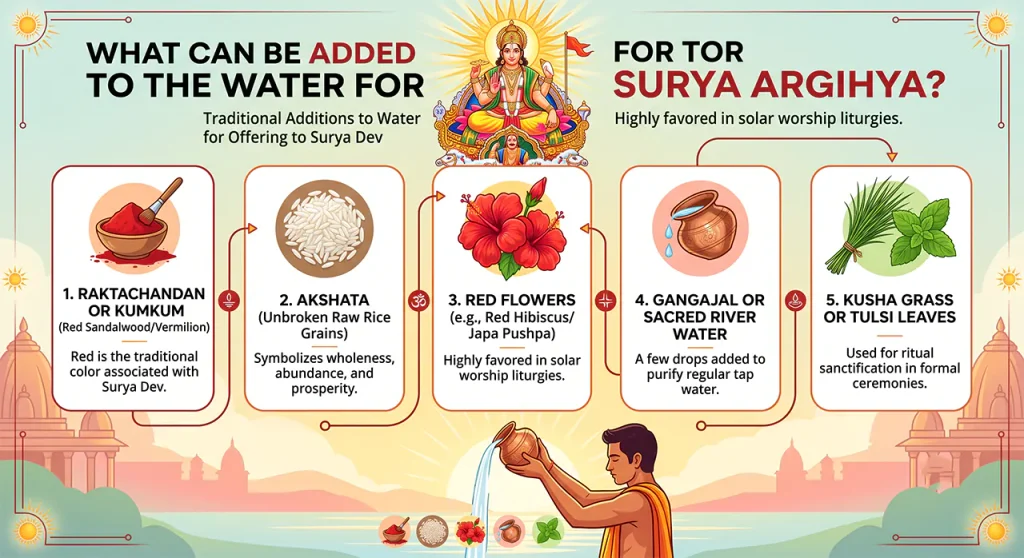
- Raktachandan or Kumkum (Red Sandalwood/Vermilion): Red is the traditional color associated with Surya Dev.
- Akshata (Unbroken Raw Rice Grains): Symbolizes wholeness, abundance, and prosperity.
- Red Flowers (such as Red Hibiscus/Japa Pushpa): Highly favored in solar worship liturgies.
- Gangajal or Sacred River Water: A few drops added to purify regular tap water.
- Kusha Grass or Tulsi Leaves: Used in formal scriptural ceremonies for ritual sanctification.
Which Mantras Are Chanted While Offering Water to the Sun?
Devotees chant different mantras based on their familiarity with Sanskrit texts. Below are authentic traditional solar verses:
1. Simple Namavali Mantra
Sanskrit: ॐ सूर्याय नमः।
Transliteration: Om Sūryāya Namaḥ
Meaning: “Salutations to Surya, the Divine Illuminator.”
2. Aditya Namavali Mantra
Sanskrit: ॐ आदित्याय नमः।
Transliteration: Om Ādityāya Namaḥ
Meaning: “Salutations to Aditya, the son of Aditi and cosmic sustainer.”
3. Surya Gayatri Mantra
Sanskrit:
ॐ भास्कराय विद्महे दिवाकराय धीमहि। तन्नः सूर्यः प्रचोदयात्॥
Transliteration:
Om Bhāskarāya Vidmahe Divākarāya Dhīmahi, Tannaḥ Sūryaḥ Pracodayāt.
Meaning:
“May we contemplate the brilliant light of the universe. May the shining Sun God illuminate and guide our intellect.”
4. Classical Dhyana Shloka
Sanskrit:
जपाकुसुमसंकाशं काश्यपेयं महाद्युतिम्। तमोरिं सर्वपापघ्नं प्रणतोऽस्मि दिवाकरम्॥
Transliteration:
Japākusuma-saṅkāśaṁ kāśyapeyaṁ mahādyutim, Tamoriṁ sarva-pāpaghnaṁ praṇato’smi divākaram.
Meaning:
“I bow to the Maker of the Day (Divakara), who resembles the red hibiscus flower, the illustrious son of Sage Kashyapa, the radiant destroyer of darkness and all faults.”
How Many Times Should Water Be Offered to the Sun?
- Three Times (Most Common Traditional Practice): In classical Sandhyavandanam, water is poured three distinct times while reciting sacred verses, symbolizing reverence for the triple worlds (Bhur, Bhuvah, Svah) and the three phases of time (past, present, future).
- Single Continuous Offering: Many everyday devotees pour water in one smooth, slow, continuous stream while chanting their chosen mantra.
- Family Traditions: Some regional traditions prescribe specific counts (such as 1, 3, or 12 times) to honor the twelve names of the Sun (Dvadasha Aditya).
Benefits of Offering Water to the Sun
| Category | Traditional & Spiritual Perspective | Observable Lifestyle Context |
| Daily Routine | Creates sacred morning habits (Sadhana) | Encourages consistent, early waking habits |
| Mindset | Fosters humility and cosmic connection | Encourages outdoor mindfulness and morning calm |
| Self-Control | Builds inner willpower (Tapas) | Strengthens personal commitment and discipline |
| Focus | Calms the senses through mindful chanting | Provides a distraction-free start to the day |
Important Note on Health Claims: While morning outdoor rituals support a healthy lifestyle, traditional rituals should never be promoted as medical cures for serious clinical conditions.



Is There a Scientific Reason for Offering Water to the Sun?
It is common on social media to encounter claims asserting that “looking at the Sun through falling water refracts light into spectrums that cure eye diseases.” Modern medical and ophthalmological science does not support these claims.
                          Understanding the Practice

     Traditional / Religious Purpose                Scientific / Lifestyle Perspective
  ─────────────────────────────────────          ────────────────────────────────────────
  • Act of devotional gratitude (*Bhakti*)        • Healthy morning sunlight exposure
  • Symbolic communion with cosmic light          • Circadian rhythm alignment
  • Daily spiritual discipline and prayer         • Mental grounding and mindfulness
1. What Modern Science Validates
- Circadian Rhythm Regulation: Stepping outdoors into ambient morning light shortly after waking signals the brain’s suprachiasmatic nucleus to halt melatonin production and regulate cortisol, improving nighttime sleep and daytime alertness.
- Mindfulness and Stress Reduction: Dedicating five uninterrupted minutes at dawn to standing quietly, breathing fresh air, and reflecting calmly reduces psychological stress markers.
2. What Science Does NOT Support
- Never Stare Directly into the Sun: Looking directly into the solar disc—even through flowing water or clouds—can cause irreversible retinal burn known as solar retinopathy. Devotees should look gently toward the eastern horizon, gaze at the falling stream of water on the ground, or keep their eyes softly lowered.
Surya Arghya vs Surya Namaskar
While both practices honor Surya Dev, they serve distinct purposes within Indian traditions:
| Feature | Surya Arghya | Surya Namaskar |
| Primary Nature | Devotional ritual / Offering | Yogic posture sequence (Asana & Pranayama) |
| Main Medium | Clean water poured from a metal vessel | Physical body movement and breath synchronization |
| Scriptural Origin | Vedic, Smriti, and Puranic ritual texts | Classical Hatha Yoga and modern physical culture |
| Physical Requirement | Minimal physical exertion; accessible to all | Moderate physical flexibility and stamina |
| Core Intention | Hospitality, reverent prayer, and gratitude | Physical fitness, flexibility, and vitality |
| Can They Be Combined? | Often performed before or after yoga routines | Frequently practiced alongside morning prayers |
Importance of Surya Worship in Hinduism
Surya holds an enduring, uninterrupted place in Hindu thought from antiquity to the present day:
- Sauras Tradition: In the historical Shanmata system consolidated by Adi Shankaracharya, the Sauras formed one of the six major worship traditions, viewing Surya as the primary manifestation of the Supreme Divine.
- The Twelve Adityas (Dvadasha Aditya): In Vedic and Puranic theology, twelve solar aspects govern the twelve solar months of the year.
- Major Festivals Dedicated to Surya:
- Chhath Puja: Celebrated widely in Bihar, Jharkhand, and Uttar Pradesh, where devotees offer Arghya to both the setting and rising Sun while standing in rivers.
- Ratha Saptami: The symbolic day marking the turning of Surya’s chariot toward the northern hemisphere (Uttarayana).
- Makara Sankranti / Pongal: Pan-Indian solar harvest celebrations marking the Sun’s transit into the zodiac sign of Capricorn (Makara).

Famous Sun Temples in India
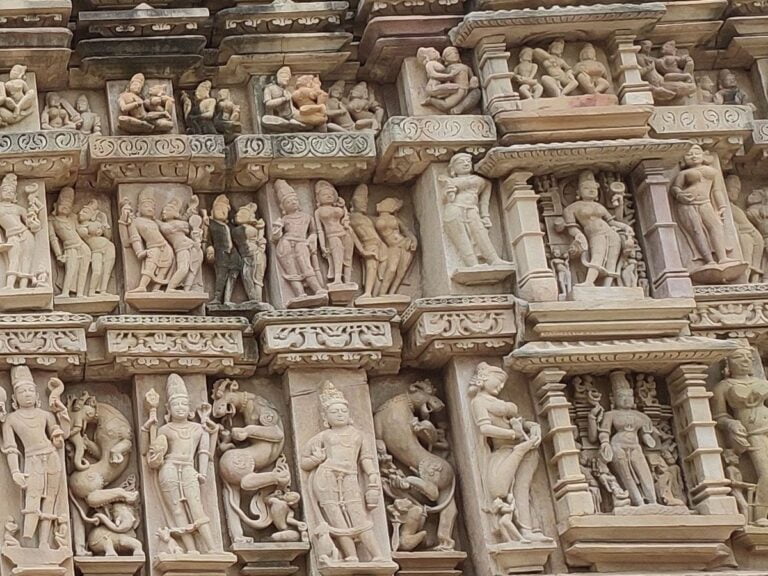
Sun worship inspired magnificent stone architecture across the subcontinent:
                            Notable Sun Temples of India

        [ Martand Sun Temple ]                   [ Modhera Sun Temple ]
        Anantnag, Kashmir (8th Century)          Mehsana, Gujarat (11th Century)
        Karkota Dynasty Architecture             Solanki Dynasty Step-well & Hall
                         │                                     │
                         └──────────────────┬──────────────────┘
                                            │
                         ┌──────────────────┴──────────────────┐
                         │                                     │
        [ Konark Sun Temple ]                    [ Suryanar Koil ]
        Puri, Odisha (13th Century)              Thanjavur, Tamil Nadu (11th Century)
        Colossal Chariot with 24 Wheels          Dravidian Navagraha Solar Complex
1. Konark Sun Temple (Odisha)
Built in the 13th century CE by King Narasimhadeva I of the Eastern Ganga Dynasty, this UNESCO World Heritage site is designed as a colossal stone chariot with 24 intricately carved wheels drawn by seven horses.
2. Modhera Sun Temple (Gujarat)
Commissioned in 1026–1027 CE by King Bhima I of the Solanki Dynasty, Modhera features an assembly hall and a sacred stepped water tank (Surya Kund), built so that the morning sun during equinoxes illuminated the inner sanctum.
3. Martand Sun Temple (Kashmir)
Constructed in the 8th century CE by King Lalitaditya Muktapida, this temple stands atop a plateau overlooking the Kashmir Valley, combining indigenous Gandhara and classical Hindu architectural styles.
4. Suryanar Koil (Tamil Nadu)
Built during the reign of Kulottunga Chola I (11th century CE), this Dravidian temple complex is dedicated to Surya Bhagwan alongside shrines for the other eight planetary deities (Navagrahas).
Surya Worship and Indian Temple Architecture
- Solar Orientation: Many classical Hindu temples are intentionally oriented along an exact east-west axis, allowing the first rays of the dawn sun to fall upon the central threshold.
- The Seven Horses (Sapta Ashva): Traditional iconography depicts Surya riding a golden chariot drawn by seven horses, symbolizing the seven days of the week, the seven poetic meters of Vedic Sanskrit (Chandas), or the seven spectrum colors of light.
- Lotus Emblems (Padma): Surya holds lotuses in both hands, symbolizing life blooming in the presence of sunlight and untainted purity rising above muddy waters.
What Does the Sun Symbolize in Hinduism?
- Light and Knowledge (Jnana): Just as the Sun dispels physical darkness, spiritual wisdom dispels the darkness of ignorance.
- Universal Consciousness (Atman): The Sun shines equally upon all beings without bias, serving as an emblem of unconditional grace.
- Time (Kala): Solar movements define days, seasons, and years, reminding human beings of the precious, fleeting nature of life.
- Vital Life Force (Prana): The Sun is revered as the ultimate source of physical vitality and health.
Common Mistakes to Avoid While Offering Water to the Sun
  ❌ Don't Stare at the Sun       ❌ Don't Waste Clean Water       ❌ Don't Walk on Water
  Never gaze directly at the     Use a modest, small vessel       Offer water into a pot
  solar disc without protection  to avoid wasteful splashing      or garden bed respectfully
- Staring Directly at the Sun: Never look straight into the bright sun, which risks severe optical damage. Keep your gaze lowered toward the ground or the falling water.
- Pouring Water in Dirty Areas: Avoid letting the poured water splash over garbage or walkways where people tread. Pour water over clean ground, a potted plant, or into an empty basin.
- Using Uncleaned Vessels: Ensure the offering vessel is clean and kept separate from general kitchen refuse.
- Wasting Excessive Water: Rituals emphasize devotion (Bhava), not large volumes. A small copper cup (200–300 ml) is entirely sufficient.
- Treating Rituals Mechanically: Performing the ritual hurriedly without mindfulness defeats its meditative and devotional purpose.


How to Practice Surya Arghya Responsibly
- Offer Water to Plants: Stand before your garden, tulsi planter, or balcony pots and let the water nourish living vegetation.
- Conserve Water: Use a modest amount of water.
- Avoid Non-Biodegradable Waste: Never leave plastic cups, plastic packets, or synthetic colors on public riverfronts or temple steps after rituals.
How Surya Worship Varies Across India
| Region | Primary Solar Festival / Tradition | Distinct Cultural Elements |
| North & East India | Chhath Puja / Surya Saptami | Elaborate fasting; offering Arghya in rivers at sunset and sunrise. |
| South India | Makara Sankranti / Pongal / Ratha Saptami | Boiling fresh milk/rice outdoors facing the Sun; making colorful Kolam designs. |
| Western India | Uttarayan / Modhera festivals | Kite flying festivals, community charity, and solar heritage celebrations. |
| Eastern India (Odisha) | Samba Dashami | Families prepare special cakes and worship Surya for health and family well-being. |
Frequently Asked Questions
Why do we offer water to the Sun God?
We offer water to the Sun God (Surya Arghya) as an act of heartfelt gratitude, humility, and reverence toward the celestial body that sustains all life, light, and energy on Earth.
What is Surya Arghya?
Surya Arghya is a traditional Hindu ritual where clean water is poured from a handheld vessel toward the morning Sun while reciting solar prayers.
What is the best time to offer water to Surya?
The ideal time is early morning during sunrise (Prātahkāla), when the sunlight is gentle, golden, and auspicious.
Which direction should we face while offering water to the Sun?
Devotees traditionally face East toward the rising Sun.
Which vessel should be used for Surya Arghya?
A clean copper (Tamra) or brass (Pital) vessel is traditionally preferred, though any clean, dedicated metal or earthen container may be used.
How many times should water be offered to the Sun?
Traditionally, water is poured in three small, continuous measures or in one unbroken, steady stream while reciting mantras.
Which mantra should be chanted during Surya Arghya?
A simple and universal mantra is “Om Suryaya Namah” or the Surya Gayatri Mantra (Om Bhaskaraya Vidmahe Divakaraya Dhimahi, Tannah Suryah Pracodayat).
Can women offer water to the Sun?
Yes. Devotional prayer, gratitude, and offering water to Surya Dev are open to every human being without distinction of gender, age, or background.
Can children offer water to Surya?
Yes. Introducing children to morning water offerings instills early rising habits, respect for nature, and mindful daily routines.
Can water be offered after sunrise?
Yes. If you miss the exact moment of sunrise, offering water during the calm hours of early morning is completely acceptable.
Can we offer water to the Sun without taking a bath?
Traditional customs recommend washing one’s face, hands, and feet—or ideally taking a full bath—to approach morning prayers with physical freshness and mental clarity.
Is Surya Arghya the same as Surya Namaskar?
No. Surya Arghya is an offering ritual using water and prayer, whereas Surya Namaskar is a twelve-step physical and yogic posture sequence.
Is there scientific proof that looking at the Sun through water cures diseases?
No. Scientific and medical authorities confirm that looking directly at the Sun can cause retinal damage (solar retinopathy). The benefits of the ritual stem from early morning outdoor light exposure, fresh air, and meditative mindfulness.
Can we add flowers or kumkum to the water?
Yes. Adding red sandalwood, kumkum, akshata (raw unbroken rice), or red flowers like hibiscus is a time-honored practice in Puranic worship.
What should be done with the water after the ritual?
It is best to let the water pour into potted plants, garden soil, or a clean tray so that it is not stepped on or wasted.