A Walk Through the Kumbalgodu Ayyappa Temple
Kumbalgodu Ayyappa Temple is a prominent Hindu temple dedicated to Lord Dharma Sastha (Lord Ayyappa), situated in Kumbalgodu along the Mysuru Road (Bengaluru–Mysuru Expressway corridor / NH 275) in the southwestern suburbs of Bengaluru, Bengaluru Urban district, Karnataka (PIN 560074).
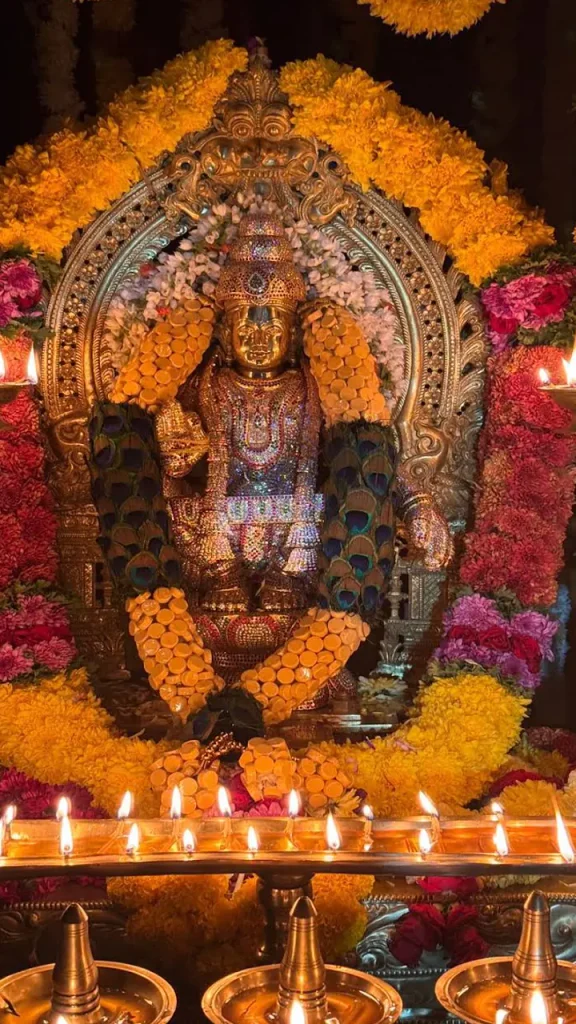
For devotees across Bengaluru and travelers driving down the highway toward Kengeri, Bidadi, Ramanagara, or Mysuru, this temple serves as an important center for prayer, regular worship, and community gathering. It is particularly active during the annual winter Mandala Kalam pilgrimage season, when hundreds of devotees observing religious vows (vratam) gather to offer prayers, sing devotional songs, and prepare for the sacred pilgrimage to Sabarimala in Kerala.
This guide provides a comprehensive overview of the temple’s history, religious significance, architectural elements, daily pooja schedules, major festivals, travel options, and practical advice for first-time visitors.
Kumbalgodu Ayyappa Temple at a Glance
| Information | Details |
| Temple Name | Kumbalgodu Sri Dharma Sastha / Ayyappa Temple |
| Main Deity | Lord Ayyappa (Sri Dharma Sastha / Hariharaputra) |
| Location | Kumbalgodu, Mysuru Road (SW Bengaluru) |
| District | Bengaluru Urban |
| State | Karnataka, India |
| Pin Code | 560074 |
| Temple Tradition | South Indian Vedic & Kerala Thantra Sampradaya / Agama tradition |
| General Timings | Morning: 06:00 AM – 10:30 AM | Evening: 05:30 PM – 08:00 PM (subject to seasonal variation) |
| Major Festivals | Mandala Pooja (Nov–Dec), Makaravilakku (Jan 14/15), Panguni Uthiram, Prathishta Dinam |
| Best Time to Visit | November to January for festival vibrancy; Weekday mornings for quiet darshan |
| Nearby Landmark | Kumbalgodu Industrial Area / Rajarajeswari Medical College & Hospital (~3 km) |
Where Is Kumbalgodu Ayyappa Temple Located?
Kumbalgodu Ayyappa Temple is located in the suburban locality of Kumbalgodu in southwest Bengaluru, Karnataka. It sits just off the main Bengaluru–Mysuru highway corridor (NH 275), positioned approximately 20 to 22 kilometers southwest of central Bengaluru (Majestic / Kempegowda Bus Station) and roughly 6 kilometers beyond Kengeri Satellite Town.
The surrounding area includes residential settlements, academic institutions, and the Kumbalgodu Industrial Area. Notable regional landmarks in the immediate radius include Rajarajeswari Medical College and Hospital (approx. 3 km northeast along the highway) and the Challaghatta Metro Station (approx. 5.5 km northeast), which serves as the western terminus of the Bengaluru Namma Metro Purple Line.
Why Is Kumbalgodu Ayyappa Temple Famous?
The temple holds a distinct position among the devotional landmarks of southwest Bengaluru for several reasons:
- A Regional Spiritual Hub for Sabarimala Pilgrims:During the sacred Mandala Masam (mid-November to late December), thousands of pilgrims in southwest Bengaluru and adjacent industrial zones observe the 41-day vratam. The Kumbalgodu temple acts as a central congregation spot where pilgrims wear their devotional beads (Mala Dharana), participate in group Bhajans, and perform the sacred Kettu Nira (packing of the two-compartment Irumudi bag containing ghee-filled coconuts).
- Authentic Ritual Customs:The daily worship follows the disciplined customs of the South Indian Sastha tradition, including the singing of Harivarasanam before the sanctum closes at night.
- Convenient Suburban Location:Positioned along the Bengaluru–Mysuru highway corridor, it offers an accessible devotional stop for families living in Kengeri, RR Nagar, Kumbalgodu, and Bidadi, as well as highway travelers looking for a calm prayer space.

History of Kumbalgodu Ayyappa Temple
Origin and Founding
Documented Institutional History: Unlike ancient medieval temples constructed centuries ago by royal dynasties, the Kumbalgodu Ayyappa Temple is a modern temple established through the collective efforts of local residents, devotees of Lord Ayyappa, and community trusts.
During the late 20th and early 21st centuries, the rapid industrialization and urban expansion along Mysuru Road brought working professionals, factory employees, and families from Kerala, Tamil Nadu, Andhra Pradesh, and different parts of Karnataka to Kumbalgodu. Devotees sought a dedicated local shrine to conduct Ayyappa poojas, Mandala Vilakku rituals, and community Annadanam without having to travel into the congested central parts of Bengaluru. Through dedicated fundraising and community coordination, the land was acquired, the sanctum erected, and the deities consecrated according to Vedic and Agamic rites.
Historical Development
Over the years, the temple expanded from a modest sanctum into a structured neighborhood complex. The managing committee introduced regular daily pooja schedules, established sub-shrines for associated deities such as Lord Ganapathi and Goddess Malikappurathamma, and added basic pilgrim amenities to manage the larger crowds that arrive during the winter festival months.
Legends Associated with the Deities vs. Documented History
Clarification of Fact vs. Legend:
There is no historical evidence or epigraphical record suggesting that a medieval temple existed at this exact site during ancient times. The legends told at the temple do not belong to the physical soil of Kumbalgodu itself, but rather to the pan-Indian mythological and devotional lineage of Lord Dharma Sastha as chronicled in Hindu Puranas and regional traditions.
Who Is Lord Ayyappa?
To appreciate the religious practices at Kumbalgodu, one must understand the identity and symbolism of Lord Ayyappa within Hindu theology.
Lord Ayyappa, also venerated as Dharma Sastha and Hariharaputra, is revered as the divine embodiment of righteousness, truth, and ascetic discipline.
The Concept of Hariharaputra
In Hindu theological tradition, Lord Sastha is the son of Lord Shiva (Hara) and Lord Vishnu (Hari in His female manifestation as Mohini). This divine lineage makes Ayyappa a unifying deity who bridges the two major traditions of Hinduism—Shaivism (worship of Shiva) and Vaishnavism (worship of Vishnu).
The Legend of Prince Manikantha
According to traditional lore preserved in the Sthala Mahatmyas of the Sastha tradition:
- The divine child was discovered on the banks of the Pampa River by King Rajashekara of the Pandalam dynasty.
- Wearing a radiant bell around His neck, the infant was named Manikantha (“the one with the golden bell around his neck”) and raised in the royal palace.
- After completing his divine mission on earth—which included vanquishing the demoness Mahishi and securing leopard’s milk to heal the queen—the young prince renounced worldly royalty.
- He ascended the sacred hill of Sabarimala, assuming a perpetual yogic posture (Chinmudra) to protect righteousness (Dharma) and guide sincere seekers.
Is Kumbalgodu Ayyappa Temple Mentioned in Hindu Scriptures?
Direct Reference: No. The Kumbalgodu Ayyappa Temple itself is a contemporary temple and is not directly mentioned in ancient Hindu scriptures, Sanskrit Puranas, or medieval epigraphs.
Broader Scriptural Foundation: However, the worship of Dharma Sastha / Hariharaputra as a deity is attested in classical Hindu literature and Agamic texts. The manifestation of Sastha is described in traditions surrounding the Brahmanda Purana and Skanda Purana in sections detailing the post-Samudra Manthan (churning of the ocean) narratives.
Authentic Sanskrit Hymns of the Sastha Tradition
The daily prayers and rituals at Kumbalgodu utilize classical verses dedicated to Lord Sastha. One of the most widely recited hymns is the opening verse of the Śrī Śāstā Daśakam:
Sanskrit Text:
लोTagवीरं महापूज्यं सर्वरक्षाकरं विभुम् ।
मनोरथप्रदं वन्देहं शास्तारं प्रणमाम्यहम् ॥
IAST Transliteration:
Loka-vīraṁ mahā-pūjyaṁ sarva-rakṣā-karaṁ vibhum |
Mano-ratha-pradaṁ vande’haṁ śāstāraṁ praṇamāmy-aham ||
English Translation:
“I bow before Lord Sastha, the protector of the universe, the hero of all worlds, the omnipresent Lord who shields all living beings, and who readily fulfills the righteous desires of the mind.”
Another universal phrase associated with the temple is the Upanishadic Mahavakya inscribed prominently across Sastha sanctums:
Sanskrit: तत्त्वमसि (Tat Tvam Asi)
Meaning: “Thou Art That” — reminding the pilgrim that the ultimate divine consciousness resides within oneself.
Architecture of Kumbalgodu Ayyappa Temple
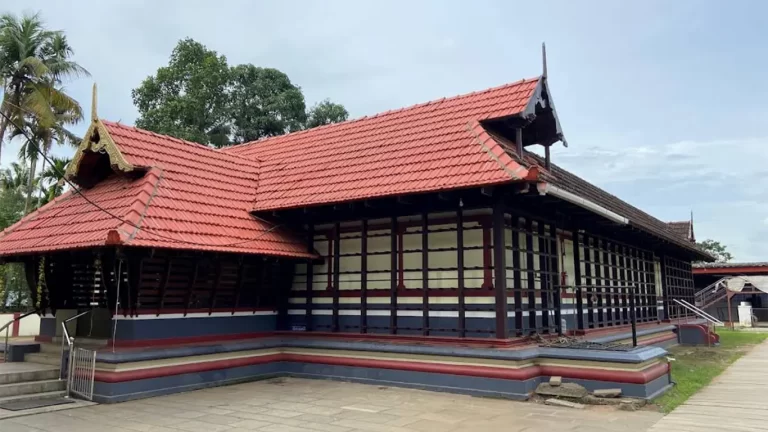
The architecture of the Kumbalgodu Ayyappa Temple draws inspiration from the traditional temple styles of Kerala (Thachu Shastra) combined with local South Indian masonry techniques.
1. The Sanctum Sanctorum (Sreekovil)
The central structure (Sreekovil) is typically square-shaped, built over a molded stone basement (Adhisthana). It features sloping roofs covered with traditional tiles or metal sheeting, designed to facilitate quick rainwater runoff while keeping the interior sanctum cool and shaded.
2. Namaskara Mandapam
Directly in front of the sanctum sits the Namaskara Mandapam, a raised, pillared stone platform where temple priests (poojaris / thantris) sit to perform preliminary rituals, chant Vedic mantras, and prepare offerings.
3. The Chuttambalam (Outer Veranda)
A covered pillared structure (Chuttambalam) surrounds the inner sanctum, creating an enclosed rectangular courtyard. This allows devotees to perform the ritual clockwise circumambulation (Pradakshina) sheltered from sun and rain.
4. Deepasthambham (Pillar of Lights)
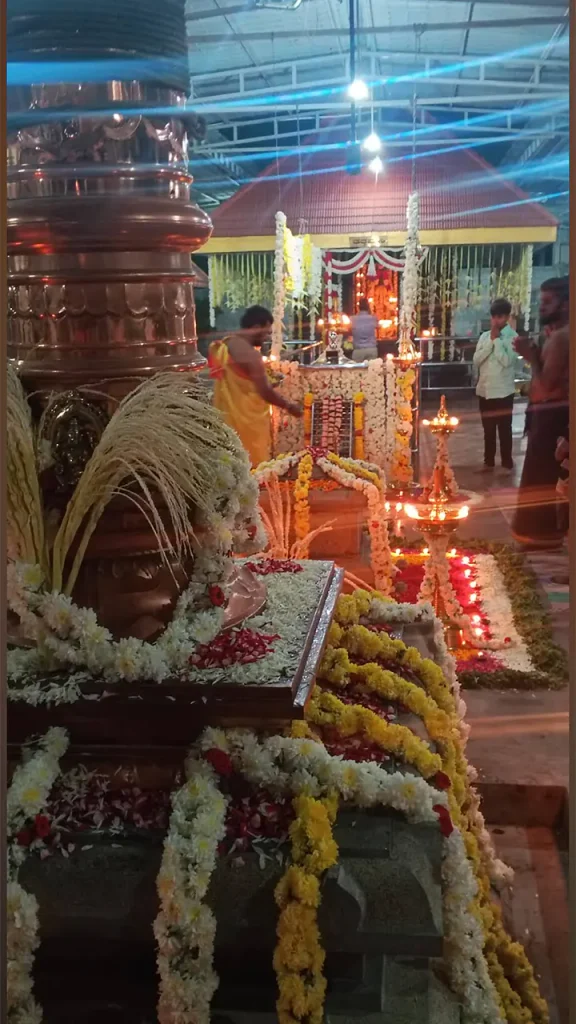
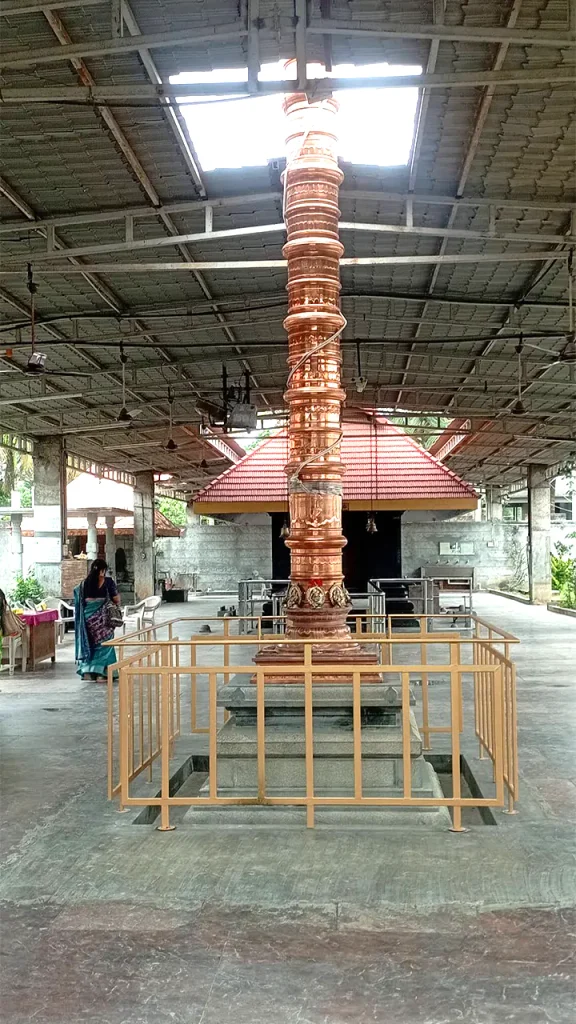
In the outer courtyard facing the main shrine stands the tall brass Deepasthambham (multi-tiered oil lamp). On festival evenings and during daily dusk prayers (Deeparadhana), this lamp is lit with sesame oil and cotton wicks.
Main Deity and Associated Shrines
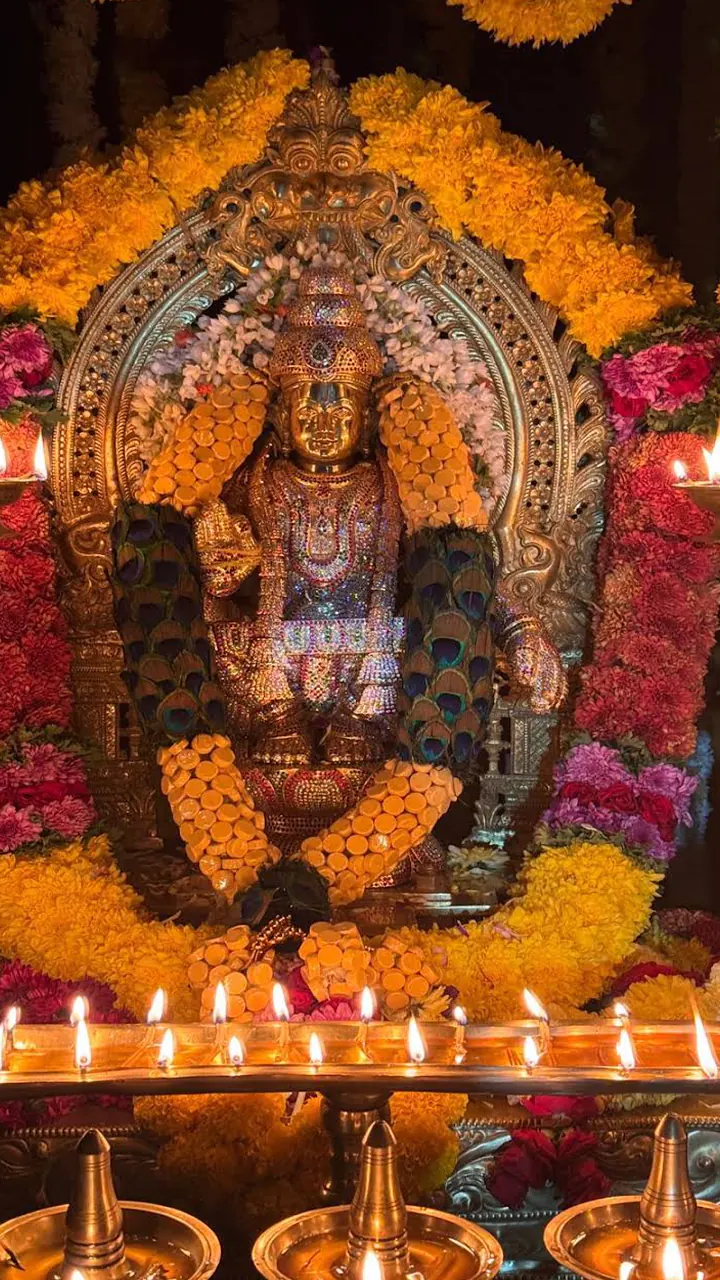
The Presiding Deity: Lord Ayyappa
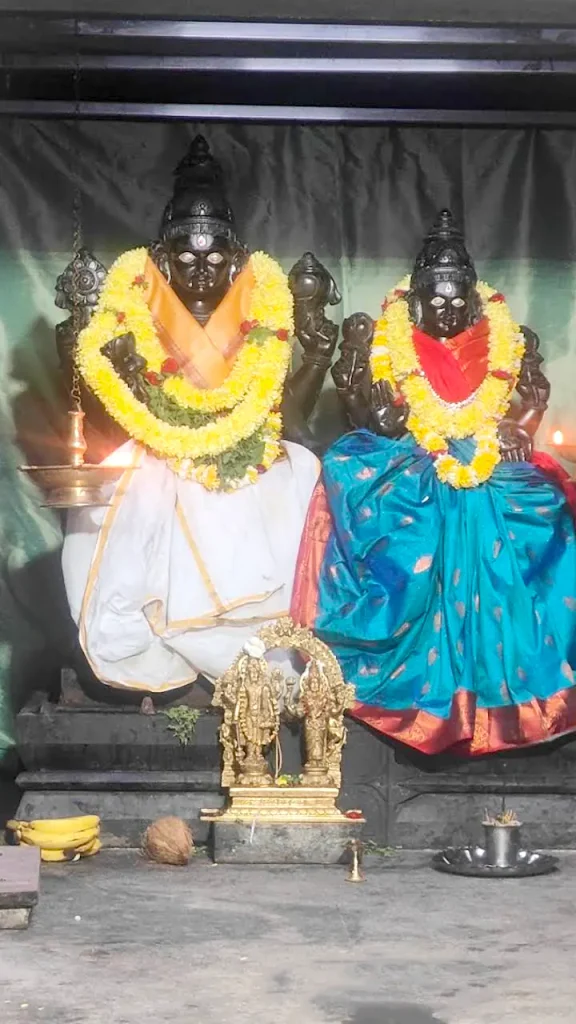
Inside the Sreekovil, Lord Ayyappa is consecrated in His traditional yogic form (Yogasana). The deity sits with knees drawn up, supported by the sacred cloth band known as the Yogapatta.
- His right hand is held in the Chinmudra (the gesture of spiritual consciousness, with the thumb touching the index finger).
- His posture symbolizes profound self-restraint, equanimity, and inner focus.
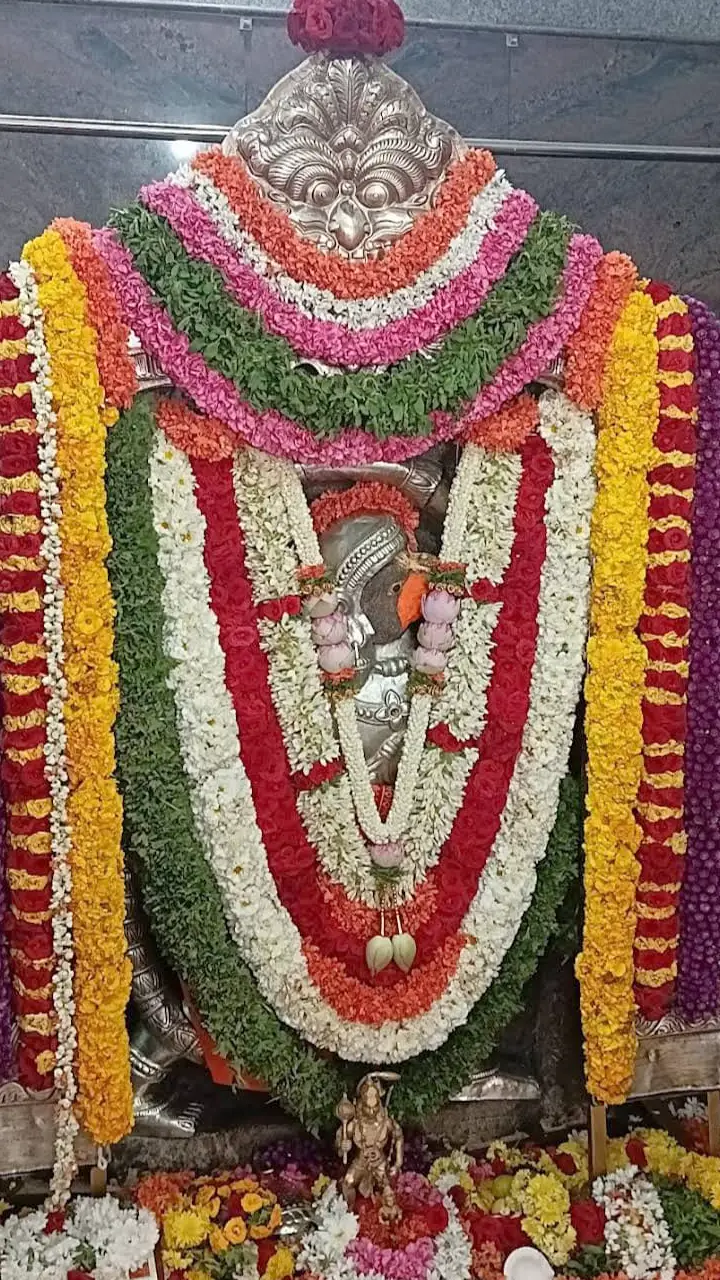
- The idol is decorated daily with fresh floral garlands, sandalwood paste (chandanam), and sacred jewels during major evening poojas.
Sub-Shrines and Associated Deities
Following the traditional arrangement found in Sastha temples, several subsidiary shrines are located within the complex:
- Lord Ganapathi (Kanni Moola Ganapathi):Positioned in the south-west corner of the inner courtyard. Devotees offer prayers here first to remove obstacles before praying to Lord Ayyappa.
- Lord Subramanya / Murugan:The brother of Lord Ayyappa, representing valor, wisdom, and protection.
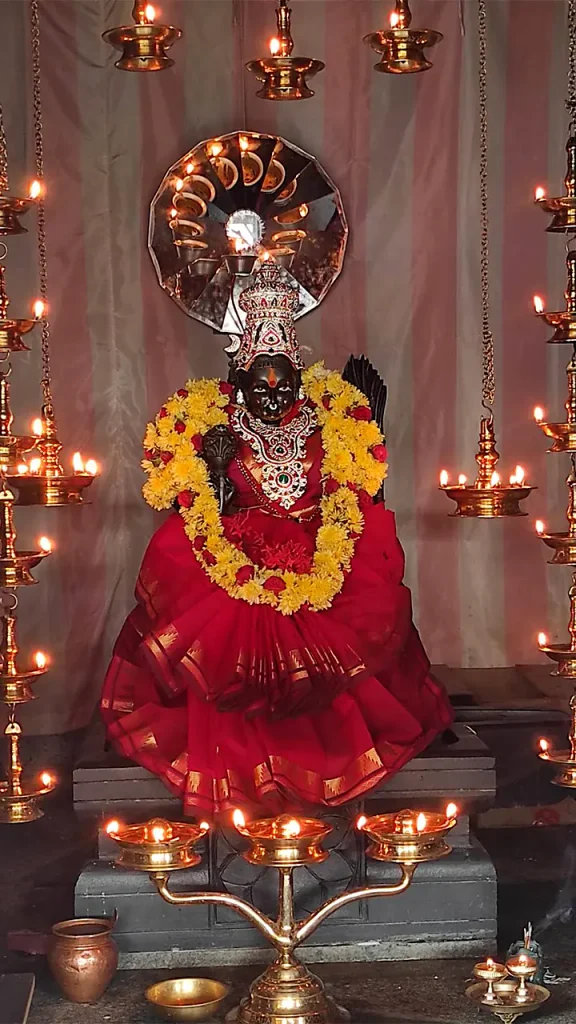
- Goddess Malikappurathamma:Consecrated in an adjacent sub-shrine. Women devotees especially offer prayers here, offering turmeric powder (Manjal Podi) and silk scarves (vastrams).
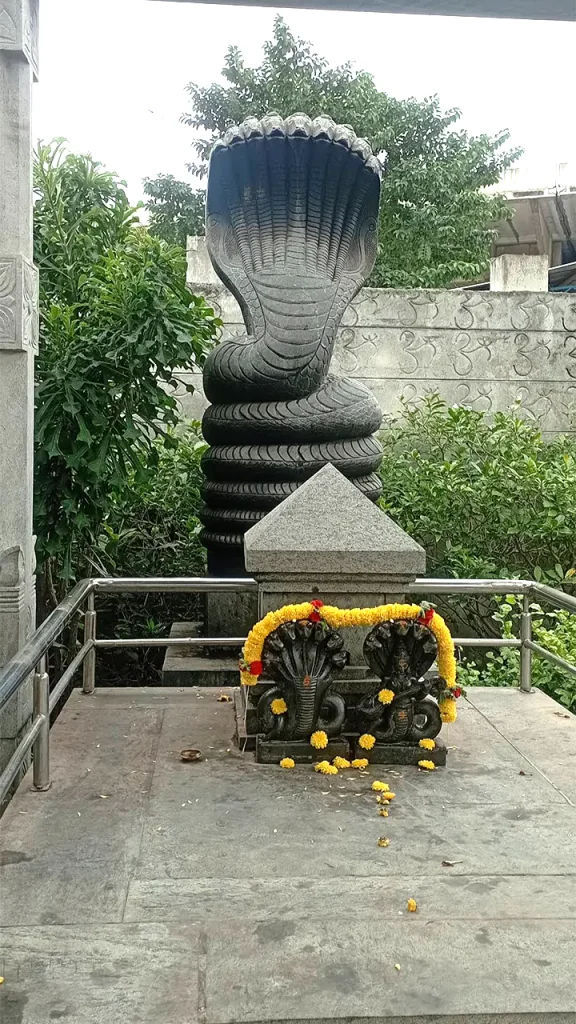
- Nagaraja & Nagayakshi (Serpent Deities):An open-air stone altar located in a corner of the temple grounds, honoring nature, lineage protection, and ecological harmony.
Poojas and Rituals at Kumbalgodu Ayyappa Temple
The temple conducts regular daily rituals, along with special ceremonies on auspicious days.
Detailed Breakdown of Major Rituals
- Ganapathi Homam:What is it? A Vedic fire offering performed early in the morning at the Ganapathi shrine using dried coconut, ghee, jaggery, and sacred herbs.Why is it performed? To remove obstacles from the lives of devotees and ensure the day begins auspiciously.
- Neyyabhishekam (Ghee Abhishekam):What is it? The pouring of pure clarified butter (cow’s ghee) over the sacred idol of Lord Ayyappa.Significance: In Sastha theology, ghee symbolizes the individual soul (Jivatma) being cleansed and merged into the supreme divine consciousness (Paramatma).
- Pushpabhishekam:What is it? An offering where the deity is showered with large quantities of fresh flowers—such as lotus, jasmine, marigold, tulasi, and bilva leaves.When is it performed? Primarily during festival days, special weekend bookings, or Mandala Kalam.
- Deeparadhana:What is it? The waving of camphor flames and multi-tiered brass oil lamps in front of the adorned deity at dusk.Experience: Accompanied by the ringing of bells and blowing of the conch, this is the most visually striking and crowded daily ritual.
- Harivarasanam:What is it? The peaceful Sanskrit hymn composed by Kambangudi Kulathu Srinivasa Iyer, sung softly every night as the final offering before the doors of the Sreekovil are closed.
Kumbalgodu Ayyappa Temple Timings
Important Notice for Visitors: Temple timings can vary on festival days, solar/lunar eclipses, and during the peak Mandala season. Visitors traveling long distances should confirm current schedules locally before planning their journey.
| Day / Occasion | Morning Hours | Evening Hours |
| Regular Weekdays (Mon–Fri) | 06:00 AM – 10:30 AM | 05:30 PM – 08:00 PM |
| Saturdays & Sundays | 06:00 AM – 11:00 AM | 05:30 PM – 08:30 PM |
| Mandala Season (Nov–Jan) | 05:30 AM – 11:30 AM | 05:00 PM – 09:00 PM |
| Makara Sankranti Day | Extended hours (often continuous from early morning) | Extended evening darshan |
Festivals and Special Days
1. Mandala Pooja Mahotsavam (Mid-November to Late December)
The 41-day Mandala Kalam is the most important period in the temple’s annual calendar.
- Special Rituals: Daily Ganapathi Homam, special Abhishekams, community Bhajans, and Irumudi Kettu ceremonies.
- Annadanam: The temple often organizes community meals (Annadanam), serving thousands of devotees with traditional vegetarian food on plantain leaves.
2. Makaravilakku (January 14 or 15)
Celebrated on the day of Makara Sankranti, marking the culmination of the pilgrimage season. The temple premises are illuminated with rows of oil lamps, and special evening processions or Deeparadhanas take place.
3. Panguni Uthiram (March–April)
Occurring on the full moon day of the Tamil month of Panguni (coinciding with the Uttara Phalguni nakshatra), this day is celebrated as the auspicious advent (Avatara Dinam) of Lord Dharma Sastha.
Crowd Information & Best Time to Visit
Crowd Patterns
- High Crowd Days: Every Saturday (the sacred day associated with Lord Sastha and relief from Saturn/Shani afflictions), all Sundays, and the entire November–January Mandala period.
- Low/Moderate Days: Tuesday, Wednesday, and Thursday mornings.
Best Time to Visit
- For a Quiet, Meditative Visit: Arrive between
07:00 AM and 09:00 AMon a regular weekday (Monday to Thursday). - For Cultural & Devotional Vibrancy: Visit during the evening Deeparadhana (
06:30 PM – 07:30 PM) on a Saturday during November or December. - Weather Considerations: Bengaluru enjoys pleasant weather from October to February (temperatures averaging 18°C to 28°C), making winter the most comfortable time for outdoor temple visits.
How to Reach Kumbalgodu Ayyappa Temple
Kumbalgodu is well connected to the Bengaluru transport network via road, metro, and rail corridors.
1. By Namma Metro (Rail Transit)
- Nearest Station: Challaghatta Metro Station (Purple Line terminal station).
- Distance: Approximately 5.5 km from the temple.
- Connecting Transit: Auto-rickshaws, app-based cabs, and BMTC feeder buses operate regularly from Challaghatta and Kengeri Metro stations toward Kumbalgodu.
2. By City Bus (BMTC)
Bengaluru Metropolitan Transport Corporation (BMTC) operates frequent bus services along Mysuru Road:
- Key Routes: Buses departing from Kempegowda Bus Station (Majestic), KR Market, or Kengeri TTMC toward Bidadi, Ramanagara, or Wonderla pass through Kumbalgodu. Common route series include 226, 227, and 401.
- Bus Stop: Alight at Kumbalgodu Bus Stop / Kumbalgodu Junction, from which the temple is a short walk or auto ride.
3. By Train
- Nearest Local Station: Kengeri Railway Station (KGI), located approximately 7 km away. Several passenger and express trains connecting Bengaluru and Mysuru stop at Kengeri.
- Major Terminal: KSR Bengaluru City Junction (SBC) (~20 km) and Yesvantpur Junction (YPR) (~26 km).
4. By Air
- Nearest Airport: Kempegowda International Airport Bengaluru (BLR), located roughly 55 to 60 km away.
- Travel Route: Travelers can take the airport expressway, transition via the NICE Road (exit at Mysuru Road junction), and proceed directly toward Kumbalgodu without traversing city center traffic.

Things to Know Before Visiting
To ensure a smooth and respectful visit, keep the following practical details in mind:
- Dress Code:
- Traditional Indian attire is encouraged.
- Men: Dhotis, kurtas, or formal trousers with shirts. (In keeping with Kerala temple customs, men are traditionally asked to remove upper shirts when entering the inner sanctum area).
- Women: Sarees, salwar kameez, or traditional modest clothing.
- Avoid western beachwear, shorts, or sleeveless gym clothing.
- Footwear:Must be removed outside the main entrance. A dedicated open rack or shoe-keeping counter is available near the entrance.
- Sanctum Photography Rules:Photography and video recording are strictly prohibited inside the Sreekovil (inner sanctum) to maintain religious sanctity. Respectful photography in the open outer courtyard is generally permitted, provided it does not disturb other devotees.
- Facilities on Site:
- Clean drinking water is available.
- Basic restroom facilities are maintained on the premises.
- A dedicated counter is available for booking special Archanas, Ghee Abhishekam, and purchasing prasadam.
- Accessibility:The main courtyard is paved and relatively level. While there are a few steps leading to the inner raised platform, temple volunteers and family members can assist elderly visitors and those using wheelchairs.
Dos and Don’ts at the Temple
Places to Visit Near Kumbalgodu Ayyappa Temple
You can combine your visit to Kumbalgodu Ayyappa Temple with several prominent religious, cultural, and family attractions located in the southwest Bengaluru corridor:
| Place Name | Approx. Distance | Type | Why Visit? |
| Sri Mukthi Naga Temple (Ramohalli) | ~6 km | Hindu Temple | Houses a massive 16-foot monolithic idol of Lord Naga; very popular for serpent worship. |
| Dodda Alada Mara (Big Banyan Tree) | ~8 km | Natural Landmark | A 400-year-old single banyan tree covering 3 acres; popular spot for quiet walks and nature study. |
| Sri Rajarajeshwari Temple (RR Nagar) | ~8 km | Hindu Temple | Renowned stone Dravidian temple dedicated to Goddess Jnanakshi Rajarajeshwari. |
| Omkar Hills / Matsya Narayana Temple | ~9 km | Pilgrimage / Scenic | One of the highest natural points in Bengaluru, featuring a clock tower and Matsya shrine. |
| Janapada Loka (Ramanagara) | ~25 km | Folk Culture Museum | An open-air cultural museum showcasing Karnataka’s traditional rural arts, tools, and puppetry. |
One-Day Temple Itinerary Around Kumbalgodu
Here is a practical, family-friendly plan for a spiritual and cultural day trip starting from central Bengaluru:
- 07:00 AM – 08:00 AM: Depart from Bengaluru city center via the Bengaluru–Mysuru Expressway service road or Namma Metro Purple Line.
- 08:15 AM – 09:30 AM: Arrive at Kumbalgodu Ayyappa Temple. Attend the morning Usha Pooja, perform Pradakshina, receive prasadam, and enjoy the quiet morning atmosphere.
- 10:00 AM – 11:30 AM: Drive 6 km northwest to Sri Mukthi Naga Temple in Ramohalli for darshan of the monolithic serpent shrine.
- 11:45 AM – 01:00 PM: Visit the nearby Dodda Alada Mara (Big Banyan Tree). Stroll along the shaded walkways under the ancient 400-year-old canopy.
- 01:15 PM – 02:30 PM: Enjoy a traditional South Indian vegetarian lunch at one of the family restaurants along the Mysuru Road highway corridor.
- 03:00 PM – 04:30 PM: (Optional) Visit the serene Omkar Hills in Rajarajeshwari Nagar or drive down to Janapada Loka in Ramanagara to explore folk heritage.
- 05:00 PM onwards: Return comfortably to central Bengaluru before peak evening highway traffic.
Frequently Asked Questions
Where is Kumbalgodu Ayyappa Temple located?
Kumbalgodu Ayyappa Temple is located in Kumbalgodu along the Mysuru Road (NH 275) corridor in southwestern Bengaluru, Bengaluru Urban district, Karnataka (PIN: 560074). It is situated approximately 6 km past Kengeri.
What are the daily timings of Kumbalgodu Ayyappa Temple?
On regular days, the temple is typically open from 06:00 AM to 10:30 AM in the morning and from 05:30 PM to 08:00 PM in the evening. Timings are extended during festival periods such as the Mandala Masam.
Who is the presiding deity at this temple?
The main deity is Lord Ayyappa, also venerated as Sri Dharma Sastha and Hariharaputra, depicted in his classical yogic seated posture (Chinmudra).
Can women visit the Kumbalgodu Ayyappa Temple?
Yes. Unlike the high-altitude forest shrine at Sabarimala, which follows distinct historical pilgrimage vows, neighborhood Ayyappa temples across Indian cities are open for public worship by all devotees and families of all age groups throughout the year.
What poojas and offerings are performed here?
Major daily and special rituals include Ganapathi Homam, Neyyabhishekam (ghee bath), Pushpabhishekam (flower shower), Archana, Deeparadhana, and the chanting of Harivarasanam.
Is there an entry fee to visit the temple?
No. General darshan is completely free for all visitors. Devotees who wish to perform specific personalized poojas or Archanas can purchase nominal seva tickets at the temple counter.
How can I reach the temple by public transport?
You can take the Namma Metro Purple Line to Challaghatta Metro Station (approx. 5.5 km away) and take an auto-rickshaw or feeder bus. Alternatively, BMTC buses operating on routes 226, 227, or 401 from Majestic and Kengeri stop directly at Kumbalgodu.
Is parking available at Kumbalgodu Ayyappa Temple?
Yes, basic street and open-ground parking spaces are available near the temple entrance for two-wheelers and personal cars.
When is the best time to visit?
For calm and personal prayer, weekday mornings between 07:00 AM and 09:00 AM are best. For witnessing vibrant festive rituals and devotional singing, the evening Deeparadhana during the November–January Mandala season is ideal.
Summary
Kumbalgodu Ayyappa Temple is an important center of worship along Bengaluru’s southwestern corridor. By upholding the timeless spiritual traditions of Lord Dharma Sastha—grounded in universal brotherhood, self-discipline, and devotion—it offers an uplifting sanctuary for regular temple-goers, families, and Sabarimala pilgrims alike.