Lord Shiva Puja and Abhishekam at Home: A Complete Beginner’s Guide
Performing Lord Shiva Puja and Abhishekam at home does not require complicated rituals or rare ingredients. At its heart, worshiping Lord Shiva is rooted in sincerity, simplicity, and mental stillness. If you have pure water, a focused mind, and a humble heart, you have everything necessary to begin.
This guide provides practical, step-by-step instructions for worshiping Lord Shiva at home, whether you have five minutes before work or wish to perform a complete traditional Abhishekam.
1. Quick Answer: What is Shiva Abhishekam?
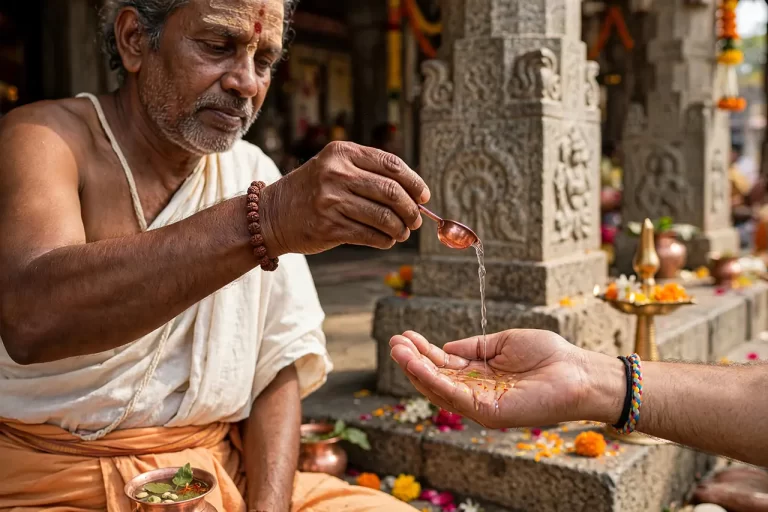
Shiva Abhishekam is the devotional practice of gently pouring sacred liquids—most commonly pure water or milk—over a consecrated Shiva Lingam while chanting prayers or meditating on the divine.
The word Abhisheka in Sanskrit means “to sprinkle” or “to pour over.” In Hindu practice, it serves as an act of loving service (Seva) and mental cleansing. As you pour water to cool the Lingam, you symbolically wash away internal anger, greed, stress, and restlessness, offering your focused mind back to the divine.
2. Who is Lord Shiva and What is the Shiva Lingam?
Lord Shiva represents the ultimate, unchanging reality (Brahman) in Hindu thought, embodying transformation, inner silence, supreme consciousness, and compassion. While often associated with the dissolution of the universe, this dissolution refers spiritually to the end of ego, ignorance, and suffering, making way for self-realization.
Understanding the Shiva Lingam
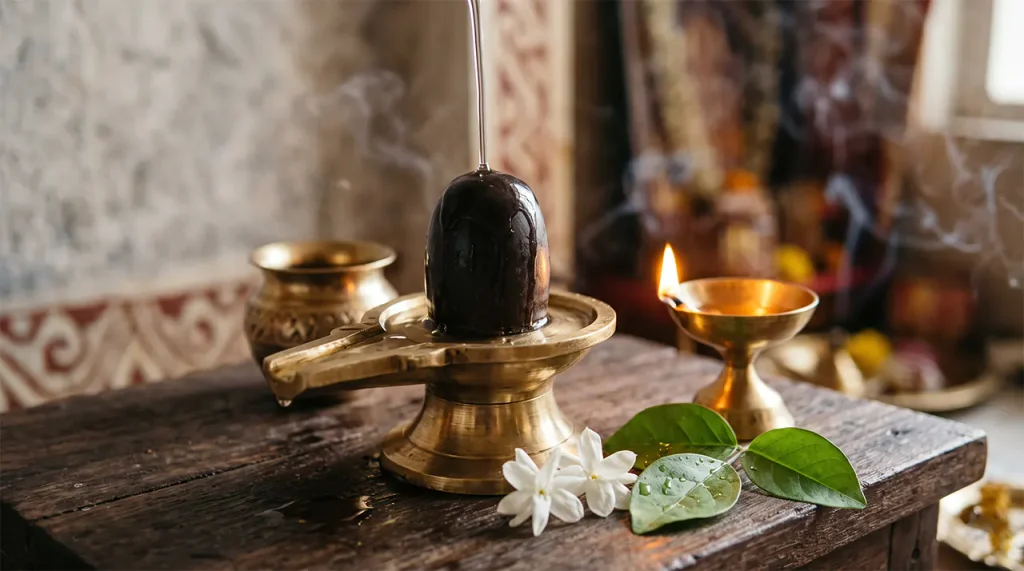
The Shiva Lingam is a sacred, aniconic (non-anthropomorphic) symbol representing the formless, infinite nature of God (Nirguna Brahman) taking an accessible form (Saguna):
- The Lingam (Cylinder): The smooth, rounded upper stone represents infinite consciousness without beginning or end.
- The Yoni or Jaladhari (The Base): The flat, grooved platform represents the cosmic feminine creative power (Shakti or Prakriti).
- The Union: The two together remind us that divine consciousness and dynamic energy are inseparable. Creation and peace exist only when consciousness and energy are united.
3. What is the Difference Between Shiva Puja and Abhishekam?
While often performed together, Puja and Abhishekam refer to distinct aspects of worship:
- Shiva Puja: The complete sequence of hospitable offerings made to God as an honored guest. It includes lighting a lamp (Deepa), offering incense (Dhupa), presenting fresh fruits (Naivedya), waving lights (Aarti), and praying.
- Shiva Abhishekam: The specific ritual bathing of the Shiva Lingam with water or other pure liquids.
Abhishekam is the central, crowning component of Shiva Puja. Unlike deities worshiped strictly through dry offerings (Alankara), Lord Shiva is traditionally described as Abhisheka Priya—one who loves the cooling offering of water.
4. Spiritual Significance of Shiva Abhishekam
The physical actions of Abhishekam reflect inner psychological and spiritual attitudes:
- Cooling the Universal Fire: Traditional accounts describe Lord Shiva consuming the Halahala poison to protect the world during the churning of the cosmic ocean (Samudra Manthan). The poison heated his body; out of gratitude, the Devas poured cooling waters of the Ganga over him. Devotees offer water today in that same spirit of gratitude and care.
- Purifying the Mind: Pouring an unbroken, gentle stream of water trains your attention. For those minutes, wandering thoughts stop, focusing on the rhythmic sound of water and the repetition of a mantra.
- Surrendering the Ego: Offering pure substances signifies returning what nature gave you with gratitude, recognizing that physical possessions are temporary.
Continue Reading: Karthika Masam: Traditions, Rituals, and Spiritual Significance Explained Simply
5. When Can We Worship Lord Shiva?
Devotion is welcome every day, but particular days and hours are traditionally set aside for deeper practice:
- Daily Morning Worship: Dawn (Brahma Muhurta) or early morning after bathing brings quiet focus before the day starts.
- Mondays (Somavara): Monday is traditionally dedicated to Lord Shiva, named after Soma (the moon), which rests on Shiva’s brow, representing a calm mind.
- Pradosham: A 3-hour window occurring twice monthly on the 13th lunar day (Trayodashi), falling roughly 1.5 hours before to 1.5 hours after sunset. This is considered an ideal time for meditation and Abhishekam.
- Shravan Month (July–August): The holy monsoon month dedicated to fasting, reflection, and continuous Jal Abhishekam.
- Maha Shivaratri: The great night of Shiva, celebrated once a year on the 14th night of the dark half of the month of Magha/Phalguna. Devotees remain awake, meditating and chanting throughout the night.
6. Complete Shiva Puja and Abhishekam Items List
Worship should never be stressful. Gather what is easily available.
Essential Items (Minimal Setup)
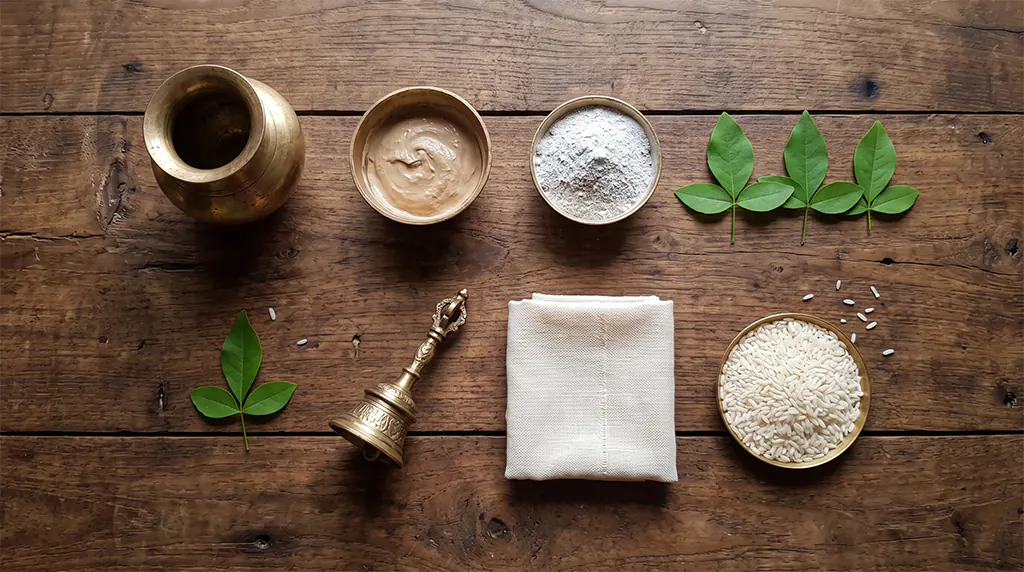
- A clean Shiva Lingam: Made of stone (such as Narmada Banalinga), brass, or sphatika (quartz).
- Pure water: Filtered tap water or well water in a clean vessel.
- A clean collection plate (Abhisheka Patra): A deep plate made of brass, copper, or stainless steel to catch the runoff liquid.
- A clean cotton towel: Reserved specifically for drying the deity.
- A simple oil or ghee lamp.
Optional Traditional Items
- Vibhuti (Bhasma): Sacred ash applied to the Lingam and worn on one’s own forehead as a reminder of life’s impermanence.
- White Sandalwood Paste (Chandan): Known for its cooling nature and pleasant scent.
- Bilva (Bel) Leaves: Trifoliate leaves central to Shiva worship.
- Uncooked, whole white rice grains (Akshata): Kept unbroken, often mixed with a touch of chandan.
- Fresh Flowers: White flowers such as Dhatura, Crown flower (Aak/Arka), Jasmine, or Marigold.
- Simple Naivedya: A piece of jaggery, rock sugar (Mishri), a banana, or a bowl of water.
7. How to Set Up Your Sacred Space at Home
- Clean the Area: Thoroughly sweep and wipe down your puja shelf, altar, or table.
- Personal Cleanliness: Take a bath or wash your hands, feet, and face. Put on fresh, comfortable clothes.
- Seating Orientation: Sit facing East (the direction of the rising sun and new energy) or North (the direction of Mount Kailash and spiritual focus).
- Positioning the Shiva Lingam:
- Place the Lingam in the center of your wide collection tray.
- Orient the spout: The draining spout of the base (Jaladhari/Yoni) should point toward the North.
- You should sit facing East while looking at the Lingam, meaning the water drains out toward your right hand side (North).
8. Step-by-Step Shiva Abhishekam Guide
Follow this sequential procedure for a calm, balanced ritual at home:
Detailed Execution
Step 1: Light the Lamp (Deepa Prajvalana)
Light an oil or ghee lamp and an incense stick. The light dispels physical and mental darkness. Take three deep, slow breaths to steady your mind.
Step 2: Invoke Lord Ganesha (Prarthana)
Begin by remembering Ganesha to clear any internal obstacles:
“Om Gam Ganapataye Namaha”
(I bow to Lord Ganesha, the remover of obstacles.)
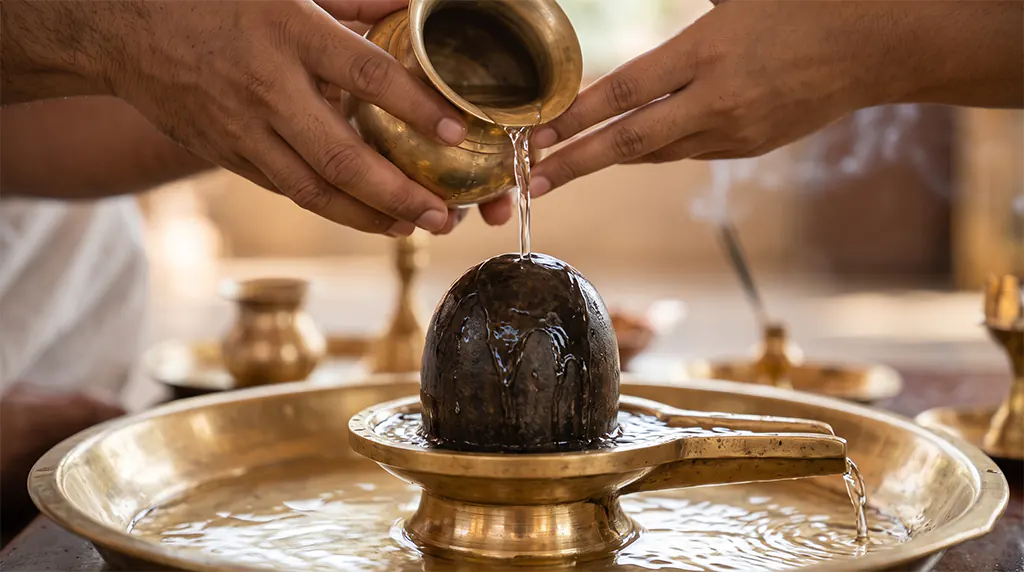
Step 3: The Primary Water Offering (Jal Abhishekam)
Take your water vessel (Kalasha) in your right hand, or support it with both hands. Begin pouring a thin, steady, unbroken stream of water over the apex of the Lingam. Chant steadily:
“Om Namah Shivaya”
Pour slowly so that the water flows smoothly over the top and runs down the spout into your collection tray.
Step 4: Optional Additional Liquids (If Using)
If offering milk, curd, or honey:
- Pour the milk or chosen liquid slowly while continuing the mantra.
- Important: Always conclude with a thorough, gentle bath of fresh, clean water (Shuddhodaka Snana) so the stone or metal is completely free of milk or sugar residues.
Step 5: Clean and Dry the Lingam
Lift the Lingam gently or dry it directly in place using your clean, dedicated cotton cloth. Pat it dry with care; do not rub it harshly.
Step 6: Sacred Markings (Alankara)
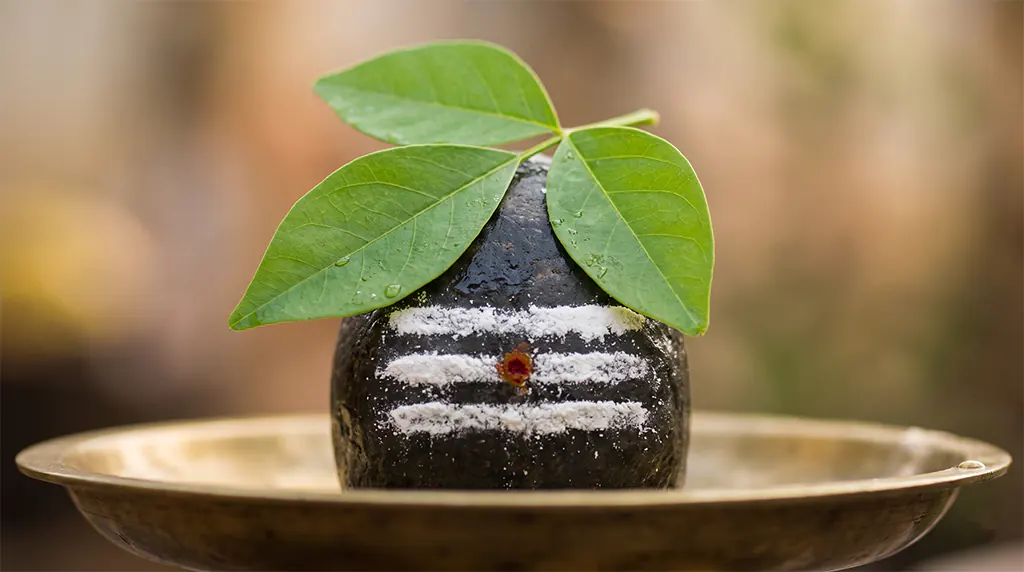
Take a small pinch of Vibhuti (sacred ash) or Chandan (sandalwood paste) with your right ring finger. Gently draw three horizontal lines (Tripundra) across the face of the Lingam, or place a neat, respectful dot on its surface.
Step 7: Offering Bilva Leaves and Flowers
Place the Bilva leaf over the Lingam with the smooth, greener side facing down (touching the stone). Offer any fresh white flowers at the base of the Lingam.
Step 8: Food Offering (Naivedya)
Place your fruit, nuts, or jaggery in front of the altar. Sprinkle a drop of clean water around the plate as a gesture of offering, saying:
“Om Sri Sadashivaya Namaha, Naivedyam Samarpayami”
(I offer this food with love to the gracious Lord Shiva.)
Step 9: Aarti and Silent Meditation
Wave your lamp or a small piece of burning camphor in a clockwise circular motion three times before the altar. Ring your handbell gently with your left hand if you have one. Sit in absolute silence for two to five minutes, closing your eyes and absorbing the stillness.
9. Types of Shiva Abhishekam and Common Substances
Different substances are offered in Hindu tradition, each carrying its own contemplative meaning:
| Offering | Sanskrit Name | Devotional Meaning | Practical Preparation Tip |
| Pure Water | Jal / Gangajal | Purity, peace, mental clarity | Use clean, filtered water at room temperature. |
| Raw Milk | Dugdha | Nourishment, calmness, purity | Use fresh, unboiled milk. Avoid packaged milk with additives if possible. |
| Curd (Yogurt) | Dadhi | Health, steadiness, discipline | Smooth it with a spoon so it pours evenly. |
| Pure Honey | Madhu | Sweet speech, pleasantness | Use natural, raw honey. A small spoonful is plenty. |
| Ghee | Ghrita | Spiritual illumination, vitality | Warm slightly so it pours in a smooth, clear liquid state. |
| Sugarcane Juice | Ikshu Rasa | Joy, satisfaction, contentment | Must be fresh and strained without salt or spice additions. |
| Chandan Water | Chandana Udaka | Cooling, soothing of anger | Mix high-grade white sandalwood paste into clean water. |
What is Panchamrit Abhishekam?
Panchamrit translates to “five nectars.” It is a traditional blend composed of:
- Fresh Milk (the base)
- Curd (a small dollop)
- Honey (a small spoonful)
- Desi Ghee (a few drops)
- Sugar or Jaggery (a small pinch)
These ingredients are combined in a small bowl. Devotees pour the Panchamrit over the Lingam after the initial water bath, followed immediately by an abundant rinse of clear, pure water.
What is Rudrabhishekam?
Rudrabhishekam is an elaborate Vedic ritual wherein the Abhishekam liquids are continuously poured while priests or trained practitioners chant the Sri Rudram (from the Krishna Yajurveda).
While an individual can chant simple hymns at home, full Rudrabhishekam is a structured ceremony often held in temples or during major festivals with specific Vedic chanting rules. Beginners do not need to attempt complex Vedic recitations without proper training; reciting Om Namah Shivaya is complete and valid in itself.
10. Core Shiva Mantras for Worship
You do not need to memorize difficult verses to worship Lord Shiva. The simplest mantra is the most profound.
1. The Panchakshari Mantra (Five-Syllable Mantra)
This is the most universal and accessible mantra for daily Abhishekam.
- Devanagari: ॐ नमः शिवाय
- English Transliteration: Om Namah Shivaya
- Literal Meaning: “I bow to Shiva” (or “I honor the divine inner consciousness”).
- How to Use: Chant this silently or softly in a rhythmic flow as you pour the water.
2. The Mahamrityunjaya Mantra
From the Rigveda (7.59.12), this healing mantra offers mental resilience, protection from the fear of death, and spiritual liberation.
- Devanagari:ॐ त्र्यम्बकं यजामहे सुगन्धिं पुष्टिवर्धनम्।उर्वारुकमिव बन्धनान्मृत्योर्मुक्षीय मामृतात्॥
- English Transliteration:Om Tryambakam Yajaamahe Sugandhim Pushti-VardhanamUrvaarukam-Iva Bandhanaan-Mrityor-Muksheeya Maamritaat
- Simple Meaning: “We meditate on the Three-Eyed One, who is fragrant and nourishes all beings. As a ripe cucumber is effortlessly freed from its vine, may we be liberated from the bondage of mortality and fear, into the nectar of immortality.”
- How to Use: Recite this 3, 9, or 11 times after drying the Lingam, while sitting quietly in meditation.
11. Bilva (Bel Patra) Leaves: Rules and Meaning
The leaf of the Bael tree (Aegle marmelos) is considered dear to Lord Shiva. It traditionally features three leaflets united on a single stalk.
Symbolism
The trifoliate leaf is commonly understood to represent:
- The three Gunas: Sattva (harmony), Rajas (action), and Tamas (inertia).
- The three functions of the cosmos: Creation, Preservation, and Dissolution.
- The three eyes of Lord Shiva, symbolizing insight beyond dualistic sight.
How to Select and Offer Bilva Leaves
- Intact Leaves: Check that the three leaflets are firmly attached to the main stem. Discard leaves torn by insects or severely spotted.
- Cleaning: Wash the leaves gently in clean water and pat them dry.
- Placing on the Lingam:
- Hold the stem between your thumb and ring finger.
- Place the leaf on top of the Lingam with the smooth, dark green top surface facing downward, directly touching the stone.
- The lighter, veined underside should face upward toward you.
12. Offerings: What to Give and What to Avoid
Different Hindu traditions follow specific guidelines regarding which items are appropriate for the Shiva Lingam.
Recommended Offerings
- Pure Water and Ganga Jal
- Vibhuti (Sacred Ash)
- White Sandalwood Paste (Chandan)
- Bilva Leaves
- Dhatura Flowers and Fruit: Symbolizing the surrender of worldly poisons, desires, and ego.
- White or wild native flowers: Jasmine, Crown flower (Calotropis/Aak), and Kaner.
Items Traditionally Avoided (and Why)
Note on regional customs: In certain regional traditions, particularly during specific household festivals or combined Shiva-Parvati worship (Gauri-Shankar Puja), mild applications of Haldi or Kumkum may be made to the base (Jaladhari / Shakti portion) only, while the Lingam stone itself receives only cooling white substances. Respect your family’s established customs.
13. Practical Rules and Setup Precautions
To maintain both ritual decorum and household cleanliness, observe these practical guidelines:
Choosing Proper Vessels
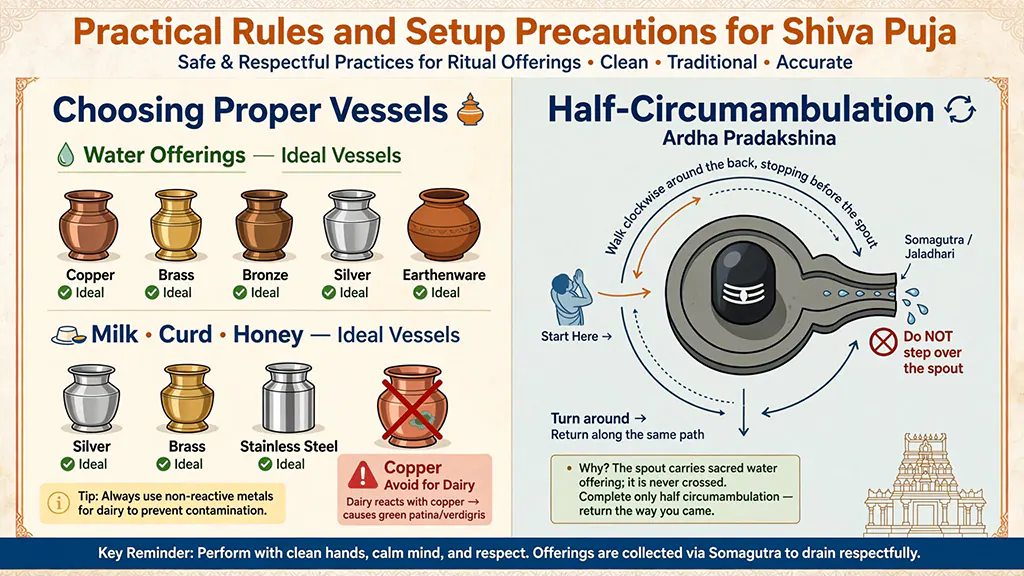
- Water Offerings: Copper, brass, bronze, silver, or earthenware vessels are ideal.
- Milk, Curd, or Acidic Offerings: Do not use copper for milk, curd, or honey. Copper reacts chemically with dairy, tamarind, and acidic liquids, causing oxidation and green patinas that can stain the altar and spoil the offering. Use silver, brass, or stainless steel vessels for milk.
The Half-Circumambulation (Ardha Pradakshina)
When circumambulating (walking around) a Shiva Lingam in a temple:
- Devotees start from the left side and walk around the back until they reach the drainage spout (Somagutra or Jaladhari).
- Do not step over the spout.
- Turn around and walk back along the same path to the other side. This practice honors the continuous stream of divine energy flowing from the runoff point.
14. What to Do with Runoff Water and Leftover Offerings (Nirmalya)
One of the most frequent questions for home practitioners is how to handle the collected Abhishekam water and wilted flowers with proper respect and hygiene.
- Jal Abhishekam Water (Clear Water):
- This energized water is known as Charanamrit or Tirtha. Devotees may sip a spoonful with reverence.
- Collect the remaining water and pour it into outdoor garden soil, around the base of trees, or into potted household plants.
- Avoid pouring it into indoor potted Tulsi plants out of traditional respect.
- Milk and Panchamrit Runoff:
- Only consume milk runoff as Prasad if your hands, utensils, and Lingam were thoroughly washed beforehand, and the milk was fresh and uncontaminated.
- In warm climates, milk residue spoils within hours. Pour leftover dairy runoff around the roots of outdoor trees or shrubs, then immediately rinse the collection tray to prevent sour odors or insects.
- Used Flowers and Bilva Leaves (Nirmalya):
- Collect wilted leaves and flowers in a compost bin or compost pit.
- If living in an apartment, let them dry naturally, then return them to the soil of outdoor public garden beds or compost them for nature.
- Never throw sacred offerings into general household garbage bins.
15. Inclusivity: Can Women, Children, and Beginners Worship Lord Shiva?
Yes, without reservation.
Devotion (Bhakti) in Hindu philosophy transcends gender, age, and social standing. The Shiva Purana explicitly states that Lord Shiva is accessible to all beings who approach him with a clear and loving heart:
- Women: Women can freely chant Om Namah Shivaya, perform daily home Puja, and pour Abhishekam water over household Shiva Lingams. During menstrual cycles, many families choose a few days of physical rest away from formal ritual setups, but mental repetition (Manasika Japa) and internal prayer are never restricted.
- Children: Children should be encouraged to pour water, offer flowers, and ring the bell. It teaches mindfulness, physical care, and quiet reflection.
- Beginners: You do not need formal initiation (Diksha) to chant the Panchakshari Mantra (Om Namah Shivaya) or offer clear water. A humble, sincere approach is the highest qualification.
16. Common Mistakes and Misconceptions
| Common Misconception | The Grounded Reality |
| “You need a large, expensive marble Lingam.” | Small, palm-sized stones (especially naturally smoothed Narmada Banalingas) are traditionally preferred for home worship. |
| “If I make a small ritual mistake, Lord Shiva will get angry.” | Shiva is traditionally addressed as Ashutosh—one who is easily pleased by the simplest sincere gesture. Sincerity of heart matters far more than mechanical precision. |
| “You must offer dozens of liters of milk.” | A single spoonful of milk, or simply pure water, is entirely sufficient. Ritual waste of food is never encouraged in true spiritual philosophy. |
| “I need hours of free time every day.” | A focused, heartfelt two-minute prayer is more beneficial than a distracted, rushed two-hour ritual. |
17. The 5-Minute Daily Home Shiva Routine
For busy students, parents, and professionals, this quick routine maintains daily consistency without feeling overwhelming:
18. Frequently Asked Questions
Can I do Shiva Abhishekam with water only?
Yes. Pure water is the original, most authentic substance for Shiva worship. The Puranas praise simple Jal Abhishekam. Offering plain water with a clean mind is entirely complete.
What should I do if I don’t have a Shiva Lingam at home?
You can place a framed picture or portrait of Lord Shiva on your altar. If worshiping a picture, do not pour liquids over it. Instead, place a small clean bowl in front of the picture and offer drops of water into the bowl as a symbolic bath (Manasika Abhishekam).
Which direction should the Shiva Lingam face at home?
The round body of the Lingam has no front or back, but its base (Jaladhari / drainage spout) should ideally point toward the North. You, the worshiper, should sit facing East or North.
Can we keep a Shiva Lingam at home?
Yes. Most scriptures recommend that a Lingam kept inside a home should be modest in size—traditionally not larger than the length of the owner’s thumb (roughly 2 to 3 inches). Compact Lingams are easy to maintain with cleanliness and daily respect.
Why is copper prohibited for milk Abhishekam?
Copper chemically reacts with dairy fats and mild acids present in milk and curd, releasing toxic copper compounds and tarnishing the metal. Use brass, silver, or stainless steel for milk, and reserve copper for clean water.
How many times should I chant Om Namah Shivaya during Abhishekam?
You can chant it continuously while the water is flowing. When sitting afterward, standard counts include 11, 21, or 108 times (using a Rudraksha mala if available).
Is it necessary to fast on Mondays to do Shiva Puja?
No. Fasting (Vrata) is a personal discipline to lighten the body and quiet the senses, but it is not mandatory. You can perform morning Puja and eat healthy, regular meals throughout the day.
Can pregnant women perform Shiva Abhishekam?
Yes. Gentle prayer, pouring water, and sitting in silent meditation create a peaceful environment for both mother and child. Simply avoid strenuous standing or prolonged fasting.
Can I offer boiled milk for Abhishekam?
Traditionally, raw (Kaccha Doodh), unpasteurized, unboiled milk is used in classical ceremonies. If only pasteurized kitchen milk is available, use it cold or at room temperature without boiling or adding flavorings.
Can I offer red flowers to Lord Shiva?
While white flowers (symbolizing peace and purity) are traditional favorites, simple red native flowers like Hibiscus can be offered with love if white flowers are unavailable, except where local traditions specify otherwise.
What should I do if my Bilva leaf is missing a leaflet?
Try to find whole, three-petaled leaves. If a complete leaf is unavailable, simply offer clean water with devotion. Lord Shiva accepts your intention (Bhava).
Can left-handed people perform Abhishekam?
Offerings are traditionally presented with the right hand, which in classical Indian culture is reserved for clean, sacred actions. If you are left-handed, you may support the vessel with both hands.
What is the best time for Shiva Puja?
Early morning during dawn (Brahma Muhurta or Pratah Kala) is ideal for stillness. The second best time is twilight (Sandhya Kala / Pradosham).
What if I cannot pronounce Sanskrit mantras correctly?
Mantra sounds have traditional resonances, but divine understanding looks at your heart, not your grammatical polish. If Sanskrit is difficult, you can say with feeling: “Lord Shiva, please accept this water and cleanse my mind.”
How often should the Shiva Lingam be cleaned?
If you perform daily worship, rinse and dry the Lingam every morning. If you worship only on Mondays, ensure the Lingam is covered or kept clean on your altar during the week.
Devotional Reflection
The ultimate purpose of Shiva worship is to cultivate a peaceful, stable, and compassionate mind. When you pour water over the Lingam, visualize your worries, resentments, and self-doubts washing away. When you step back from your altar, carry the stillness of Lord Shiva into the rest of your day—speaking gently, acting responsibly, and remaining patient with those around you.