Jalakandeswarar Temple Vellore: History, Timings, Architecture & Complete Visitor Guide
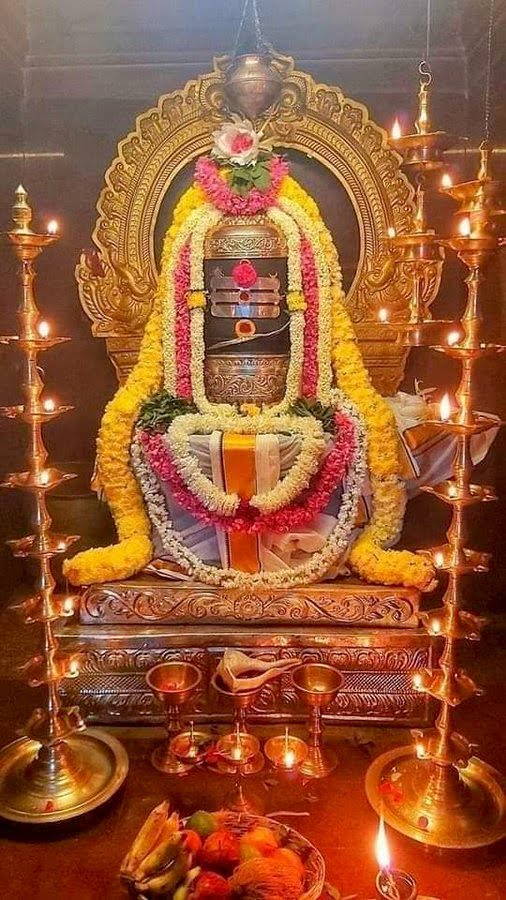
Jalakandeswarar Temple is a historic 16th-century Hindu temple dedicated to Lord Shiva, located inside the granite walls of Vellore Fort in Vellore, Tamil Nadu. Built during the Vijayanagara Empire, the temple is famous for its carved stone pillars, its dramatic four-century period without a sanctum idol, and the revival of daily worship in 1981.
For devotees and travellers visiting northern Tamil Nadu, this sacred shrine offers a rare combination of living devotion and preserved royal architecture. Whether you are planning a peaceful morning darshan or exploring the monuments inside Vellore Fort, this guide covers the temple’s history, daily timings, rituals, architecture, and practical travel tips.
Quick Information: Jalakandeswarar Temple at a Glance
| Feature | Details |
| Temple Name | Sri Jalakandeswarar Temple (also spelled Jalagandeeswarar Temple) |
| Presiding Deity | Lord Shiva as Jalakandeswarar (Shiva Lingam) |
| Consort Deity | Goddess Parvati as Sri Akilandeswari Amman |
| Location | Inside Vellore Fort, Balaji Nagar, Vellore, Tamil Nadu 632004, India |
| Architectural Style | Late Vijayanagara Architecture (circa 16th Century CE) |
| Monument Status | Centrally Protected Monument under the Archaeological Survey of India (ASI) |
| Daily Darshan Timings | Morning: 6:30 AM – 1:00 PM | Evening: 3:30 PM – 8:30 PM (subject to festival adjustments) |
| Entry Fee | Free general darshan and free entry to Vellore Fort grounds |
| Best Time to Visit | November to February (pleasant winter weather) |
| Nearest Railway Stations | Vellore Cantonment (2 km) and Katpadi Junction (6.5 km) |
| Nearest Airport | Chennai International Airport (approx. 130 km) |
| Official Reference | Vellore District Administration Temple Portal |
Why Jalakandeswarar Temple Is Famous
Many temples in South India are admired for their age, while others are known for their royal architecture. Jalakandeswarar Temple stands out because it brings together extraordinary Vijayanagara stone art and an unusual modern revival story.
Here are the main reasons millions of devotees and heritage lovers visit this temple every year:
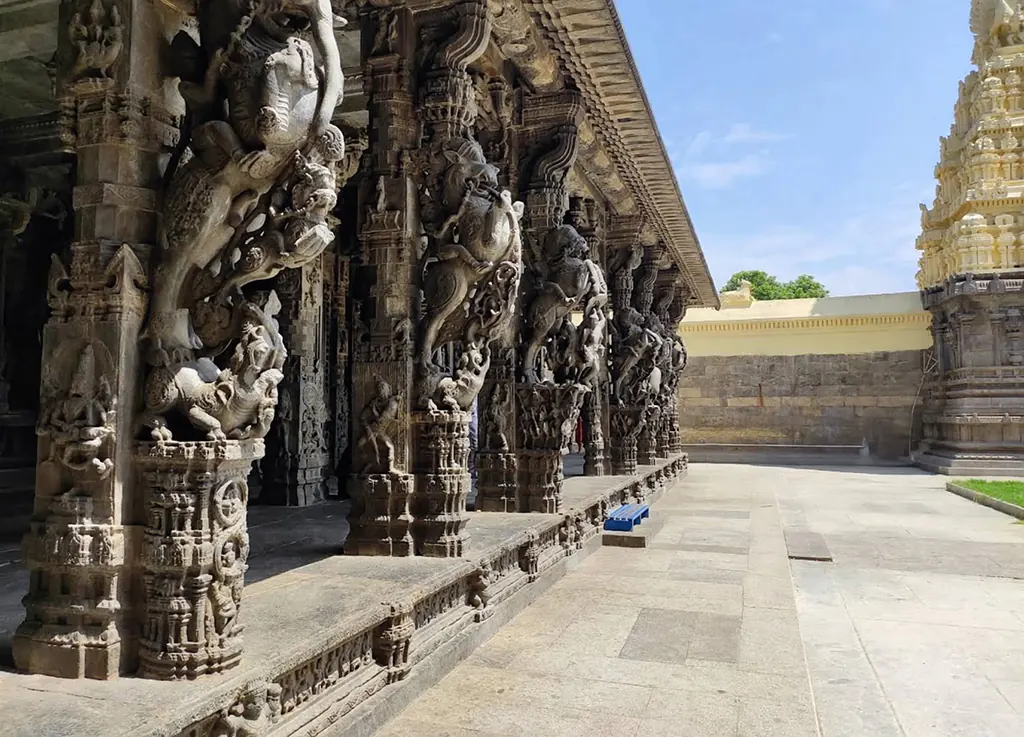
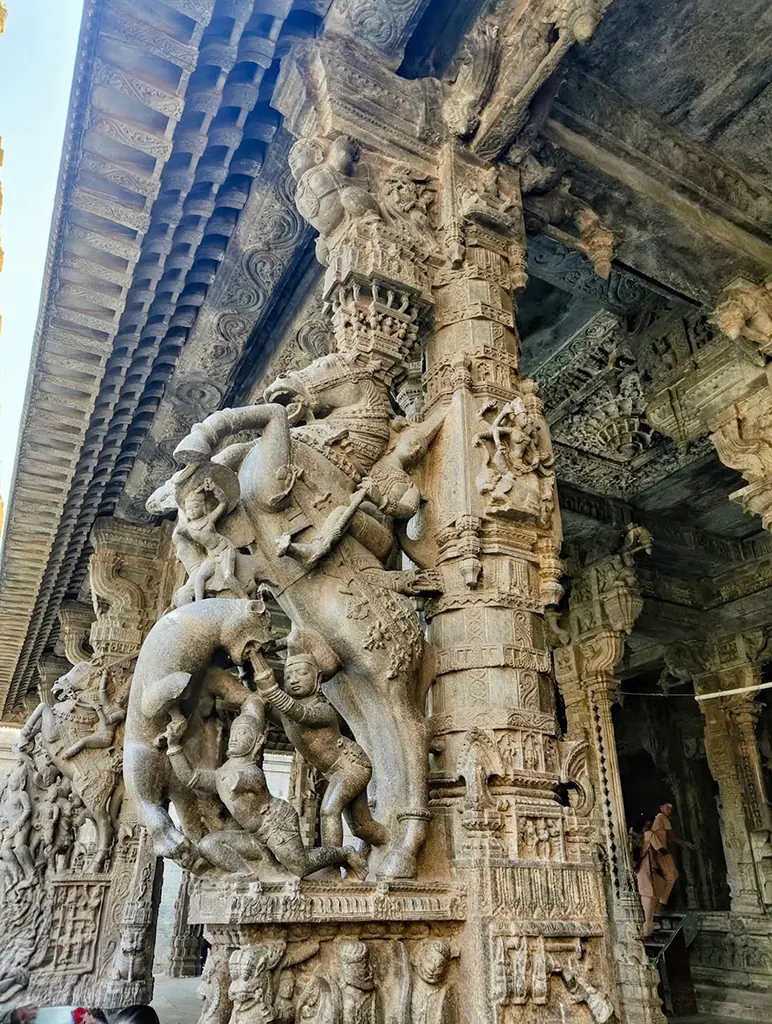
- Masterpiece of Vijayanagara Art: The temple’s Kalyana Mandapam (wedding hall) contains some of the finest monolithic stone carvings in Tamil Nadu, featuring rearing horses, mythical lions, and intricate ceiling sculptures.
- Fort Moat Setting: Unlike most temples built in open town centers, this shrine sits inside the massive stone ramparts of Vellore Fort, surrounded by a wide water moat.
- Four Centuries Without an Idol: After historical invasions left the inner sanctum empty for over 400 years, local devotees restored active worship in 1981, turning a silent monument back into a vibrant center of faith.
- Important Shaivite Pilgrimage Stop: Alongside other famous Shiva temples in Tamil Nadu, Jalakandeswarar Temple attracts pilgrims travelling between Chennai, Tirupati, Tiruvannamalai, and Bengaluru.
History of Jalakandeswarar Temple
Understanding the history of Jalakandeswarar Temple requires looking at both royal Vijayanagara patronage and the turbulent centuries that followed in Vellore.
Vijayanagara Origins and Chinna Bommi Nayak
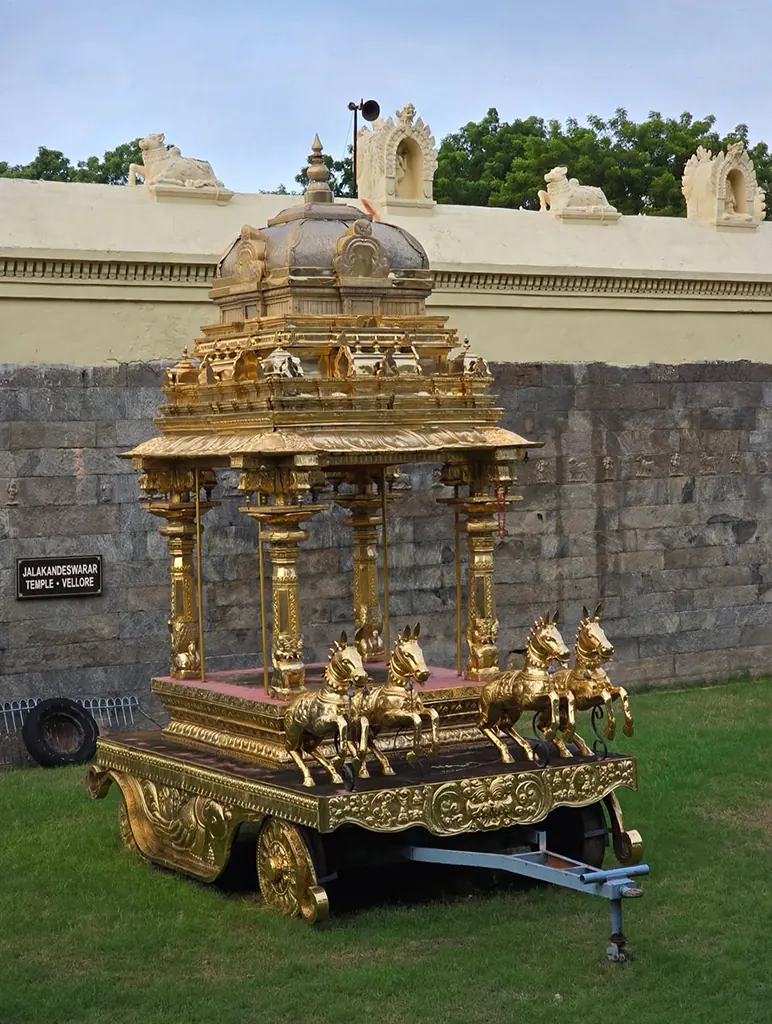
Historical records and inscriptions indicate that the temple was constructed in the mid-16th century CE (around the 1550s) during the reign of the Vijayanagara kings Sadasiva Raya and Sri Ranga Raya. The construction was commissioned by Chinna Bommi Nayak, a prominent Vijayanagara chieftain and governor of the Vellore region.
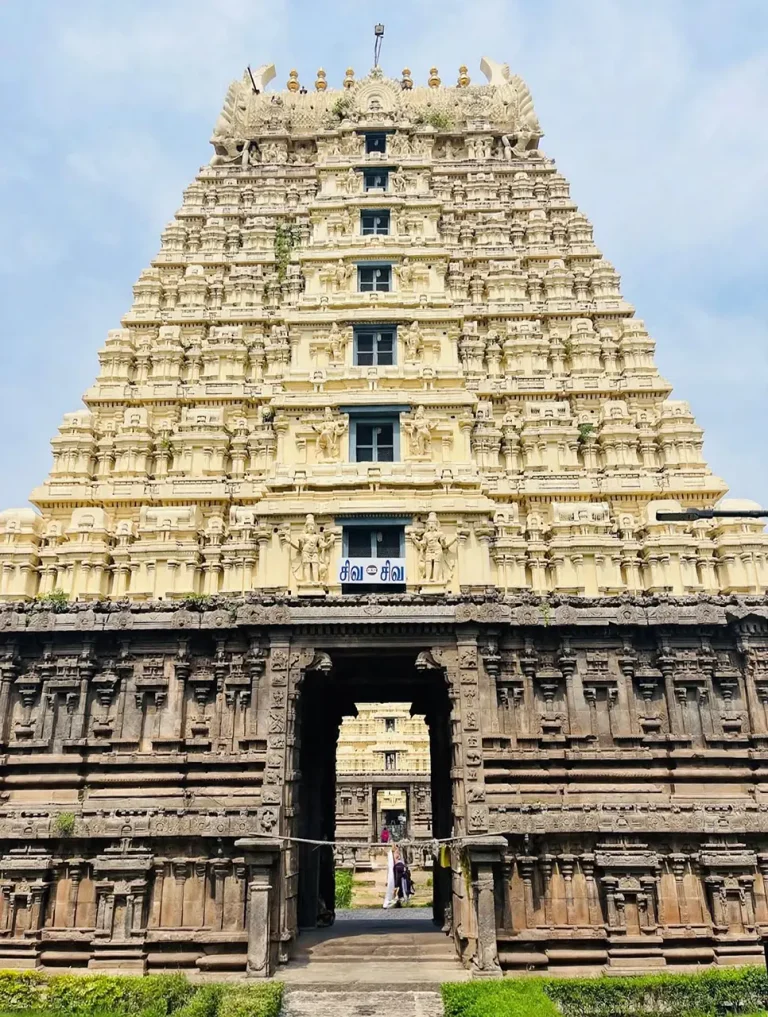
Chinna Bommi Nayak was a devout patron of Shaivism and temple architecture. Under his supervision, master sculptors used hard local granite to build the seven-tiered entrance tower, the double-walled courtyard, and the ornate pillared halls that still stand today.
Four Centuries Without an Idol and the 1981 Revival
Soon after the temple was completed, Vellore Fort became a strategic military prize. Over the next several centuries, control of the fort passed through the Bijapur Sultanate, the Marathas, the Nawabs of Arcot, and eventually the British East India Company.
During these periods of military occupation and conflict, the original Shiva Lingam was removed from the main sanctum to protect it from desecration, or was lost during the upheavals. For roughly 400 years, no daily pooja took place inside the temple. During British rule, parts of the fort complex were even used as an arsenal and garrison, while the temple structure survived as an empty stone monument.
After India’s independence, the temple came under the care of the Archaeological Survey of India (ASI) as a protected heritage monument. However, local devotees in Vellore long wished to see worship restored. On March 16, 1981, following sustained efforts by local elders, religious leaders, and the Jalakandeswarar Dharma Sthapanam trust, a sacred Shiva Lingam brought from nearby Sathuvachari was installed in the sanctum. A grand Kumbhabhishekam (consecration ceremony) was performed, officially restarting daily rituals after four centuries of silence.
Sacred Legend and Spiritual Meaning (Sthala Purana)
While historians study inscriptions and royal records, traditional Hindu accounts preserve the spiritual meaning behind the temple’s name and location.
The Sanskrit and Tamil name Jalakandeswarar combines Jala (water), Kanda (surrounded by or residing in), and Ishwarar (Lord Shiva). According to local tradition, a sacred ant-hill (putru) containing a self-manifested Shiva Lingam once stood at this spot surrounded by natural springs and water bodies.
When Chinna Bommi Nayak decided to build a grand temple around the shrine, the builders designed a deep water moat around the outer fort walls. Because the water level in the moat remained higher than the floor of the inner sanctum, devotees came to revere Lord Shiva here as Jalakandeswarar—the Lord who resides amidst sacred waters.
Just as devotees revere Lord Shiva across the sacred Jyotirlinga temples of India, worshippers here believe that praying to Shiva in a water-surrounded shrine brings peace of mind, relief from obstacles, and spiritual renewal. Devotees also pray to Goddess Akilandeswari for harmony in family life and marriage.
Main Deities and Sub-Shrines Inside the Temple
When you walk through the main entrance tower into the temple courtyard, you will encounter several sacred shrines arranged according to traditional Agama principles.
Sri Jalakandeswarar (Main Sanctum)
The central sanctum (garbhagriha) faces east and houses Lord Jalakandeswarar in the form of a polished stone Shiva Lingam. Directly in front of the sanctum sits a finely sculpted stone Nandi (the sacred bull and mount of Lord Shiva), gazing toward the deity.
Sri Akilandeswari Amman Shrine
To the left of the main sanctum stands the separate shrine of Goddess Akilandeswari, the divine consort of Lord Jalakandeswarar. Her name means “Ruler of the Universe.” Devotees visit her shrine to offer turmeric, kumkum, flowers, and silk sarees, praying for family well-being and prosperity.
Other Important Sub-Shrines
As you walk clockwise around the inner courtyard (prakaram), you can offer prayers at several smaller shrines:
- Sri Nataraja Sabha: Dedicated to Lord Shiva as the cosmic dancer, accompanied by Goddess Sivakami.
- Sri Dakshinamurthy: Located on the southern wall of the sanctum, facing south, representing Lord Shiva as the supreme guru of wisdom and learning.
- Sri Selva Vinayagar: A shrine dedicated to Lord Ganesha, worshipped first before beginning the temple circuit.
- Sri Subramanyar: A sacred shrine dedicated to Lord Murugan with his consorts Valli and Devasena.
- Kala Bhairava and Navagrahas: Shrines dedicated to Lord Bhairava (the guardian deity of the temple) and the nine planetary deities, similar in devotional significance to traditional Navagraha temples.
Vijayanagara Architecture and Stone Carvings
Even visitors who come primarily for historical sightseeing spend hours admiring the craftsmanship of Jalakandeswarar Temple. Maintained as a heritage structure by the Archaeological Survey of India (ASI) Chennai Circle, the complex displays the bold engineering of the late Vijayanagara period.
The Seven-Tiered Rajagopuram and Fort Moat Setting
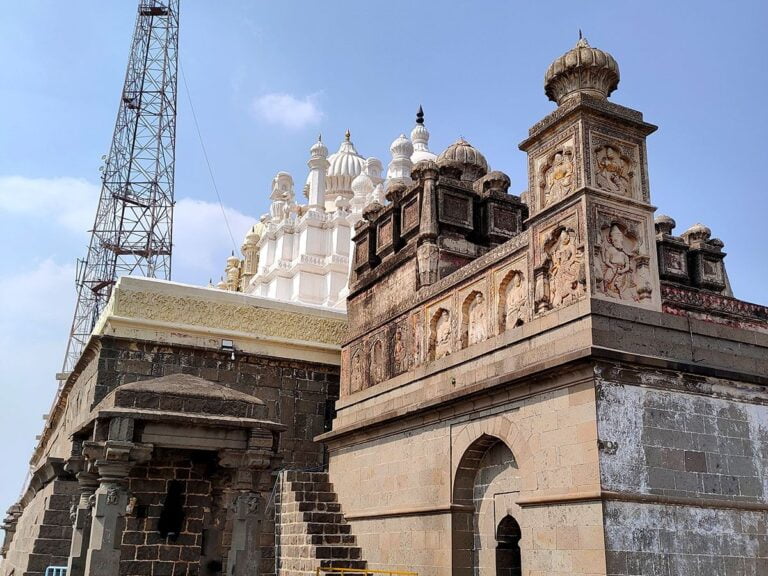
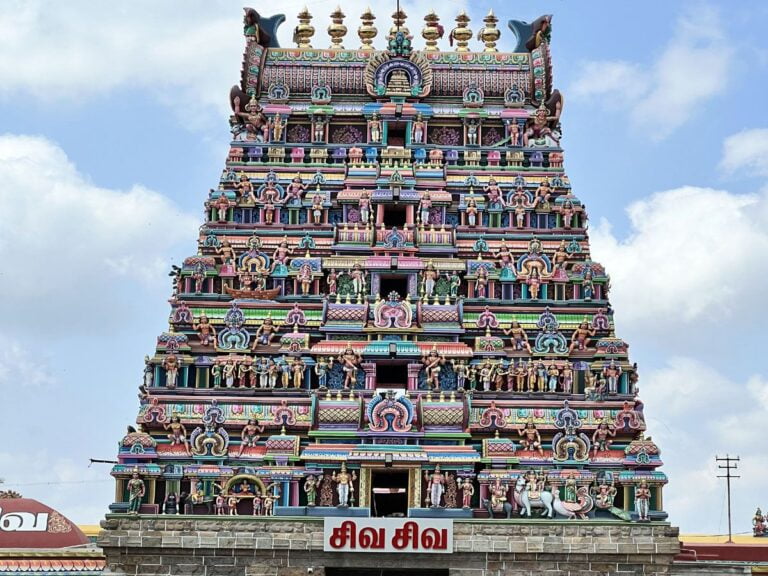
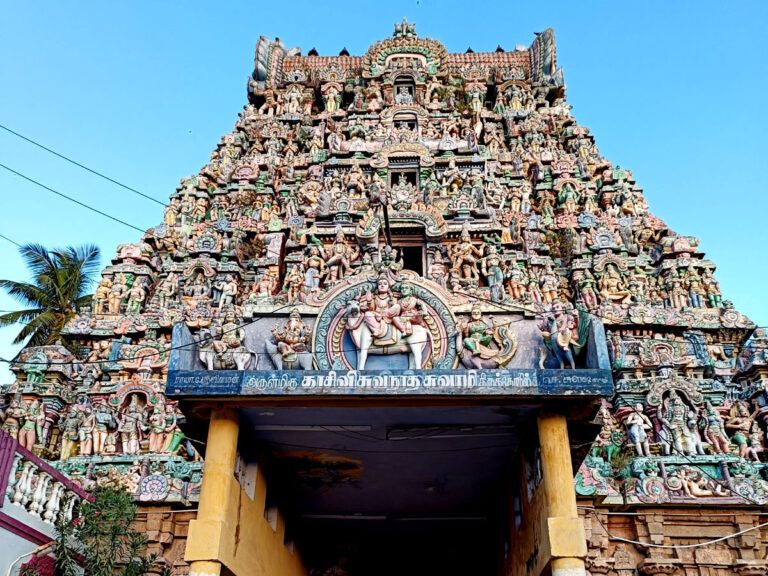
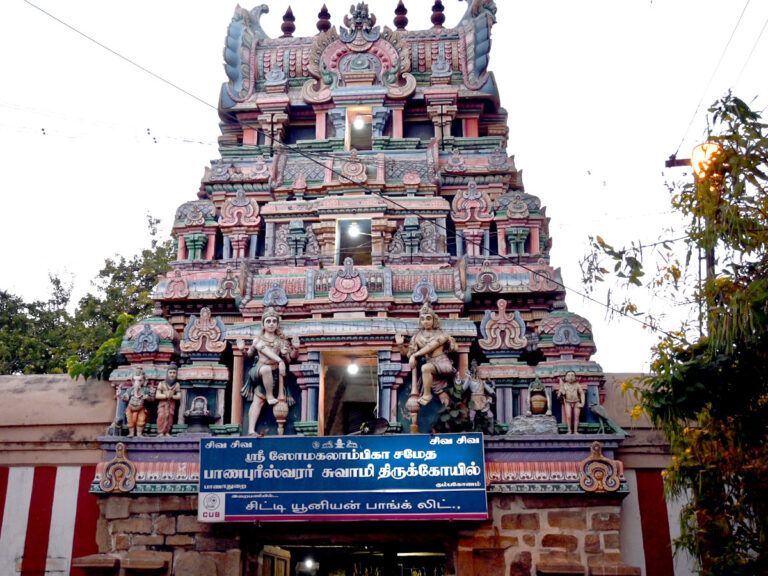
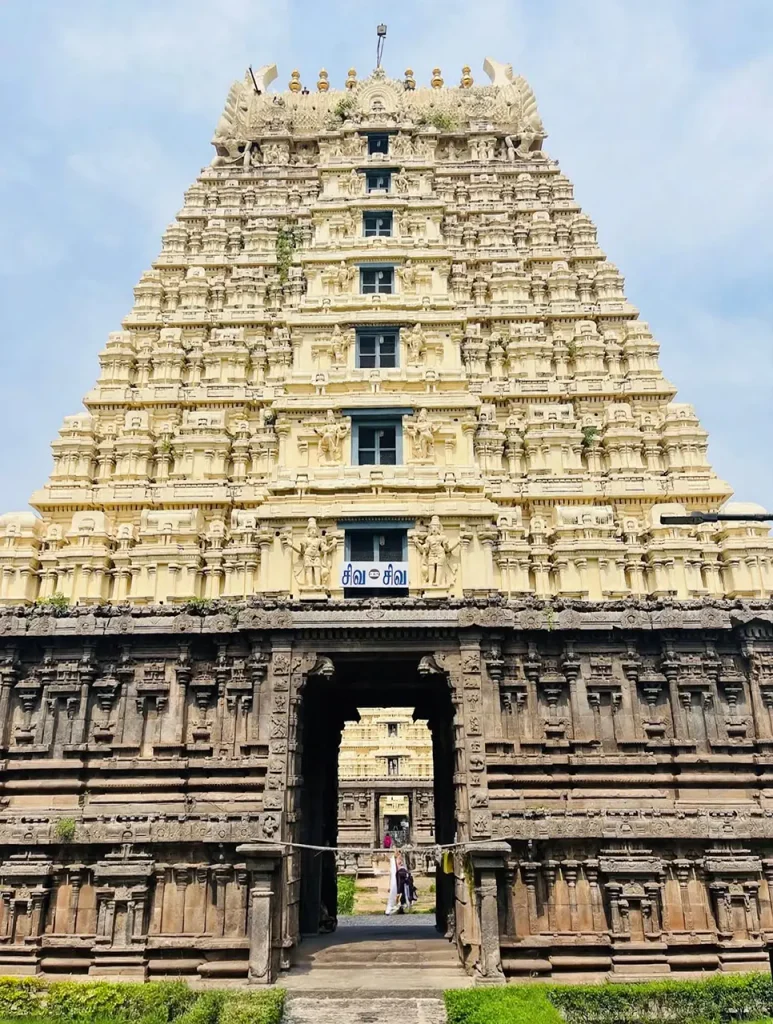
You enter the temple through an imposing seven-tiered Rajagopuram (main gateway tower) rising roughly 100 feet high. The lower granite base features intricate relief carvings of floral patterns, dancers, and guardian figures (dvarapalas), while the upper brick-and-stucco tiers display stucco images of Shaivite deities.
Just outside the temple perimeter lies the wide stone-lined moat of Vellore Fort, which historically held water year-round and protected both the fortress and the shrine.
The Ornate Kalyana Mandapam and Monolithic Pillars
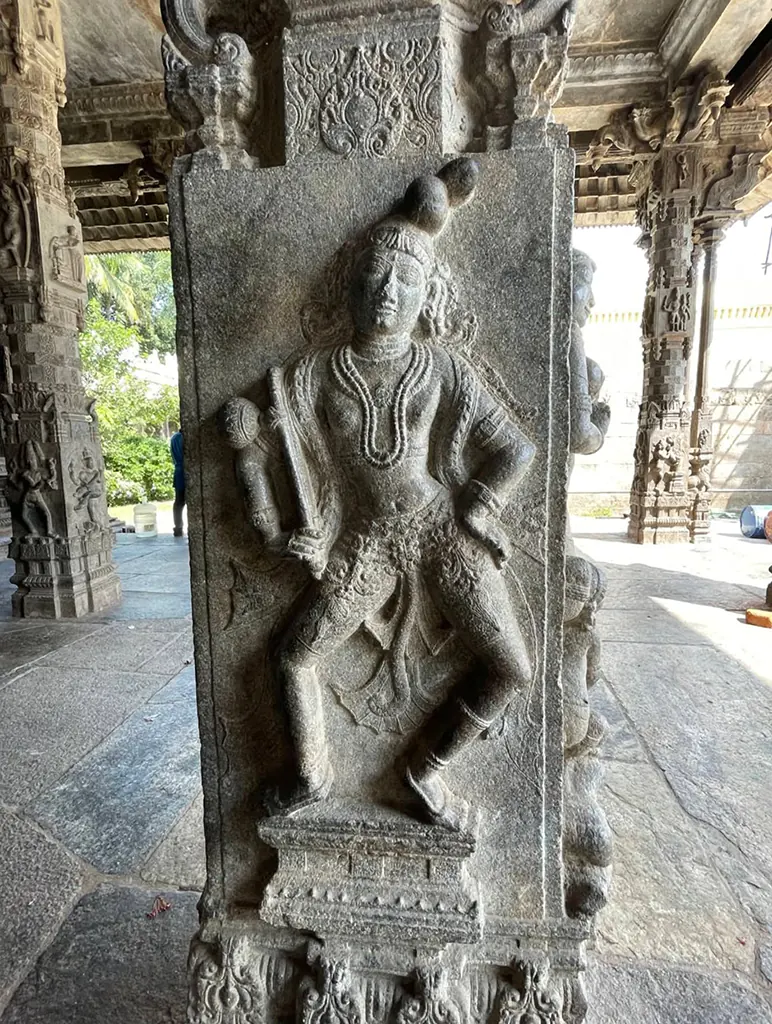
Located in the southwest corner of the outer courtyard, the Kalyana Mandapam is the architectural jewel of the temple. Each pillar is carved from a single block of hard granite and divided into elaborate panels:
- Mythical Yali Pillars: The front pillars feature towering yalis (mythical creatures combining features of a lion, elephant, and horse) standing on their hind legs.
- Carved Stone Chains and Rings: In several corners of the hall, master artisans carved delicate interlocking stone rings and chains directly out of solid rock.
- Multi-Tiered Ceiling Lotus: Look upward at the central ceiling of the mandapam to see a multi-layered stone lotus medallion surrounded by carved parrots and geometric reliefs.
- Sculpted Riders: Several pillars depict Vijayanagara warriors mounted on prancing horses, capturing the military energy of 16th-century South India.
Double Prakaram and Underground Legend
The temple is enclosed by two concentric stone walls (prakarams) with pillared corridors (mandapams) that provide cool shade even during hot afternoons. Local folklore also speaks of a secret underground tunnel leading from the temple complex toward the Palar River, though historians note that no accessible tunnel is open to visitors today.
Daily Darshan Timings, Poojas, and Entry Fees
Planning your visit around the daily ritual schedule ensures a smooth and meaningful darshan experience.
Standard Daily Timings
- Morning Session: 6:30 AM to 1:00 PM
- Afternoon Closure: 1:00 PM to 3:30 PM (temple doors close for midday rest)
- Evening Session: 3:30 PM to 8:30 PM
Note: On auspicious days such as Pradosham, Amavasya (New Moon), Pournami (Full Moon), and Maha Shivaratri, the temple often stays open longer in the evening. Always check local notices or the Vellore District portal if you are travelling specifically for a late-night ritual.
Daily Pooja Schedule
Priests perform traditional Agama poojas at fixed intervals throughout the day:
- Ushathkala Pooja (Early Morning): Around 6:30 AM – 7:00 AM, opening rituals and morning deeparadhana.
- Kalasandhi Pooja (Morning Worship): Around 8:30 AM – 9:00 AM, abhishekam (sacred bathing of the Shiva Lingam) and alankaram (decoration).
- Uchikala Pooja (Midday Worship): Around 12:00 PM – 12:30 PM, midday offerings before the afternoon closure.
- Sayaraksha Pooja (Evening Twilight Worship): Around 6:00 PM – 6:30 PM, evening lamp lighting and chanting.
- Arthajama Pooja (Night Closing Ritual): Around 8:00 PM – 8:30 PM, final offering before the sanctum closes for the night.
Entry Fee and Special Darshan Tickets
- General Darshan: Free for all visitors.
- Vellore Fort Grounds: Free entry to walk around the fort and enter the temple. (A small entry fee applies only if you choose to visit the separate Government Museum inside Vellore Fort.)
- Special Archana & Abhishekam: Optional tickets for personal archana (name-and-star blessing) or sponsorship of daily abhishekam are available at the official temple counter near the entrance at nominal rates.
Major Festivals Celebrated at Jalakandeswarar Temple
While the temple welcomes devotees every day, several annual and monthly Hindu festivals bring special decorations, processions, and musical performances:
- Maha Shivaratri (February / March): The most important annual festival at the temple. Thousands of devotees stay awake through the night as priests perform four special yama abhishekams to Lord Jalakandeswarar, accompanied by Vedic chanting and classical music.
- Pradosham (Twice Every Month): Observed on the 13th lunar day (Trayodashi) of both waxing and waning moon cycles. Devotees gather during the twilight hours (4:30 PM to 6:00 PM) to watch the special abhishekam of Nandi and Lord Shiva.
- Arudra Darshan (December / January): Celebrated in the Tamil month of Margazhi with special rituals for Lord Nataraja.
- Karthigai Deepam (November / December): The entire temple courtyard and Rajagopuram steps are illuminated with hundreds of traditional clay oil lamps (agal vilakku).
- Navaratri (September / October): Nine nights of special alankaram and devotional singing dedicated to Goddess Akilandeswari.
- Thai Poosam and Panguni Uthiram: Celebrated with special prayers at the Lord Murugan shrine inside the complex.
Best Time to Visit Jalakandeswarar Temple
Because Vellore experiences warm tropical weather for much of the year, choosing the right season and time of day makes your visit much more comfortable.
- Winter (November to February) — Best Overall Season: Daytime temperatures range between 20°C and 30°C. The cool morning breeze across the Vellore Fort moat makes exploring the open stone courtyards very pleasant.
- Monsoon (July to October) — Lush and Moderate: Light to moderate rains cool down the granite surroundings, and the fort moat fills with water, showing the temple in its traditional water-surrounded setting.
- Summer (March to June) — Hot Afternoons: Temperatures in Vellore frequently cross 38°C to 40°C during April and May. If you visit in summer, arrive between 6:30 AM and 9:30 AM or after 5:30 PM, as the open granite floors become very hot underfoot at midday.
Best Time of Day: Early morning (7:00 AM to 9:00 AM) offers peaceful darshan and soft sunlight for viewing the Kalyana Mandapam carvings. Evening twilight (5:30 PM to 7:00 PM) provides a lively devotional atmosphere with oil lamps lit across the courtyard.
How to Reach Jalakandeswarar Temple, Vellore
Vellore is well connected by rail and highway between Chennai and Bengaluru, making the temple easy to reach for both day-trippers and long-distance pilgrims.
By Train
- Vellore Cantonment Railway Station (Code: VLR): Located just 2 km from Vellore Fort. Auto-rickshaws and local buses reach the fort gate in 5 to 10 minutes.
- Katpadi Junction Railway Station (Code: KPD): The major railway hub for Vellore, located 6.5 km north of the temple. Express trains from Chennai, Bengaluru, Tirupati, Coimbatore, and Howrah stop here. You can check train schedules on Indian Railways (IRCTC) and take an auto-rickshaw, cab, or city bus from Katpadi straight to Vellore Fort.
By Air
- Chennai International Airport (MAA): Located approximately 130 km east of Vellore (about 2.5 to 3 hours by car via NH 48).
- Tirupati Airport (TIR): Located approximately 115 km northeast of Vellore (about 2.5 hours by road).
- Kempegowda International Airport, Bengaluru (BLR): Located approximately 210 km west of Vellore (about 3.5 to 4 hours via NH 48).
By Road and Bus
Vellore sits directly on National Highway 48 (NH 48) connecting Chennai and Bengaluru. Regular Tamil Nadu State Transport Corporation (TNSTC) and private buses run from Chennai (CMBT Koyambedu), Bengaluru, Tirupati, Kanchipuram, and Arunachaleswarar Temple in Tiruvannamalai to the Vellore New Bus Stand, which is about 2.5 km from Vellore Fort.


Dress Code, Temple Rules, and Visitor Facilities
Because Jalakandeswarar Temple is both an active Hindu place of worship and an ASI-protected monument, visitors should follow both devotional etiquette and heritage preservation rules.
Dress Code
- Follow a modest South Indian temple dress code.
- Men: Dhoti (veshti), trousers, or full-length pants with a shirt or kurta. Avoid shorts or sleeveless vests.
- Women: Saree, salwar kameez, churidar, or long skirt with a modest top. Avoid short skirts, shorts, or sleeveless outfits.
Temple and ASI Rules
- Footwear: Remove shoes and sandals at the designated footwear stand outside the main Rajagopuram entrance before stepping onto the temple floor.
- Photography: Photography is generally permitted in the outer fort grounds and outer courtyard (without flash or tripods), subject to ASI guidelines. However, photography and video recording are strictly prohibited inside the inner sanctum and deity shrines. Switch mobile phones to silent mode before entering.
- Heritage Care: Do not touch, lean on, or mark the carved Vijayanagara pillars in the Kalyana Mandapam, as oil from hands damages ancient granite carvings over time.
Visitor Facilities
- Parking: Paid and designated parking areas for two-wheelers and cars are available near the main entrance of Vellore Fort, a short walk from the temple gate.
- Drinking Water & Washrooms: Public washrooms and drinking water points are available inside the Vellore Fort complex outside the temple entrance.
- Accessibility: The temple sits on flat ground with low stone thresholds at the main doorways. Elderly visitors and families with children can walk comfortably across the main courtyard, though a few traditional granite steps lead up to raised pillared halls.
- Food & Accommodation: Simple prasadam is distributed after major poojas. Several vegetarian restaurants, budget lodges, and mid-range hotels are located within 1 to 3 km of Vellore Fort in Gandhi Road and Katpadi Road.
Nearby Temples and Places to Visit in Vellore
Most pilgrims combine their darshan at Jalakandeswarar Temple with a half-day or full-day tour of Vellore’s nearby spiritual and historical landmarks:
- Sripuram Golden Temple in Vellore (Sri Lakshmi Narayani Golden Temple): Located about 8 km south of Vellore Fort in Thirumalaikodi, this famous modern temple features intricate gold-leaf architecture set inside a star-shaped spiritual park.
- Vellore Fort & Government Museum: Right outside the temple walls, walk along the 16th-century granite ramparts and visit the ASI-maintained museum showcasing regional sculptures, coins, and inscriptions.
- Ratnagiri Bala Murugan Temple: Located about 14 km east of Vellore on a scenic hillock along the Chennai highway, dedicated to Lord Murugan.
- Virinchipuram Margabandheeswarar Temple: An ancient Chola-era Shiva temple located about 14 km west of Vellore, known for its historic time-telling stone sundial and ornate carvings.
Frequently Asked Questions About Jalakandeswarar Temple
1. What are the daily darshan timings of Jalakandeswarar Temple?
Jalakandeswarar Temple is open every day from 6:30 AM to 1:00 PM in the morning and from 3:30 PM to 8:30 PM in the evening. Timings may extend on Pradosham, full moon days, and Maha Shivaratri.
2. Is there any entry fee to visit Jalakandeswarar Temple?
No. General darshan at Jalakandeswarar Temple and entry into the Vellore Fort grounds are completely free. You only pay if you choose to buy an optional archana ticket at the temple counter or enter the separate Government Museum inside the fort.
3. Why was Jalakandeswarar Temple without an idol for 400 years?
During centuries of military invasions and occupation of Vellore Fort by various rulers, the original Shiva Lingam was removed from the sanctum to protect it. The temple remained without an active deity for roughly four centuries until devotees installed a new Shiva Lingam and performed consecration rituals on March 16, 1981.
4. Which railway station is closest to Jalakandeswarar Temple?
Vellore Cantonment (VLR) is the nearest station, located about 2 km away. For major express trains from Chennai, Bengaluru, and Tirupati, Katpadi Junction (KPD) is the main rail hub, located 6.5 km from the temple.
5. Is photography allowed inside Jalakandeswarar Temple?
Visitors may take photos in the outer Vellore Fort area and outer courtyard while following Archaeological Survey of India rules, without using tripods or flash. Photography and videography are strictly prohibited inside the main sanctum and deity shrines.
6. Can I visit Jalakandeswarar Temple and Sripuram Golden Temple on the same day?
Yes. Both temples are only about 8 to 9 km apart (roughly 20 minutes by auto-rickshaw or car). Many devotees visit Jalakandeswarar Temple in the early morning, explore Vellore Fort, and head to Sripuram Golden Temple later in the morning or afternoon.
7. What is the best time of year to visit Vellore?
The best time to visit is between November and February, when Vellore’s weather is cool and comfortable for walking across the open granite courtyards of the temple and fort.
Conclusion
Jalakandeswarar Temple in Vellore is far more than a stop inside a historic fortress—it is a living symbol of devotion, resilience, and Vijayanagara artistic mastery. Standing beneath the towering Rajagopuram, admiring the monolithic carvings of the Kalyana Mandapam, and offering prayers in a sanctum revived after four centuries leaves a lasting impression on both pilgrims and history enthusiasts.
To make the most of your trip, arrive early in the morning for a calm darshan, wear traditional modest attire, and set aside an extra hour to walk along the historic moat and ramparts of Vellore Fort before continuing your pilgrimage across Tamil Nadu.