Uttara Guruvayurappan Temple Delhi: Timings, History, Rituals, and Visitor Guide
Uttara Guruvayurappan Temple is a sacred Hindu temple dedicated to Lord Krishna in Mayur Vihar Phase 1, East Delhi. Known as the “Guruvayur of North India,” this serene shrine brings authentic Kerala temple architecture and traditional Vedic worship to the heart of New Delhi.
(Note: Another well-known shrine named Sri Uttara Guruvayurappan Temple is located in Nanganallur, Chennai. This complete guide covers the famous Uttara Guruvayurappan Temple in Mayur Vihar, New Delhi.)
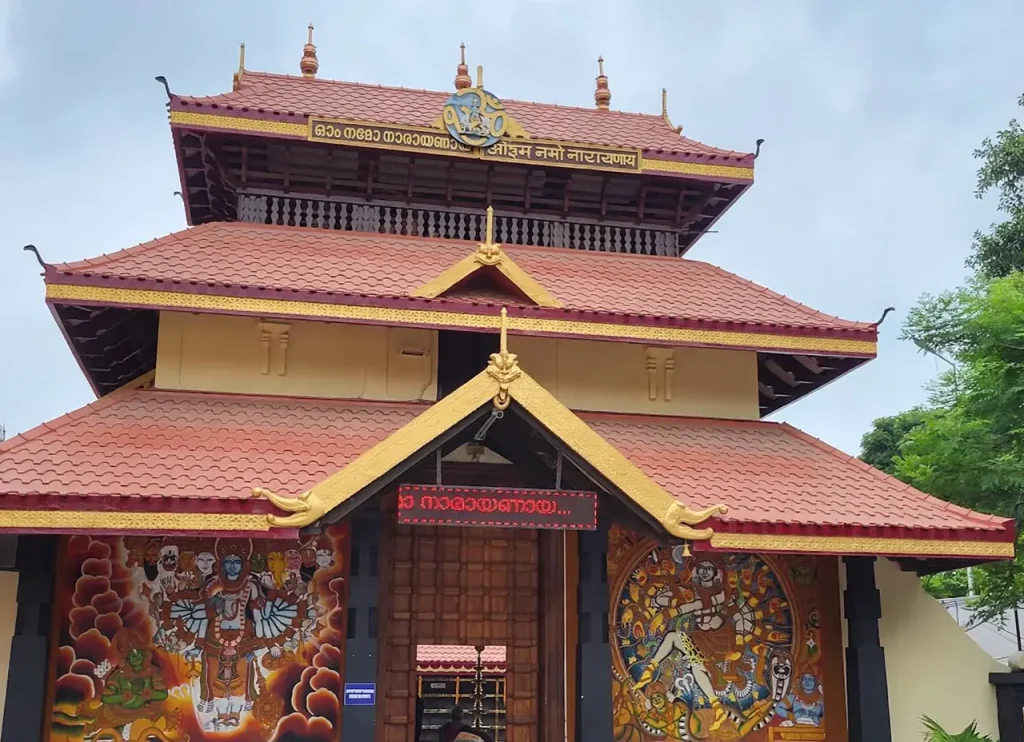
For devotees living in Delhi-NCR who cannot travel frequently to Kerala, this temple offers a deeply spiritual experience. From early morning oil lamp rituals to grand celebrations of Janmashtami and Vishu, the temple welcomes thousands of families, pilgrims, and visitors every month.
Quick Information About Uttara Guruvayurappan Temple
Before planning your visit, review the essential details in the table below. Because festival schedules can change closing times slightly, checking the official temple notice board before special occasions is always helpful.
| Feature | Details |
| Official Temple Name | Sree Uttara Guruvayurappan Temple |
| Presiding Deity | Lord Guruvayurappan (Lord Krishna / Lord Vishnu) |
| Sub-Deities | Lord Ganapathi, Lord Ayyappan, Goddess Bhagavathy, Naga Devatas |
| Location | Pocket 3, Mayur Vihar Phase 1, East Delhi, Delhi 110091 |
| Administering Trust | Sree Guruvayurappan Bhaktha Samajam |
| Year of Consecration | 1983 |
| Architectural Style | Traditional Kerala Temple Architecture (Nalambalam) |
| Morning Darshan Timings | Around 5:00 AM to 11:00 AM |
| Evening Darshan Timings | Around 5:00 PM to 8:30 PM (up to 9:00 PM on special days) |
| Entry Fee | Free for general darshan |
| Nearest Metro Stations | Mayur Vihar Pocket-1 (Pink Line) and Mayur Vihar Phase-1 (Blue & Pink Lines) |
| Major Festivals | Krishna Janmashtami, Guruvayur Ekadashi, Vishu, Onam, Mandala Pooja |
| Dress Code | Modest traditional attire required; shorts and sleeveless tops discouraged |
| Official Website | Sree Uttara Guruvayurappan Temple Official Website |
Why Uttara Guruvayurappan Temple Is Special
In Hindu tradition, the word Uttara means “North.” Devotees call this sacred place Uttara Guruvayurappan Temple because it serves as the northern spiritual counterpart to the historic Guruvayur Sri Krishna Temple in Kerala.
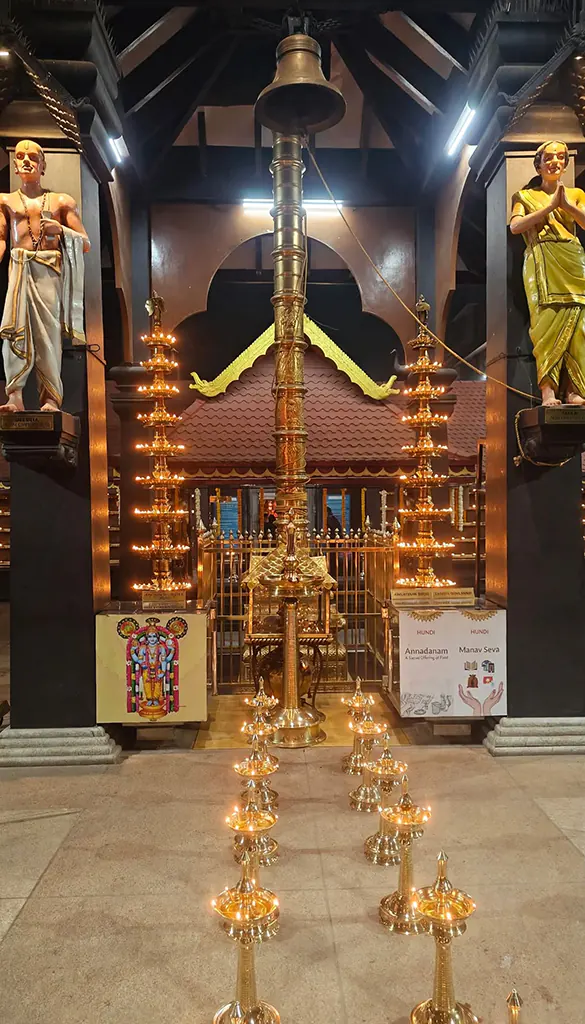
Walking through the main entrance feels like stepping out of busy East Delhi and straight into a quiet village temple in Kerala. The scent of sandalwood, burning camphor, fresh tulsi leaves, and sesame oil lamps fills the courtyard.
What makes the temple truly special is its strict devotion to authentic Kerala worship traditions. Every daily pooja, musical offering, and festival follows the ancient Tantra Samuchaya rules practiced in Kerala’s classic shrines. At the same time, the temple is warm and welcoming to devotees from every part of India and abroad.
History and Origins of the Temple
The story of Uttara Guruvayurappan Temple began with the devotion of Malayali families living in New Delhi during the 1970s and early 1980s. At that time, there was no traditional Kerala-style temple in the national capital where devotees could perform customary rituals or celebrate festivals together.
To fulfill this spiritual wish, a group of dedicated devotees formed the Sree Guruvayurappan Bhaktha Samajam, a registered charitable and religious society. With community support and land allotted in Mayur Vihar Phase 1, construction began using skilled artisans and traditional blueprints from Kerala.
In May 1983, the sacred Prana Pratishtha (consecration ceremony) was performed under the guidance of respected Kerala Tantris from the Chennas Mana family, who also serve as the traditional chief priests of the main Guruvayur Temple. Since that day, daily worship has continued without interruption, and the temple has grown into one of East Delhi’s most respected spiritual landmarks.
Sacred Legend and Connection to Guruvayur in Kerala
To understand the spiritual heart of Uttara Guruvayurappan Temple, it helps to know the ancient legend behind Lord Guruvayurappan.
According to Hindu sacred tradition, the original idol of Lord Vishnu worshipped at Guruvayur was once revered by Lord Krishna himself in Dwarka. When Dwarka was about to submerge beneath the sea at the end of the Dvapara Yuga, Lord Krishna instructed his disciple Uddhava to save the sacred idol.
With the help of Guru (Brihaspati, the preceptor of the gods) and Vayu (the wind god), the idol was carried south until they found a peaceful lotus lake in Kerala. Together, Guru and Vayu installed the deity at that spot. Because Guru and Vayu consecrated the shrine, the place came to be known as Guruvayur, and the Lord became famous as Guruvayurappan.
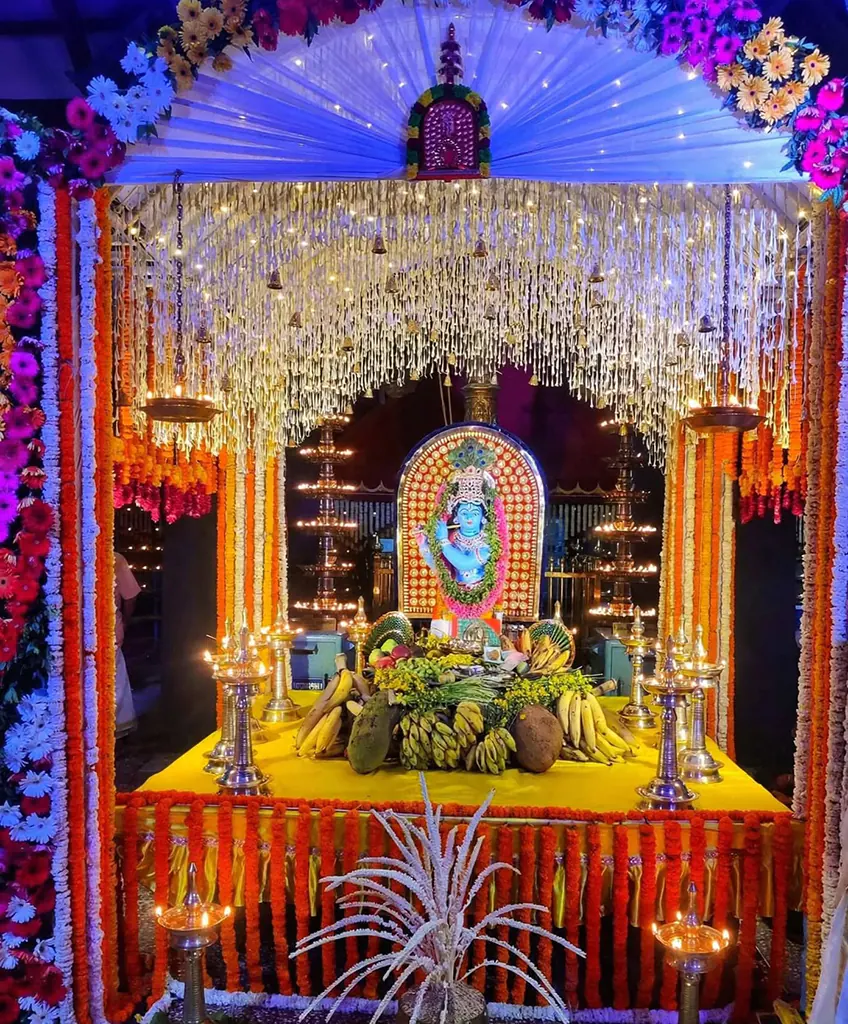
The Delhi temple honors this sacred lineage. When devotees stand before the sanctum in Mayur Vihar, they offer prayers to the same divine form of Bala Gopala—the beloved child-form of Lord Krishna who protects, blesses, and guides his devotees.
Presiding Deity and Sub-Shrines
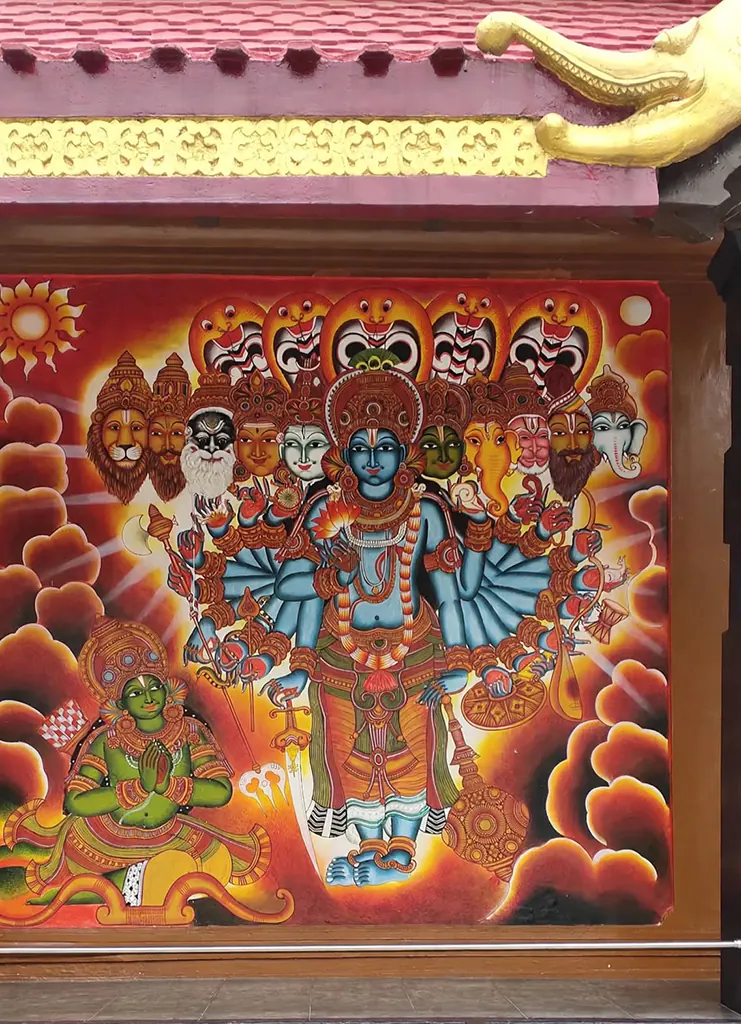
The central sanctum (Sreekovil) houses the majestic idol of Lord Guruvayurappan. Although devotees lovingly worship him as little Krishna, the idol depicts the four-armed cosmic form of Lord Vishnu (Chaturbhuja).
In his four hands, the Lord holds:
- Panchajanya: The sacred conch shell representing the primordial sound of creation.
- Sudarshana Chakra: The divine discus symbolizing protection and cosmic order.
- Kaumodaki: The royal mace representing spiritual strength.
- Padma: A blooming lotus flower symbolizing purity and peace.
Sub-Shrines Inside the Complex
Around the main courtyard, devotees can also offer prayers at dedicated sub-shrines built according to traditional temple geometry (Vastu Shastra):
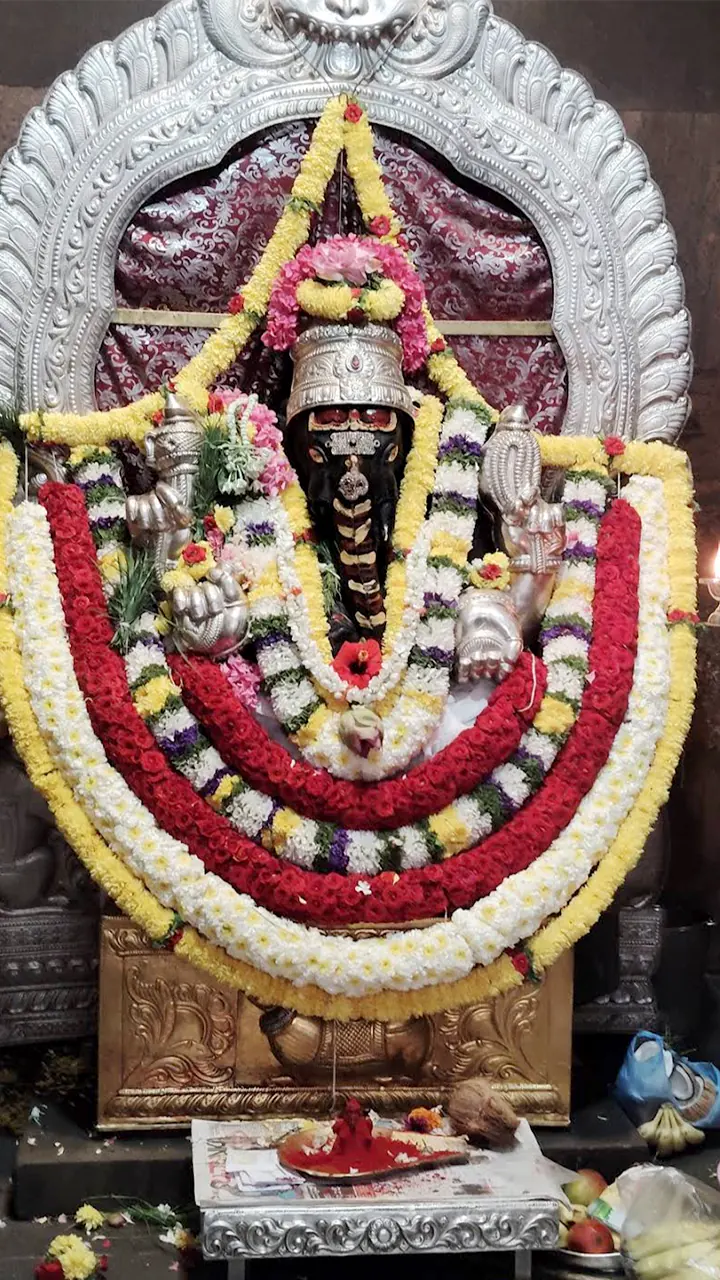
- Lord Ganapathi: Worshipped first before beginning any prayer or ritual to remove obstacles.
- Lord Ayyappan: A dedicated shrine where devotees gather especially during the annual Mandala-Makaravilakku season.
- Goddess Bhagavathy (Durga): Revered as the divine mother who blesses families with strength and well-being.
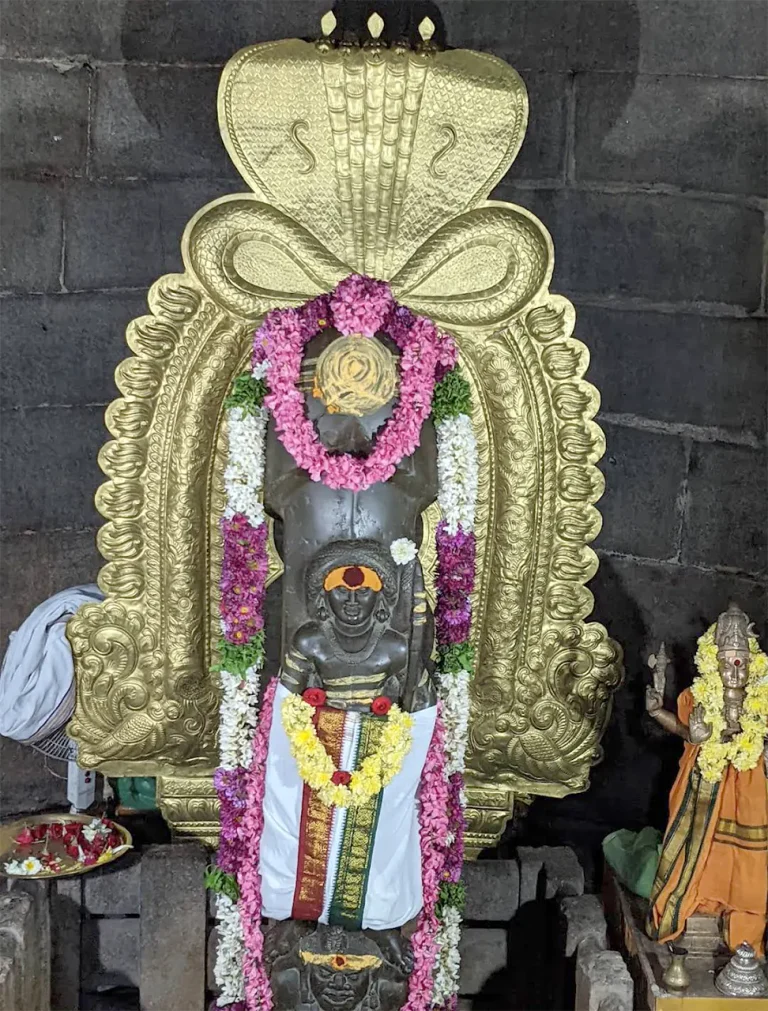
- Naga Devatas: Sacred serpent deities installed under holy trees in the outer courtyard, worshipped for family harmony and prosperity.
Kerala-Style Temple Architecture
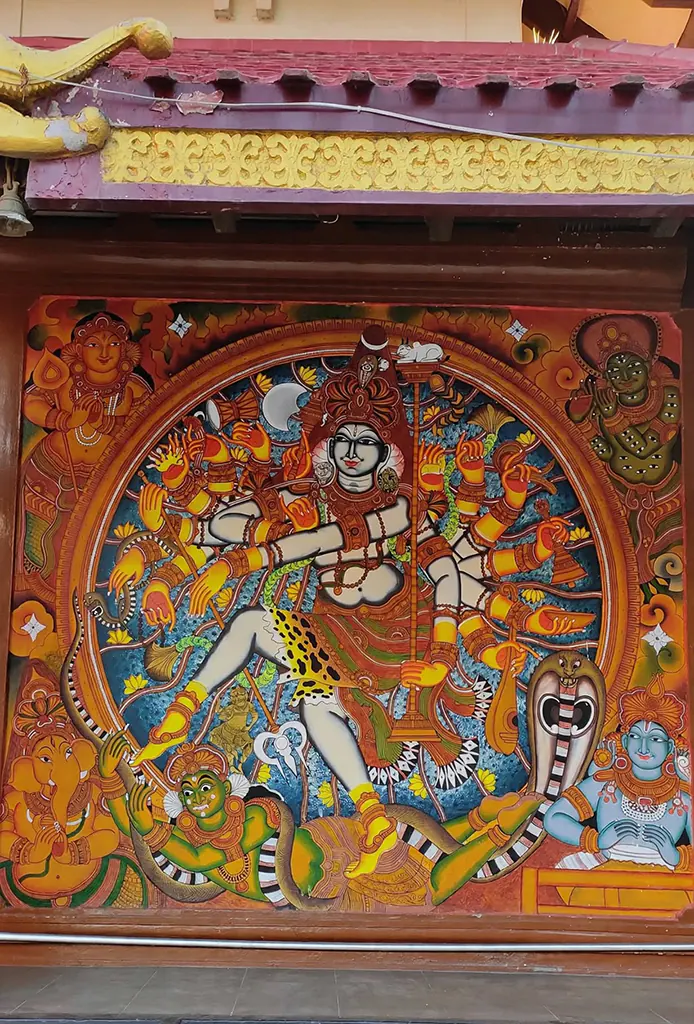
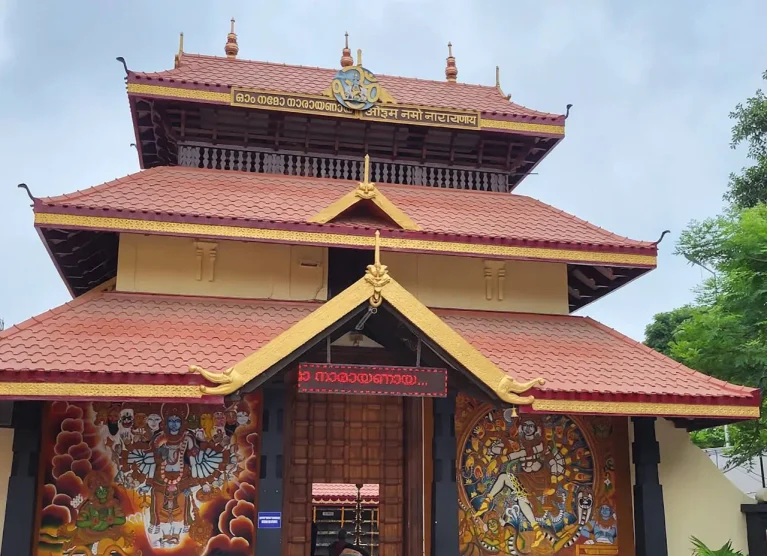
One of the first things visitors notice at Uttara Guruvayurappan Temple is its distinctive South Indian architectural beauty, which stands out gracefully in New Delhi.
- Sloped Terracotta Roofs: Unlike North Indian temples that feature tall conical Shikharas, Kerala temples are built with tiered, sloped roofs covered in traditional clay tiles. This design was originally created to handle heavy monsoon rains and gives the structure a calm, grounded look.
- The Nalambalam: The main sanctum is surrounded by a rectangular pillared corridor called the Nalambalam. Devotees walk clockwise around this inner courtyard during darshan.
- Dwajasthambam (Flagstaff): Standing tall in front of the sanctum entrance is the gleaming copper-plated flagstaff, which is ceremonially hoisted during the annual temple festival (Utsavam).
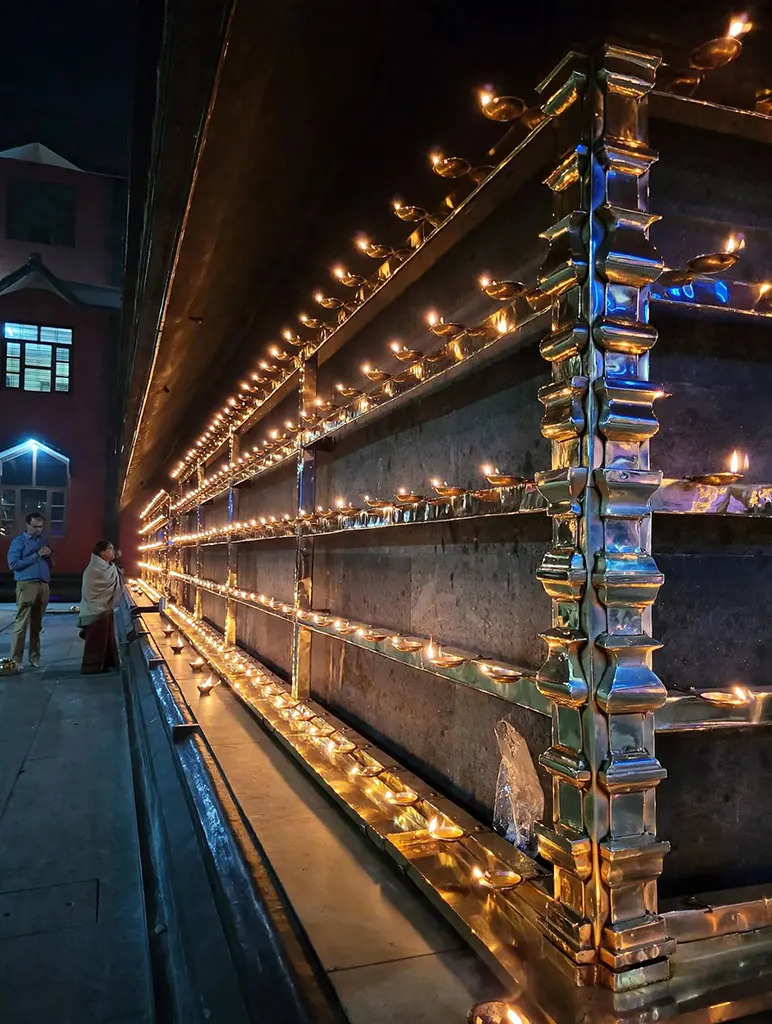
- Balikkal and Deepastambham: Near the entrance stand the sacred altar stone (Balikkal) and multi-tiered brass lamp pillars (Deepastambham) that glow warmly with hundreds of cotton wicks every evening.
Daily Darshan and Pooja Timings
Worship at Uttara Guruvayurappan Temple follows a disciplined daily schedule divided into morning and evening sessions. Arriving early in the morning offers the most peaceful darshan experience.
Standard Daily Schedule
- Morning Session: Approximately 5:00 AM to 11:00 AM
- Afternoon Closure: Approximately 11:00 AM to 5:00 PM (the sanctum closes for midday rest, as is customary in Kerala temples)
- Evening Session: Approximately 5:00 PM to 8:30 PM (may extend to 9:00 PM on weekends and festival days)
Key Daily Rituals Explained
- Nirmalyam Darshan (Around 5:00 AM): The most auspicious darshan of the day. Devotees see the deity adorned with the previous night’s flowers and garlands before the morning sacred bath (Abhishekam).
- Usha Pooja (Early Morning): Morning prayers offered to the Lord after decorating the idol with fresh sandalwood paste and tulsi garlands.
- Ucha Pooja (Late Morning): The main midday offering before the sanctum closes for the afternoon.
- Deeparadhana (Around 6:30 PM): The evening lamp worship. As temple bells ring and traditional drums (Chenda or Edakka) echo through the courtyard, priests wave glowing camphor lamps before the Lord.
- Athazha Pooja (Around 8:00 PM): The final night prayer before the temple closes for the day.
Tip for Visitors: Timings can shift slightly during lunar eclipses or major festivals. Always verify exact timings on the temple notice board or website before planning a time-sensitive ritual.
Major Festivals and Special Rituals (Vazhipadu)
Throughout the year, Uttara Guruvayurappan Temple hosts vibrant religious festivals that attract devotees from across Delhi, Noida, Ghaziabad, and Gurugram.
Major Annual Festivals
- Krishna Janmashtami (Ashtami Rohini): Celebrated with midnight prayers, devotional bhajans, floral decorations, and Uriyadi (traditional pot-breaking festivities).
- Guruvayur Ekadashi: Observed in the Malayalam month of Vrischikam (November–December) with all-day Vishnu Sahasranama chanting, special lamp lighting, and classical music offerings.
- Vishu: The Malayalam New Year in April, when devotees arrive at dawn for Vishukkani—the auspicious first sight of Lord Krishna surrounded by golden laburnum flowers (Kani Konna), fruits, grains, and mirrors.
- Onam: Celebrated with colorful flower carpets (Pookkalam), special prayers, and community feasts.
- Mandala Pooja: A 41-day period of devotion from November to December dedicated to Lord Ayyappan, ending with special Ayyappan Vilakku rituals.
Popular Family Rituals (Vazhipadu)
Families frequently visit the temple to book personal offerings and life-cycle ceremonies at the temple office counter:
- Choroonu (Annaprashana): A sacred ceremony where an infant is fed their first solid meal of blessed rice (Payasam or temple prasad) in the presence of Lord Guruvayurappan.
- Thulabharam: A traditional vow where a devotee sits on one side of a large weighing scale while offerings such as bananas, jaggery, sugar, rice, or tulsi leaves are placed on the other side until balanced.
- Pushpanjali and Neyvilakku: Offering fresh flower garlands or lighting ghee lamps for health, education, and peace of mind.
- Traditional Weddings: The temple auditorium and sacred courtyard are popular venues for traditional Hindu weddings conducted with blessings from the deity.
How to Reach Uttara Guruvayurappan Temple
Located in Pocket 3, Mayur Vihar Phase 1, the temple is well connected to all parts of Delhi-NCR by metro, road, rail, and air.
By Delhi Metro (Most Convenient Option)
You can check live routes and fares on the Delhi Metro Rail Corporation (DMRC) website before starting your trip:
- Nearest Station (Pink Line): Mayur Vihar Pocket-1 Metro Station is the closest stop, located roughly 1 to 1.5 kilometers from the temple. From the station exit, an e-rickshaw or auto-rickshaw reaches the temple gate in about 5 minutes.
- Interchange Station (Blue & Pink Lines): Mayur Vihar Phase-1 Metro Station is about 1.5 to 2 kilometers away. It connects directly to Rajiv Chowk (Connaught Place), Noida Sector 18, and Anand Vihar. Cycle rickshaws and auto-rickshaws are easily available outside the station.
By Road and Bus
- The temple lies just off the Noida Link Road and Mayur Vihar Phase 1 Main Road, making it easy to reach by car, cab, or DTC bus from Central Delhi, South Delhi (via DND Flyway), and Noida.
- Limited roadside parking is available near the temple lanes, though arriving early is recommended on weekends and festival evenings.
By Train and Air
- Nearest Major Railway Stations: Hazrat Nizamuddin Railway Station (approximately 7–8 km away via DND/Noida Link Road) and Anand Vihar Terminal (approximately 8–9 km away). New Delhi Railway Station is roughly 12–14 km away.
- Nearest Airport: Indira Gandhi International (IGI) Airport, located approximately 22–25 km away. You can take the Airport Express Metro to New Delhi/Dhaula Kuan and transfer to the Pink or Blue Line toward Mayur Vihar.
Best Time to Visit, Dress Code, and Visitor Rules
Best Time to Visit
- Best Season: October to March brings pleasant weather in Delhi, making morning and evening temple visits comfortable.
- Best Time of Day: Visit between 5:30 AM and 8:00 AM for quiet meditation, or around 6:15 PM to witness the glowing evening Deeparadhana.
Dress Code and Etiquette
To preserve the sanctity of the shrine, visitors are expected to follow modest temple etiquette:
- For Men: Traditional attire such as a mundu (dhoti), kurta-pajama, or neat full-length trousers with a shirt is appropriate. If participating in special inner-sanctum rituals, wearing a traditional mundu is preferred.
- For Women: Sarees, salwar kameez, churidar suits, or long ankle-length skirts with modest tops are ideal.
- Restricted Attire: Shorts, mini-skirts, torn jeans, and sleeveless tops are strongly discouraged and may restrict entry into the inner prayer area.
Important Visitor Rules
- Footwear: Remove shoes and sandals at the designated footwear counter outside the main entrance before stepping onto the temple premises.
- Photography and Mobile Phones: Photography and videography are strictly prohibited inside the Nalambalam and near the main sanctum. Switch mobile phones to silent mode before entering.
- Circumambulation (Pradakshina): Always walk clockwise around the sanctum and avoid stepping over the sacred water outlet (Somachakra/Pranala) on the northern side of the shrine.
Facilities and Nearby Temples in Delhi
Temple Facilities
- Footwear Storage: Organized shoe-keeping counter near the entrance gate.
- Prasad and Vazhipadu Counter: Devotees can collect blessed Palpayasam (sweet rice pudding), Unniyappam, sandalwood paste, and book daily poojas at the temple office counter.
- Drinking Water and Restrooms: Clean basic amenities are maintained inside the outer compound for visitors.
- Community Hall: Available for religious discourses, classical music concerts, and family ceremonies.
Nearby Temples and Attractions to Combine
If you are planning a half-day spiritual trip in East Delhi, several major landmarks listed by Delhi Tourism are just a short drive away:
- Swaminarayan Akshardham Temple (Approx. 3–4 km): Located right along the Noida Link Road, this grand stone monument is one of Delhi’s most famous spiritual and cultural complexes.
- Lotus Temple & Kalkaji Mandir (Approx. 10–12 km via DND Flyway): Easily reachable across the Yamuna River in South Delhi for a wider temple tour.
- Prachin Hanuman Mandir, Connaught Place (Approx. 12 km): Accessible directly via the Delhi Metro Blue Line from Mayur Vihar Phase-1.
Frequently Asked Questions About Uttara Guruvayurappan Temple
1. Where is Uttara Guruvayurappan Temple located in Delhi?
Uttara Guruvayurappan Temple is located in Pocket 3, Mayur Vihar Phase 1, East Delhi, Delhi 110091, near the Noida Link Road.
2. Which metro station is closest to Uttara Guruvayurappan Temple?
Mayur Vihar Pocket-1 Metro Station on the Delhi Metro Pink Line is the closest station (about 1 to 1.5 km away). Mayur Vihar Phase-1 Metro Station (Blue and Pink Line interchange) is also nearby at roughly 1.5 to 2 km.
3. Is there any entry fee for darshan at Uttara Guruvayurappan Temple?
No, general darshan is completely free for all visitors. Fees apply only if you wish to book specific personal poojas (Vazhipadu), special prasad, or family ceremonies like Choroonu or Thulabharam.
4. Is Uttara Guruvayurappan Temple in Delhi the same as the one in Chennai?
No. While both temples are dedicated to Lord Guruvayurappan and share the same name, they are two separate shrines. The Chennai temple is in Nanganallur (established in 1974), while the Delhi temple is in Mayur Vihar Phase 1 (consecrated in 1983).
5. Do men have to remove their shirts inside Uttara Guruvayurappan Temple in Delhi?
Unlike the main Guruvayur Temple in Kerala—where men must remove their shirts before entering the inner courtyard—regular visitors in Delhi can wear modest shirts or kurtas for general darshan. However, traditional mundu attire is encouraged for special rituals.
6. Can non-Hindus or tourists visit the temple?
Yes, respectful visitors and cultural travellers who follow the modest dress code, remove footwear outside, and respect photography restrictions are welcome to experience the peaceful architecture and evening lamp prayers.
Conclusion
Uttara Guruvayurappan Temple stands as a peaceful spiritual haven in East Delhi, preserving the timeless devotional heritage of Kerala in the heart of North India. Whether you are visiting for early morning Nirmalyam darshan, booking a family Choroonu ceremony, or simply admiring its sloped terracotta roofs during the evening lamp prayers, the temple offers a deeply calming experience.
To make the most of your visit, plan to arrive early in the morning or right before the 6:30 PM Deeparadhana, dress modestly in traditional attire, and take the Delhi Metro Pink or Blue Line to Mayur Vihar for a smooth journey.