
Hampi Uncovered: Achyuta Raya Temple Mystery You Need to See!
Achyuta Raya Temple: Peacefully situated between the Gandhamadana and Matanga Hills in Hampi, Karnataka, India, the temple is not only a series of old stones; it is an electric echo of a bygone glory, a sacred haven, and a reflection of the phenomenal artistic and architectural brilliance of the Vijayanagara Empire.
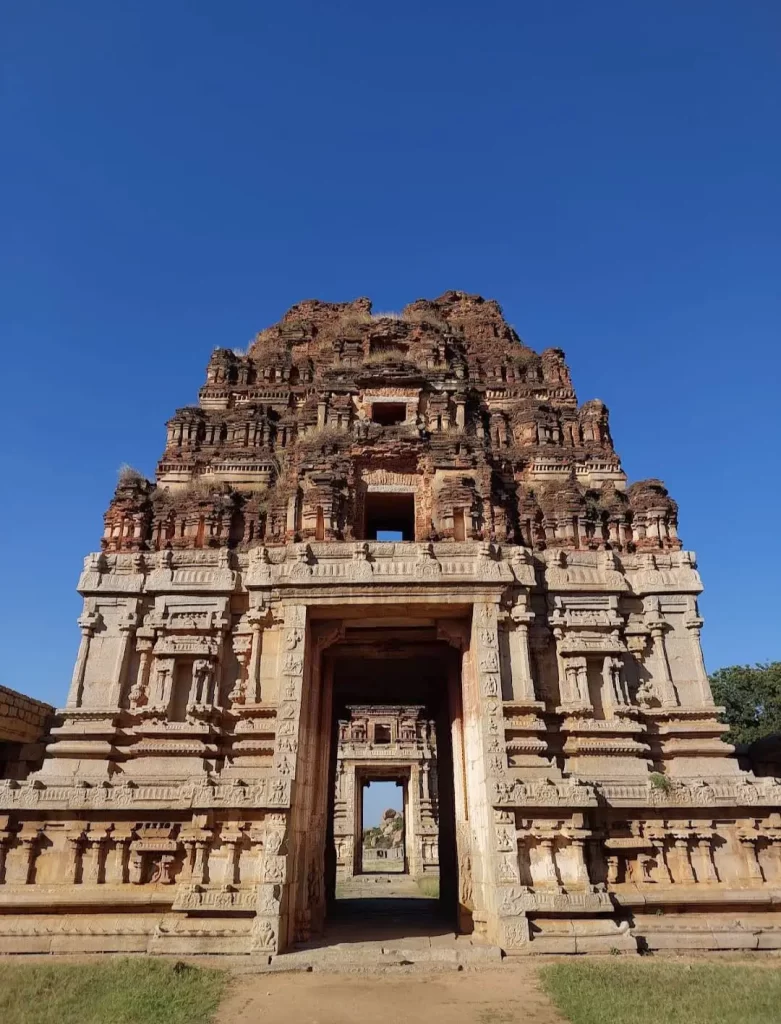
Envision retreating to the 16th century, an age when kings governed with both power and piety, and art received support in their patronage. That is the period to which this grand building belongs. Though numerous temples at Hampi attract massive crowds, the Achyuta Raya Temple is less crowded, so you can indulge thoroughly in its majesty and mystique. Let us then proceed on this great exploration!
Contents
- 1 Achyuta Raya Temple History: Once Upon a Time in Hampi…
- 2 The Legend of the Achyuta Raya Temple: Echoes of Divinity
- 3 Cultural, Spiritual, and Mythological Significance of the Temple
- 4 Distinct Architectural Features and Sculptures: A Visual Treat
- 5 Festivals, Special Days, and Rituals
- 6 Myths and Beliefs of the Temple
- 6.0.1 Mahaganapathi Temple Malleswaram
- 6.0.2 Gangapur Dattatreya Temple
- 6.0.3 Sri Kshetra Dharmasthala Temple: Miracles of Lord Manjunatha
- 6.0.4 Shri Bettada Byraveshwara Temple
- 6.0.5 Vidyashankara Temple Sringeri 12 Pillars Reveal Your Destiny
- 6.0.6 Venugopala Swamy Temple Kannambadi: Lost for Decades Under Water
- 7 Achyuta Raya Temple Timings: Plan Your Visit
- 8 Places to Visit Near the Achyuta Raya Temple
- 9 Accommodation Options Near the Temple
- 10 How to Reach the Achyuta Raya Temple
- 10.0.1 Ajgaibinath Temple Bhagalpur
- 10.0.2 Strange Bateshwar Sthan Bhagalpur: Bihar’s Hidden Gupta Kashi
- 10.0.3 Famous Sundarnath Temple Araria Bihar | Sundar Nath Dham
- 10.0.4 Shiv Shakti Temple Bhagalpur Bihar
- 10.0.5 Mangala Gauri Temple Gaya Bihar
- 10.0.6 Is Bhoothnath Mandir Bhagalpur HAUNTED? See For Yourself!
- 10.1 Why is Achyuta Raya Temple so Important?
Achyuta Raya Temple History: Once Upon a Time in Hampi…
Each stone here has a history, and the history of the Achyuta Raya Temple is well interwoven with that of the Vijayanagara Empire, or rather the period of King Achyuta Deva Raya. This temple was commissioned in around 1534 AD and was one of the last major architectural projects initiated before the inevitable downfall of the empire.
It was not King Achyuta Deva Raya himself who constructed it directly, but a senior officer in his court, namely Salakaraju Tirumaladeva. But so intense was the devotion and patronage of King Achyuta Deva Raya that the temple, which was initially called the Tiruvengalanatha Temple (for Lord Tiruvengalanatha, an avatar of Lord Vishnu), later came to be addressed by the name of the king – the Achyuta Raya Temple.
Consider this: a king, even amid increasing dissents to his empire, still made the construction of such a heavenly and complex building a priority. It says a great deal about the spiritual commitment and cultural depth of the Vijayanagara era. This temple, through the depredations of time and war, remains a testament to that golden age, exemplifying the empire’s architectural splendor at its height. It is a quiet, grand reminder of a mighty kingdom and its godly rulers.
Read More>> 3BCE Pathala Sembhu Murugan Temple: Secret of Underground Copper Pot and Karungali Mala
The Legend of the Achyuta Raya Temple: Echoes of Divinity
While the Achyuta Raya Temple itself does not possess a widely known, traditional creation myth specifically associated with its construction in the same manner as some of the older, more ancient temples might, its consecration to Lord Tiruvengalanatha, one of the forms of Lord Vishnu, places it firmly within the larger Vaishnava traditions and the divine mythology of Vishnu. Hampi itself, the greater area, is rich with mythology.
The place is generally associated with Kishkindha, the kingdom of the monkeys in the epic Ramayana. In Ramayana, Lord Rama and Lakshmana encountered Hanuman and Sugriva here in pursuit of Sita. This association raises Hampi, and consequently its temples such as the Achyuta Raya Temple, to a position of great mythological importance.
Although individual verses of the Puranas specifically relating to Achyuta Raya Temple are not easily available, the Puranas do mention from time to time various incarnations and avatars of Vishnu, to whom the deity of the temple is devoted. For example, the Bhagavata Purana and the Vishnu Purana thoroughly describe the glories and manifestations of Lord Vishnu and his function as the preserver of the universe. The temple’s presence is a physical testimony to the passion outlined in these ancient texts, animating the divine tales with its sacred grounds.
Read More>> Ramappa Temple: An 800 Years Old Architectural Marvel
Cultural, Spiritual, and Mythological Significance of the Temple
The Achyuta Raya Temple is not only a piece of architectural masterwork; it is a deep cultural and spiritual root. Culturally, it is the epitome of Vijayanagara art and architecture, marrying Dravidian inspirations with distinctive imperial embellishments. The intricate bazaars (street markets) that extended out from the entrance of the temple were not only centers of trade, but also bustling hubs of cultural exchange where products, ideas, and visitors from distant regions met. Picture the frenetic activity, the cries of merchants, the aromas of spices – all based around this hallowed center.
Spiritually, the temple’s association with Lord Tiruvengalanatha is an important pilgrimage for Vishnu devotees. Passing through its corridors, one can feel the whispers of centuries of prayer and devotion. It was a place where individuals found solace, prayed for prosperity, and communed with the divine. The act of visiting, going round the shrine, and praying itself, is already a spiritual pilgrimage. It brings to mind the persistent human search for union with something beyond ourselves.
Mythologically, being part of Hampi, the Achyuta Raya Temple is bathed in the mythology of the Ramayana. Even the hills that protect it, Gandhamadana and Matanga, are generally named after episodes of the epic. Though not laid out extensively within the temple legend, the greater mythical context of Hampi enhances the visit, giving the temple an air of age-old sanctity and mythic stories.
Read More>> Thuravoor Temple of 2 Powerful Deities Narasimha & Sudarsana
Distinct Architectural Features and Sculptures: A Visual Treat
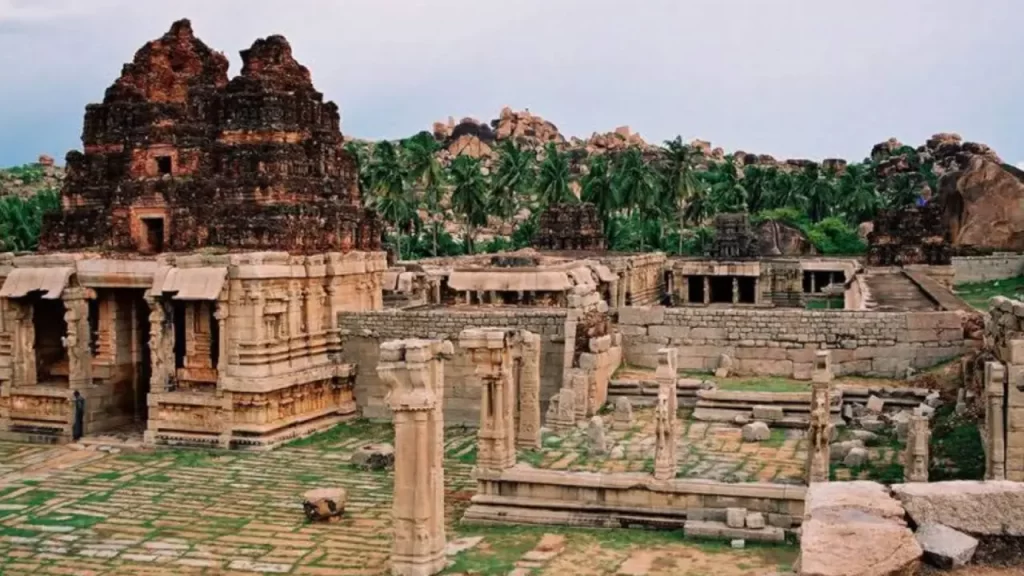
Next, let us discuss how the Achyuta Raya Temple stands out as a place of architectural distinction. Observe its distinctive site, placed in a half-made valley between the twin hills. The unexplored location makes it less popular and all the more intriguing.
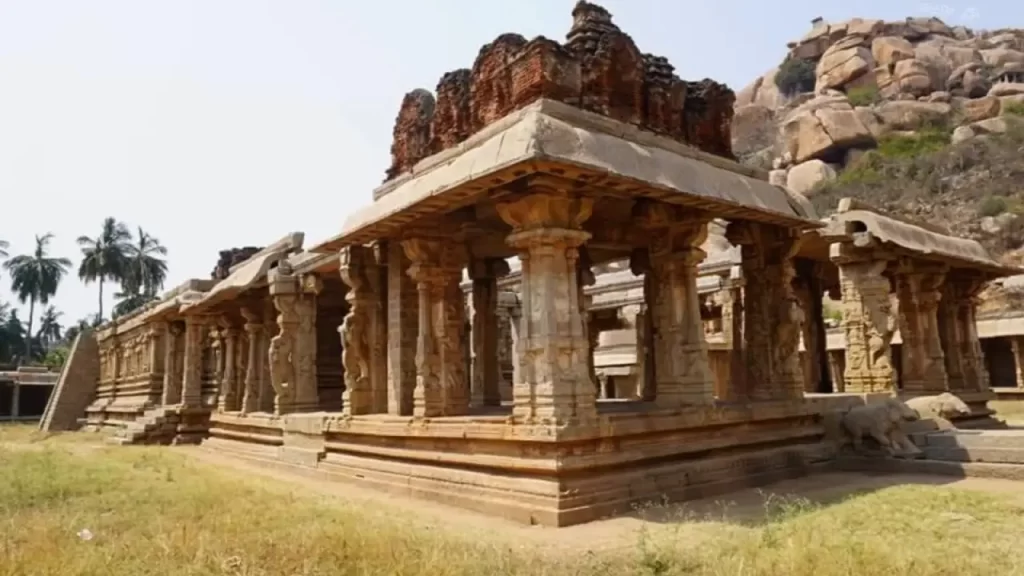
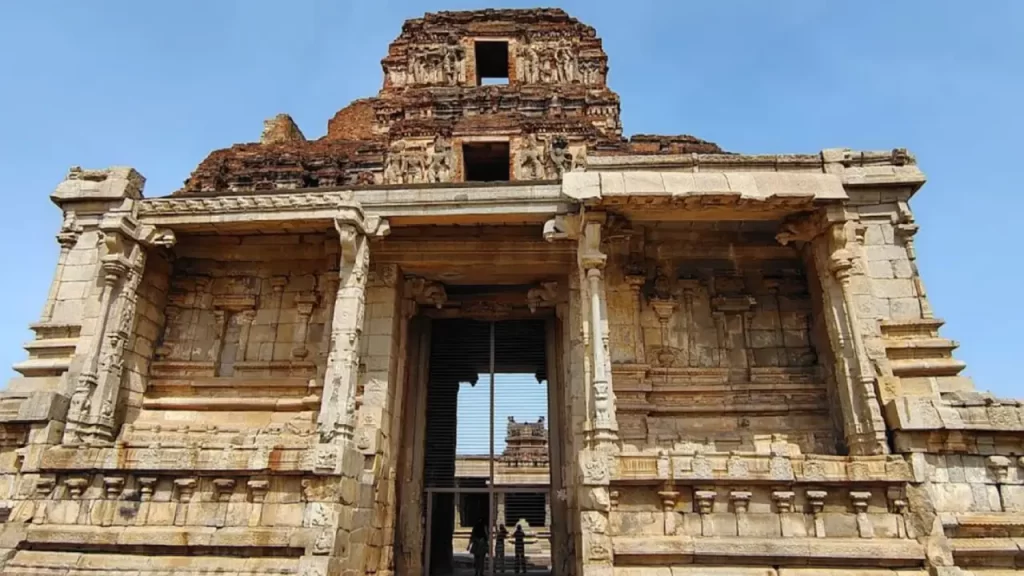
The temple reflects the Vijayanagara style of architecture at its best. You’ll notice an expansive quadrangle with two concentric enclosures. When you stroll within the inner courtyard, you can notice pillared verandahs that were once along the walls. Sadly, most of the pillars outside are in ruins, but even in their deteriorated condition, they suggest the former glory.
The main shrine, centrally located, consists of a Garbhagriha (sanctum sanctorum), a Sukanasi (vestibule), an Antarala (ante-chamber), a Rangamantapa (main hall), and a spacious pillared Mahamantapa (large hall). Look closely at the carvings on the pillars – they are simply exquisite! You’ll find scenes from Hindu mythology, like Lord Vishnu blessing an elephant, or the charming depiction of infant Krishna dancing while holding a snake by its tail. You can even catch a glimpse of Lord Krishna playing the flute, flanked by calves, an absolutely peaceful and rural scene.
One of the most striking aspects is the Kalyana Mantapa, a big hall probably employed for ceremonial marriages of deities. The basement of this mantapa has exquisitely carved elephants. The temple’s external walls, though destroyed, show delicate bas-reliefs that are said to illustrate the episodes of Ramayana and Mahabharata, though some have eroded badly. The high detail and craftsmanship of these carvings show the unprecedented artistry of the Vijayanagara sculptors. They sculpted with local granite, cleverly molding hard stone into flowing, life-like episodes.
It’s a marvel in itself of the craftsmen who labored here, carving such minute details on rock monolithic blocks. Consider the hours, the dedication, the pure artistic vision that went into every single carving.
Read More>> 11th CE Lempuyang Temple: Bali’s Magical Gate to Heaven!
Festivals, Special Days, and Rituals
While the Achyuta Raya Temple may not host massive, multi-day festivals like some of the more active temples in Hampi (like the Virupaksha Temple), its connection to Lord Tiruvengalanatha means it would traditionally observe important Vaishnava festivals.
Vaikuntha Ekadashi: This is a significant day for Vishnu devotees, observed with fasting and prayers. It’s believed that on this day, the gates of Vaikuntha (Lord Vishnu’s abode) are open.
Rama Navami: Festival of the birth of Lord Rama, an avatar of Lord Vishnu, this festival would have been a day of prayers and perhaps reading from the Ramayana.
Janmashtami: The birthday of Lord Krishna, another well-known avatar of Lord Vishnu, is a festive day. Though not the main deity, his tales are shown in the carvings, and his birthday would certainly be celebrated.
On these festive days, and on any other lucky day, the devotees would conduct archanas (personal prayer with offering), abhishekams (ceremonial bathing of the deity), and offer naivedyam (food offering). Although firsthand accounts of special poojas related to the Achyuta Raya Temple as it stands today are scarce because of its partially destroyed state and lesser active worship than certain Hampi temples, in the past it would have been a center for grand rituals and ceremonies honoring the prosperity and devotion of the empire.
In terms of busy days, due to its rather isolated location, the Achyuta Raya Temple tends to be less busy than the more central Hampi sites. Nonetheless, on peak tourist season (October to March) and especially on major public holidays or long weekends, you may experience a moderate rush of visitors. Weekends attract more domestic tourists. If you want to experience the real tranquility, I suggest you visit on a weekday morning or late afternoon.
Read More>> Chamundeshwari Temple Mysore: Architectural Marvel & Spiritual Wonder
Myths and Beliefs of the Temple
In addition to grand history and grandeur, temples also harbor a fabric of regional myths and beliefs. Although the Achyuta Raya Temple itself does not have a robust independent set of myths like, for instance, the Virupaksha Temple with its living godhead, the fact that it is connected to the larger Hampi area gives it some communal beliefs.
A shared belief throughout Hampi is that being within this hallowed land, once Kishkindha, has a spiritual elevating effect. Pilgrims usually experience great peace and closeness to the divine here. Also present is the underlying faith in the Vijayanagara kings’ piety’s potency, seen in the very rocks of these temples. Many hold that the carvings contain hidden meanings or blessings for those who gaze upon them with an open heart.
There may be some local legend that tells of secret passages or lost treasures within the temple complex, though these are rather more rumour than documented reality. The true treasure, in my view, is in the sense of awe and wonder you experience standing among these ruins, envisioning the bustling life that once coursed through these sacred halls.


Achyuta Raya Temple Timings: Plan Your Visit
The Achyuta Raya Temple is usually open to the public throughout the day. Although there are no strict “darshan” hours like you would see in actively worshipping temples with continuous rituals going on by priests, you can generally access from approximately 5:30 AM to 1:00 PM and then from 5:30 PM to 9:00 PM.
It’s worth noting that these are general rules for access to the complex. As it’s an ASI-managed archaeological site, there could be exceptions. I always say go there earlier in the morning or later in the afternoon to stay away from the sun during the hottest part of the day and to enjoy the softer light, ideal for photography and contemplation. And the crowds are also thinner at these times.
Read More>> Swaminarayan Akshardham Temple, Delhi | Complete Guide
Places to Visit Near the Achyuta Raya Temple
The beauty of Hampi is that every corner reveals another marvel! The Achyuta Raya Temple is strategically located, making it easy to explore several other significant Hindu sites nearby.
Matanga Hill: Standing right behind the Achyuta Raya Temple, this hill provides one of the most panoramic views of Hampi, particularly at sunrise or sunset. The ascent can be a little strenuous, but the payoff is worth it. You get to view the whole temple complex spreading below – it’s something you won’t soon forget.
Hampi Bazaar: A long, abandoned market street leading from the Achyuta Raya Temple to the Virupaksha Temple. This used to be a thriving commercial center, and you can still view the remnants of shops and pavilions. It’s an interesting walk, enabling you to envision the vibrancy of ancient Hampi.
Virupaksha Temple: This is the most active and central temple in Hampi, dedicated to Lord Virupaksha, a form of Lord Shiva. It has been a continuous place of worship since the 7th century. Its towering gopuram (gateway tower) is iconic, and the temple elephant, Lakshmi, is a beloved resident.
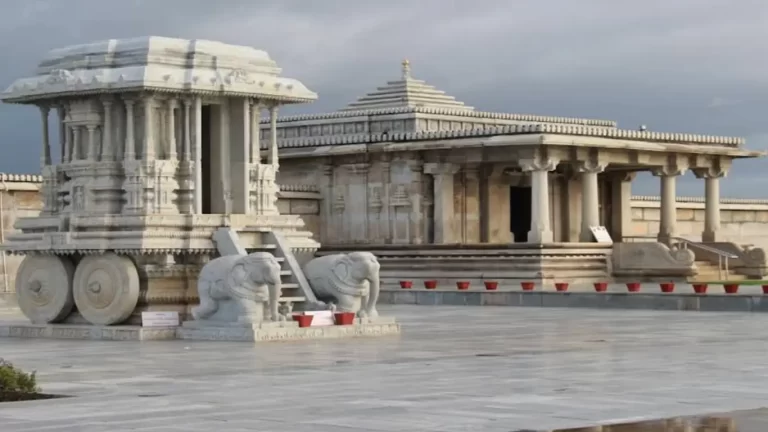
Vittala Temple:: A bit farther away, but a definite must-see! The Vittala Temple is a standout for its amazing musical pillars and the symbol of the Stone Chariot. It’s a masterpiece of Vijayanagara architecture and design.
Kodanda Rama Temple: This temple sits on the banks of the Tungabhadra River and is dedicated to Lord Rama. It’s a peaceful area with beautiful riverside views and providing a sense of calm.
Hazara Rama Temple: This temple is famous for its finely crafted panels filled with scenes from the Ramayana. It was a private temple for the royal family. The amount of detail on its walls is engrossing.
Visiting these locations in combination with the Achyuta Raya Temple gives an overall insight into Hampi’s rich religious and architectural past.
Read More>> Triyuginarayan Temple: Journey to the Eternal Flame
Accommodation Options Near the Temple
Though there are no hotels within the complex of Achyuta Raya Temple (since it’s an archaeological site), there are plenty of options available in Hampi and the town of Hospet that cater to all budgets and tastes. Hampi is a UNESCO World Heritage Site, which means it’s a really big deal for the entire world!
Hampi Bazaar Area: For a stay near the top sights and for feeling the local culture, guesthouses and homestays are found in abundance here. They provide a rustic and off-the-beaten-track kind of experience, usually with simple but comfortable facilities. Vicky’s Home Stay Hampi or Padmaa Hampi Villa are such examples, usually 1-2 km from the Achyuta Raya Temple.
Hospet: Situated around 13 km from Hampi, Hospet is a bigger town with more developed hotels, ranging from budget to mid-range and even luxury resorts. Here you would find hotels like Hotel Malligi or Royal Orchid Central Kireeti with more contemporary amenities and facilities.
Riverside Hampi (Virupapur Gaddi): On the other side of the Tungabhadra River, this place was once highly sought out for its relaxed guesthouses and shacks with a bohemian feel. That said, there has been some alteration to the accessibility and development of this section, so it’s always best to verify current facts.
Luxury Resorts: For an even more luxurious stay, Hampi also has some upscale resorts a bit further out, such as Evolve Back, Hampi or Hyatt Place Hampi, which provide lavish amenities and a peaceful atmosphere.
Don’t forget to book your hotel in advance, particularly during peak season (October to March), since Hampi is a top tourist destination.
Read More>> 5000 Years Gangeshwar Mahadev Temple
How to Reach the Achyuta Raya Temple
Arrival at the Achyuta Raya Temple and Hampi in general is quite easy, with plenty of ways to get there.
By Air: Jindal Vijayanagar Airport (VDY), which is the closest airport, is 30-35 km from Hampi. You can take a taxi or use public transport from the airport to Hampi. Greater airports are in Bengaluru (350 km) or Goa (300 km), from which you can travel by train, bus, or private taxi.
By Train: The nearest railway station is Hospet Junction (HPT), 13 km from Hampi. Hospet has frequent connectivity to cities such as Bengaluru, Hyderabad, and Goa. From Hospet, auto-rickshaws, taxis, or local buses are readily available for Hampi and further to the Achyuta Raya Temple.
By Road: Hampi has frequent road connectivity to major cities in Karnataka as well as the nearby states.
From Bengaluru: Direct bus (sleeper and non-sleeper), private taxi, or self-drive are all options. The drive is around 6-7 hours.
From Hyderabad: The same options are available, with the travel time being around 8-9 hours.
From Goa: Taxis and buses can be used, and the drive itself is rather picturesque, taking approximately 7-8 hours.
Once you are in Hampi, reaching the Achyuta Raya Temple itself will take a little walk or a brief auto-rickshaw ride.
From Hampi Bazaar: You can directly walk through the destroyed Hampi Bazaar street, which reaches as far as the northern gopuram of the temple. This is a nice and scenic path.
From Matanga Hill: If you approach from the side of Matanga Hill (maybe after a sun rise trek!), there are steps close to the Monolithic Bull that bring one down to the temple complex.
The way to the Achyuta Raya Temple is fairly isolated and less used by big tourist buses, which helps to keep it so serene. It’s really one place where you can drift and feel as if you have stumbled upon a secret treasure.
Read More>> Golden Temple, Amritsar (Harmandir Sahib) | Complete Guide

Why is Achyuta Raya Temple so Important?
The Achyuta Raya Temple is extremely significant for a number of reasons, and it’s something that I always mention to tourists:
Firstly, it’s a chronological signpost in the history of Vijayanagara architecture. Constructed towards the later end of the empire, it shows the development and sophistication of their style, arguably at their most developed. It’s like seeing the last masterpiece of a great artist before the break.
Secondly, its consecration to Lord Tiruvengalanatha, an avatar of Vishnu, marks the intense Vaishnava traditions prevalent in the Vijayanagara era. It was a major place of worship, encouraging religious tolerance and fervor in an era of splendor as well as eventual decline.
Third, its remote position between the hills contributes to its significance. Unlike the more accessible temples, the ride to the Achyuta Raya Temple is a discovery, transporting you away from the more popular routes and into a peaceful, near-meditative arena. This provides a different, more intimate experience of Hampi’s religiosity.
Finally, and most significantly, even in its state of desolation, the Achyuta Raya Temple still narrates the tale of a mighty empire that patronized religion, art, and culture on an unprecedented scale. The complex sculptures, the large courtyards, and the sheer size of the structure testify to the ambitions and accomplishments of a past era. It’s not a ruin; it’s a living testament to a glorious civilization, waiting for us to hear its silent tales.
I hope you’ve loved this tour of the Achyuta Raya Temple with me. It’s somewhere that still inspires awe and wonder, and I feel incredibly lucky to be able to share its beauty and history with you. Safe travels, and may the Hampi spirit remain with you!
6 Comments