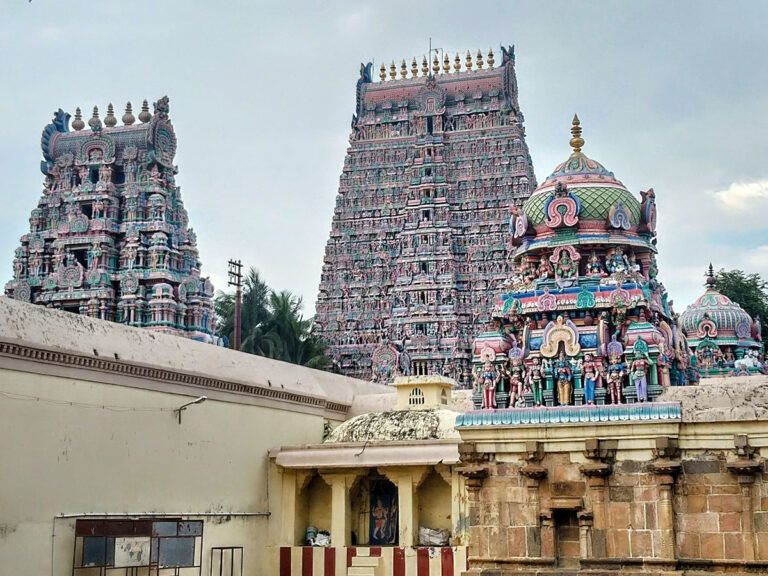
Namakkal Anjaneya Temple: Complete Pilgrimage Guide, History, Architecture & Legend
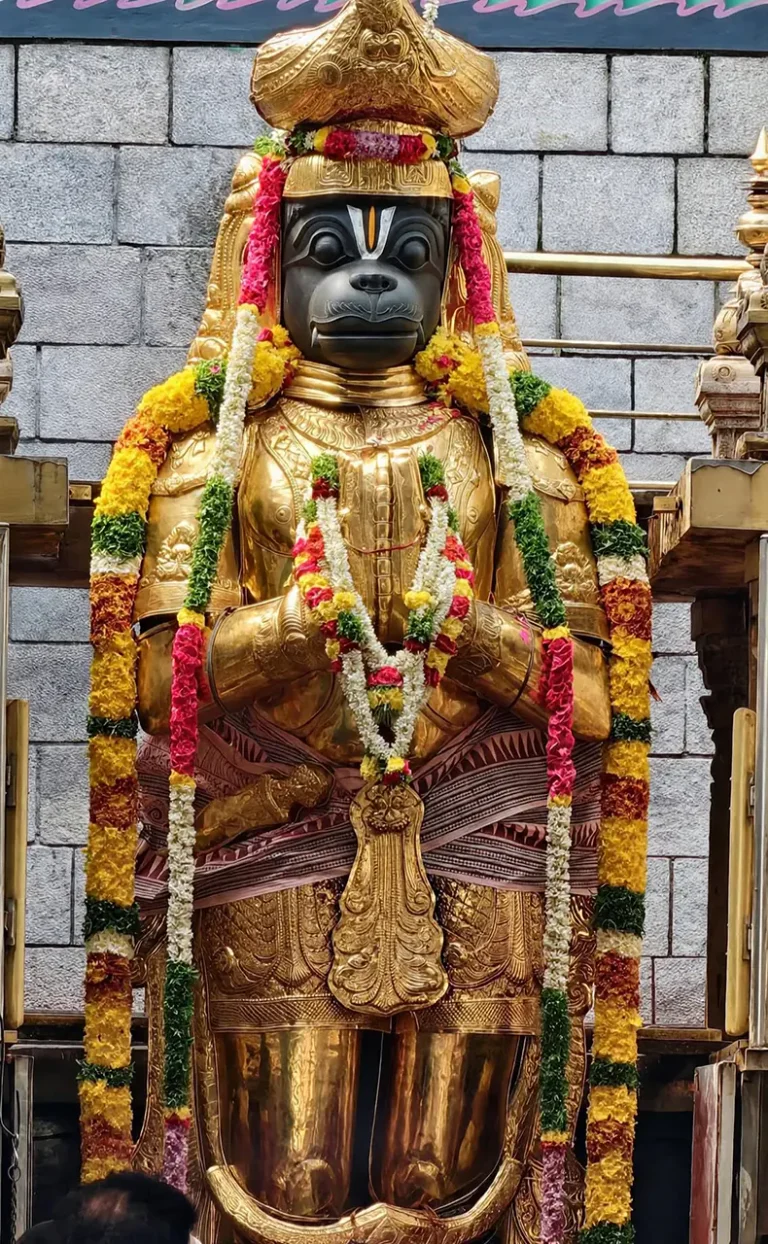
Namakkal Anjaneya Temple (also known as Sri Anjaneyar Swamy Temple) is one of Tamil Nadu’s most revered Hanuman shrines, located at the foothills of the historic Namakkal Fort hill in Namakkal town, Namakkal district, Tamil Nadu. The temple is famous worldwide for its towering 18-foot monolithic granite idol of Lord Anjaneya, who stands in a humble, reverent posture with folded hands (Anjali Mudra) beneath an open-to-sky sanctum roof, gazing directly across the street toward the ancient rock-cut Sri Narasimha Swamy Temple.
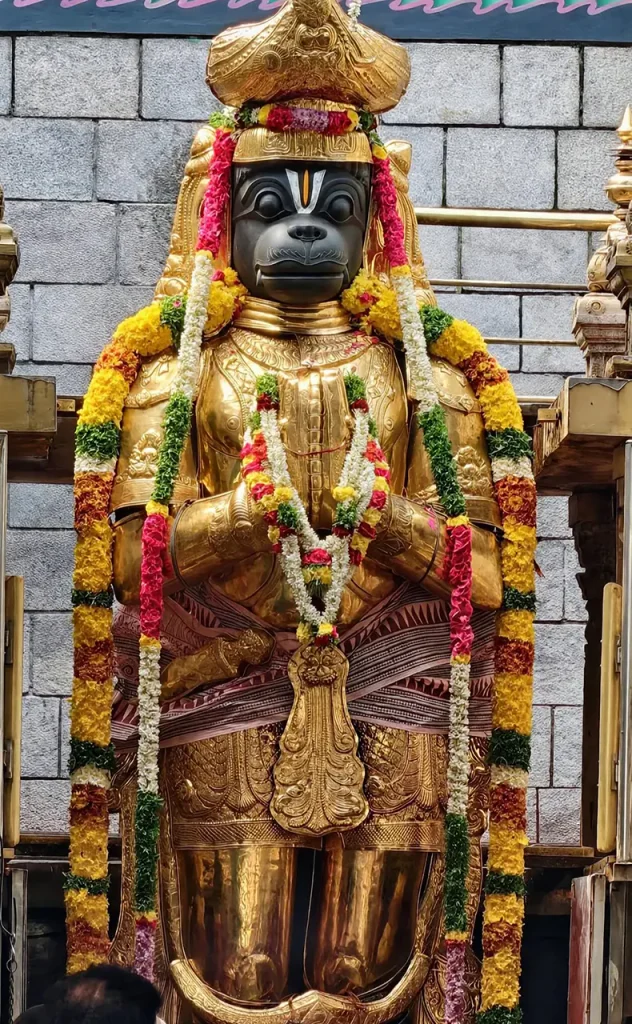
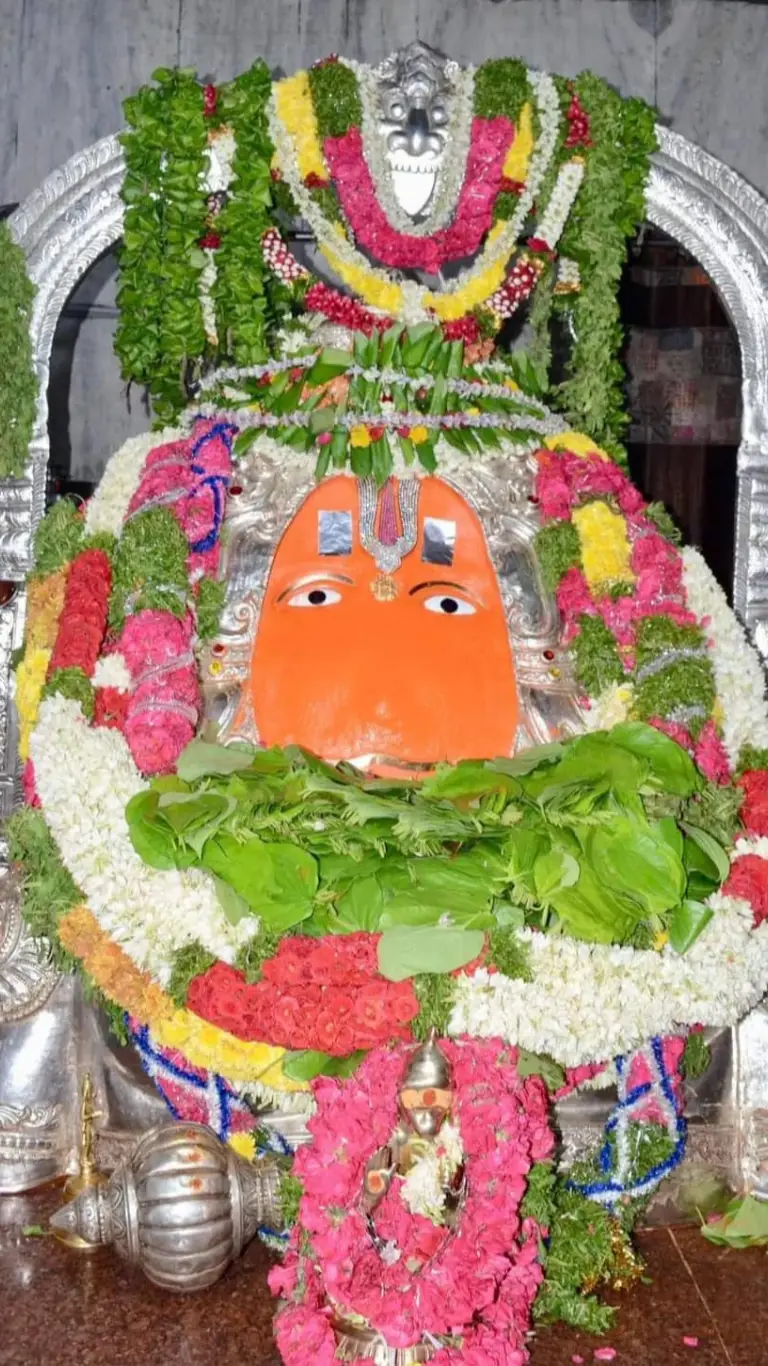
Unlike temples where Hanuman is depicted carrying the Sanjeevani mountain or wielding a mace in battle, the Namakkal Anjaneya idol embodies pure devotion, discipline, and spiritual surrender. Every year, hundreds of thousands of devotees, families, and heritage travelers visit the shrine to witness special adornments such as Vada Malai (savory lentil garlands), Vetrilai Malai (betel leaf garlands), and Vennai Kappu (butter coating), alongside major celebrations during Hanuman Jayanti and Panguni Uthiram.
Quick Information: Namakkal Anjaneya Temple
| Feature | Details |
| Temple Name | Namakkal Anjaneya Temple (Arulmigu Anjaneyar Swamy Temple) |
| Presiding Deity | Lord Anjaneya (Hanuman) — 18-foot monolithic standing idol |
| Facing Deity | Sri Narasimha Swamy & Namagiri Thayar (located directly opposite) |
| Location | Bazaar Street / Fort Road, Namakkal Town, Namakkal District, Tamil Nadu 637001 |
| Architectural Style | Dravidian temple architecture with an open-roof Garbhagriha (sanctum) |
| Daily Darshan Timings | Typically 6:30 AM – 1:00 PM and 4:30 PM – 9:00 PM (confirm locally before travel) |
| Major Offerings | Vada Malai, Vetrilai Malai (betel leaves), Tulsi garland, Butter Alankaram, Gold/Silver Kavacham |
| Key Festivals | Hanuman Jayanti (Margazhi Moolam), Panguni Uthiram, Tamil New Year, Purattasi Saturdays |
| Nearest Railway Station | Namakkal Railway Station (NMKL) — approx. 3–4 km from the temple |
| Nearest Major Junction | Salem Junction (SA) — approx. 55 km north |
| Nearest Airport | Salem Airport (SXV) (~70 km) / Tiruchirappalli International Airport (TRZ) (~95 km) |
| Entry Fee | Free general darshan; nominal charges apply for special darshan and archana tickets |
| Administration | Hindu Religious and Charitable Endowments Department (HR&CE), Government of Tamil Nadu |
Why Namakkal Anjaneya Temple Is Unique in India
Many famous Hanuman shrines across South India—such as Kondagattu Anjaneya Swamy Temple, Nanganallur Anjaneyar Temple, Shri Anjaneya Swamy Temple in Hulimangala, and Alathiyoor Hanuman Temple—hold a special place in regional devotion. Namakkal Anjaneya Temple stands apart because it highlights a distinct aspect of his character: unwavering humility in the presence of the Divine.
Four defining features make this shrine extraordinary:
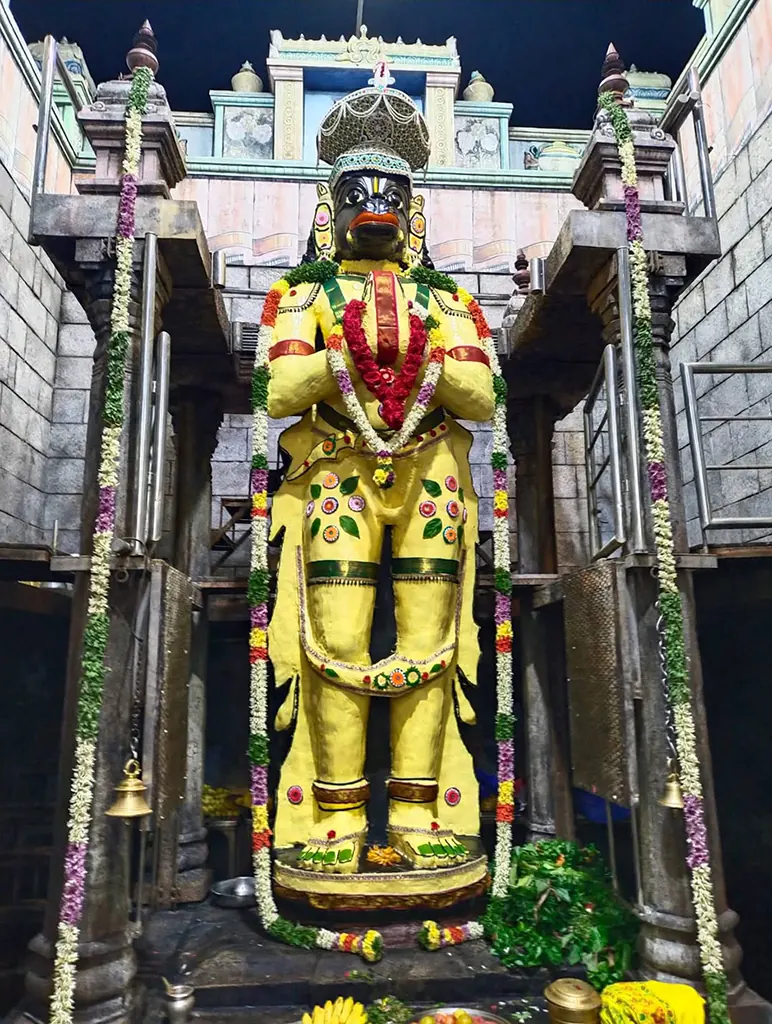
- The 18-Foot Monolithic Idol: Carved out of a single massive block of granite, the deity stands roughly 18 feet tall, making it one of the tallest monolithic Hanuman idols in South India.
- Anjali Mudra (Folded Hands): Lord Anjaneya stands upright with both palms joined together in Anjali Mudra—the traditional Indian gesture of deep reverence (explored further in our guide on why we join palms in Namaste)—while wearing a sacred thread (Yajnopavita), a curved dagger (Udayaval) tucked at his waist, and fine sculptural ornaments.
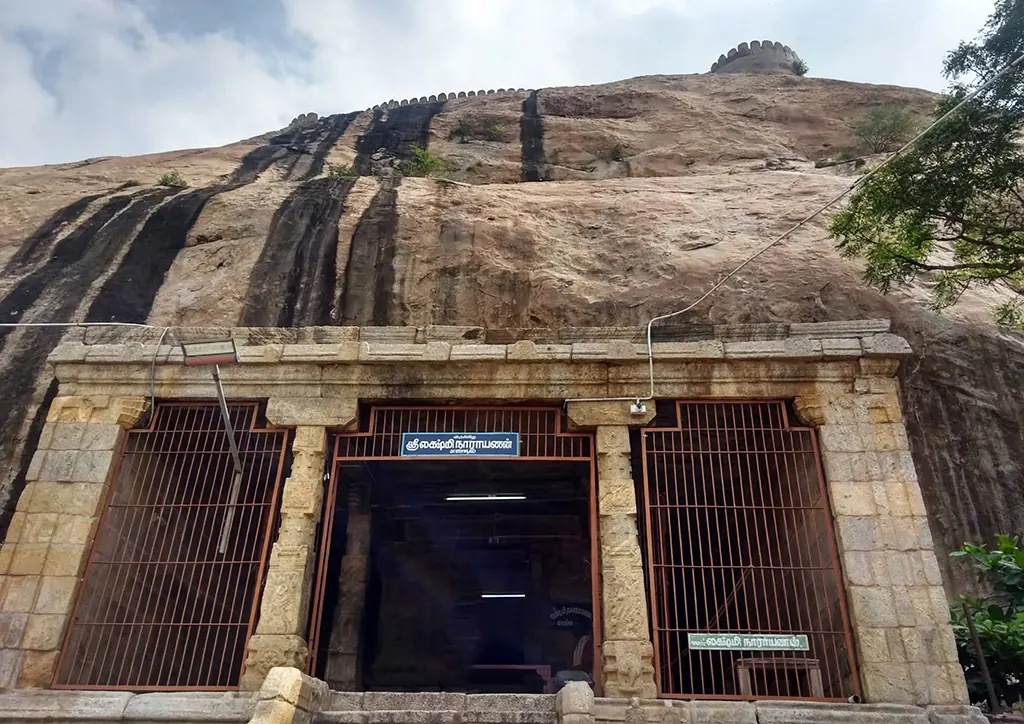
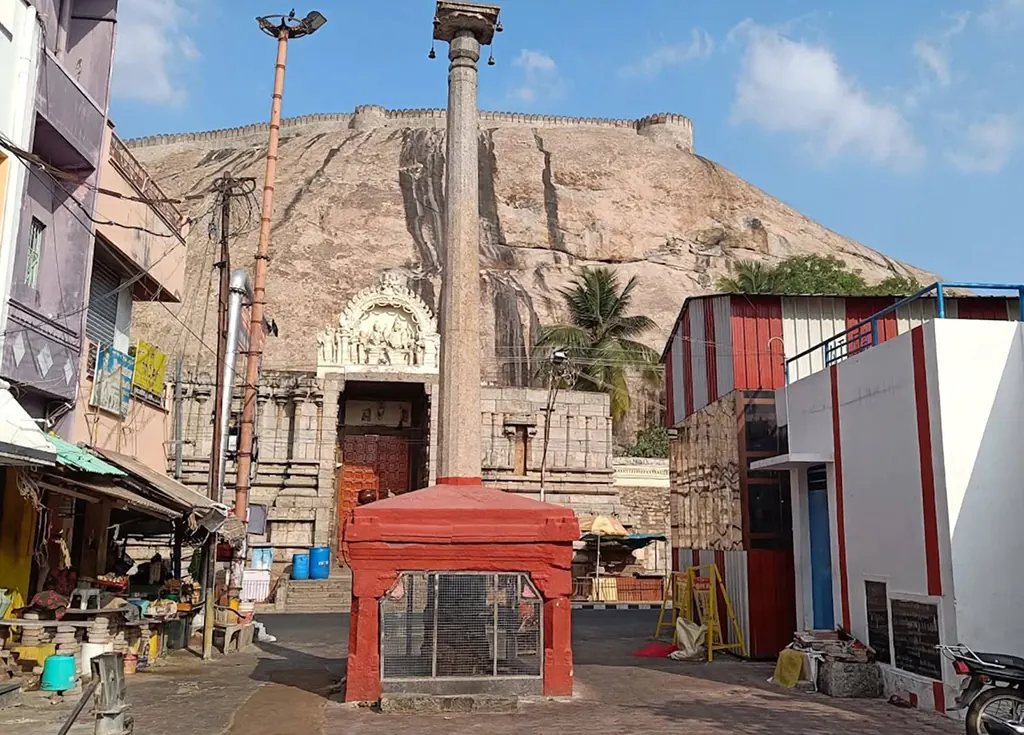
- Direct Alignment with Sri Narasimha: There is no enclosing front wall or tall gopuram blocking the deity’s line of sight. Instead, Anjaneya looks straight across the main road into the sanctum of the Sri Narasimha Swamy Cave Temple, carved into the western face of the Namakkal hillock.
- The Open-to-Sky Sanctum Roof: The inner sanctum (Garbhagriha) directly above the 18-foot idol has no ceiling. Rain, sunlight, and open air fall directly upon the granite statue, honoring a centuries-old sacred tradition that no roof could contain the growing stature and spiritual energy of Anjaneya.
Sthala Purana: The Sacred Legend of Namakkal Anjaneya
In Hindu temple tradition, a Sthala Purana preserves the spiritual origin story of a sacred site. While these narratives belong to devotional tradition rather than modern archaeological records, they explain the deep religious symbolism behind every ritual performed at the temple.
Hanuman, Goddess Lakshmi, and the Salagrama Stone
According to the Sthala Purana, after the events of the Ramayana, Goddess Lakshmi (worshipped here as Namagiri Thayar) performed intense penance in the region now known as Namakkal, wishing to witness Lord Vishnu in his fierce yet protective Narasimha avatar—a divine form also celebrated in major Narasimha shrines like Ahobilam Temple and Yadagirigutta Temple.
Meanwhile, Lord Hanuman was returning from the Himalayas carrying a sacred Salagrama stone—a revered fossilized stone associated with Lord Vishnu. As he passed through this region, he paused to bathe in the Kamalalayam sacred tank. Before entering the water, Hanuman entrusted the sacred Salagrama stone to Goddess Lakshmi, asking her to hold it safely until he returned, with one instruction: not to place it on the ground.
The Birth of the Namakkal Hillock
While Hanuman was immersed in his bath, the Salagrama stone grew heavier and heavier in Goddess Lakshmi’s hands until she was compelled to set it down on the earth. The moment the stone touched the ground, it began expanding rapidly into a massive, towering monolithic rock—the Namagiri (the giant rock hill that stands at the center of Namakkal town today).
When Hanuman returned and saw the colossal rock formation, he realized it was a divine manifestation of Lord Narasimha, who appeared on the hillock alongside Goddess Lakshmi to fulfill her penance. Overwhelmed with devotion, Hanuman stepped back to a respectful distance facing the hill, joined his hands in humble salutation, and remained there forever in eternal service to Lord Narasimha and Namagiri Thayar.
Why the Sanctum Has No Roof
Local tradition holds that devotees and rulers originally attempted to build a roofed mandapam over the towering granite image of Anjaneya. However, according to sacred lore, the idol continued to grow taller, or divine signs indicated that Hanuman wished to remain beneath the open sky so nothing would separate him from the heavens and his Lord. To this day, the sanctum rises around the idol with an open top, allowing natural daylight to illuminate the 18-foot sculpture.
Documented History and Cultural Heritage
Beyond sacred legend, Namakkal occupies an important place in Tamil Nadu’s documented regional history.
Connection to the Rock-Cut Narasimha Temple
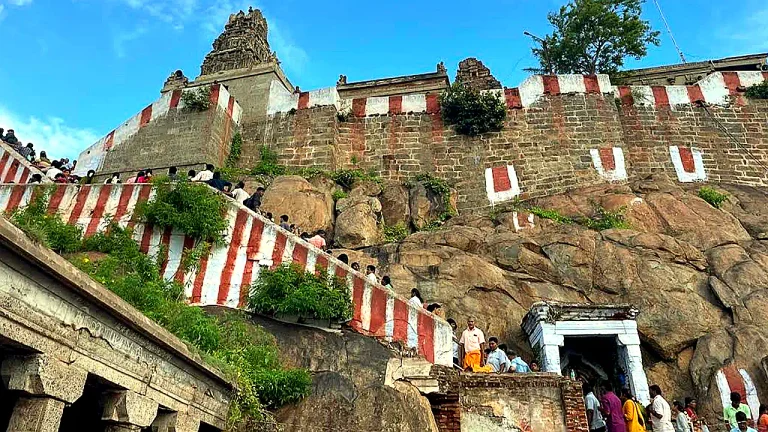
Archaeological and historical scholarship connects the Namakkal hillock and its rock-cut shrines—the Narasimha Swamy Temple on the western side and the Ranganathaswamy Temple on the eastern side—to the Adiyaman (Atiya) dynasty of Kongu Nadu during the 7th and 8th centuries CE. Inscriptions inside the rock-cut cave temples mention ruler Gunaseela, who patronized early Pallava-era rock-cut temple architecture in this region.
Growth of the Anjaneya Shrine
While the rock-cut Narasimha shrine dates to the early medieval period, the freestanding Anjaneya Temple facing it developed into a major focal point of worship during the later medieval and Nayak periods, as Vaishnavite and Madhva devotional traditions flourished across Tamil Nadu alongside great Vaishnava centers such as Srirangam Ranganathaswamy Temple.
Over the centuries, local chieftains, merchants, and devotees expanded the surrounding prakaram (courtyard), stone pillared halls (mandapams), and festival infrastructure. Today, the temple is administered as a major public shrine by the Hindu Religious and Charitable Endowments (HR&CE) Department of the Government of Tamil Nadu.
Architecture and Sculptural Details of the 18-Foot Idol
Art historians and temple visitors frequently pause to admire the sheer craftsmanship of the Namakkal Anjaneya statue. Sculpting an 18-foot standing figure from a single granite monolith without structural fractures required extraordinary engineering and artistic precision.
Key Iconographic Features
- Posture (Samabhanga): Unlike dynamic sculptures where one leg is raised, Anjaneya stands straight and grounded in Samabhanga posture, symbolizing stability, discipline, and mental focus.
- Facial Expression: Despite his colossal scale, the face carries a serene, compassionate expression rather than ferocity. His eyes gaze directly forward along the east-west axis toward Lord Narasimha’s cave sanctum.
- Sacred Ornaments: Close inspection reveals intricately carved details in the granite—a tall conical crown (Kirita Makuta), large circular ear ornaments (Kundalas), layered necklaces, armlets, anklets, a waist belt holding a ceremonial short sword (Udayaval), and a rosary (Japamala) draped over his folded hands.
- The Raised Tail: Sweeping upward behind his back and curving gracefully above his head is his tail, adorned with a small ceremonial bell—a classic iconographic marker of Hanuman in South Indian sculpture.
Temple Layout and Surroundings
- Open Garbhagriha: Because the idol is 18 feet tall, priests climb a specially constructed platform or wooden scaffolding behind and beside the statue during daily abhishekam (ritual bathing) and alankaram (decoration) to reach the crown and shoulders.
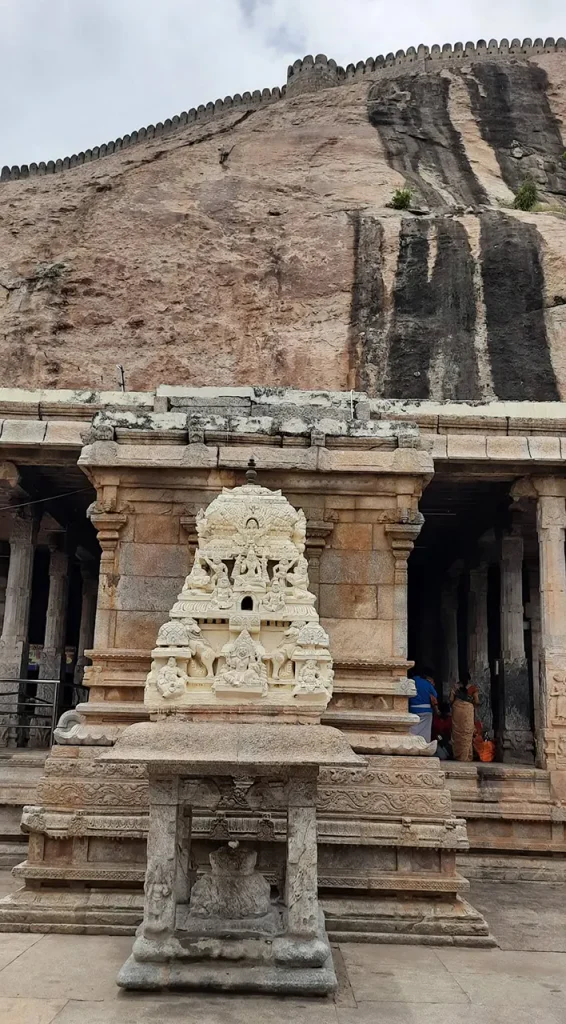
- East-West Sacred Axis: The temple faces east toward the Narasimha Swamy Temple. Stepping outside the Anjaneya entrance gives visitors an unobstructed view of the massive rock hillock and the cave shrine directly across the street.
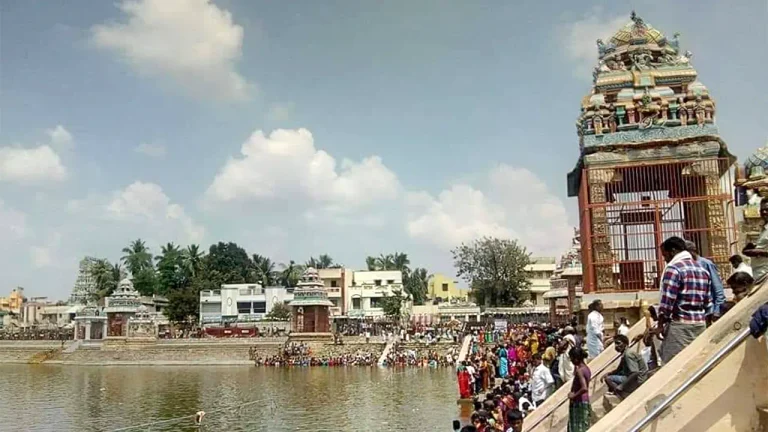
- Kamalalayam Tank: Located nearby is the historic temple tank (Pushkarani), associated in local tradition with Hanuman’s ritual bath and used during annual float festivals (Theppotsavam).
Daily Poojas, Rituals, and Famous Offerings
Worship at Namakkal Anjaneya Temple follows traditional Vaishnava Agama practices. Because the deity is 18 feet tall, every ritual decoration requires immense preparation and devotion.
Daily Worship Schedule
While exact clock timings can shift slightly on Saturdays, Amavasya (New Moon), and major festival days, the daily routine generally unfolds across six traditional phases:
- Vishwaroopa Darshan (Early Morning): The temple opens at dawn with ceremonial lamps, chanting, and initial morning prayers.
- Kalasandhi Pooja (Morning): Ritual offerings and morning naivedyam (sacred food offering) are presented to the deity.
- Uchikalam Pooja (Midday): Noon worship performed before the temple closes for the afternoon break.
- Sayarakshai Pooja (Evening): The temple reopens in the late afternoon with lamp lighting and evening chanting.
- Ardhajama Pooja (Night): Final night worship before the sanctum closes.
Tip for visitors: Morning abhishekam (ritual anointing with milk, sandalwood paste, turmeric, and sacred water) is one of the most memorable sights at the temple, as priests pour sacred liquids from the elevated platform over the towering granite figure.
Signature Offerings and Alankarams
Devotees book or offer specific adornments throughout the year to seek blessings for courage, health, career progress, and relief from planetary hardships (especially Shani Dosha):
- Vada Malai (Garland of Savory Lentil Vadas): Perhaps the most famous offering at Namakkal Anjaneya Temple. Hundreds—and during festivals, thousands—of crisp black-gram (urad dal) vadas are strung together into massive garlands and draped around the 18-foot deity. Unlike soft vadas, temple vadas are fried firm so they stay fresh and crisp for days before being distributed as prasadam.
- Vetrilai Malai (Betel Leaf Garland): Garlands made of fresh green betel leaves and areca nuts are offered by devotees praying for marriage, family harmony, and successful new ventures.
- Vennai Kappu (Butter Alankaram): During special occasions and Saturdays, the granite idol is coated in fresh white butter, which is believed to cool the deity’s fiery spiritual energy (ushna).
- Thanga & Velli Kavacham (Gold and Silver Armor): On auspicious days and major festivals, the deity is adorned with custom-fitted gold or silver armor plating that covers the entire 18-foot form, transforming the dark granite statue into a resplendent golden figure.
- Tulsi and Flower Garlands: Fresh Tulsi (holy basil) garlands are considered especially dear to Lord Anjaneya and are offered daily.
Major Festivals Celebrated at Namakkal Anjaneya Temple
If you want to experience the temple at its most vibrant—and don’t mind large crowds—plan your visit around one of these major annual events:
1. Hanuman Jayanti (Margazhi Moolam)
Observed in the Tamil month of Margazhi (December–January) on the Moolam star day, Hanuman Jayanti is the grandest celebration of the year at Namakkal. The 18-foot idol is famously adorned with a colossal 1,00,008 Vada Malai (over one lakh vadas prepared over several days by dedicated temple cooks), followed by gold armor decoration (Thanga Kavacham) and special homams. Tens of thousands of devotees travel from across Tamil Nadu, Karnataka, and Kerala for darshan.
2. Panguni Uthiram
Celebrated in March–April, Panguni Uthiram marks major temple festivities across Namakkal, featuring ceremonial processions, special abhishekams, and cultural programs around the fort hillock.
3. Purattasi Saturdays
In the Tamil month of Purattasi (September–October)—considered sacred to Lord Vishnu and Hanuman—all Saturdays draw massive crowds. Devotees observe fasting and visit both the Sri Narasimha Swamy Temple and Sri Anjaneyar Temple on the same day.
4. Tamil New Year (Chithirai Vishu) & English New Year
On January 1 and Tamil New Year’s Day (mid-April), the deity is decorated in Gold Kavacham or full floral alankaram, attracting thousands of families starting their new year with blessings.


How to Reach Namakkal Anjaneya Temple
Namakkal is centrally located in Tamil Nadu along National Highway 44 (NH 44), making it easy to reach by road and rail from major South Indian cities.
By Road
- From Salem: ~55 km (approx. 1 to 1.5 hours via NH 44). Frequent Tamil Nadu State Transport Corporation (TNSTC) and private buses run every 15–20 minutes.
- From Tiruchirappalli (Trichy): ~90 km (approx. 2 hours via Musiri / Thottiyam).
- From Coimbatore: ~155 km (approx. 3 to 3.5 hours via Kangeyam and Karur or Erode).
- From Madurai: ~190 km (approx. 3.5 hours via Dindigul and Karur on NH 44).
- From Bengaluru: ~255 km (approx. 4.5 to 5 hours straight down NH 44 via Hosur, Dharmapuri, and Salem).
- From Chennai: ~385 km (approx. 6.5 to 7.5 hours via Ulundurpet, Attur, and Salem).
Once in Namakkal town, the temple sits right at the base of the central rock hill near the old bus stand area, easily reachable by auto-rickshaw or a short walk.
By Train
- Namakkal Railway Station (NMKL): Located roughly 3 to 4 km from the temple on the Salem–Karur railway line. Several express and passenger trains connecting Chennai, Bengaluru, Madurai, Nagercoil, and Tirunelveli stop here. Auto-rickshaws are readily available outside the station.
- Salem Junction (SA): Located ~55 km away, Salem is a major railway hub with high-frequency connections from across India. From Salem, buses and taxis reach Namakkal in about an hour.
By Air
- Salem Airport (SXV): Approx. 70 km away (limited domestic flights).
- Tiruchirappalli International Airport (TRZ): Approx. 95 km away (well-connected to Chennai, Bengaluru, Hyderabad, and international hubs).
- Coimbatore International Airport (CJB): Approx. 165 km away.
Best Time to Visit Namakkal Anjaneya Temple
Namakkal experiences a warm, semi-arid tropical climate, so timing your trip makes a noticeable difference in comfort:
- Best Overall Season (October to February): Daytime temperatures are pleasant (22°C to 30°C), making it comfortable to walk barefoot across stone courtyards and climb the nearby Namakkal Fort hill. This window also includes Hanuman Jayanti in December/January.
- Moderate Season (July to September): Light monsoon showers cool down the region, and weekday visits are peaceful outside of Purattasi Saturdays.
- Summer Season (March to June): Temperatures frequently climb above 36°C–40°C during midday. If visiting in summer, arrive for early morning darshan (6:30 AM – 9:30 AM) or evening darshan (5:30 PM – 8:30 PM), and wear thick cotton socks if walking outside the shaded corridors.
- Best Days of the Week: Tuesdays, Thursdays, and Saturdays are considered most auspicious for Hanuman worship and feature the richest alankarams, though queues are longer. Mondays, Wednesdays, and Fridays offer much faster darshan for families and senior citizens.
Dress Code, Temple Rules, and Visitor Facilities
Following standard temple etiquette ensures a smooth, respectful visit (see our guides on ringing the temple bell before entering and pradakshina rules for general temple customs):
- Dress Code: Traditional, modest clothing is strongly recommended. Men typically wear dhoti/veshti, trousers, or full-length pants with a shirt or kurta. Women wear sarees, salwar kameez, or long skirts with modest tops. Avoid shorts, sleeveless outfits, or short dresses.
- Footwear: Shoes and sandals must be left at the designated footwear counter outside the temple entrance before stepping onto the temple premises.
- Photography and Mobile Phones: Photography and videography are strictly prohibited inside the Garbhagriha (inner sanctum) and main prayer hall. Keep mobile phones on silent mode.
- Accessibility for Seniors and Children: The Namakkal Anjaneya Temple is situated on flat ground level with minimal steps, making it very accessible for elderly devotees and young children—unlike the rock-cut temples on the hillock opposite, which require climbing stone steps.
- Facilities: Drinking water points, footwear stands, prasad counters, and public restrooms are available near the temple complex. Multiple vegetarian restaurants and budget-to-midrange hotels are located within 1 to 2 km in Namakkal town.
Nearby Temples and Attractions to Combine in Your Trip
Because Namakkal is compact, you can easily cover several spiritual and heritage landmarks within a half-day or full-day itinerary:
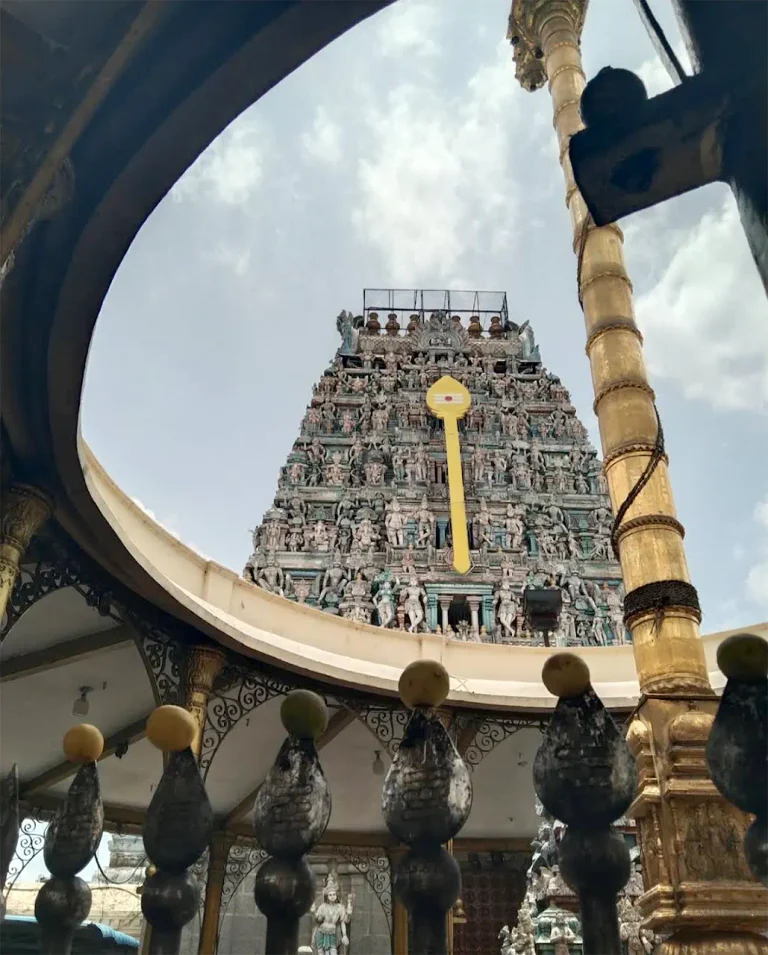
- Sri Narasimha Swamy Temple (Directly Opposite): Carved into the western face of the Namakkal hillock, this 7th–8th century rock-cut cave temple houses Lord Narasimha and Goddess Namagiri Thayar. Devotees traditionally visit Narasimha Swamy and Namagiri Thayar first before crossing the street to worship Lord Anjaneya.
- Sri Ranganathaswamy Temple (Eastern Side of the Hill): Located on the opposite side of the same giant rock hill (~1 km around the base), this rock-cut cave temple features a magnificent reclining sculpture of Lord Ranganatha resting on Adisesha.
- Namakkal Fort (Atop the Hillock): Built atop the 75-meter-high single-rock hillock, this historic fort (associated with Ramachandra Nayak and later Tipu Sultan) offers sweeping panoramic views over Namakkal town and the temple spires below.
- Nainamalai Temple, Namakkal: Another notable temple in Namakkal district—read our Nainamalai Temple Namakkal timings and steps guide if you are exploring multiple shrines across the district.
- Kolli Hills (Kolli Malai) — ~50 km away: If you are staying overnight, Kolli Hills in the Eastern Ghats offers 70 scenic hairpin bends, Agaya Gangai Waterfalls, and the ancient Arapaleeswarar Temple, making it a popular nature-and-pilgrimage extension.
Suggested Half-Day Namakkal Pilgrimage Itinerary
- 6:30 AM – 7:30 AM: Start early at Sri Narasimha Swamy Temple and offer prayers to Lord Narasimha and Goddess Namagiri Thayar before the morning sun heats up the rock steps.
- 7:45 AM – 9:00 AM: Walk directly across the road to Namakkal Anjaneya Temple for morning darshan, witness the towering 18-foot monolith, and collect Vada or Tulsi prasadam.
- 9:15 AM – 10:00 AM: Enjoy a traditional South Indian vegetarian breakfast in Namakkal town.
- 10:15 AM – 11:30 AM: Visit Sri Ranganathaswamy Temple on the eastern side of the hillock, and (energy permitting) climb up to Namakkal Fort for panoramic views before noon.
Frequently Asked Questions (FAQs)
1. Why is the Namakkal Anjaneya idol standing with folded hands?
According to the temple’s Sthala Purana, Lord Hanuman stood in Anjali Mudra (folded hands) out of deep humility and reverence while gazing directly at Lord Narasimha and Goddess Namagiri Thayar in the rock-cut cave temple across the street.
2. How tall is the Hanuman statue in Namakkal?
The presiding idol of Lord Anjaneya is approximately 18 feet tall, carved out of a single piece of granite, making it one of the tallest monolithic Hanuman sculptures in India.
3. Why does the Namakkal Anjaneya Temple have no roof over the sanctum?
Traditional lore states that the sanctum roof over the 18-foot statue is left open to the sky because no ceiling could contain the growing stature and spiritual energy of Lord Anjaneya, allowing sunlight and rain to fall directly on the deity.
4. Which temple should I visit first—Narasimha Swamy or Anjaneya?
By local custom, devotees visit Sri Narasimha Swamy and Namagiri Thayar in the cave temple first, and then cross the road to seek the blessings of Lord Anjaneya, who faces his Lord in eternal service.
5. Is Namakkal Anjaneya Temple suitable for senior citizens?
Yes. Unlike hill temples that require steep climbs, Namakkal Anjaneya Temple is located on flat ground at the base of the hill, making it very easy for elderly visitors and families with small children to access.
6. What is the most famous offering at Namakkal Anjaneya Temple?
Vada Malai (a garland made of crisp black-gram vadas) and Vetrilai Malai (a garland of fresh betel leaves) are the two most popular offerings, alongside Vennai Kappu (butter coating) on Saturdays and special occasions.
Final Thoughts
Whether you are visiting to fulfill a vow, admire South Indian monolithic sculpture, or explore Tamil Nadu’s rock-cut temple heritage, Namakkal Anjaneya Temple leaves a lasting impression. Standing before the 18-foot granite figure beneath the open sky—with the ancient Narasimha cave shrine rising directly behind you—captures the quiet strength and devotion that define this sacred town. Plan an early morning visit, confirm current Saturday or festival schedules locally before you travel, and take time to explore both sides of the historic Namakkal hillock.