Bhuteshwar Mahadev Mandir: Mathura’s Miraculous Divine Secret
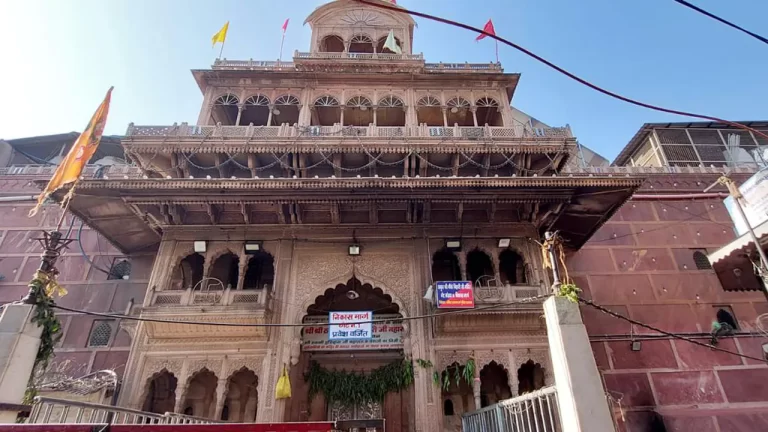
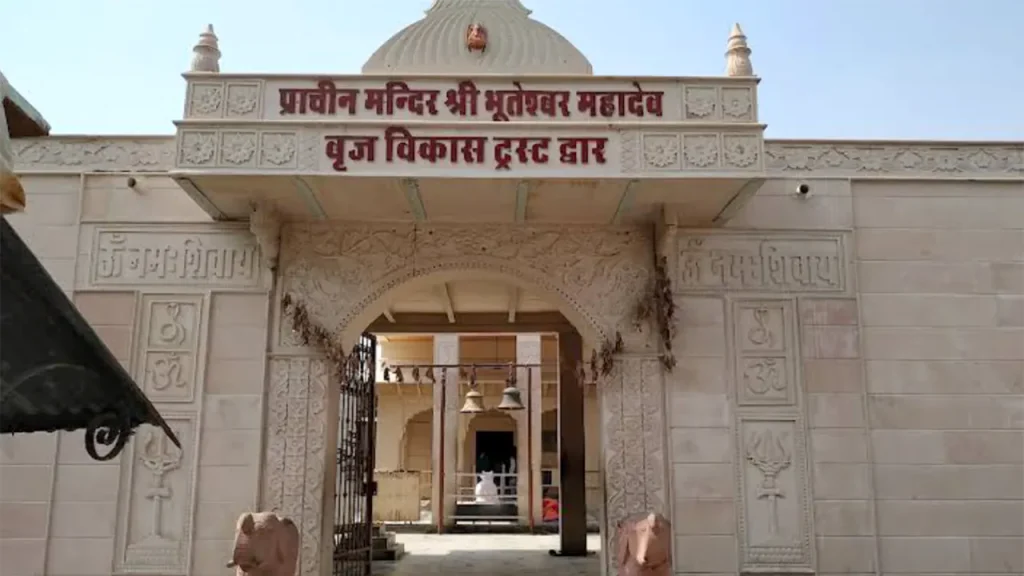
The Bhuteshwar Mahadev Mandir is situated close to the old city bus stand and the Shri Krishna Janmabhoomi area in Mathura, an ancient city of Uttar Pradesh, India. Hello there! This is your guide, and today we are exploring one of the oldest and holiest Shiva temples in the northern part of India. Whoever you are – a school kid, a devotee, or a history buff – this guide has everything you would need to know about the temple.
Mathura is famous all across the globe as the birthplace of Lord Krishna. But according to ancient traditions, any pilgrimage to Braj Bhoomi is incomplete without paying homage to Lord Shiva at this place. I will help you explore the fascinating facts and mysteries of this divine temple.
The Sacred Guardian of Braj
Overview of the Temple
Bhuteshwar Mahadev Mandir is a perpetual monument of the spiritual world in the center of Mathura. In contrast to modern temples built from polished concrete, this place contains millions of years of accumulated spiritual power, resulting from centuries of prayers and worship. The temple is dedicated to Lord Shiva in his incarnation Bhuteshwar, which means the Lord of the spirits, elements, and creatures.
Uniqueness and Spiritual Importance
Why is Bhuteshwar Mahadev Mandir unique among all Hindu temples?
- The Western Protector: Mathura is guarded from all four cardinal directions by the four protector manifestations of Lord Shiva called Char Dikpala or Kotwals. Bhuteshwar Mahadev Mandir is the protector of the western direction of the holy city.
- Protector of Krishna’s Birth Place: According to legends, Lord Shiva protects the whole Braj Dham region from any evil that would dare to enter into this divine place where Lord Krishna played with Radha.
- Intersection of Traditions: This is the place where Shaivism and Vaishnavism traditions come together perfectly. People who visit Lord Krishna’s birth place also visit Bhuteshwar Mahadev Mandir immediately after.
Target Audience
This temple is open to all:
- Pilgrims: Who wish to find peace within, spiritual purifying, and liberation from negativity.
- History Lovers: Who seek to unravel the origins of Mathura through years of uninterrupted worship.
- Inquisitive Tourists and Scholars: Wanting to understand how India’s living culture lives on.
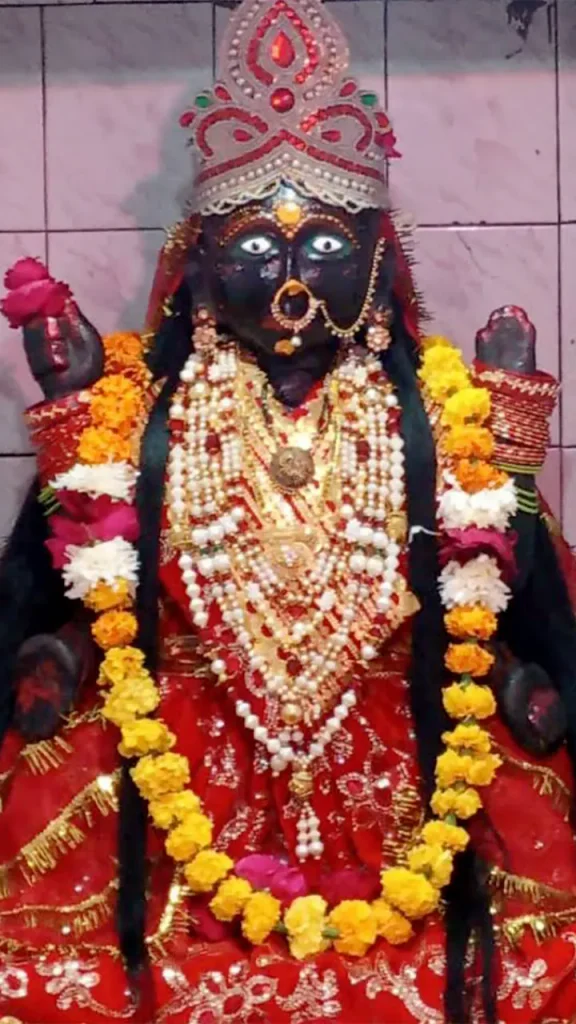
Historical Background: Legends, Dynasties, and Saints
Founding Story: Shatrughna and the Defeat of Lavanasura
The genesis of Bhuteshwar Mahadev Mandir can be traced back to the Treta Yuga.
As per legend, the region surrounding present-day Mathura was a thickly wooded area called Madhuvan and was under the control of a demonic king called Lavanasura. Lavanasura had a magical spear that made him immortal. He troubled saints, ascetics, and civilians alike who dwelled on the banks of the river Yamuna.
Prince Shatrughna was deputed by Lord Rama to free the region from Lavanasura’s tyranny. Shatrughna managed to surprise Lavanasura, as he did not have his spear when he ventured out of his fort.
In a grueling struggle, Lavanasura was vanquished by Shatrughna. In order to cleanse the land of its evil aura and show his gratitude to God, Shatrughna set up a Shiva Linga at this site and prayed to Lord Shiva for the eternal protection of the new city of Mathura.
Read More >> Why Do We Ring the Bell Before Entering a Temple? Shocking Truth
Lord Shiva’s Desire to Witness the Raas Leela
A widely loved folk tale also associates Bhuteshwar Mahadev Mandir with the childhood of Lord Krishna during the era of Dvapara Yuga.
During the performance of Maha Raas by Lord Krishna in the Vrindavan groves, Lord Shiva in Kailash had an urgent desire to witness it. However, the forest of Vrindavan permitted only the female energy (Gopi Bhav) to enter the ring of divine dance.
Taking a holy bath in the river Yamuna and taking the form of a Gopi (popularly known as Gopeshwar Mahadev), Lord Shiva was able to witness the divine dance. After that, Mahadev established himself in Mathura in Bhuteshwar Mahadev Mandir in order to be permanently close to his beloved Lord Krishna.
Dynastic Patronage and Historical Changes
For hundreds of years, Bhuteshwar Mahadev Mandir saw the growth and collapse of some great Indian empires:
- Kushan and Gupta Periods (1st to 6th Century CE): The town of Mathura was known for its artistic culture, being the sculptural capital of the world. Gifts from kings and stones were laid down at the temple complex.
- Medieval Transformations: In spite of foreign attacks on Mathura’s huge architectural wonders, the sacredness of the Shiva Lingam within Bhuteshwar Mahadev Mandir was safeguarded by local sadhus and locals alike.
- Maratha Revival (18th Century): With the coming of the Maratha era in North India, some temples in Mathura and Vrindavan were restored and fortified, making the temple structure we see today.
Religious and Cultural Significance
The Deity: Bhuteshwar Mahadev
The presiding deity of the temple is Lord Shiva in the form of a self-manifested (Swayambhu) stone Lingam. The word Bhuteshwar is derived from two Sanskrit words:
- Bhuta (भूतः): Meaning the five physical elements (Pancha Mahabhutas—Earth, Water, Fire, Air, Space) as well as all living souls and spirit entities.
- Ishwara (ईश्वरः): Meaning the supreme controller or Lord.
Thus, worshiping at Bhuteshwar Mahadev Mandir signifies submitting oneself to the master of all cosmic elements, helping devotees overcome fears of mortality, negative spirits, and worldly illusions.
Scriptural References and Sanskrit Proofs
The sanctity of Bhuteshwar Mahadev Mandir is not mere folklore; it is documented in classical Puranic literature.
Reference from the Mathura Mahatmya (Varaha Purana)
The Varaha Purana contains an entire treatise dedicated to the glory of Mathura (Mathura Mahatmya), where Lord Varaha describes the four cardinal Shiva guardians to the Earth Goddess:
मथुरामभितो दृष्ट्वा सर्वपापैः प्रमुच्यते।
भूतेश्वरं च सततं संरक्षति महामतिः॥
“Looking upon the holy borders of Mathura frees a soul from all sins. The great and wise Lord Bhuteshwar eternally protects this sacred realm.”
— (Varaha Purana, Mathura Mahatmya)
Reference from the Padma Purana (Patala Khanda)
The Padma Purana notes the absolute necessity of visiting the western guardian when circumambulating Braj:
पश्चिमतो भूतेश्वरः पातु सततं पुरीम्।
तं दृष्ट्वा सर्वयज्ञेषु स्नातस्य फलमाप्नुयात्॥
“May Bhuteshwar guard the western quarters of the holy city forever. By having his sacred Darshan, a seeker obtains the spiritual fruit equivalent to bathing in all Vedic sacrifices.”
— (Padma Purana)
Cultural Integration of Shiva and Krishna
For the Braj civilization, Shiva is revered as the greatest Vaishnava (worshiper of Krishna), and Krishna as the devotee of Shiva for maintaining balance in the cosmos. It is this devotion that renders Bhuteshwar Mahadev Mandir an important place for millions of devotees on the occasion of the yearly Braj Chaurasi Kos Parikrama.

Architecture and Structural Design
Architectural Style
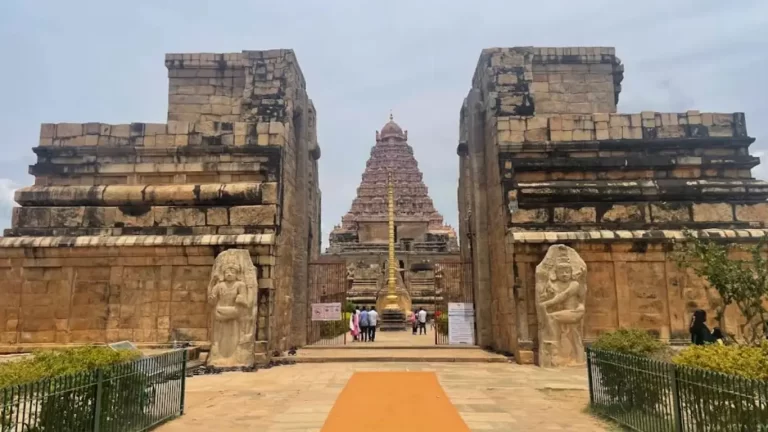
The Bhuteshwar Mahadev Mandir is built largely in the typical North Indian temple architectural style known as Nagara, mixed with local vernacular style of Braj:
- Curved Tower (Shikhara): Arising high up in the sky above the sanctuary, topped by the Amalaka (stone disk) and Kalasha, bearing the Trishul.
- Platform (Jagati): Built on a raised stone platform to shield the sanctum from the rainwater, creating a sacred space away from the hustle bustle of street life.
Architecture and Building Material
- Red Sandstone Stone Masonry: Taken from the local quarries of Agra and Bharatpur; the red sandstone takes the color of morning sunshine.
- Sabha Mandapa (Assembly Hall): An open air pillared structure in which devotees chant prayers, sing hymns, and wait their turn to pour water and milk on the Shivling.
- Garbhagriha (Sanctum): A cool, subterranean square chamber situated just a few feet below the level of the mandapa. The sanctum remains naturally very cool throughout the hot summer days.
Read More >> Divine Nalambalam Temples Circuit: Complete 1-Day Guide
Main Attractions and Shrines within the Complex
| Section / Shrine | Presiding Deity / Feature | Spiritual Purpose & Significance |
| Garbhagriha | Ancient Shiva Lingam & Silver Yoni | Primary sanctum for Jalabhishekam and deep meditation. |
| Nandi Mandapa | Stone Carved Nandi Bull | Worshiper of Shiva; devotees whisper prayers in his ear. |
| Mata Parvati Shrine | Devi Parvati / Gauri | Invoking blessings for marital harmony and family welfare. |
| Shri Ganesha & Kartikeya | Sons of Shiva | Removing obstacles and providing courage before starting rituals. |
| Patal Kund (Subterranean Spring) | Ancient Natural Water Well | Holy water source historically used for temple rituals. |
| Navagraha Shrine | Nine Planetary Deities | Neutralizing planetary afflictions (Graha Doshas). |
Sacred Shiva Lingam
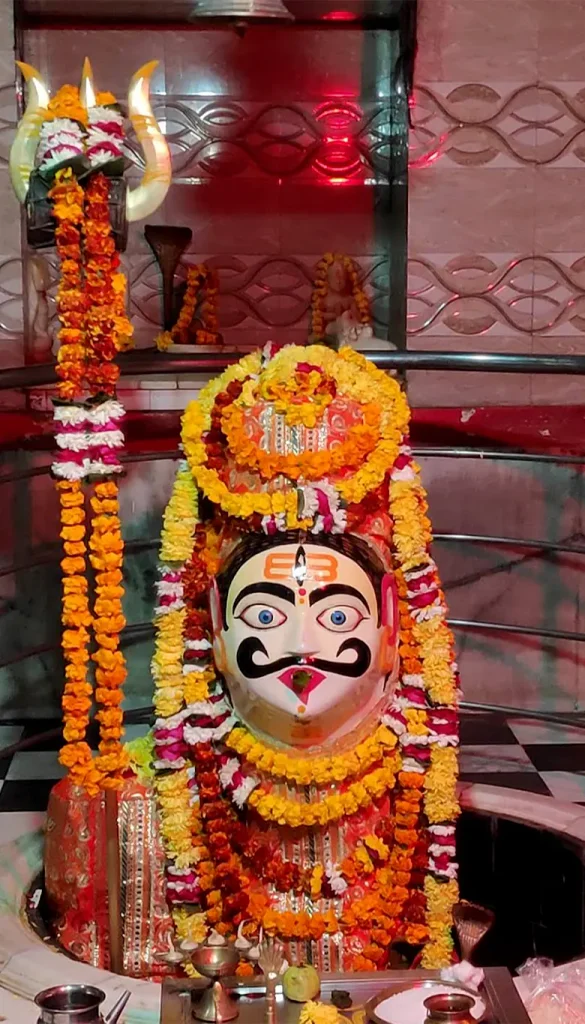
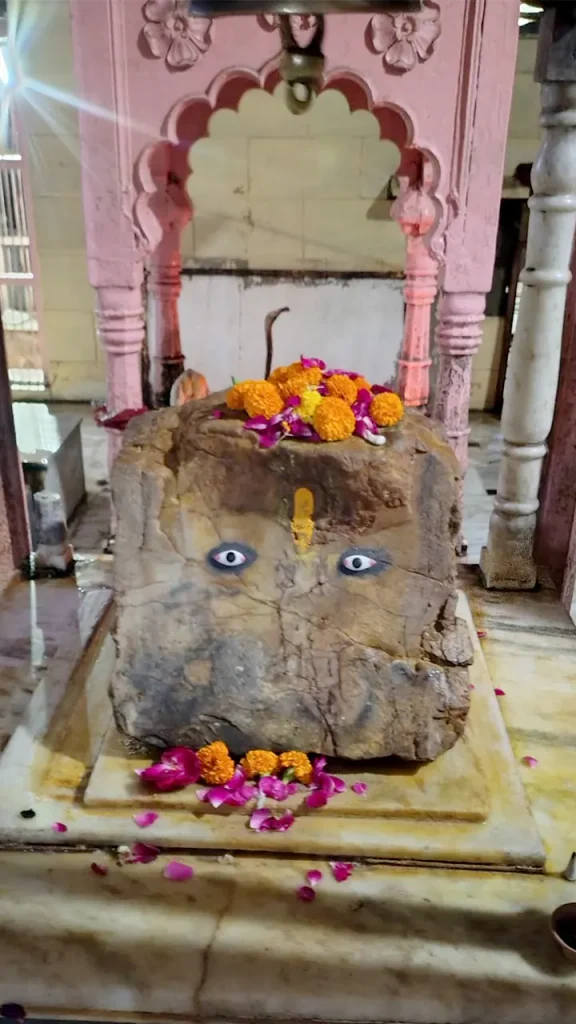
At Bhuteshwar Mahadev Mandir, the Shiva Lingam forms its most significant structure. It is a black and shiny Shiva Lingam kept in a silver-coated base known as Argha or Yoni. Hanging above the Shiva Lingam is the brass pot called Jhadhari from which water drips drop-by-drop to signify the continuous flow of sacred River Ganga.
The Bull, Nandi
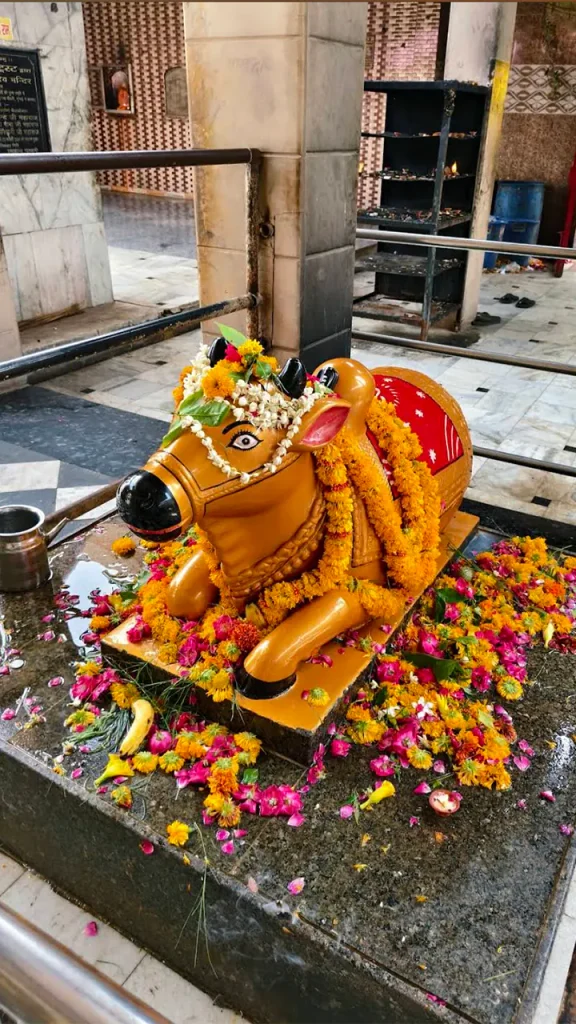
Outside the temple gate, facing the entrance of the temple, stands the vehicle of Lord Shiva, Nandi. Worshipers stop here, touch Nandi’s horns, and pour their true feelings into his ears, convinced that Nandi communicates these feelings directly to Mahadev.
Bhuteshwar Mahadev Temple Timings, Daily Schedule, and Rituals
Daily Timings
- Morning Opening: 04:30 AM
- Afternoon Closing: 12:30 PM
- Evening Reopening: 04:00 PM
- Night Closing: 10:00 PM
(Note: During major festivals like Maha Shivratri and Shravan Somwar, Bhuteshwar Mahadev Mandir remains open continuously for up to 20 hours to accommodate long queues of pilgrims.)
Daily Aarti Schedule
- Mangala Aarti (05:00 AM): The waking of the Lord, accompanied by the sounding of conch shells (Shankhnaad) and bells.
- Bhog & Madhyahna Aarti (12:00 PM): Offering of fresh fruits, milk sweets, and grain preparations.
- Sandhya Aarti (07:00 PM): The grand evening ceremony featuring vibrant oil lamps, incense, and collective chanting of the Shiva Tandava Stotram.
- Shayana Aarti (09:30 PM): The peaceful closing ceremony of the day.
Special Poojas and How Devotees Perform Them
- Jalabhishekam: Offer pure Yamuna water or clean water from taps in copper vessels to be poured on the Shiva Lingam, chanting “Om Namah Shivaya.”
- Dudh and Panchamrit Abhishekam: The pouring of milk, curd, honey, sugar, and clarified butter (ghee) on the God for peace, good health, and enlightenment.
- Belpatra Arpan: The offering of Belpatra which comprises of three leaves. According to religious texts, giving a single Belpatra leaf to Lord Shiva in Bhuteshwar Mahadev Mandir will cleanse the sins of past lives.
- Rudrabhishekam: It is performed by the priest of the temple on behalf of individuals or families. It invokes the 11 Rudra forms with the help of Vedic chants.
Read More >> Azhimala Shiva Temple with 58 ft statue
Major Festivals and Peak Days
Maha Shivratri (February / March)
Maha Shivratri is the grandest night of the year at Bhuteshwar Mahadev Mandir.
- Thousands of devotees stand in long lines starting as early as 2:00 AM.
- The temple premises are illuminated with thousands of oil lamps and colorful LED fairy lights.
- Four distinct Prahara Pujas are performed through the entire night until the following sunrise.
The Holy Month of Shravan (July / August)
The entire monsoon month of Shravan (Sawan) is packed with energy:
- Shravan Mondays (Somwar): The most crowded days of the week. Tens of thousands of pilgrims gather from early morning.
- Kanwar Yatra: Saffron-clad pilgrims (Kanwariyas) walk hundreds of kilometers carrying holy Ganga water on balanced shoulder poles to perform Abhishekam at Bhuteshwar Mahadev Mandir.
Practical Visitor Guide: Transport, Facilities, and Accessibility
How to Reach the Temple
- By Train: The temple is approximately 3 km from Mathura Junction Railway Station and just 1.5 km from Mathura Cantt Station. Auto-rickshaws, e-rickshaws, and cycle-rickshaws are readily available outside both stations.
- By Road: Mathura is connected to Delhi, Agra, and Jaipur via the Yamuna Expressway and National Highway 19 (NH-19). Inter-state buses stop at the Mathura Central Bus Stand, which is within easy walking or e-rickshaw distance of the temple.
- By Air: The nearest airports are Agra Airport (AGR) (~60 km) and Indira Gandhi International Airport, New Delhi (DEL) (~160 km).
Entry Fees and Queue Management
- Entry Fee: Free. There is no ticket required for general entry or Darshan.
- Special Pooja Charges: Nominal dakshina/fees are set by local priests for detailed private rituals like Rudrabhishek or Mahamrityunjaya chants.
Facilities and Accessibility
- Shoe Stands: Free managed shoe-keeping counters are available near the entrance.
- Drinking Water & Restrooms: Clean drinking water filters and public washrooms are situated near the outer gate.
- Elderly & Disabled Visitors: The main courtyard is flat, but reaching the inner sanctum requires walking down a short flight of steps. Temple volunteers and family members can assist wheelchair users up to the Sabha Mandapa.
Dos and Don’ts for Visitors
What to Do (Dos)
- Modest Dressing: Wear modest, decent clothes covering shoulders and knees (Kurtas, Sarees, Salwar Kameez, or modest pants/shirts).
- Cleanliness: Ensure that you wash hands and feet prior to visiting the shrine.
- Queue Etiquette: Walk in the queue quietly, particularly on crowded festival mornings.
- Chanting: Chant with fellow worshippers the mantras of “Har Har Mahadev” or remain quiet in prayers.
What to Avoid (Don’ts)
- NO Items Made of Leather in the Sanctum: Do not wear leather belts, wallets, and shoes while entering into the Garbhagriha.
- Flash Photography is Unacceptable: Avoid taking photos of the idol of the main deity during Aarti.
- Littering is Not Permitted: Use temple dustbins for disposing used flowers, packets of milk, and plastic bags.
Nearby Attractions in Mathura
| Attraction | Distance from Temple | Key Highlights |
| Shri Krishna Janmabhoomi Complex | ~1.5 km | The historic prison cell and grand temple marking Lord Krishna’s birthplace. |
| Dwarkadhish Temple | ~2.5 km | Renowned for vibrant Rajasthani architecture and Jhula festivals on the Yamuna banks. |
| Vishram Ghat | ~2.8 km | The central bath ghat where Lord Krishna rested after defeating Kansa; site of evening Yamuna Aarti. |
| Mathura Government Museum | ~2.0 km | Houses an internationally famous collection of ancient Kushan and Gupta red sandstone sculptures. |
| Gita Mandir (Birla Mandir) | ~4.0 km | Features the entire Bhagavad Gita inscribed on its marble pillars. |
Frequently Asked Questions (Trending FAQs)
Why is Bhuteshwar Mahadev considered the protector of Mathura?
According to ancient tradition and the Varaha Purana, Lord Shiva acts as the Kotwal (divine guardian) of Mathura on the western front. Devotees believe his presence safeguards the spiritual borders of Braj Bhoomi from negative elements.
Can we visit Bhuteshwar Mahadev Mandir and Krishna Janmabhoomi on the same day?
Yes. The two temples are located just 1.5 km apart. Most pilgrims visit Bhuteshwar Mahadev Mandir in the morning and then walk or take an e-rickshaw to the Shri Krishna Janmabhoomi temple complex.
What is the best offering for Lord Shiva at this temple?
The simplest and most revered offerings are fresh, clean water (Jal), raw cow milk, Belpatra leaves, white flowers, and sacred ash (Bhasma).
Is photography allowed inside Bhuteshwar Mahadev Mandir?
Photography in the outer courtyard is generally permitted for personal travel memories. However, taking photos or recording videos directly inside the inner sanctum during active prayer rituals is restricted.
Conclusion: Carrying the Blessings of Mahadev Home
A trip to Bhuteshwar Mahadev Mandir does not only become one of the points of the checklist for sightseeing but also an amazing experience that touches your soul and shows the pulse of old Mathura. Being near the holy Shiva Lingam where Shatrughna used to pray, the rishis found tranquillity and Mahadev watches over the playing field of Lord Krishna.
As you prepare for the trip to the Braj Bhoomi and make the list of the things you should take with yourself, do not forget to put the visiting of the Western Guardian into your schedule. May the blessing of Lord Shiva guide your path and remove all obstacles on your way, making your heart full of happiness. Har Har Mahadev!