Radha Rani Temple in Barsana: History, Darshan Timings, Ropeway, and Travel Guide
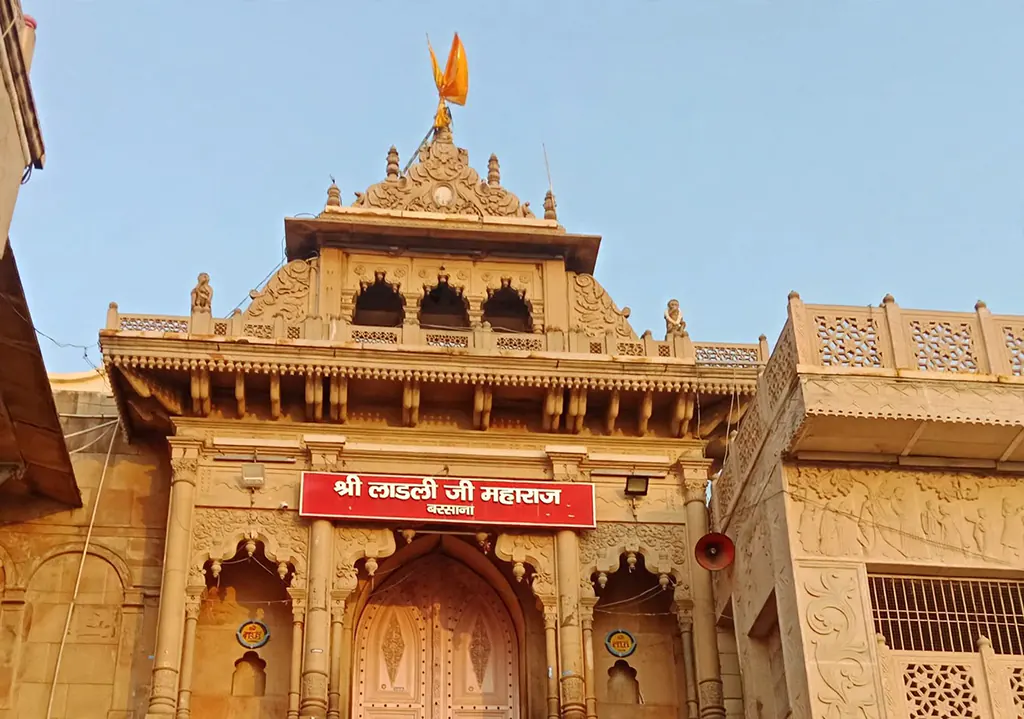
Radha Rani Temple, affectionately known by devotees as Shriji Temple or Ladliji Mandir, sits atop Bhanugarh Hill in Barsana, Mathura district, Uttar Pradesh. Dedicated to Goddess Radha, the eternal consort of Lord Krishna, it is the spiritual heart of Barsana and one of the holiest pilgrimage sites in Braj Bhoomi.
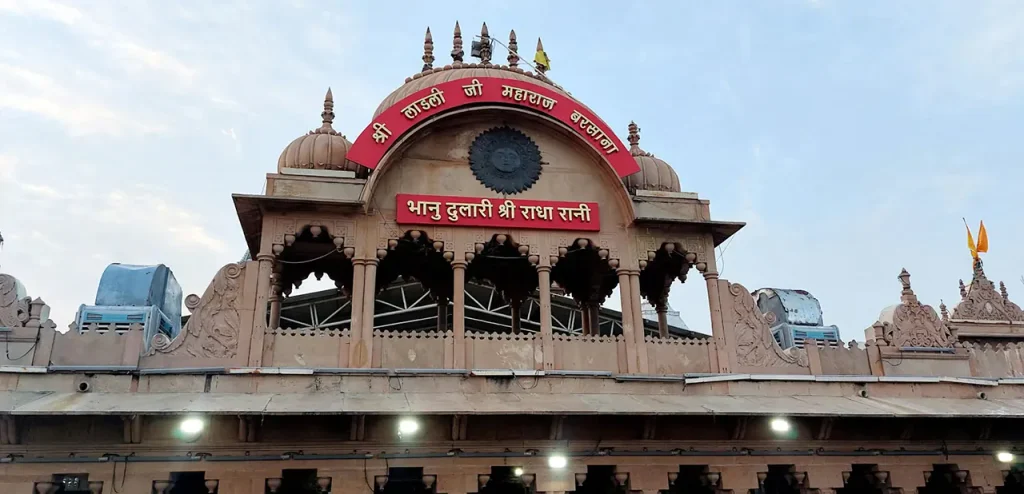
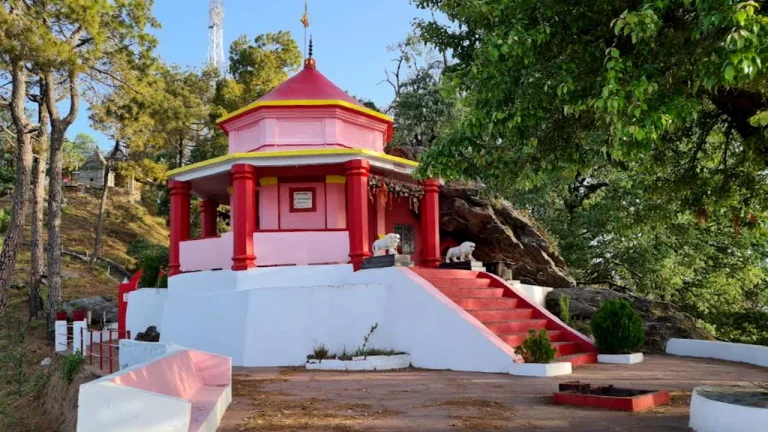
Built from striking red and white sandstone, the hilltop temple looks like a royal palace overlooking the town below. Millions of devotees visit every year to seek blessings, walk the sacred hills of Braj, and join vibrant celebrations like Radhashtami and Lathmar Holi.
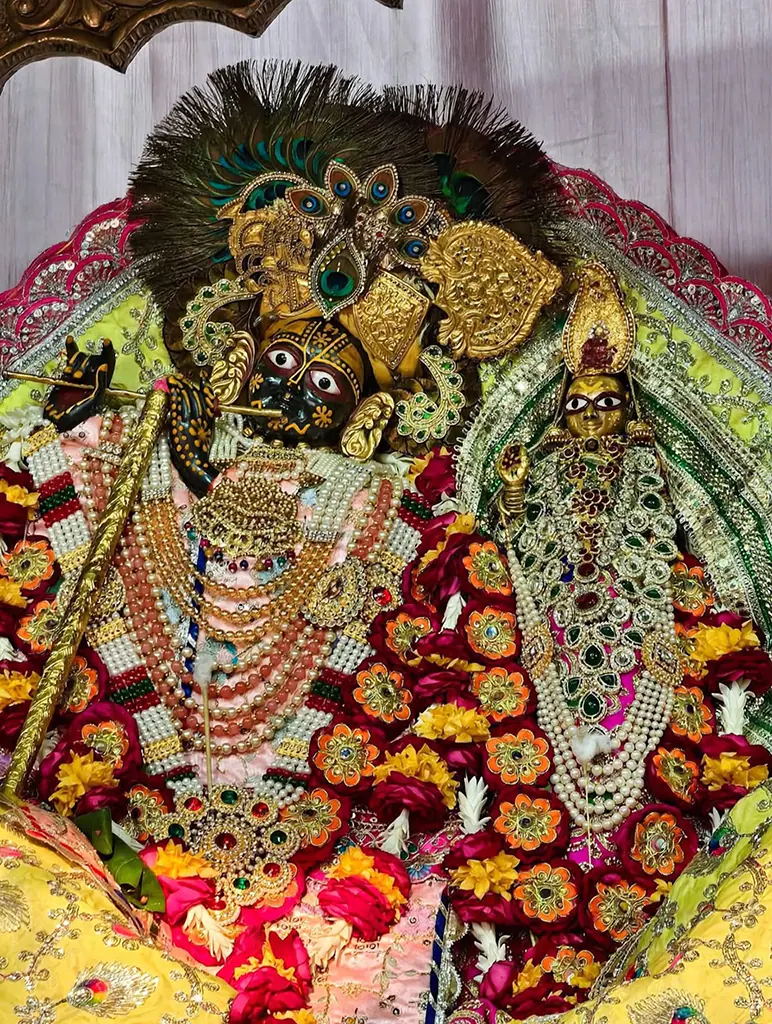
Whether you are planning a peaceful family darshan or a multi-day pilgrimage combining Barsana with Banke Bihari Temple in Vrindavan, this guide covers the temple’s history, darshan schedule, ropeway access, and practical travel tips.
Quick Information About Radha Rani Temple, Barsana
| Feature | Details |
| Temple Name | Shri Radha Rani Temple (Shriji Temple / Ladliji Temple) |
| Main Deity | Goddess Radha (Radharani) alongside Lord Krishna |
| Location | Bhanugarh Hill (Brahmagiri Range), Barsana, Mathura District, Uttar Pradesh |
| Architectural Style | Late 17th-century Bundela-Mughal red and white sandstone structure |
| Morning Darshan Timings | Approx. 5:00 AM to 2:00 PM (shifts slightly by season) |
| Evening Darshan Timings | Approx. 5:00 PM to 9:00 PM (shifts slightly by season) |
| Entry Fee | Free general darshan |
| Hill Access Options | Approx. 250 stone steps, Barsana Ropeway, or traditional palanquin (doli) |
| Major Festivals | Radhashtami (August/September) and Lathmar Holi (February/March) |
| Nearest Railway Stations | Kosi Kalan (~22 km) and Mathura Junction (~45–50 km) |
| Nearest Airports | Agra Airport (~105 km) and Indira Gandhi International Airport, Delhi (~150 km) |
| Best Time to Visit | October to March for pleasant weather; August–September or February–March for festivals |
Note: Exact Mangala and Shayan aarti times adjust by 30 to 60 minutes between summer and winter. Always verify local timings if you are visiting for the early morning opening.
Why Radha Rani Temple in Barsana Is So Important
In the Vaishnava traditions of Braj, Radha Rani is not viewed merely as a historical figure or a companion of Krishna. She is revered as Hladini Shakti, the supreme spiritual energy of divine love and devotion. Devotees believe that reaching Lord Krishna becomes effortless when one first receives the grace of Radha Rani.
Barsana holds a special place in this tradition because it is revered as the childhood home of Radha Rani. Just as Mathura is celebrated as Krishna’s birthplace and Vrindavan as the land of his youthful pastimes, Barsana is cherished as the kingdom of Radha’s father, King Vrishabhanu.
For pilgrims exploring ancient Braj shrines such as Bhuteshwar Mahadev Mandir in Mathura, traveling onward to Barsana completes an essential spiritual circle. Locals greet every visitor not with ordinary salutations, but with a warm, joyful call of “Radhe Radhe.” That greeting reflects the living devotion that still shapes daily life across the town.
History and Origins of Shriji Temple
The story of Radha Rani Temple spans both ancient sacred memory and documented medieval history. Understanding both layers helps visitors appreciate how old the site’s devotion is and how the current stone monument came to stand on the hill.
Ancient Tradition and Rediscovery
According to Braj oral tradition, the original shrine on Bhanugarh Hill was established nearly 5,000 years ago by Vajranabha, the great-grandson of Lord Krishna. Vajranabha is credited in regional lore with installing sacred deities and marking holy spots across Braj Bhoomi so future generations would remember them.
Over many centuries, the early shrine fell into ruin and became hidden by dense forest. In the 16th century, saint-scholars of the Bhakti movement—most notably Narayan Bhatt, a disciple of Chaitanya Mahaprabhu’s tradition—worked to identify and restore the forgotten sacred sites of Barsana.
Construction of the Present Temple
The grand red-and-white sandstone temple that visitors see today was constructed in the late 17th century, around 1675 CE. Historical accounts attribute its construction to Raja Veer Singh Bundela of Orchha, a devoted patron of Braj temples.
Later rulers and devotees, including local chieftains and patrons from Jaipur and Gwalior, added gateways, courtyards, and surrounding shrines over the next two centuries. Because it was built during the Bundela-Mughal era, the temple looks much like a fortified hilltop palace rather than a traditional South Indian or Nagara spire temple.
Sacred Legends and Traditions of Barsana
Braj traditions preserve several deeply meaningful stories about Barsana and the hill where Shriji Temple stands.
The Legend of King Vrishabhanu and Radha Rani
According to traditional Vaishnava accounts and the Padma Purana, King Vrishabhanu and his wife Kirti Devi ruled over Barsana. One day, while bathing in a sacred lotus pond (widely associated with Raval, before the family settled in Barsana), King Vrishabhanu found a radiant baby girl resting on a golden lotus flower.
Overjoyed, the royal couple raised her as their beloved daughter, Radha. Because she was the treasured princess of Barsana, devotees still call her Ladliji (the beloved daughter) and Shriji (the revered mistress of Braj).
The Four Peaks of Brahmagiri Hill
Local tradition says that the hill of Barsana is not an ordinary rocky ridge. According to Braj lore, Lord Brahma wished to witness the divine pastimes of Radha and Krishna firsthand. To serve them humbly, Brahma took the form of a four-peaked hill in Barsana, known as Brahmagiri.
Each of the four peaks represents one of Brahma’s four heads and holds a sacred shrine:
- Bhanugarh: The peak where King Vrishabhanu’s palace and the main Radha Rani Temple stand.
- Dangarh: Associated with playful episodes where Krishna collected tolls of butter and curds from the gopis.
- Mangarh: Home to Maan Mandir, where Radha Rani playfully expressed loving pique (maan) toward Krishna.
- Vilasgarh: Associated with joyful songs, dances, and spiritual pastimes.
Temple Architecture and Notable Features
Walking up to Radha Rani Temple feels like stepping into a royal court set high above the plains of Uttar Pradesh.
Red and White Sandstone Symbolism
The builders used two distinct colors of sandstone across the main structure, arches, and pavilions:
- Red Sandstone: Represents Radha Rani’s deep, selfless love and devotion.
- White Sandstone: Symbolizes Lord Krishna’s purity, peace, and transcendence.
Together, the alternating red and white stonework gives the temple its unmistakable warm glow, especially during sunrise and sunset.
Main Sanctum and Courtyards
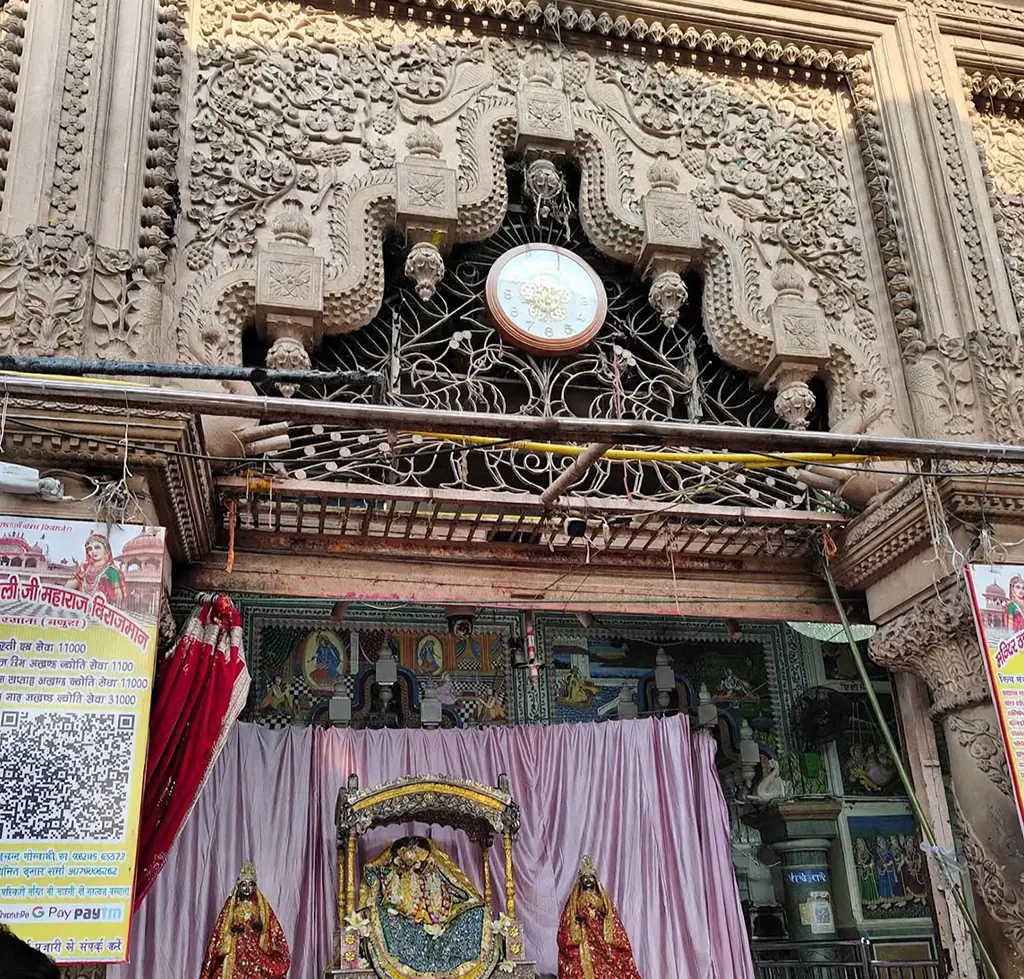
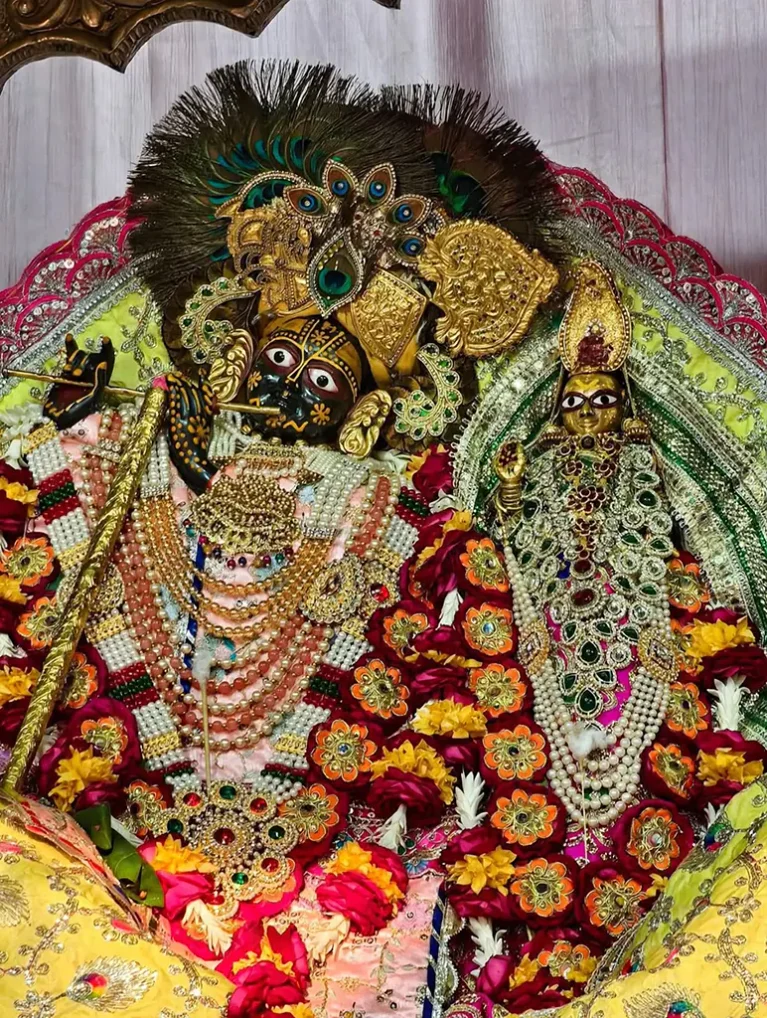
Inside the central hall (mandap), the main altar enshrines the revered deities of Shri Radha Rani and Lord Krishna, accompanied by Radha’s close companions (ashtasakhis) such as Lalita and Vishakha. The deities are dressed in richly embroidered silks, floral garlands, and traditional Braj ornaments that change throughout the day.
Outside the inner sanctum, wide open courtyards, carved stone pillars, and arched galleries allow large crowds to gather for devotional singing (kirtan). From the upper terrace, visitors enjoy sweeping views of Barsana town, Gahvar Van forest, and the surrounding Braj countryside.
Daily Darshan and Aarti Timings
Like other historic Braj-tradition shrines such as Shreenathji Temple in Nathdwara, Radha Rani Temple follows an intimate daily routine known as Ashtayam Seva, treating the deity as a living royal guest throughout the day.
The temple opens in two main sessions—morning and evening—and closes during the afternoon so the deities can rest.
Typical Daily Schedule
| Ritual / Session | Approximate Timing | What Happens |
| Mangala Aarti | 5:00 AM – 5:30 AM | First morning awakening ceremony and lamp offering |
| Shringar Aarti | 6:30 AM – 7:30 AM | Deities are bathed, dressed in fresh attire, and adorned with jewels |
| Rajbhog Aarti | 12:00 PM – 1:00 PM | Midday royal meal offering before afternoon rest |
| Temple Afternoon Closure | 2:00 PM – 5:00 PM | Doors close for the deities’ midday rest (shayan) |
| Utthapan & Sandhya Aarti | 5:00 PM – 6:30 PM | Evening reopening and sunset lamp offering |
| Shayan Aarti | 8:30 PM – 9:00 PM | Final night prayer before the temple closes for the night |
Summer vs. Winter Timing Adjustments
Braj temples adjust their clocks with the seasons to keep the deities comfortable:
- Summer Schedule (roughly March to October): The temple often opens slightly earlier in the morning (around 5:00 AM) and stays open slightly later at night (up to 9:00 PM or 9:30 PM).
- Winter Schedule (roughly November to February): Morning Mangala Aarti usually shifts later (around 5:30 AM or 6:00 AM), and evening Shayan Aarti concludes earlier (around 8:00 PM or 8:30 PM).
Before planning an early morning arrival, you can check seasonal pilgrimage updates through the Uttar Pradesh Braj Teerth Vikas Parishad or confirm locally in Barsana the evening prior.
Major Festivals Celebrated at Radha Rani Temple
While daily darshan is peaceful on ordinary weekdays, Barsana transforms into a sea of color, music, and devotion during its major annual festivals.
Radhashtami
Radhashtami celebrates the birth anniversary of Goddess Radha. It falls on the eighth day (Ashtami) of the bright fortnight in the Hindu lunar month of Bhadrapada (usually August or September), exactly 15 days after Krishna Janmashtami.
Celebrations begin before dawn with a grand Abhishekam (ceremonial bathing of the deities with milk, yogurt, honey, ghee, and sacred herbs, later distributed much like charanamrit in Hindu worship). Thousands of devotees sing traditional Braj hymns (padavali), and the temple offers Chhappan Bhog (56 varieties of devotional food).
Lathmar Holi
Barsana is famous across the world for Lathmar Holi, celebrated about a week before the main festival of Holi in the Hindu month of Phalguna (February or March).
Rooted in playful legends of Krishna visiting from nearby Nandgaon to tease Radha and her friends, men from Nandgaon visit Barsana singing Holi songs. The women of Barsana playfully greet them with wooden sticks (lathis), while the men protect themselves with sturdy leather shields. The entire courtyard of Radha Rani Temple fills with gulal (colored powder), flower petals, and traditional folk music.
Devotees who enjoy Braj Holi often combine Barsana with celebrations at Banke Bihari Temple in Vrindavan during the same week.
Climbing the Hill: Steps, Ropeway, and Accessibility
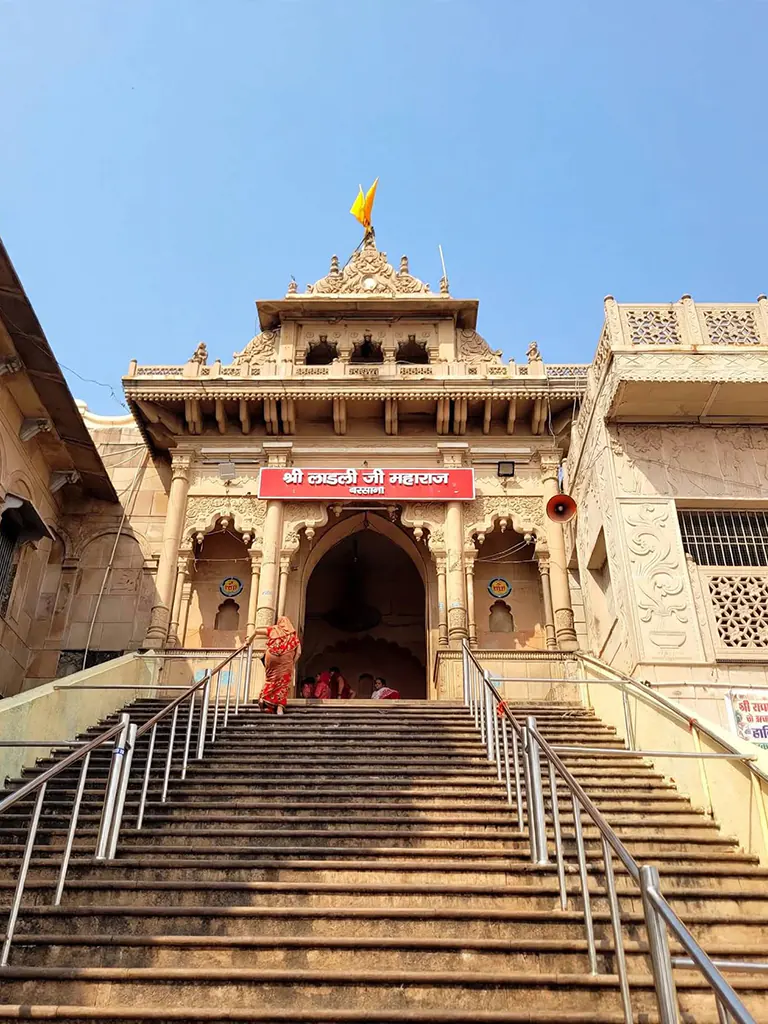
Because Shriji Temple sits at the summit of Bhanugarh Hill, every visitor must ascend from the town level to the temple courtyard. Fortunately, pilgrims have multiple ways to reach the top depending on their fitness and comfort.
1. The Stone Steps
The traditional approach involves climbing roughly 250 wide stone steps from the main bazaar entrance up to the temple gate. The steps are broad, well-paved, and lined with small shops selling flowers, sweets, and devotional items. Most healthy adults complete the climb comfortably in 10 to 15 minutes, pausing at landings to enjoy the view.
2. Barsana Ropeway
To make darshan easier for elderly pilgrims, families with young children, and visitors with knee or mobility challenges, the Barsana Ropeway connects the base of Brahmagiri Hill directly to the upper temple complex.
- The cable car ride takes only a few minutes and saves visitors the steep climb.
- Ropeway operating hours generally align with daytime temple darshan hours, though maintenance breaks may occur in the afternoon.
- Ticket counters are located at the lower terminal near the base parking area. Check current ticket rates and operating hours on site, as schedules can change during major festivals.
3. Palanquin (Doli) Services
When the ropeway has long queues or during off-hours, local bearers offer traditional doli (palanquin) services at the foot of the stairs. Always agree clearly on the round-trip or one-way fare before starting the climb.
How to Reach Radha Rani Temple in Barsana
Barsana is well connected by road to Mathura, Vrindavan, Agra, and Delhi NCR. Information on regional heritage circuits is also available on the Uttar Pradesh Tourism official portal.
By Road
Driving or hiring a private taxi is the easiest way to reach Barsana, especially if you plan to visit nearby shrines on the same day.
- From Mathura: Approx. 45 to 50 km via Govardhan or Chhata (1 to 1.5 hours).
- From Vrindavan: Approx. 45 to 50 km via Chhata or Govardhan (1 to 1.5 hours).
- From Govardhan: Approx. 22 km (35 to 45 minutes).
- From Delhi NCR: Approx. 150 km via the Yamuna Expressway or NH-19 (3 to 3.5 hours).
By Train
Barsana does not have its own major railway station. The closest railheads are:
- Kosi Kalan Railway Station (KSV): Located about 22 km away on the Delhi–Mathura main line; convenient for regional express trains.
- Mathura Junction (MTJ): Located about 45 to 50 km away; a major railway hub connected to almost every part of India. You can check train schedules and seat availability via Indian Railways (IRCTC).
From either station, you can hire an auto-rickshaw, e-rickshaw, or cab to reach Barsana.
By Air
- Agra Airport (AGR): Roughly 105 km away, offering limited domestic flights.
- Indira Gandhi International Airport, New Delhi (DEL): Roughly 155 km away, offering full domestic and international connectivity. From Delhi Airport, taxis reach Barsana in about 3.5 hours via the Yamuna Expressway.
Best Time to Visit Barsana
Choosing the right season makes a huge difference in your experience at Radha Rani Temple.
- October to March (Best Overall Weather): Cool, pleasant days (10°C to 25°C) make walking the steps, exploring Gahvar Van, and visiting nearby temples comfortable. Carry light woolens between December and February.
- August to September (Monsoon & Radhashtami): Rain turns the hills of Barsana lush green, creating beautiful views from the temple terrace. Expect very large crowds around Radhashtami.
- February to March (Holi Season): Ideal if you specifically want to experience Lathmar Holi, though hotels and roads become heavily congested.
- April to June (Peak Summer): Daytime temperatures often cross 40°C. If visiting in summer, arrive for the early morning Mangala or Shringar Aarti before 9:00 AM.

Dress Code, Temple Rules, and Visitor Facilities
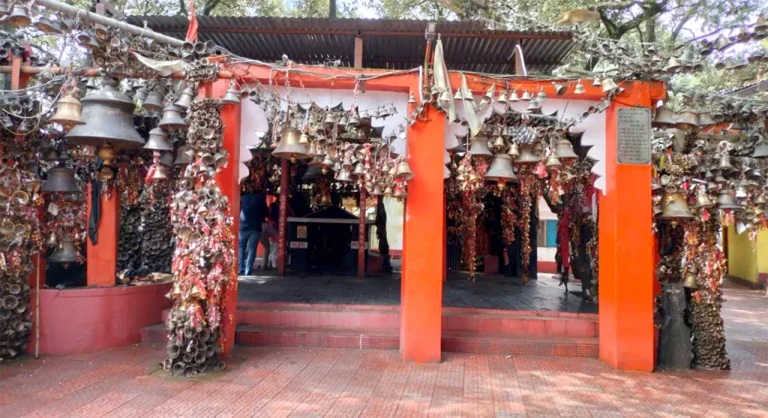
Following local customs—from modest clothing to traditional customs like ringing the bell before entering a temple
—ensures a smooth and respectful visit inside Shriji Temple.
Dress Code
There is no rigid written uniform enforced at the gate, but modest traditional Indian attire is strongly expected.
- Women: Sarees, salwar kameez, kurtis with dupatta, or long skirts.
- Men: Dhoti-kurta, kurta-pajama, or full-length trousers with a modest shirt.
- Avoid shorts, sleeveless tops, or torn jeans out of respect for the sacred atmosphere.
Important Temple Rules
- Footwear: Shoes and sandals must be removed before entering the temple precincts. Paid shoe stands are available near the base of the steps and near the upper entrance.
- Photography: Photography and video recording are generally prohibited inside the inner sanctum (garbhagriha). Always follow instructions from temple security staff.
- Monkey Safety: Like Vrindavan, Barsana has many monkeys along the steps and rooftops. Keep eyeglasses, mobile phones, wallets, and prasad bags securely tucked away.
Facilities Available
- Drinking water points and basic washrooms near the base parking area and ropeway terminal.
- Prasad shops selling peda, laddoos, floral garlands, and chunari offerings along the approach road.
- Simple dharamshalas and guesthouses in Barsana town, though many pilgrims prefer staying in Vrindavan or Mathura where hotel options are wider.
Nearby Temples and Sacred Places in Barsana
If you are traveling to Barsana, set aside half a day to explore these nearby sacred spots within a few kilometers of Shriji Temple:
- Kirti Mandir (Rangeeli Mahal): Located at the base of the hill, this beautifully carved modern temple is dedicated to Radha Rani’s mother, Kirti Devi, and features detailed depictions of Radha-Krishna pastimes.
- Maan Mandir: Perched on the nearby Mangarh peak, this quiet ashram and temple commemorates the spot where Krishna pacified Radha Rani’s loving pride.
- Gahvar Van: A peaceful sacred grove at the foot of Brahmagiri Hill where devotees follow the traditional rules of pradakshina by walking a gentle barefoot circumambulation around the forest path.
- Prem Sarovar: A historic sacred pond located between Barsana and Nandgaon, cherished in Braj tradition as a meeting place of Radha and Krishna.
- Nandgaon (Nand Bhavan): Located just 8 to 9 km away, Nandgaon is revered as the childhood village of Lord Krishna’s foster father, Nanda Baba. Pilgrims traditionally visit both Barsana and Nandgaon together.
- Vrindavan Shrines: Roughly 45 km away, allowing pilgrims to combine Barsana with Katyayani Shakti Peeth in Vrindavan and other historic Braj temples.
For more tips on preparing for sacred shrines across India, review general Hindu temple etiquette and dress code guidelines before your journey.
Frequently Asked Questions About Radha Rani Temple, Barsana
1. How many steps are there in Radha Rani Temple, Barsana?
There are approximately 250 stone steps leading from the main market entrance at the base of Bhanugarh Hill up to the main courtyard of Radha Rani Temple.
2. Is there a ropeway at Radha Rani Temple in Barsana?
Yes. The Barsana Ropeway operates between the base of Brahmagiri Hill and the upper temple complex, making darshan accessible for elderly visitors, children, and those unable to climb stairs.
3. Is there any entry fee for Radha Rani Temple?
No. General darshan at Radha Rani Temple is completely free for all visitors. Charges apply only if you choose to use the ropeway, palanquin (doli) service, or shoe-keeping stalls.
4. What is the difference between Shriji Temple and Radha Rani Temple?
Both names refer to the exact same temple on Bhanugarh Hill in Barsana. Local Braj residents affectionately call Radha Rani “Shriji” and “Ladliji,” so the temple is widely known by all three names.
5. How much time is needed to visit Radha Rani Temple?
Plan for 1.5 to 2 hours for a comfortable darshan, including climbing the steps (or taking the ropeway), attending an aarti, and enjoying the view from the courtyard. If you also visit Kirti Mandir and Gahvar Van, allow half a day.
6. Can we visit Barsana and Vrindavan on the same day?
Yes. Barsana is about 45 to 50 km from Vrindavan (roughly 1 to 1.5 hours by road). Many pilgrims start early in Vrindavan, visit Barsana and Nandgaon in the morning, and return by evening.
7. Why is the temple built with red and white stones?
In Braj devotional symbolism, the red sandstone represents Radha Rani’s deep love and devotion, while the white stone represents Lord Krishna’s purity and peace.
Conclusion
A visit to Radha Rani Temple in Barsana offers far more than a scenic hilltop view. From its 17th-century red-and-white sandstone arches to the joyful “Radhe Radhe” greetings echoing through its courtyards, Shriji Temple immerses every pilgrim in the living devotion of Braj Bhoomi.
To make the most of your trip, arrive early in the morning for Shringar Aarti, use the Barsana Ropeway if anyone in your group prefers to skip the 250 steps, and leave time to walk through Gahvar Van and nearby Nandgaon. With a little planning, your journey to Radha Rani’s sacred hill will remain one of the most memorable highlights of your Braj pilgrimage.